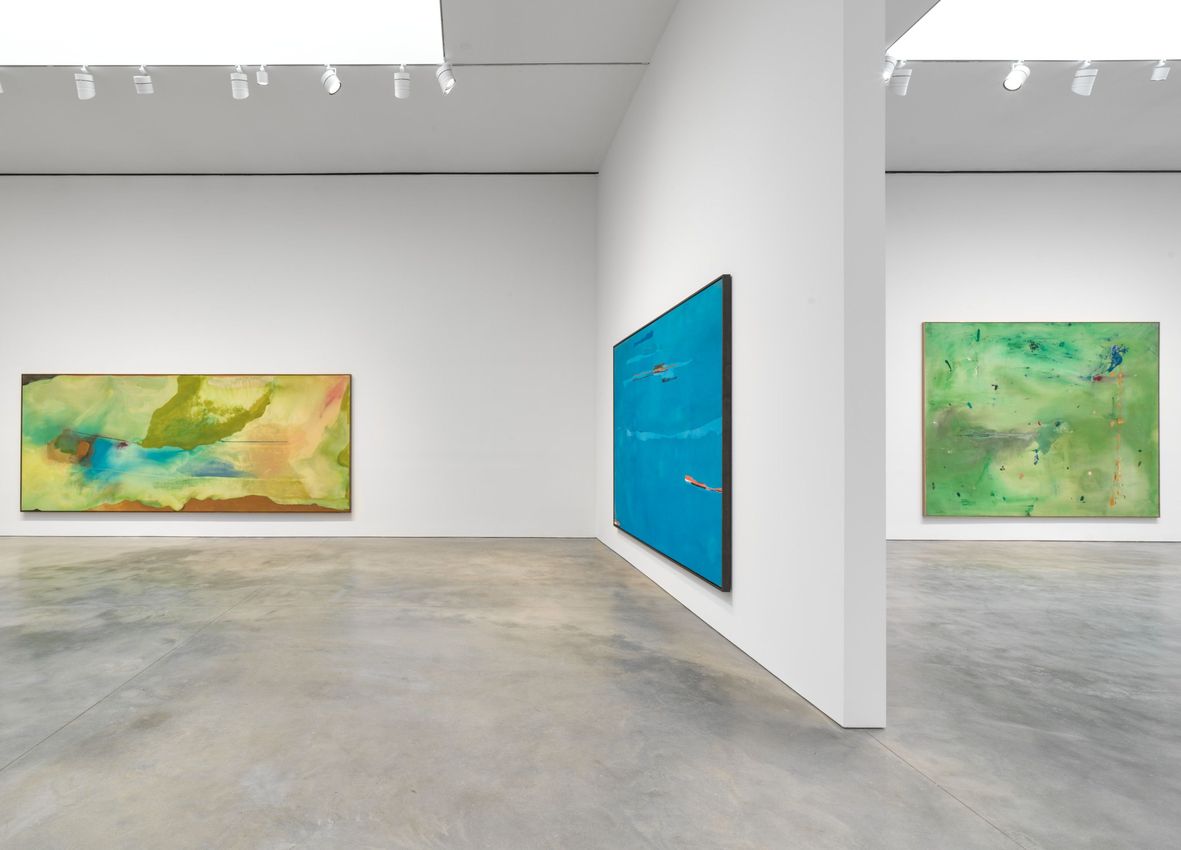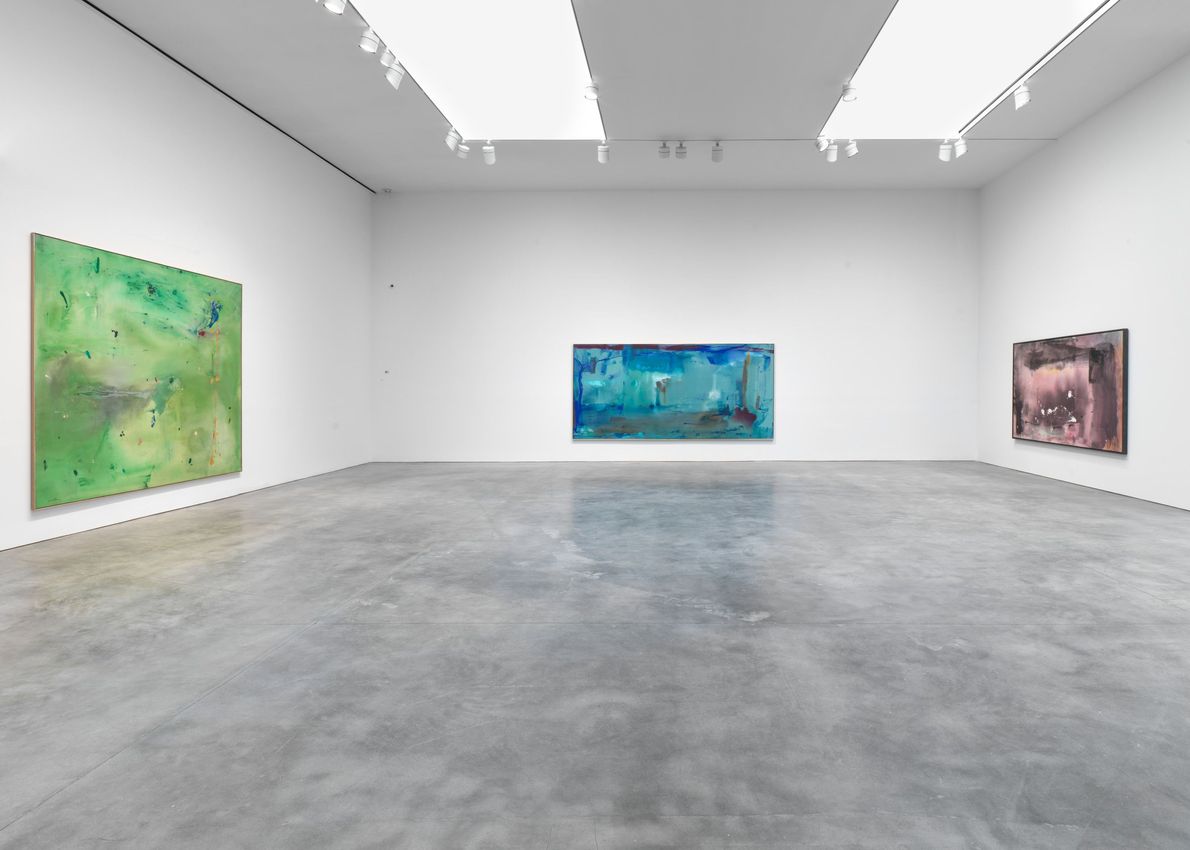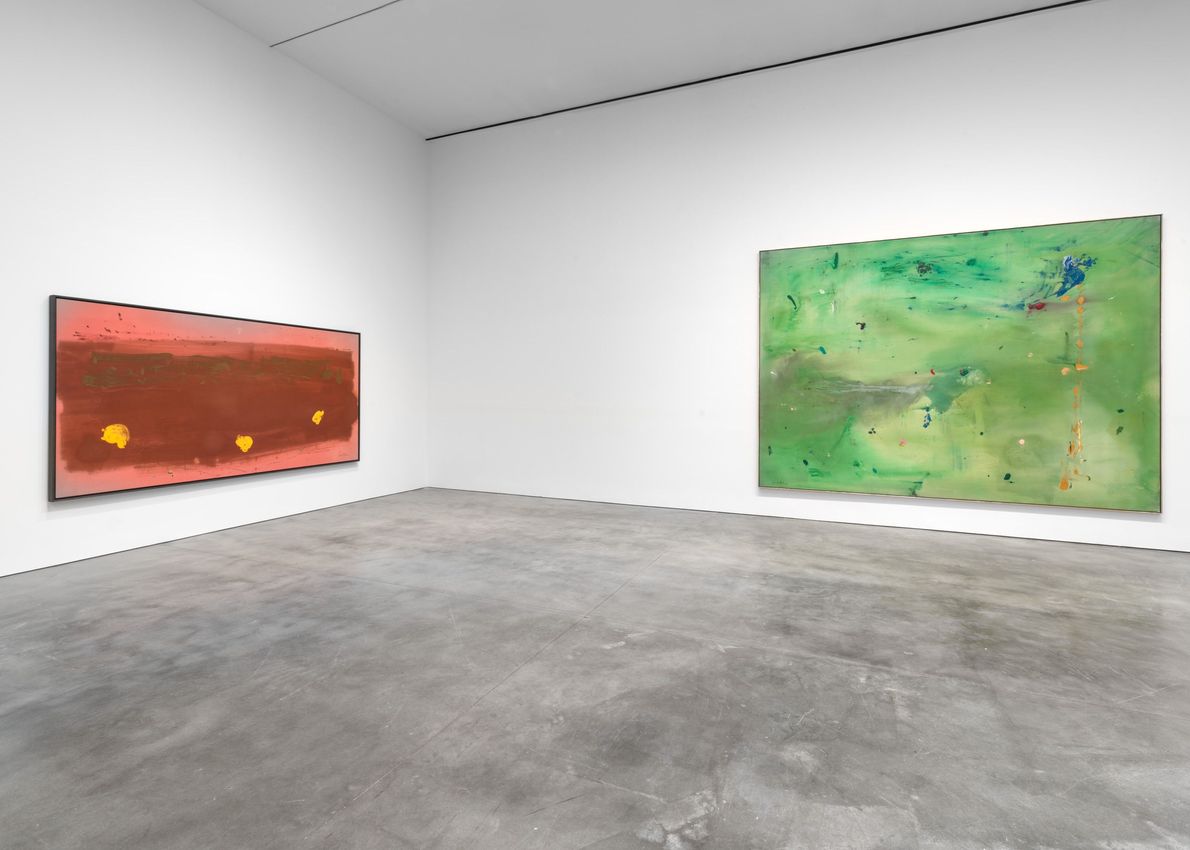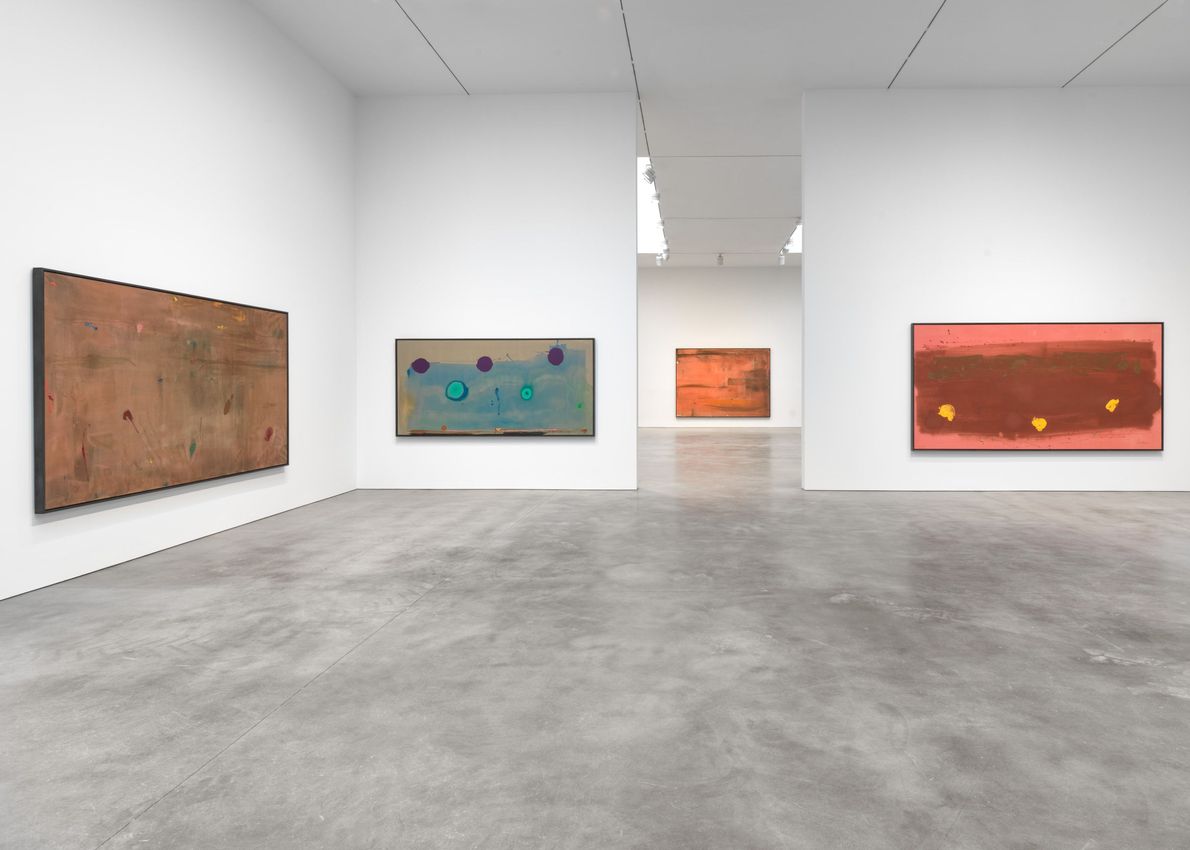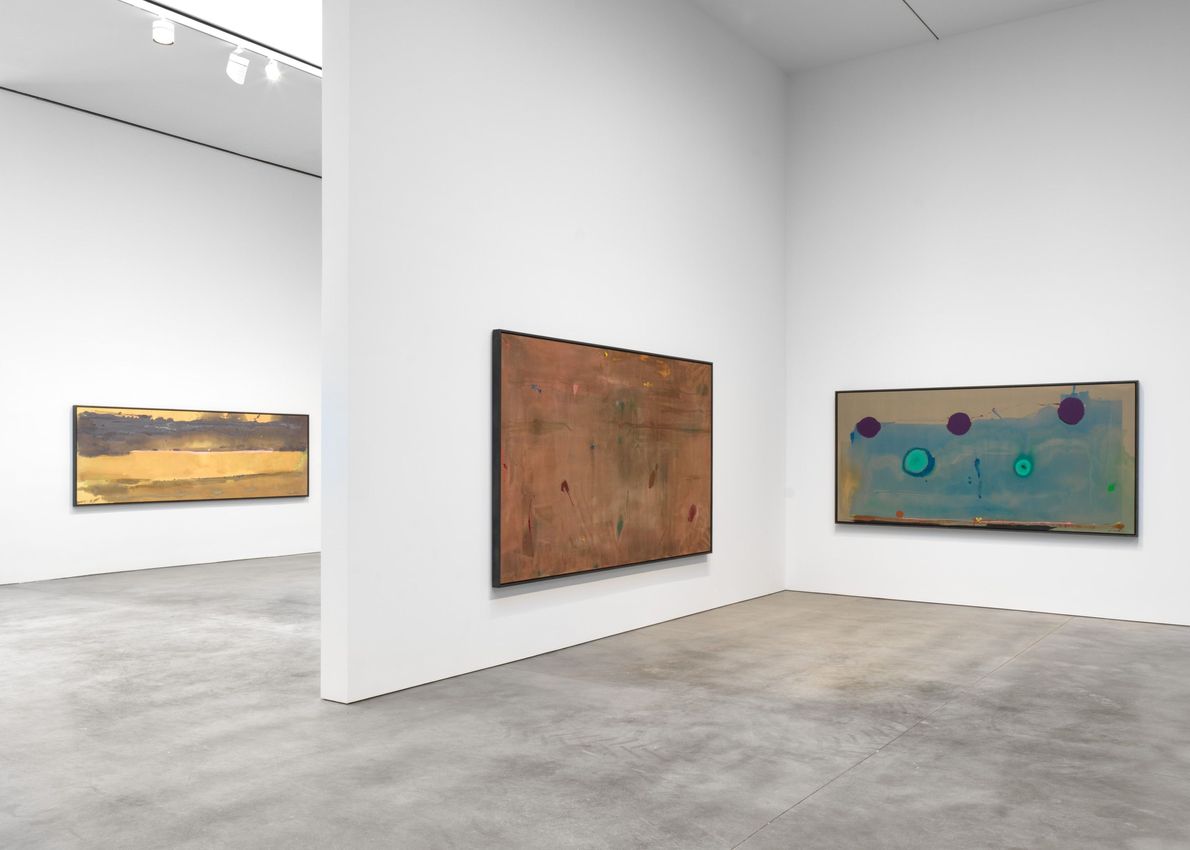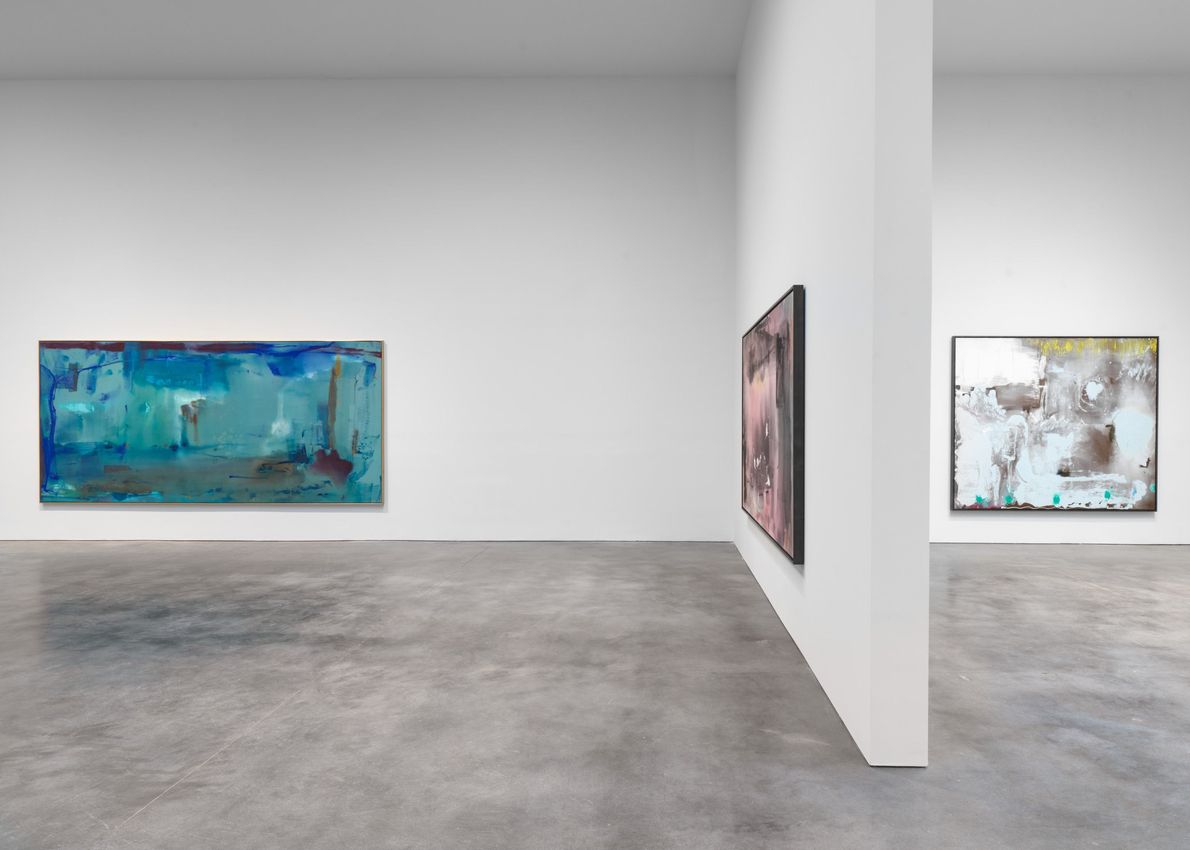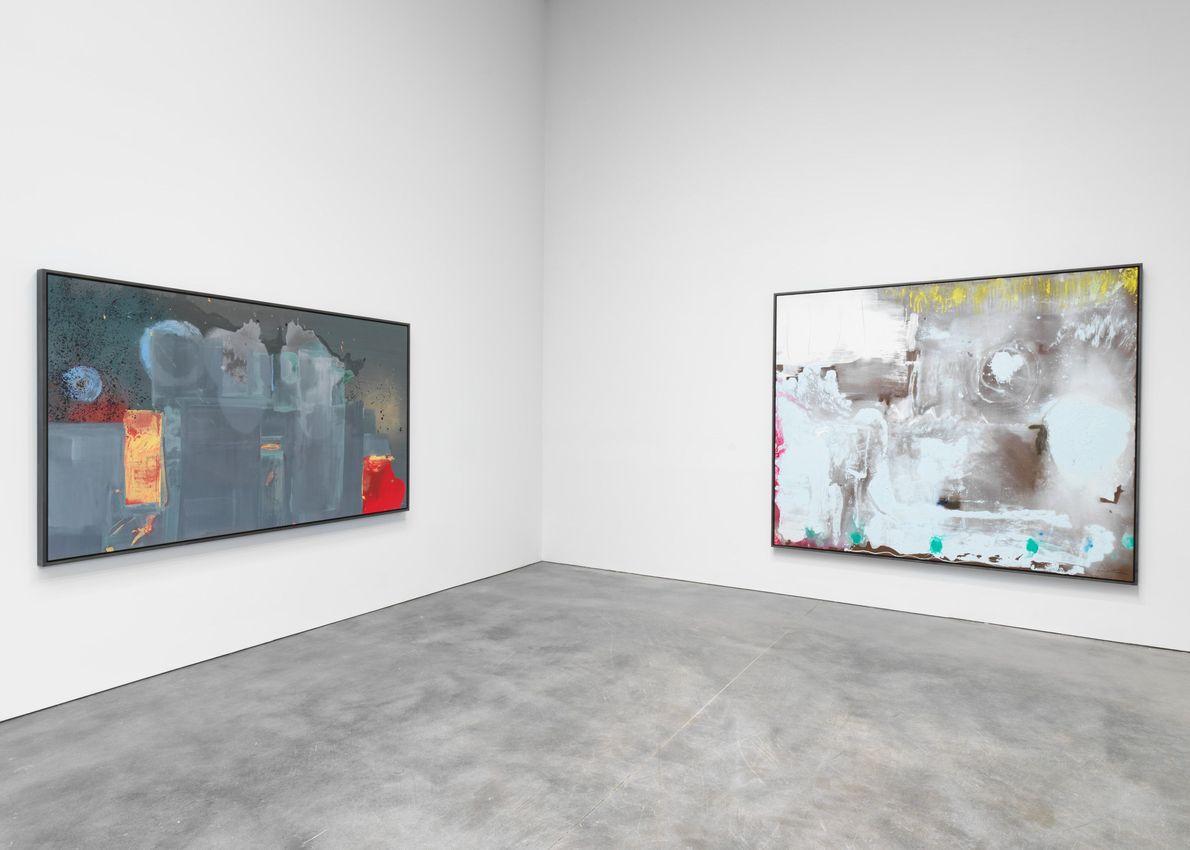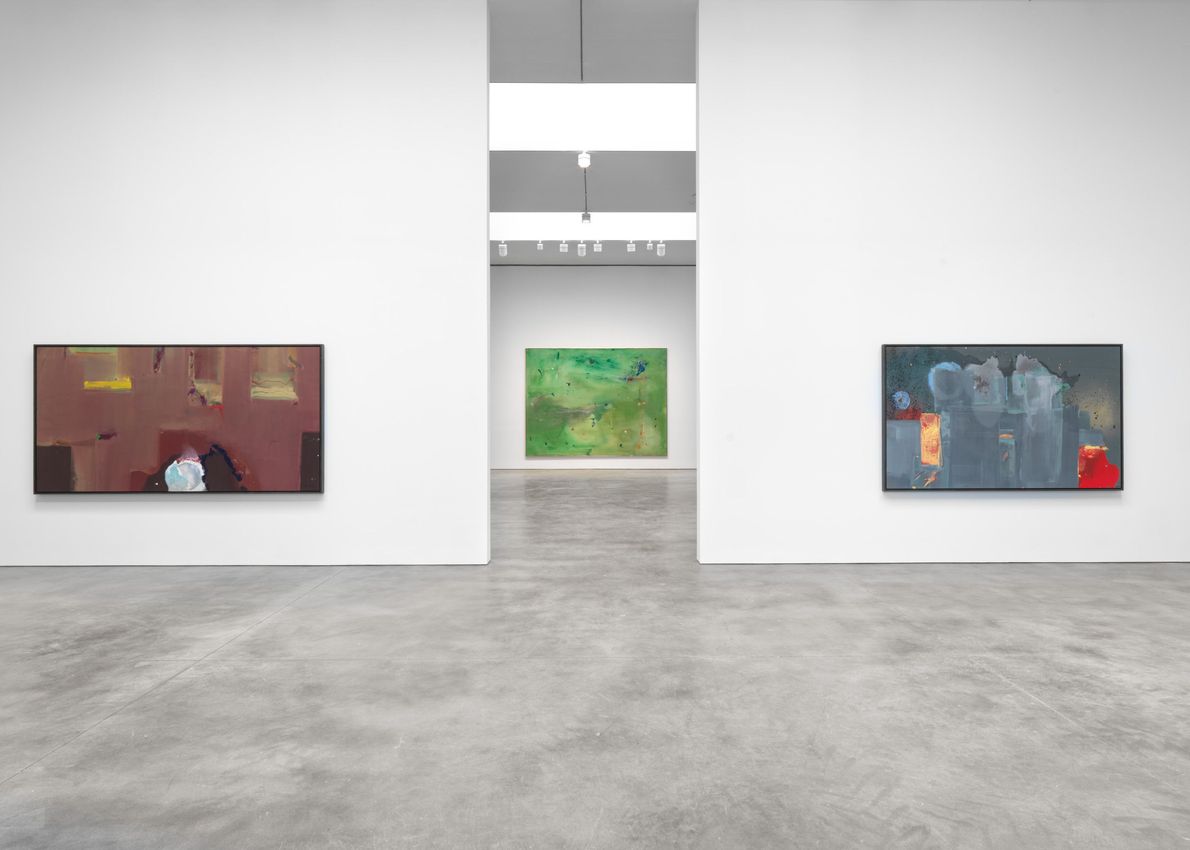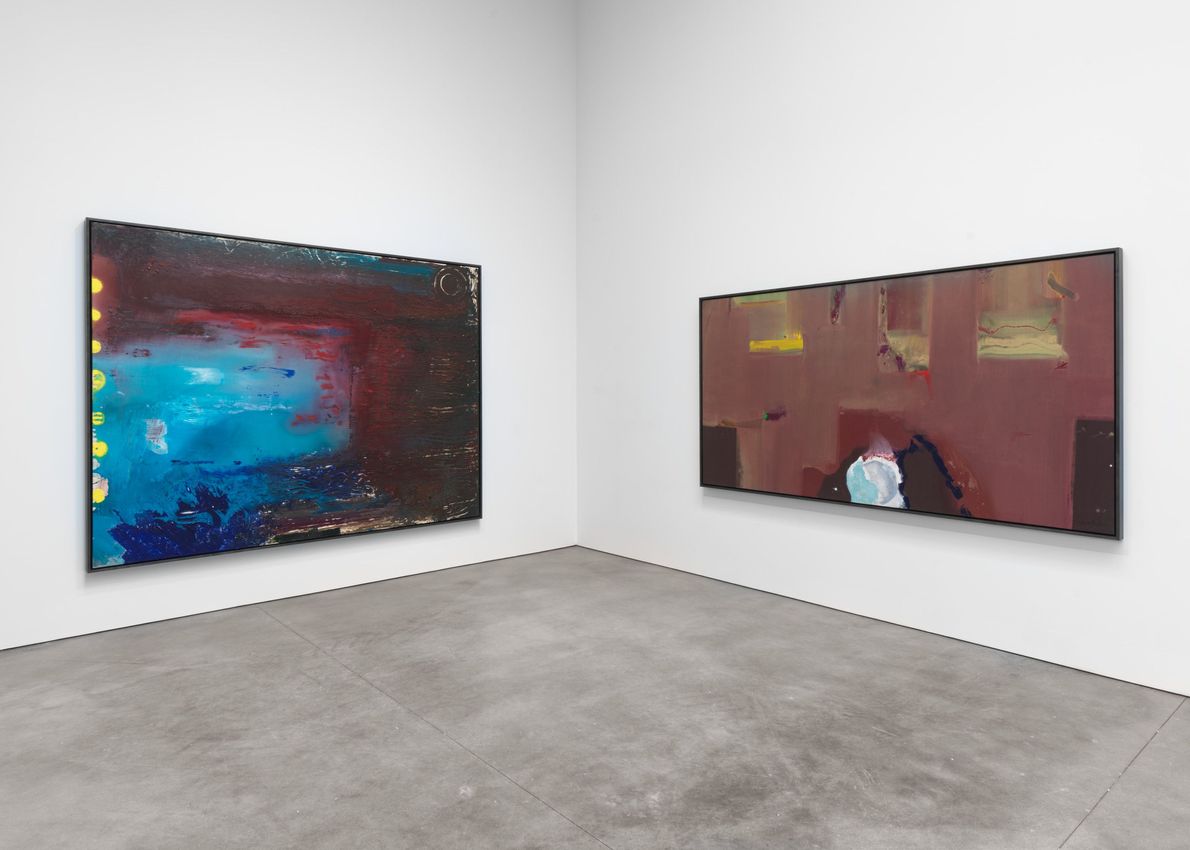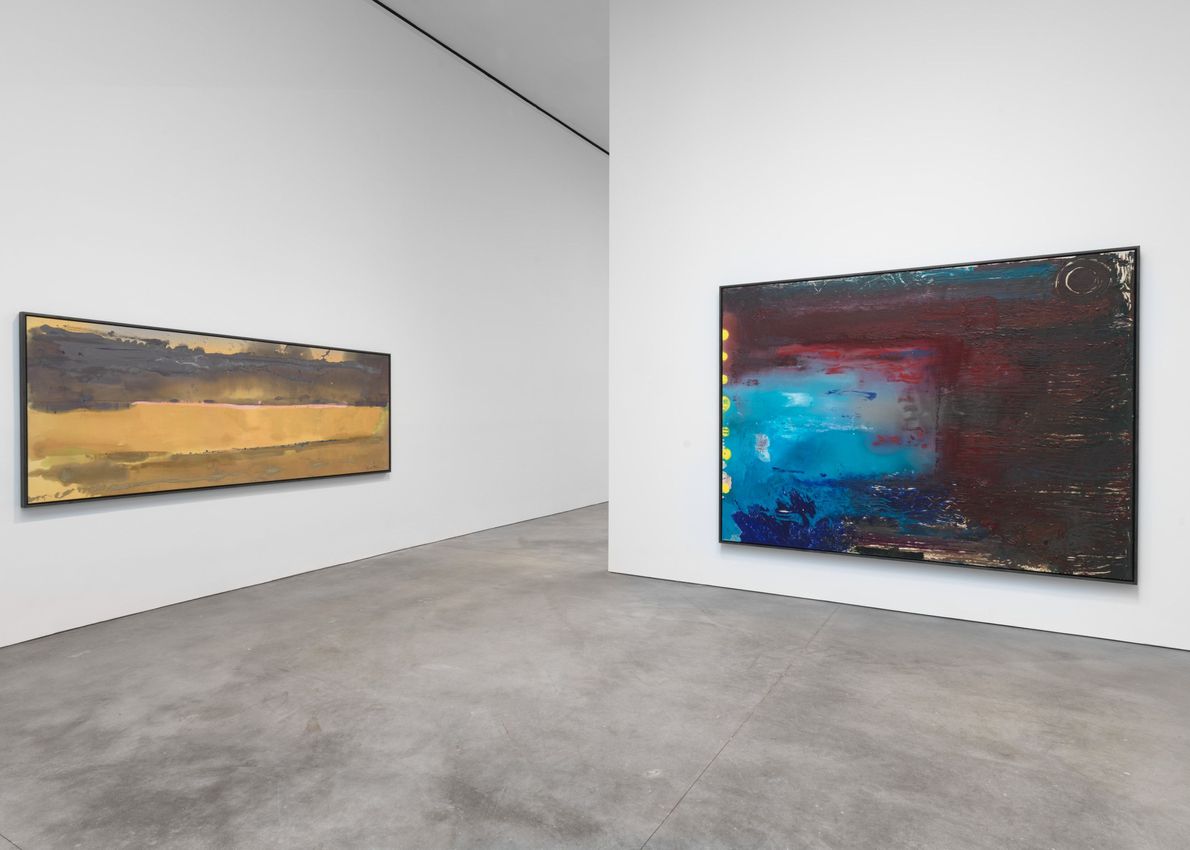
Gagosian is pleased to announce Helen Frankenthaler: The Moment and the Distance, an exhibition organized in collaboration with the Helen Frankenthaler Foundation.
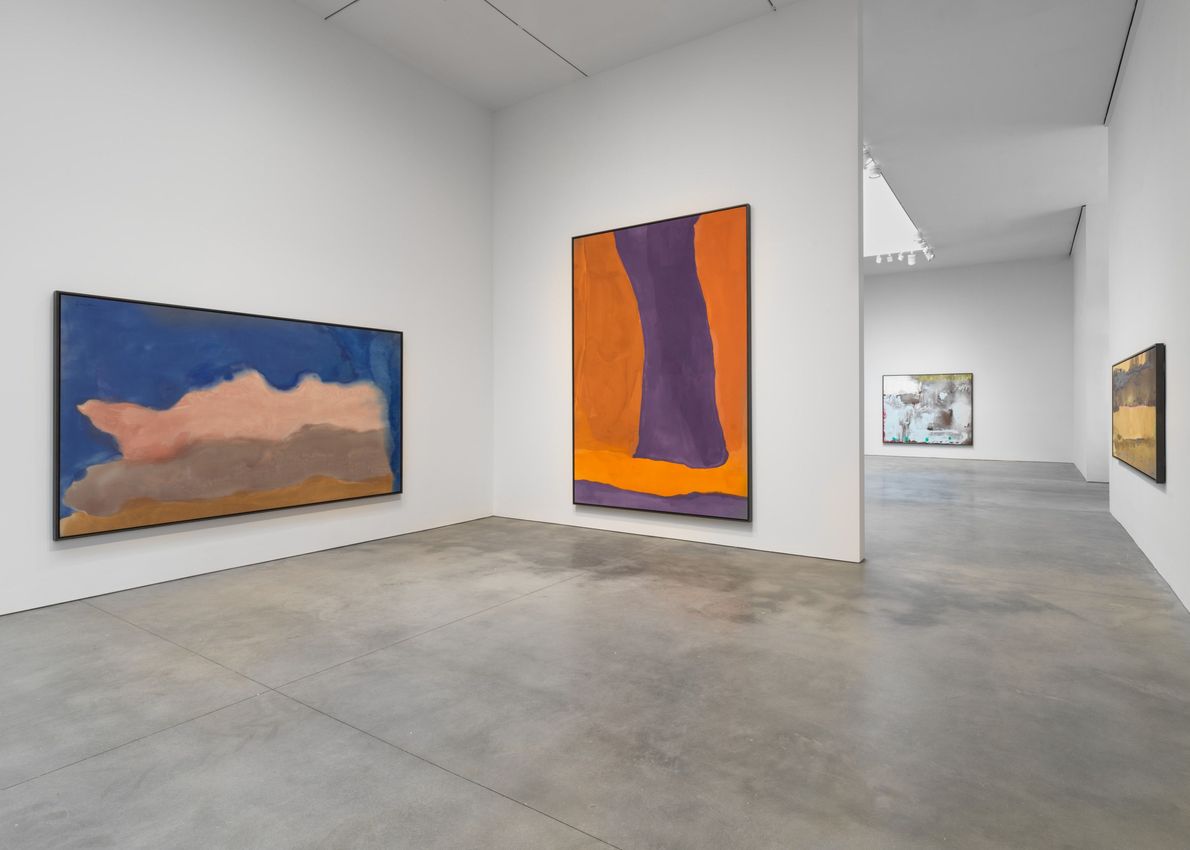
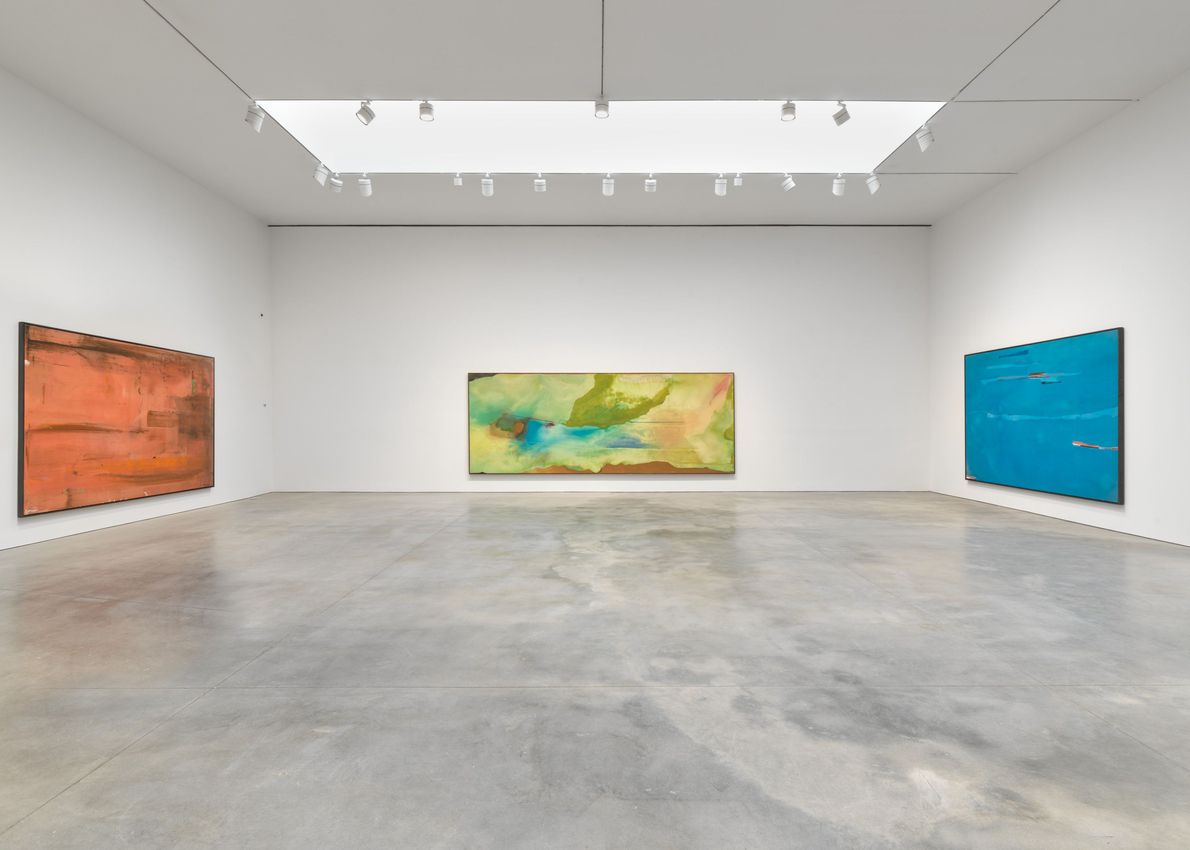
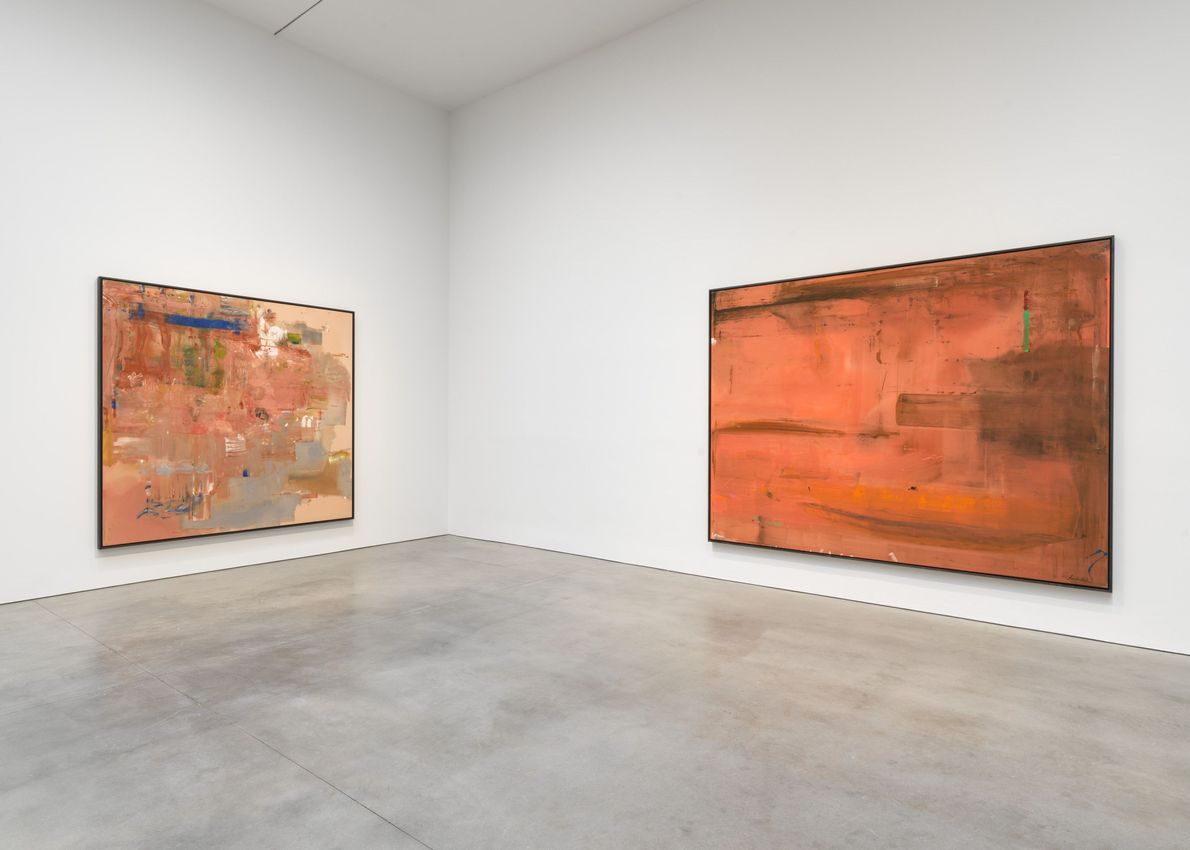
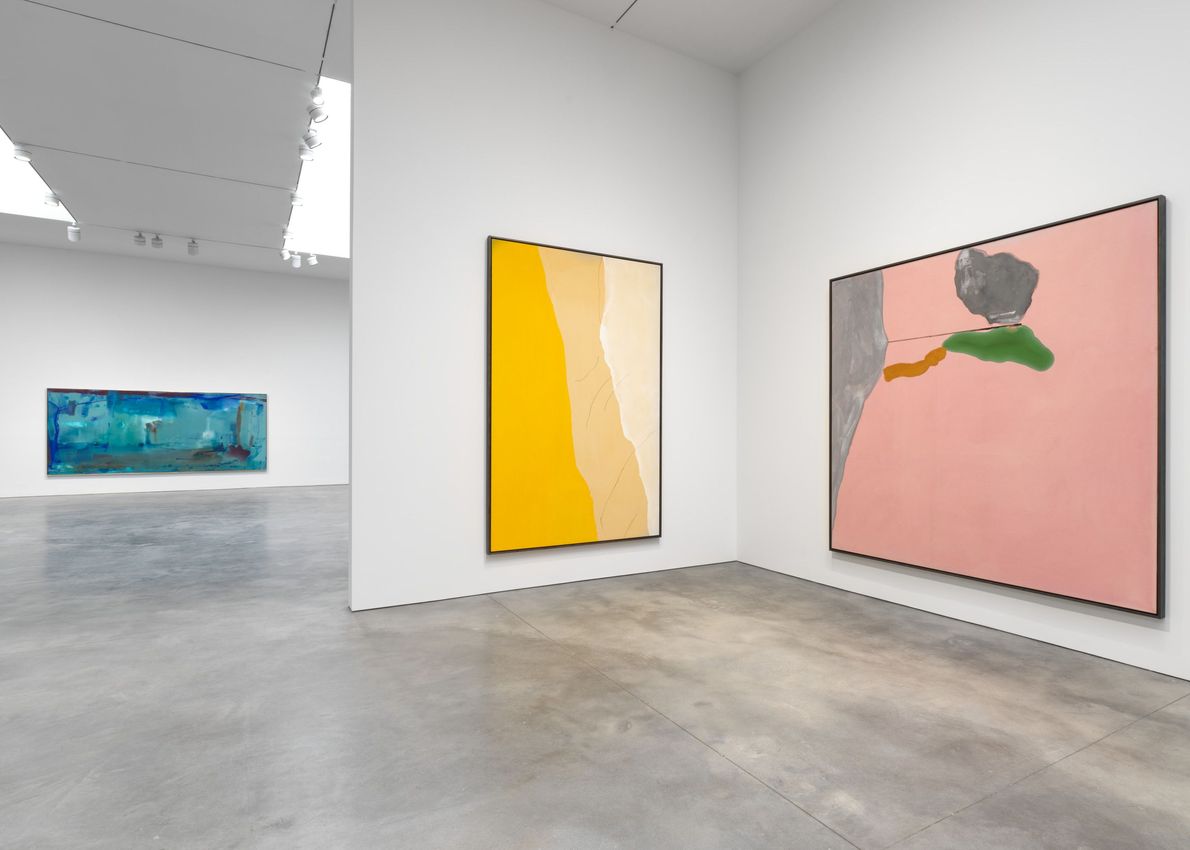
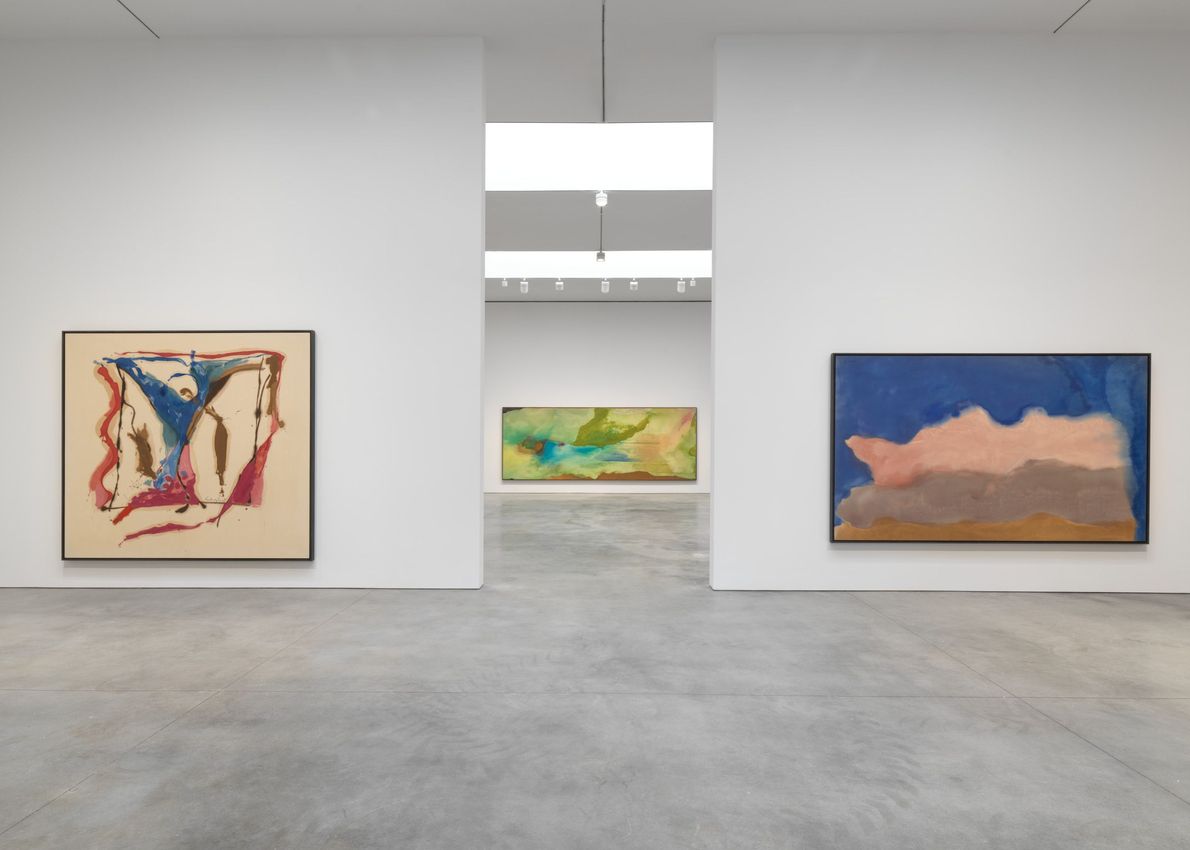
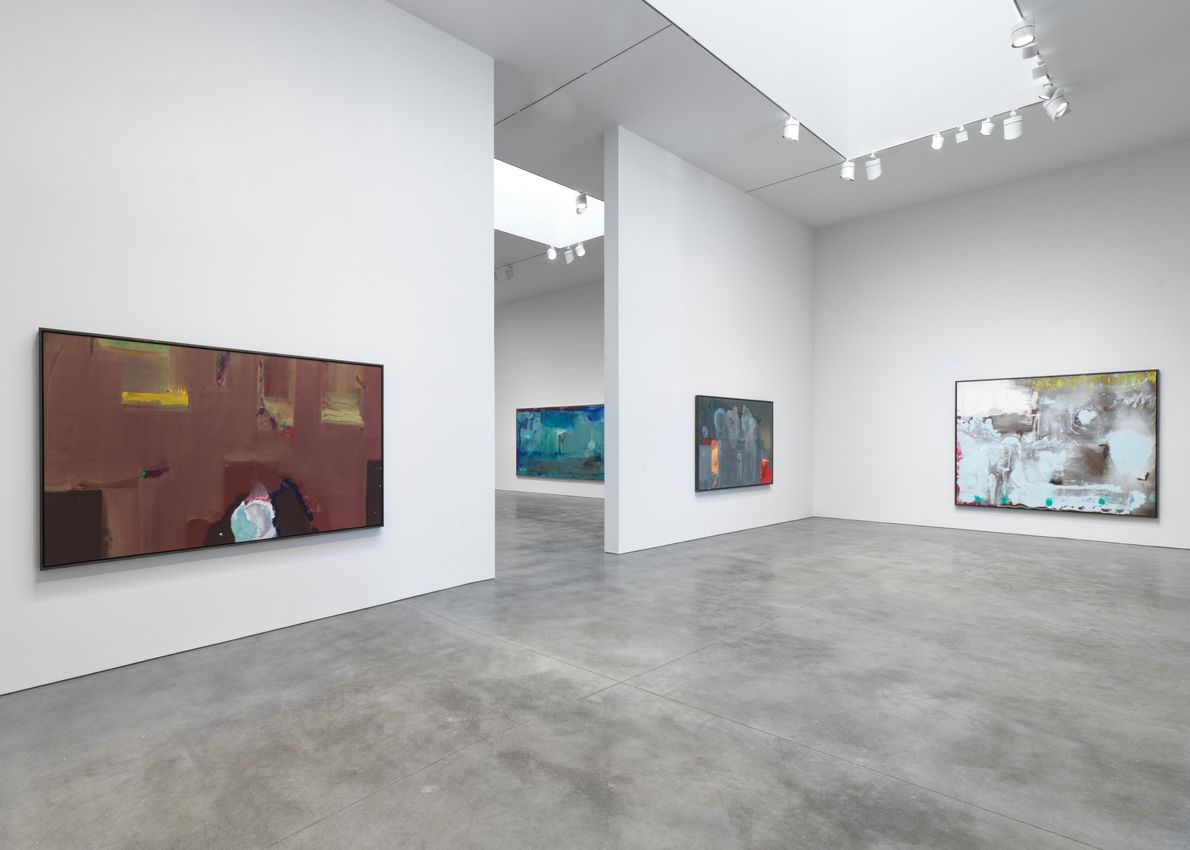
Surveying four decades of paintings from 1960 to 1992, the exhibition features more than twenty of Frankenthaler’s largest, most ambitious works. Arranged by decade, these canvases—with their monumental scale, sensuous color, and innovative compositions—offer new perspectives on the artist’s continual reinvention of her practice.
The exhibition’s title is derived from an incisive 1975 essay by Barbara Guest, a poet and friend of the artist, who wrote: “She has rewarded us with the astonishing combination of freedom with restraint, extravagance with discipline, suggestion and definition. The moment becomes the distance.” Embodying Frankenthaler’s exploratory, lyrical approach to abstraction, the canvases on view benefit from an expansive scale that enhances the exceptional visual impact of their brilliant colors and varied gestures.
Created with diluted oil paint applied directly to untreated canvas, Provincetown I (1961) features compelling contrasts between line and color, bound and unbound form. In the late 1960s and 1970s, following her move from oil to acrylic paint, Frankenthaler shifted to composing with large, flat slabs of color. Mornings (1971) is distinguished by flowing descents of yellow, buff, and white tones interrupted by linear filaments drawn with black marker, which is also used in Thanksgiving (1972) to arrange biomorphic shapes in precarious balance.
Throughout her career, Frankenthaler engaged in a conversation with the history of art. Auguste (1977) was inspired by Auguste Renoir, reconfiguring the Impressionist’s fleshy palette and varied application into a field of loosely rectilinear brushstrokes. Allusions to landscape are also a constant in Frankenthaler’s oeuvre. Ocean Drive West #1 (1974), titled after the address of her seaside studio at Shippan Point in Stamford, Connecticut, stretches striated bands across a vibrant blue canvas to suggest currents, while the expansive horizontal composition of Shippan October (1981) evokes the seascape of the Long Island Sound in autumnal light.
Frankenthaler once described her painting as “inner amorphous worlds or depths exploding on the surface and in perspective,” channeling the fluidity of pigment that washes over works like A Green Thought in a Green Shade (1981), punctuated by opaque elements in contrasting colors. In Janus (1990), mirrored accumulations of layered gray tones face one another in the center of the work, framed by passages of fiery color and splattered, vaporous textures. Together, these paintings epitomize Frankenthaler’s continuous introduction of new painting techniques and imagery as well as her stalwart commitment to abstraction.
Gagosian is publishing a catalogue to accompany the exhibition. It features the essay “Unborrowed Dreams: Helen Frankenthaler’s Post-Surrealist Spaces” by Ara H. Merjian, which discusses the artist’s uniquely sustained engagement with abstraction and Surrealist methods. The gallery’s tenth solo presentation of Frankenthaler’s work, The Moment and the Distance follows Helen Frankenthaler: A Grand Sweep at the Museum of Modern Art, New York (on view through February 8, 2026) and coincides with Helen Frankenthaler at Kunstmuseum Basel (April 18–August 23, 2026), which will be the largest exhibition of her art to date in Europe


Helen Frankenthaler (1928–2011), whose career spanned six decades, has long been recognised as one of the great American artists of the twentieth century. Heir of first-generation Abstract Expressionism, she brought together in her work—with prodigious inventiveness and singular beauty—a conception of the canvas as both a formalised field and an arena for gestural drawing. She was eminent among the second generation of postwar American abstract painters and is widely credited for playing a pivotal role in the transition from Abstract Expressionism to Colour Field painting. One of the foremost colourists of our time, she produced a body of work whose impact on contemporary art has been profound.


A respected voice in contemporary art discourse.
Focusing on ambitious storytelling and insightful art-world commentary. Ocula Magazine publishes in-depth interviews, critical essays and timely analysis on the artists, exhibitions and ideas driving the global art world.
Learn more about Ocula Magazine
Showcasing the best of the art world.
Ocula partners with galleries from around the world to highlight their artists, artworks and exhibitions. Gallery membership is by application and invitation, with each member vetted by an independent panel.
Learn more about Ocula Membership

Specialises in the sale of major artworks.
Led by a team with deep ties to the world’s leading auction houses, galleries and collectors. Ocula’s advisory team offers bespoke services to high-net-worth clients from around the world who are looking to acquire the best of contemporary and modern art.
Learn more about our team and services