





TETSUYA ISHIDA
1973-2005, JapanBorn in 1973, Shizuoka Japan, Tetsuya Ishida was a promising young artist living and working in Tokyo until he passed away in 2005.
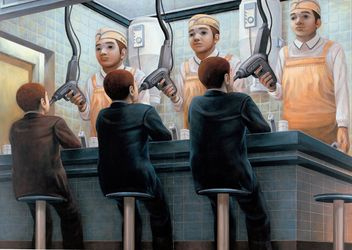
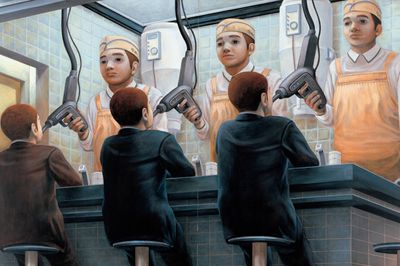
In most of his works, strains of the Japanese society came up as the result of its economical and technological growth in the 80s and its deep economical depression in the 90s are implied as a main theme. Instead of portraying these issues in an offensive manner, the artist uses himself as a motif to show his personal sympathy to the people in struggle.
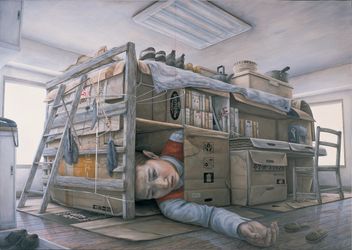
Ishida had a usual childhood and was a perfectly adjusted student. However, during high school, his anxieties towards Japanese society and educational system developed. He found it to be an authoritarian and oppressive system as it’s shown in Prisoner (1999) that depicts this period in his life. In this painting, a man’s body is stuck in a school building with no energy to move or even think.
The sarin gas attack that took place at a subway station in Tokyo in 1995 gravely affected the artist and he even mentions it in his journal: ‘One characteristic of Japanese psychology is the idea that all the Japanese people understand each other’, meaning that all Japanese are expected to think in the same way which may be the cause of an oppressive system. Ishida describes the perpetrator of this crime as: ‘A Japanese who was not in sync with everyone else.’ Ishida shows his sympathy towards individuals who have isolated themselves because of the pressures of society, as he feels the same.
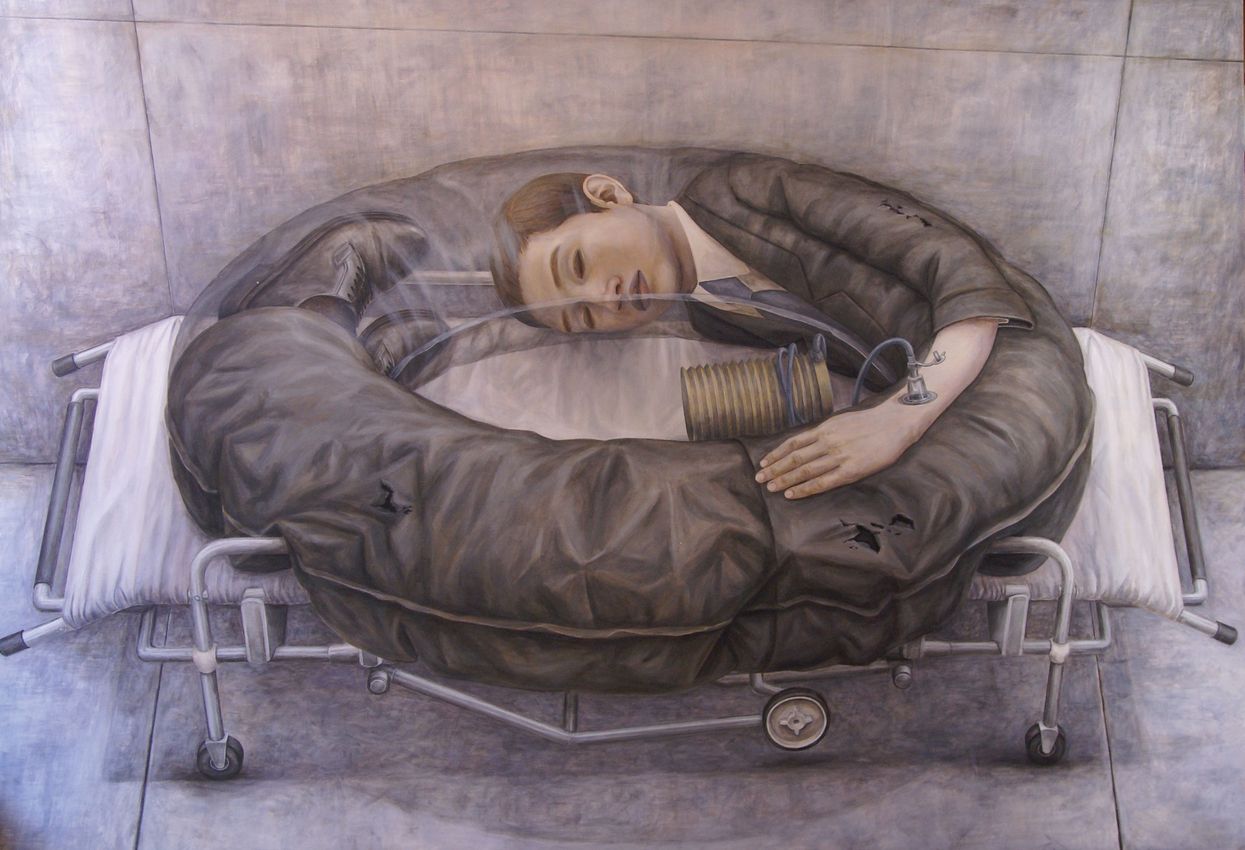
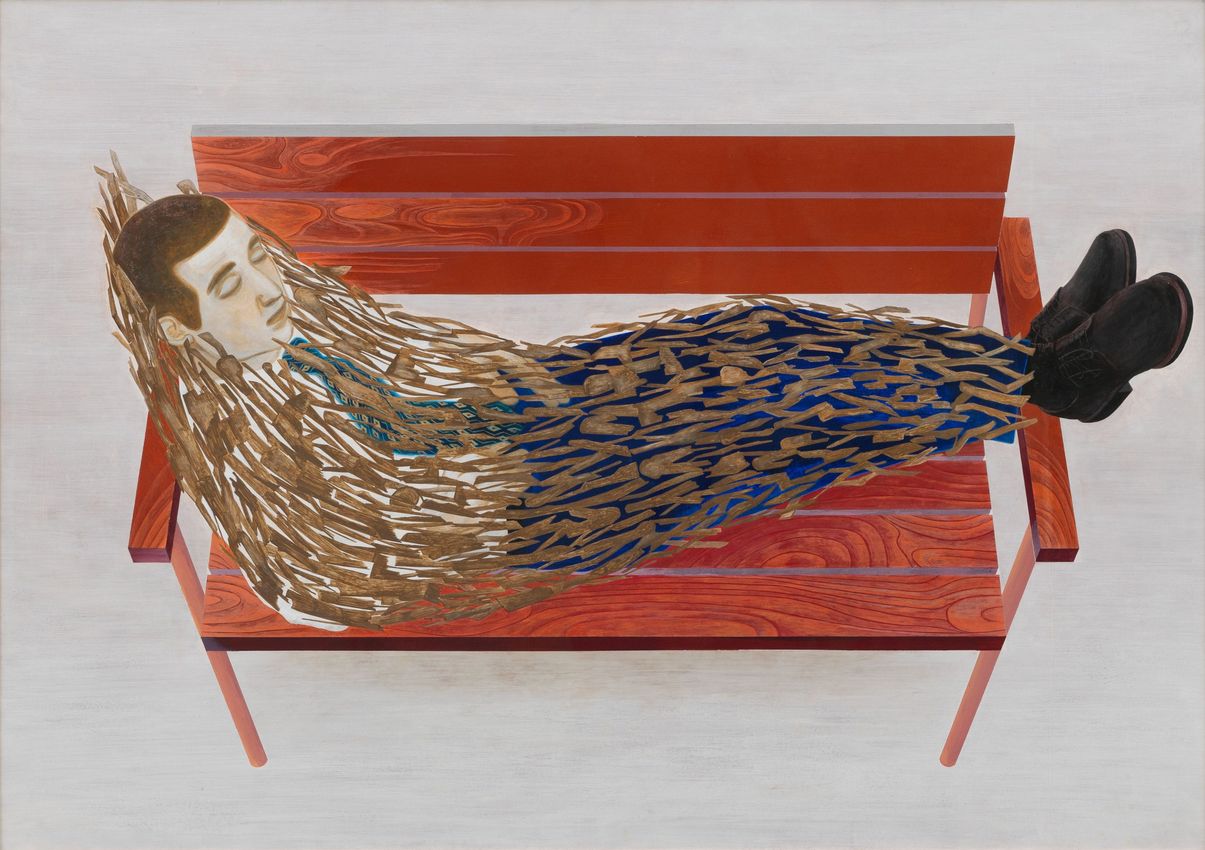
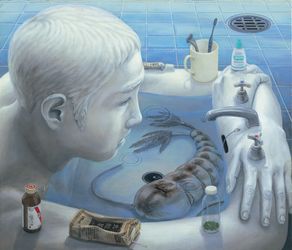
In Rehabilitation (2003), Ishida paints himself upside down resembling a cocoon hanging from a tree branch. In this painting, the outdoors are brought indoors, a recurring feature of his work. His head is metamorphosed with a wheel on his paintings. Ishida frequently merged his figure with mundane objects such as hangers, microscopes, backpacks and lavatories. Holes on his body give the impression of hollowness. He seems to depict a state of mind, the emptiness of his brain. He is asleep as if to recharge his energy, hence the IV drip attached to his body.
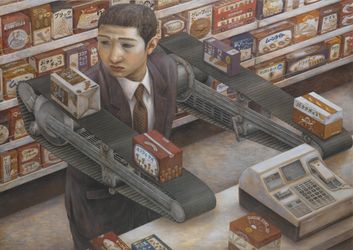
Baggage (1998) portrays bodies of identical men in the shape of boxes. Again, Ishida uses himself as a motif. Ishida objectifies human beings, getting out of a train. Humans are treated as cargos. The artist is depicting the daily life in the big Japanese cities, where the contemporary men have no space to develop their own individuality.

Representative Artworks
View story
View story
View story
View story
View story

View story



Explore and Follow Artists Shaping Contemporary Art
A respected voice in contemporary art discourse.
Focusing on ambitious storytelling and insightful art-world commentary. Ocula Magazine publishes in-depth interviews, critical essays and timely analysis on the artists, exhibitions and ideas driving the global art world.
Learn more about Ocula Magazine
Showcasing the best of the art world.
Ocula partners with galleries from around the world to highlight their artists, artworks and exhibitions. Gallery membership is by application and invitation, with each member vetted by an independent panel.
Learn more about Ocula Membership
Specialises in the sale of major artworks.
Led by a team with deep ties to the world’s leading auction houses, galleries and collectors. Ocula’s advisory team offers bespoke services to high-net-worth clients from around the world who are looking to acquire the best of contemporary and modern art.
Learn more about our team and services