Press Release

Gladstone presents Innervisions, an exhibition of new paintings by Celia Paul in New York, marking her first show with the gallery.

For decades, Paul has lived and worked in the same top - floor London flat, spare, paint - scented, and lit by a steady window, where the British Museum sits almost at eye level and the distant BT Tower blinks across the city like a slow pulse. The studio is not a backdrop so much as an instrument: it holds time, and it concentrates attention.

Paul was born in India in JKLK and later moved to England; these biographical details matter , but only because it helps explain her recurring preoccupation with interior life — what it means to belong to a place, and what it means to remain slightly outside it. She studied at the Slade School of Fine Art in London where she encountered Lucian Freud, a visiting tutor, and entered a relationship that would mark her life and, in complicated ways, the public reading of her art. Yet the essential fact is simpler than any biography: she persisted as a painter, patiently, daily, working in a medium that rewards slowness and refuses easy noise.

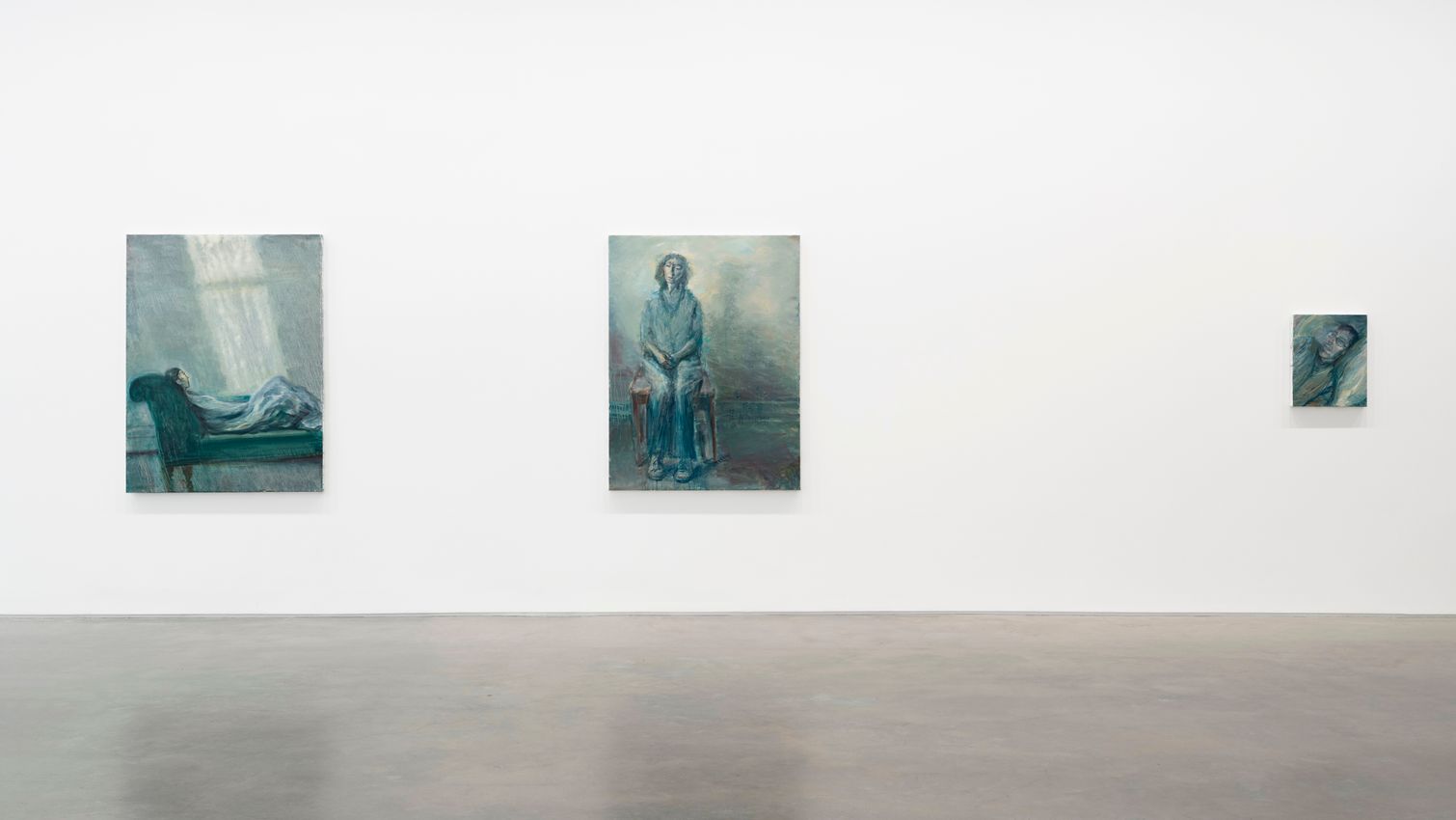
Celia Paul paints as if she were listening for something that can’t be said any other way: a hush behind conversation, a pressure of feeling that gathers in a room long after the people have gone. She depicts herself, her mother, and her sisters not merely as motifs, but as relationships shaped by years, grief, and the ordinary weather of family life. These same qualities have been named as “intimacy and inwardness,” and those words fit: Paul’s paintings often feel like private weather made visible, not spectacle offered up for applause.

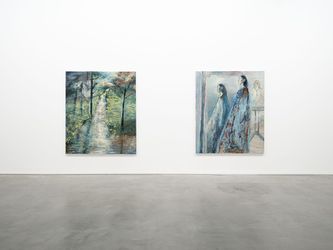
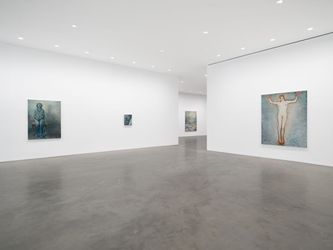
The look of the paintings — often pared down, with large quiet fields and figures that seem to emerge out of air — can be mistaken for simplicity. But the austerity is a discipline. Paul’s portraits do not perform charisma; they seem to insist that the human face and posture are already dramatic enough. Her figures tend to sit, stand, or recline with a kind of unshowy gravity. The paintings don’t so much describe a person as hold them in time, allowing the viewer to register how expression can be made from stillness.

Alongside the portraits, there is the sea. In a painter so devoted to rooms and bodies, the sea can read as counterpoint: an expanse that refuses enclosure, a surface that is always changing even when it looks calm. The framing of “the sea” as one of Paul’s central themes suggests it isn’t merely scenery; it is a way of thinking in paint about distance, return, and what cannot be possessed.

What is striking, especially in light of how often women artists are cast as satellites, is how Paul’s work steadily reclaims authorship. She has made paintings that engage with the legacy of Freud and his circle, but from her own vantage point, refusing to be fixed forever as someone else’s subject.

Read More

Installation Views

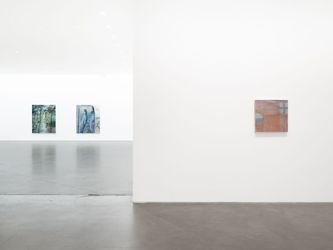
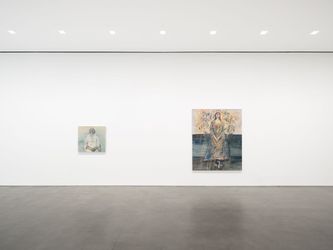
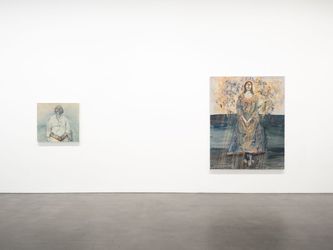
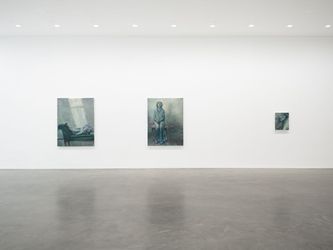
Exhibition view: Celia Paul, Innervisions, Gladstone, New York (28 April–13 June 2026). © Celia Paul. Courtesy the artist and Gladstone. Photo: Anthony Flores.
About the Artist

British artist Celia Paul’s portraits and paintings are known for their intensity, while at the same time emitting melancholy and a sense of introspection.

View Artist Profile

Also Exhibiting

About the Gallery

Gladstone is known for its commitment to artists whose prescient approaches and experimental practices have defined the contours of contemporary art. The gallery has long been an active partner in the cultivation of iconoclastic careers, fostering a roster of artists recognied for their ground-breaking contributions. Headquartered in New York and including outposts in both Brussels and Seoul, Gladstone’s impact extends globally, enabling both the presentation of new bodies of work, and an amplification of the international reach of its artists. Alongside its work with contemporary artists, the gallery is steward to the legacies of pivotal historical artists and serves as an advocate for the enduring power of art. Gladstone is led by a team of partners who spearhead its long-term vision and program, building on the values of its founder Barbara Gladstone.

View Gallery Profile
Address
515 West 24th Street
New York
United States
Opening Hours
Tuesday - Saturday
10am - 6pm
(1)
New York 515 West 24th Street
Gladstone
515 West 24th Street, New York, United States
+1 212 206 9300
http://gladstonegallery.com

Opening hours
Tuesday - Saturday
10am - 6pm
The art world in focus