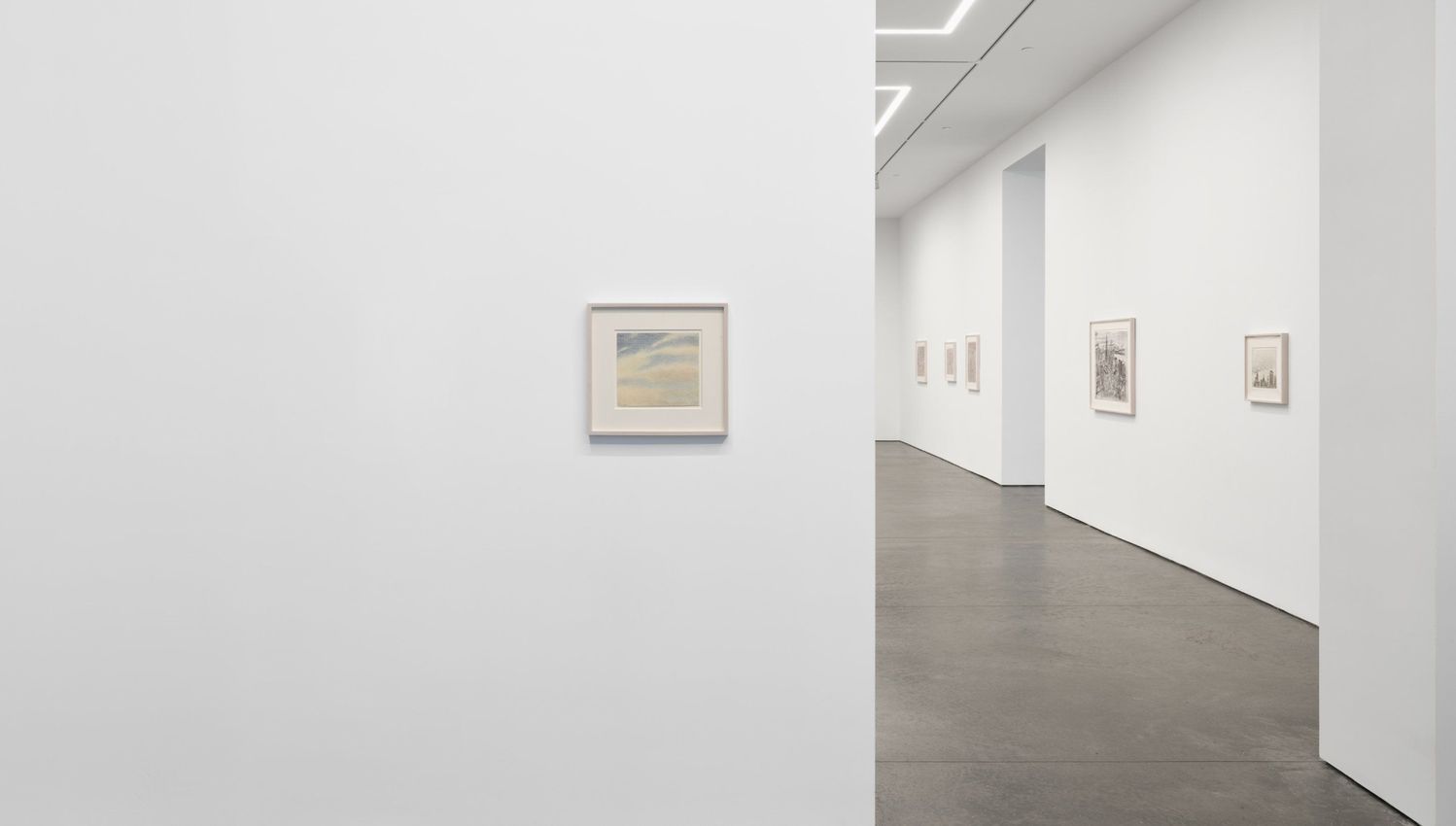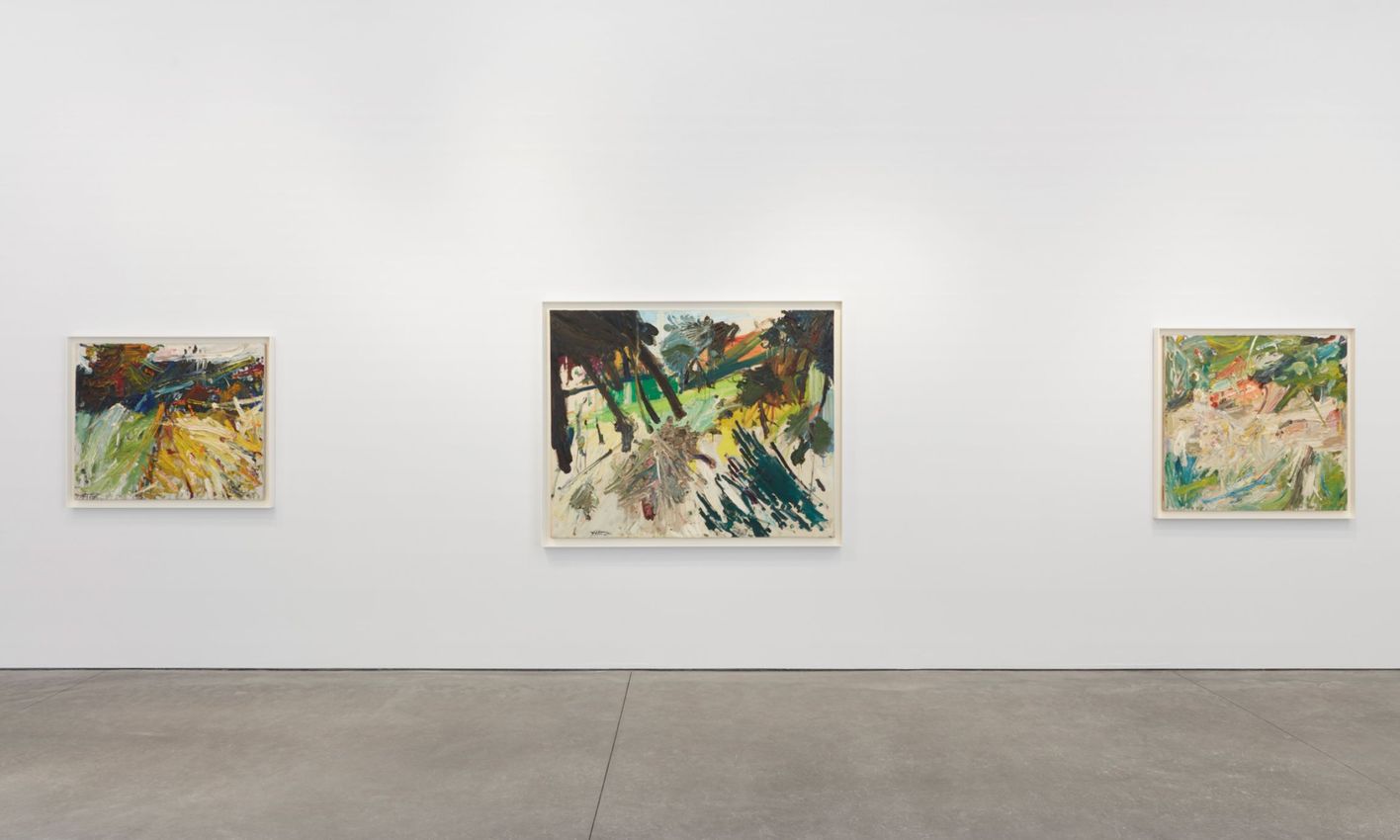
Karma inaugurates its new exhibition space in Chelsea at 549 West 26th Street with Landscapes, a survey of paintings by first-generation New York School painter and poet Manoucher Yektai, open from September 12 through November 9, 2024.
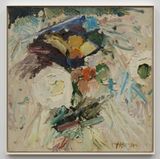
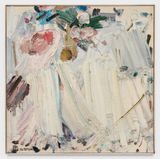
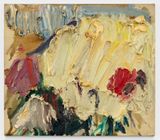
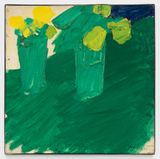
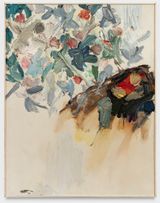
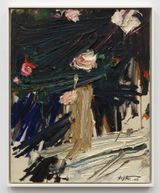
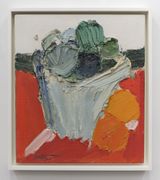
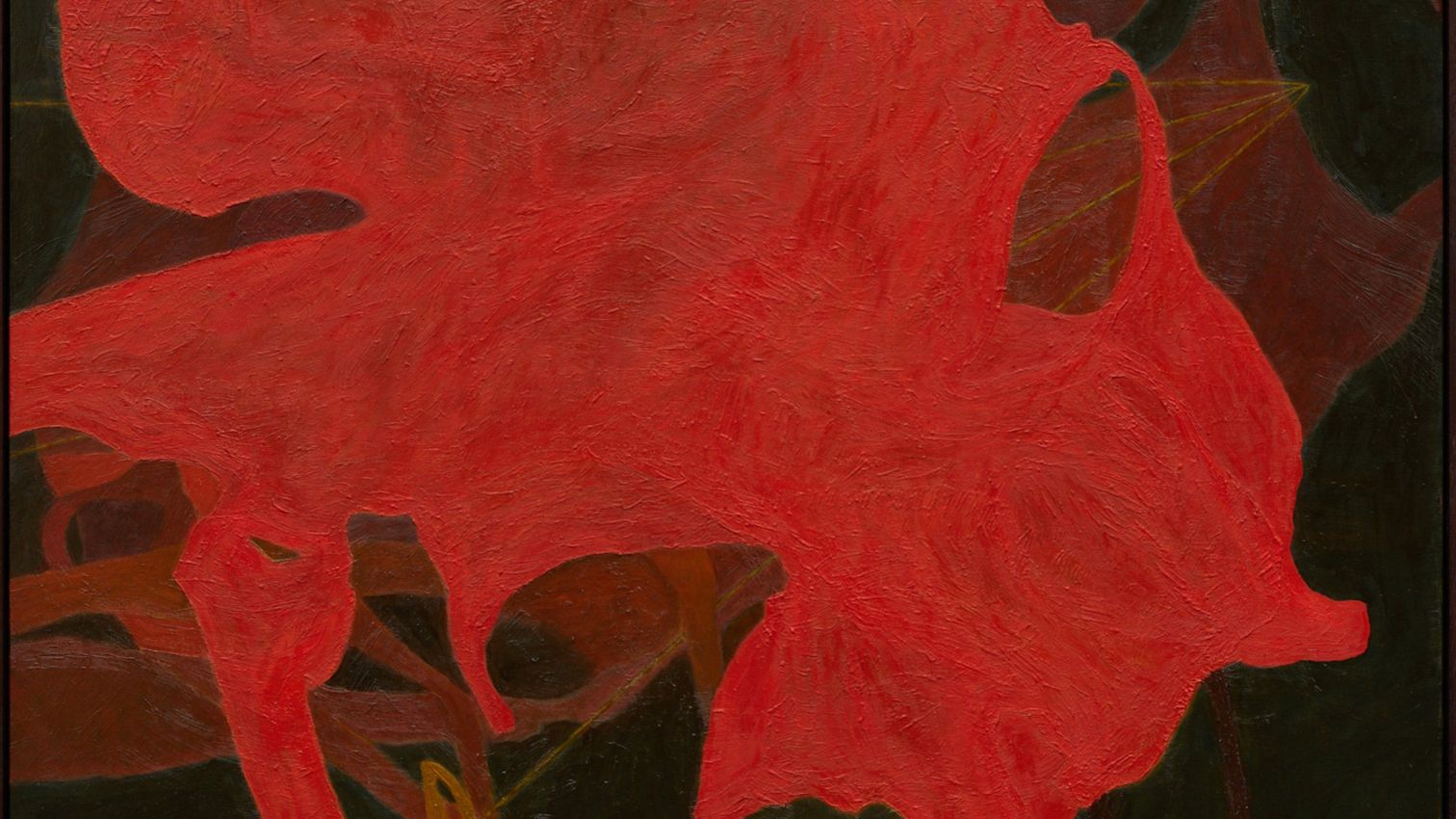
This exhibition—the first to focus exclusively on Yektai’s landscapes—offers a selection of paintings made between 1957 and ‘92. Executed to varying degrees of abstraction, these works are emblematic of a perspective on art born of his positions as at once American citizen and Iranian expat, Abstract Expressionist innovator and classicist, painter and poet, insider and outsider. By painting both improvisationally and from memory, Yektai, as art historian and curator Suzanne Hudson argues in the show’s catalogue, was able to ‘produce rather than illustrate landscape.’ With its modern origins in sixteenth-century Dutch painting, landscape traditionally presupposes a faithful recreation of place. Yektai’s, however, upend both genre painting and modernist abstraction. The perspective they offer complicates inherited histories of the New York School, expanding our understanding of the Abstract Expressionist canon.
Born in Tehran in 1921, Yektai was part of the founding cohort of students at the city’s Fine Art Academy, a group that would constitute the country’s first artistic avant-garde. His education there emphasised both academic realism and the innovations of Impressionism, celebrating France as the birthplace of modern painting and inspiring the artist to make his way to Paris to continue his studies. When he arrived at the École des Beaux-Arts in 1946—only after traveling nearly around the globe and spending a year in New York to wait out World War II—he found the city’s art scene stale. A year later, he was back in Manhattan making nonrepresentational paintings, seduced by the possibilities of the burgeoning Abstract Expressionist movement. Inspired by Jackson Pollock’s technique of dripping paint onto a canvas laid flat on the floor, Yektai abandoned his brush in favour of nontraditional implements including spatulas, pieces of wood, palette knives, and even a whip. By the mid-1950s, he had established the signature elements that would define his paintings until his death in 2019: sculptural impasto, lush colours, and the use of the language of abstraction to break open traditional genres like landscape, portraiture, and the still life.
The earliest works on view, from 1957, illustrate the unique approach Yektai developed during that pivotal first decade in New York by synthesising diverse influences from the United States, France, and Iran. These paintings—of country roads, barns, lakes, and other sights redolent of his weekends escaping the city for the Catskills, Vermont, or the East End of Long Island, where he would spend time with Milton Avery, Clement Greenberg, Jane Freilicher, and many other New York School luminaries—are among the most straightforwardly representational in his oeuvre. Yet they retain the gestural mark, the surface ‘action’ theorised by critic and friend Harold Rosenberg five years earlier, writing that the canvas of this era was increasingly viewed ‘as an arena in which to act—rather than as a space in which to reproduce, re-design, analyse, or ‘express’ an object, actual or imagined.’ In Vermont Landscape #4 (1957), Yektai tilts the picture plane up, pushing the background forward. This flattening of space evokes both the Post-Impressionist landscapes of Paul Cézanne, a favourite of Yektai’s, and the destabilised perspectival hierarchies characteristic of Persian miniature painting, which he would later claim as a key part of his legacy, citing artists like Reza Abbasi, Kamāl ud-Dīn Behzād, and Sulṭān Muḥammad as influences. It is a testament to the internationalism of New York that Yektai saw his first Persian miniature at the Museum of Modern Art, more than six thousand miles from his birthplace. His synthesis of these diverse approaches to transforming pictorial space widened the scope of Abstract Expressionism from the outside in.
The following year, Yektai pushed his landscapes further toward the brink of dissolution, showing paintings from his Positano and 95th Street series at his second solo exhibition with Poindexter, a tony Upper East Side gallery that also represented Willem De Kooning, Franz Kline, and Richard Diebenkorn. The Positano paintings transform the sea, sand, and greenery of the Italian art colony, where Yektai spent the summer of 1958, into rapid vertical strokes and thick daubs of oil. By this point, he had returned to the brush as his tool of choice, reconnecting his work more strongly to the painting tradition Pollock’s ascension supplanted, but he continued to paint on the floor, straddling his canvases as he worked. The marks in Landscape of Italy (1959) swoop upwards forcefully from the bottom edge of the painting, disrupted by bursts of colour that suggest wildflowers. Like Joan Mitchell—another first generation Abstract Expressionist relegated for years to the so-called ‘second generation,’ which uncoincidentally consists largely of women and people of colour—Yektai here treats nature as impetus for outbursts of painterly bravura rather than stable subject. Here and in his other early landscapes, the artist retains a reference—if fleeting and expressionistic—to the external world, anchoring his work to the long history of the genre.
The bustling urban environment of New York also served as a jumping-off point for Yektai’s abstracted landscapes. In works such as 95th Street Landscape (1958), he channeled the energy of the street as seen from the window of his Upper East Side studio into long strokes with upward momentum, like inverted rain or speeding cars captured in long exposure. Poet-critic James Schuyler noted how in these works ‘nothing is literally described but all is there: openness, greenness, the pink and wrecked look of New York.’ To deem the city a landscape is to find something natural in a constructed environment; to capture it as such necessitates finding a way of representing its constant change in a single image. With his furious mark-making against exposed white canvas, Yektai enacts vitality—not only his own, but that of his adopted hometown.
Compared to the 95th Street paintings, Yektai’s later landscapes are pared-back and almost meditative. As he grew older, the artist spent increasing spans of time out on Long Island, painting in his barn in Bridgehampton. Created the year after he published his epic, Persian-language poem Falgoosh, Untitled (1971) is spare and nearly monochromatic. A lone tree punctuates an off-white hill flanked by a road, a common structuring device in Yektai’s landscapes. The white of the foreground is warmer than the neutral, empty canvas that peeks out from behind it and constitutes the whole of the open sky; it could be one of Iran’s deserts or the Long Island dunes, which served as inspiration to numerous other members of the New York School who found solace out east. Around this time, Yektai returned to the palette knife, carving and smearing his oils into textural ridges. In Untitled (1985), the off-white of the 1970s again dominates the scene, here subtly marbled with blue, purple, and viridian. His paint is furrowed and piled up like frosting; white crests top the bright-blue water that draws the eye to the right side of the canvas. Far beyond the scope of Abstract Expressionism, his inspired manipulation of paint into three-dimensional, sculptural reliefs remains a testament to Yektai’s legacy as a true innovator within the medium.
Manoucher Yektai (b. 1921, Tehran, Iran; d. 2019, New York, NY) was a Persian-American artist of the New York School whose painterly impasto works capture still lifes, portraits, and color fields with equal expressiveness. His intense, lyrical pieces maneuver between naturalism and abstraction. Yektai worked on his paintings from the floor, a feature that contributed to their visual dynamism and channeled a mid-century sense of artistic freedom.


A respected voice in contemporary art discourse.
Focusing on ambitious storytelling and insightful art-world commentary. Ocula Magazine publishes in-depth interviews, critical essays and timely analysis on the artists, exhibitions and ideas driving the global art world.
Learn more about Ocula Magazine
Showcasing the best of the art world.
Ocula partners with galleries from around the world to highlight their artists, artworks and exhibitions. Gallery membership is by application and invitation, with each member vetted by an independent panel.
Learn more about Ocula Membership

Specialises in the sale of major artworks.
Led by a team with deep ties to the world’s leading auction houses, galleries and collectors. Ocula’s advisory team offers bespoke services to high-net-worth clients from around the world who are looking to acquire the best of contemporary and modern art.
Learn more about our team and services