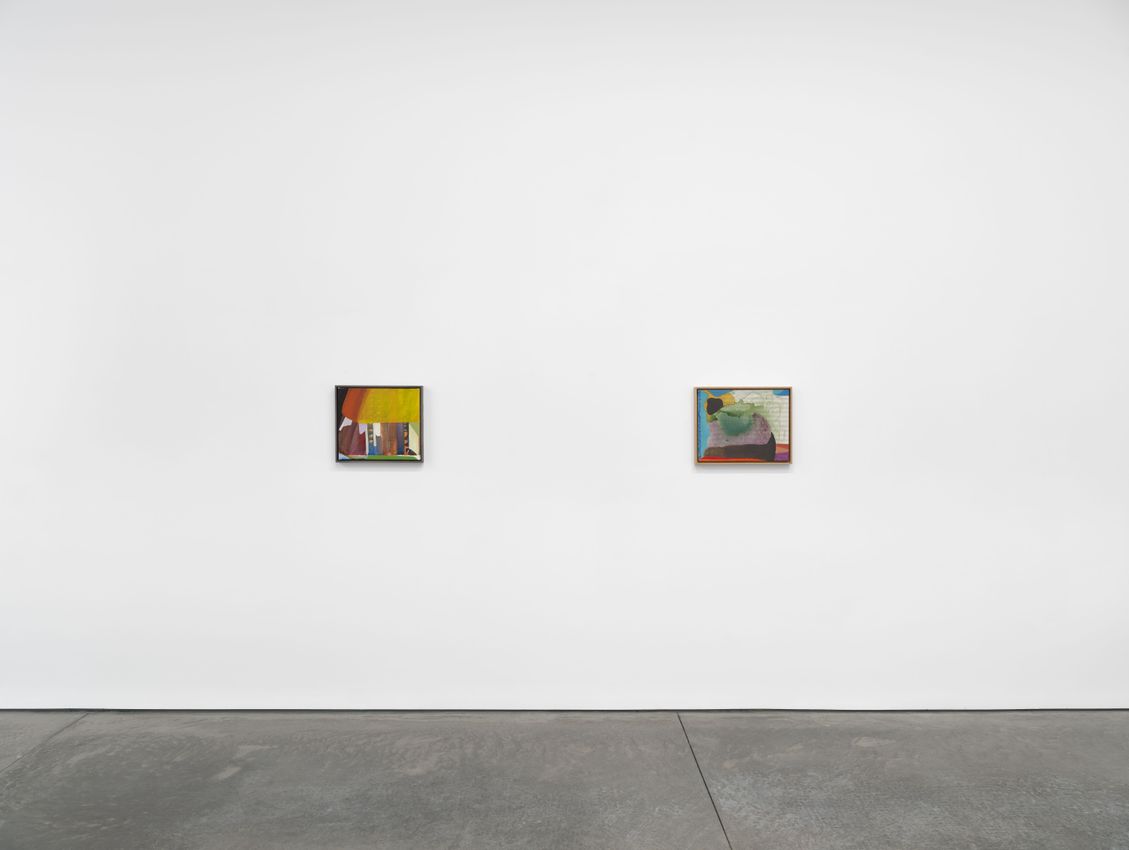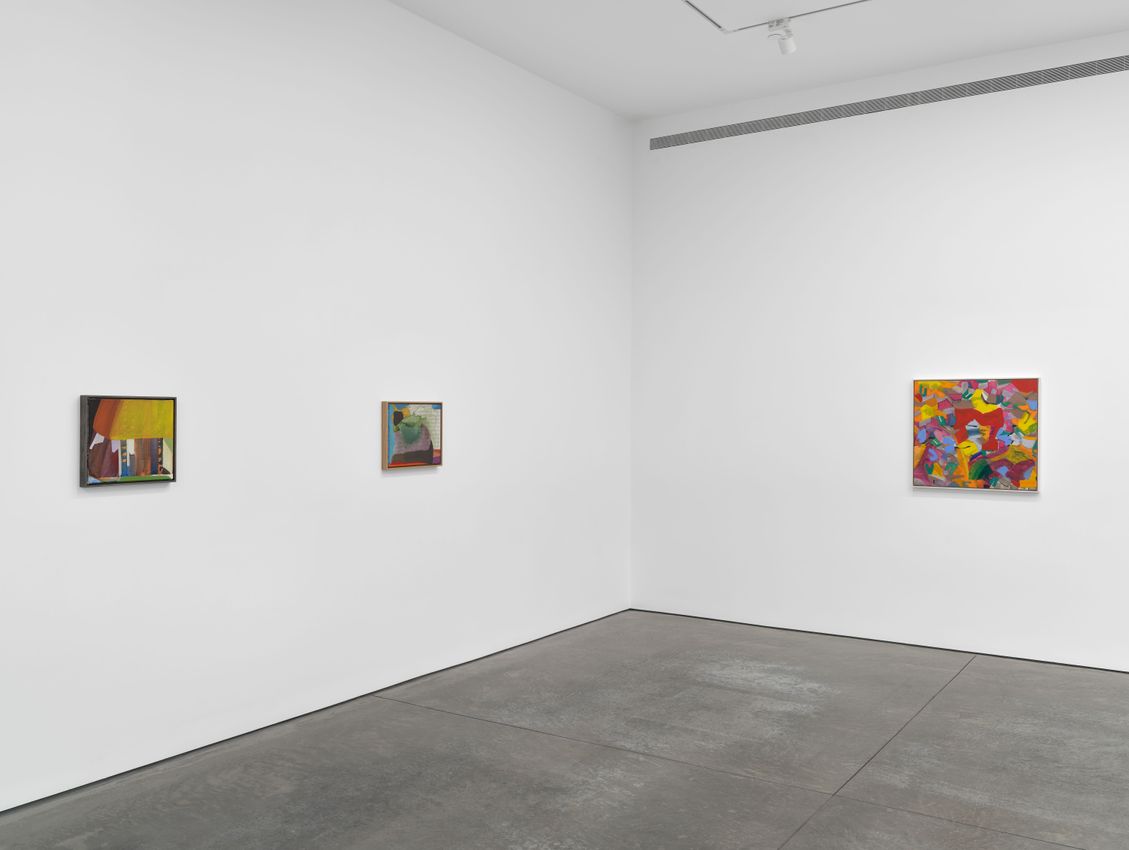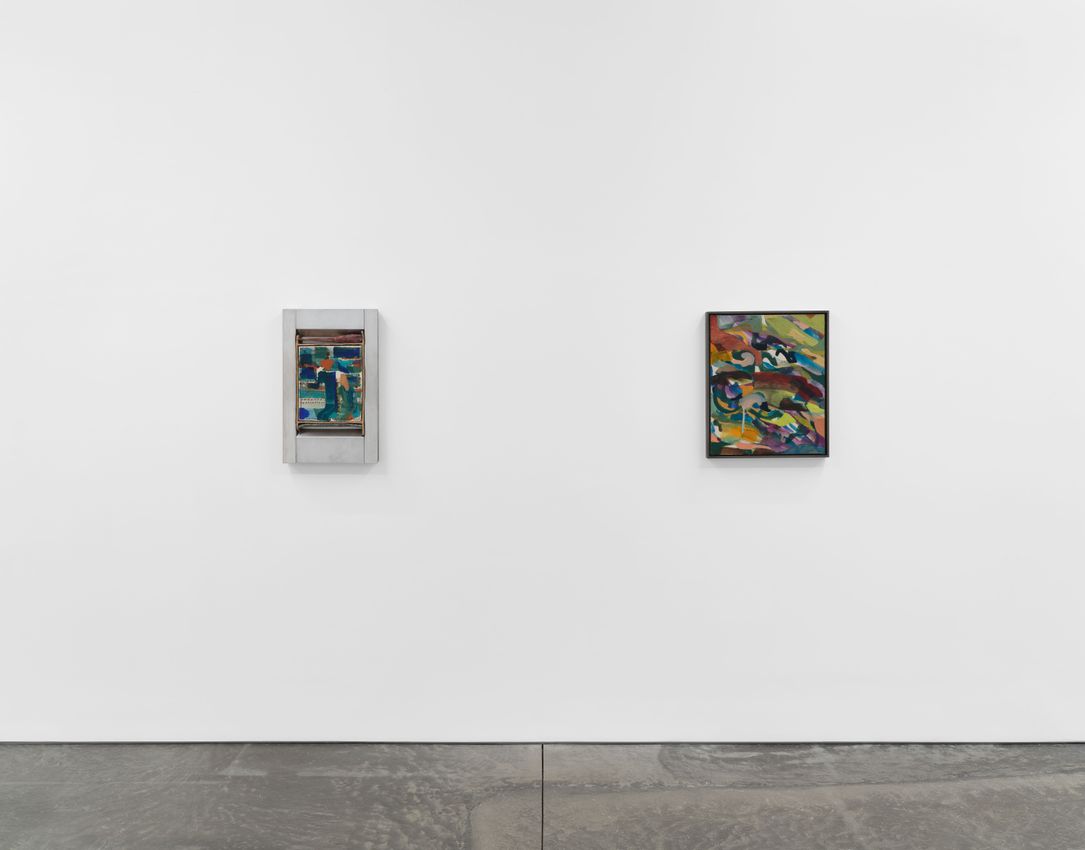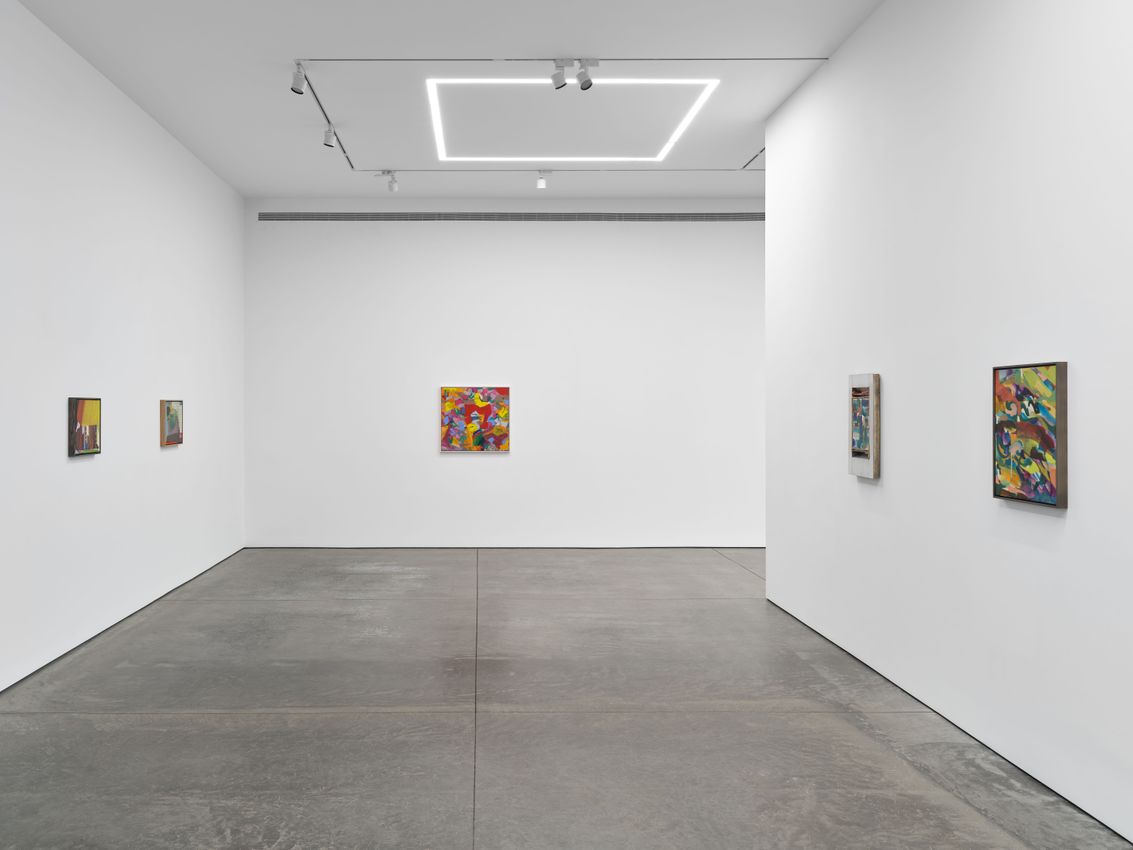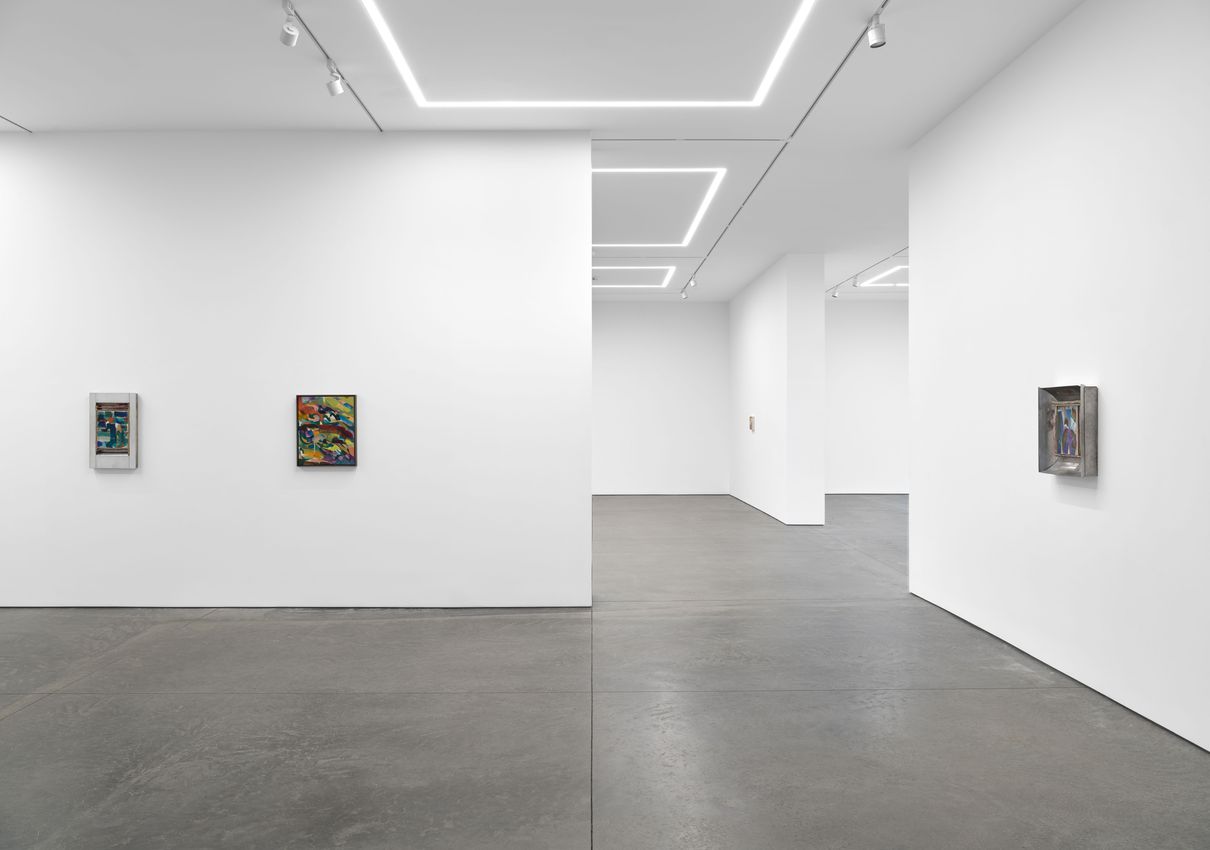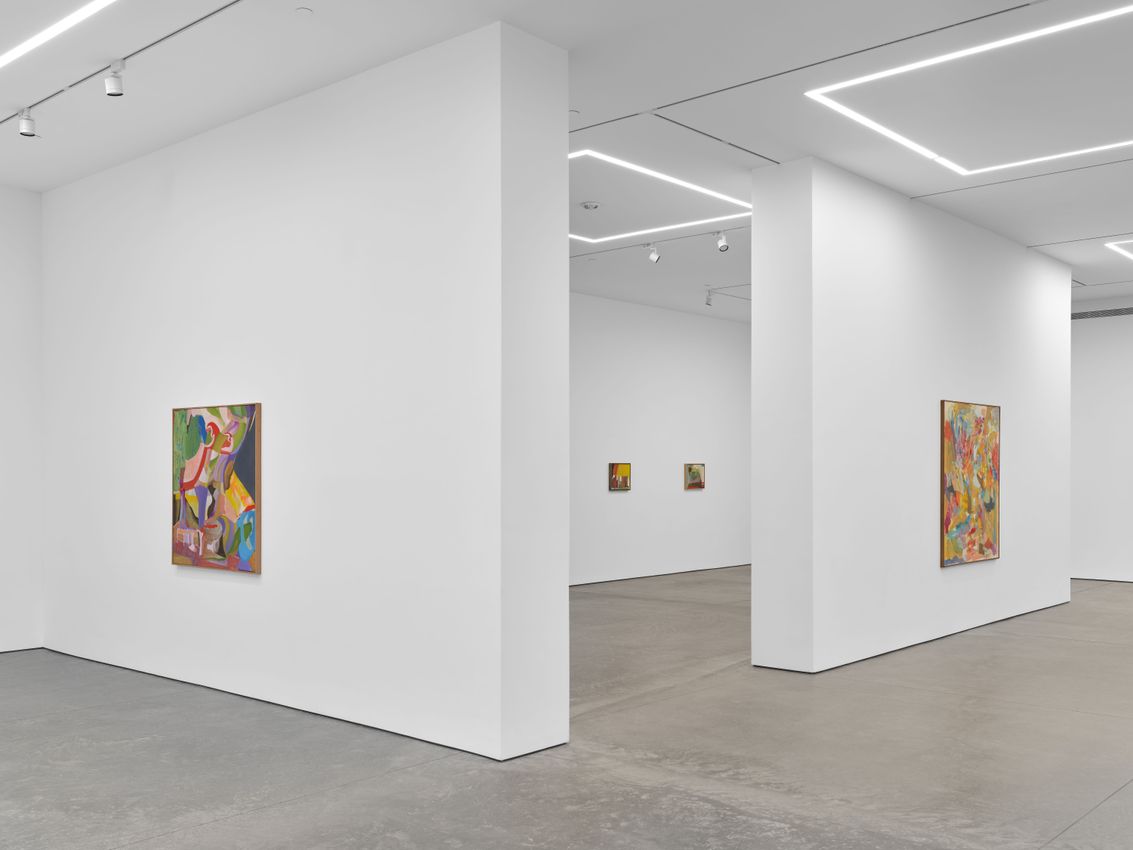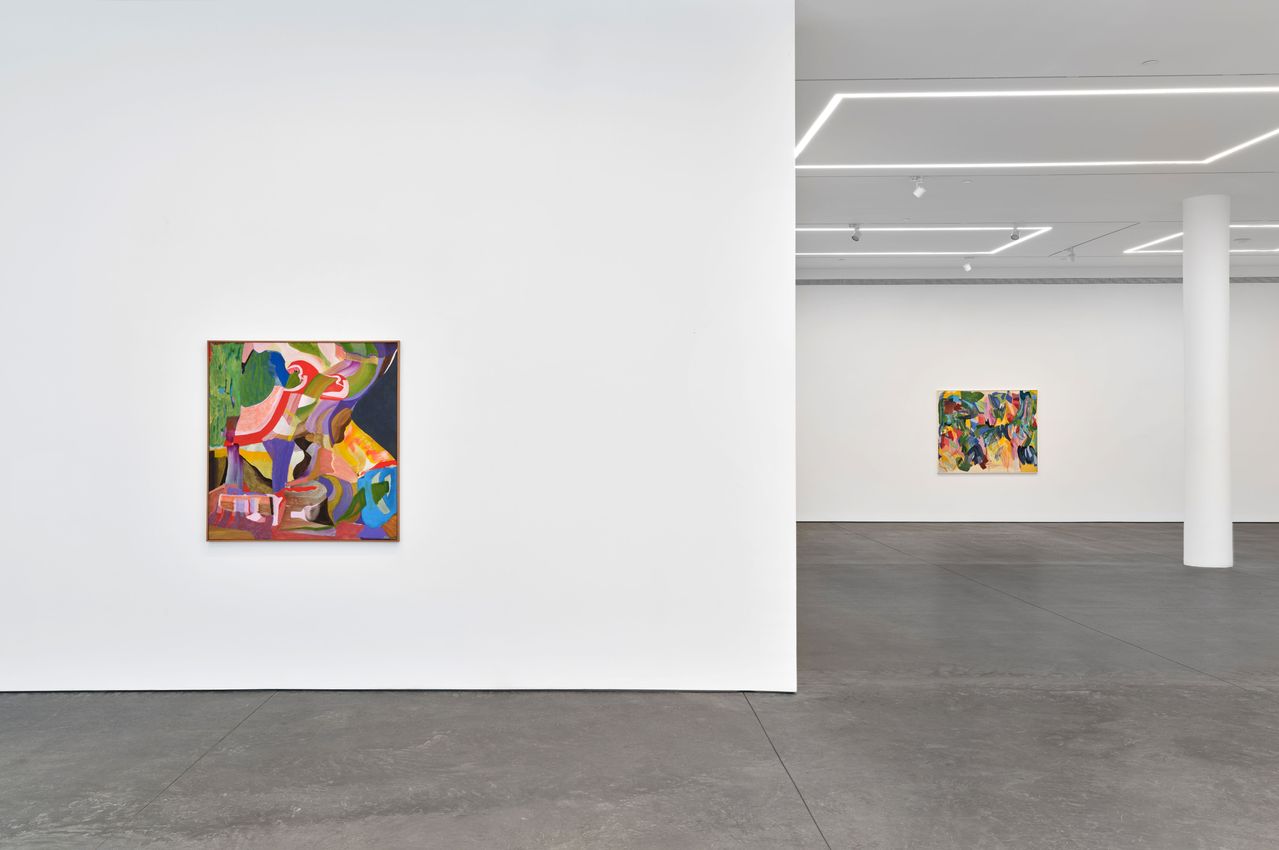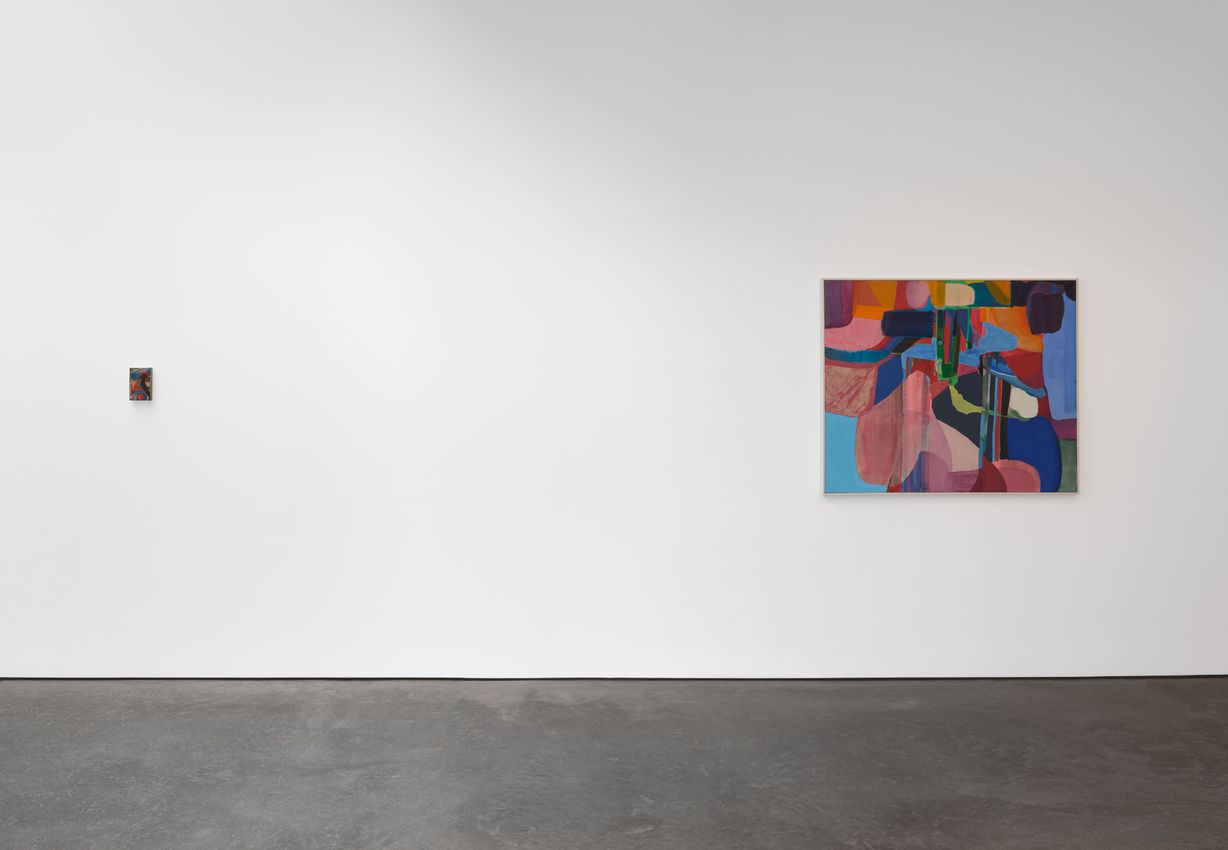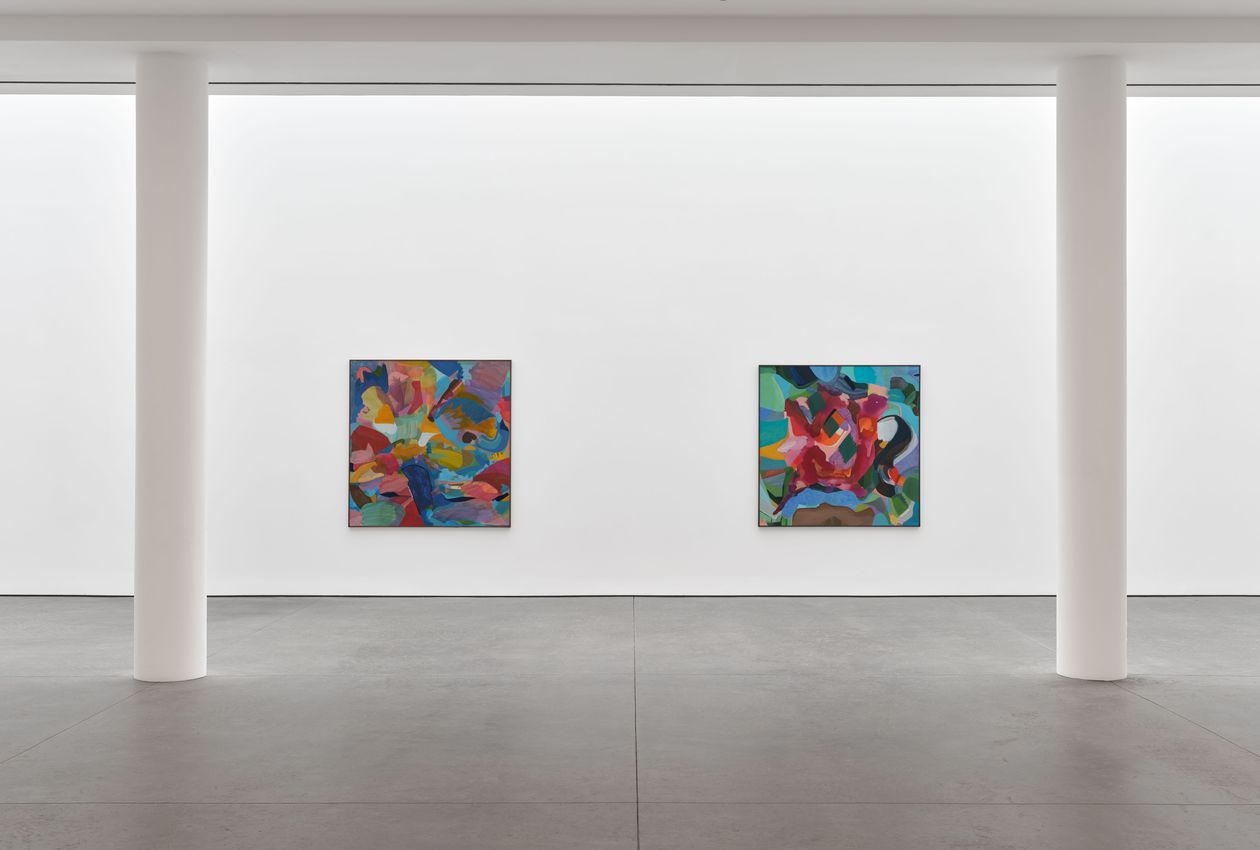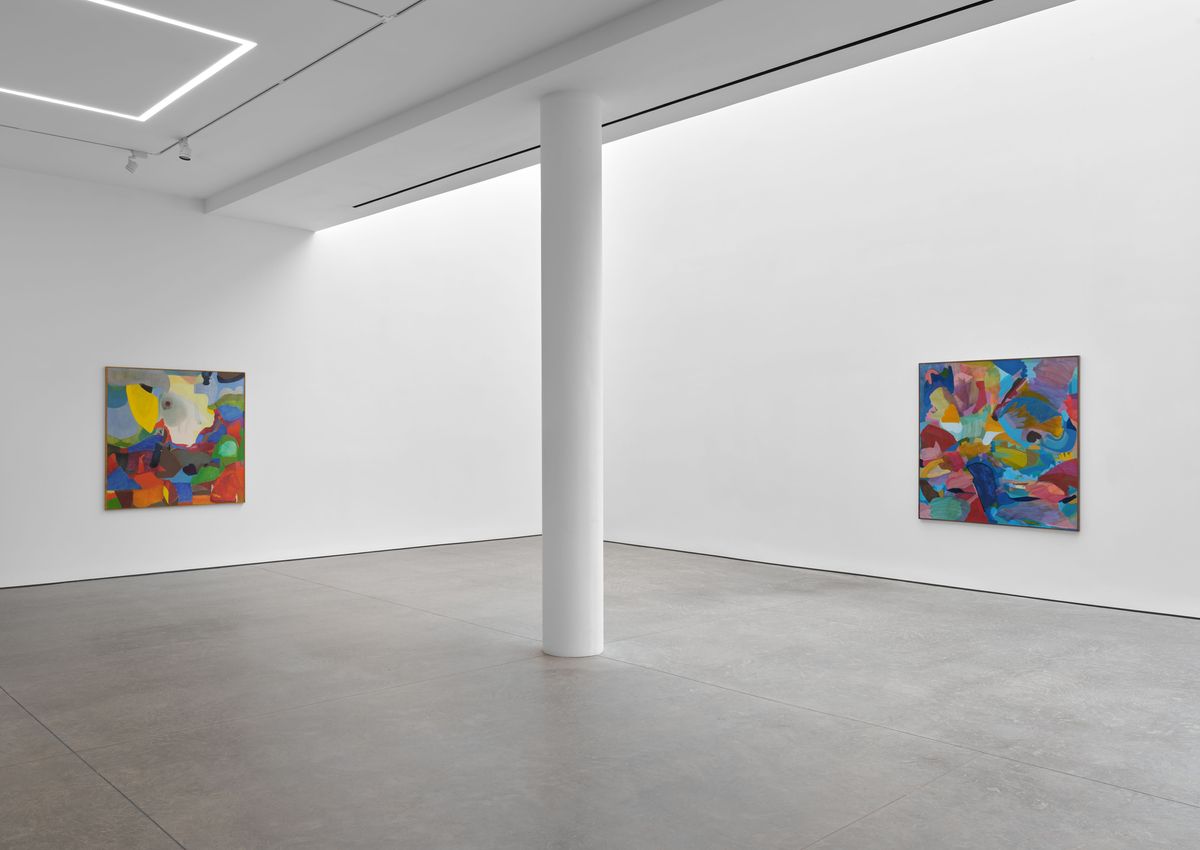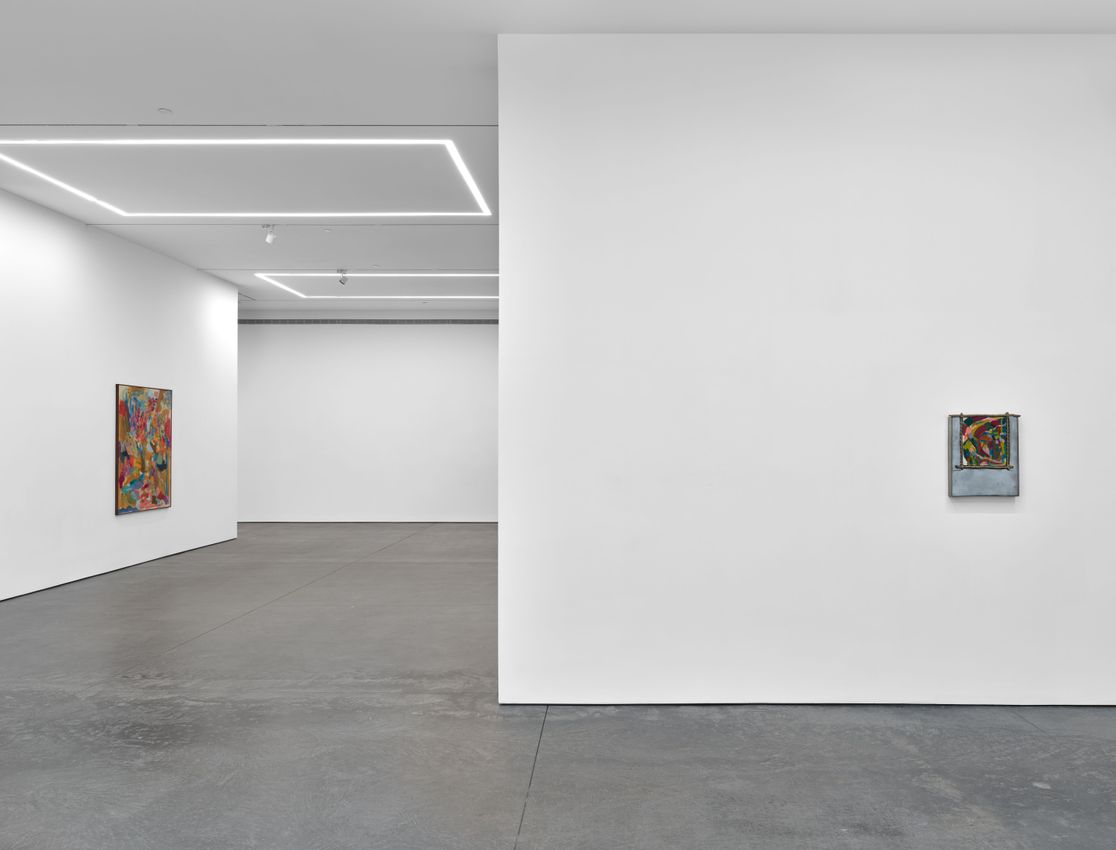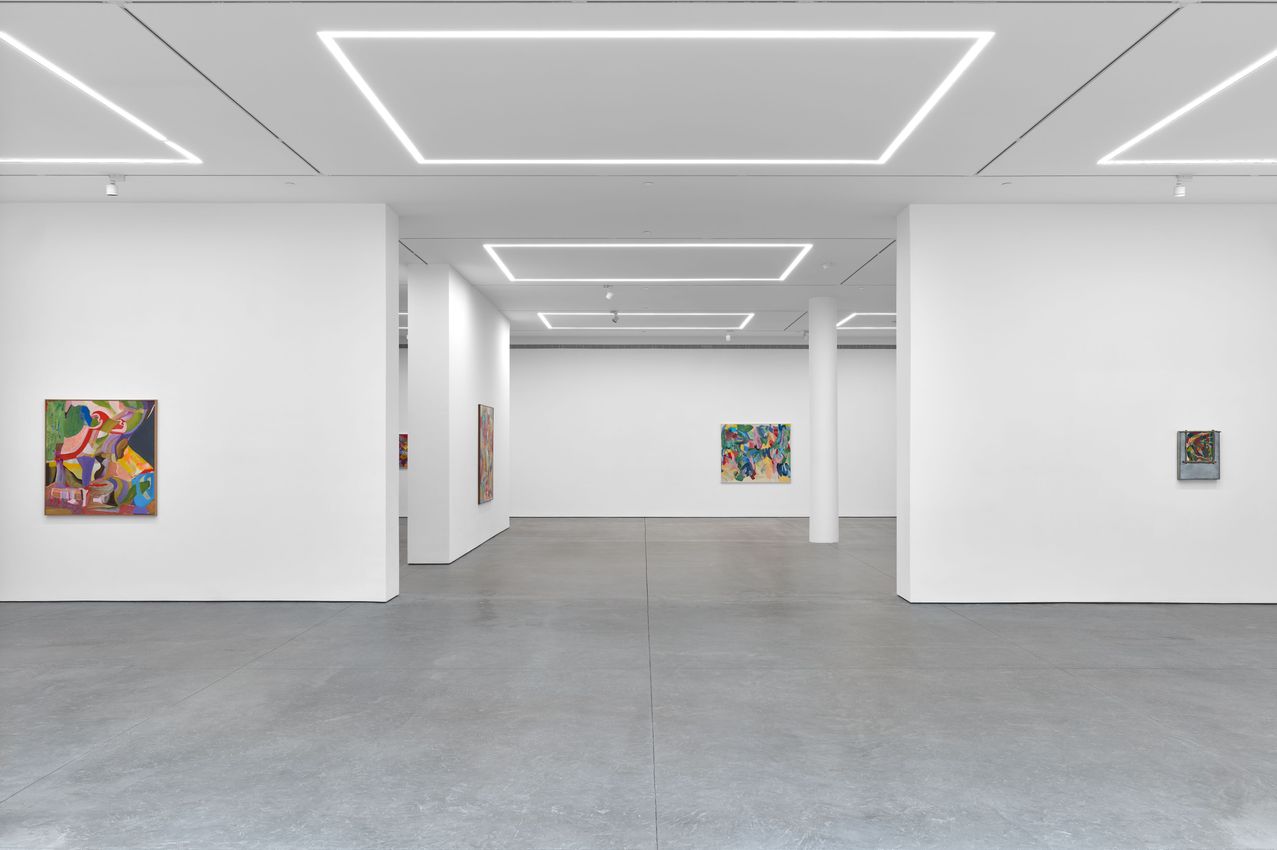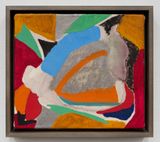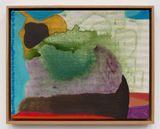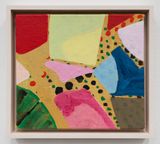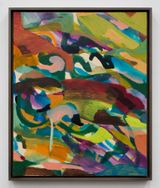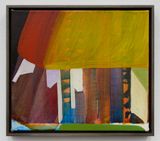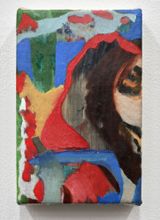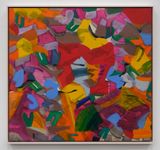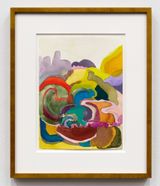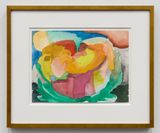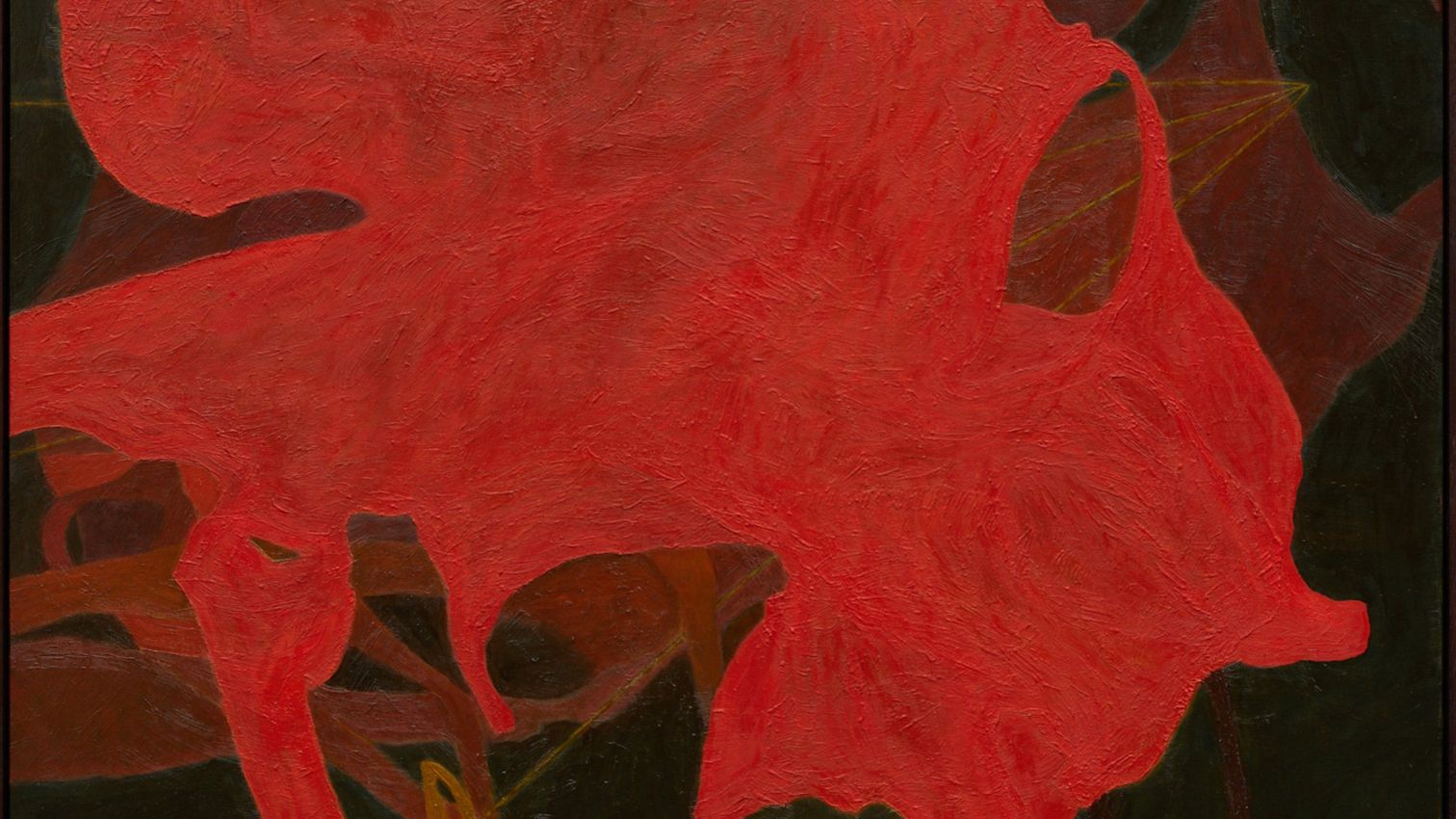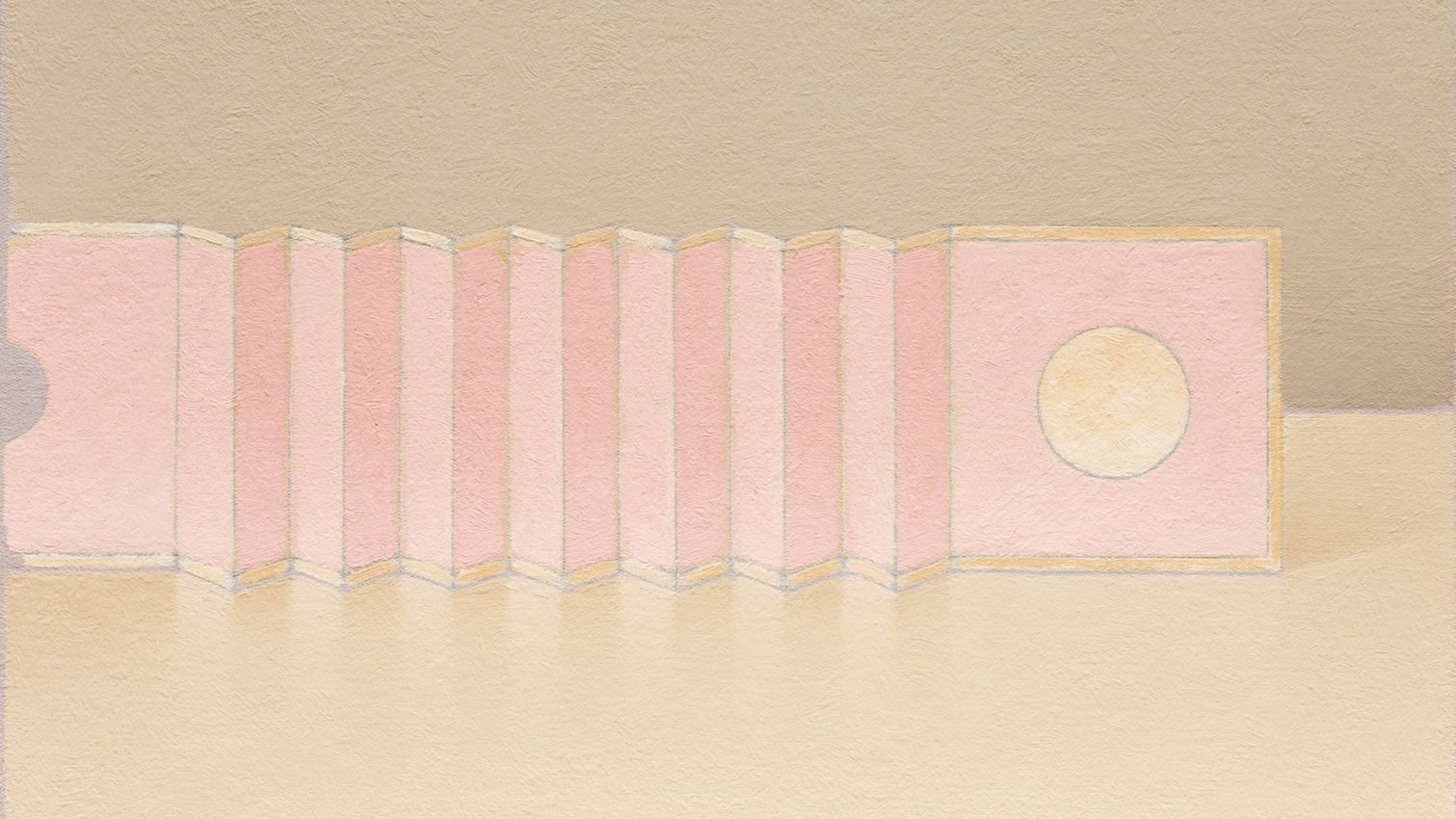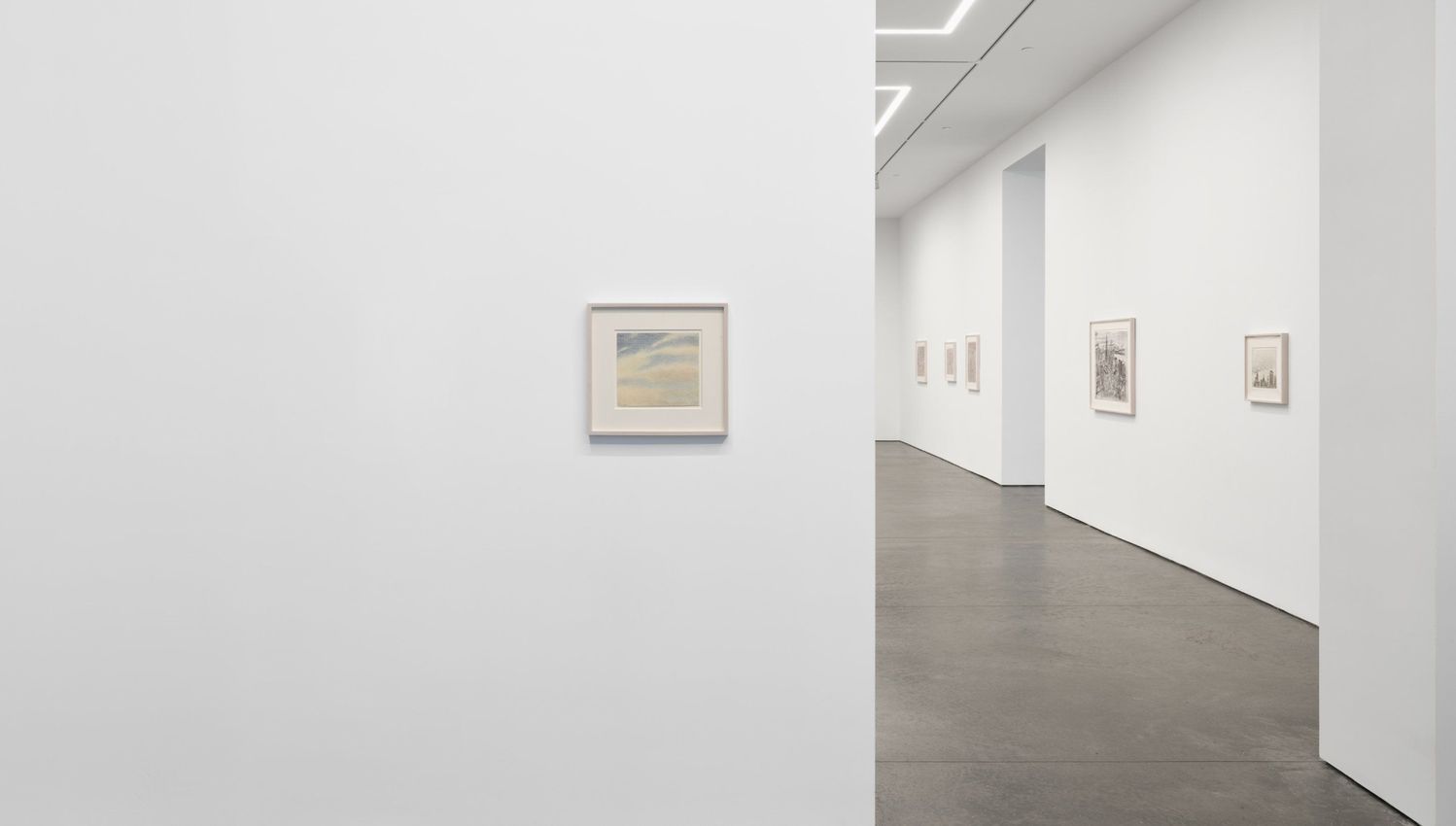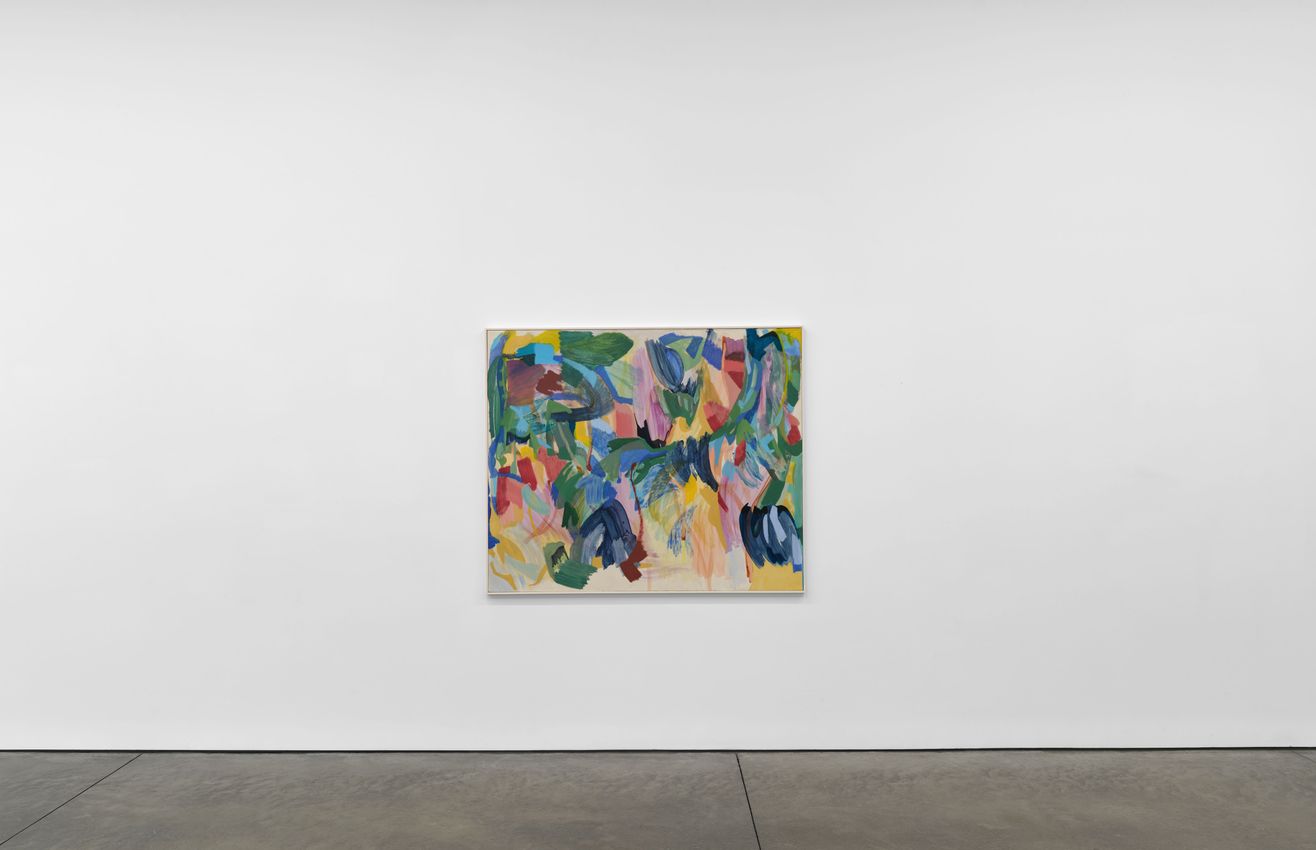
no when presents a selection of intuitively generated and yet tightly composed paintings by Marley Freeman made in the past two years. The artist found her way to painting through a deep knowledge of pattern, texture, and colour cultivated during early experiences with mosaic and textile production—the latter at her family business and then an archive connected to a jacquard and dobby mill. Building on the resulting knowledge that flat media have their own architectures, Freeman’s recent oil and acrylic paintings are at once process-based and concerned with the structural qualities of two-dimensionality. These works are driven by her investigation into, as the artist puts it, ‘how abstractions can act like images.’
Working simultaneously across an array of sizes in her studios in New York and Sheffield, Massachusetts, she moves fluidly from canvas to canvas. Each work is both question and answer; she resolves her initial marks in a process of painterly call and response that takes place over the course of months. Augmented with passes of transparent, thinned-out oil, early layers of acrylic are nonetheless visible on the surface, like the warp threads that undergird every woven textile. The triptych only his desire kept him from fleeing (2025)—the largest painting Freeman has ever made—expands her brushstrokes and organic forms across a vast, eighteen-foot-wide plane, her gestures reaching and undulating from one panel to the next. Created in the wide-open environment of western Massachusetts, only his desire evinces a new willingness in Freeman’s work to submerge the viewer in colour, inciting a more phenomenological relationship between body and canvas.
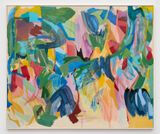
Despite her hand’s evidence in each composition, Freeman’s paintings are not purely expressive. She also conceives of them as images, built up from an initial mark into whole visual systems. Though every stroke in give this sea a name (2024) is brushy, the transparency of Freeman’s oil allows them to intermingle, each colour reacting to what is beside and beneath it. Hot pinks and turquoises distributed all over the surface are set off by ochres as the varied marks coalesce. Like Chicago Imagist Barbara Rossi, with whom Freeman studied at the School of the Art Institute of Chicago, the younger artist allows visual stimuli of all kinds to seep into her paintings, rendering them resolutely non-hierarchical. The lyrical forms of no suffering is unnecessary (2024) evoke the Imagist’s tradition of off-kilter representation, but Freeman layers them into an abstract composition that verges on pattern while never actually repeating itself. Alongside textiles and twentieth-century painters, she looks to the old masters—Giotto, for the way his pastel tones set off his famous blue at Padua; El Greco, for his ability to create a mood through hue—in her conception of palette as a wordless conduit for the expression of emotional states.
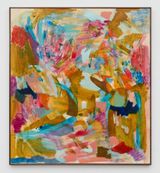
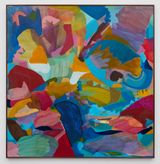
For years, Freeman has collaborated with friends such as Lukas Geronimas and Jared Buckhiester, relating to one another through making together. Freeman’s paintings shell crater with flowers and _nocturnal encounter with a lunati_c (both 2025) are ringed with ceramics created by Buckhiester and framed in metal forms hewn by Geronimas. Her titles, borrowed from artists and writers like Otto Dix, Bernadette Mayer, Agnes Martin, Jean-Paul Sartre, and Susan Howe (the show is titled after a line from one of her poems), also evince the importance of engaging with the creations of others. ‘The only way to work through ideas,’ she says, ‘is to paint through them.’ Conspiring with other artists and with material and image histories alike, Freeman paints her way through and arrives on the other side, creating one continuous fabric of entwined colours, forms, and references. Unlike textiles, however, her paintings are liberated from the constraints of functionality. Here, she finds the freedom to improvise.


Marley Freeman (b. 1981, Boston, MA) is a New York-based artist who combines the disciplines of abstract and representational painting. Her unique facture is characterized by the hand-mixed gesso, acrylic, and oil paints she uses to create meticulous, psychologically-charged color fields. Through this technical process, she studies the ways in which paint “wants to perform.” “Pigments have their own ways of acting,” Freeman says, “and I became obsessed with learning their traits.” Freeman’s distinct vocabulary of forms is made up of brushy strokes, color washes, and shapes that freely transform across the picture plane. The influence of textile design is evident in her close attention to the textural subtleties of her paints, and her reverence for their surface effects—their impressions in the warp and weft of the canvas.


A respected voice in contemporary art discourse.
Focusing on ambitious storytelling and insightful art-world commentary. Ocula Magazine publishes in-depth interviews, critical essays and timely analysis on the artists, exhibitions and ideas driving the global art world.
Learn more about Ocula Magazine
Showcasing the best of the art world.
Ocula partners with galleries from around the world to highlight their artists, artworks and exhibitions. Gallery membership is by application and invitation, with each member vetted by an independent panel.
Learn more about Ocula Membership

Specialises in the sale of major artworks.
Led by a team with deep ties to the world’s leading auction houses, galleries and collectors. Ocula’s advisory team offers bespoke services to high-net-worth clients from around the world who are looking to acquire the best of contemporary and modern art.
Learn more about our team and services