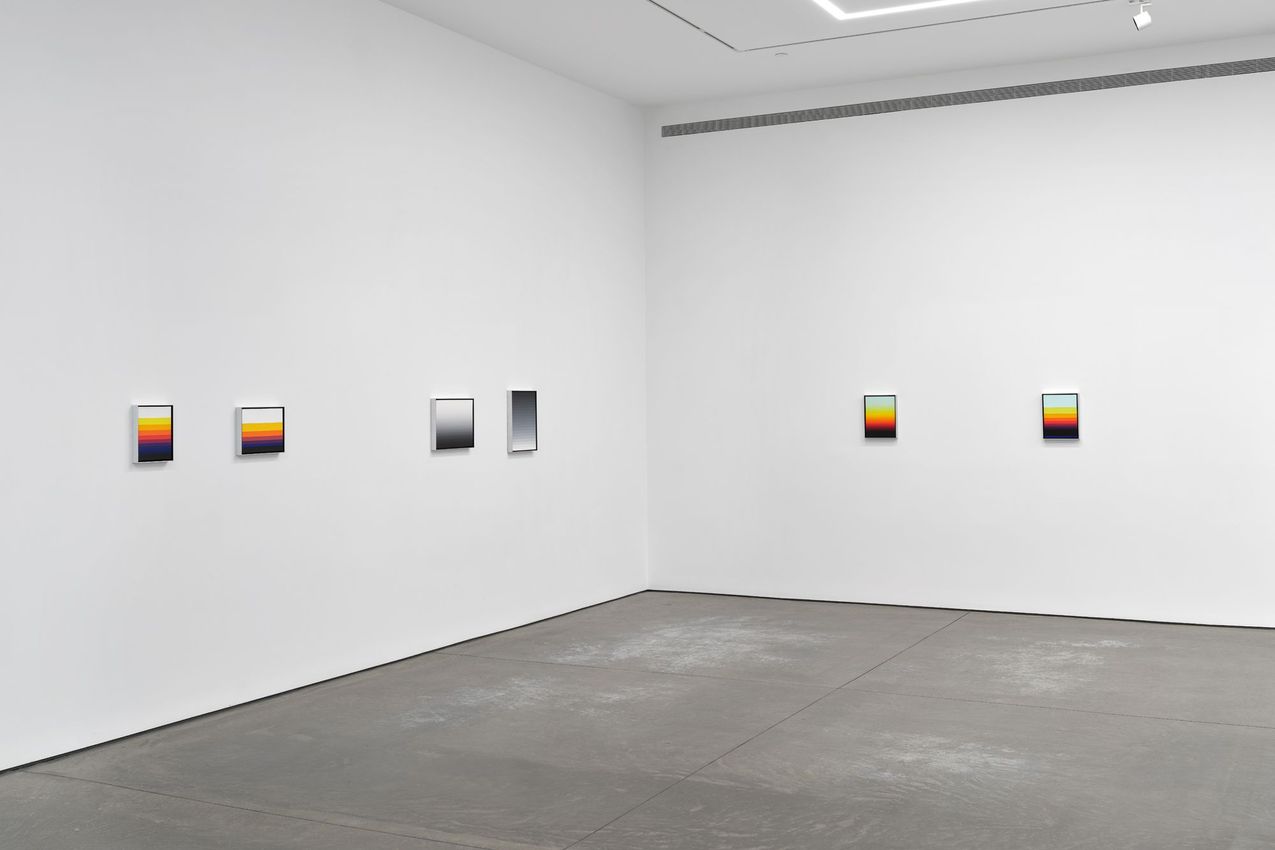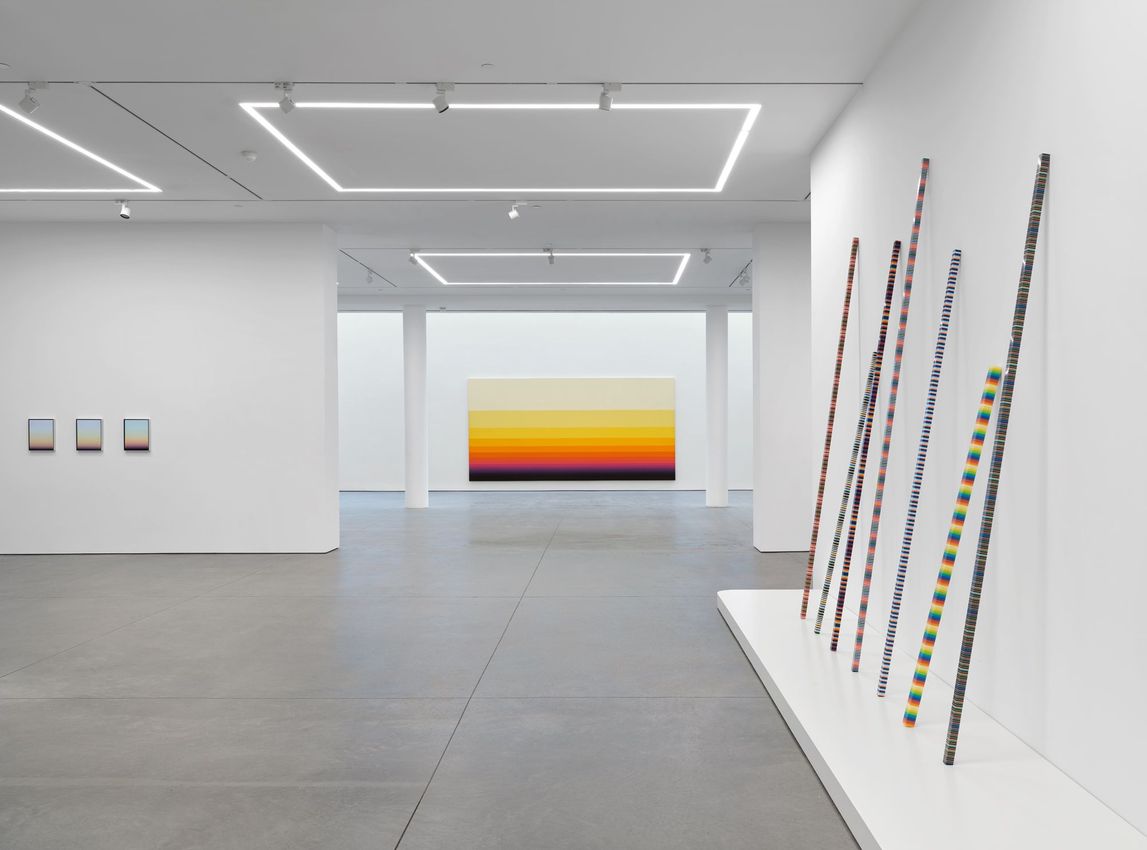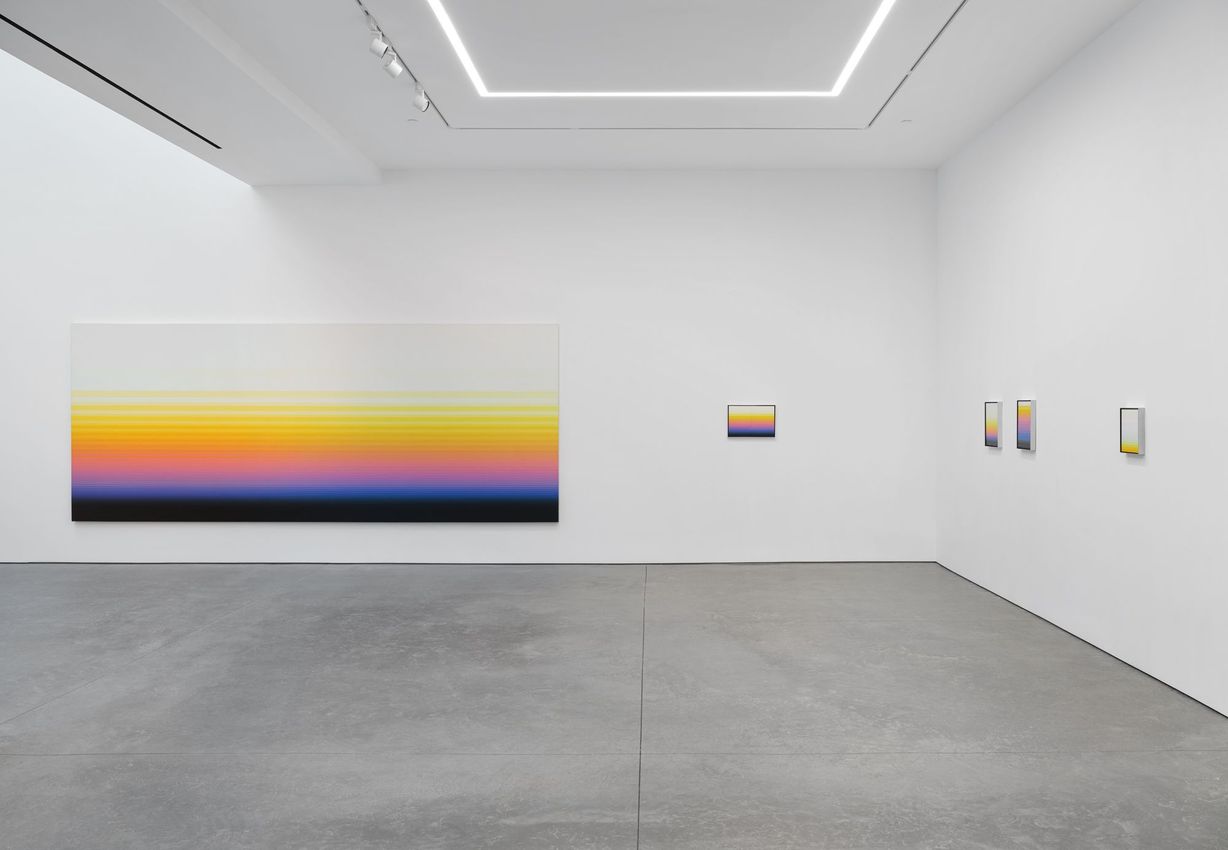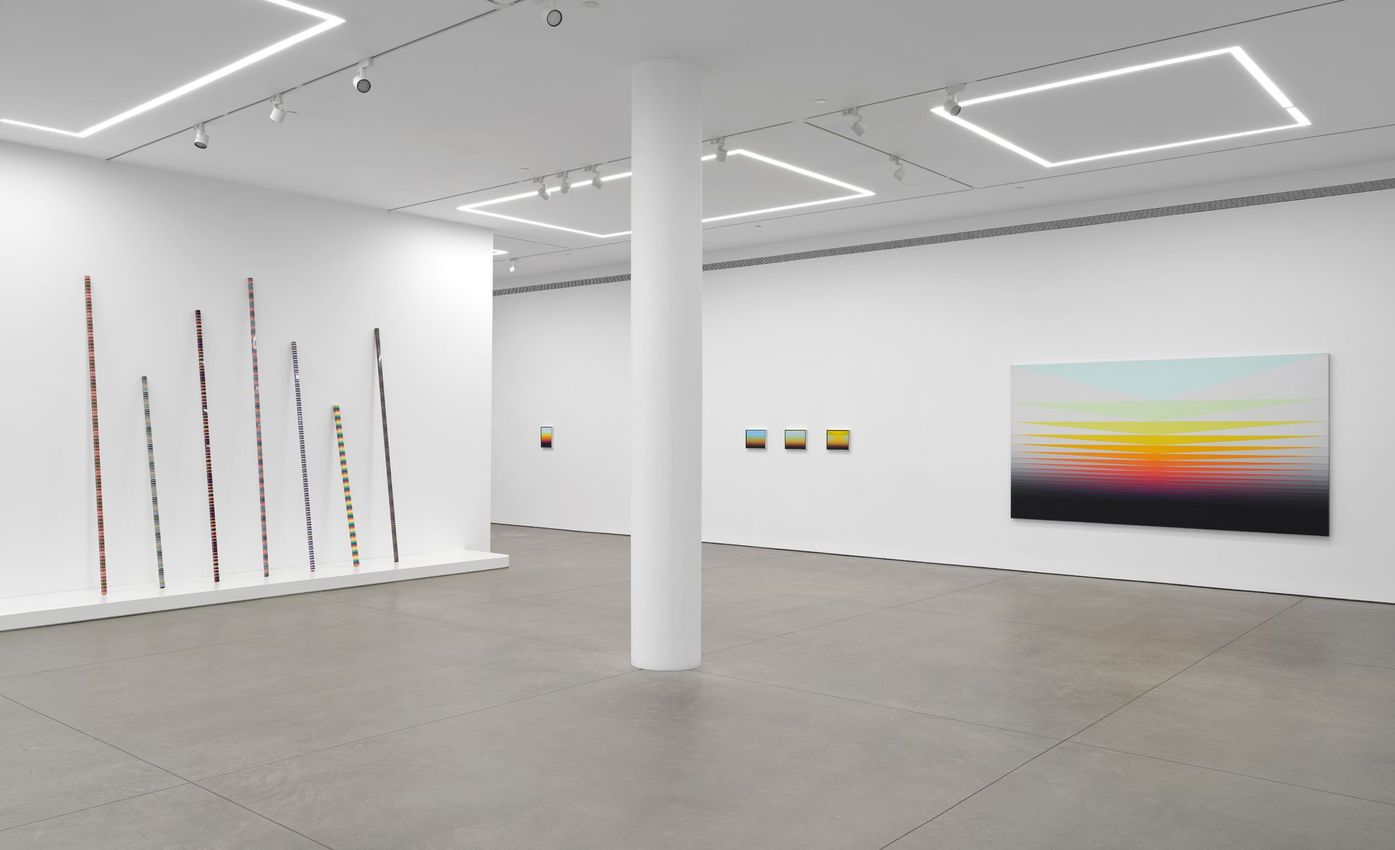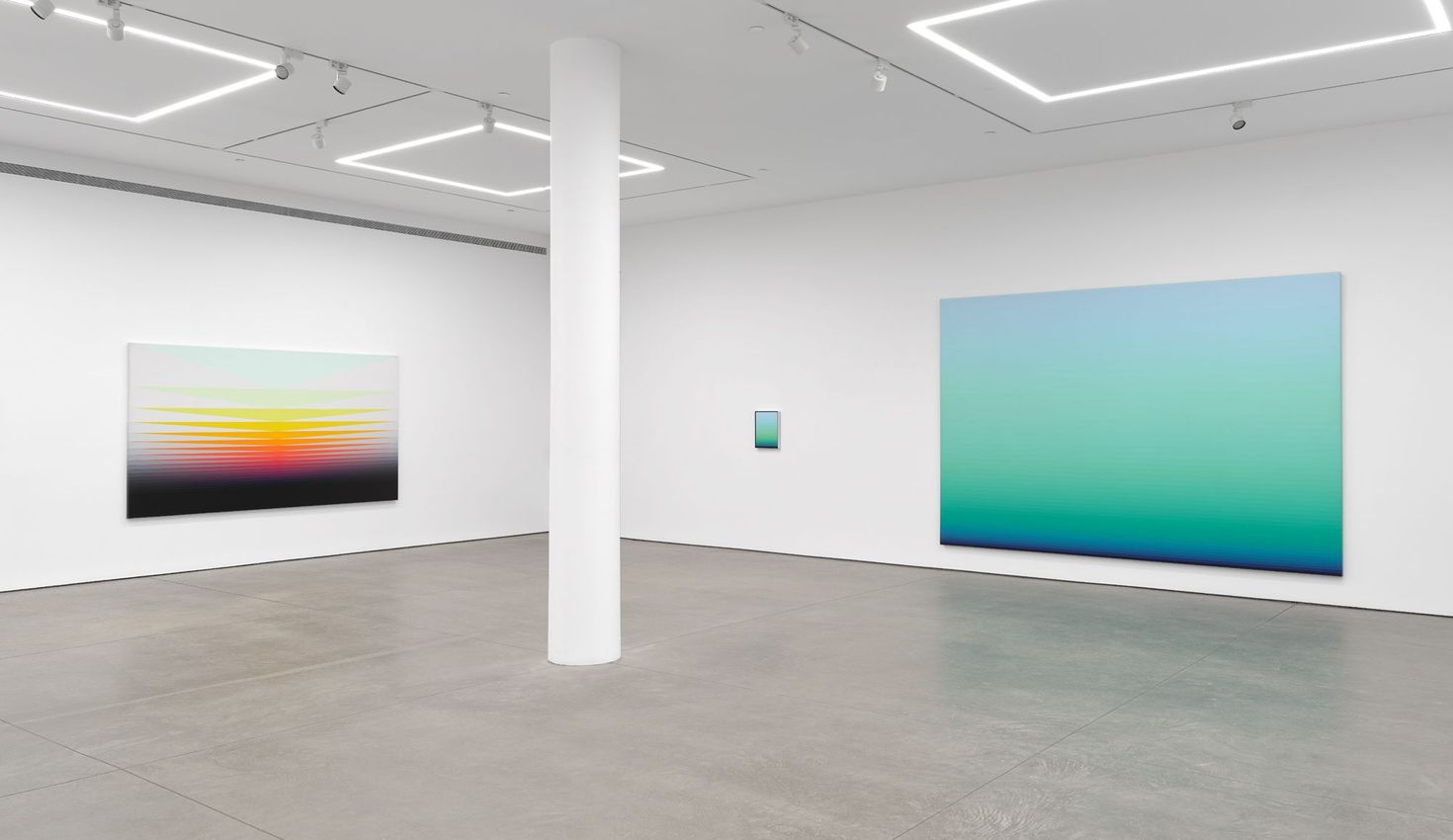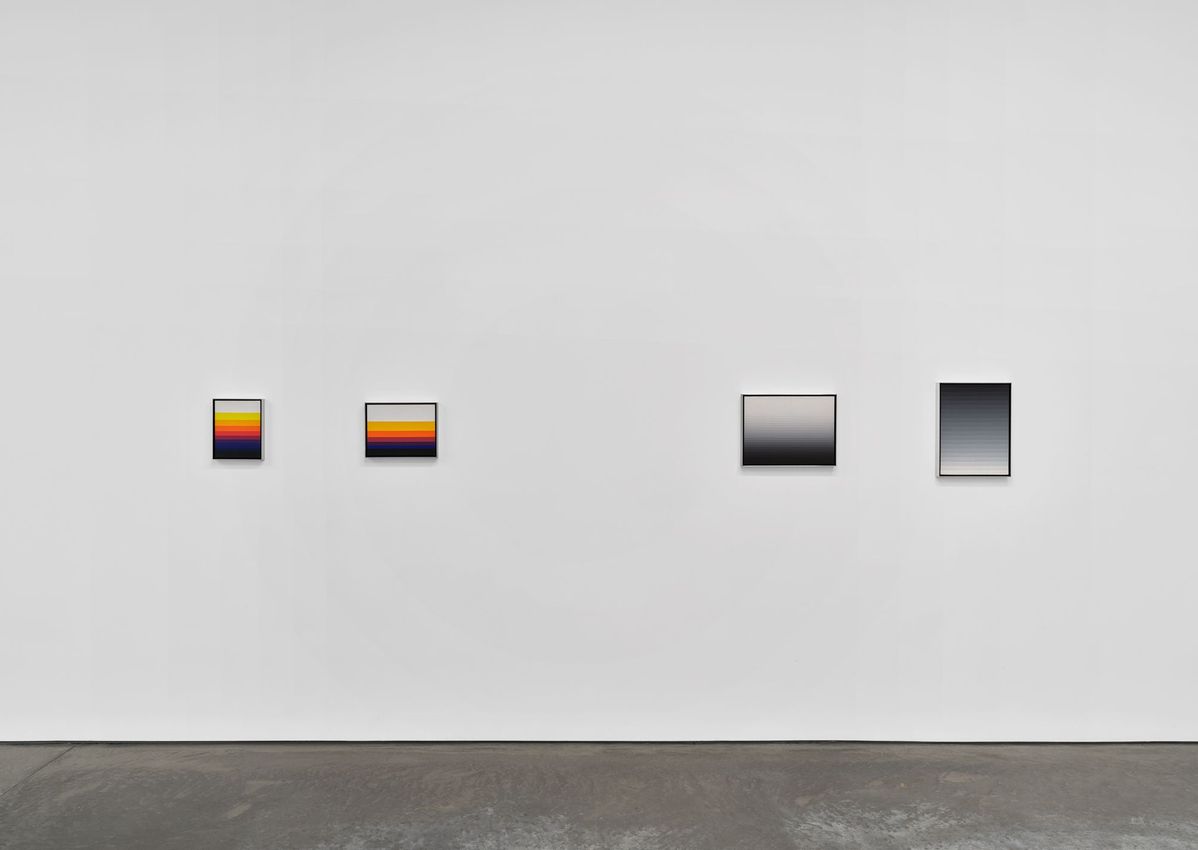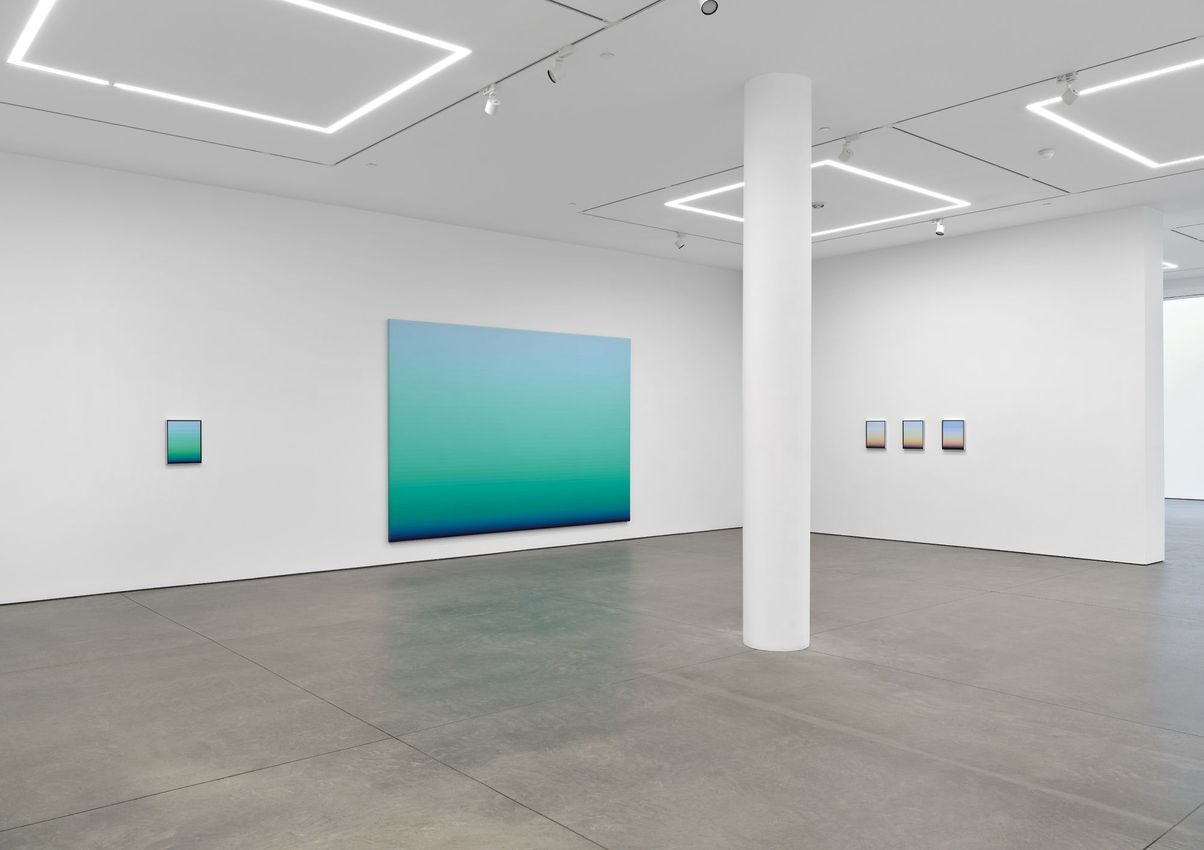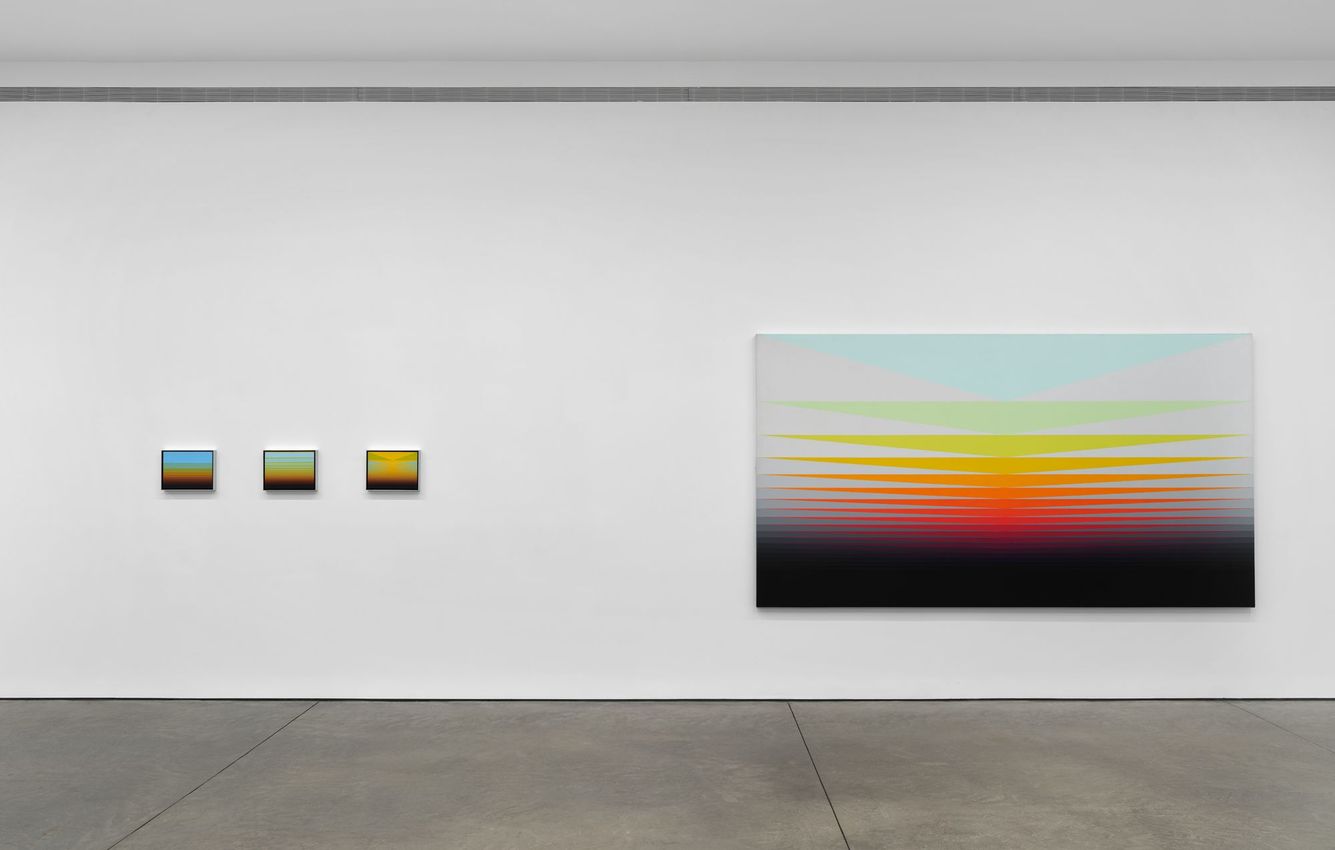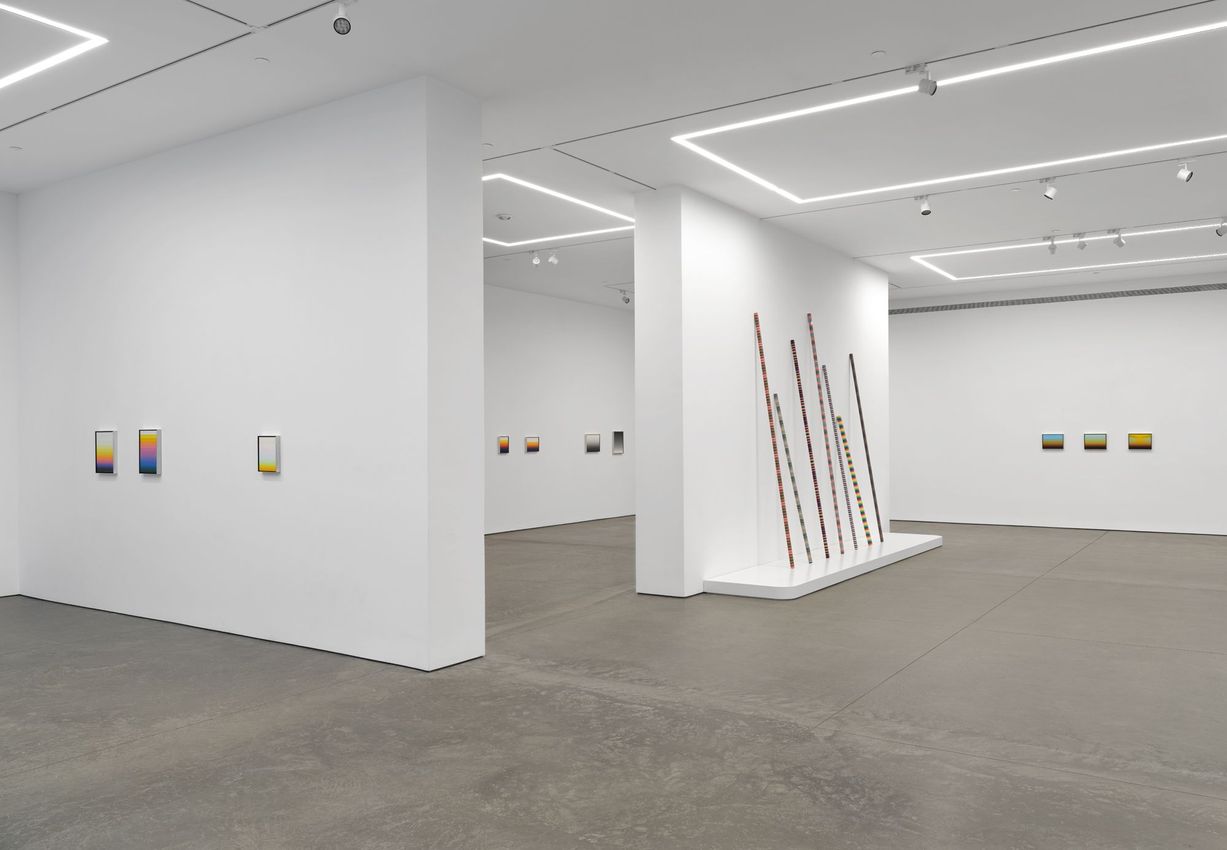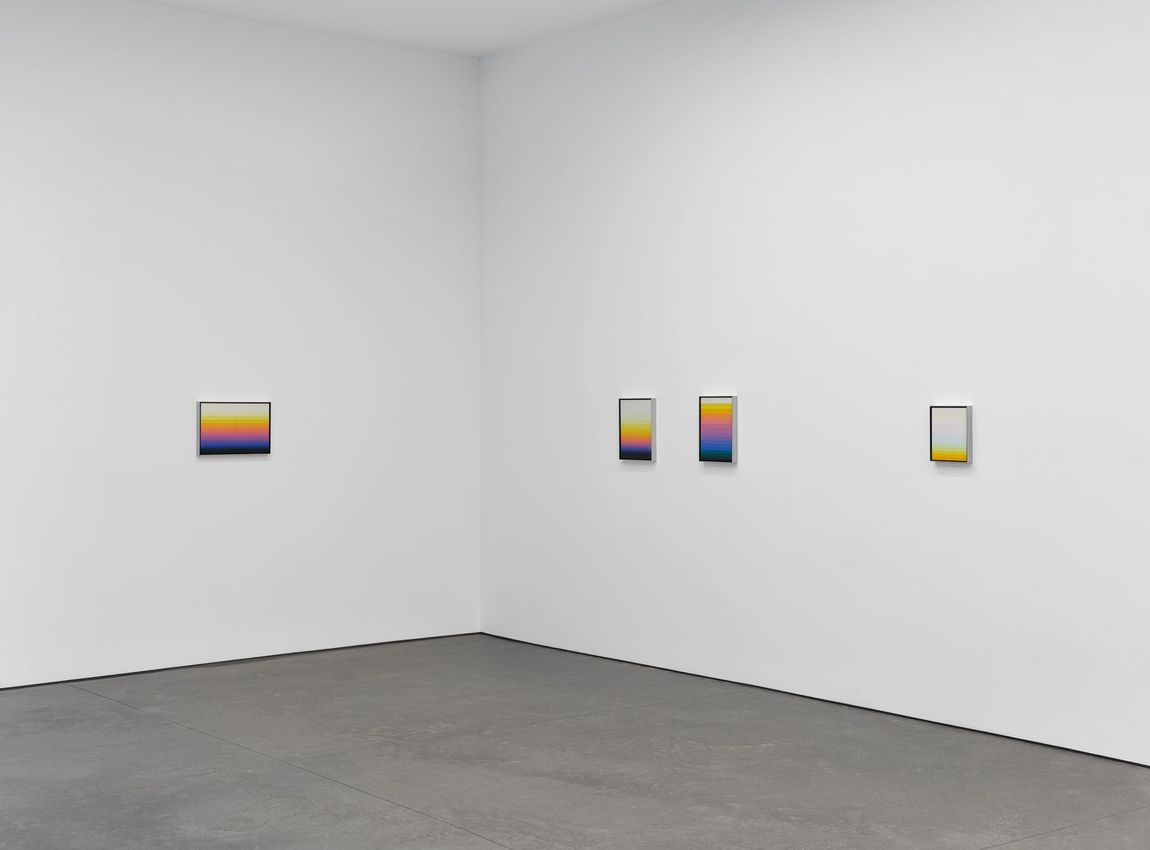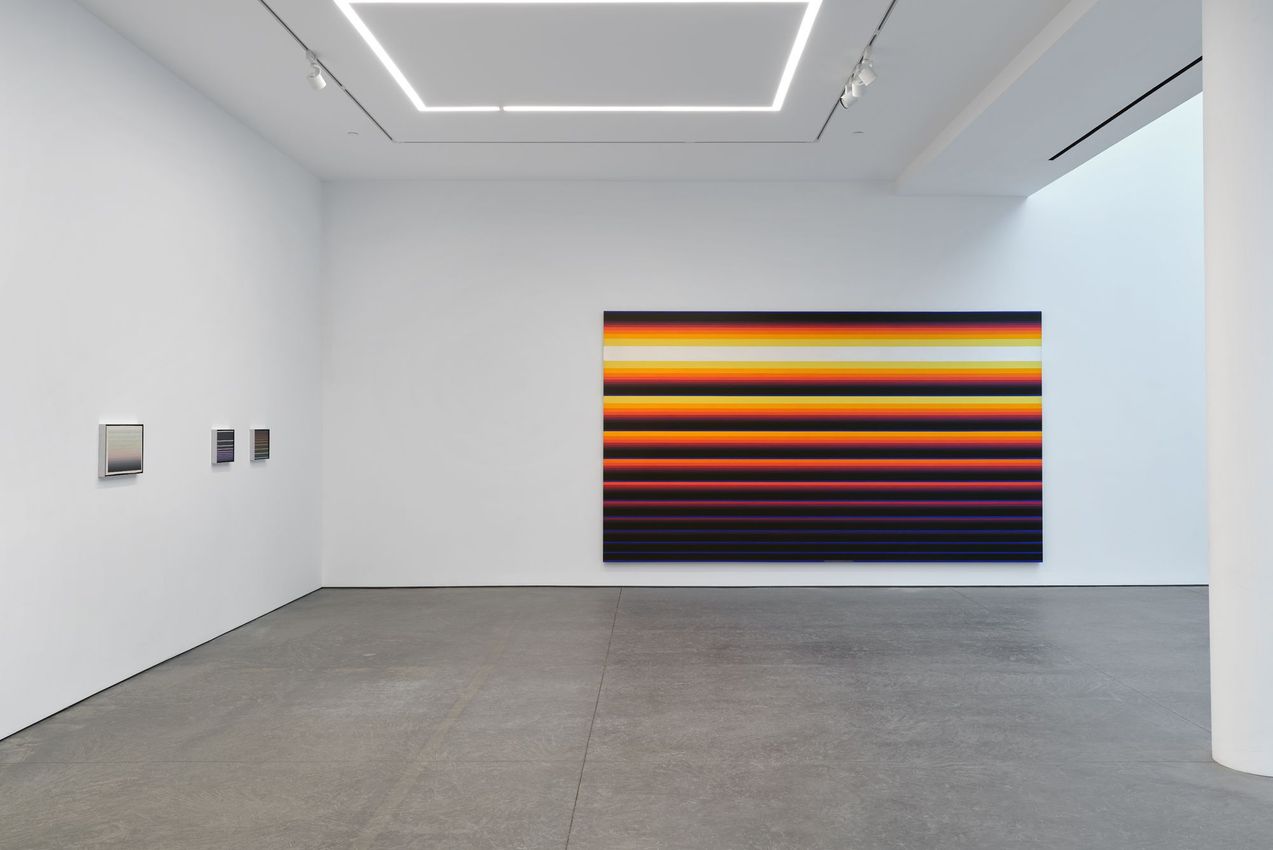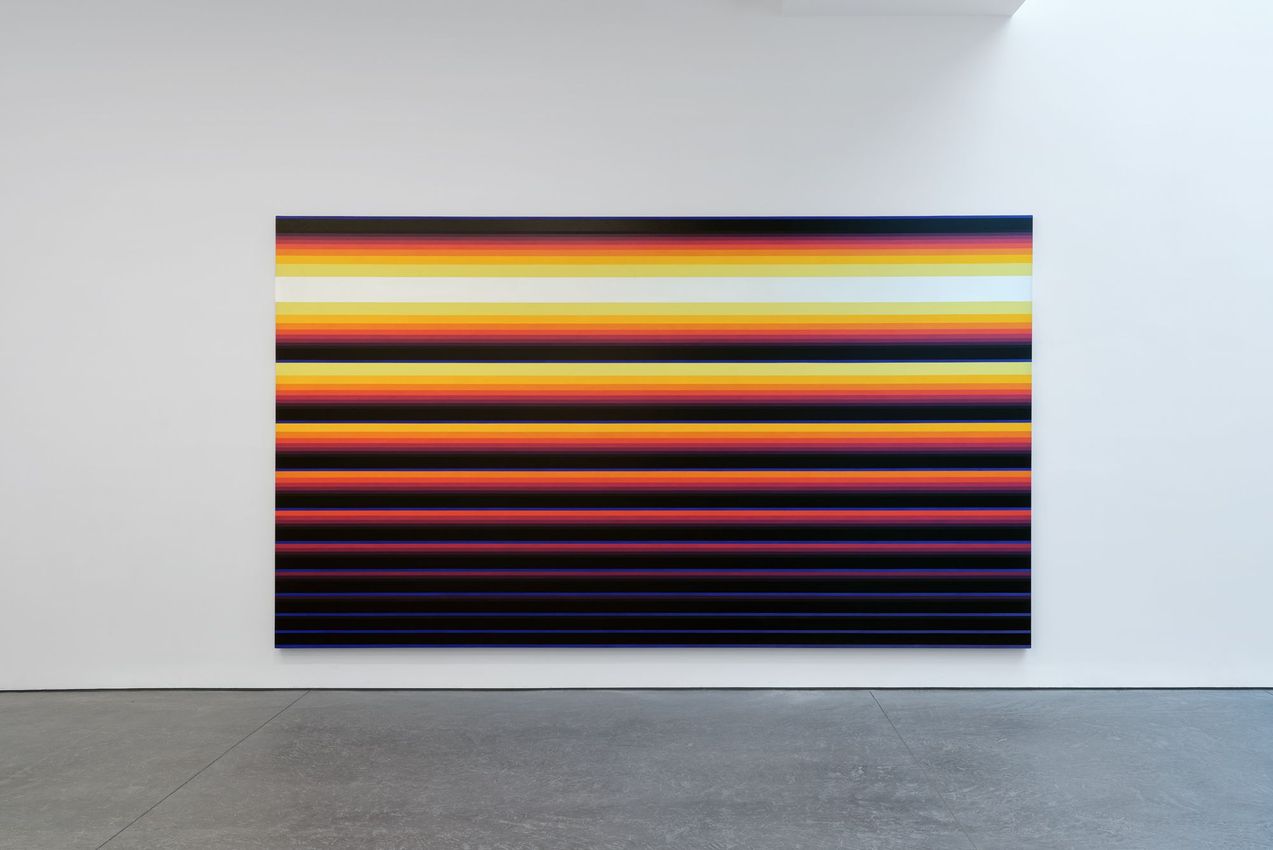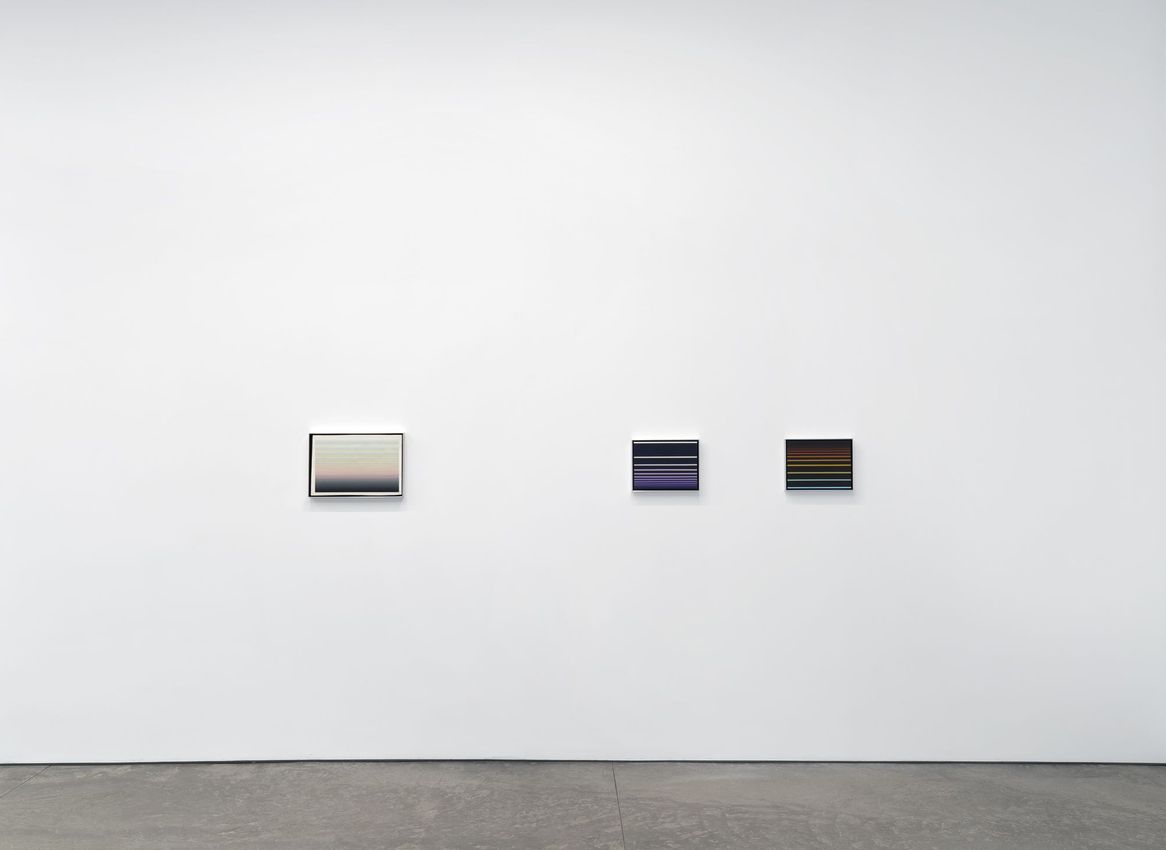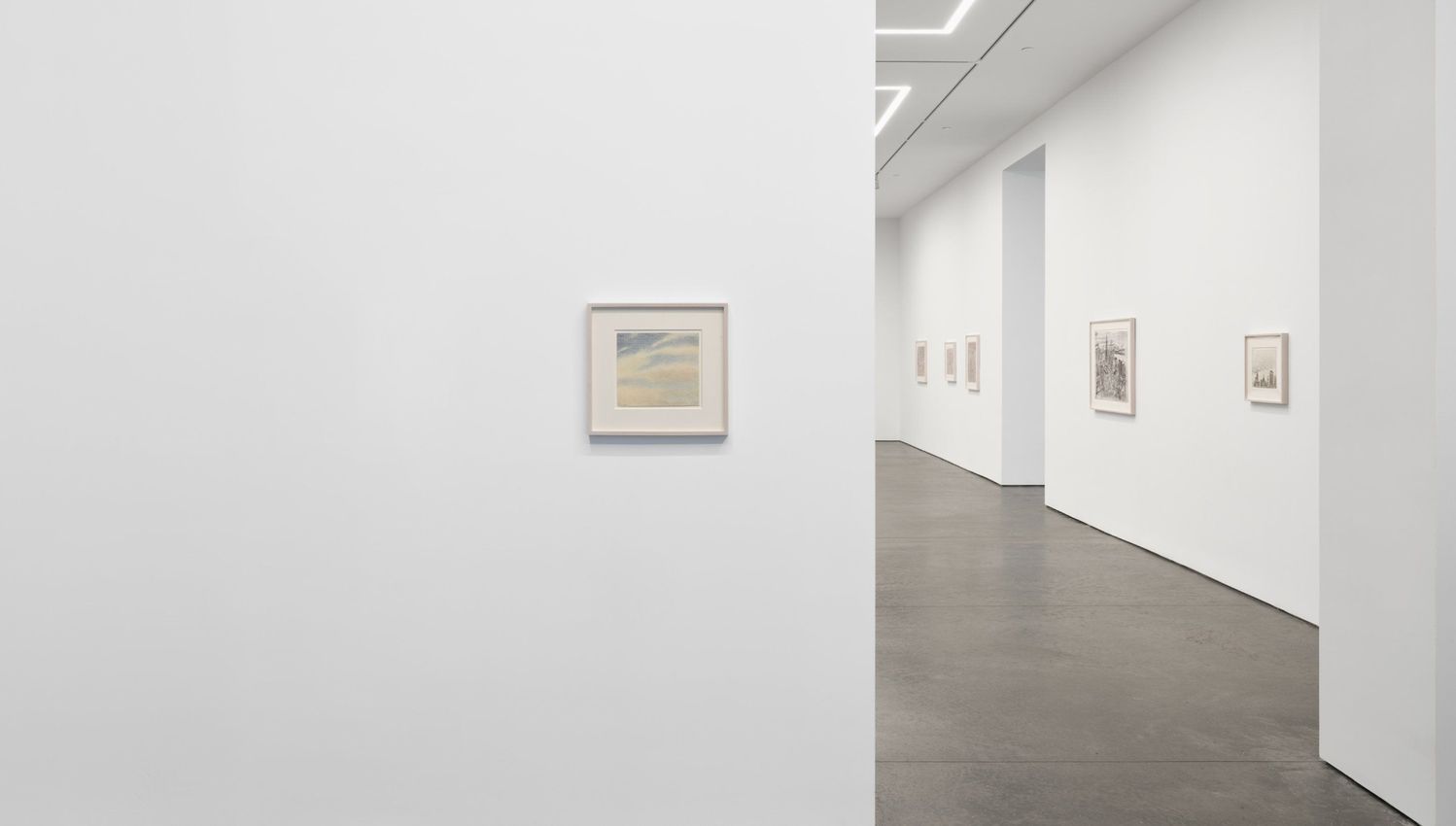
Norman Zammitt’s first exhibition in New York for nearly six decades, A Degree of Light surveys two of his most significant bodies of work: laminated-acrylic pole sculptures and the striated, abstract Band Paintings, whose shifting horizontal registers are fullest realization of Zammitt’s quest to capture the way light and color interact in perception. The result of mathematical, formal, and spiritual inquiries, these series reflect his reverence for the skies of Los Angeles and New Mexico; his deployment of then-groundbreaking industrial and computer technologies; and his commitment to the poetics of experience. A Degree of Light draws connections from Zammitt’s early sculptural work to his Band Paintings, attesting to his lifelong dedication to “revealing, like hidden virtues, our metaphorical and spiritual world.”
Both series evolved out of inventive techniques and ideas the artist developed during his initial engagement with plastic as a material for sculpture. Zammitt made his first such sculptures, what he called “solid state” constructions, in 1964—only three years out of his MFA at the Otis Art Institute, where he had been working primarily with oil on canvas. The conception of these initial solid states coincided with the very beginning of what would become known as the “Finish Fetish” movement, a Los Angeles–based cohort of artists using synthetic resins and other recently invented industrial materials to craft seamless art objects rendered with a scientific precision. Zammitt, however, did not practice formalism for its own sake; nor did he fetishize materials for their futuristic or industrial appeal. His goal was to reveal “that form is born of color,” both in art and in nature. In this sense, he used the sculptural materials of Finish Fetish to explore metaphysical concerns associated with Light and Space, another art movement born in 1960s Los Angeles. But unlike peers James Turrell and Robert Irwin, Zammitt never took light as one of his literal materials, attempting to approximate its ethereal qualities through color.****
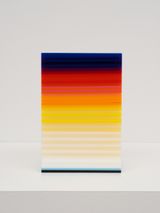
In the late 1960s, Zammitt began laminating together colored panes of acrylic into seamless, perfectly joined square poles. Each of these totemic, freestanding sculptures, made between 1968 and ‘72, measures between one and two inches wide and seven and nine feet tall—dimensions determined by the small, acrylic offcuts he purchased from sign companies to use in these works. Though his palette was limited by the sign shops’ production, Zammitt, the consummate colorist, managed to conceive of a new progression of tones in each work. Some poles feature only a few threads of color among a predominance of black, grey, and white, while others shift like rainbows from red to violet and back again. One particularly dazzling example shatters the acrylic layers into tiny cubes, recombining them into swirling tessellations. Installed leaning against the wall, the poles bridge the geometric patterns of Op Art with Minimalist objecthood. These vertical works are the apotheosis of an investigation into transparency that began as early as 1962, when he inaugurated his series of Boxed Figures. Originally shown at the groundbreaking Felix Landau Gallery in Los Angeles, these early paintings of segmented body parts enclosed within translucent cubes are on view at the 12th SITE Santa Fe International through the end of the year.
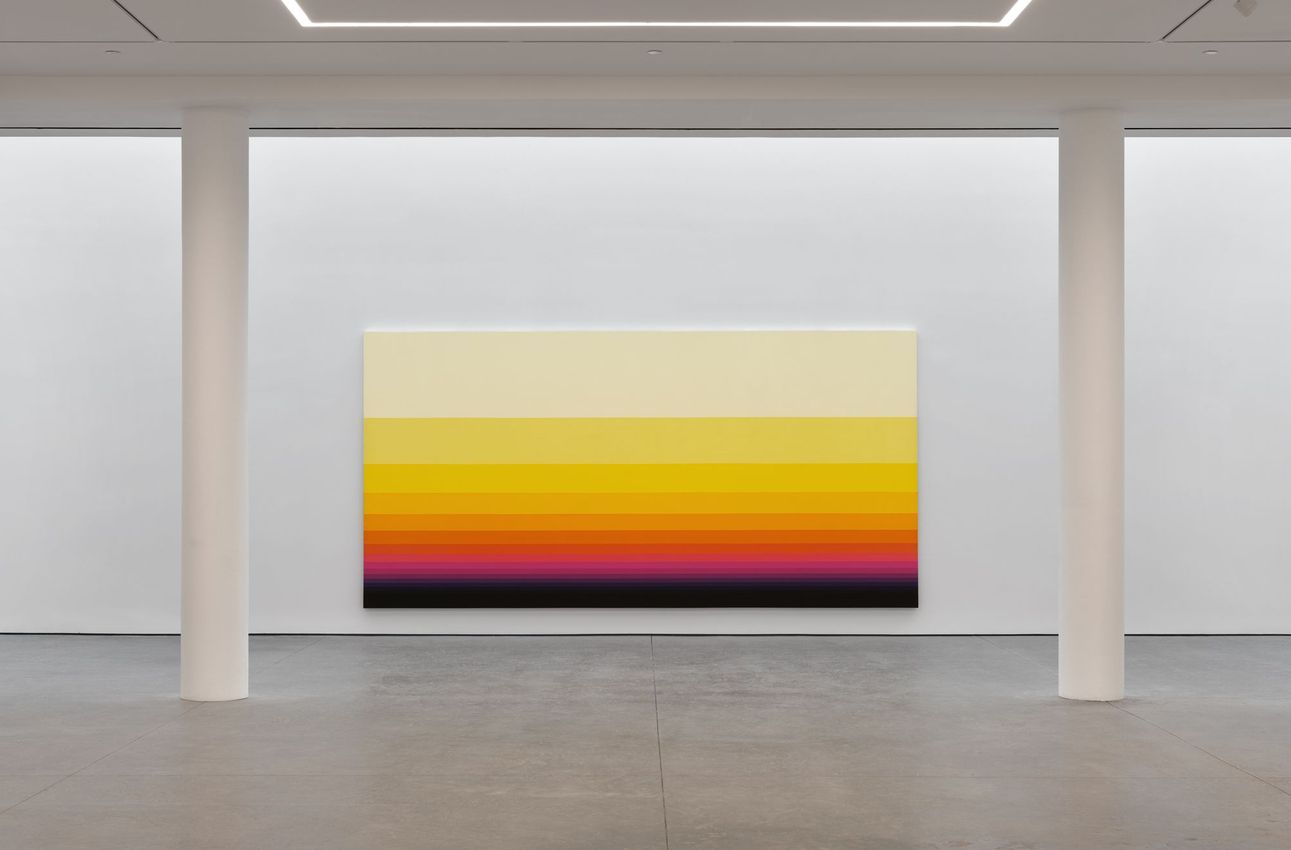
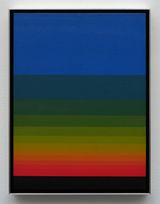
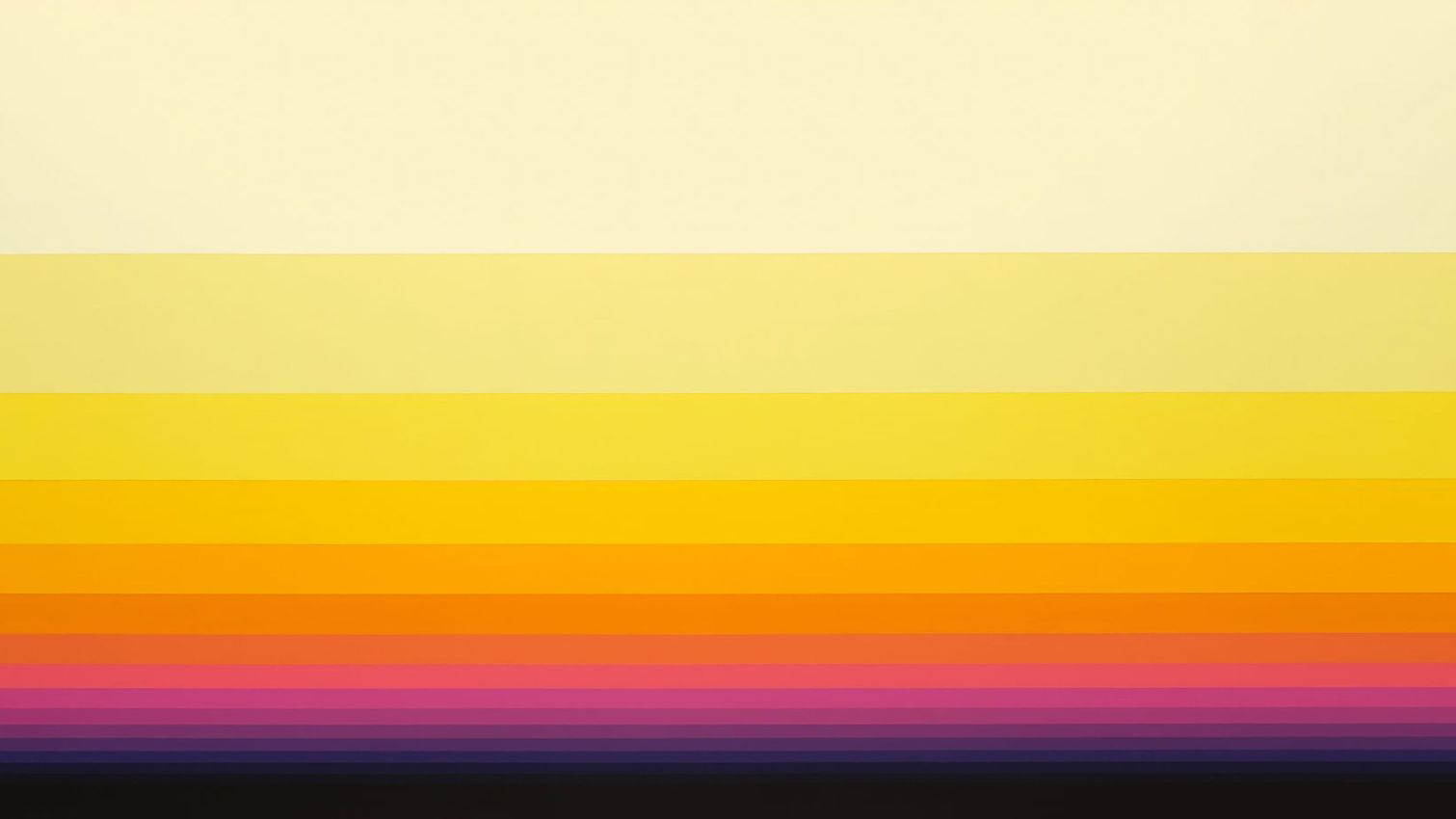
Zammitt returned to paint in 1973, seeking a degree of control over color not possible with ready-made acrylic. The Band Paintings he began that year enact chromatic progressions that evoke the luminosity and presence of the sky at various moments throughout the day. One (1973), his first large-scale work of this kind, proceeds upward from thin strata of black to thicker strips of yellow like the sun rising over an inky horizon. As with his sculptures, Zammitt used new processes informed by mathematics to create these paintings. Finding that traditional color theories had little to do with what he saw in nature, the artist conceived of his own system of mapping color transitions using parabolas and logarithms, then mixed his paint in ratios calculated to the thousandth of a gram. He would later take advantage of early computer technology and co-design a program that plotted the progressions and ran the equations involved in executing them (the young Caltech grad who helped him confirmed Zammitt’s suspicion that his color system was in tune with nature, noting that the way his hues shifted paralleled the growth rates of living organisms). The artist built a custom tape machine to achieve his perfectly straight, smooth lines, and while each band of color appears discrete, they in fact overlap slightly to convey gradations. The tones in works like Green One (1975) transition so slowly and subtly that the borders between them seem to evaporate. Stretching up to eleven feet wide, these mural-scale canvases invite the viewer into an optical environment of pure color. North Wall and the brighter South Wall (both 1976), originally installed on the corresponding planes of his former studio (alongside a third painting on the east wall), speak to Zammitt’s intent to envelop the viewer in a transcendent architecture.Search for the Elysian Field (1976), with its standout graduated chevrons, vibrates with intensity from its burning red heart. Surrounded by his paintings in the present, the total effect is somewhere between stepping inside one of his plastic sculptures and floating high in the atmosphere, surrounded by polychromatic light.


Norman Zammitt (b. Toronto, 1931; d. Pasadena, California, 2007) made sculptures, paintings, and lithographs that utilize color theory to capture the mystical qualities of natural light. Zammitt was raised by a Sicilian father and a Mohawk mother in Ontario. The family then moved onto the Kahnawá:ke Reservation near Montreal, and later to Buffalo, New York, finally settling in Southern California when Zammitt was fourteen.


A respected voice in contemporary art discourse.
Focusing on ambitious storytelling and insightful art-world commentary. Ocula Magazine publishes in-depth interviews, critical essays and timely analysis on the artists, exhibitions and ideas driving the global art world.
Learn more about Ocula Magazine
Showcasing the best of the art world.
Ocula partners with galleries from around the world to highlight their artists, artworks and exhibitions. Gallery membership is by application and invitation, with each member vetted by an independent panel.
Learn more about Ocula Membership

Specialises in the sale of major artworks.
Led by a team with deep ties to the world’s leading auction houses, galleries and collectors. Ocula’s advisory team offers bespoke services to high-net-worth clients from around the world who are looking to acquire the best of contemporary and modern art.
Learn more about our team and services