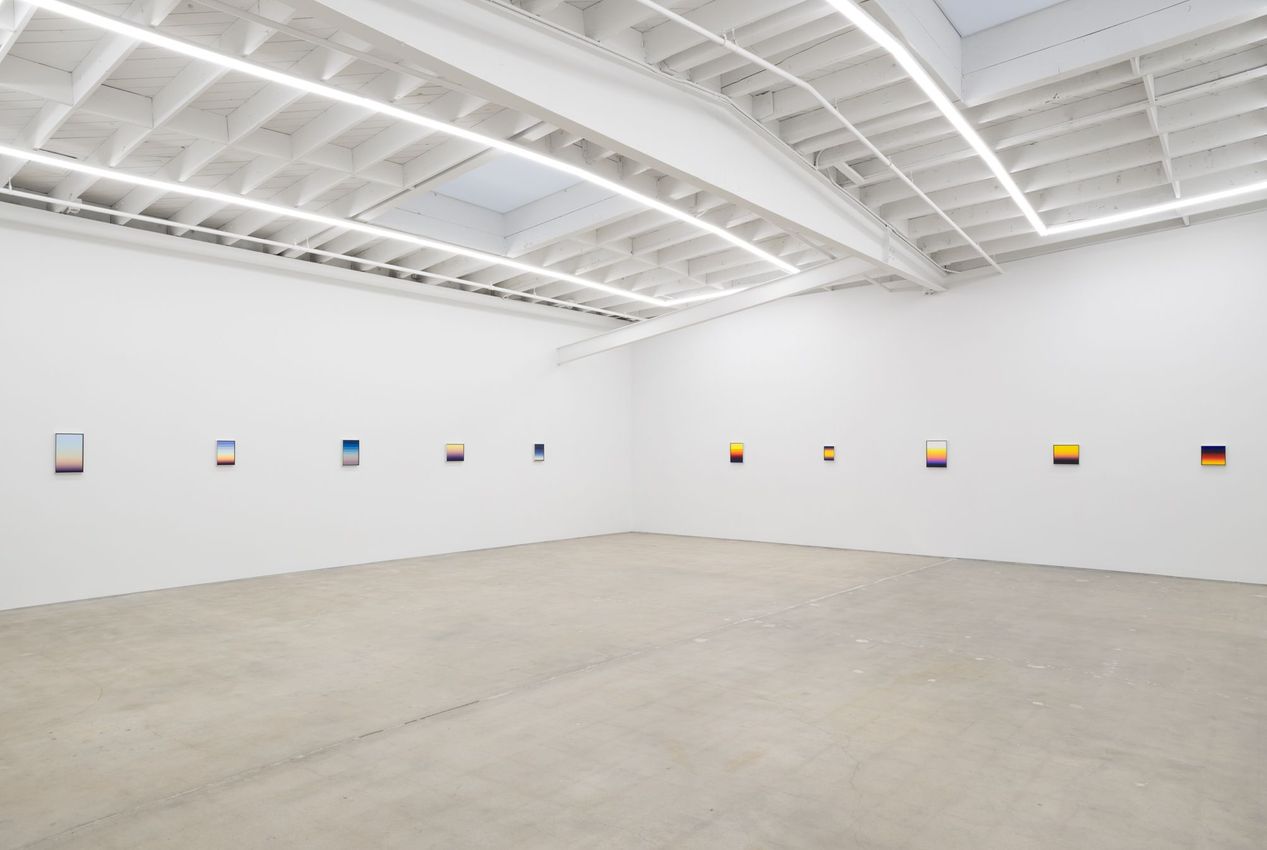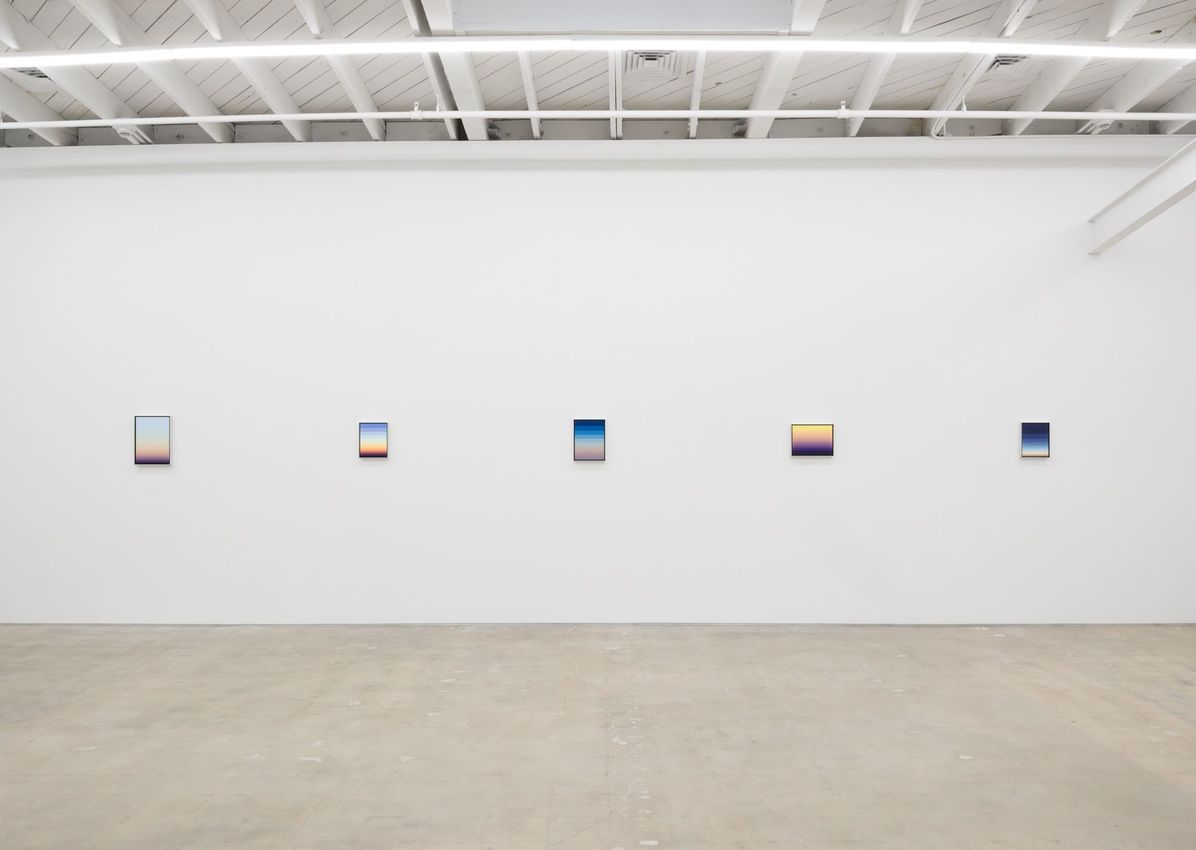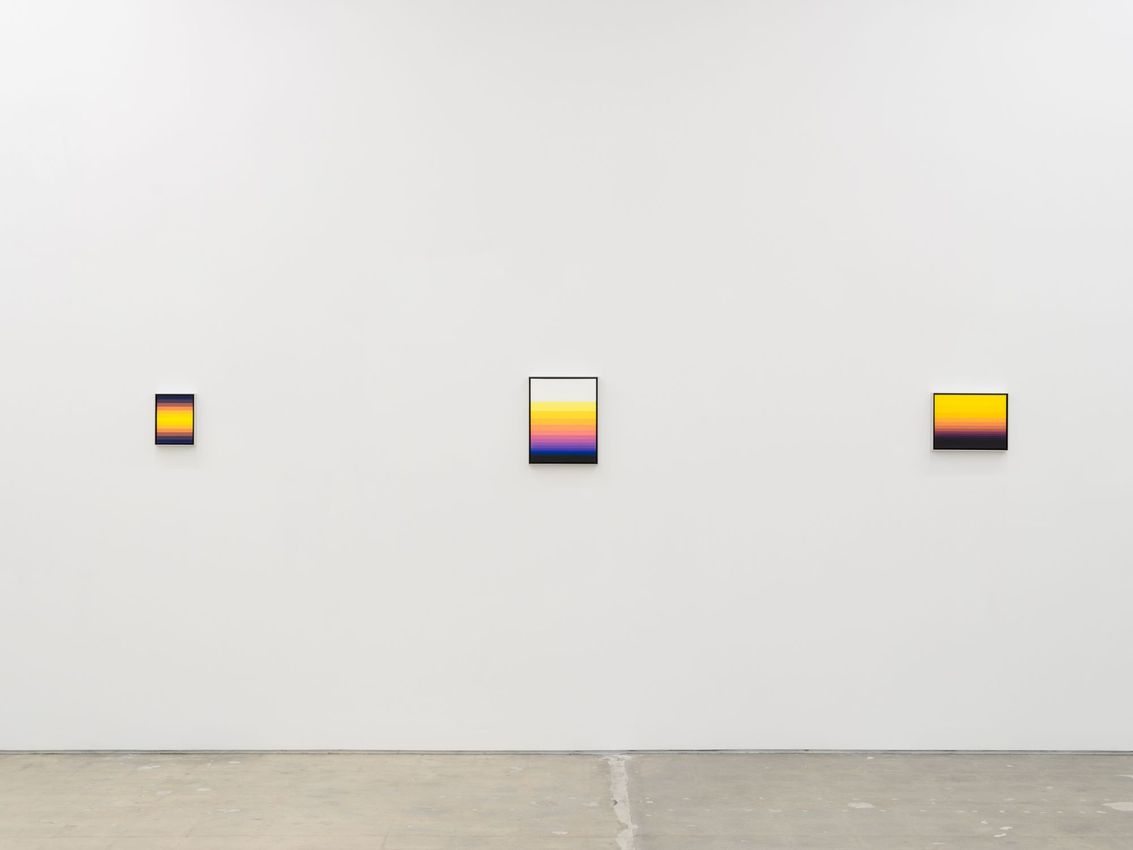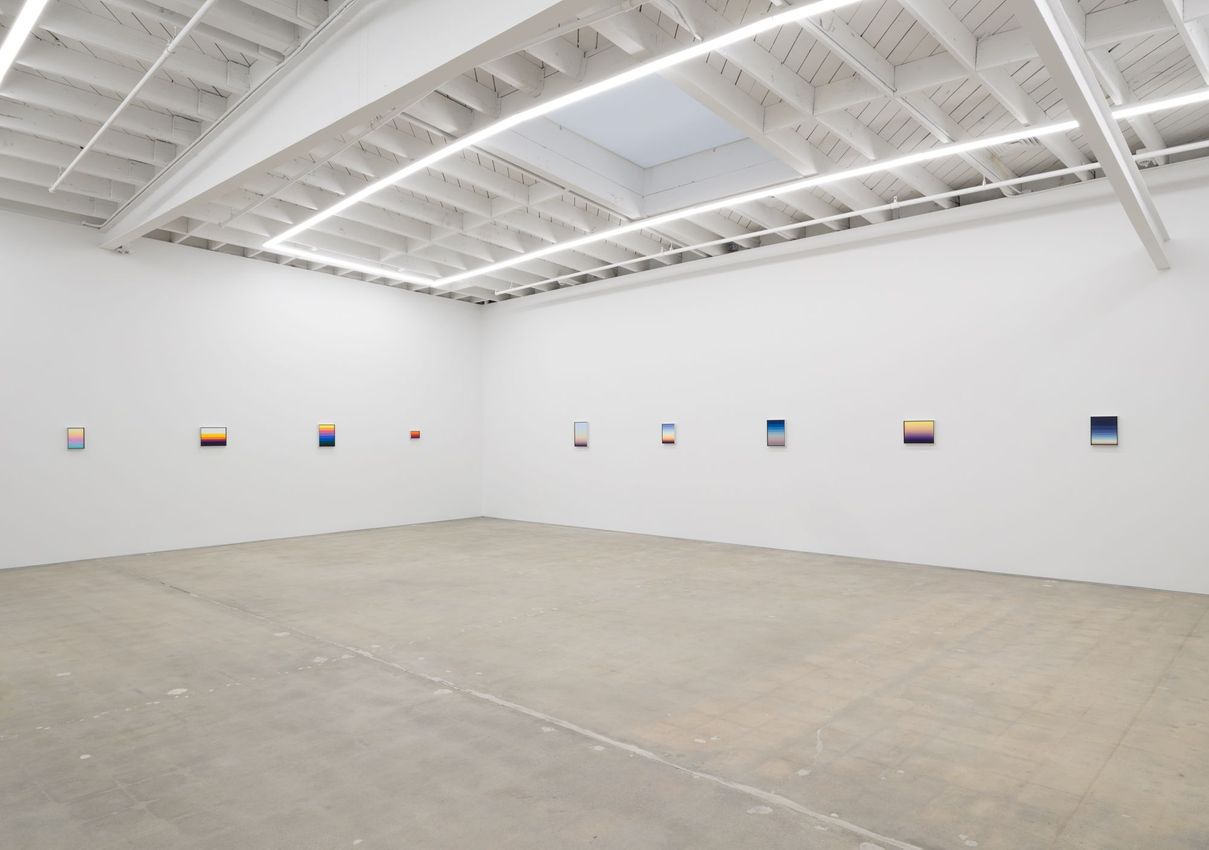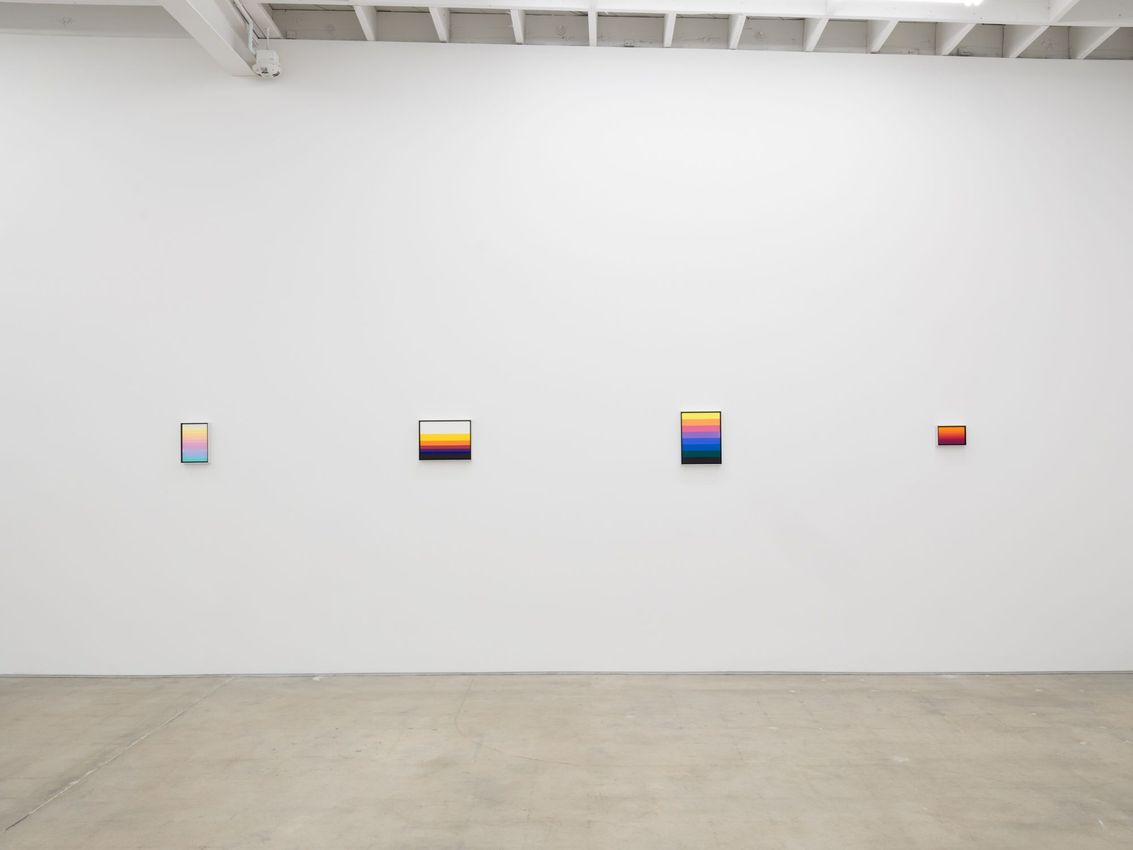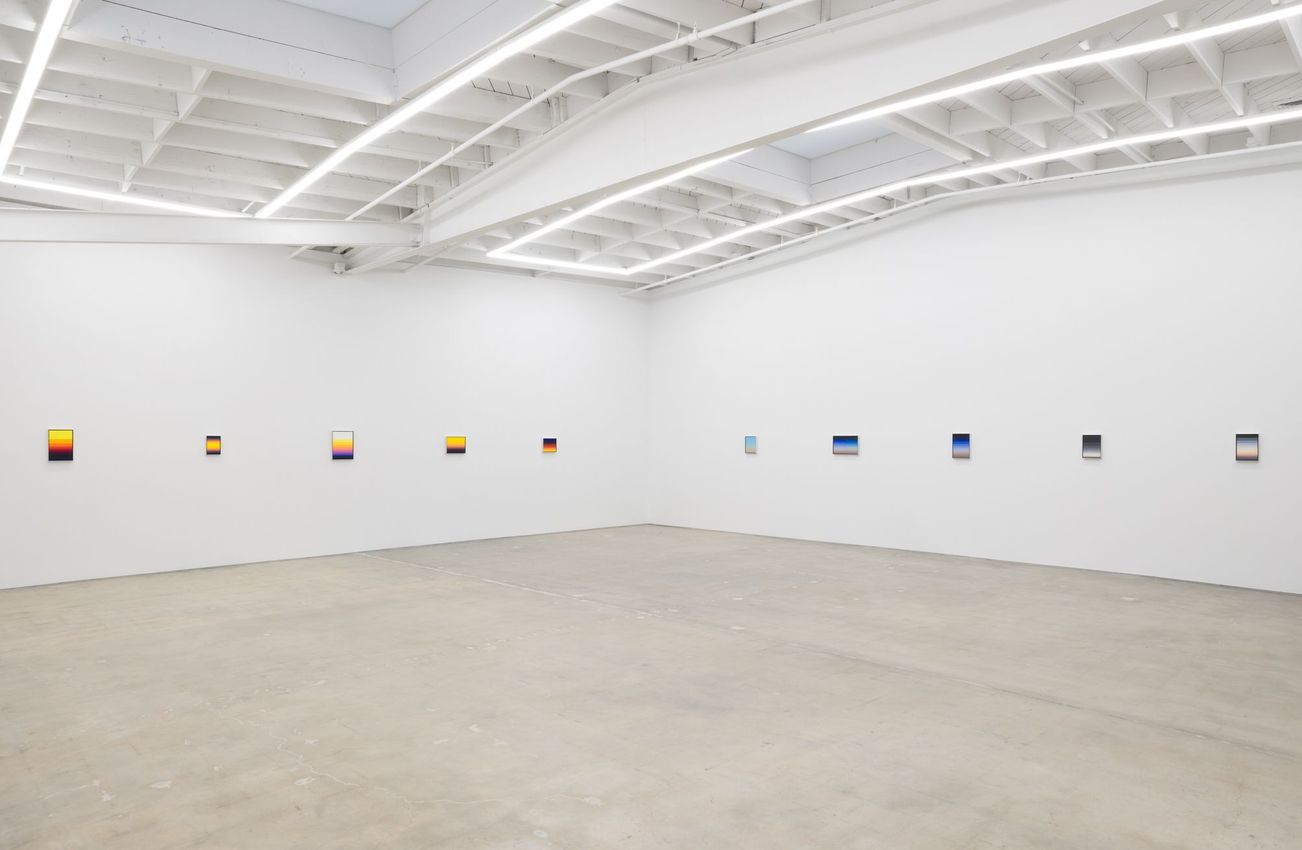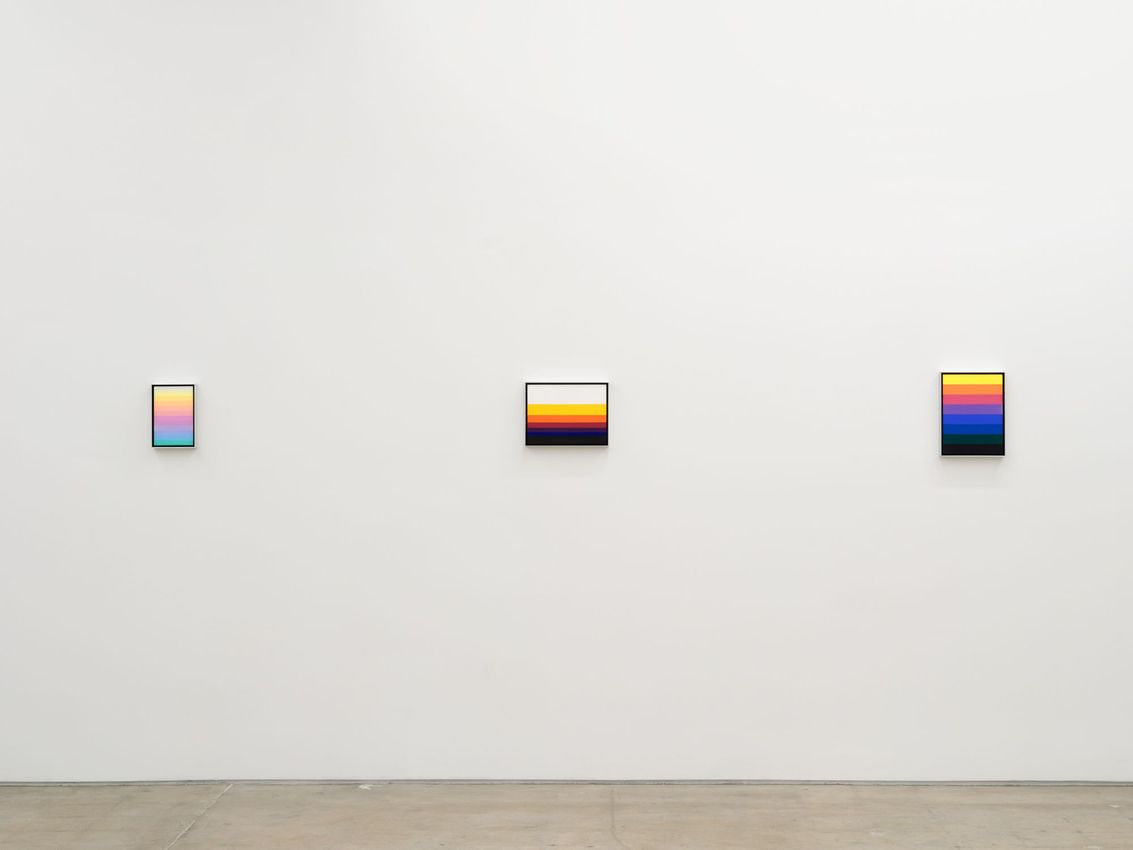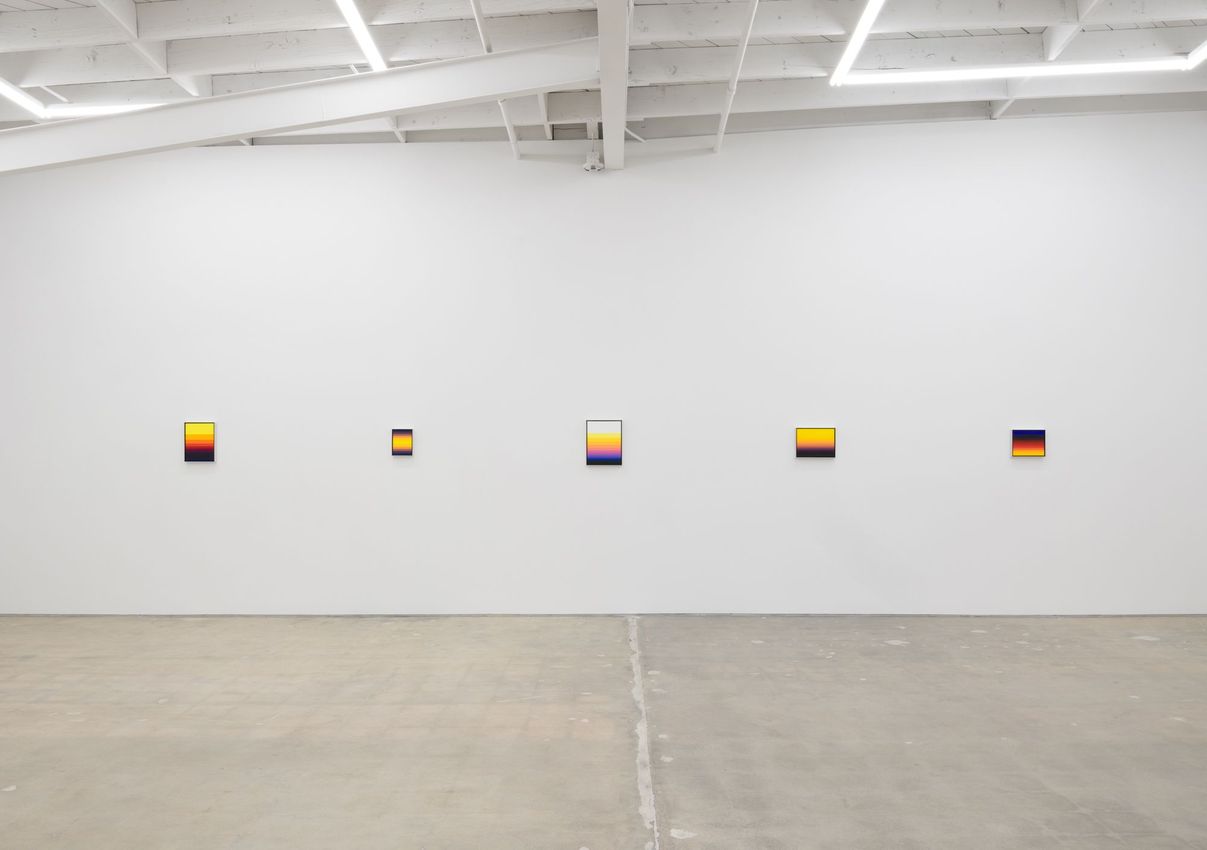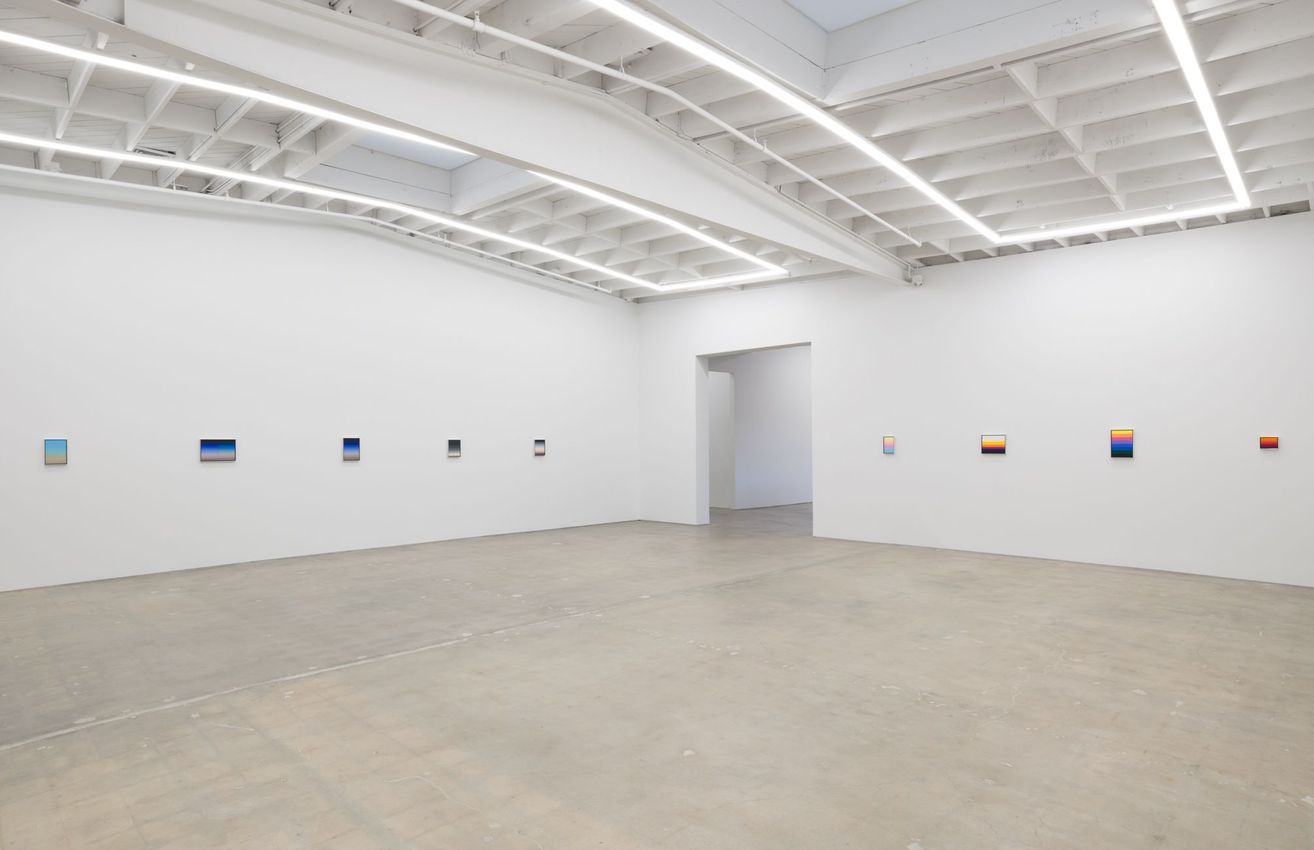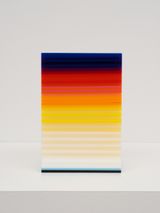




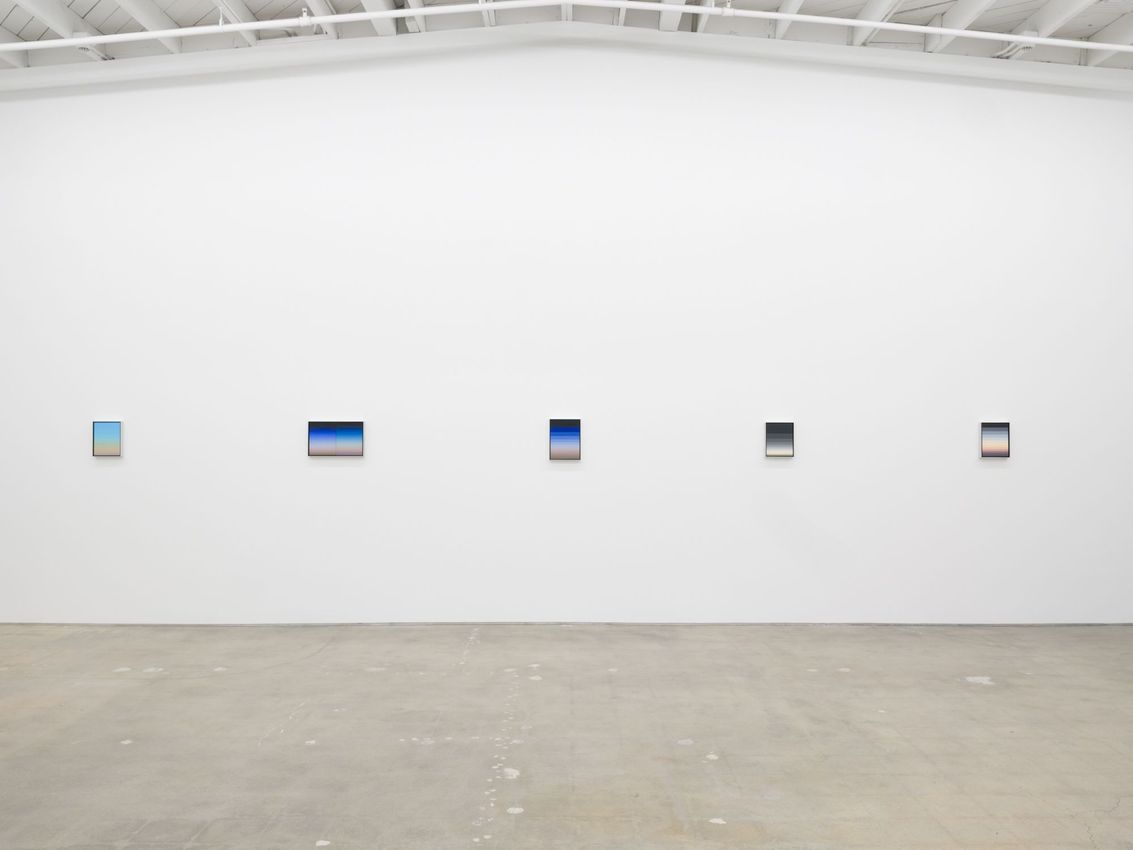
Karma presents Norman Zammitt, Band Paintings 1973–1992, open from November 10, 2023, to January 6, 2024, at 7351 Santa Monica Boulevard, Los Angeles. This is the Los Angeles artist’s first solo exhibition in the city in over a decade.
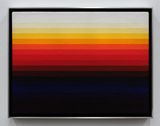
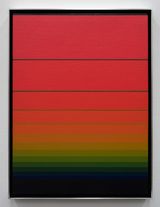
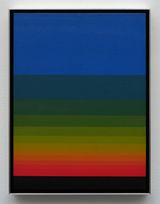
For over twenty years, Zammitt worked from daybreak to sundown seven days a week in a former dance studio in Pasadena to create a series of horizontally striped canvases in numerous sizes that would come to be known as the Band Paintings. Using an idiosyncratic colour-theory system of his own invention, the artist logarithmically calculated pigment weights precise to the thousandth of a gram, then suspended his mixtures in an acrylic medium. The transitions between stacked lines of colours project a luminosity as ethereal as the scattered rays of the sun. Inspired by and created in greater Los Angeles, the Band Paintings made their mark on the city: November 16, 2000, was officially “Norman Zammitt Day” in Los Angeles.
Zammitt and his family arrived in Southern California from Buffalo, New York, around 1945. Due to his mother’s membership in the Kanien’kehá:ka (Mohawk) nation of eastern Canada, he spent much of his early childhood living on the Kahnawá:ke Reservation near Montreal. In 1963, a faculty appointment at the University of New Mexico led to a yearlong stint in Albuquerque, after which Zammitt returned to greater Los Angeles, where he would live until his death in 2007. This spectrum of landscapes, and the varying qualities of natural light in each, informed the artist’s thinking about colour as possessing an inherent vitality. As he would write following the Los Angeles County Museum of Art’s acquisition of his monumental Band Painting Untitled (The Elusive Eureka) (1977–78):
“I had been thinking about the nature of colour, most specifically, the sequential nature of colour for most of my life. I was drawn to it, not by a decorative or superficial attraction but by something deep within the colour, akin to the feeling of life itself.”
Zammitt entered the Los Angeles art world at a key moment in its history. His first major body of work after graduating in 1961 from the Otis Art Institute—a breeding ground for progressive art in that period—consisted of semi-transparent plexiglass sculptures that encase and refract layers of colour. These early pieces are in conversation with the polyester resin works of Peter Alexander and John McCracken, among other artists working in modes that have since been categorised as Finish Fetish and Light and Space. The Band Paintings, many of which Zammitt made while referencing calculations from an Atari 800 computer program he developed with scholars from Pasadena’s California Institute of Technology, echo the mathematical precision of these art movements. These works also relate directly to the Hard-edge paintings that dominated the Los Angeles scene in the late 1950s in reaction to the gestural abstraction of the New York School.
Through paint alone, the Band Paintings achieve the radiance other artists were only able to create by manipulating light itself. Rather than figuratively depicting the sun as it moves through the sky, the Band Paintings engulf the viewer in its luminosity. ZBLKZAM.2D (1988) captures either the last moments of a sunset or the first of a sunrise as a thick band of inky blue slowly transitions into subsequently thinner gradations before grounding the composition in a thin gray horizon. _BLACK.4 _(1988) lends even a nocturnal palette a sense of weightlessness—remarkably, considering his works’ tonal depth, Zammitt never used black pigments. The searingly bright blue of Parabola Blue 3A/PB.3A (1989), on the other hand, evokes the quality of light filtered through a shallow tide pool. The dusky _KKCC _(1987) and NEW BLUE 5-A (1984) paintings, iterating within a range of dust-soaked blues, yellows, and reds, evince his attentiveness to the atmospheric subtleties of the Western landscape he called home for sixty-three years. “As long as I wake up in the morning and see the light pouring through my skylight here in California,” Zammitt wrote in 1981, “I am ready to work.”
Norman Zammitt (b. Toronto, 1931; d. Pasadena, California, 2007) made sculptures, paintings, and lithographs that utilize color theory to capture the mystical qualities of natural light. Zammitt was raised by a Sicilian father and a Mohawk mother in Ontario. The family then moved onto the Kahnawá:ke Reservation near Montreal, and later to Buffalo, New York, finally settling in Southern California when Zammitt was fourteen.


A respected voice in contemporary art discourse.
Focusing on ambitious storytelling and insightful art-world commentary. Ocula Magazine publishes in-depth interviews, critical essays and timely analysis on the artists, exhibitions and ideas driving the global art world.
Learn more about Ocula Magazine
Showcasing the best of the art world.
Ocula partners with galleries from around the world to highlight their artists, artworks and exhibitions. Gallery membership is by application and invitation, with each member vetted by an independent panel.
Learn more about Ocula Membership

Specialises in the sale of major artworks.
Led by a team with deep ties to the world’s leading auction houses, galleries and collectors. Ocula’s advisory team offers bespoke services to high-net-worth clients from around the world who are looking to acquire the best of contemporary and modern art.
Learn more about our team and services