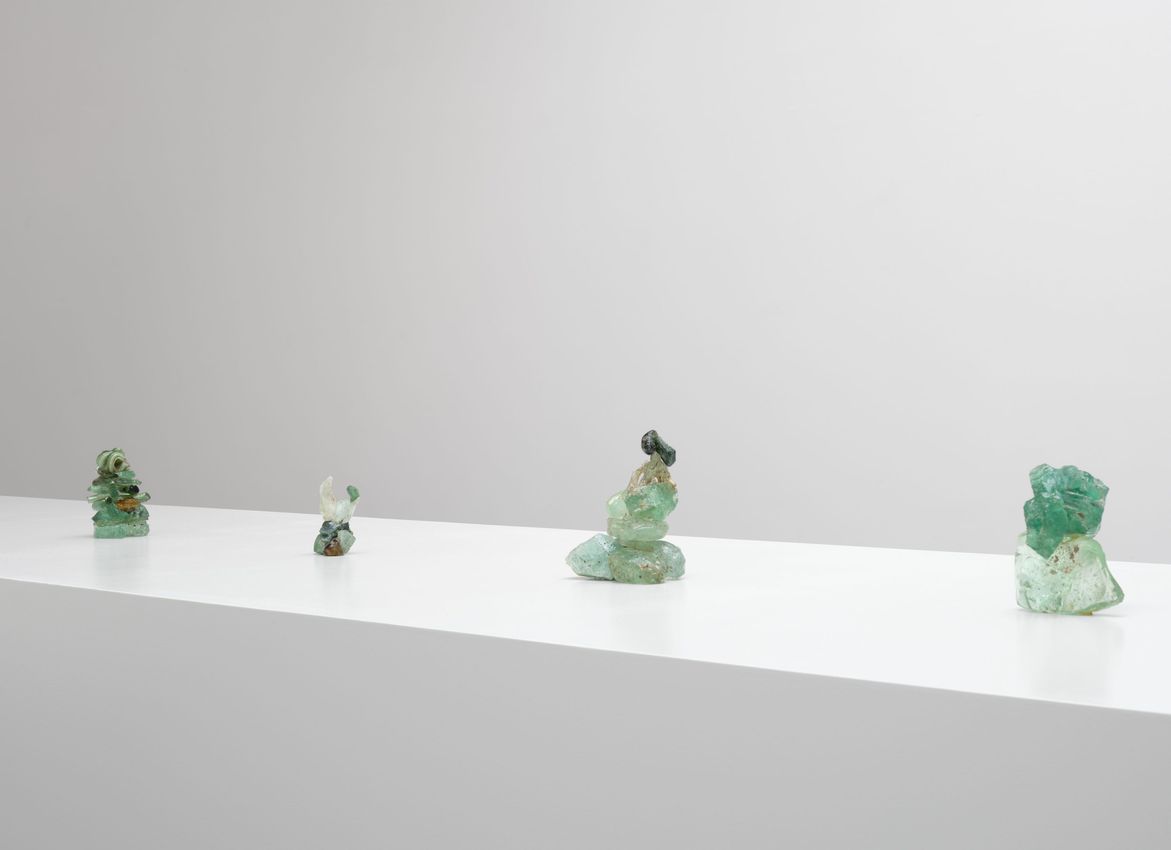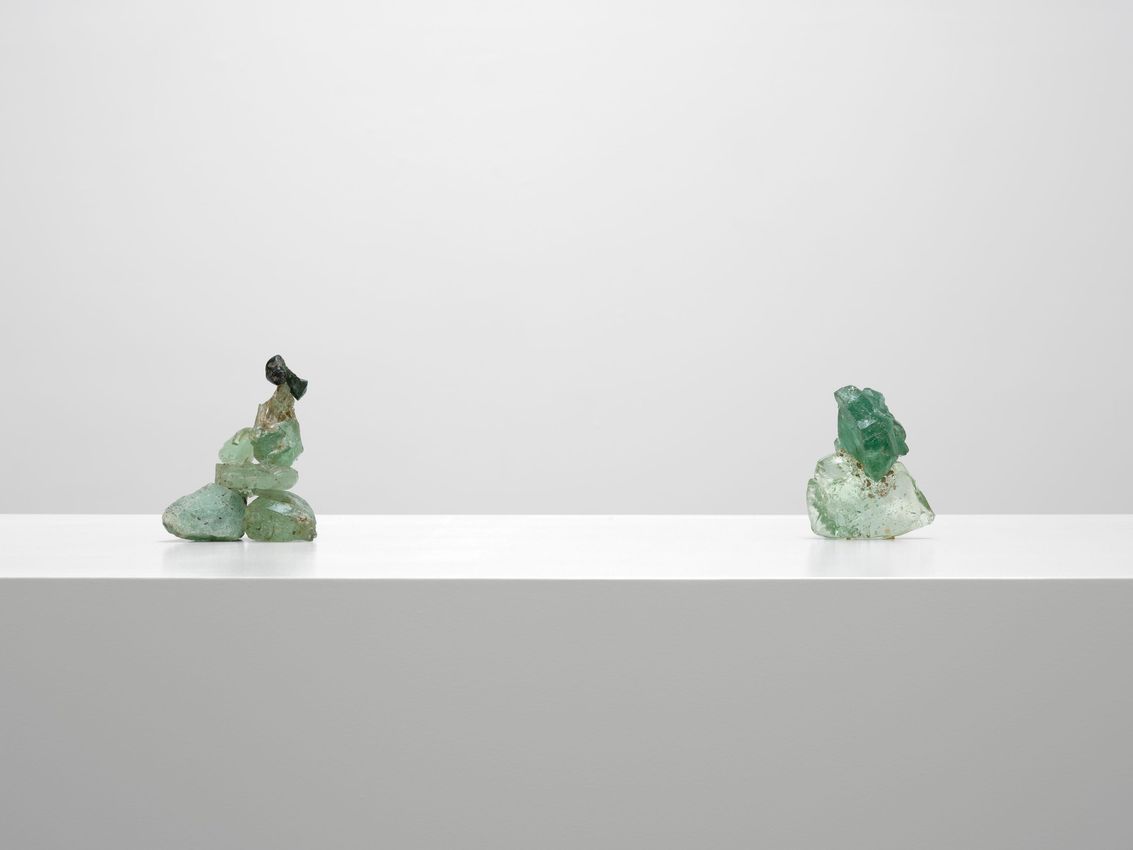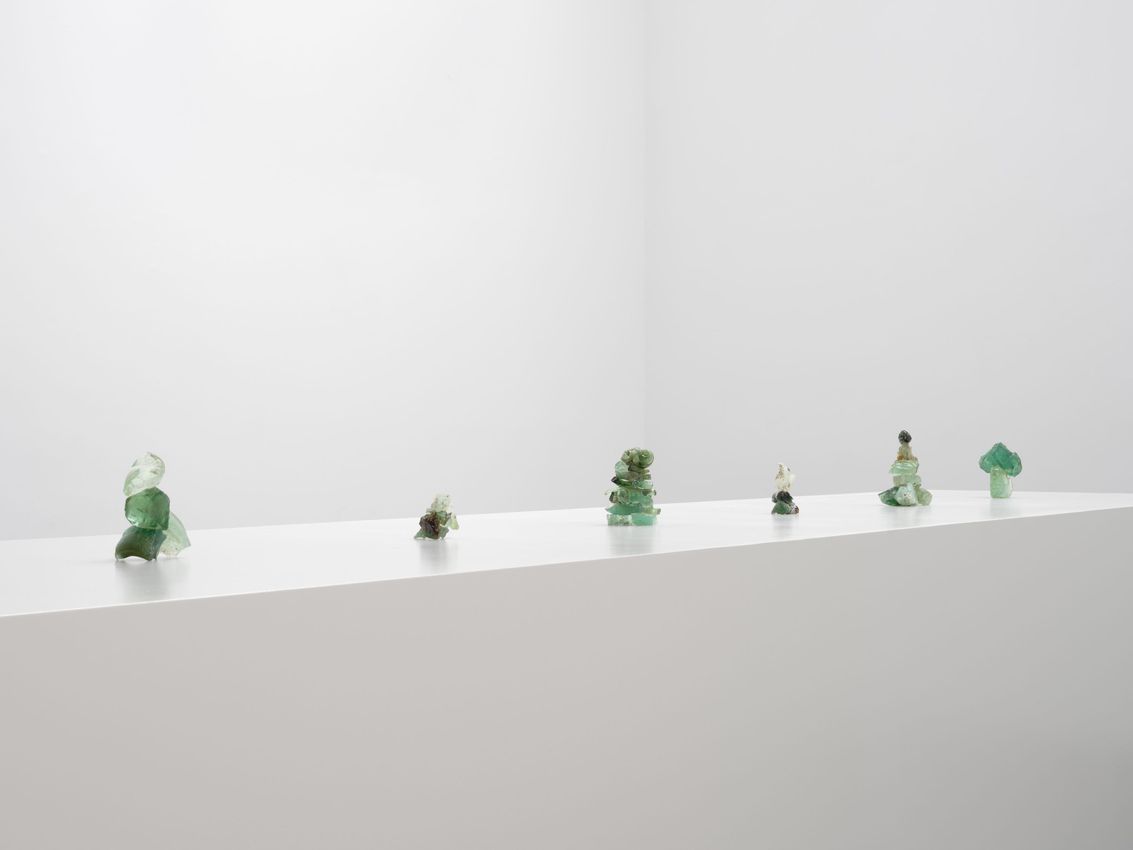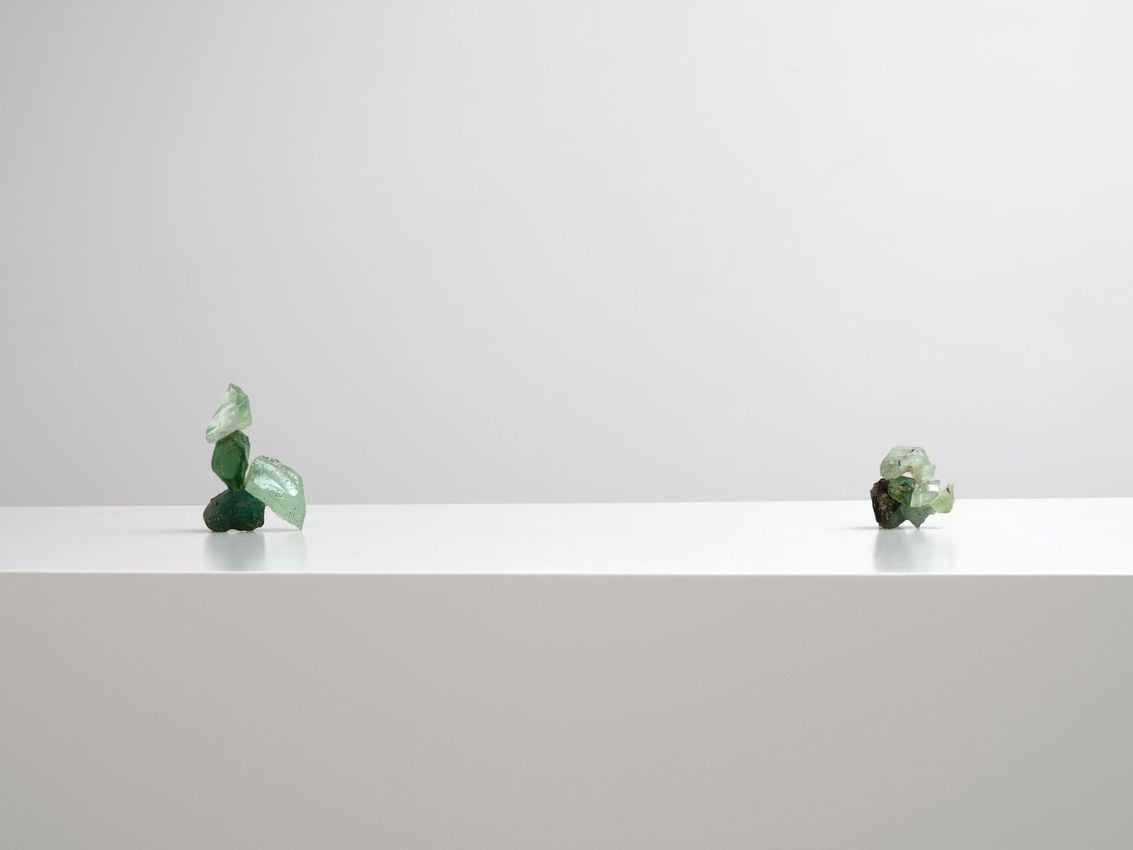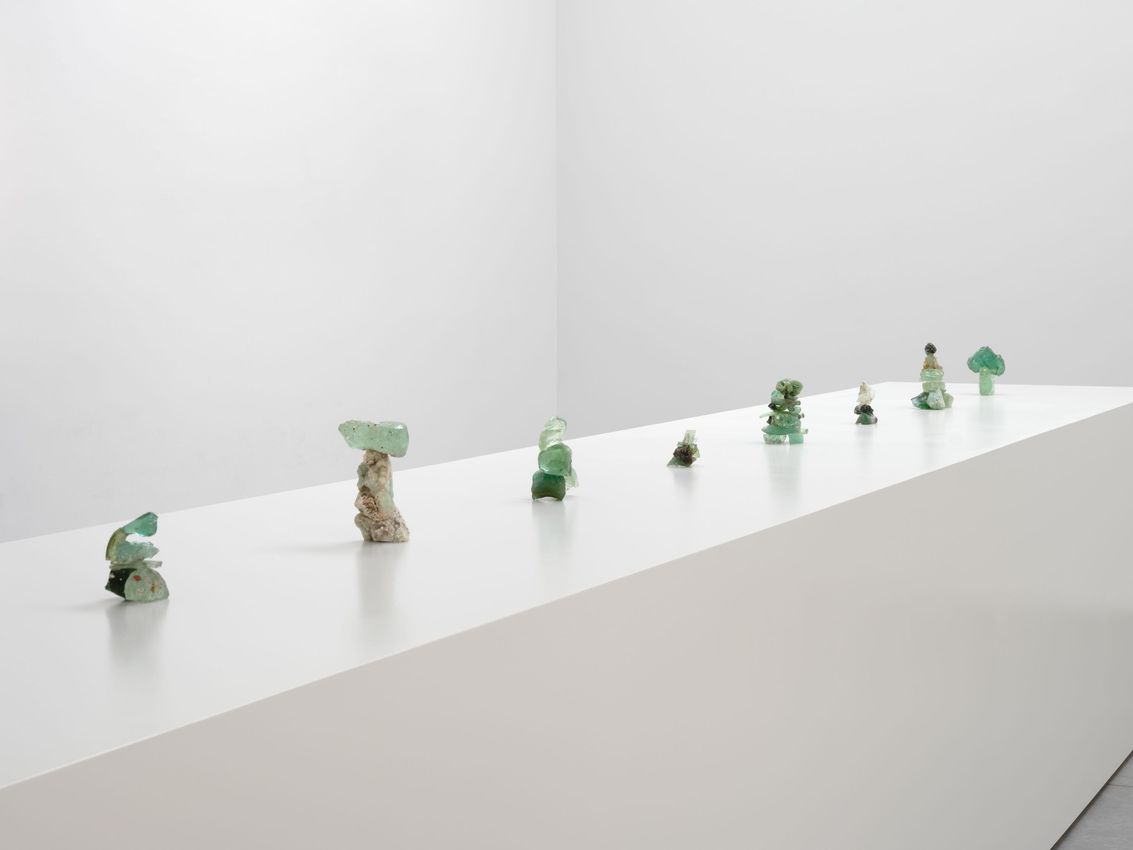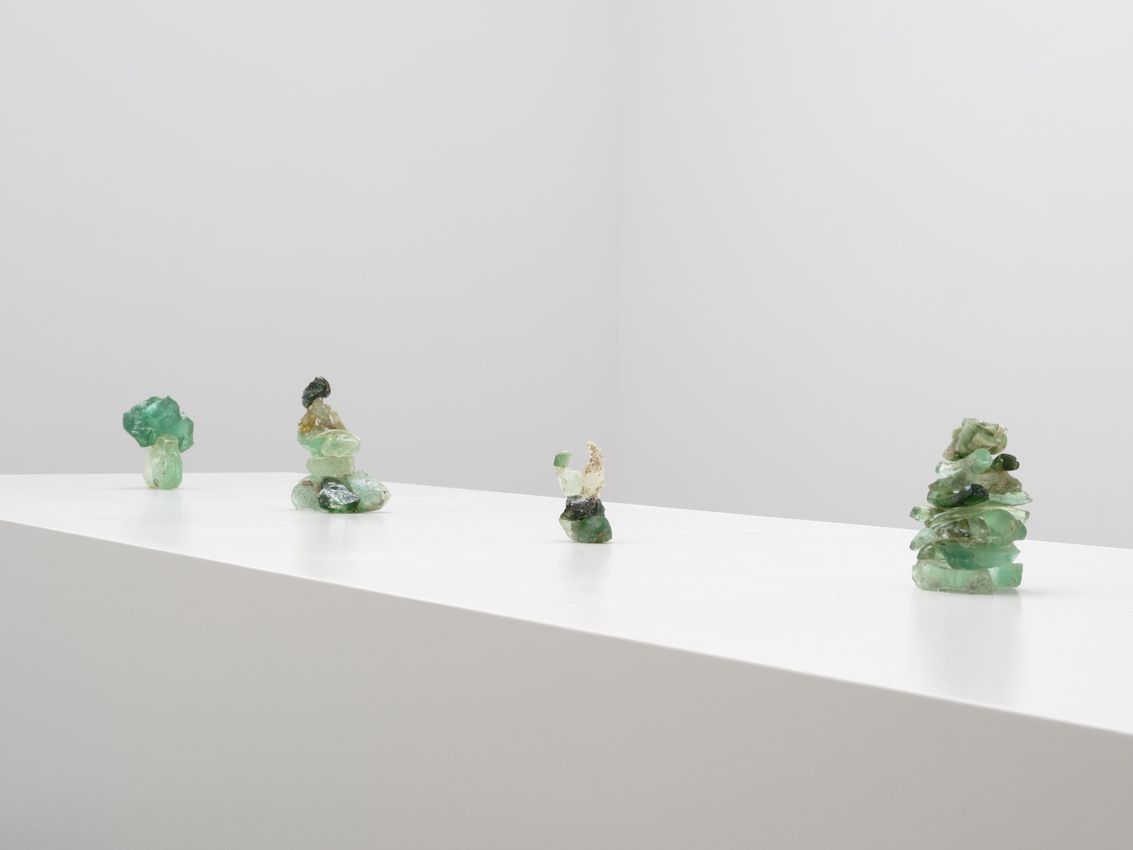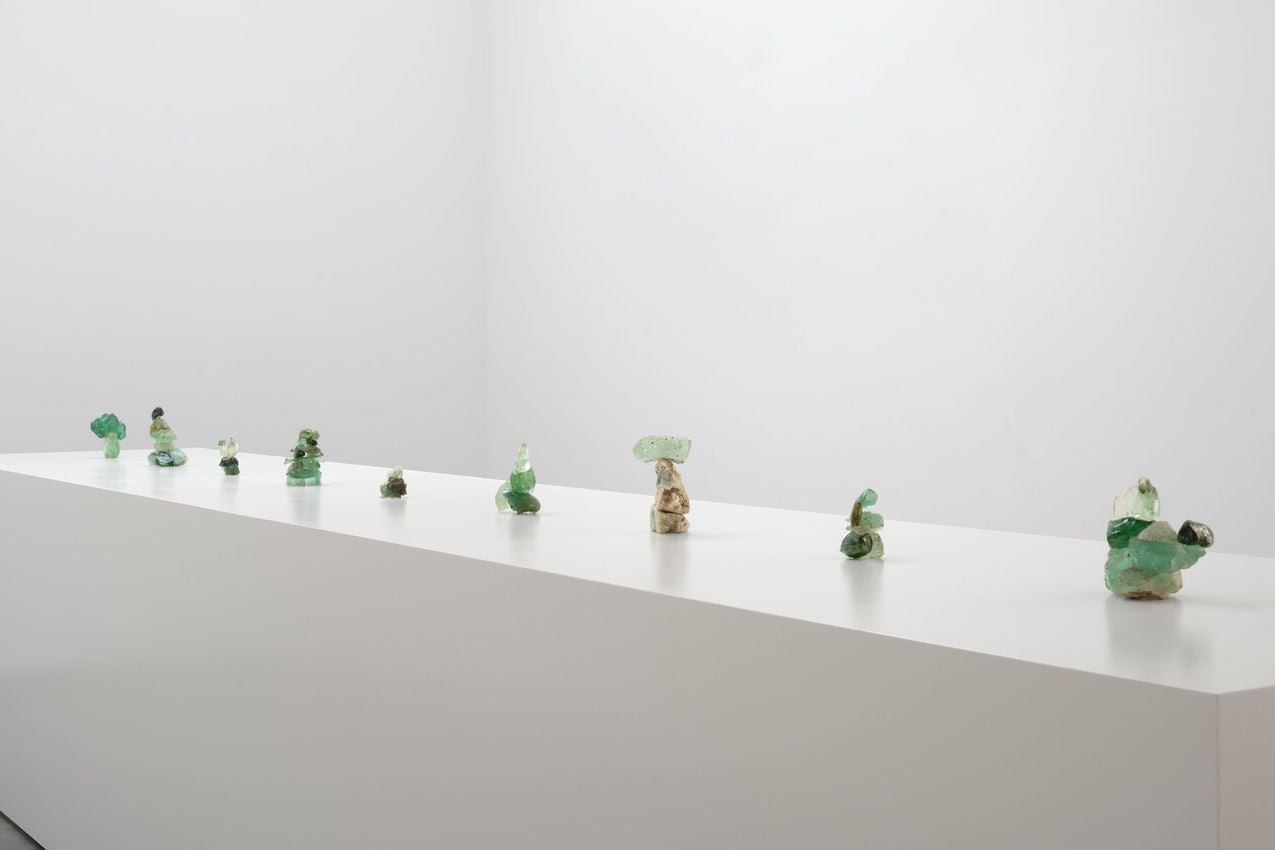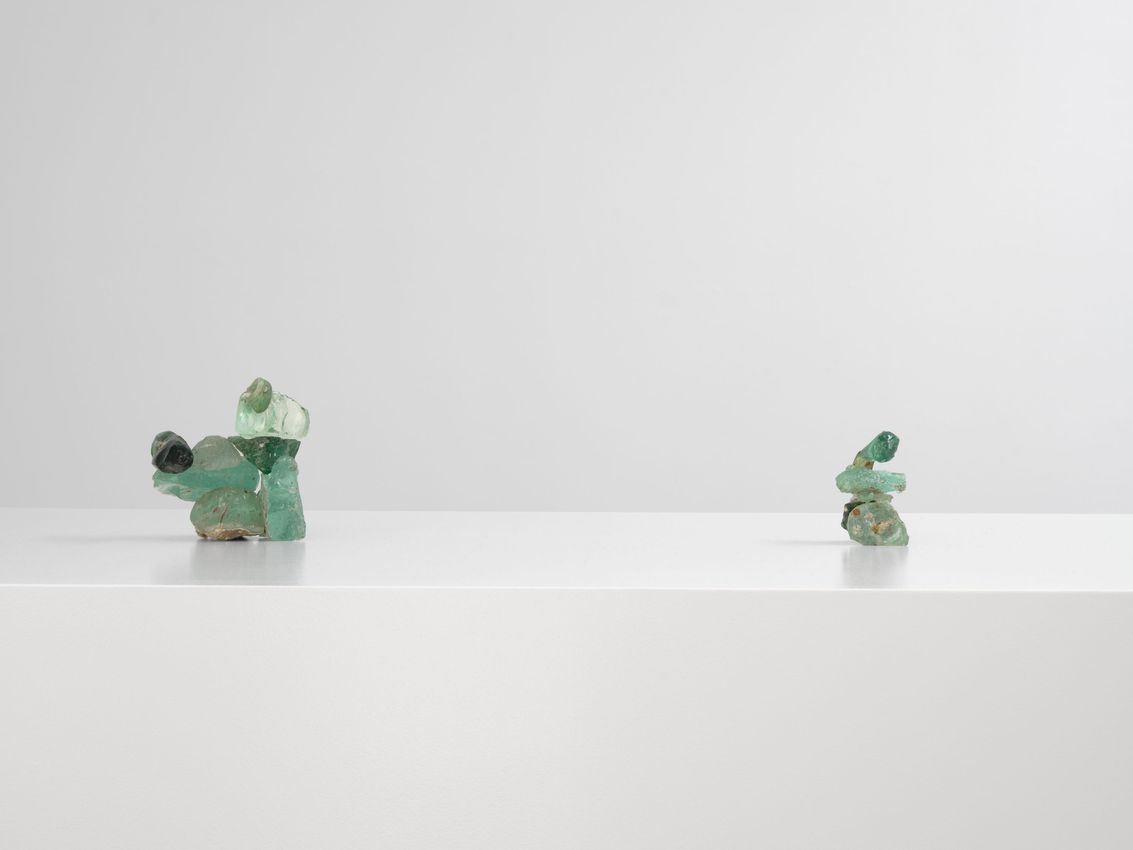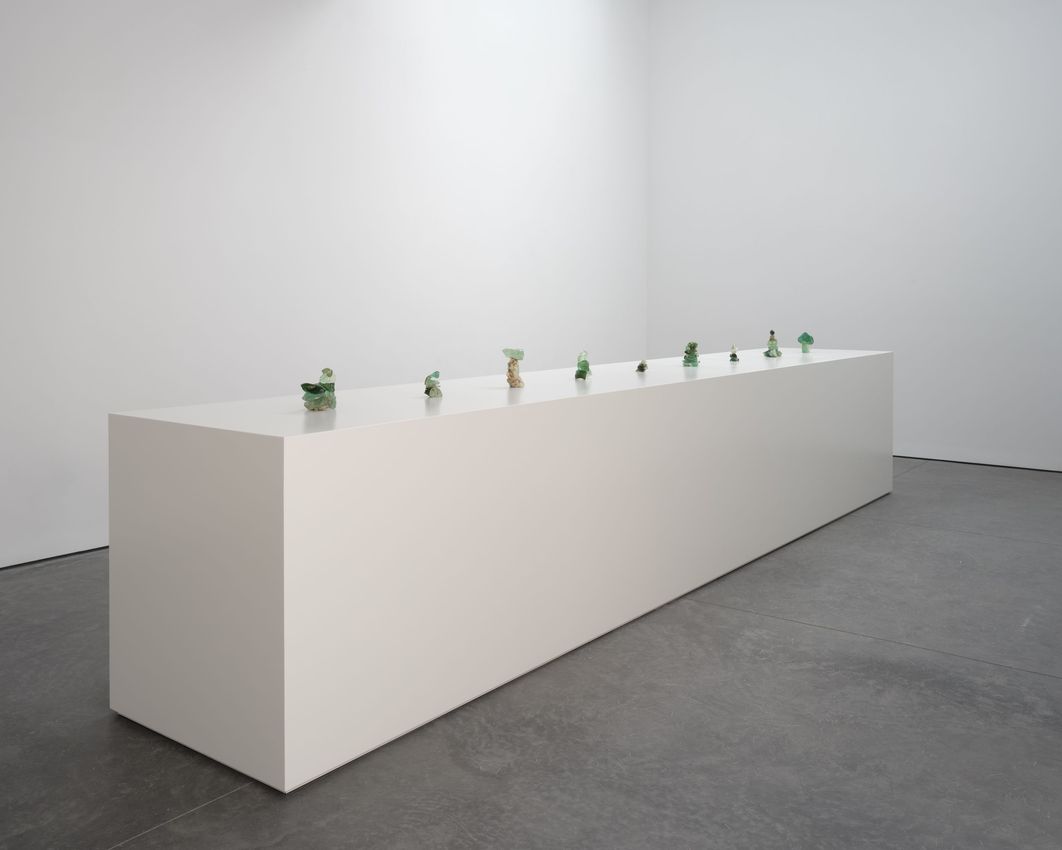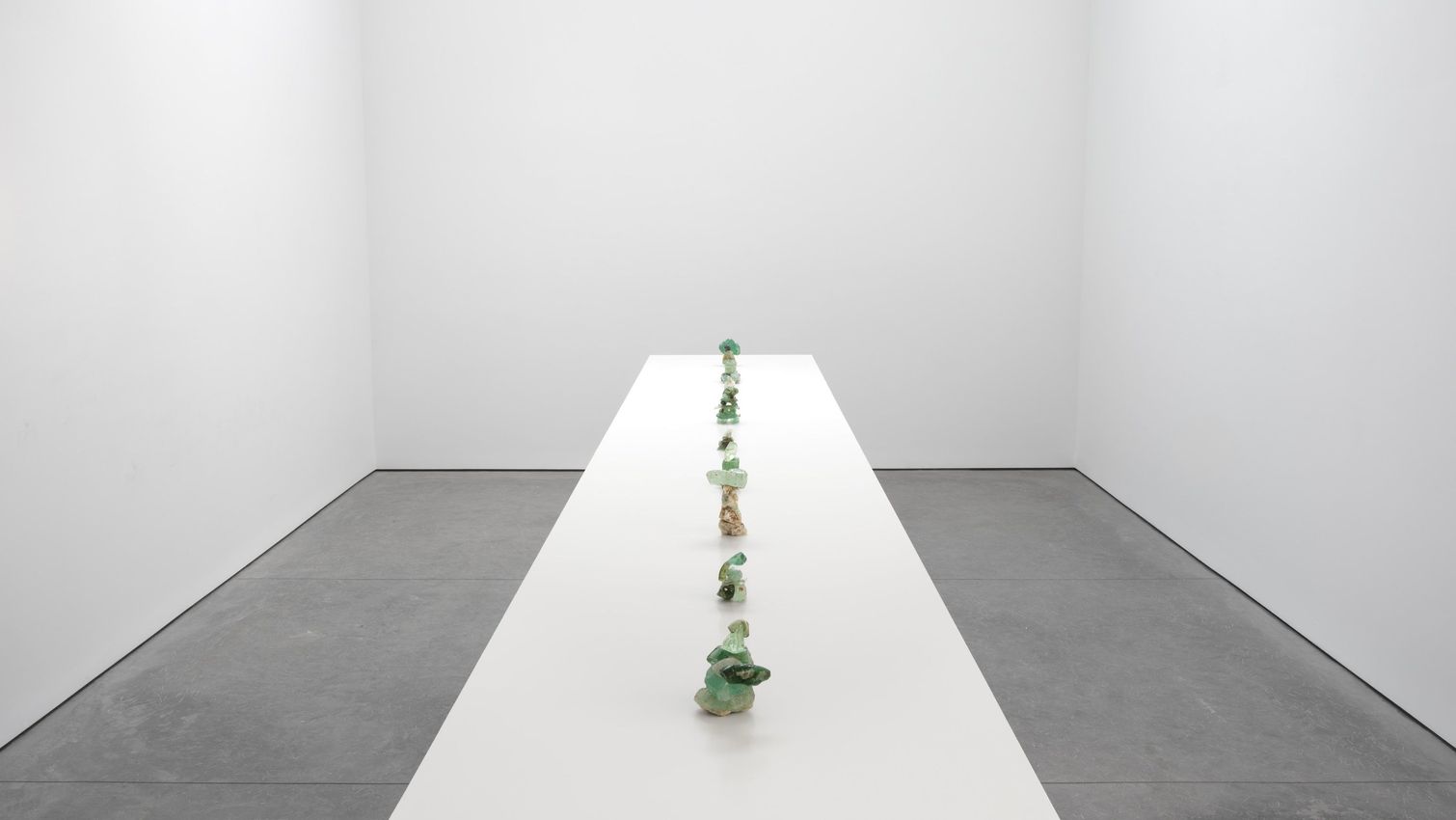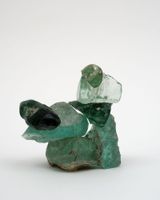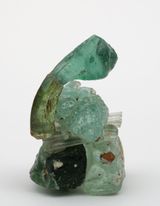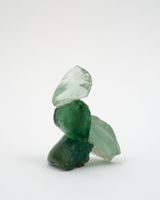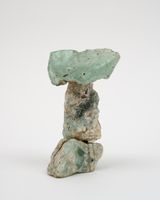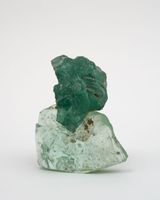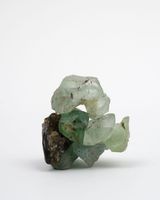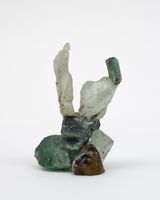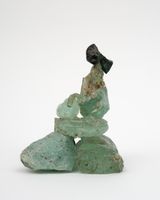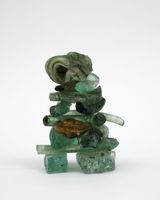




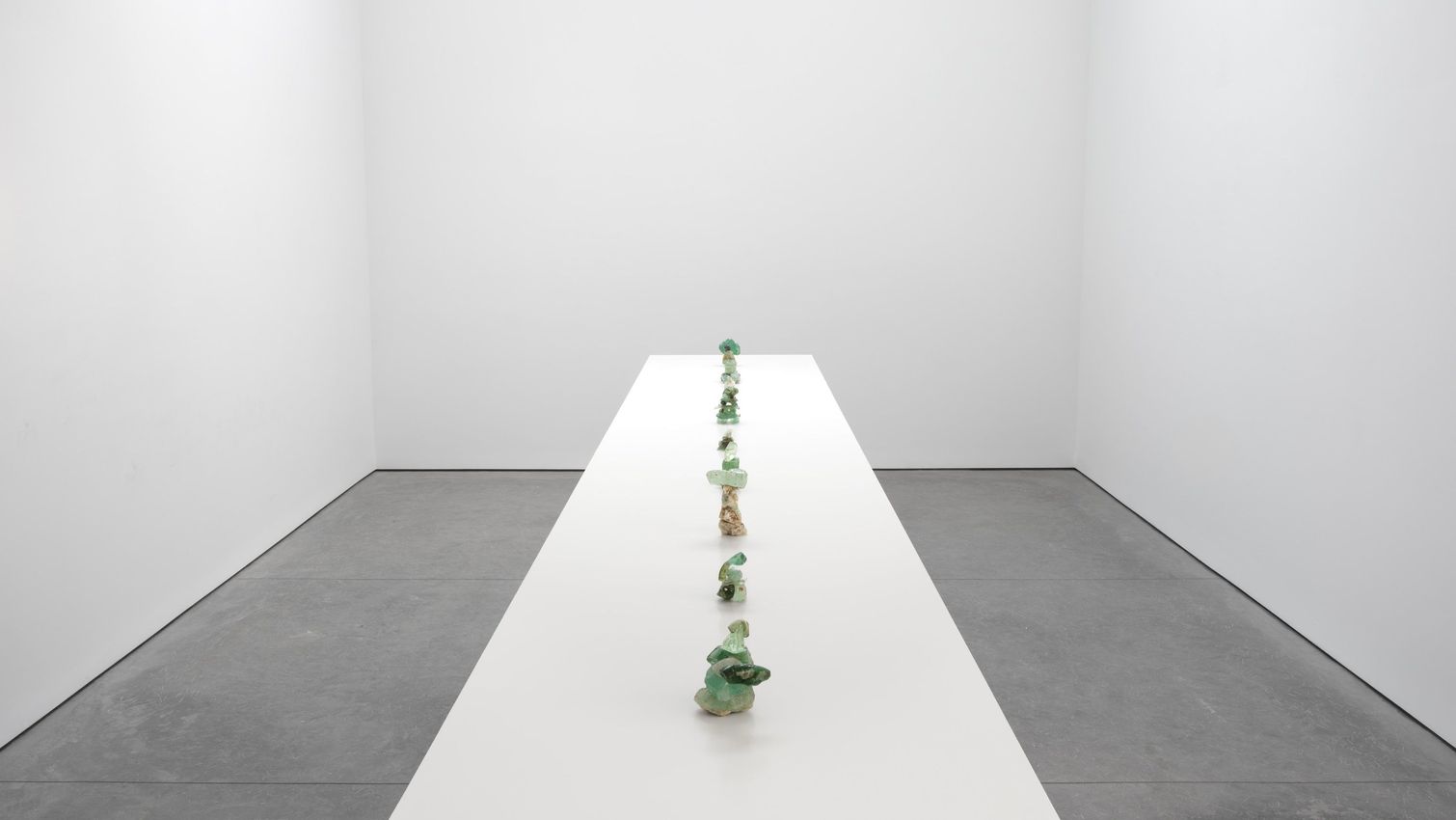
Between 2010 and 2013, sculptor Thaddeus Mosley, who has worked almost exclusively with wood since the 1950s, began experimenting with glass. Using fragments he collected forty years earlier from an abandoned bottle factory, the artist combined pieces of varying textures, colours, and shapes into an array of small-scale sculptures that are at once foils and companions to his often-monumental carved-wood sculptures. In both media, Mosley works with the inherent properties of the material rather than against them. Polished and molded by the elements and time, the fragments Mosley joined together each have their own unique character. The artist’s fusion of weather-buffed rounds into rhizomatic forms lends the sculptures an organic quality: one section branches out from the next as if its growth were inevitable; smaller clusters evoke barnacles or coral.
Before becoming associated with steel, Pittsburgh, which has been Mosley’s home for eight decades, was known as the centre of the glass industry in the United States—in 1926, when the artist was born, the city made about eighty percent of the country’s glass. Mosley’s use of this found material with a local history relates to his practice of salvaging wood from Pittsburgh’s forestry division and nearby lumber mills. With these glass sculptures, the artist chose pieces that are at turns crystalline and cloudy, ranging in surface texture from burnished smooth to jagged like the face of a cliff. Their palette—familiar to anyone who has combed shorelines for sea glass—is made up of an array of scintillating greens and blues. While Mosley’s rippling wood surfaces catch and reflect light, the glass sculptures refract it, revealing the bubbles and striations that mark their interiors and casting an almost transcendental glow on their surrounds. Mosley’s guiding principle of ‘weight in space’ remains key: despite the apparently precarious arrangements of glass elements, these sculptures remain stable, balanced through the artist’s careful calibration of mass and gravity.
Glass is Karma’s sixth presentation of Mosley’s work. Weight in Space, the most comprehensive monograph to date on his seven-decade-long sculptural practice, is forthcoming from Karma Books and can be pre-ordered here; it features contributions from Jessica Bell Brown, Sam Gilliam, Catharina Manchanda, Fred Moten, Jenée-Daria Strand, a conversation between the artist and Hans Ulrich Obrist, excerpts from an oral history conducted by Bridget R. Cooks and Amanda Tewes, and a chronology by Canada Choate.
Mosley’s sculptures are held in the collections of the Art Institute of Chicago; August Wilson African American Center, Pittsburgh; Baltimore Museum of Art, Maryland; Brooklyn Museum, New York; Carnegie Museum of Art, Pittsburgh; Colby College Museum of Art, Waterville, Maine; High Museum of Art, Atlanta; Mattress Factory, Pittsburgh; Portland Museum of Art, Maine; Seattle Art Museum; Solomon R. Guggenheim Museum, New York; Westmoreland Museum of American Art, Greensburg, Pennsylvania; and the Whitney Museum of American Art, New York.


Thaddeus Mosley (b. 1926, New Castle, PA) is a Pittsburgh-based self-taught artistwhose monumental sculptures are crafted with the felled trees ofPittsburgh’s urban canopy, via the city’s Forestry Division; wood fromlocal sawmills; and reclaimed building materials. Using only a malletand chisel, he reworks salvaged timber into biomorphic forms. Withinfluences rang-ing from Isamu Noguchi to Constantin Brâncuși—and theBamum, Dogon, Baoulé, Senufo, Dan, and Mossi works of his personalcollection—Mosley’s sculptures mark an inflection point in the historyof American abstraction. These “sculptural improvisations,” as he callsthem, take cues from the modernist traditions of jazz. “The only wayyou can really achieve something is if you’re not working so much from apattern,” Mosley says of his improvisational method. “That’s also theessence of good jazz.” Mosley had his first Karma solo exhibition in2020, and was commissioned for the 2020 edition of Frieze Sculpture atRockefeller Center, New York.


A respected voice in contemporary art discourse.
Focusing on ambitious storytelling and insightful art-world commentary. Ocula Magazine publishes in-depth interviews, critical essays and timely analysis on the artists, exhibitions and ideas driving the global art world.
Learn more about Ocula Magazine
Showcasing the best of the art world.
Ocula partners with galleries from around the world to highlight their artists, artworks and exhibitions. Gallery membership is by application and invitation, with each member vetted by an independent panel.
Learn more about Ocula Membership

Specialises in the sale of major artworks.
Led by a team with deep ties to the world’s leading auction houses, galleries and collectors. Ocula’s advisory team offers bespoke services to high-net-worth clients from around the world who are looking to acquire the best of contemporary and modern art.
Learn more about our team and services