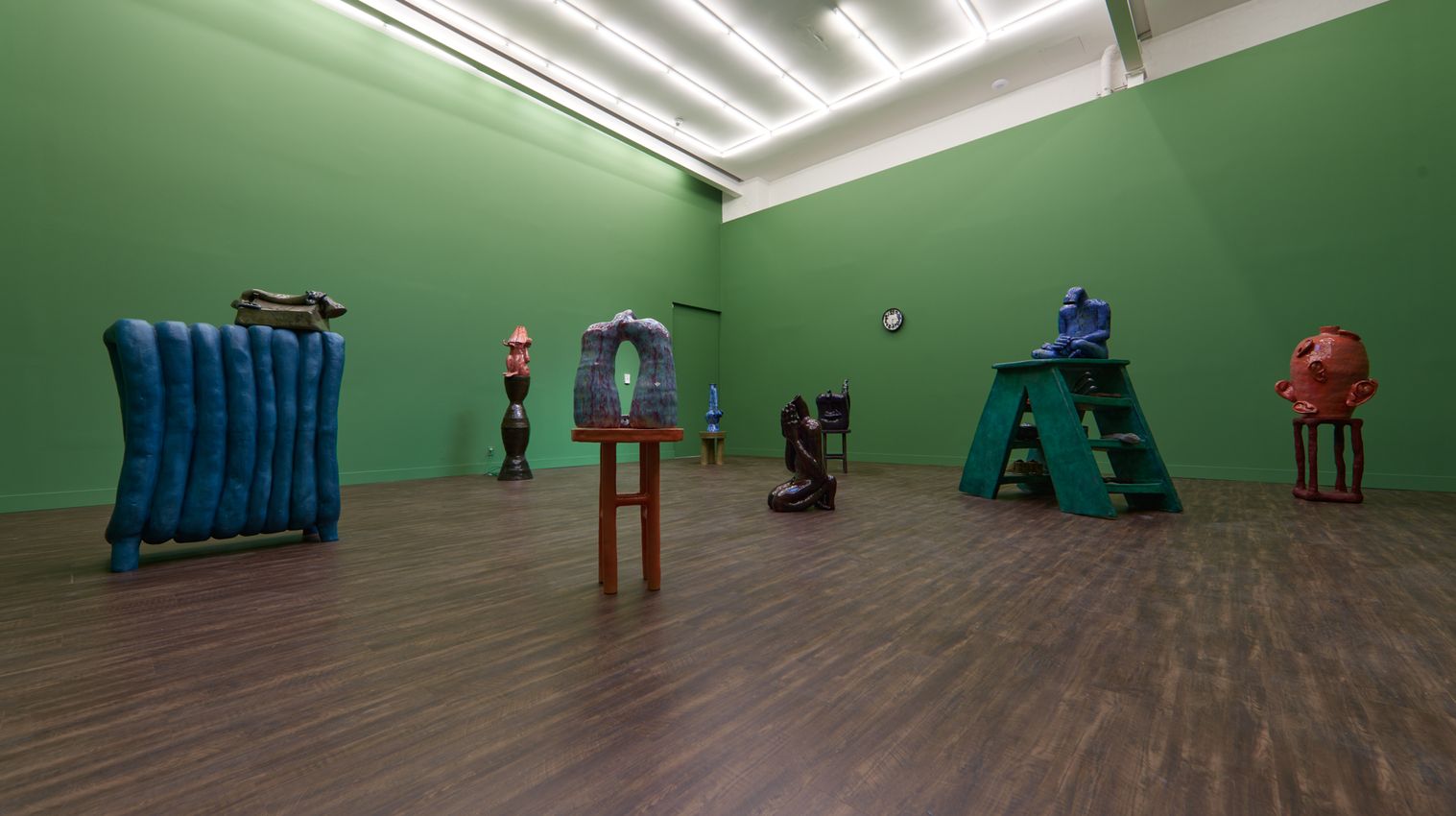
Karma is pleased to present Maybe tomorrow, an exhibition of sculptural work by Woody De Othello. The show is located at Karma’s 22 East 2nd Street location and will run from September 24th through November 5th, 2022.
Maybe tomorrow takes its name from a catchy, unsettling 1971 tune by jazz musician Grant Green. The return of the song’s darkly melodic hook was often stuck in Woody De Othello’s head while he worked in his Bay Area studio.
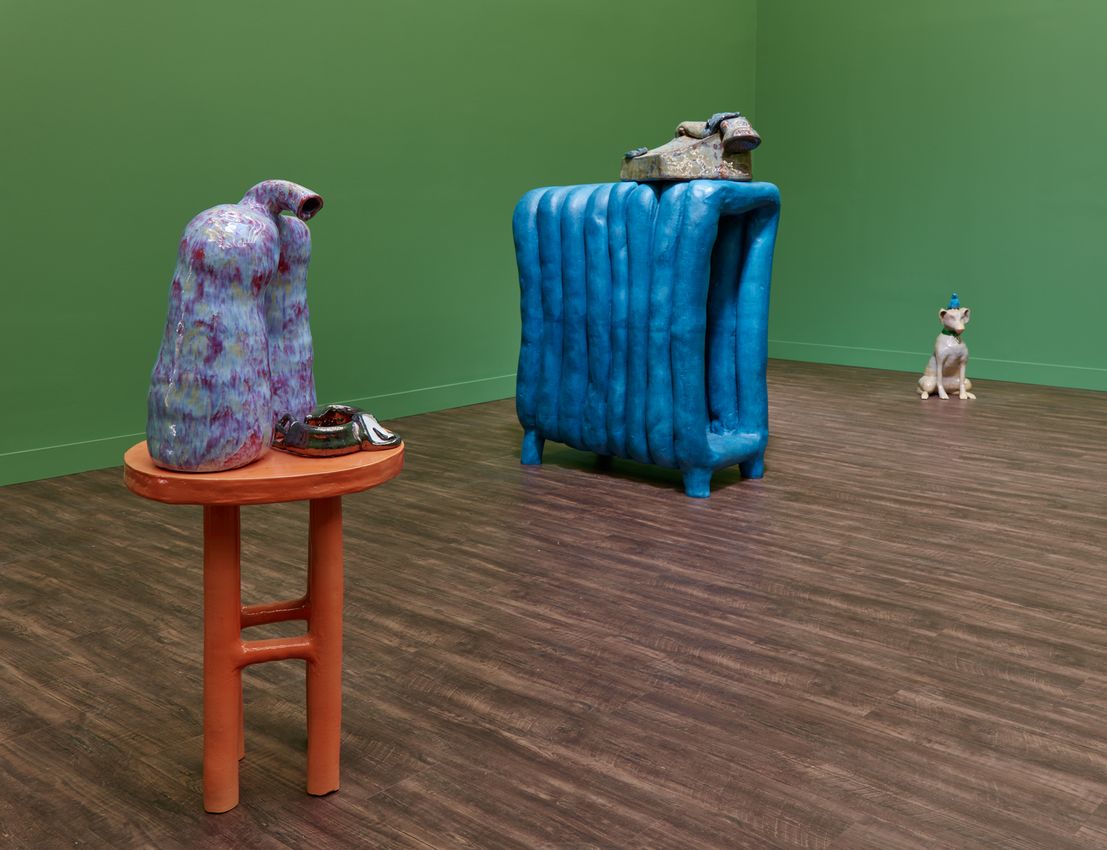
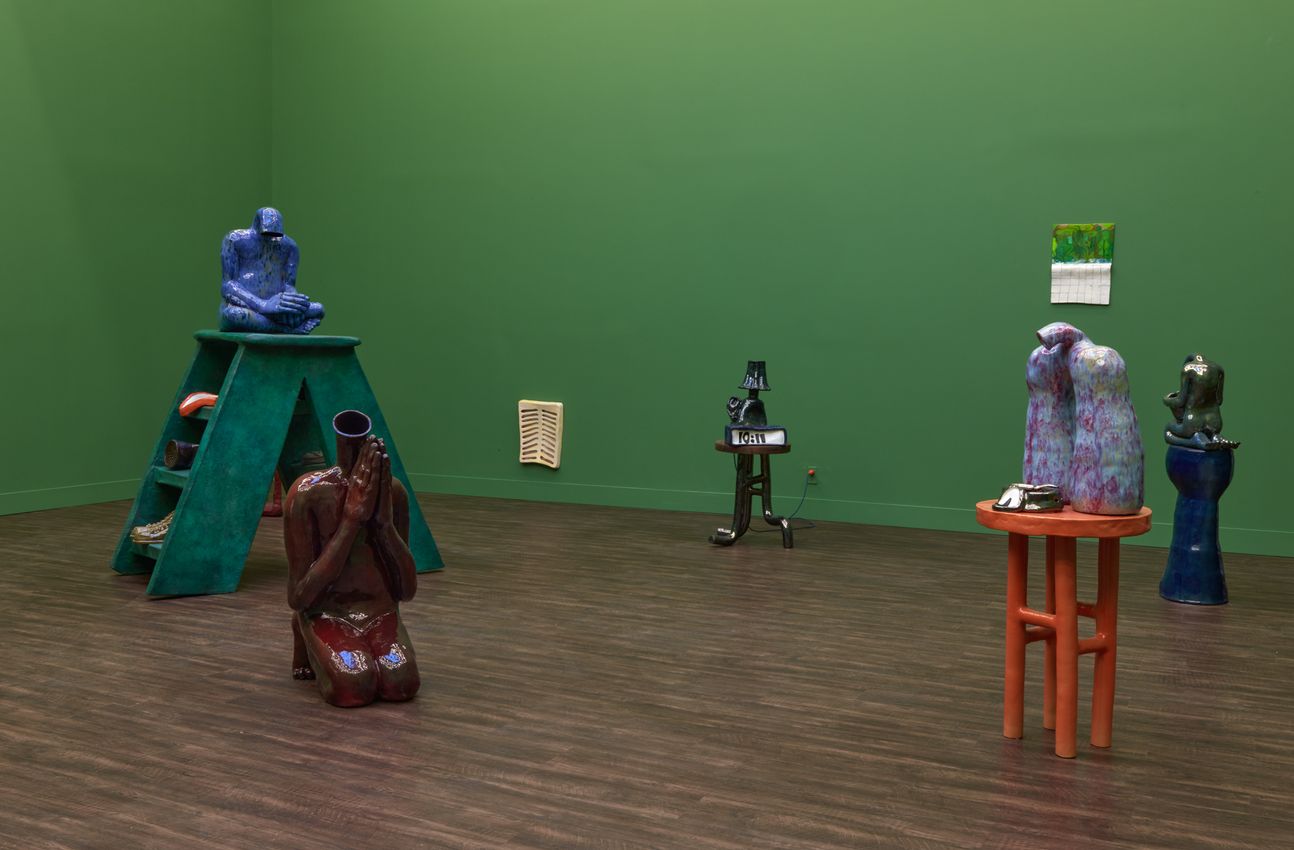
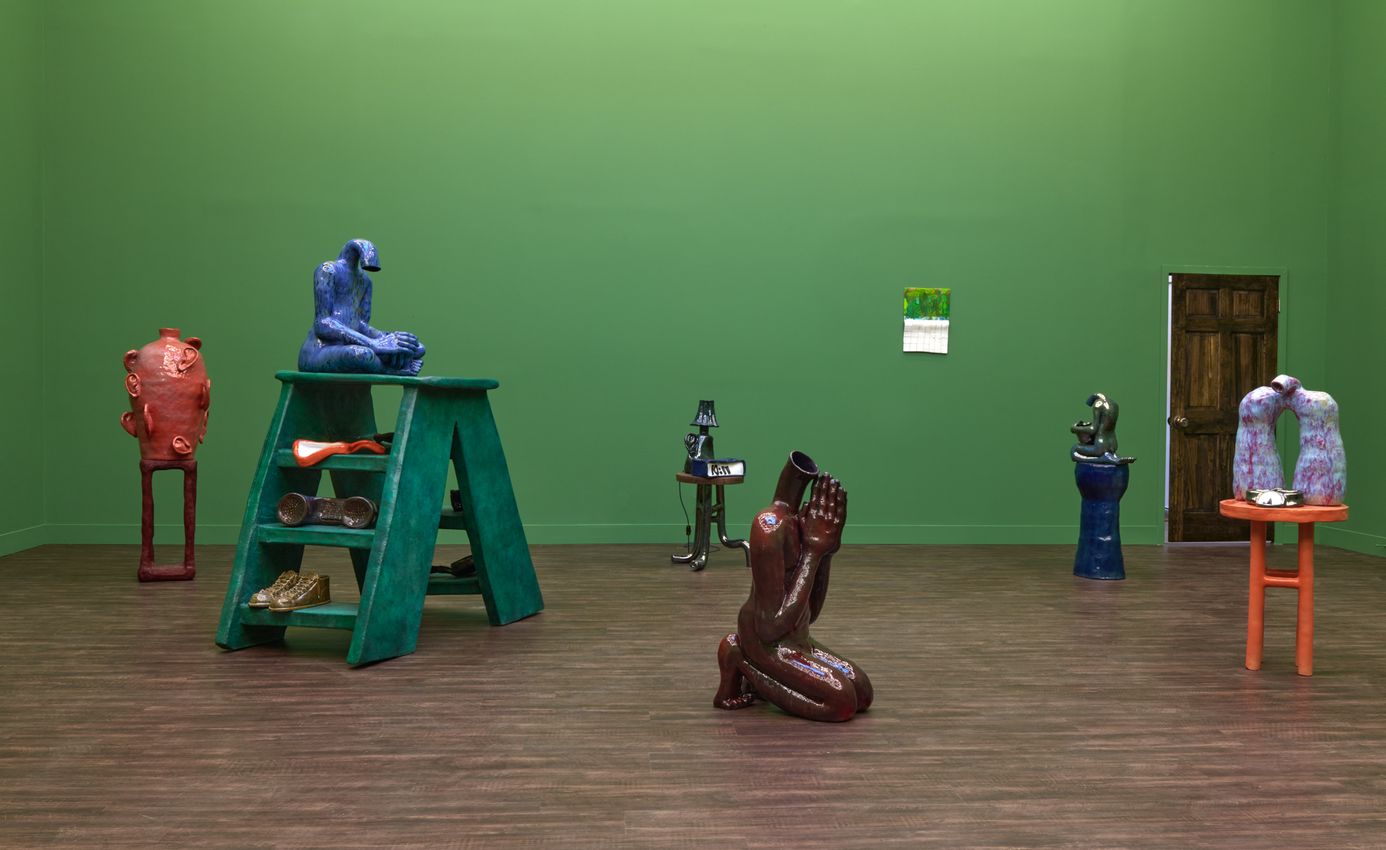
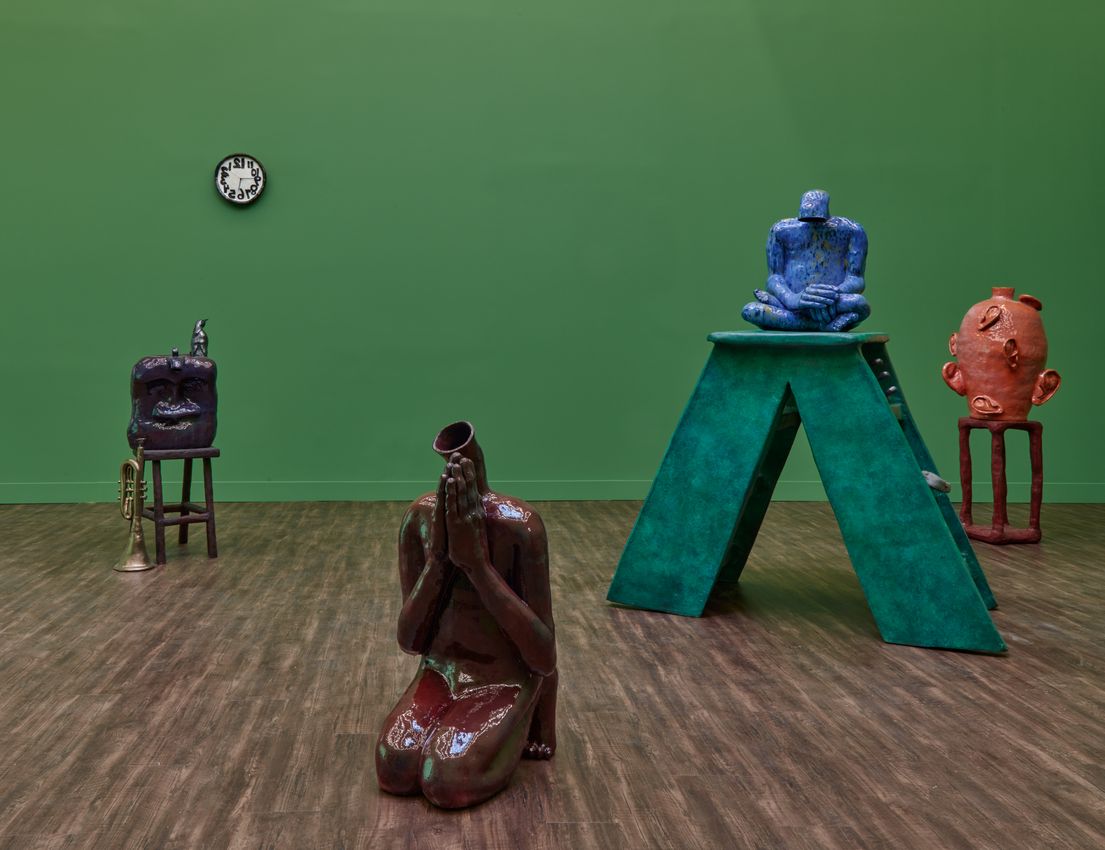
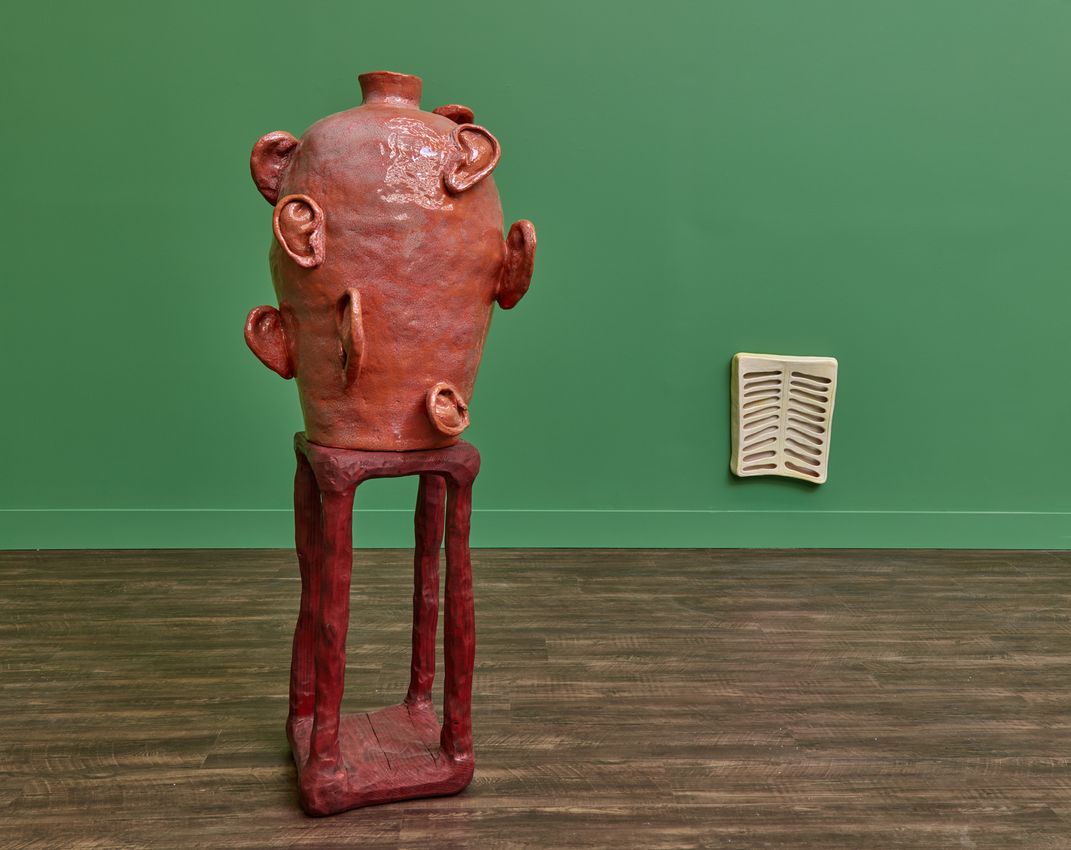
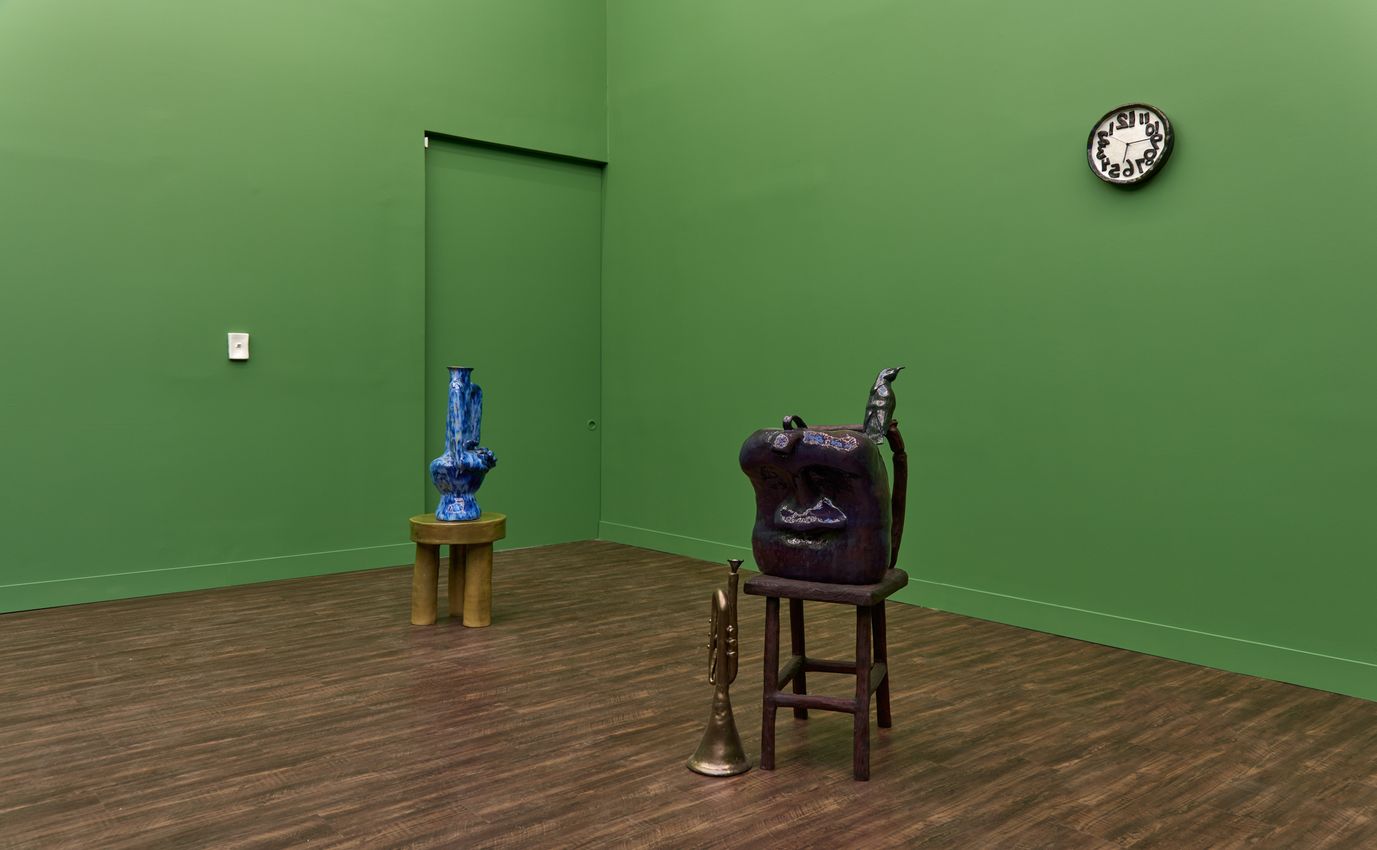
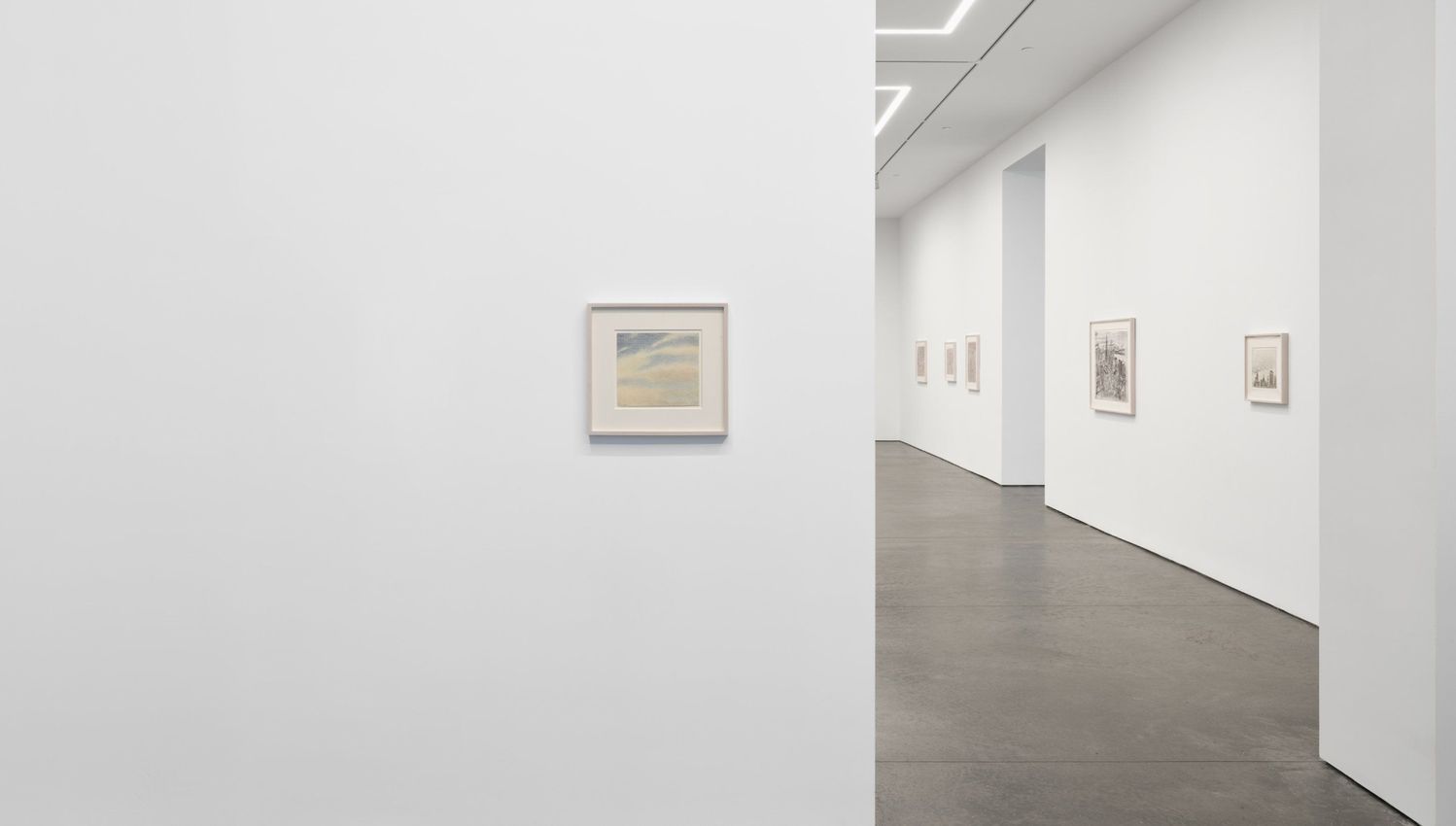
In Maybe tomorrow, the gallery becomes the site of an architectural intervention. Passing through the entrance to the gallery, a second doorway greets the viewer, behind which hides the exhibition. Inside, concrete floors and walls are covered up, transformed by wooden floorboards and vibrant green walls. Within them, Othello has created a site of transportation where a multitude of mise-en-scenes are staged, and the passage of time is replaced with a strange current. This immersive installation recalls Othello’s earliest sculptural works, made when he was still in his undergraduate years that were set in unexpected surroundings such as bodegas and barbershops.
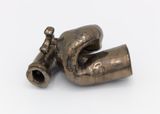
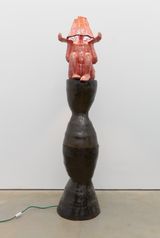
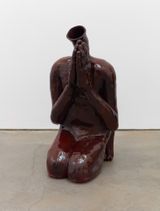
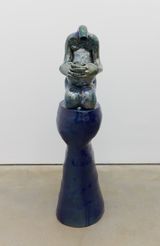
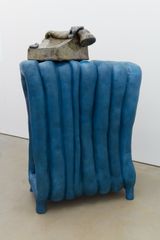
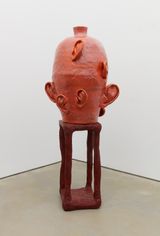
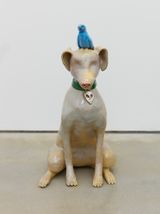
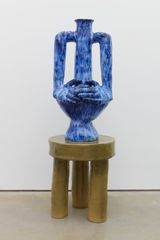
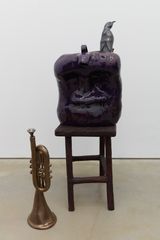
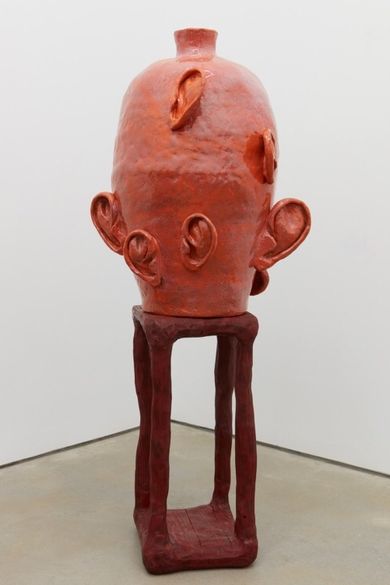
Othello’s process is intuitive. Beginning with seemingly mundane and domestic forms—clocks, calendars, phones, and box fans—Othello hones in on their emotionality, extrapolating on their curves and exaggerating their size. The result is often tubular, drooping, and coated in vibrant reds, purples, and magnetic blacks, imbued with the subterranean futurity of jazz. Figurative works join anthropomorphised objects. The rattling of a radiator is poised against a silent prayer; hands clasp together and ears decorate a vase; a dog sits like a deity. Domestic objects become repositories of psychic significance, resonant of nkisi, a West and Central African concept in which objects contain and release spiritual forces. For Othello, each work is a vessel, even when it is physically sealed.
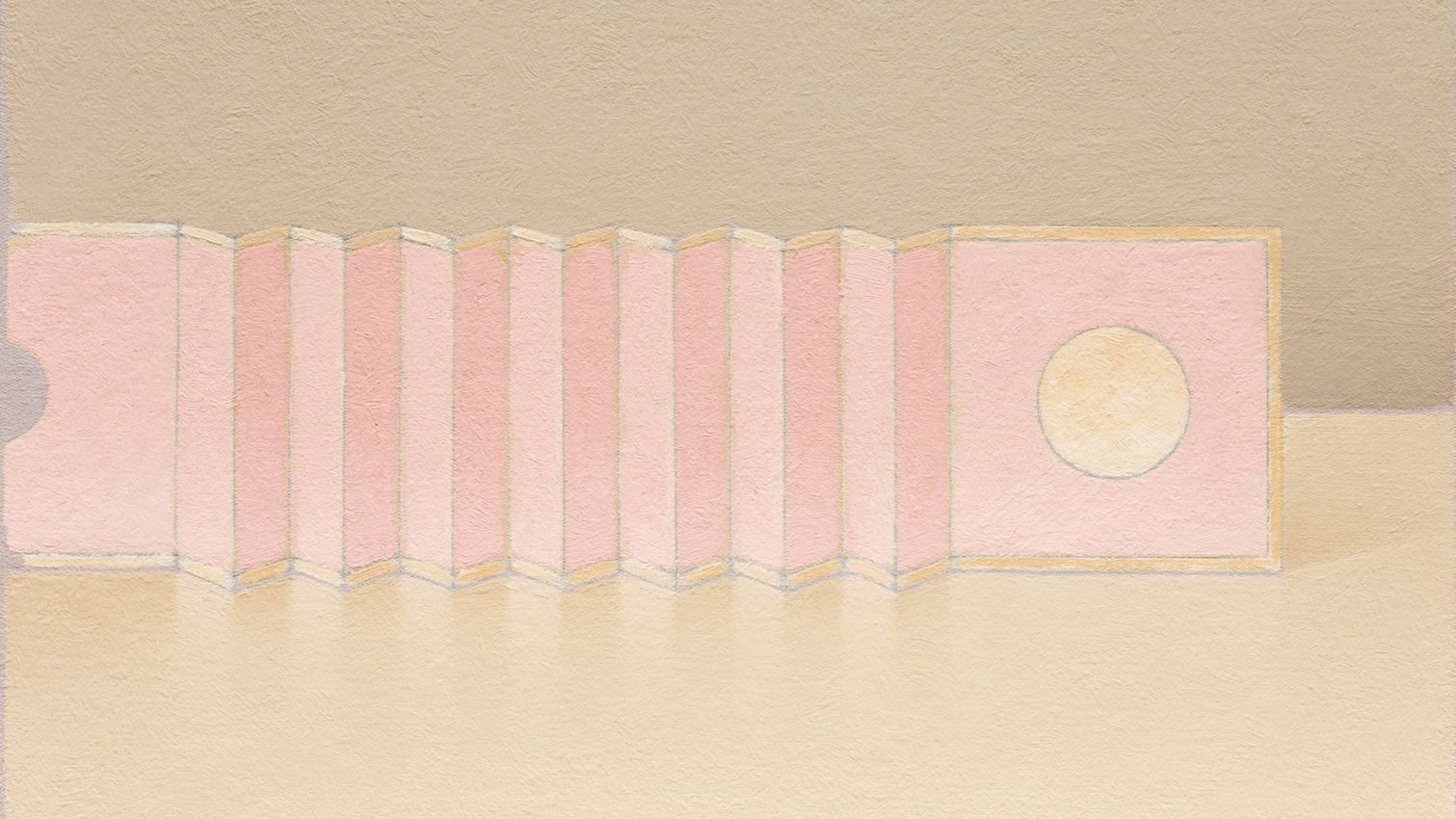
Othello’s works are created in Richmond, California, in close proximity to where artists Peter Voulkos, Viola Frey and Robert Arneson articulated their style of ‘muscular sculpture.’ Influences are treated as organically as his materials, which he moulds and manipulates, layers, and leaves thick. Books on Bantu art and Yoruba religion are referenced in drum-shaped pedestals, while tropical plants are painted onto a calendar, nodding to Othello’s upbringing in Miami as the child of Haitian immigrants. Whether he is working with source material or aesthetic media, Othello’s hand is always present—shaping, pulling, and searching.
Othello describes the first time he touched clay as an epiphany, in which ‘he just knew.’ This encounter emanates from the core of his practice, in which he gives personal shape to the world around him and mundane objects become doorways into the domain of the spirit.
Woody De Othello (b. 1991, Miami) is based in San Francisco. His work is currently included in Hear Me Now: The Black Potters of Old Edgefield, South Carolina, at the Metropolitan Museum of Art. In 2021-2022, Othello was the subject of a solo exhibition, Hope Omens, at the John Michael Kohler Center, and was included in Quiet as It’s Kept, the 2022 Whitney Biennial. Othello’s work is represented in the collections of the Institute of Contemporary Art, Miami, Florida; San Francisco Museum of Modern Art, San Francisco, California; Carnegie Museum of Art, Pittsburgh, Pennsylvania; Renwick Gallery, Smithsonian American Art Museum, Washington, D.C, the Baltimore Museum of Art, Baltimore, Maryland; and the Museum of Fine Art, Boston, Massachusetts, among others.

Woody De Othello (b. 1991, Miami, FL) is a California-based artist whose subject matter spans household objects, bodily features, and the natural world. Everyday artifacts of the domestic—tables, chairs, television remotes, telephone receivers, lamps, air purifiers, et cetera—are anthropomorphized in glazed ceramic, bronze, wood, and glass. Othello’s sense of humor manifests across his work in visual puns and cartoonish figuration. “I choose objects that are already very human,” says Othello. “The objects mimic actions that humans perform; they’re extensions of our own actions. We use phones to speak and to listen, clocks to tell time, vessels to hold things, and our bodies are indicators of all of those.” Othello’s scaled-up representations of these objects often slump over, overcome with gravity, as if exhausted by their own use. This sophisticated gravitational effect is a central formal challenge in his work. Informed by his own Haitian ancestry, Othello takes interest in the supernatural objects of Vodou folklore, nkisi figures, and other animist artifacts that inspire him.


A respected voice in contemporary art discourse.
Focusing on ambitious storytelling and insightful art-world commentary. Ocula Magazine publishes in-depth interviews, critical essays and timely analysis on the artists, exhibitions and ideas driving the global art world.
Learn more about Ocula Magazine
Showcasing the best of the art world.
Ocula partners with galleries from around the world to highlight their artists, artworks and exhibitions. Gallery membership is by application and invitation, with each member vetted by an independent panel.
Learn more about Ocula Membership

Specialises in the sale of major artworks.
Led by a team with deep ties to the world’s leading auction houses, galleries and collectors. Ocula’s advisory team offers bespoke services to high-net-worth clients from around the world who are looking to acquire the best of contemporary and modern art.
Learn more about our team and services