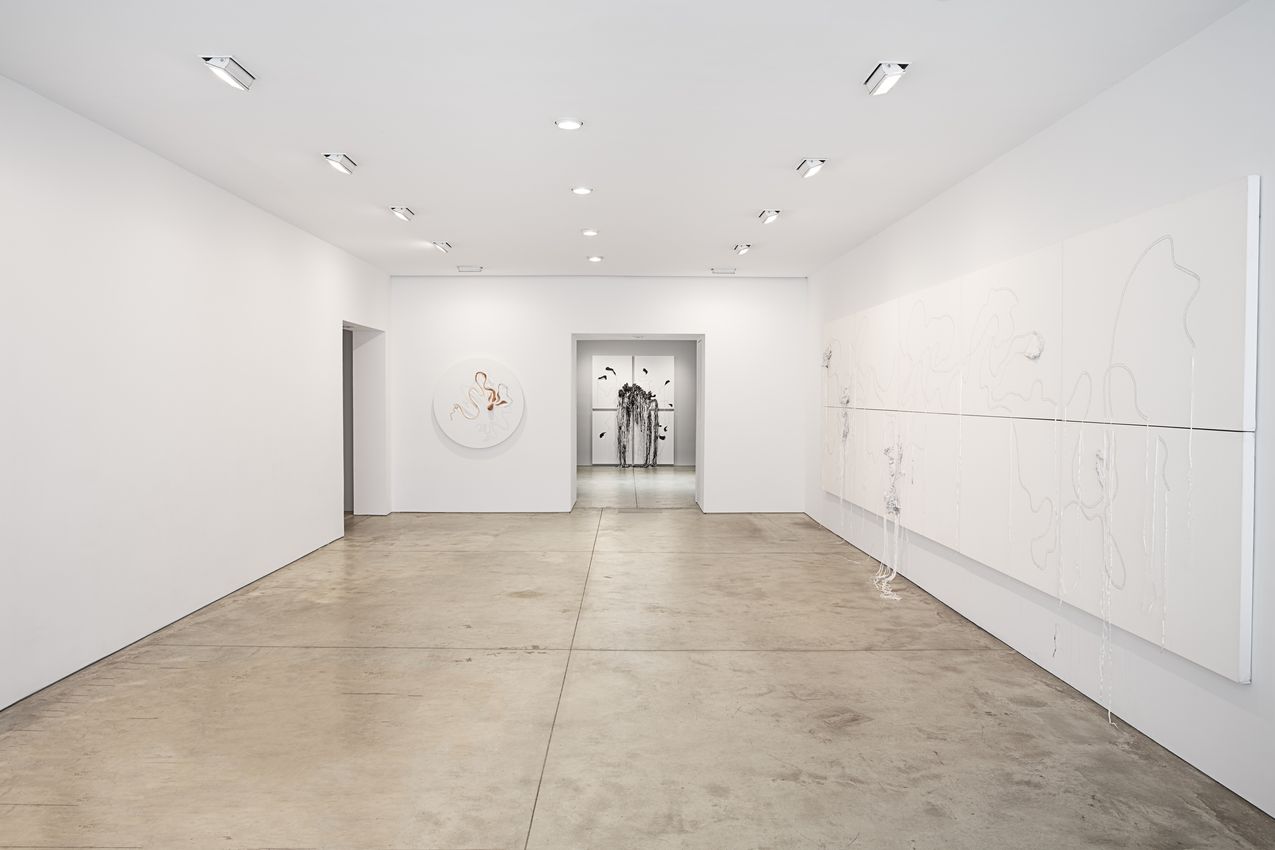
Lehmann Maupin is pleased to announce Ulwamkelo. For Nicholas Hlobo’s second exhibition with the gallery, the South African artist will show recent mixed media paintings and sculptures that merge his signature materials of ribbon, leather, wood, and rubber employed with conceptual specificity to address complex issues of identity. The title, Ulwamkelo, translates to The Welcoming, the artist’s acknowledgement that many of these works were recently recovered and returned to him after his studio in Johannesburg was robbed in 2017. Celebrating this serendipitous outcome, the gallery will host a special opening reception on Wednesday, July 18, from 6 to 8 PM, with an artist talk and performance throughout.
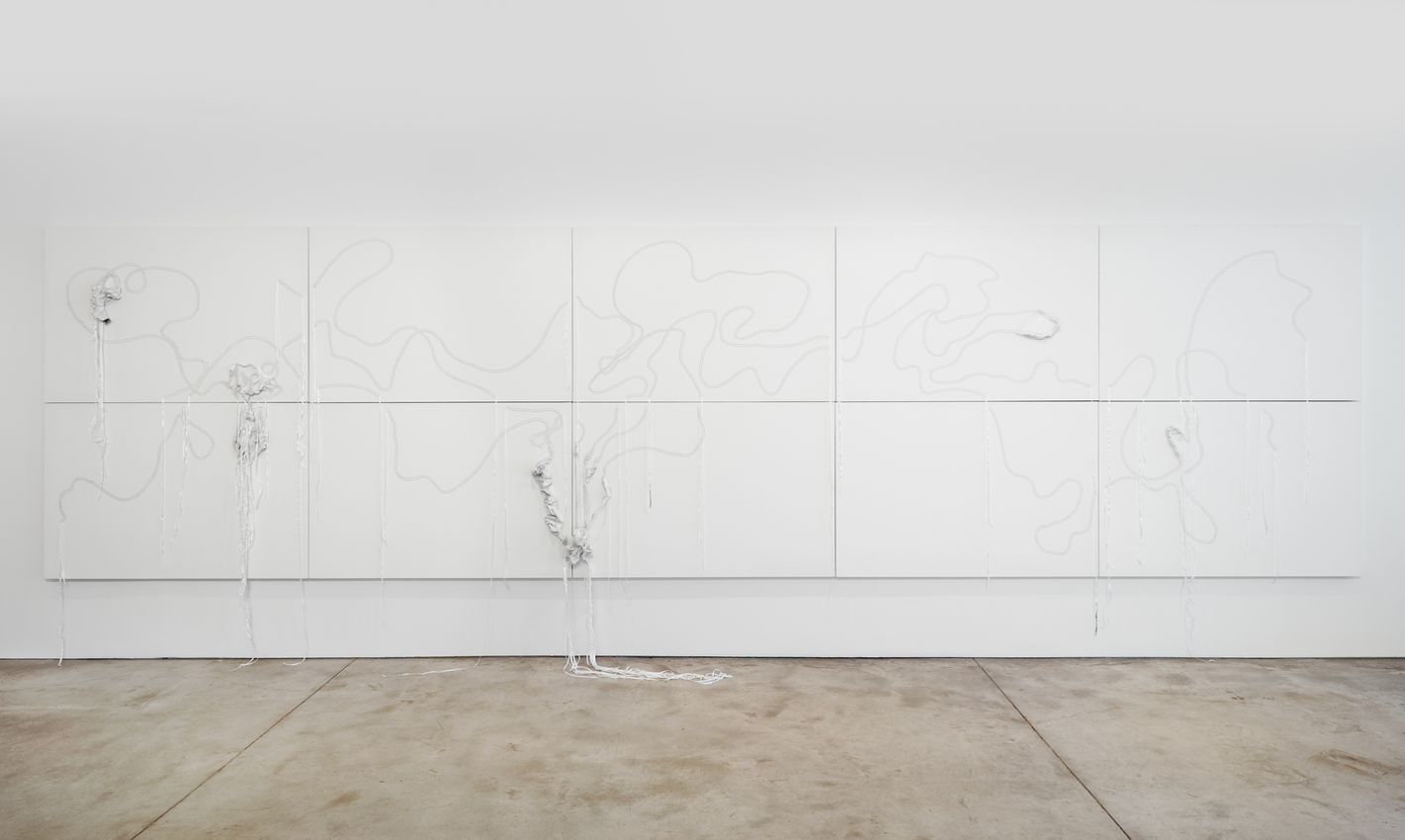
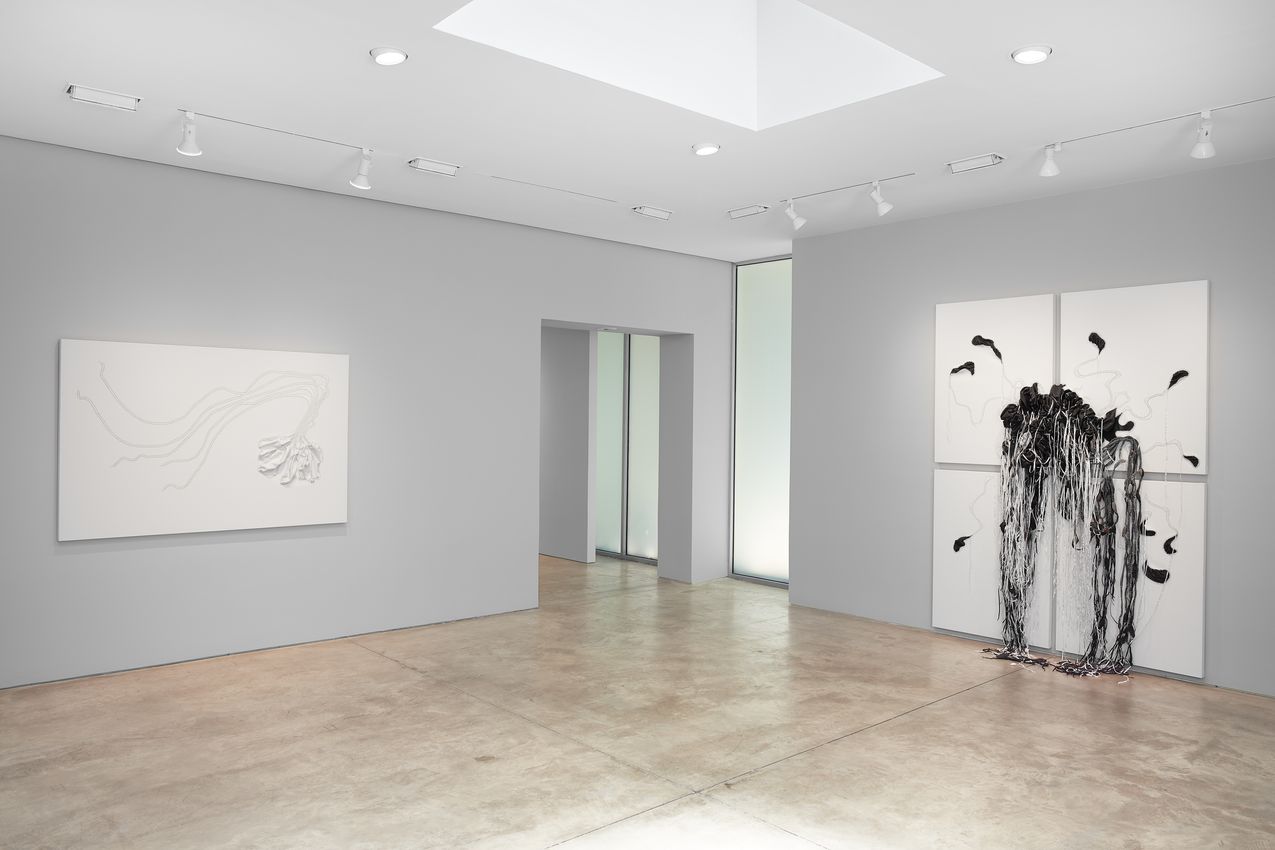
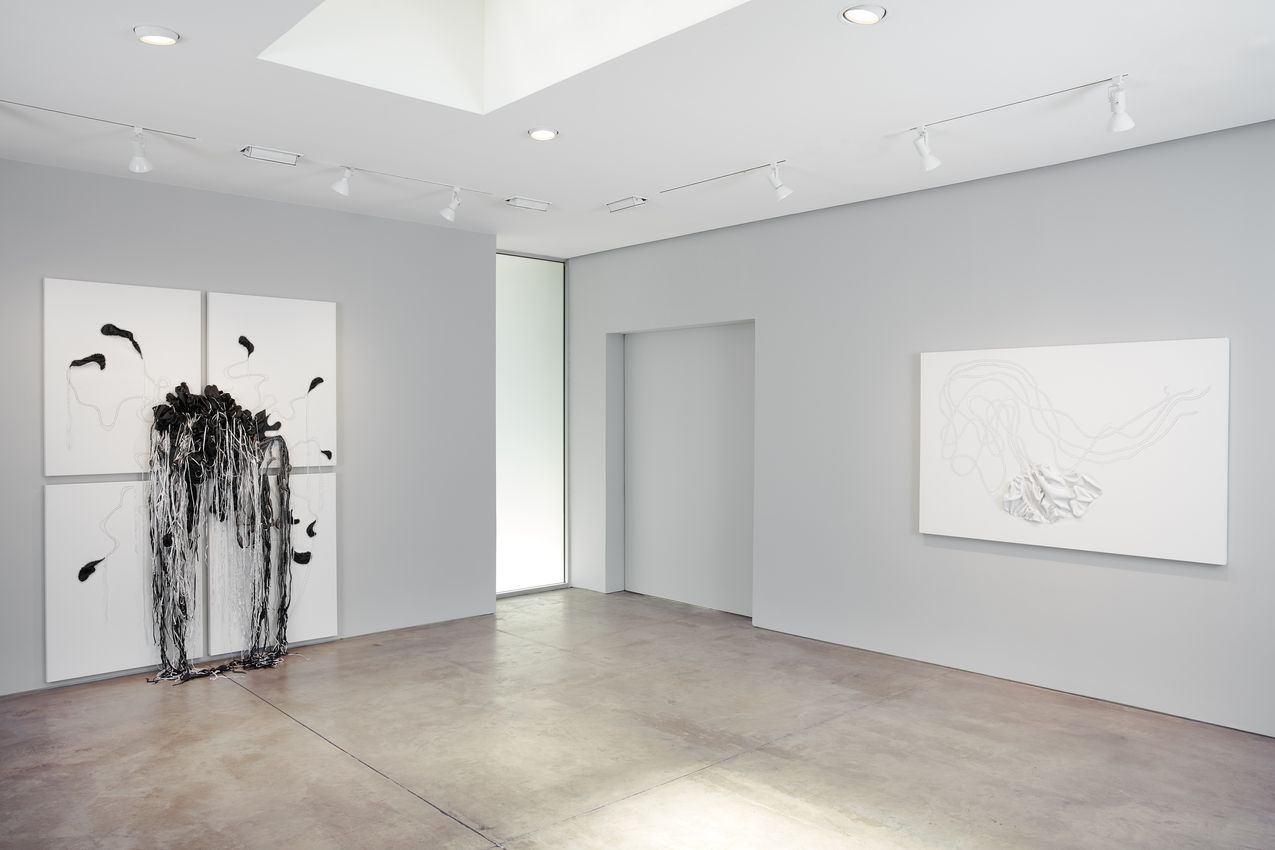
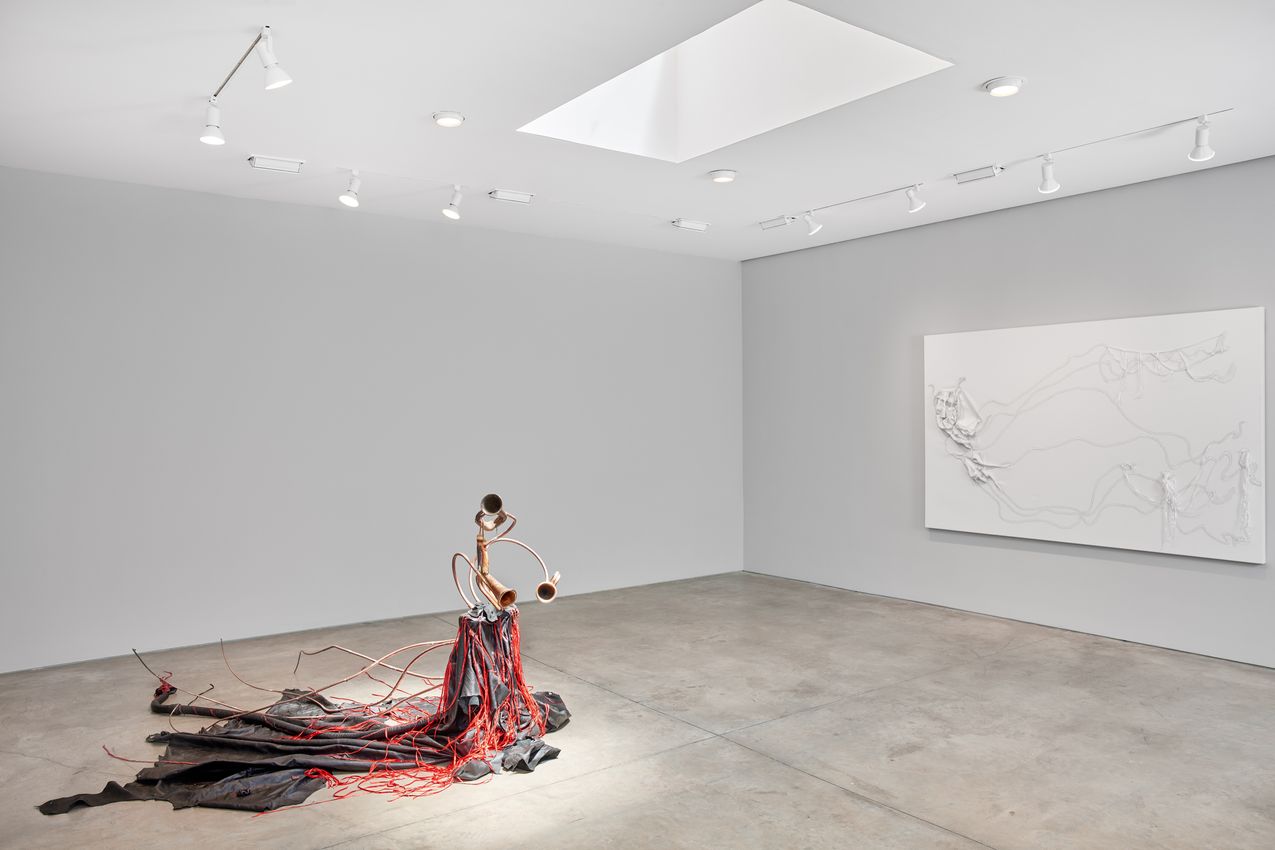
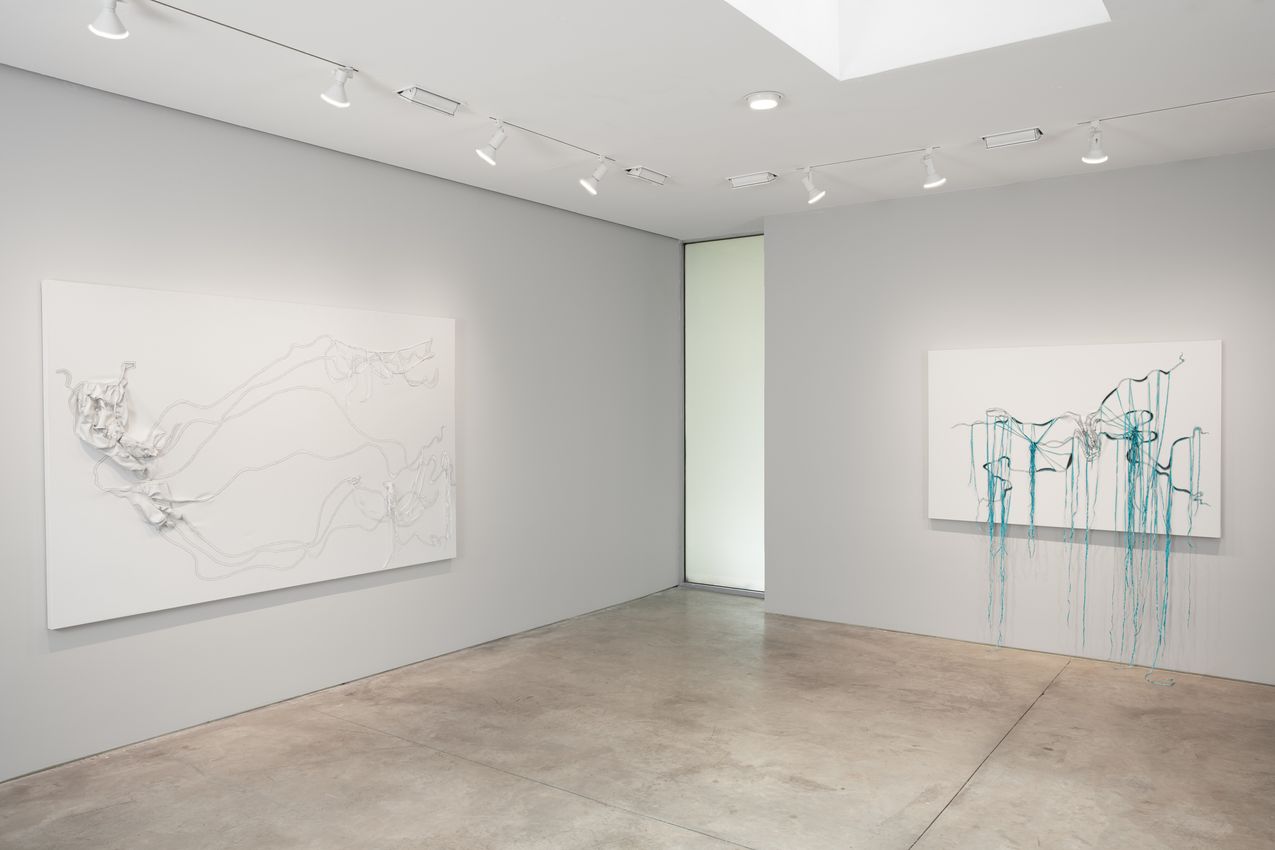
Often, Hlobo leverages the associations weighted in specific materials—ribbons representing the feminine, leather the masculine—merging the two in his paintings like Babelana ngentloko (2017) to pull apart this binary assimilation and present a more holistic and multifaceted approach. The biomorphic entities represented, often described as sperm-like, seem to morph into more female reproductive organs, or alternatively could just as easily be floral, or oceanic, making a point about the reality of fluidity in a construct like gender.
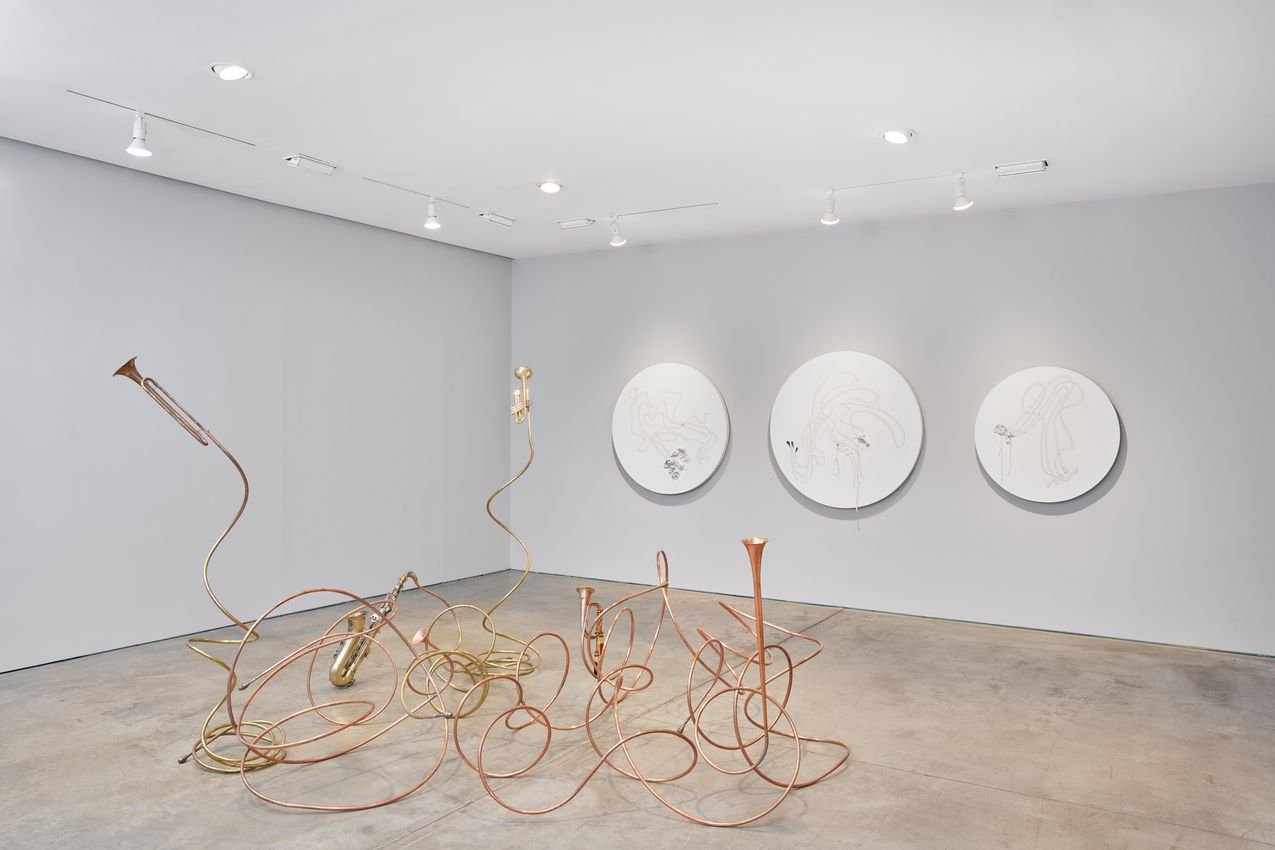
The elegant arcs and arabesques of the ribbon stitching, and more free-flowing compositions like Phantsi Komngcunube (2017), where a density of black leather and white ribbons spill from the canvas onto the floor, are mimicked in sculptures of molded bronze, copper, and brass instruments. In these, bugles, trumpets, and saxophones appear to levitate amid the elongated stems of their mouthpieces, which have been molded in many feet of curling, sculpted metal. Rendered mute by the intervention in their design, the works nonetheless vibrate with the qualities one would expect from a jazz solo, or a duet of lovers. Indeed, Hlobo explicitly relates the phallic qualities of the instruments, and the act of playing them, to oral sex, exaggerating these physical attributes of the instruments to an absurd scale. The title shared by this series, Mphephethe uthe cwaka…, translates from Xhosa, Hlobo’s native language used to title all of his works, as ‘blowing them in silence,’ a further titillation, until one reflects on the functions of violence and silence associated with masculinity and eroticism in cultures shaped by a colonial past.
Hlobo allows himself to work instinctively and draws his forms directly onto canvas from his subconscious. In this manner, his work functions as a catharsis or exorcism, purging from himself the indoctrination of cultural dichotomies that set boundaries of either/or, where Hlobo wishes to portray the multitude.
This exhibition will overlap with an exhibition of Hlobo’s work at SCAD Museum of Art in Savannah, Georgia, opening August 21. Responding to historic narratives of the South, Hlobo has created a poetic and moving installation comprised of large two-dimensional and sculptural works. This includes an exhibition developed site-specifically. There is an opening reception at SCAD on Thursday, October 4.
Nicholas Hlobo (b. 1975, Cape Town, South Africa; lives and works in Johannesburg) received a fine art degree from Johannesburg’s Technikon Witwatersrand in 2002. Solo exhibitions of his work have been organized at Uppsala Art Museum, Sweden (2017); Museum Beelden aan Zee, The Hague, Netherlands (2016); Locust Projects, Miami (2013); National Museum of Art, Architecture and Design, Oslo (2011); Savannah College of Art and Design, Lacoste, France (2010); Tate Modern, London (2008); Institute of Contemporary Art, Boston (2008); and SCAD Museum of Art, GA (2007). Select group exhibitions featuring his work include Art/Afrique, le nouvel atelier, Fondation Louis Vuitton (2017); Energy and Process, Tate Modern, London (2016); The Divine Comedy: Heaven, Purgatory and Hell Revisited by Contemporary African Artists, Museum für Moderne Kunst, Frankfurt, traveled to SCAD Museum of Art, GA (2014); and Smithsonian National Museum of African Art, Washington, D.C. (2015); A History (art architecture design, from the 80s to now), Centre Pompidou, Paris (2015); Intense Proximity, La Triennale 2012, Palais de Tokyo, Paris (2012); and Flow, Studio Museum in Harlem, New York (2008). Hlobo has participated in multiple biennials, including the 18th Biennale of Sydney, Australia (2012); the 54th Venice Biennale (2011); the 6th Liverpool Biennial (2010); and the 3rd Guangzhou Triennial, China (2008). His work is included in numerous international public and private collections, including the The Metropolitan Museum of Art, New York; Fondation Louis Vuitton, Paris; South African National Art Gallery, Cape Town; and the Tate Modern, London.
Hlobo has received numerous honours and distinctions such as the Rolex Visual Arts Protégé (2010–2011); Standard Bank Young Artist Award (2009); and the Tollman Award for Visual Art (2006).
Nicholas Hlobo (b. 1975, Cape Town, South Africa; lives and works in Johannesburg) began his career around the end of apartheid in 1994, when there was a new sense of freedom and national pride in South Africa. With the eradication of legalised and enforced discrimination and segregation, Hlobo and his peers were empowered to openly voice their opinions and ideas under the protection of these new laws. Hlobo’s subtle commentary on the democratic realities of his home country and concerns with the changing international discourse of art remain at the core of his work. Using tactile materials such as ribbon, leather, wood, and rubber detritus that he melds and weaves together, Hlobo creates intricate two- and three-dimensional hybrid objects. Each material holds a particular association with cultural, gendered, sexual, or ethnic identity. Together, the works create a complex visual narrative that reflects the cultural dichotomies of Hlobo’s native South Africa as well as those that exist around the world. His evocative, anthropomorphic imagery and metaphorically charged materials elucidate the artist’s own multifaceted identity within the context of his South African heritage.


Rachel Lehmann and David Maupin founded Lehmann Maupin in 1996. The gallery represents a diverse range of American artists, as well as artists and estates from across Europe, Asia, Africa, South America, and the Middle East. It has been instrumental in introducing numerous artists from around the world in their first New York exhibitions.

A respected voice in contemporary art discourse.
Focusing on ambitious storytelling and insightful art-world commentary. Ocula Magazine publishes in-depth interviews, critical essays and timely analysis on the artists, exhibitions and ideas driving the global art world.
Learn more about Ocula Magazine
Showcasing the best of the art world.
Ocula partners with galleries from around the world to highlight their artists, artworks and exhibitions. Gallery membership is by application and invitation, with each member vetted by an independent panel.
Learn more about Ocula Membership

Specialises in the sale of major artworks.
Led by a team with deep ties to the world’s leading auction houses, galleries and collectors. Ocula’s advisory team offers bespoke services to high-net-worth clients from around the world who are looking to acquire the best of contemporary and modern art.
Learn more about our team and services