





Chinese-Restaurant Aesthetics and Rod Stewart: Lap-See Lam Talks to Poet Will Harris
The Cantonese‑Swedish artist tells Harris about generational loss, unplanned discovery and preserving the memory and experience of her family’s business. Save to My Ocula
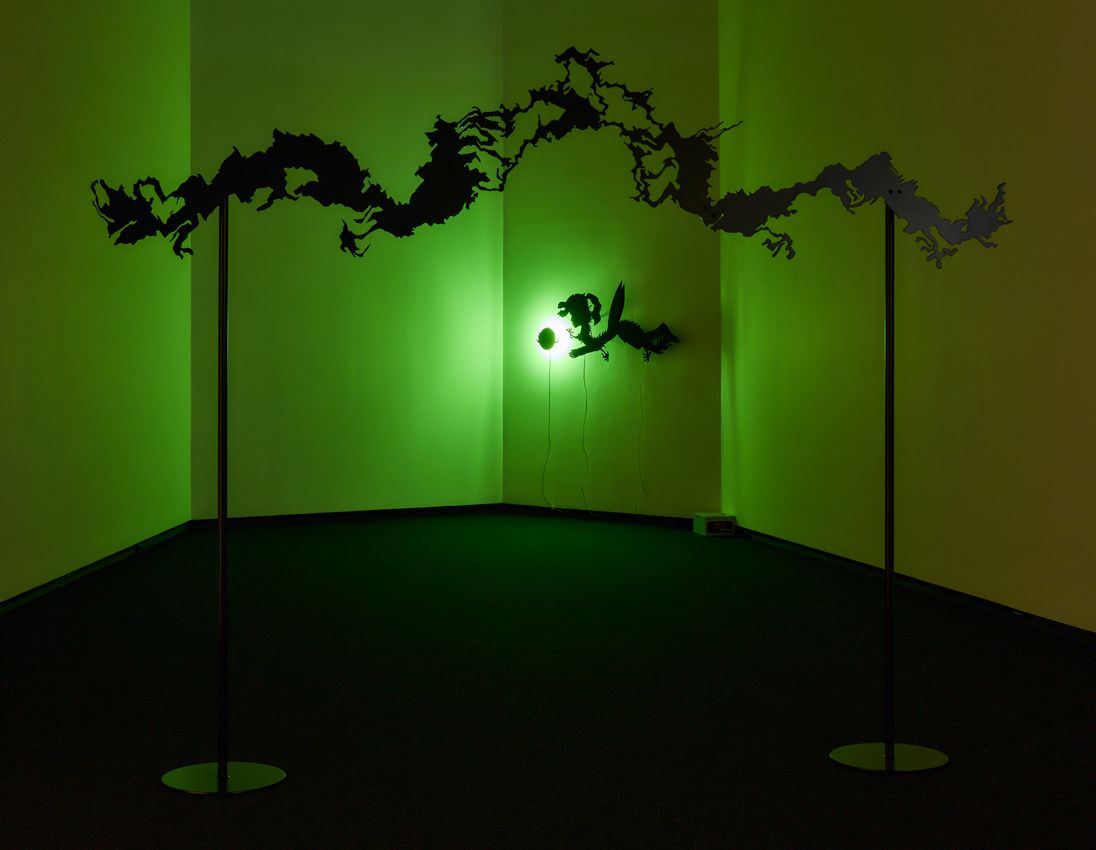
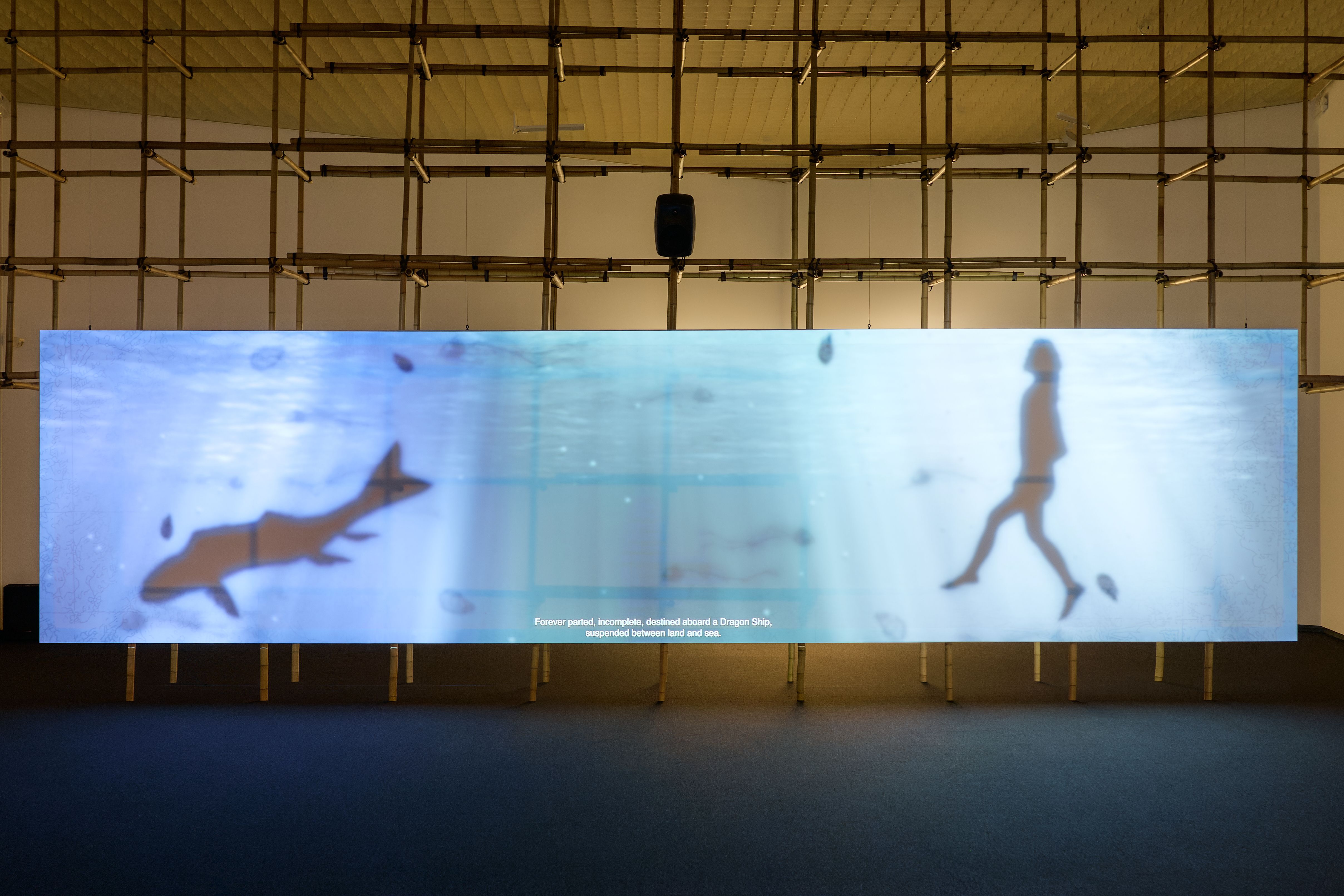
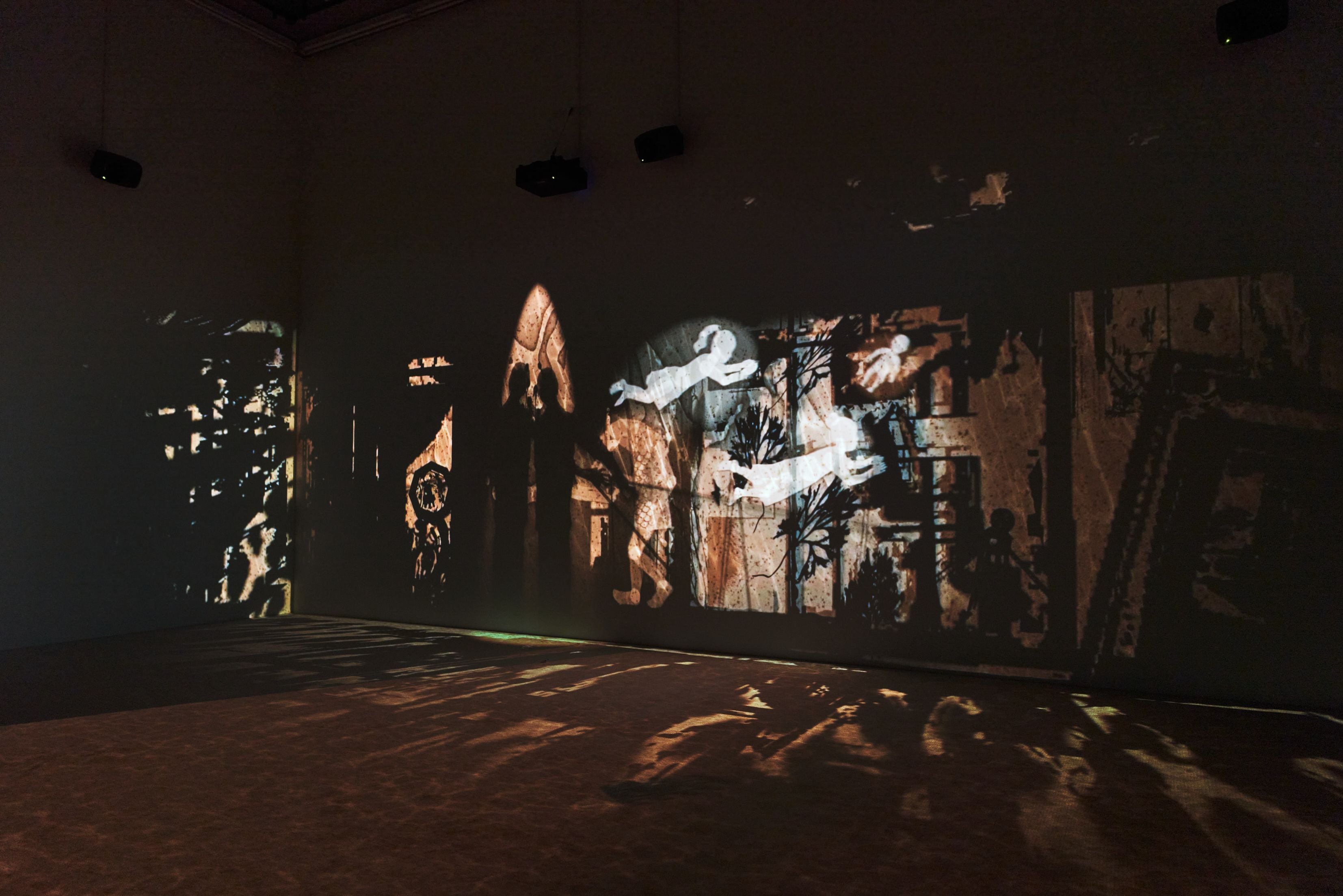
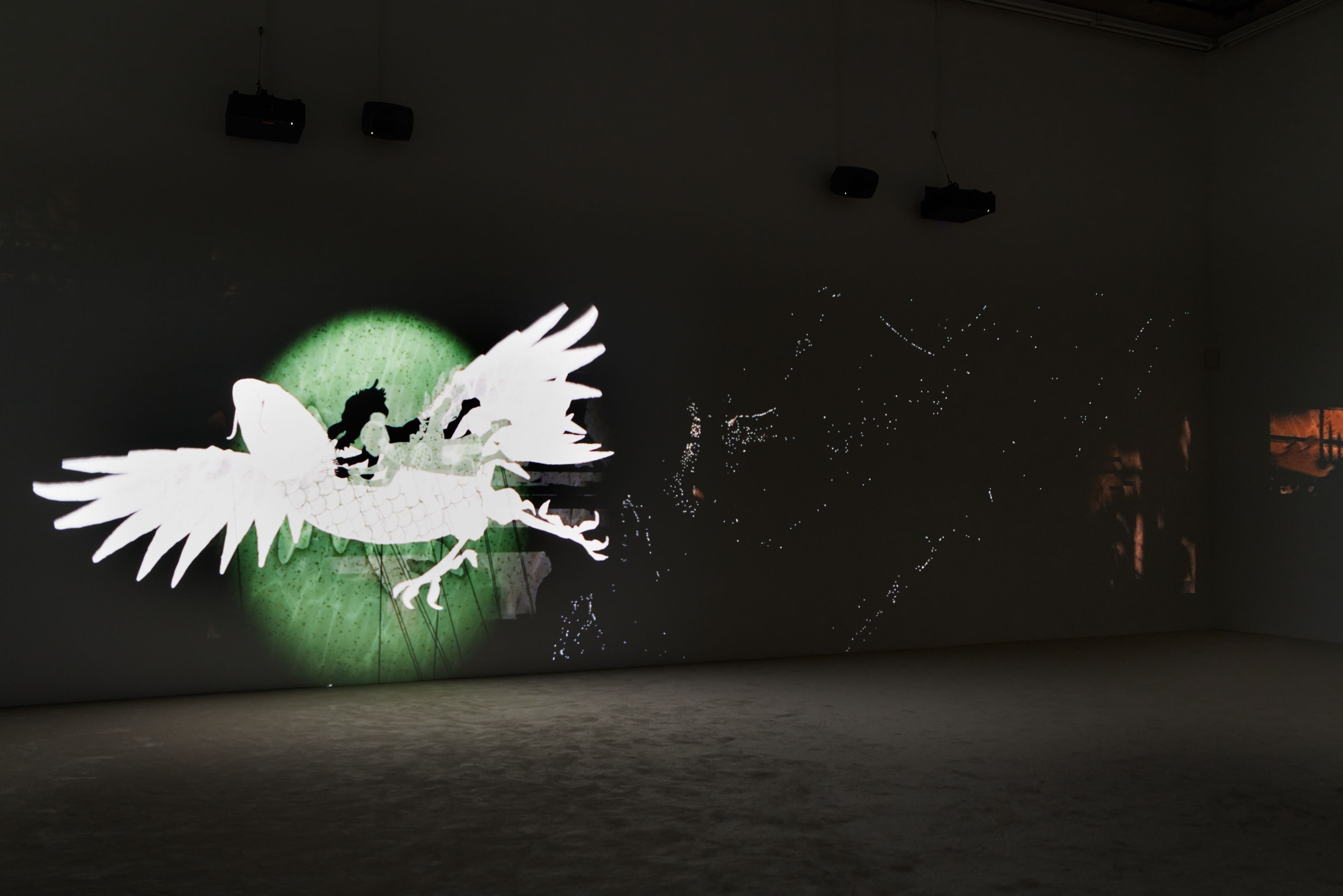
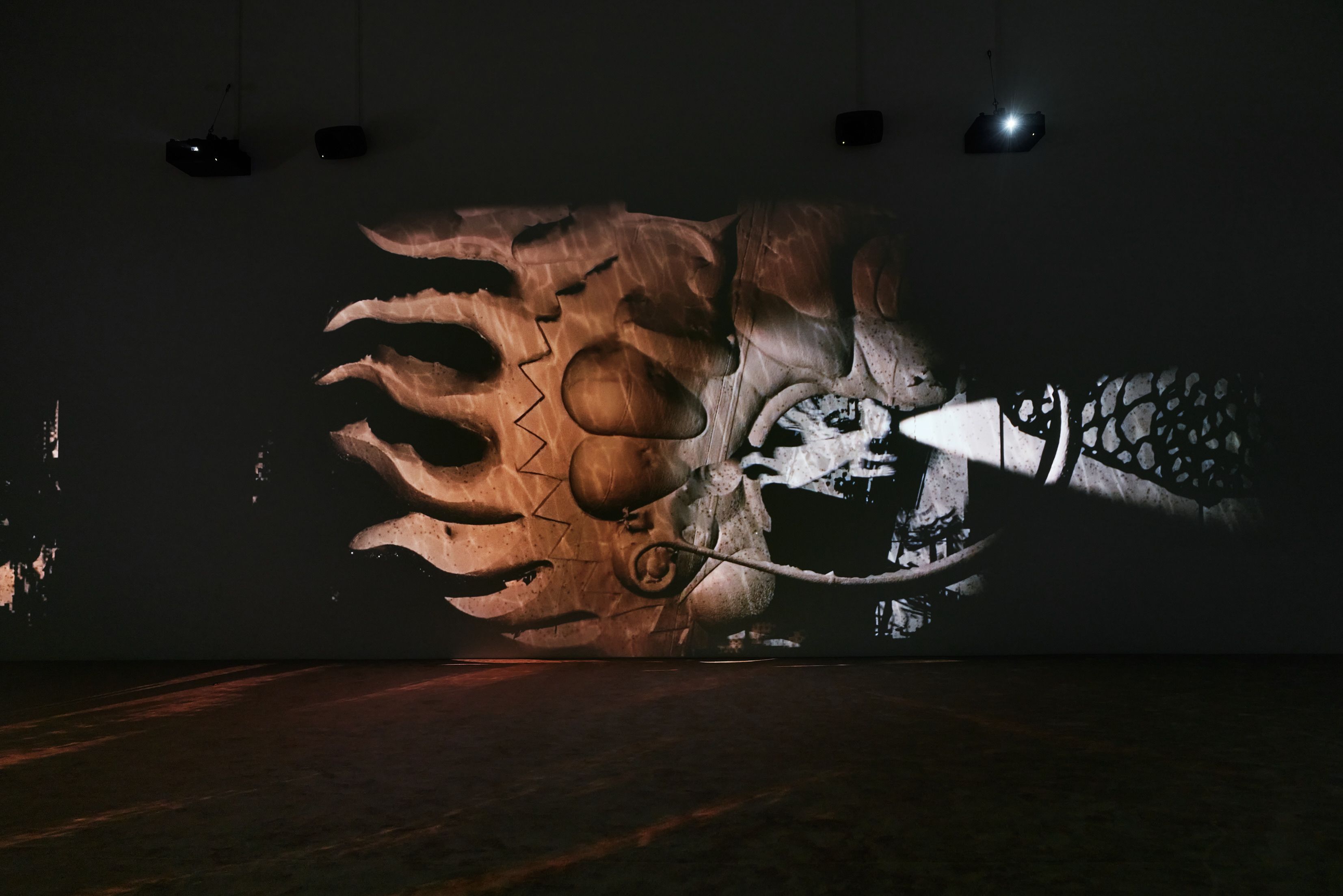
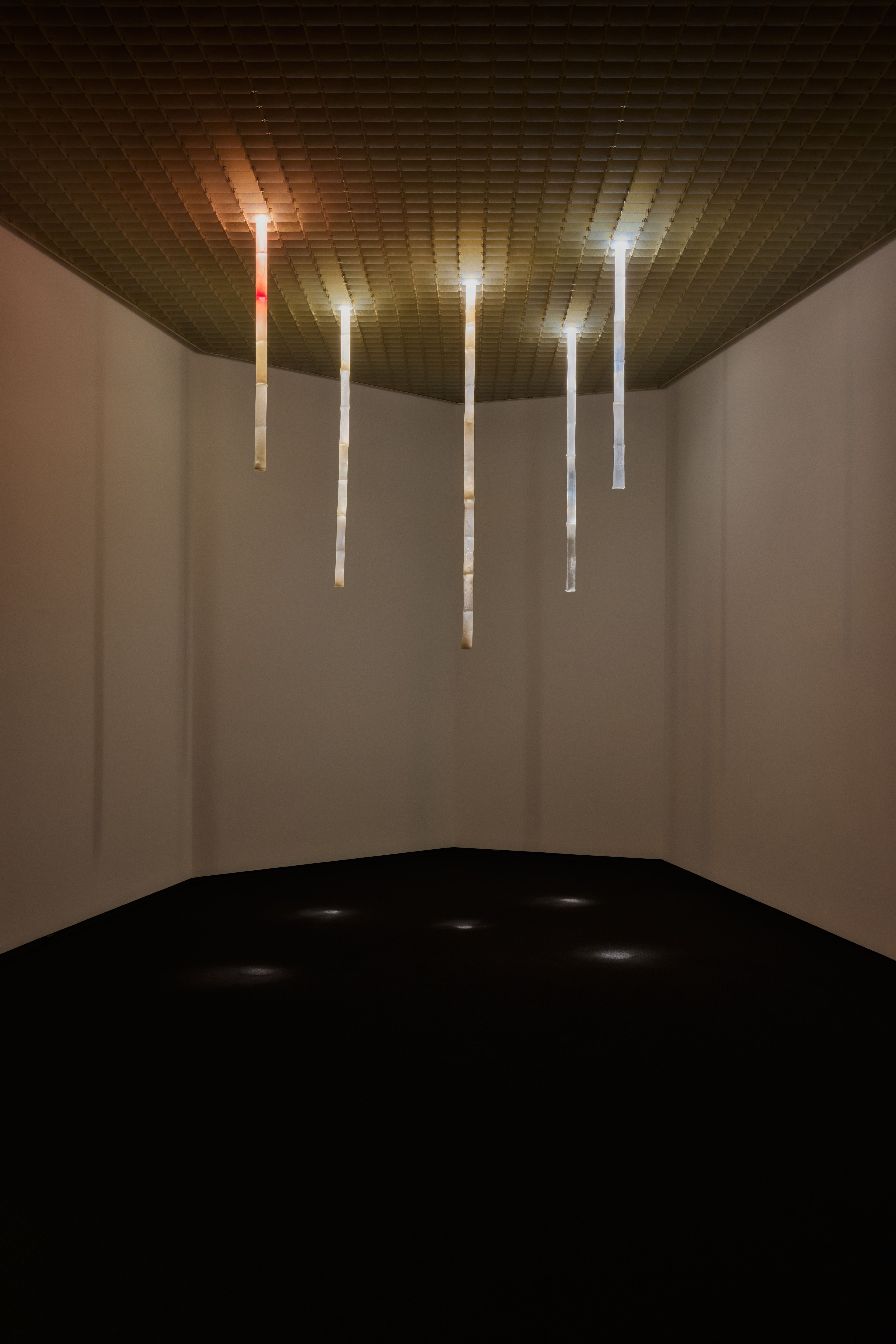
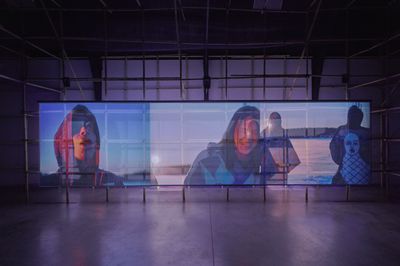
A short bus ride out of Oslo takes me to Henie Onstad Kunstsenter; private boats are docked to the west, and the waters of the fjord lap against the headland. It’s an appropriate location for Lap-See Lam’s watery show Ombres, especially on the day I arrive, in torrential rain. Ombres, which comes as a direct result of Lam receiving the Lise Wilhelmsen Art Award in 2025, collects recent video work: Dreamers’ Quay (2022), a shadow play telling the time-travelling story of a girl called A’Yan; Tales of the Altersea (2023), which centres on the mythological half-fish, half-human Lo Ting, and Floating Sea Palace (2025), a work using elements of Chinese opera to reanimate a disused restaurant on a “dragon ship”. The gallery space is punctuated by sculptures: a cast-iron portal, a mobile of copper dragon scales, a new series of hand-blown glass sculptures shaped as bamboo stalks.
The thread running through many of these works is water: the quay as a plane between land and sea, waterways as a means of migration and, in the case of Lo Ting, transformation. Lam was born in 1990 in Stockholm, near the water. Her grandparents had migrated from Hong Kong to London during the 1960s. The following decade, her grandmother moved to Stockholm and set up a restaurant called Bamboo Garden, which was then taken over by her parents. Lam grew up in and around the restaurant; she was good at drawing as a child and later became interested in sculpture and fashion, working as a stylist assistant for several years before studying at the Royal Institute of Art in Stockholm.

Her breakthrough work, Mother’s Tongue (2018), came out of a project to document Bamboo Garden before its closure in 2014. The resulting video installation took an oblique approach to the material, exploring the fictional perspectives of restaurant workers from the 1978, 2018 and 40 years into the future (2058). In our interview, Lam said she was interested in “unplanned discoveries” and “duality”. Her work certainly seems to carry a dual awareness, both of the flattening projection of “Chineseness”, as presented by a Chinese restaurant in the West, for instance, and the waywardness of actual experience. Perhaps that lies behind her use of shadow play and Chinese opera in Dreamers’ Quay and Floating Sea Palace; both are art forms that encourage a performative approach to storytelling and blur boundaries between myth and reality.
Before my own grandmother died in Indonesia, I tried to have conversations with her about her life. I asked her what her favourite food was, and she said it was spaghetti bolognese, though I had never seen her eating that. I never knew why she said that; maybe it was her favourite. But that comment stayed with me. I wanted my first book to end with the image of my grandma saying her favourite food was spaghetti bolognese. Lam’s work makes me think of that: the ways in which desire develops antagonistically, formed both with and against the grain of others’ expectations.
Two weeks after my visit to Norway, Lam and I spoke online. She was back in her white-walled studio in Stockholm, empty except for a computer and samples of her work. She paused to think before answering each question and spoke precisely, describing with joy walking to her studio along the waterfront each day.
Will Harris: Am I right that your grandmother came from Hong Kong to London before she went to Stockholm?
Lap-See Lam: Exactly. My maternal grandmother comes from a village outside Yuen Long in the New Territories of Hong Kong. She’s part of the Hakka community. My grandparents met there. My grandfather went to London to work in Chinatown, and I think the story is that she wanted to join him. So she travelled there for the first time and ended up living in London for almost 10 years. She worked in different places in Chinatown, and then, 10 years later, she had the opportunity to move to Sweden to work as a chef in a Chinese restaurant.
WH: Do you feel like there’s a similarity between the Chinese communities here and in Sweden? I’m thinking of this identity you make work about, which has evolved in the diaspora, and is not China and not not—this kind of “floating sea palace” identity.
L-SL: Perhaps I wouldn’t have made this work if I were living in London. In Sweden, we’re so few that we basically know each other, and we can often trace each other through the Chinese restaurants that opened in the 1980s and 1990s. When I started 3D-scanning a number of Chinese restaurants in 2014, I realised that many of them were about to close, and that these places were largely undocumented in Swedish history, and in the Nordic countries more broadly. Perhaps this wouldn’t have been a topic of mine if I was brought up in the UK.
WH: At what point did that early project of preservation become an art project in your mind?
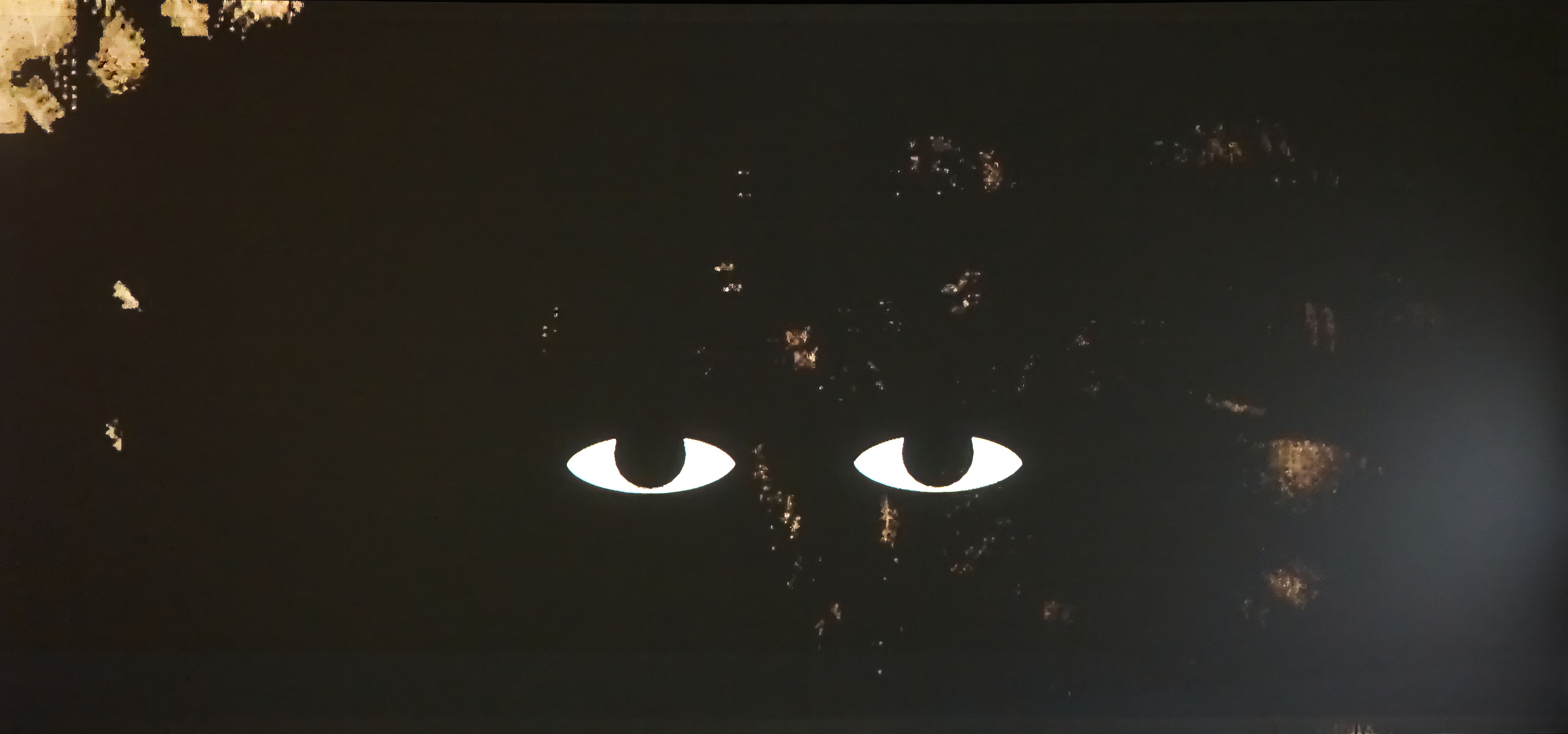
L-SL: My parents told me that they were selling our family restaurant in 2014 and they hadn’t spoken with us siblings about it. That sparked a need to document and somehow preserve the restaurant. I’d heard about there being a 3D laser scanner where I was a student at the Royal Institute of Art. I had a lot of material, but wasn’t able to import it using the programs I had, so we tried to convert it. What happened within the material was a sort of simplification of the mesh of the renderings. I could create animations, but they were glitchy. They had holes, they were incomplete.
When I saw this, I really felt that the material itself spoke about the diasporic experience and the transformation of memory and knowledge. I also learned about the computational term “generational loss” or “information loss”, which describes how information is lost each time you move material from one format to another or make copies of a digital file. I thought it was such a beautiful way to visualise the kind of information loss that happens when people, histories or languages move from one place to another.
WH: So if the technology had been better and there had been no glitches, it might have just remained a personal project?
L-SL: I think so, yeah. I try to hold on to this kind of unplanned event or uncontrollable process when I develop projects.
WH: Have there been other unplanned events that have shaped the work you’ve made since?
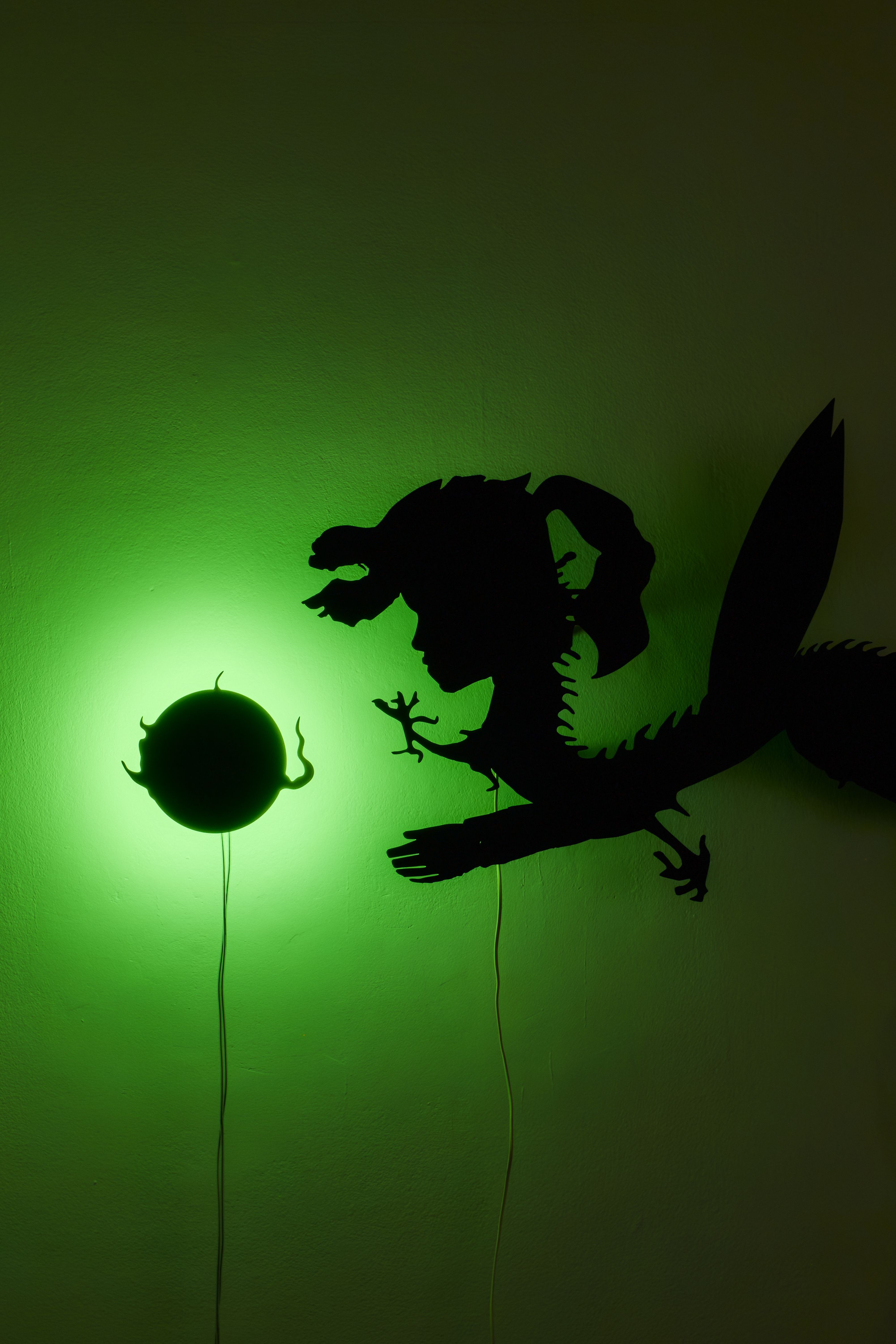
L-SL: Everything I do, I really try to let the material and the process guide me. The use of shadow play [in Dreamers’ Quay] was one of those unplanned discoveries. One day when I was working in my studio, I saw this dragon ship docking by the amusement park. At that time, it didn’t have its head and tail. It looked like a traditional Chinese ship, but very… how do I say it?
WH: Mutilated?
L-SL: Exactly, yeah. Like a shipwreck. I started doing research about this ship and ended up going to the shipyard—when it’s not at the amusement park, it stays at this shipyard. And, through a person called Hasse, I could get in contact with the owner of the dragon ship. I 3D-scanned the ship: the interior and the exterior. I wanted to place the ship digitally in the space of Bonniers Konsthall (a Stockholm gallery) just to understand the scale of it, and then by accident I pressed a button where you can no longer see the mesh of the ship—it becomes invisible, but it’s still there—only the shadow of the ship in the space.
This led me to reading about the use of shadow play in art history. I mean, a lot of artists have been using shadow play before—like William Kentridge, Kara Walker—but in their very specific ways. I read that the ombres chinoises [a European adaptation of Chinese shadow puppetry] was brought by Chinese merchants in the 18th century and I thought it would make sense to use shadow play as the medium, and as a way to incorporate the actual story of the ship into the history of chinoiserie. This was also something that was completely unplanned.
WH: You said that all your work is part of the same world. But it also feels like there’s been a shift from your early work and its more familial dimensions—like the restaurant—to the more historical and mythical scope of recent work. Do you feel that, too?
L-SL: I think so. After Floating Sea Palace, the universe really expanded through collaboration, through other voices. For example, bringing in [Australian artist] Ivan Cheng and [alt-rock musician] Bruno Hibombo. Their voices and their way of making art contributed a lot to how we reinterpreted the mythological figure of Lo.
But, at the moment, I feel myself moving closer to the familial again. After making these large, larger-than-life projects, both physically and narratively, I feel the need to work with a smaller group of people. I’ve been travelling to Hong Kong and conducting a lot of research with my family, with my aunties and uncles who live there.
My father, together with his siblings, opened a karaoke bar and restaurant in Hong Kong in Tsim Sha Tsui between 1988 and 1991. It was called Bamboo Palace. It was a karaoke bar by night and a restaurant by day. But they actually served Western food. It was the other way around [from in Sweden].
“I researched the use of shadow play in art history”
WH: Karaoke appears in Dreamers’ Quay as well?
L-SL: Oh yeah, it does. Through this song Sailing [by Rod Stewart], sung by my father. The “singing chef” is a character I developed together with him.
WH: What was it like choosing work for your show at Henie Onstad?
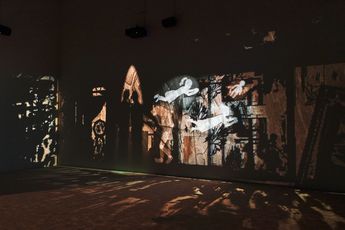
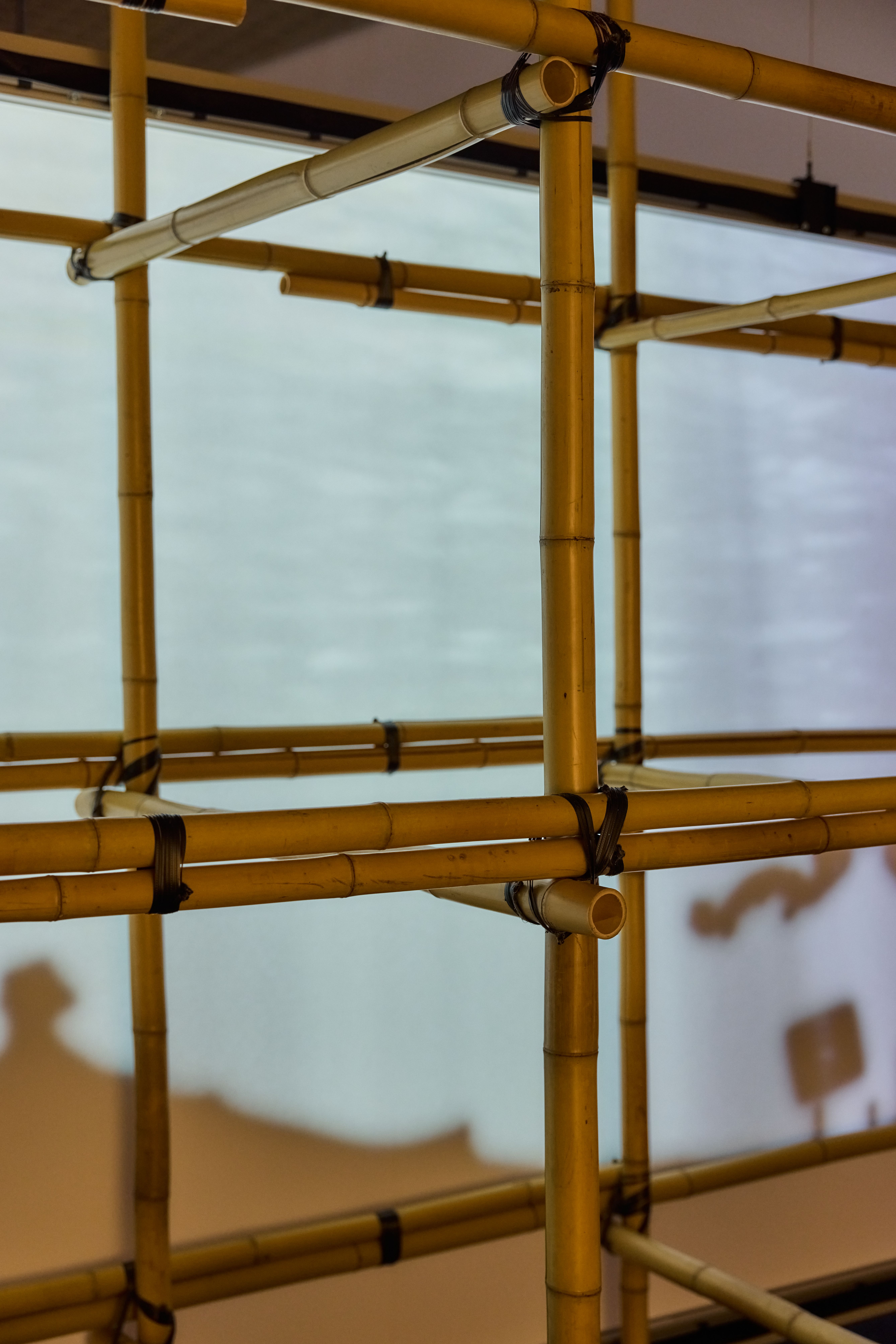
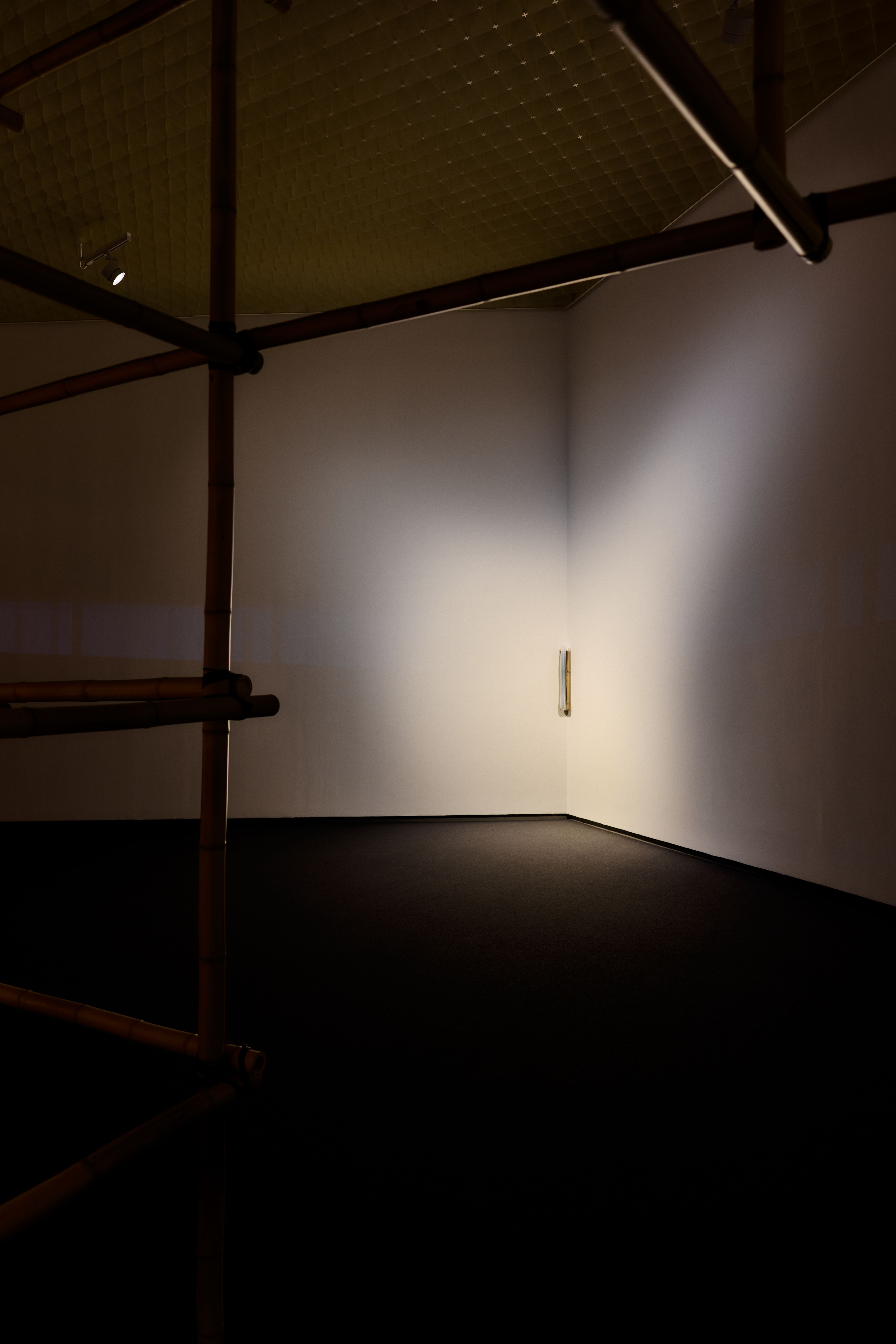
L-SL: First, I was completely mesmerised by the Prisma Galleries. I love the honeycomb ceilings. It’s like a ceiling without ending. I wanted to work with the architecture—the shadow plays are always made specifically for the spaces they inhabit. In the Prisma Galleries, there aren’t any 90-degree walls, so it made sense to create this translucent screen within the room, where you can see the shadows from both sides. That way, the shadow play could exist in dialogue with the architecture, rather than turning it into something else.
I’m very happy that both the curators and Henie Onstad were open to making it quite ambitious—to bringing these three video installations together and also bringing in Daisy Pak, a bamboo scaffold master from Hong Kong. She travelled all the way from Hong Kong to Henie Onstad to build this scaffolding on site.
WH: Something I’m often thinking about—or am forced to think about—is the kind of representational burden still placed on non-white artists in the West. How do you deal with that?
L-SL: You can imagine that it is even more so here in Sweden and in the Nordic countries. I think my work addresses that by perhaps both affirming and trying to redefine the subject of identity and belonging. But it is difficult. There are so many traps and it’s easy to get pigeonholed.
“I learned the computational term for generational loss”
WH: But there is this trap. You want to feel free, but you know that you’re not. It makes me think of Deleuze and Guattari’s line about identity being defined by “lines of flight”. I wondered if that was in your work: this desire to create an identity that exists in between places, in between states, in between images?
L-SL: I’m interested in what exists between fixed identities—in the space between different projections of identity, different histories, and different ways of seeing. Like, for example, with the Chinese restaurant, I always found its duality interesting. It’s a projection of Chineseness, a place catering to a Western gaze—and, of course, one can point that out and reject it. But it’s also a real place where a lot of important unwritten history is being played out in relation to the diaspora and everyday life. I’m interested in working through that doubleness. —[O]
Lap-See Lam, Ombres (until 3 January 2027), Henie Onstad Kunstsenter, Oslo
Main image: Lap-See Lam, Ombres, at Henie Onstad Kunstsenter (2026). Photo: Magnus Gulliksen / Henie Onstad Kunstsenter.






A respected voice in contemporary art discourse.
Focusing on ambitious storytelling and insightful art-world commentary. Ocula Magazine publishes in-depth interviews, critical essays and timely analysis on the artists, exhibitions and ideas driving the global art world.
Learn more about Ocula Magazine
Showcasing the best of the art world.
Ocula partners with galleries from around the world to highlight their artists, artworks and exhibitions. Gallery membership is by application and invitation, with each member vetted by an independent panel.
Learn more about Ocula Membership
Specialises in the sale of major artworks.
Led by a team with deep ties to the world’s leading auction houses, galleries and collectors. Ocula’s advisory team offers bespoke services to high-net-worth clients from around the world who are looking to acquire the best of contemporary and modern art.
Learn more about our team and services