





Sedrick Chisom, Excavator of America's 'Unprocessed History'
The Philly‑born, London‑based artist explores the idea that historical narratives contain unresolved trauma in his dreamy, eerie paintings. He talks to Lydia Eliza Trail about historiography and his revolutionary colour palette. Save to My Ocula
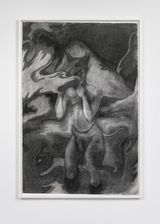
One of Sedrick Chisom’s artworks shows a man tearing open his stomach with a spear, the blood dripping on to a mask on the floor beneath him. It’s titled The Wholly Avoidable Death of Mighty Whitey, The Last Drunk Dionysian Hero, AKA The Wholly Tragic Birth of Fragile Narcissus (2020). The name contains clues to some of Chisom’s interests: the German philosopher Friedrich Nietzsche and his idea that decadence and health are opposing forces, 19th-century colonial history (“Mighty Whitey”) and ancient mythology, through the story of Narcissus, the hunter who fell in love with his own reflection. The painting itself, all in greyscale, is haunting: soft washes, hazy outlines and miasmic, sinister shadows.
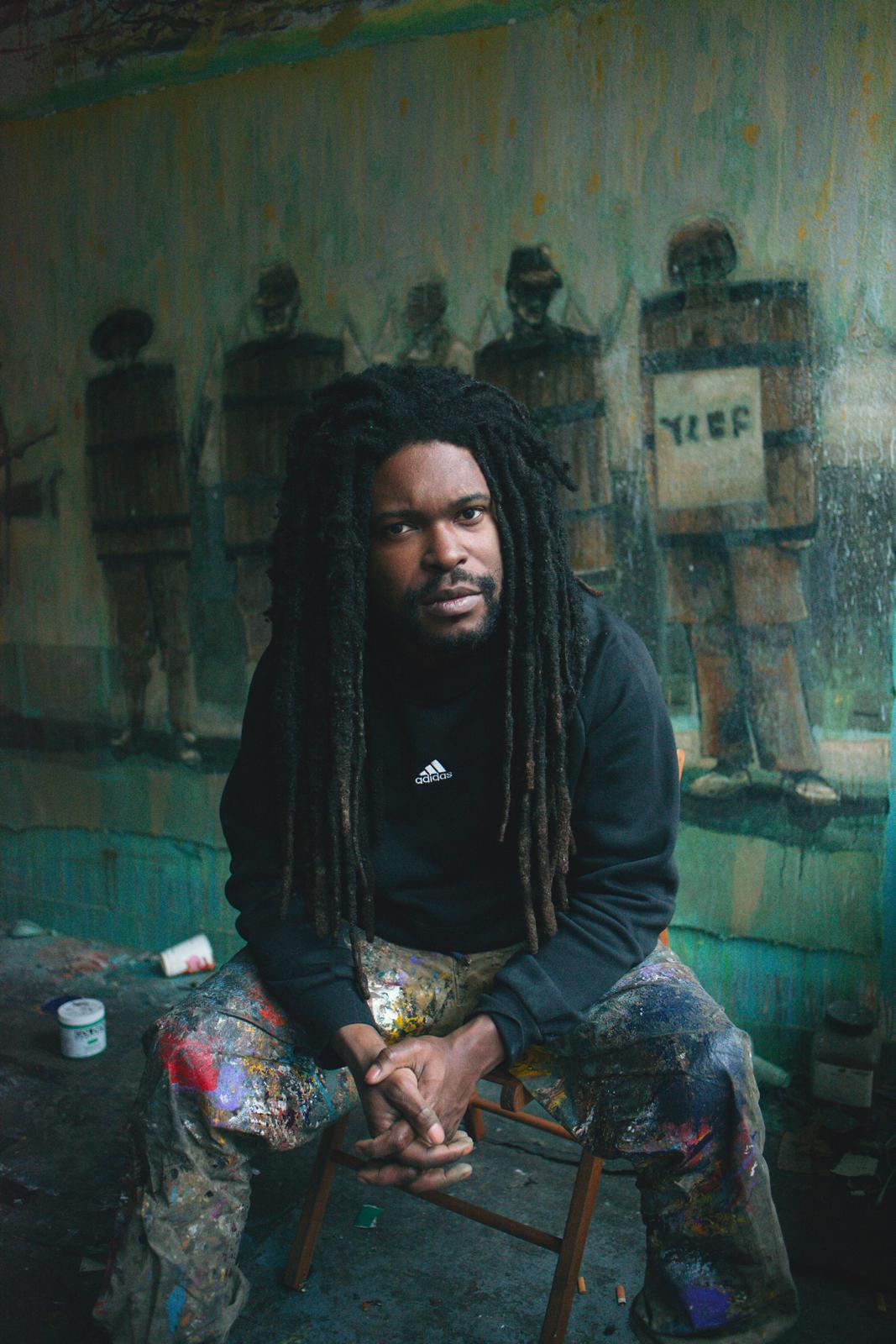
Chisom was born in 1989 in Philadelphia. His dad sold sold rifles, shotguns and grenades from the boot of his car, and at one point, grenade launchers, while his mother was a nurse. The artist began painting in his last year at Cooper Union, after receiving a full scholarship to study at the prestigious school, taking influence from the works of outsider artists such as Henry Darger and William Blake. He then went on to receive an MFA from the Mason Gross School of the Arts at Rutgers University. Now, he lives and works in East London.
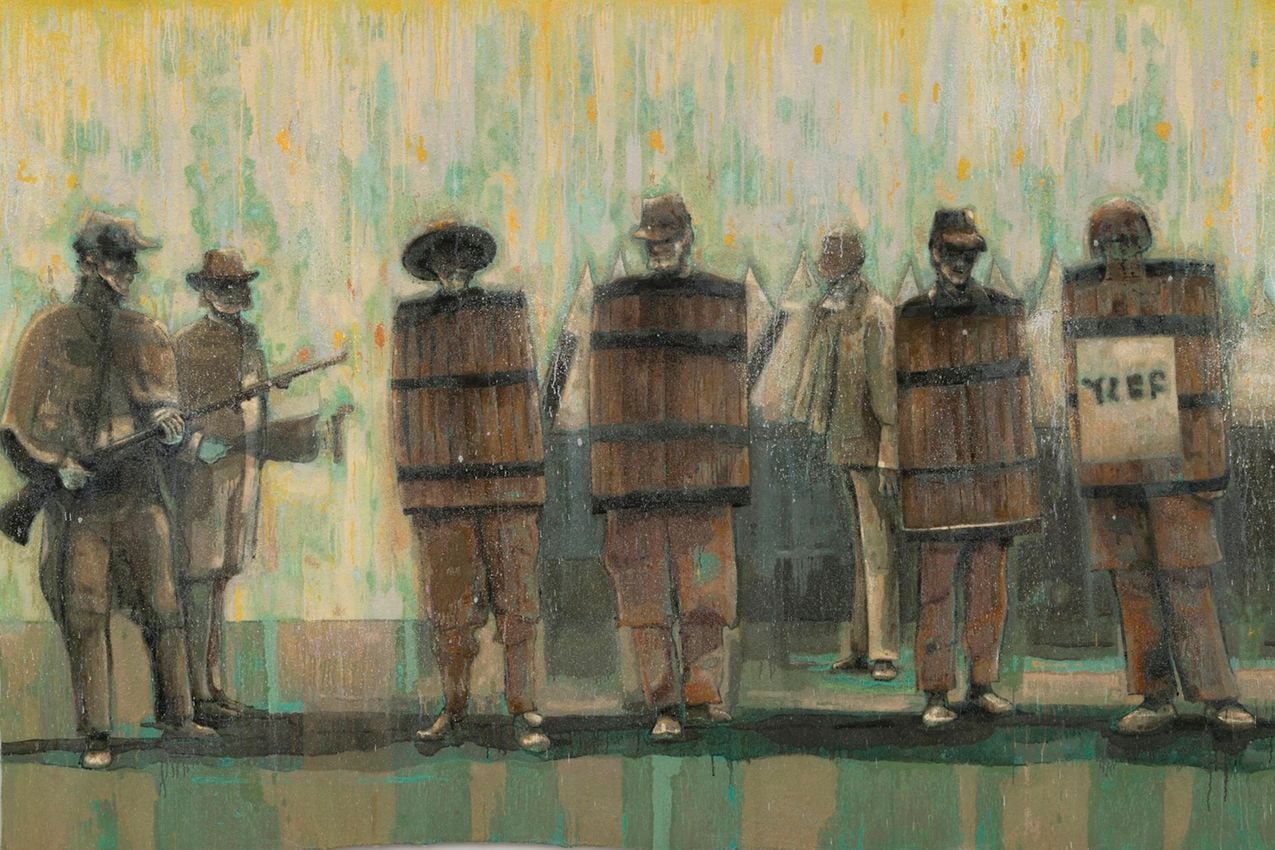
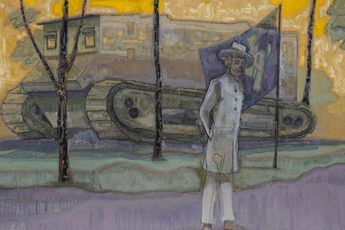
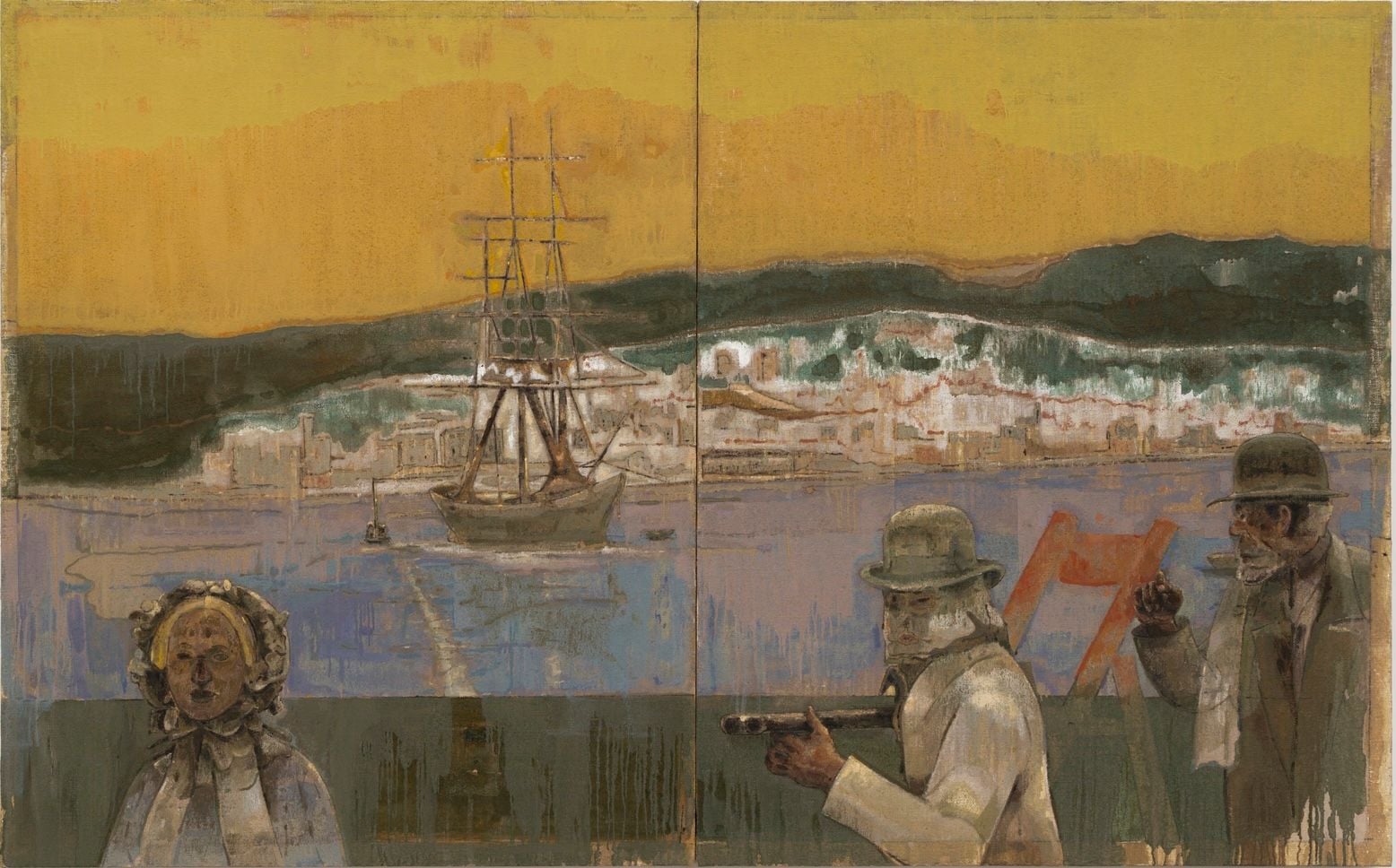
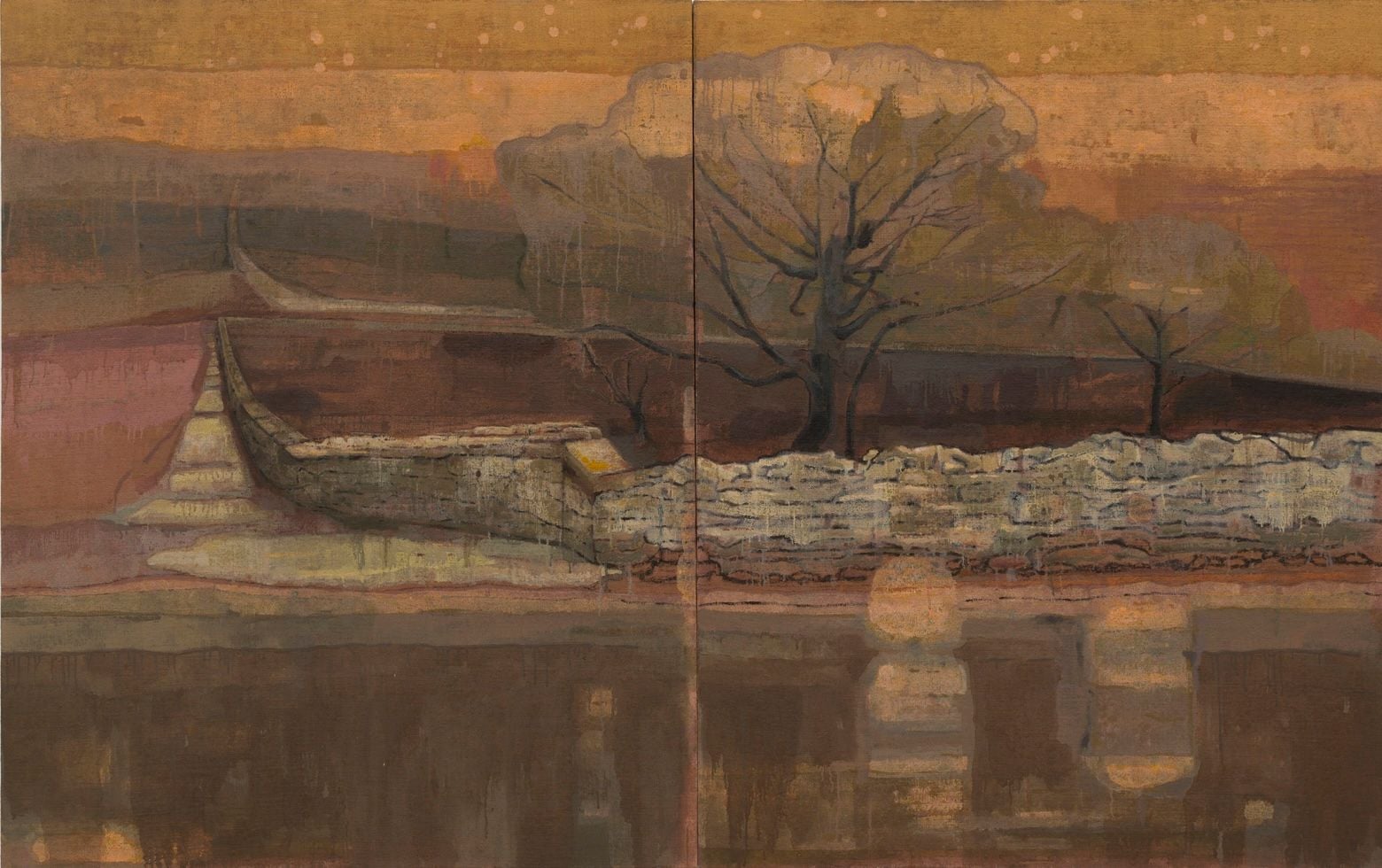
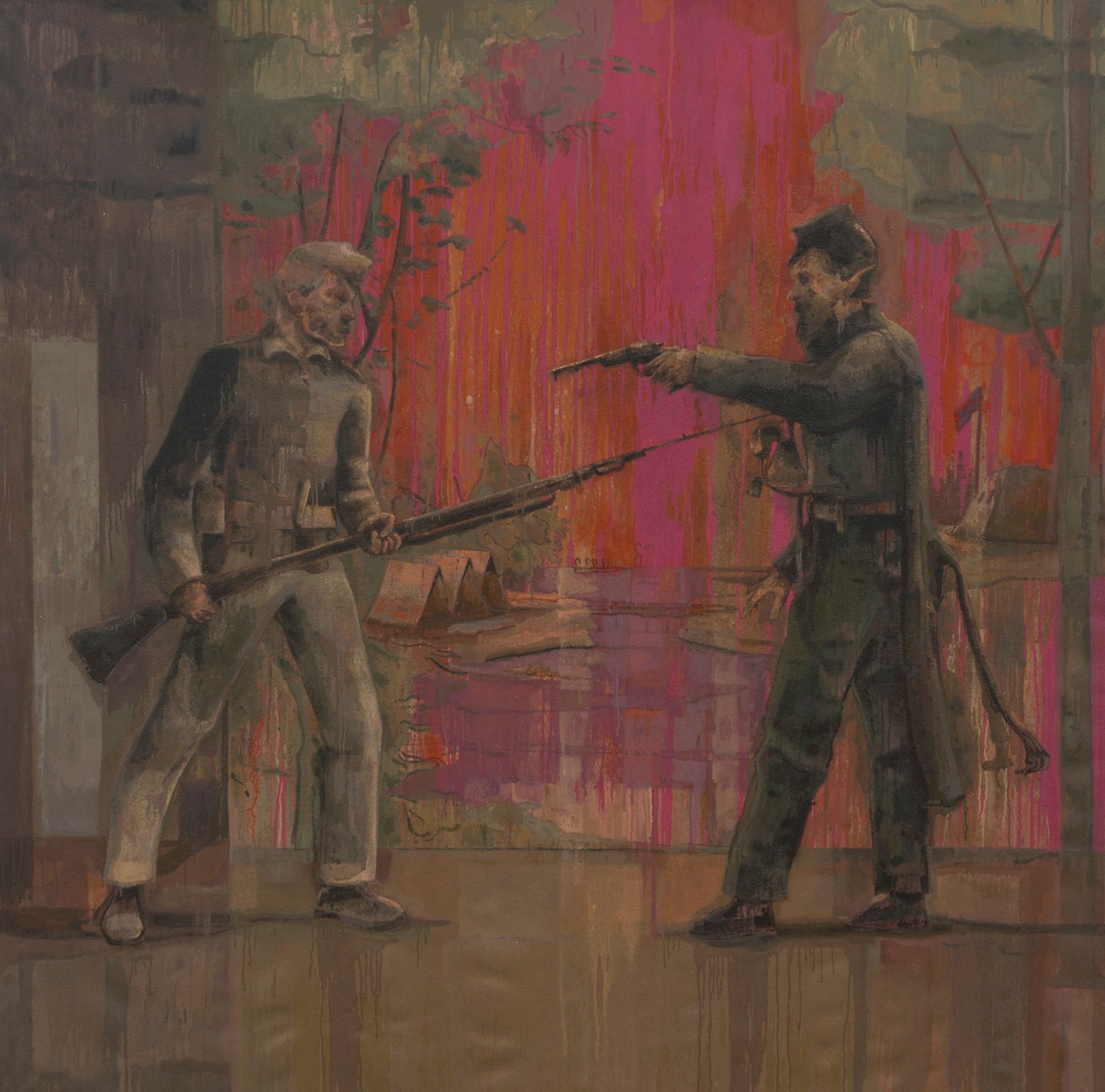
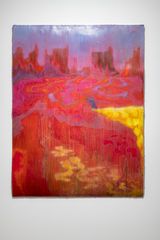
For his most recent body of work, Chisom mined the history of the American Revolution. He used a colour palette intended to resemble an apocalyptic future as imagined in science-fiction films, anime and books: polluted, acidic tones. In the acrylic-on-panel work Cataracts Marked the Terrain Like Typos in the Blasted Ground (2026), Chisom depicts a crumbling stone wall the colour of parchment disappearing into the horizon line, while in The Historical Reenactment of The Empire’s Counterattack on The Monstrous Races, Restaged as a Minstrel Comedy (2026) the background of the civil war encounter between a confederate and a union soldier is set ablaze by a neon, nuclear-pink horizon.
Lydia Eliza Trail: The title of your most recent exhibition, The Revenants of Our Founding Furies, which showed at Matthew Brown, had a historical tilt to it. Where does it come from?
Sedrick Chisom: The title of my [previous] show was The Villain of History for One Night Alone (2024) and, before that, The Ghost of White Presidents Yet to Come (2019). If you’re familiar with my larger practice, you know my work is concerned with how history, historical painting and mythology have a grammar. My titles are always perverted or contaminated. So with this, the furies in Greek mythology are spirits of vengeance who return when people have transgressed the moral law. At first, I was going to go with “Revenants of Our Founding Fathers”, but that felt too didactic. “Founding Furies” sounded better—partly for the alliteration, partly because it’s the return of the original, foundational negative energy. They are people who have transgressed the moral law. The way those words come together is meant to put you within the historical frame of thinking.
LET: Do you see yourself as a history painter?
SC: History is extremely important to me, but I see myself as a painter of… I don’t want to say historiography, because even historiography is too clean. Rather, historical residue. A painter of unprocessed history.
LET: What do you mean by “unprocessed history”?
SC: With Freud, the whole thing is the collision between unconscious desire and conscious defences. That’s on the individual scale. I think history has symptoms of unprocessed trauma too, symptoms which haven’t fully metabolised.
One of the central contradictions in the US is slavery, but a deeper contradiction is that the country was founded on genocide of the Native American people. There’s no other way to describe it. The US inspired Hitler, put it that way.
LET: When you say contradiction, do you mean in the way that the country conducts itself now is in its refusal to acknowledge its foundations?
SC: No. It’s more that the framework of the US depends on ideas developed from liberal freedom, and the only way for those ideas to actualise and express themselves was through mass unfreedom, or slavery. So within the imagination, the foundational myth of the country itself is an unresolved contradiction.
“The US inspired Hitler, put it that way”
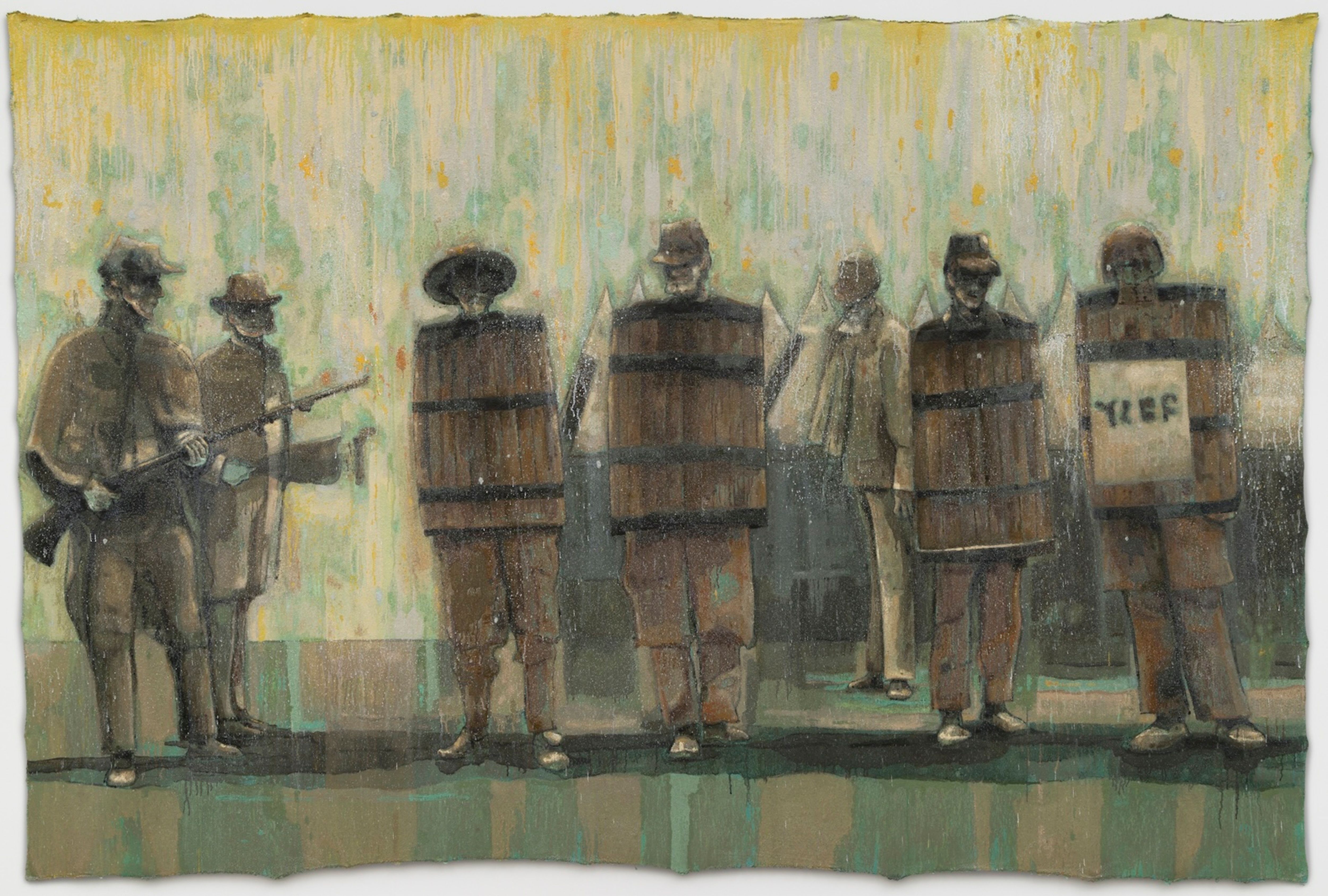
LET: How did The Barrel Shirt Pageants were Conducted in the Barracks by Order of the Office of Disgrace (2026), come to be, especially in relation to your theory of historiography?
SC: That painting is based on a very small section of a larger Civil War photograph, about half an inch in size, which I blew up and painted from. It depicts a bunch of guys being paraded through a military encampment. When people were held prisoner, one way of holding them captive was to make them carry a barrel so they couldn’t reach for a gun; they were immobilised. That form of provisional imprisonment actually comes out of folklore: stories about things that happened on the battlefield—hyperstitions—beliefs that become actual.
LET: You’ve previously said, quoting Žižek, that revolution is traumatic. How does that quote influence your work?
SC: Žižek is talking about fiction and movies and how, after the revolutionary or apocalyptic moment, the movie always ends because reconstructing or rebuilding a world is traumatic. It’s a lot of work. Escapist media can’t internalise that intensity. There’s this silence, this black box where the aftermath should be.
I was on a revolutionary tip when I said that, thinking about the Russian Revolution, the French Revolution, the Haitian Revolution, the American Civil War (the sequel never came out), the Mexican Revolution, the revolutions across Central and South America. At a basic level, a lot of what a revolution does is revise history altogether, part of its success is destroying the aura of the prior regime and the basis of its authority, then establishing a new order where the people pretend that all the arbitrary norms they’ve just established are sacred and untouchable.
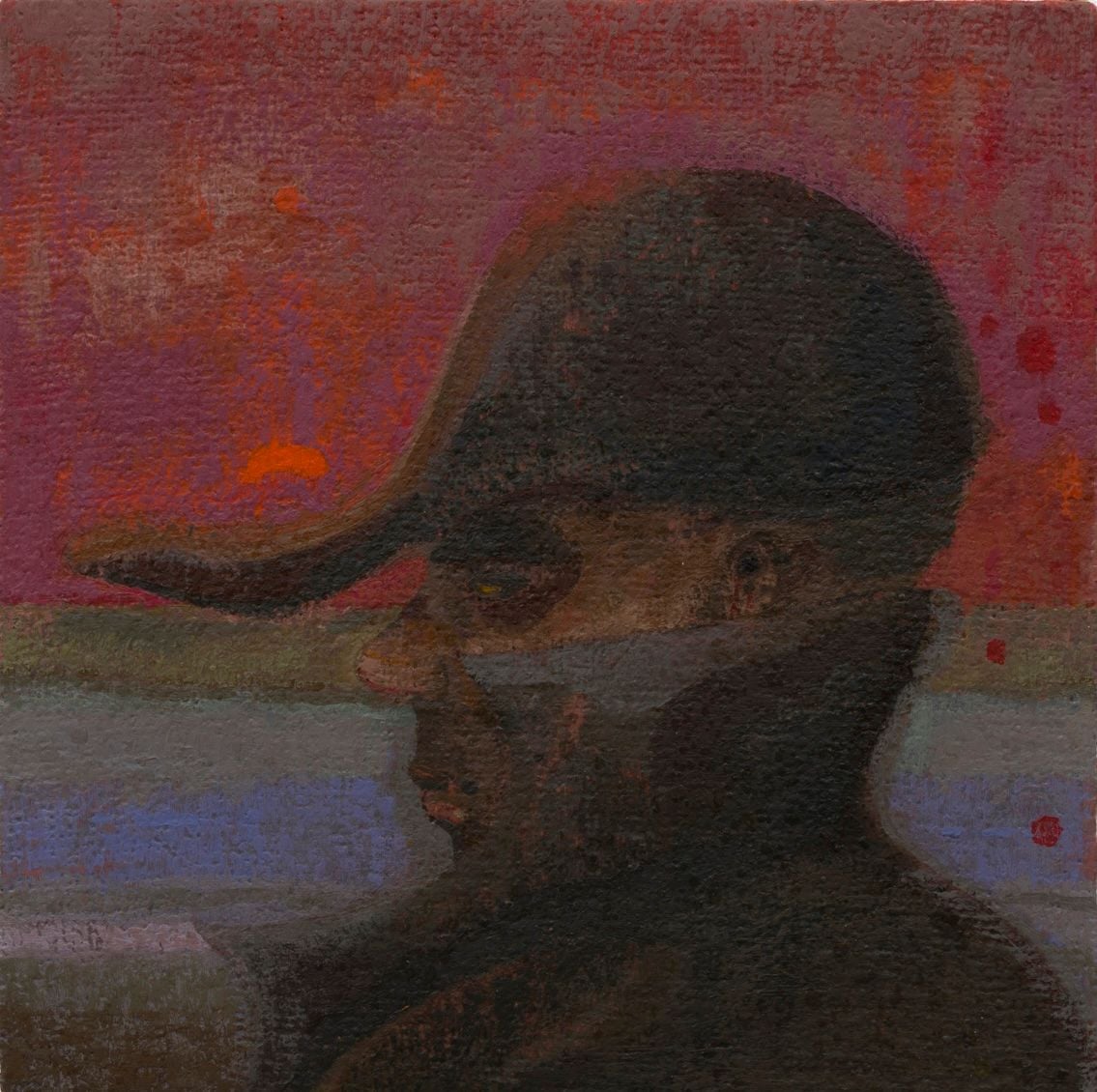
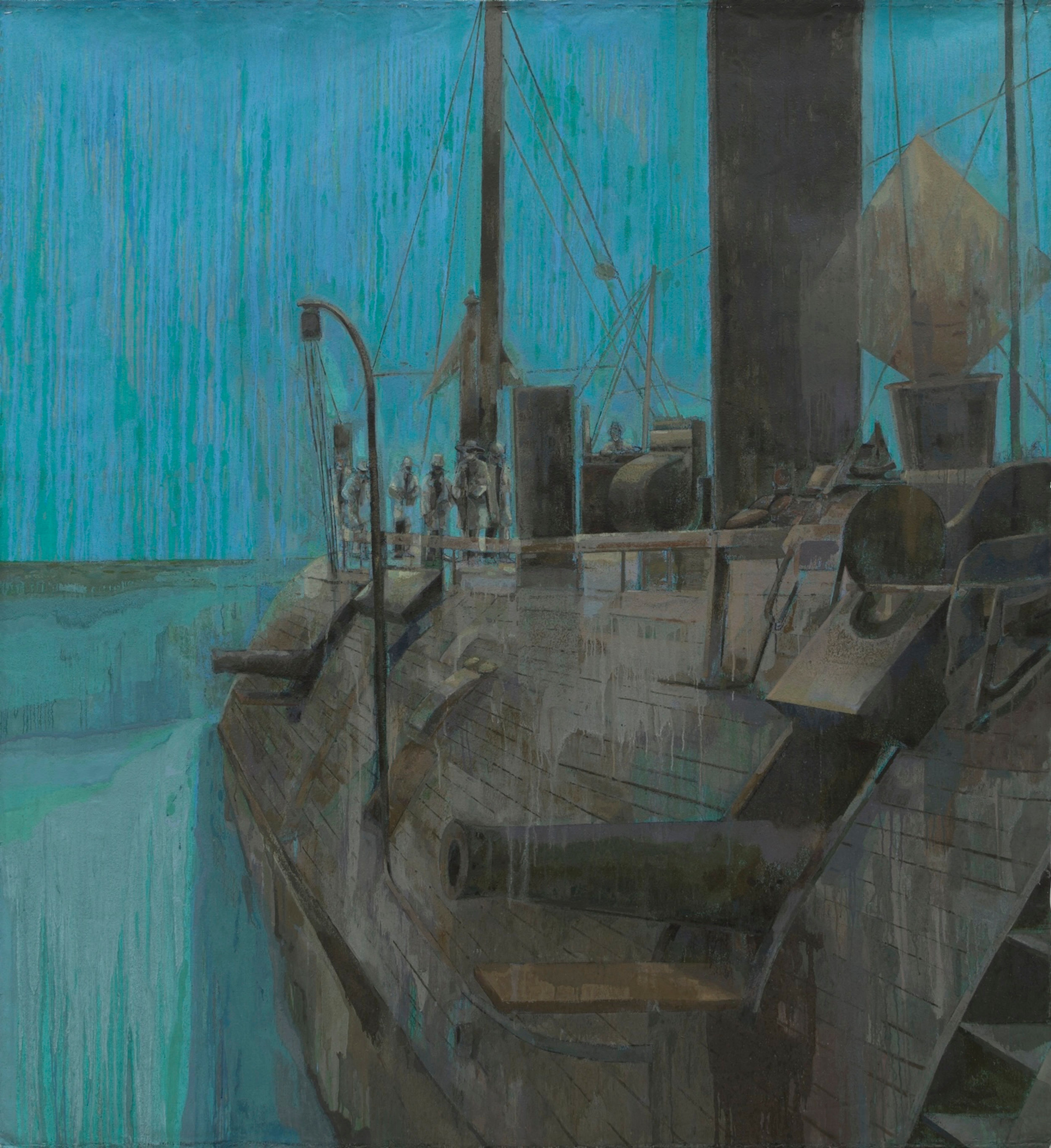
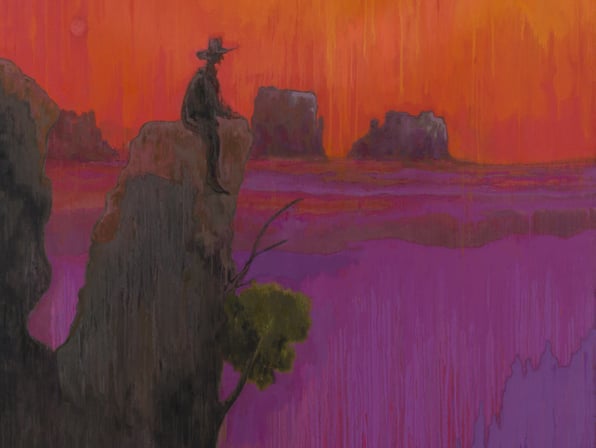
LET: How do you fabricate the faded, almost acidic layering of paint in your works? How does your chromatic choice—acid green, yellows, blues, neons—reflect ideas of revolution or even apocalypse?
SC: At a visceral level, I trust visceral reaction. You get the sense that something is wrong about the colour, the conveying of wrongness: bacteria, bruising, distress, acid, artifice, apocalypse. Contamination, a strong register.
“A lot of what a revolution does is revise history altogether”
LET: If you had to do a show with three artists or more—as many as you like—who would you choose?
SC: Brandon Ndife, Prunella Clough (my favourite) and the Kienholzes. There is an interest in remainders, or leftovers, in all these artists, and in me as well. With Prunella Clough, [it] is the leftover from perception: she was working while London was reconstructing itself after being bombed to hell; and you see the forms that emerge from that trauma.
LET: Do you have a favourite conspiracy theory?
SC: Neil Armstrong wasn’t the first man to go to the moon. He was just the first man to leave it.—[O]
Main image: Sedrick Chisom,The Historical Reenactment of The Empire’s Counterattack on The Monstrous Races, Restaged as a Minstrel Comedy (2026). Acrylic on canvas. Courtesy Matthew Brown Gallery and the artist.











A respected voice in contemporary art discourse.
Focusing on ambitious storytelling and insightful art-world commentary. Ocula Magazine publishes in-depth interviews, critical essays and timely analysis on the artists, exhibitions and ideas driving the global art world.
Learn more about Ocula Magazine
Showcasing the best of the art world.
Ocula partners with galleries from around the world to highlight their artists, artworks and exhibitions. Gallery membership is by application and invitation, with each member vetted by an independent panel.
Learn more about Ocula Membership
Specialises in the sale of major artworks.
Led by a team with deep ties to the world’s leading auction houses, galleries and collectors. Ocula’s advisory team offers bespoke services to high-net-worth clients from around the world who are looking to acquire the best of contemporary and modern art.
Learn more about our team and services