





The Story of America in Eight Photographs
It’s Fourth of July weekend and, on both sides of the Atlantic, photography exhibitions are marking 250 years since the official adoption of the Declaration of Independence. Arthur Lubow curates an octet of photos that narrate the history of American experience. Save to My OculaTo mark the 250th anniversary of the signing of the Declaration of Independence on 4 July 1776, which proclaimed the 13 colonies free of Great Britain and established the sovereignty of the United States of America, several museums have mounted photography exhibitions. This is America at Miami’s Pérez Art Museum, Portrait of a City: A Century of American Photography at Dulwich Picture Gallery in London and Containing Multitudes at the Minneapolis Institute of Art all grapple with the contradictory facets of the American experience. I thought I’d follow their lead and make my own selection of eight photographs that tell a story of the tensions between democratic rule and economic inequality, the clarion call of liberty and the brutal imposition of slavery, the waves of national expansion and the yearning for a return to an idealised past.
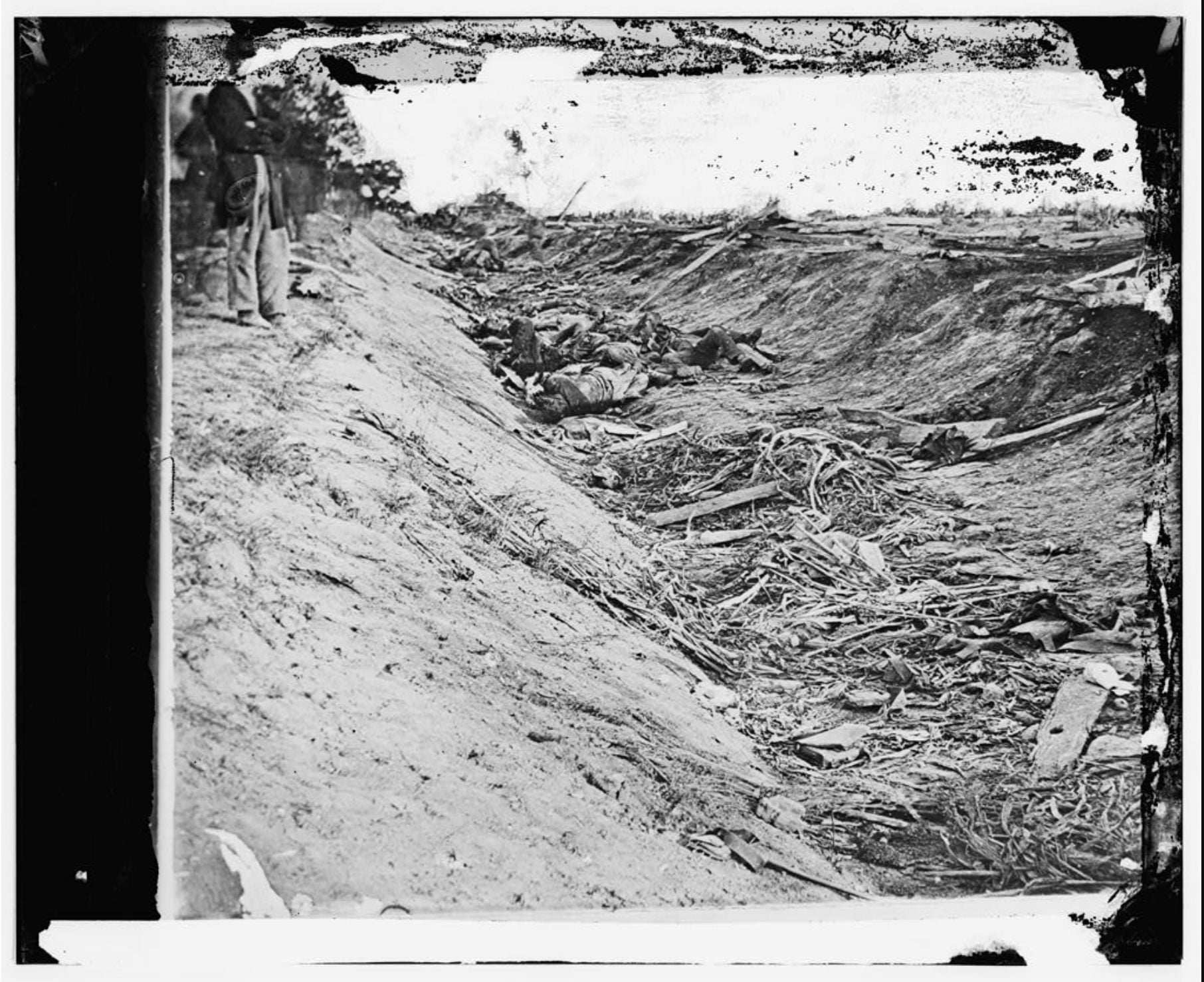
Alexander Gardner, Antietam, Maryland. Confederate dead in a ditch on the right wing (1862)
At Antietam in 1862, after the bloodiest day of the Civil War, fought between the north and south over the issue of slavery, Alexander Gardner was the first photographer to depict the dead on a battlefield, documenting, among other sites, a ditch littered with the corpses of Confederate soldiers. The blasted trees in the background give a sense of the destruction wreaked by heavy artillery. Although the anniversary of the Revolutionary War is currently being hurrahed, the conflict that still fractures America is the Civil War, with its divisions of the liberal-leaning north and conservative south, white and Black, industrial and agricultural, leaving wounds that have never completely healed.
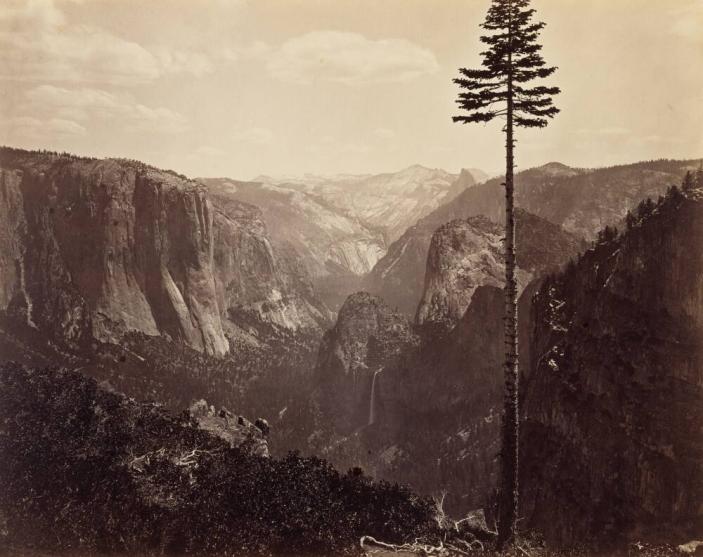
Carleton Watkins, Yosemite Valley from the Best General View (1866)
The quasi-mythical allure of the American West has long provoked conflicting passions. In 1845, journalist John L O’Sullivan wrote that it was America’s “manifest destiny” to settle the wilderness. At the same time, there was an urgent desire to preserve it. Carleton Watkins, born in New York State in 1829, was the foremost photographer of the rugged, unspoiled Western landscape. His photographs of Yosemite inspired President Abraham Lincoln to transfer ownership of the Yosemite Valley to the State of California, the federal government’s first conservation of land for recreational use and the forerunner of the National Park system.
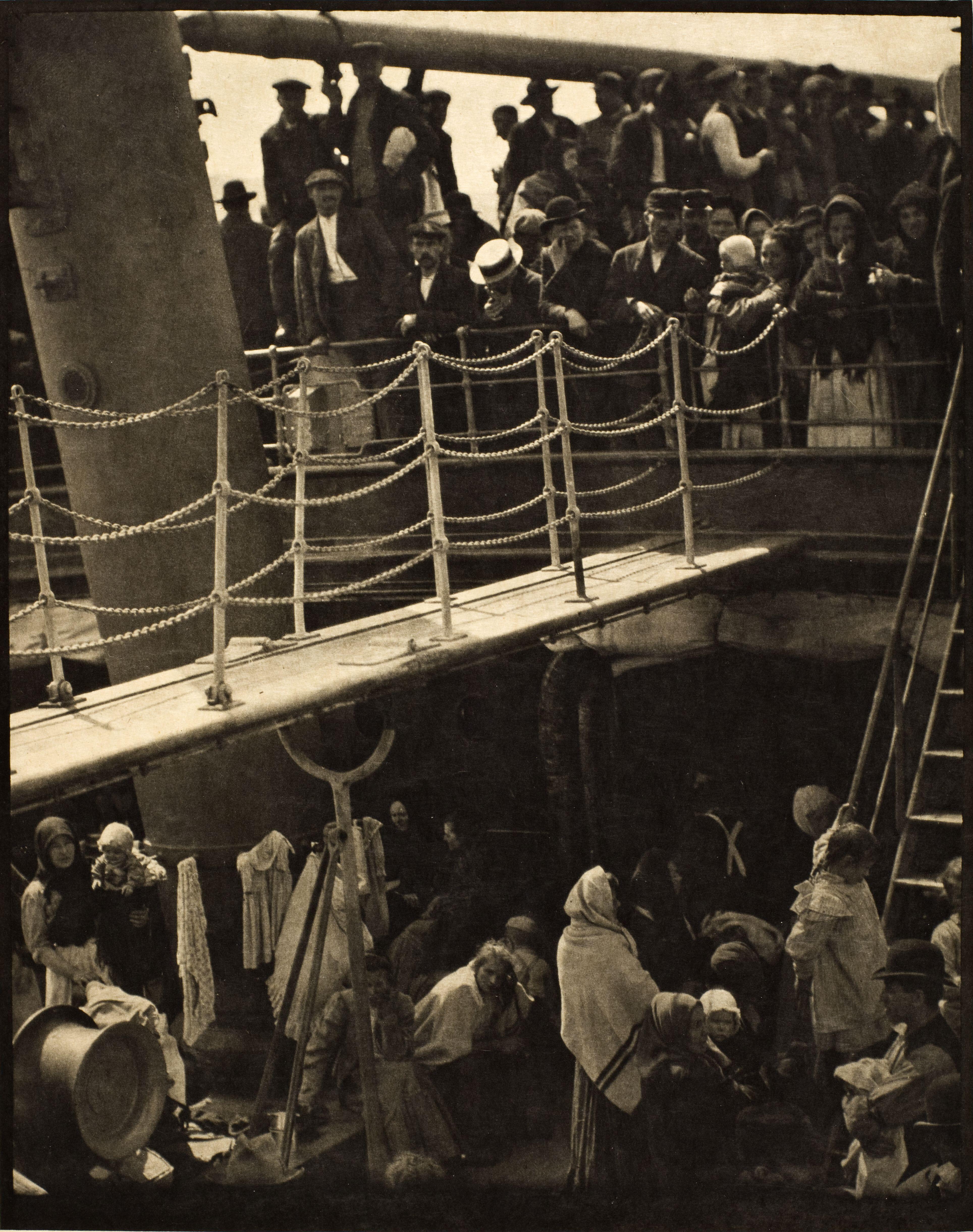
Alfred Stieglitz, The Steerage (1907)
This classic image is usually interpretted as a depiction of immigrants below and the affluent above, sailing into New York Harbour. It is, in fact, a ship leaving New York City, bound for Europe—and those would-be immigrants have likely failed the medical exam and been refused entry. The dream and the reality of America never lined up exactly.
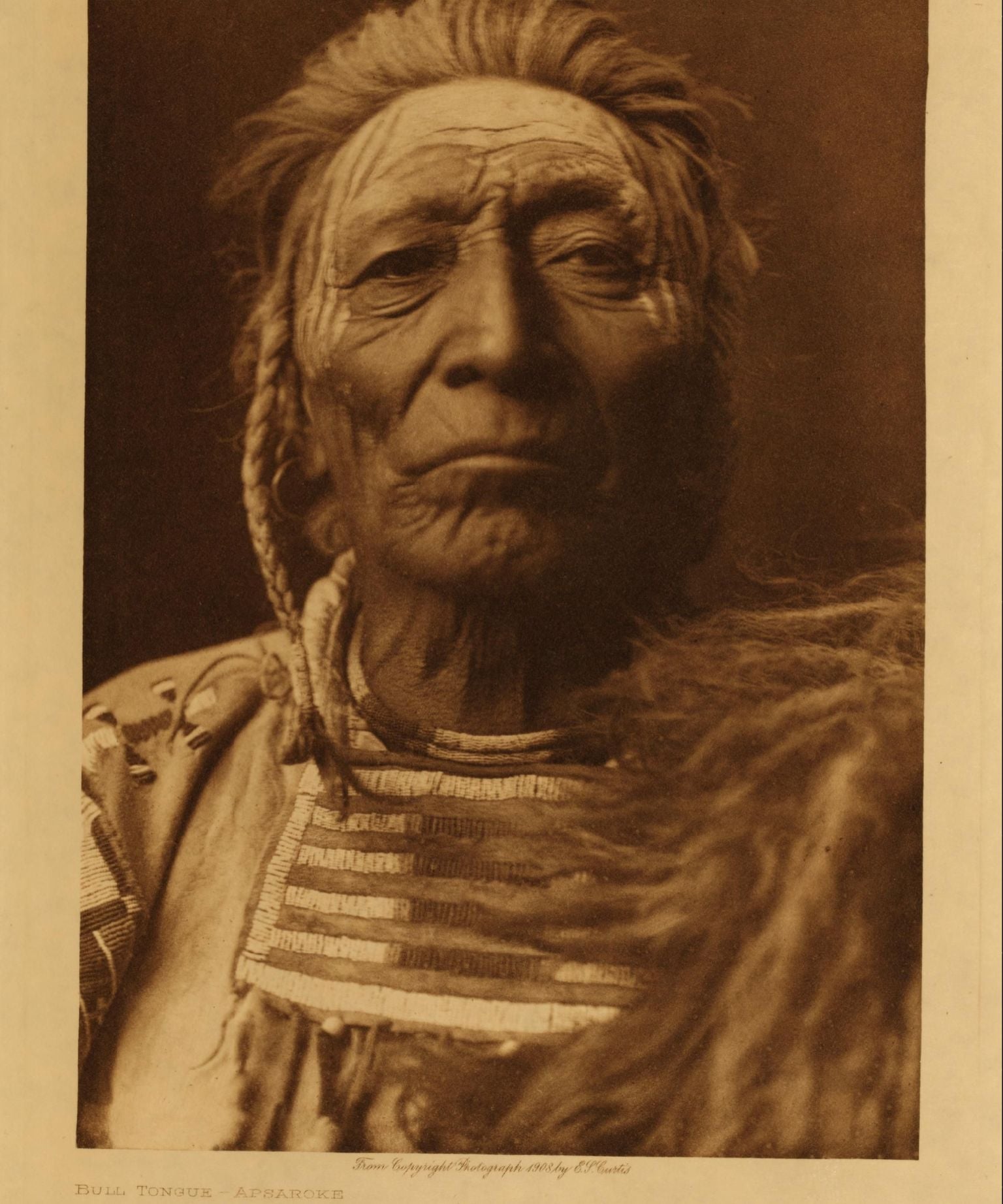
Edward C Curtis, Bull Tongue—Apsaroke (c 1908)
Edward C Curtis was an influential photographer of the Indigenous peoples who inhabited the continent before the arrival of the colonists in the 17th century. During the first 30 years of the 20th century, he visited more than 70 Native American tribes with his camera. By that time, his subjects had been relocated from their traditional lands and relegated to harsh reservations. There is an elegiacal air that imbues his portraits of sitters such as Bull Tongue, a leader of the Apsáalooke (Crow) people of the Northern Great Plains, whose lined face, set mouth and sad eyes radiate dignity and tragedy. From the photograph, you can see that he was someone Curtis admired, both as an individual and as an emblem of a romanticised past.
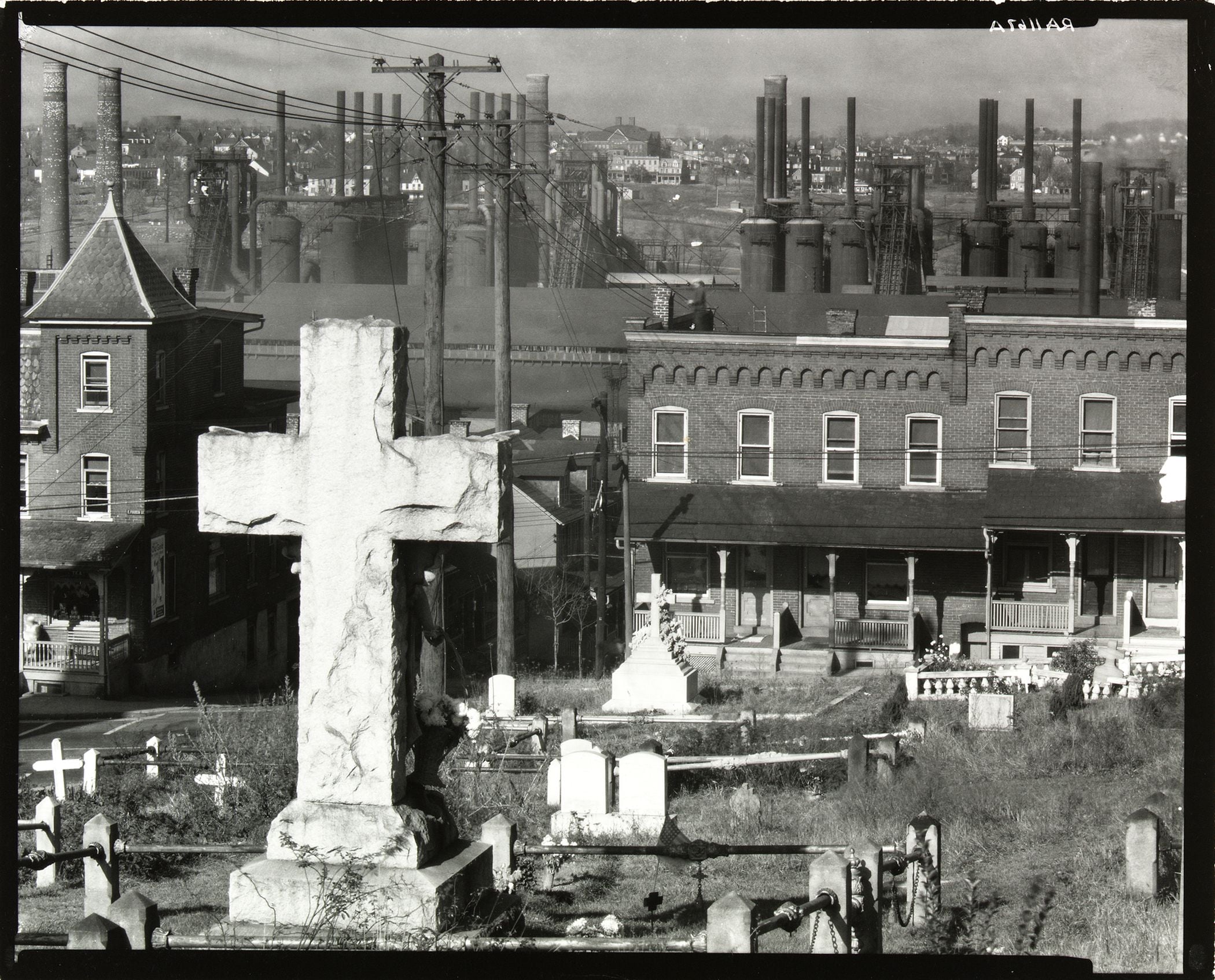
Walker Evans, Graveyard, Houses, and Steel Mill, Bethlehem, Pennsylvania (1935), on view in Containing Multitudes at Minneapolis Institute of Art (until 2 August)
Touring the country during the Great Depression of the 1930s with an 8x10 view camera, Walker Evans visited this Pennsylvania steel town and defined with elegant precision the two forces that ruled the workers who inhabited the dreary rowhouses between them. Christianity, embodied by a giant cross erected in the cemetery, faces off against capitalism, represented by the serried smokestacks of the mills.
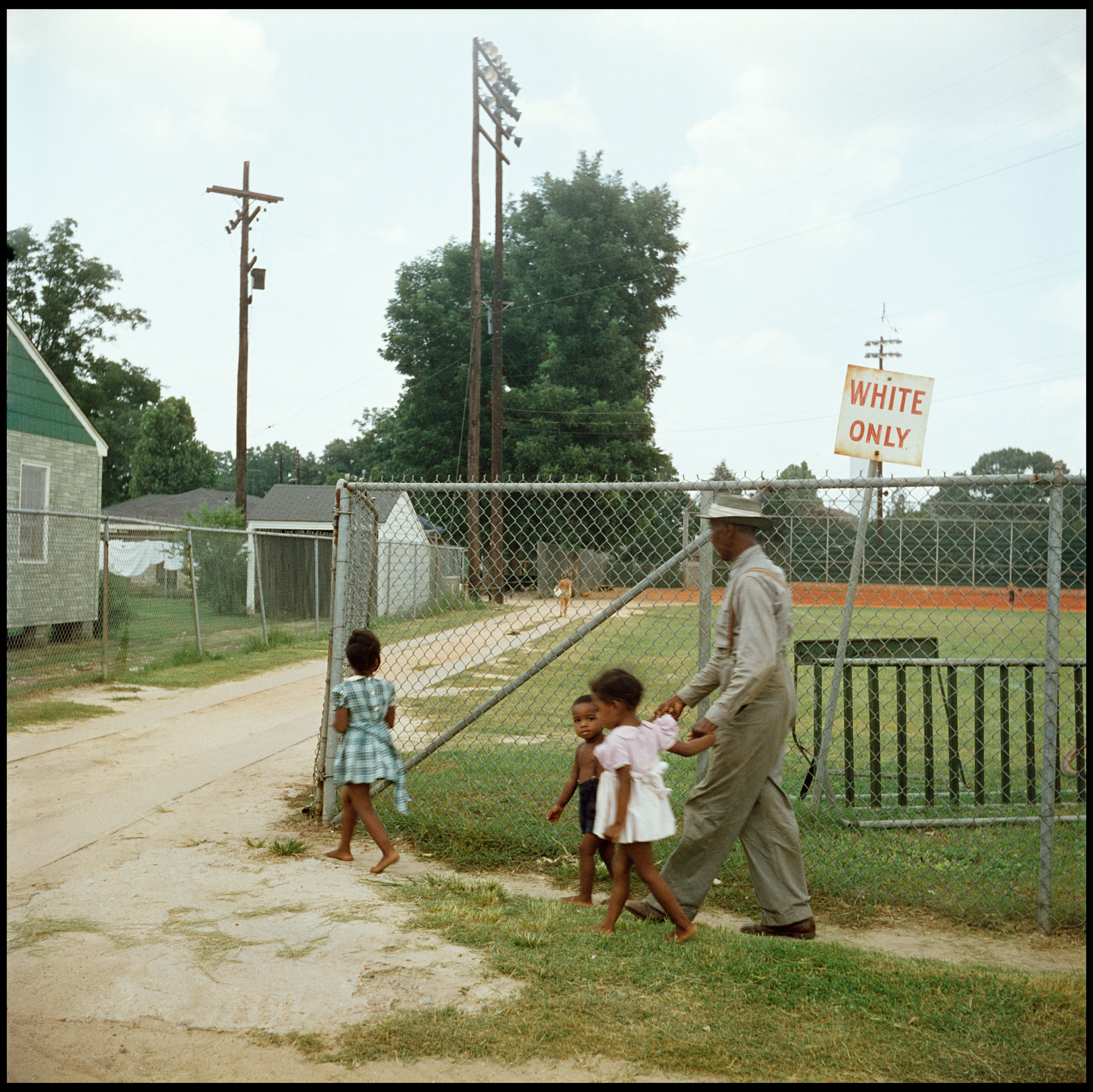
Gordon Parks, Untitled, Mobile, Alabama (1956), on view in Gordon Parks: The South in Colour at Jackson Fine Art, Atlanta (until 11 July)
A Choice of Weapons was the title Gordon Parks gave to his 1965 memoir. Much as Woody Guthrie said that his guitar was a machine that kills fascists, Parks used his camera to expose and combat racism. In this photograph, an African American man escorts three small children between fences marking off a park that, as the sign unambiguously states, is “White Only”. And indeed, a white woman in the background seems to be heading toward a cordoned-off tennis court. The civil rights movement was just beginning when Parks made this photograph. The ensuing turmoil and violence are foretold in the tension beneath the false calm in this poignant photograph.
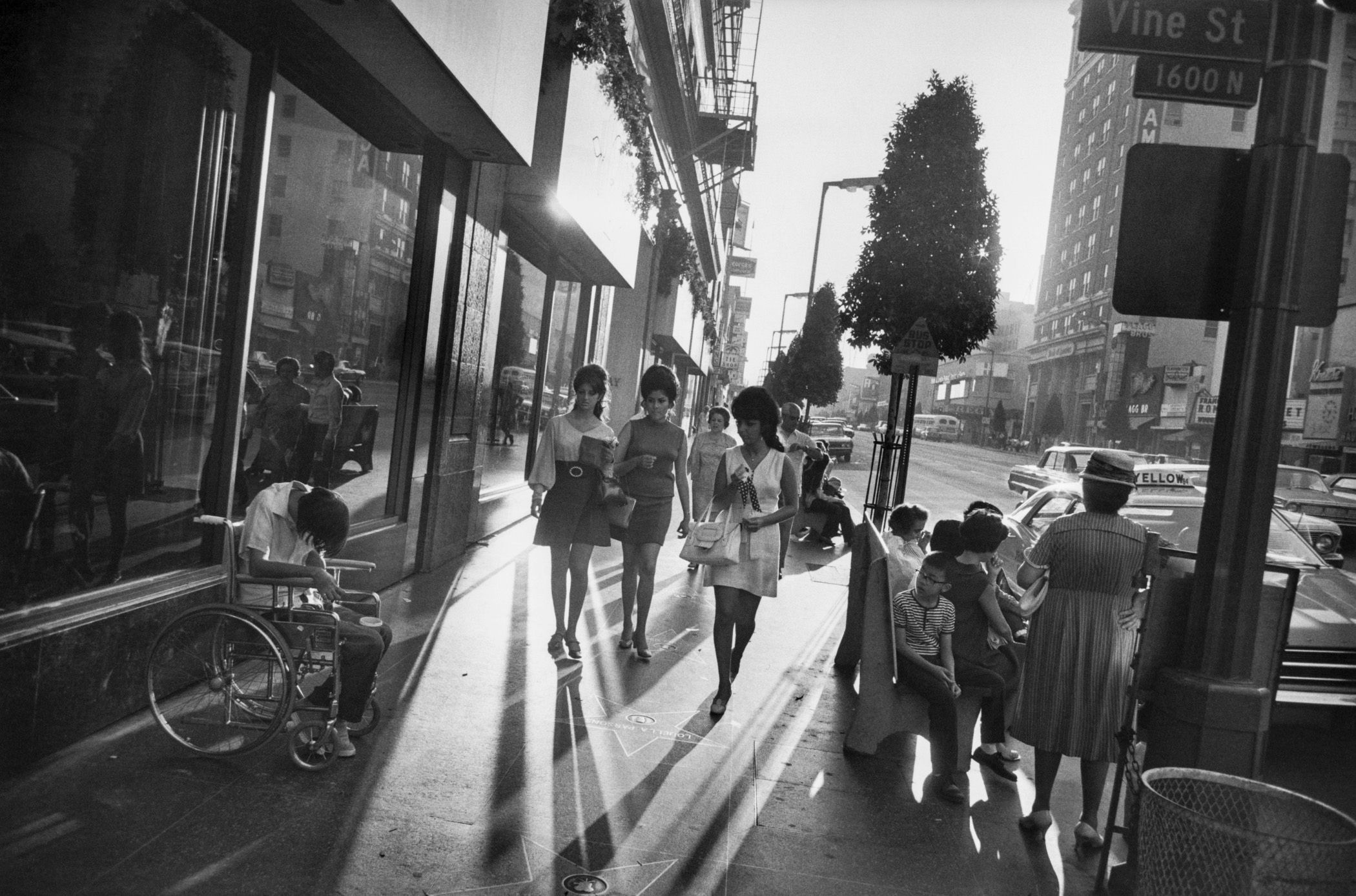
Garry Winogrand, Los Angeles (1969)
The consummate New York City street photographer Garry Winogrand found pedestrians wherever he went, even in automobile-centric LA. No one equalled him in revealing the disparities and absurdities of 1960s America. At the fabled intersection of Hollywood and Vine, three dolled-up women with beehive hairdos walk a sidewalk gamut between the less fortunate. To the right, people are waiting for a bus, the mode of transportation for underprivileged Angelenos. On the left, a figure slumps in his wheelchair, not going anywhere. As the striking shadows suggest, this is a land of light and darkness.
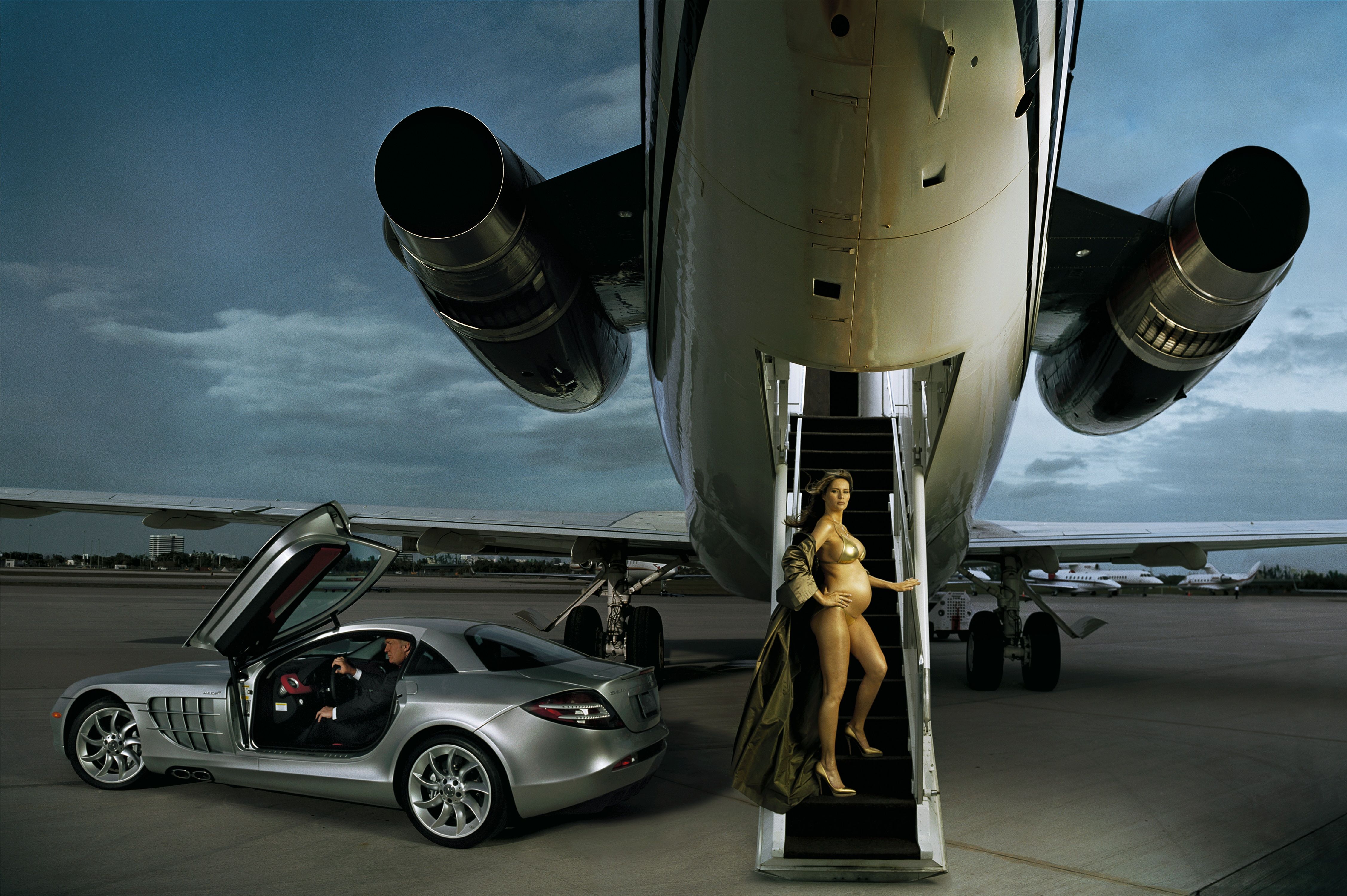
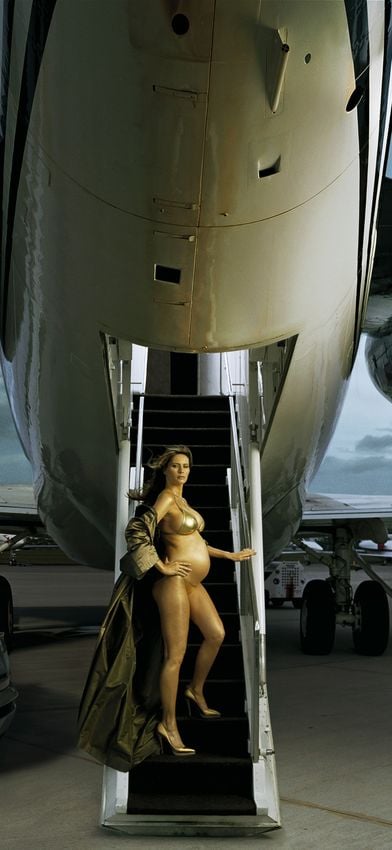
Annie Leibovitz, [Donald and Melania Trump for Vogue, 2006]
Twenty years ago, Annie Leibovitz summed up in one uproarious and disquieting image where the country was headed. The stylist for Vogue brought the gold bikini, which Melania was happy to put on. Seated in a half-a-million-dollar Mercedes-McLaren sports car that was his gift to Melania, eyeing his aeroplane and his pregnant wife with a proudly proprietary air, Trump revelled in vulgar ostentation. With no embarrassment or apology, he collaborated in the making of this photograph. It was an opening trumpet blast for the new Gilded Age—in which, 250 years after its founding, America is now enmired. —[O]
Main image: Walker Evans, Graveyard, Houses, and Steel Mill, Bethlehem, Pennsylvania (1935). Courtesy Minneapolis Institute of Art.





A respected voice in contemporary art discourse.
Focusing on ambitious storytelling and insightful art-world commentary. Ocula Magazine publishes in-depth interviews, critical essays and timely analysis on the artists, exhibitions and ideas driving the global art world.
Learn more about Ocula Magazine
Showcasing the best of the art world.
Ocula partners with galleries from around the world to highlight their artists, artworks and exhibitions. Gallery membership is by application and invitation, with each member vetted by an independent panel.
Learn more about Ocula Membership
Specialises in the sale of major artworks.
Led by a team with deep ties to the world’s leading auction houses, galleries and collectors. Ocula’s advisory team offers bespoke services to high-net-worth clients from around the world who are looking to acquire the best of contemporary and modern art.
Learn more about our team and services