Press Release

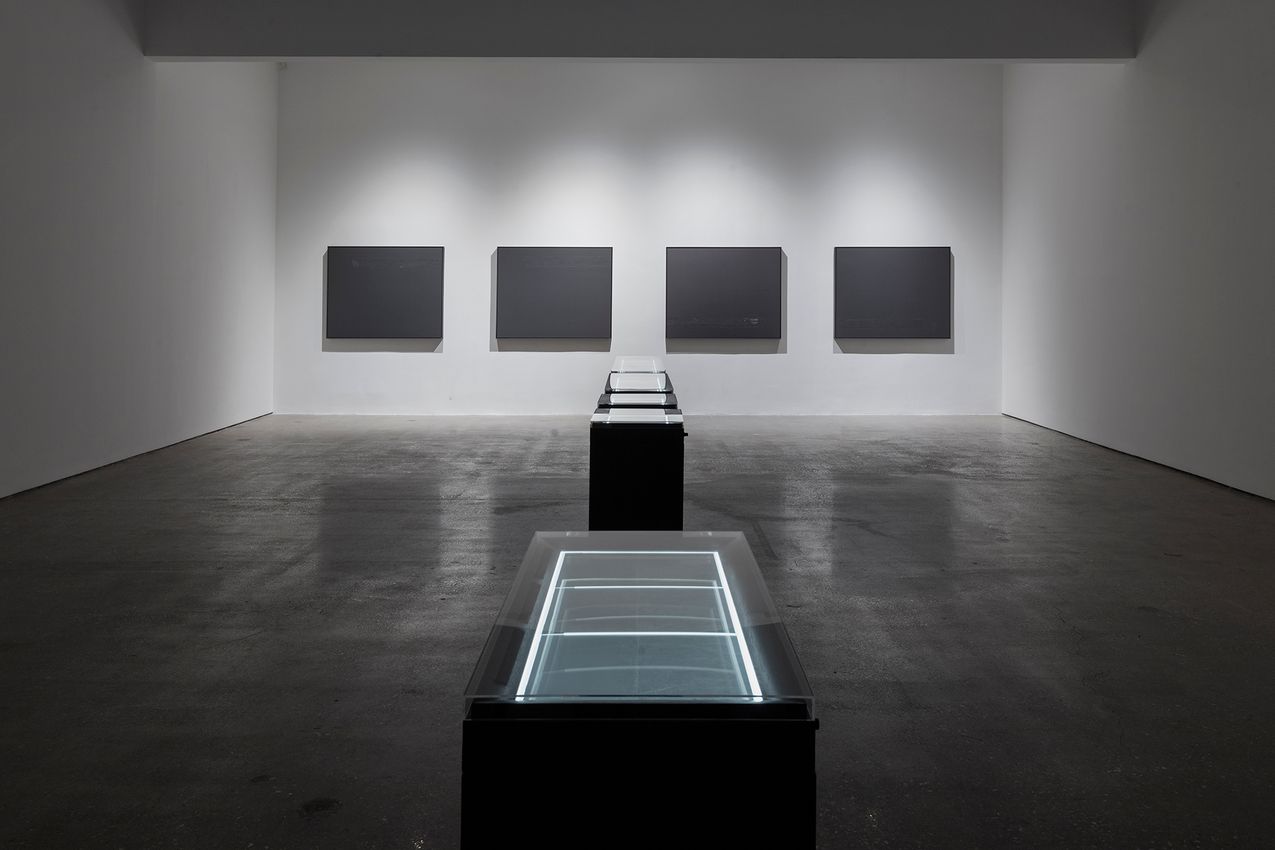
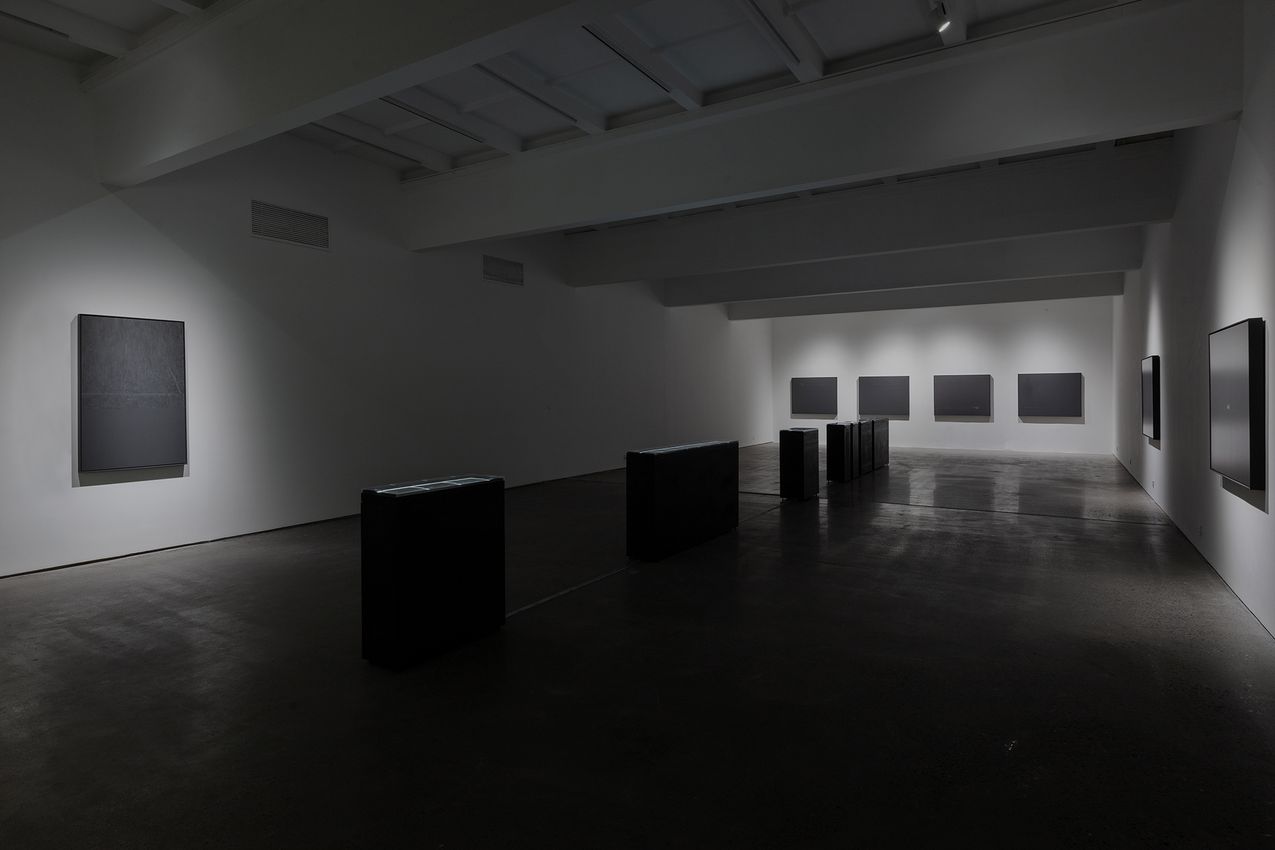
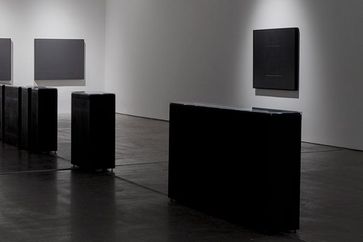
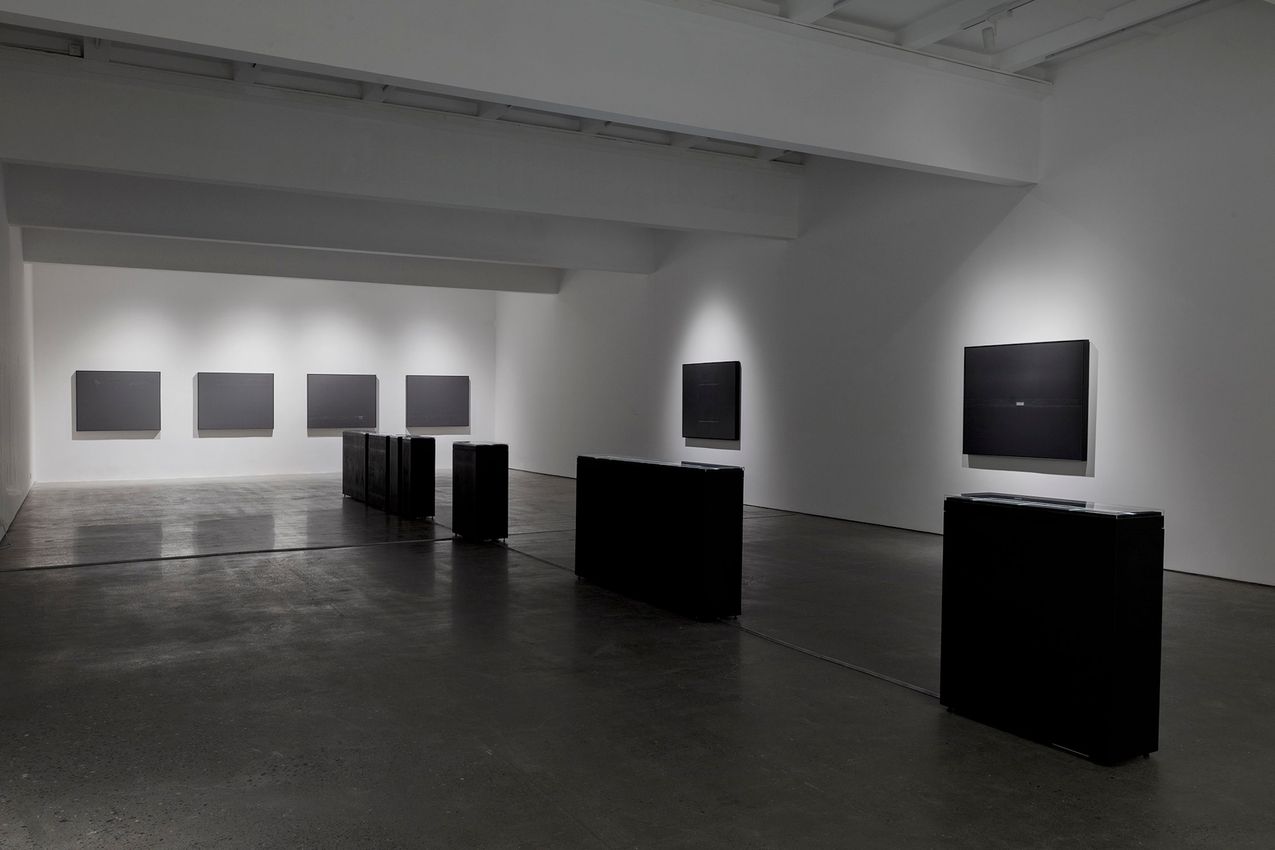
In the space, four groups of light boxes are set up to display a varied number of negatives: 10, 3, 7, 3. Each group takes several shots of the remnants of a plain Ming-style furniture until the taken negatives, erasing light and dark projection, three-dimensional perspective, and spatial depth, and compressed into a gray surface as much as possible.

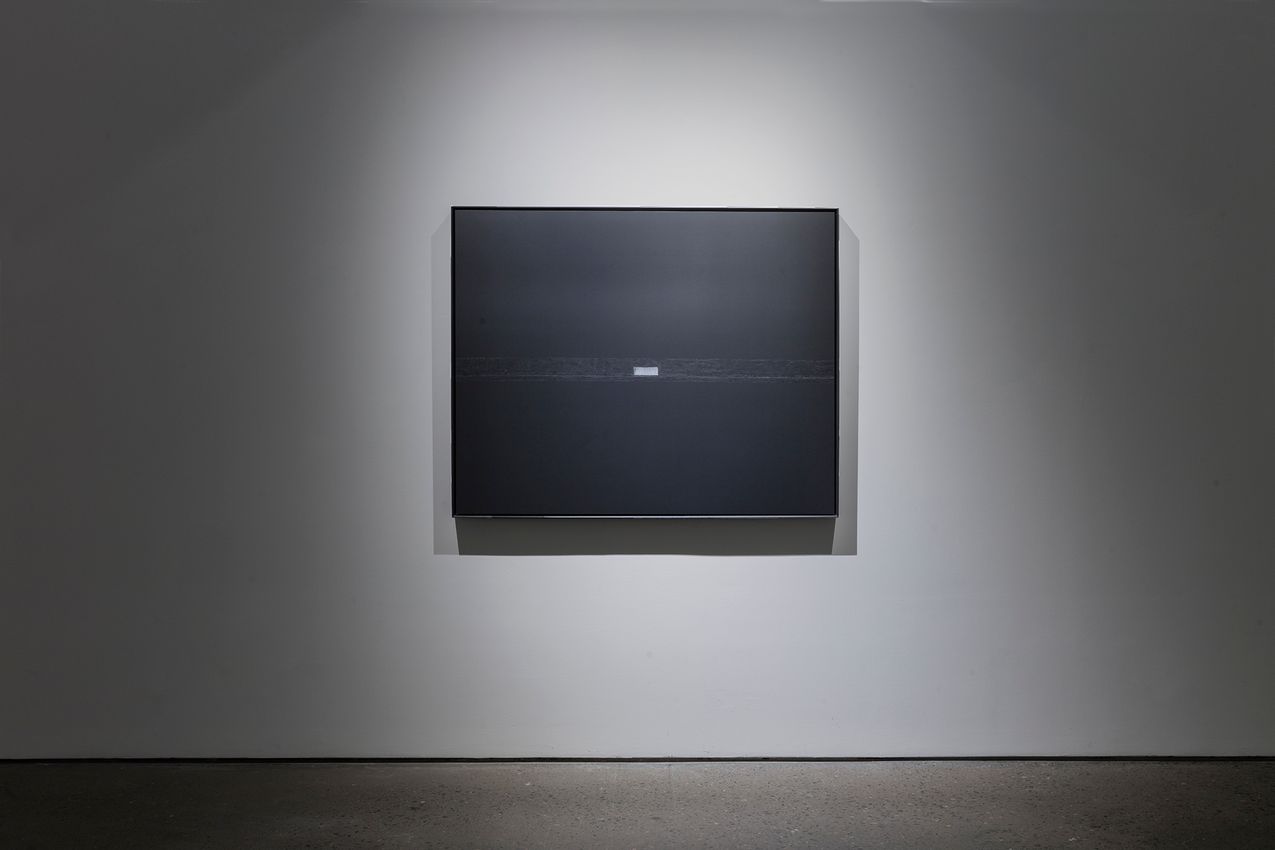
This is what the artist Qin Yifeng has attempted for many years—using a large-format camera to create a kind of radical flatness on 8×10 film. Thus, metering daylight on a daily base, a three-dimensional vision also that violates optical refraction without the help of artificial light source, exits from the dogmatic framework of reproduction. As Qin Yifeng’s language, these negatives that tend to be flat cannot be embedded in commonly agreed empirical standards. Thus, they can only be arranged in the sequence according to their own differences, and the most ideal one can be selected from them by comparison.

In other words, the absence of standards is the result of Qin Yifeng’s introduction of multiple contradiction into photography: using camera to resist the depth of field, using negative film to invert black and white, or out of intuition to see things disappear in the clearest image. Thus, despite daylight changes, the film Ilford Delta 100 is Qin Yifeng’s image matrix because its mildest optical sensitivity precipitates the finest silver halide particles, paradoxically enough to validate the artist’s hypothesis.

In this way, the 8×10 particle plane, rather than photography, is a theater of decay Qin Yifeng created according to the property of silver salt particles; the character in the play, the remnants of the plain furniture, both clearly indicate the life texture of tree and converge under the aesthetic contour of Ming artisans. The natural order and cultural order are mutually constrained on the same surface and decay simultaneously in time. It is difficult to demonstrate this future-oriented decay in any three-dimensional space, so it is no wonder that Qin Yifeng uses exposure time to modulate a tight gray flat, in order to eliminate the intervention of narrative and guide the wooden object to a pure particle endgame.

As a viewer, what the naked eyes seen is the evenly articulated gray surface of the wooden object, but the real reading must be achieved with the help of a magnifying glass. Under the silent gray tones, particles of different orders resist or dissipate according to their encoding, reaching the peak of tension on the edge of the remnants; Qin Yifeng also uses earthworm clay to make up the wooden object, trying to weaken its materiality. In other words, he intends to counteract the silver salt particles with the powder of clay, completing the most dramatic decaying transition with the slightest material intervention.

This means that, before shooting, Qin Yifeng has focused on the negatives. Imagining in his mind the light-sensitive accumulation of particles, deducing the possibility of gray flatness in reverse, all these contradictory engineering of reverse point to the negative as a starting point—the negative is the place where Qin Yifeng negotiates the meaning of nature through photography, and it is also his foundation position— when the negative brings the information to the surface degree zero, here language begins again.

Press release courtesy Magician Space.

Read More

Installation Views

Must-See Shows During Gallery Weekend Beijing and Beyond Spotlight Must-See Shows During Gallery Weekend Beijing and Beyond Ocula Magazine shares a selection of must‑see exhibitions over Gallery Weekend Beijing (26 May–4 June 2023) and into the summer months. Read the story
About the Artist

Qin Yifeng was born in 1961 in Qinghai, China, and moved to Shanghai with his parents the following year. He graduated from Shanghai Arts and Crafts College in 1983 and then continued his education at the College of Fine Arts, Shanghai University, completing his studies in 1989. Qin currently holds a post as Associate Professor at Shanghai University.

View Artist Profile

Also Exhibiting at Magician Space

About the Gallery

The Chinese transliteration for magician – ‘mó jīn shí’ has the meaning of sharpening and refining, suggests a kind of reflection and introspection, while the English word ‘magician’ itself means something fantastical and unpredictable, implying further possibilities.

View Gallery Profile
Address
798 Art Zone, No.2 Jiuxianqiao R.d
Chaoyang District
Beijing
China
Opening Hours
Tuesday - Saturday
10.30am - 6.30pm
(1)
Beijing Magician Space, 798 Art Zone, No.2 Jiuxianqiao R.d
Magician Space
798 Art Zone, No.2 Jiuxianqiao R.d, Chaoyang District, Beijing, China

Opening hours
Tuesday - Saturday
10.30am - 6.30pm
The art world in focus