





What Do TikTok and Cold War Propaganda Have in Common?
Ting‑Jung Chen’s 2018 sound installation You Are the Only One I Care About (whisper) breaks down a 1970s Taiwanese propaganda tool into multiple sound streams. Zian Chen considers the parallels between the power of many “voices” and today’s social media landscape. Save to My OculaFor many of us growing up in 1990s Taiwan, it felt as if the Cold War had only just ended before old propaganda slogans (“Liberate our mainland compatriots”) became the subject of parody in pop culture. It made the idea of war seem suddenly far away, like something from another era. Shaped by American political scientist Francis Fukuyama’s “end of history” thesis, the post-Cold War proposition that liberal democracy marked the endpoint of ideological evolution, and a new faith in globalisation, we inherited a sense that history had already been settled.
That was until 2014, when Russia annexed Crimea and Taiwan’s economic integration with China was deepening, provoking mass concern over Beijing’s political leverage. For my generation, which once treated military threats as political theatre, the prospect of Chinese invasion began to feel newly real, and the resulting anxiety started to filter into social media.
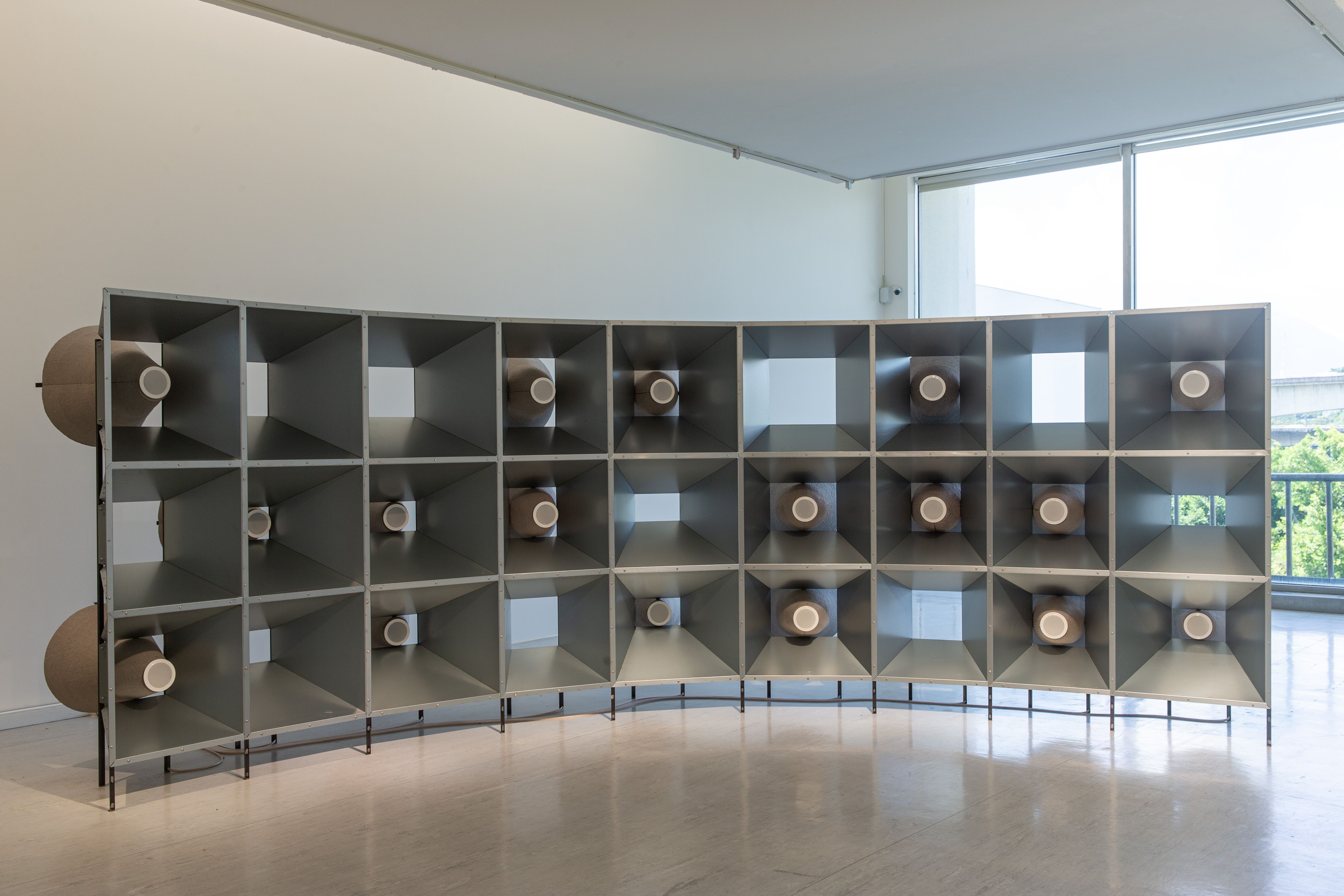
Encountering Taiwanese artist Ting-Jung Chen’s sound installation You Are the Only One I Care About (whisper) (2018) at the Taipei Fine Arts Museum, I found myself returning to that 1990s sensibility, when war seemed absurd enough to become a pop-cultural joke. Chen’s work revisits one of the Cold War’s weirdest instruments of psychological warfare: the giant loudspeaker installed on Kinmen, just off the coast of China, from which Taiwan would broadcast illicit pop songs and speeches inviting enemy soldiers to defect. It sat there from 1967 until the 1990s.
In the work’s title, borrowed from the 1980s love song by Taiwanese singer Teresa Teng, Chen captures an irony of the broadcasting offensive: propaganda was meant to cross the Cold War divide, yet it was the love songs that travelled furthest and endured the longest. “By day, listen to Deng Xiaoping,” went a popular saying in mainland China, referring to the leader of China during the 1980s, “by night, Teresa Teng.” Despite government restrictions, the people of China would listen to pirated and smuggled cassettes of Teng’s soft, emotionally direct music.
“The work brings the politics of listening back to the landscape where Cold War systems of surveillance were organised”
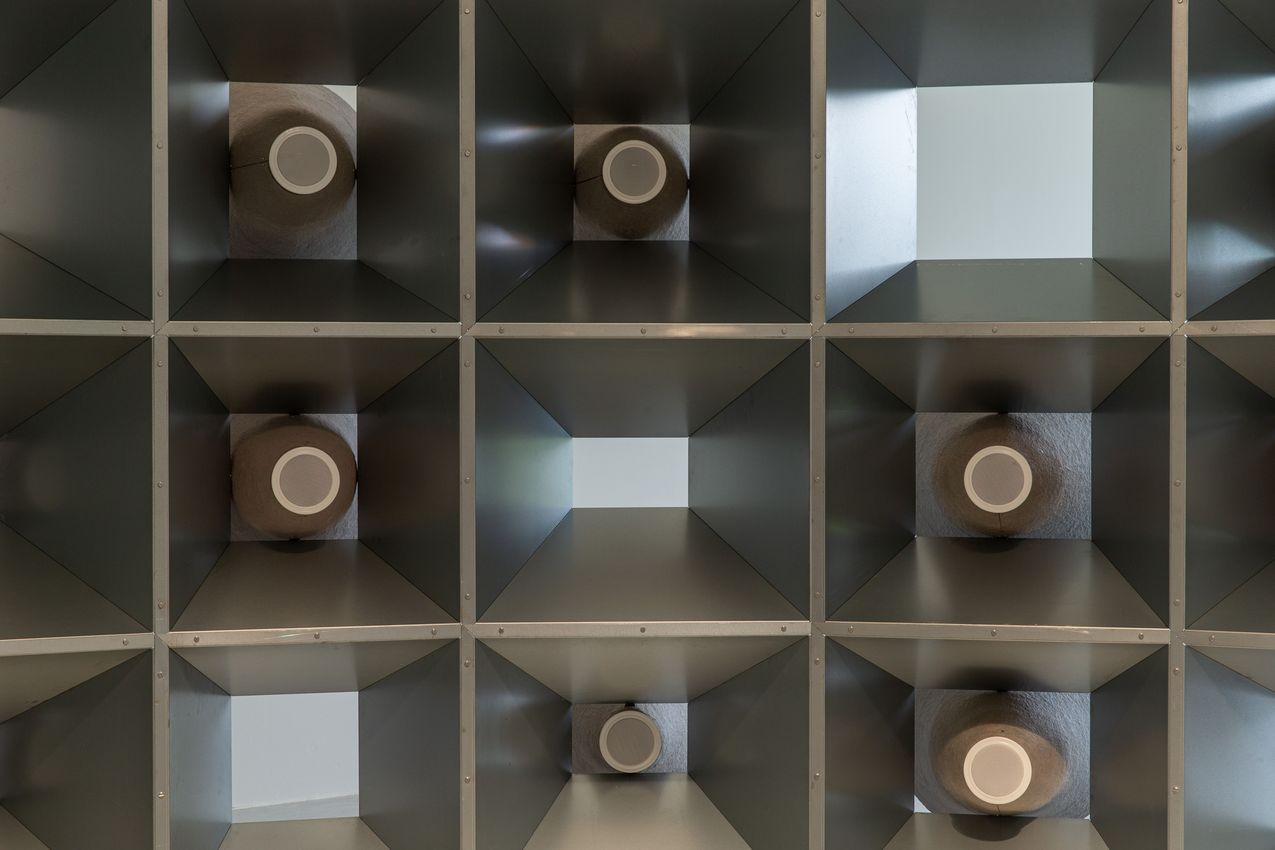
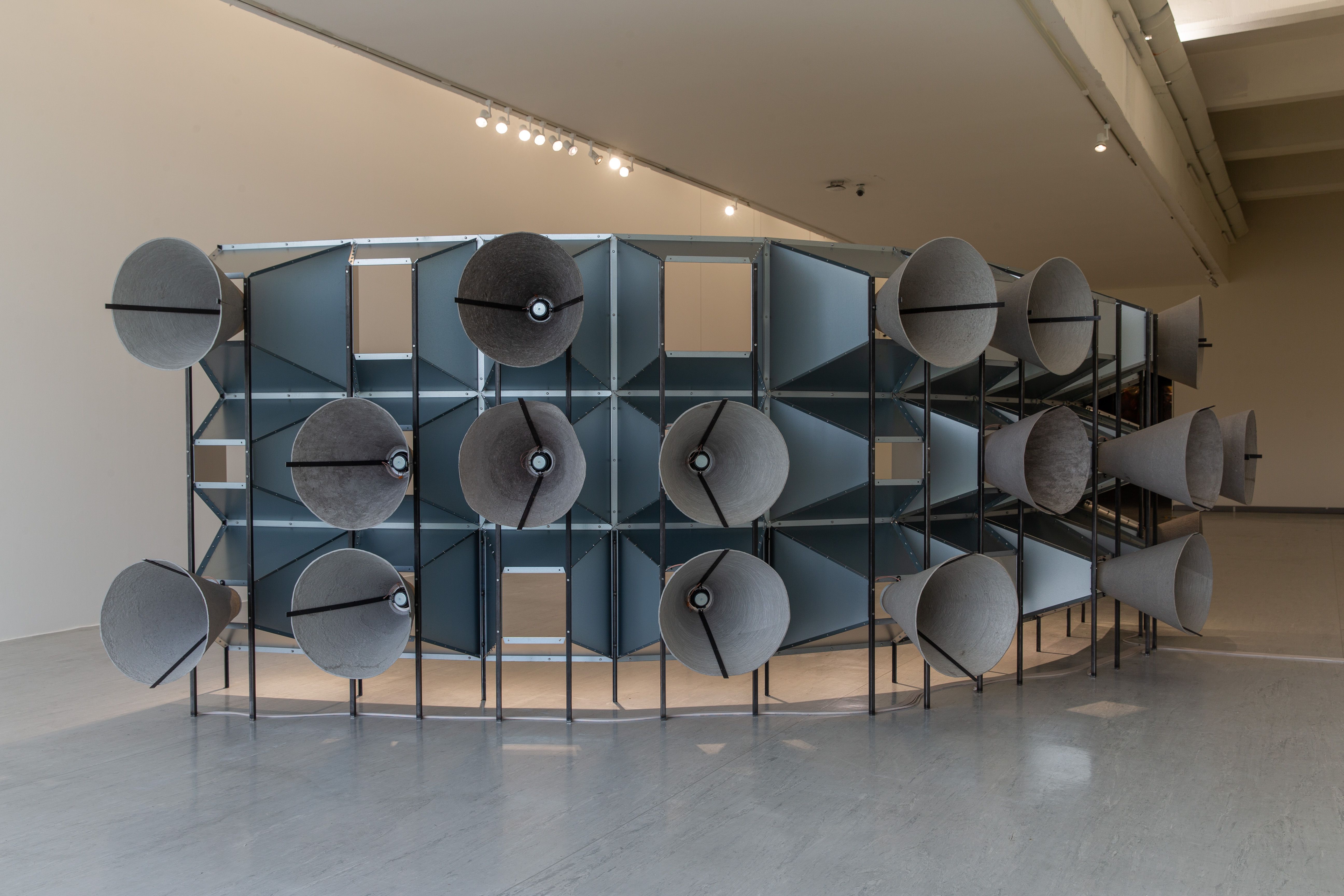
Chen’s piece exposes the strange disjunction between the machine and its message: a military instrument amplifies a woman’s voice while reducing her to an object of national and ideological desire. Chen transforms the commanding broadcast into a hesitant a cappella exchange between two female voices, one with a deeper, more grounded tone, the other rising into a higher, almost floating register. Their contrasting tones allow the ear to follow each voice through space. The recordings are split between 27 modular horn units, which are arranged in a gentle curve that gathers sound on its concave side and disperses it from the other. As the listener moves around the structure, the voices separate, overlap and recombine.
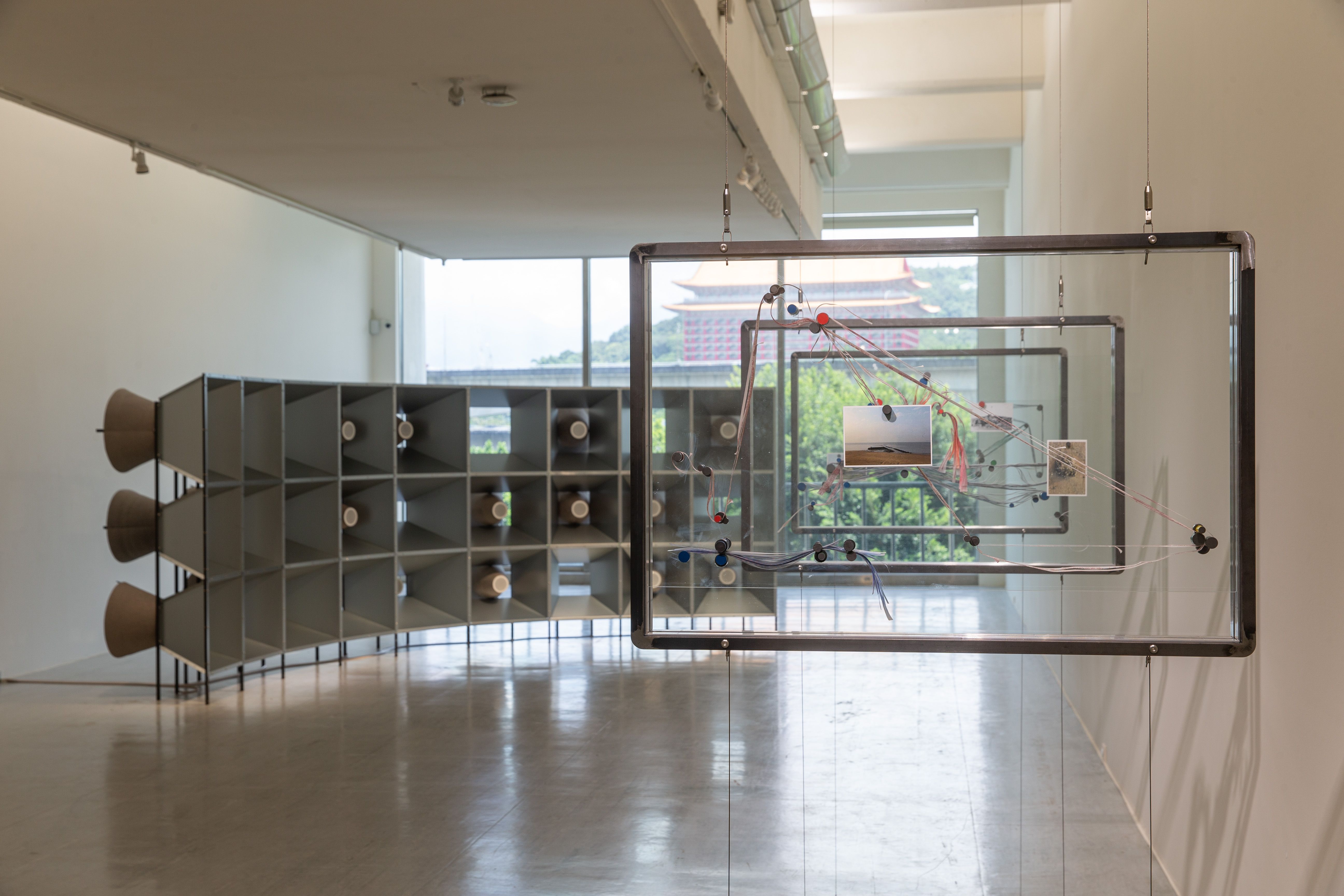
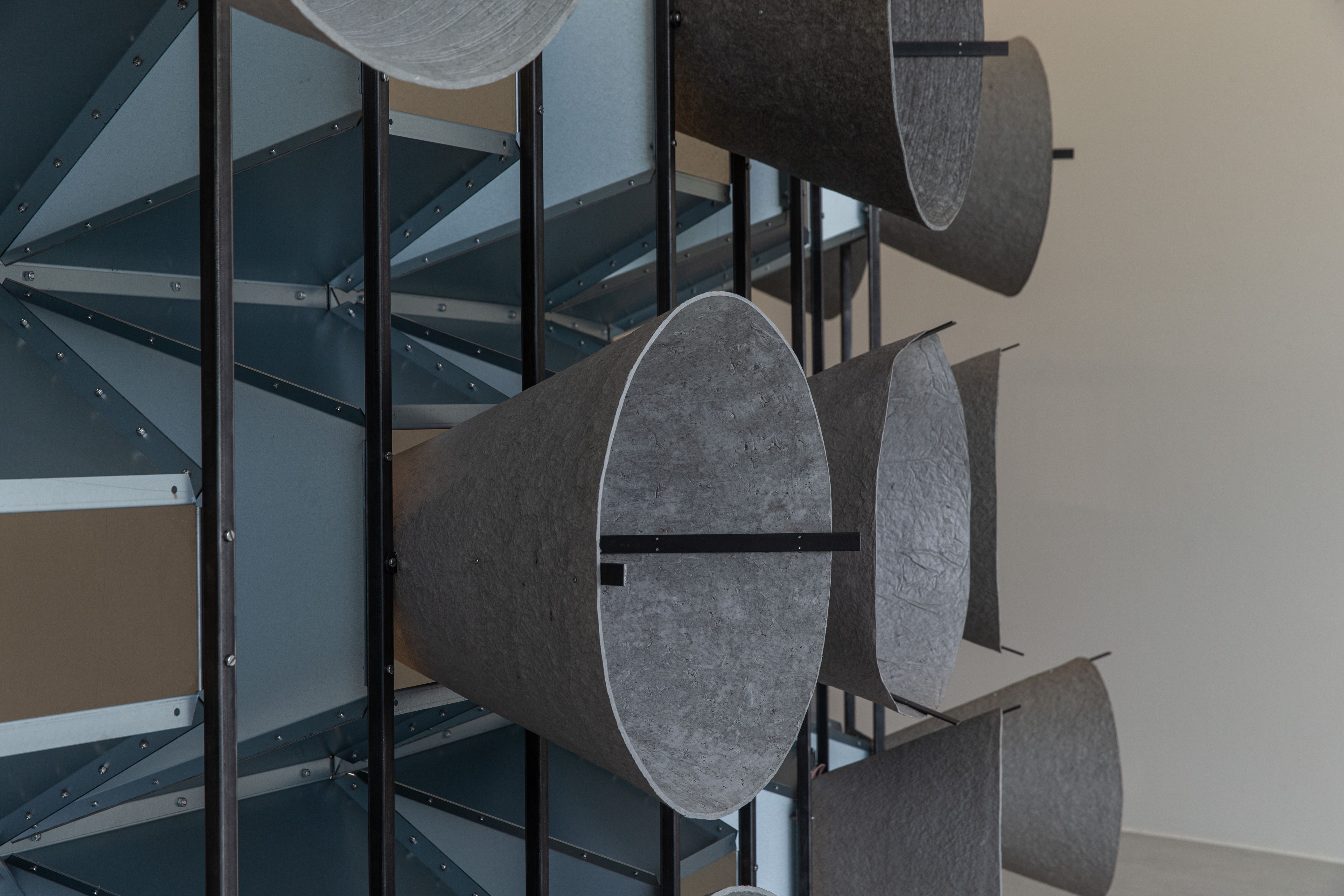
Eight years after Chen first presented the piece at Kunsthalle Wien, she is now showing it in the place where the ideas it contains originated, in Taiwan, as part of Attunement: Contemporary Politics between Mindscape and Soundscape. Installed in a white cube gallery beside a floor-to-ceiling window overlooking Yuanshan, the former site of the US Taiwan Defence Command and part of a wider American military infrastructure that included its own broadcasting network, until the US withdrawal in 1979, the work brings the politics of listening back to the very landscape where Cold War systems of surveillance and communication were organised.
Seen here, Chen’s acoustic wall acquires a different resonance. Where a giant loudspeaker was used to manipulate public opinion during the Cold War, today complex networks and data stores distribute influence. The contemporary equivalent of Teng’s voice lies in another form of intimate, everyday circulation: social media platforms such as TikTok, now contested amid renewed geopolitical tensions for their capacity to shape public opinion, where algorithmic systems transform fragments of sentiment into wider political imaginaries.
Chen’s modular acoustic wall feels uncannily prescient in this context: a field of separate units that, when connected, generate a force far greater than any single source, while leaving each individual element anonymous. Its structure recalls TikTok comment streams, where users respond to a live video, and bot farms, where countless small signals accumulate into a powerful collective force without a visible centre of command. You Are the Only One I Care About (whisper) does not so much tear up the acoustics of war as reveal that they have transformed. It recalls the reason that Teng’s voice resonated in the first place: that the softest forms of influence often prove the most penetrating.—[O]
Attunement: Contemporary Politics between Mindscape and Soundscape (until 27 September) at Taipei Fine Arts Museum
Main image: Ting-Jung Chen, You Are the Only One I Care About (whisper) (2018).










A respected voice in contemporary art discourse.
Focusing on ambitious storytelling and insightful art-world commentary. Ocula Magazine publishes in-depth interviews, critical essays and timely analysis on the artists, exhibitions and ideas driving the global art world.
Learn more about Ocula Magazine
Showcasing the best of the art world.
Ocula partners with galleries from around the world to highlight their artists, artworks and exhibitions. Gallery membership is by application and invitation, with each member vetted by an independent panel.
Learn more about Ocula Membership
Specialises in the sale of major artworks.
Led by a team with deep ties to the world’s leading auction houses, galleries and collectors. Ocula’s advisory team offers bespoke services to high-net-worth clients from around the world who are looking to acquire the best of contemporary and modern art.
Learn more about our team and services