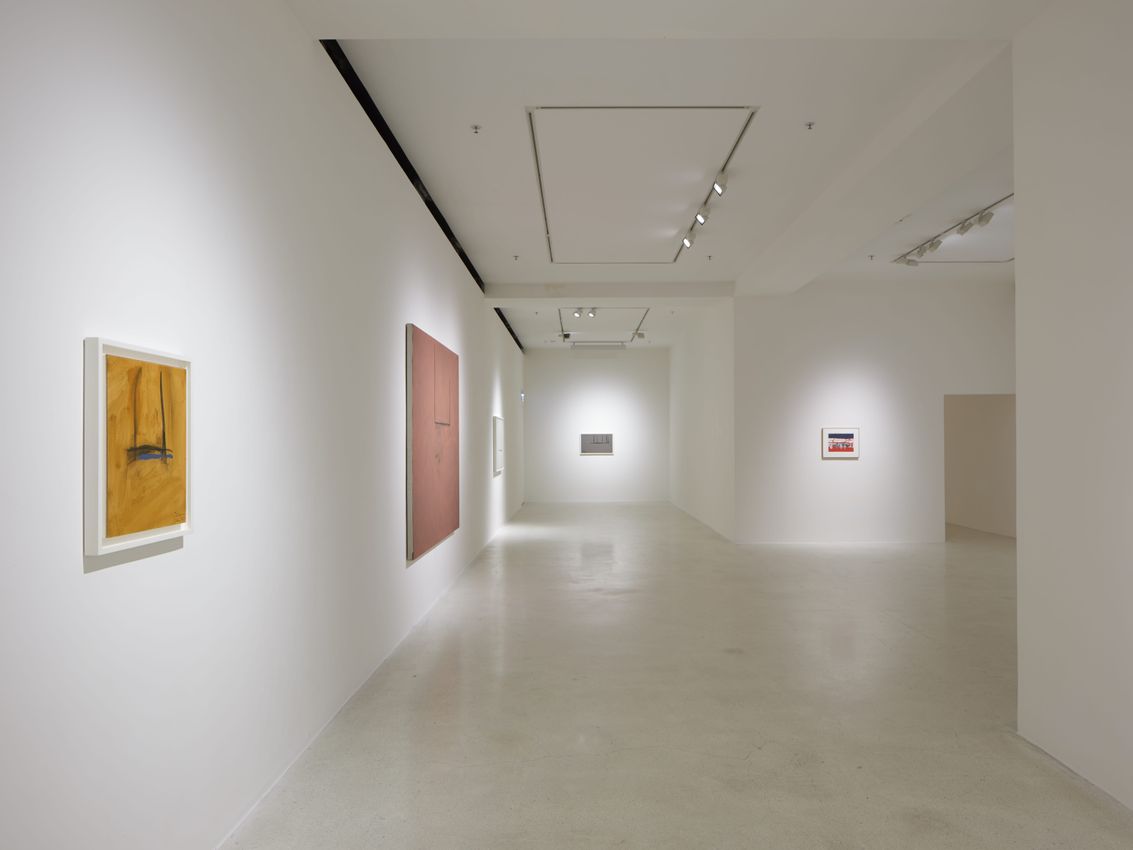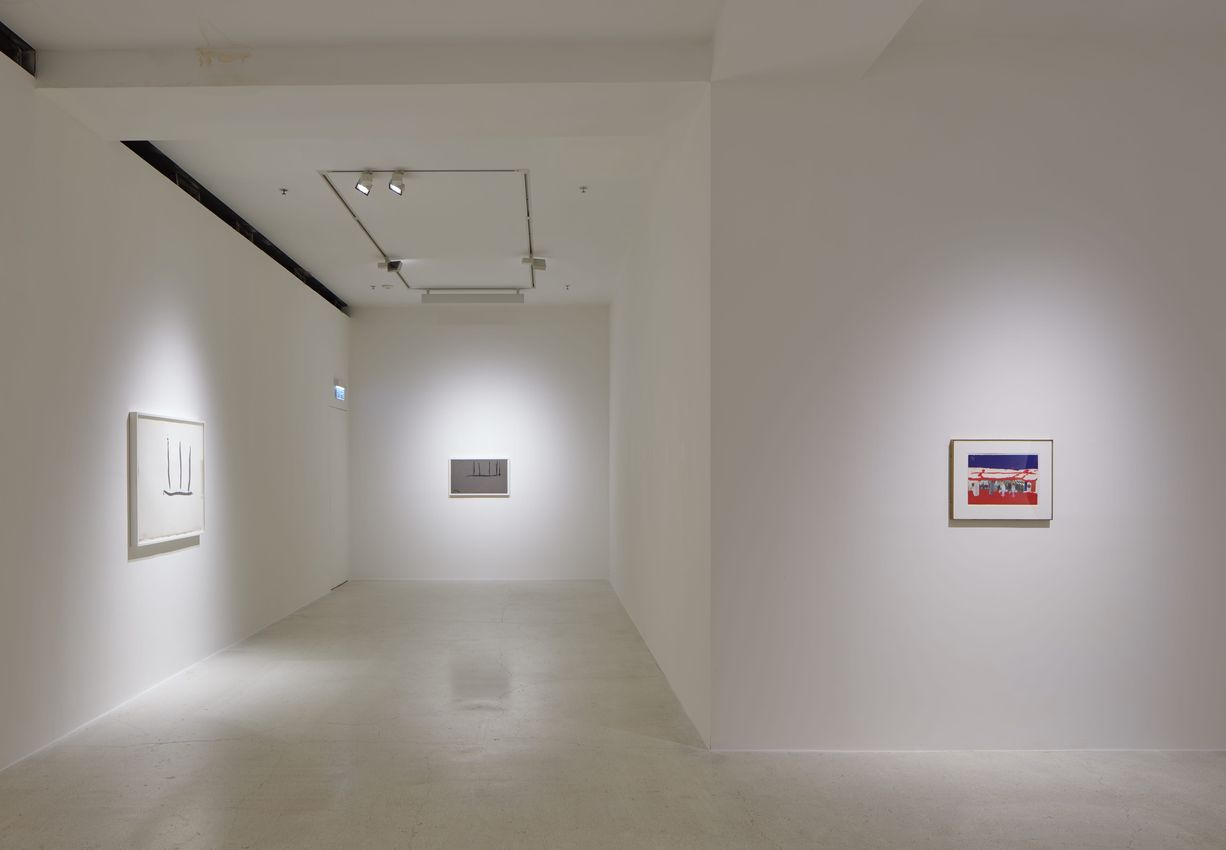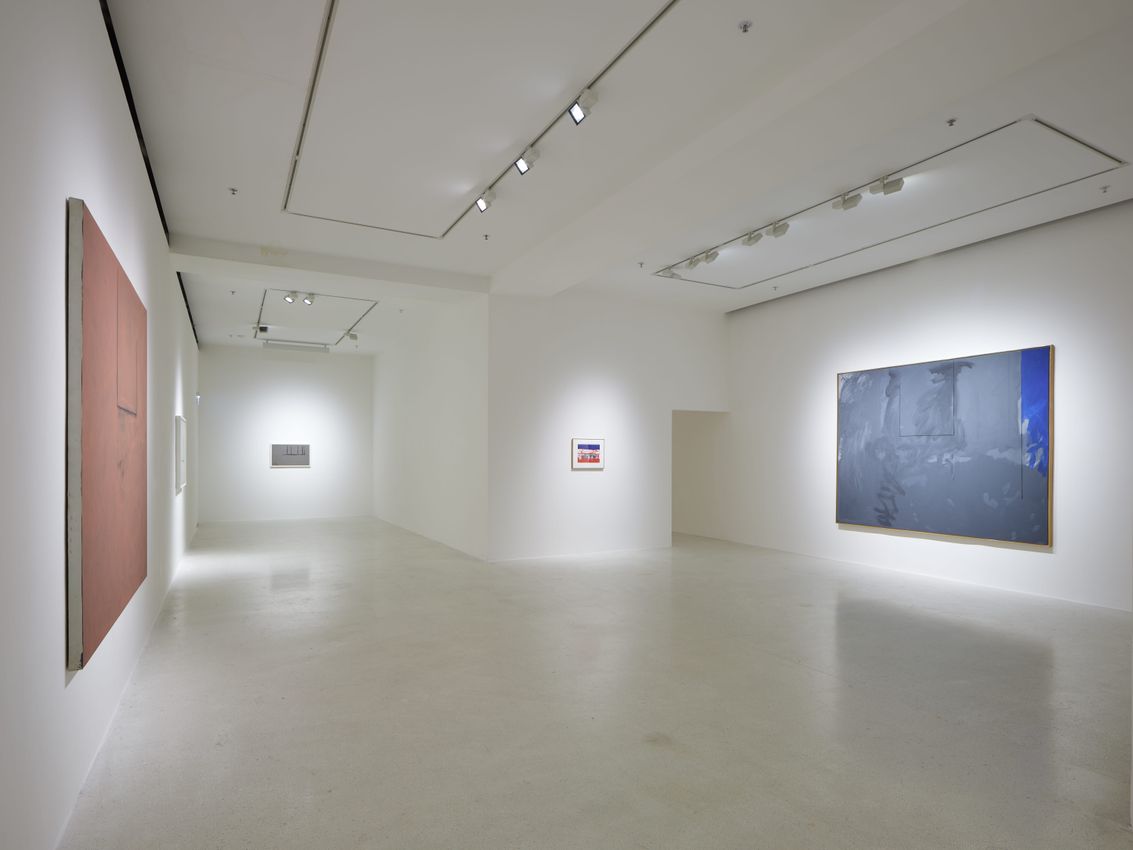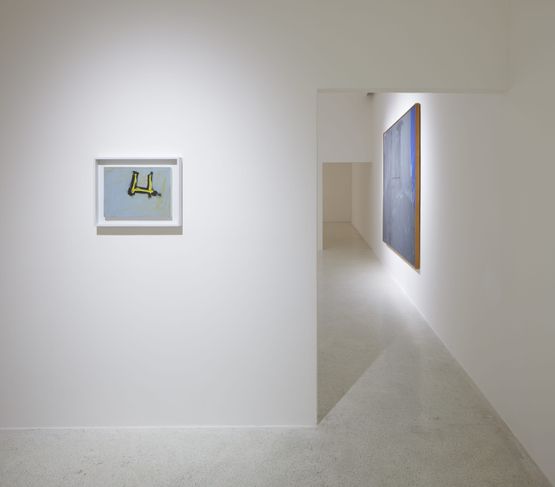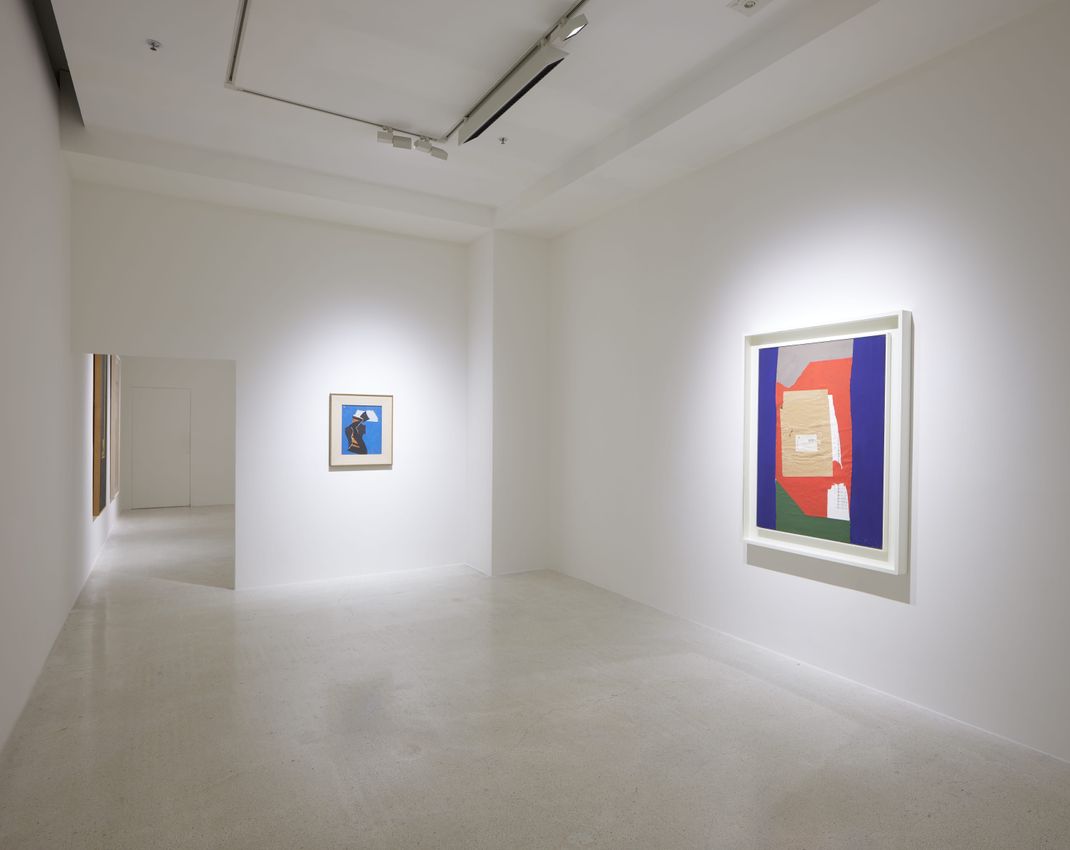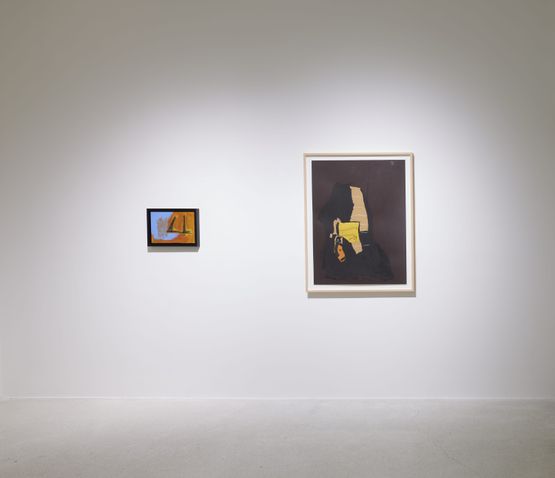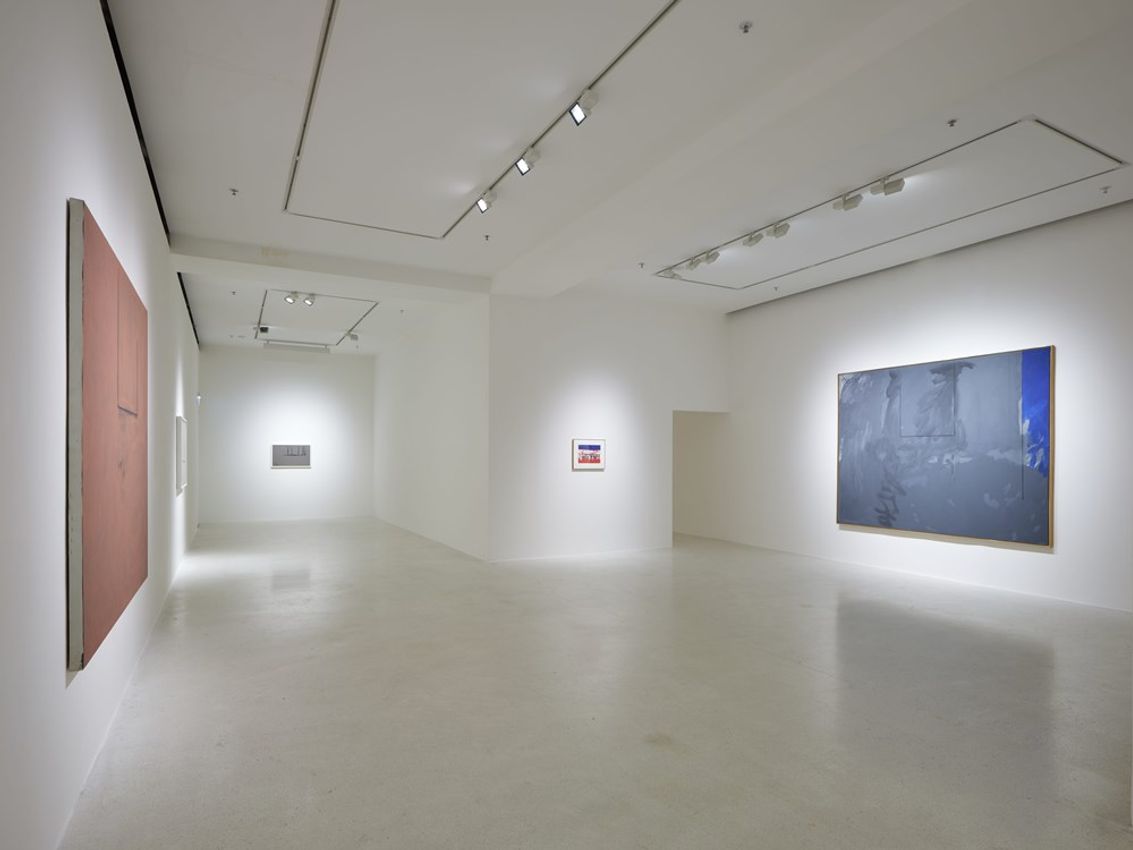
Through his transformative paintings, insightful writing, and influential teaching, Robert Motherwell’s artistic practice formed the foundation of the acclaimed Abstract Expressionist sensibility. His profound contribution to contemporary art history situates Motherwell as a signal, yet under-recognised, figure in the Western canon. It is under this backdrop that Pearl Lam Galleries presents Arriving at Reality, a comprehensive dual-space solo exhibition of works by Robert Motherwell. Exhibiting at both the H Queen’s and Pedder Building galleries in a chronological manner, Arriving at Reality features both Motherwell’s seminal Open series of paintings as well as a survey of related collages spanning his five-decade-long career. In addition, the exhibition aims to contextualise Motherwell’s corpus through various forms of documentation that situates him alongside his peers.
Robert Motherwell (1915–1991) was the youngest member and unofficial spokesman of the Abstract Expressionists, the first internationally influential American art movement. The Abstract Expressionists, or the New York School as Motherwell famously named his cohorts, included masters such as Philip Guston, Willem de Kooning, Jackson Pollock, and Mark Rothko. Taken as a whole, the scope of Motherwell’s accomplishments is well beyond the realm of art: he provided the bedrock for an American understanding of modernism through his editorial and written work.
The exhibition’s title, Arriving at Reality, is culled directly from the artist’s own writing and his belief that the function of art is to convey a humanist truth. As Motherwell stated, ‘An odd contradiction, if the layman were correct in his unconscious assumption that an artist begins with reality and ends with art: the converse is true—to the degree that this dichotomy has any truth—the artist begins with art, and through it arrives at reality.’
The artist began his Open series in 1968, a time marked by international, national, artistic and personal turmoil and uncertainties: both Martin Luther King, Jr. and Senator Robert Kennedy were assassinated, political demonstrations were underway in France and Mexico, the Zodiac Killer terrorised California, the artist recently separated from his wife Helen Frankenthaler, and Pop art and Minimalism took centre stage, usurping the cultural agency of abstract painting. It was under this historical backdrop that Motherwell turned to his Open series as an open exploration of space, subjectivity, and perhaps even a way forward. In this series, the artist furthered the trope of using a window as a set structure to investigate colour, light, geometry, and lines and his belief that primary discoveries arrive through direct and immediate contact with the materials in the studio, a notion that supports his faith in Zen philosophy and artistic roots in surrealist automatism. The Open paintings often reveal a unified surface with a rectangle consisting of three lines or a colour-filled rectangular area extending from the upper edge to half or two-thirds the distance from the bottom of a monochromatic background. Lines range from sturdy to subtle and from structural to calligraphic. Space is articulated through feelings of wholeness, fluidity, continuity, serenity, freedom, and even mortality. For example, Premonition Open with Flesh over Grey (1974) features vertical lines stopping short of the canvas’s edge, expressing the artist’s awareness that all things, even one’s own life, will be left undone and incomplete.
Motherwell is also recognised as one of the most important practitioners of collage, a medium he considered as the twentieth century’s greatest innovation. He started to create collages in the early 1940s and was inspired by diverse materials from reality including maps, art paper, wood veneers, cloth, packing paper, etc. By the late 1950s, Motherwell’s collages became more abstract and direct. He never treated collage as an activity secondary to his painting; instead, it was another form of art that afforded him infinite possibilities of personal expression. The artist enthusiastically employed techniques of surrealist automatism in his collages by splashing, dripping, pouring, and giving over to chance: a continuation of Motherwell’s interest of expressing life’s unpredictableness and unattainable equilibrium.
Producing an extensive body of abstract paintings, drawings, collages and prints between the 1930s and late-1980s, American artist Robert Motherwell was one of the leading figures of the Abstract Expressionist movement, alongside the likes of Jackson Pollock and Mark Rothko. He was also known for his critical writings on subjects including Surrealism and Piet Mondrian.
Pearl Lam Projects is an international programme of off-site exhibitions and artistic collaborations. Building on the gallery’s permanent space in Shanghai, the programme operates across numerous cities, including Hong Kong, enabling the gallery to present work by and expand opportunities for its diverse roster of international artists beyond its year-round gallery programme.

A respected voice in contemporary art discourse.
Focusing on ambitious storytelling and insightful art-world commentary. Ocula Magazine publishes in-depth interviews, critical essays and timely analysis on the artists, exhibitions and ideas driving the global art world.
Learn more about Ocula Magazine
Showcasing the best of the art world.
Ocula partners with galleries from around the world to highlight their artists, artworks and exhibitions. Gallery membership is by application and invitation, with each member vetted by an independent panel.
Learn more about Ocula Membership

Specialises in the sale of major artworks.
Led by a team with deep ties to the world’s leading auction houses, galleries and collectors. Ocula’s advisory team offers bespoke services to high-net-worth clients from around the world who are looking to acquire the best of contemporary and modern art.
Learn more about our team and services