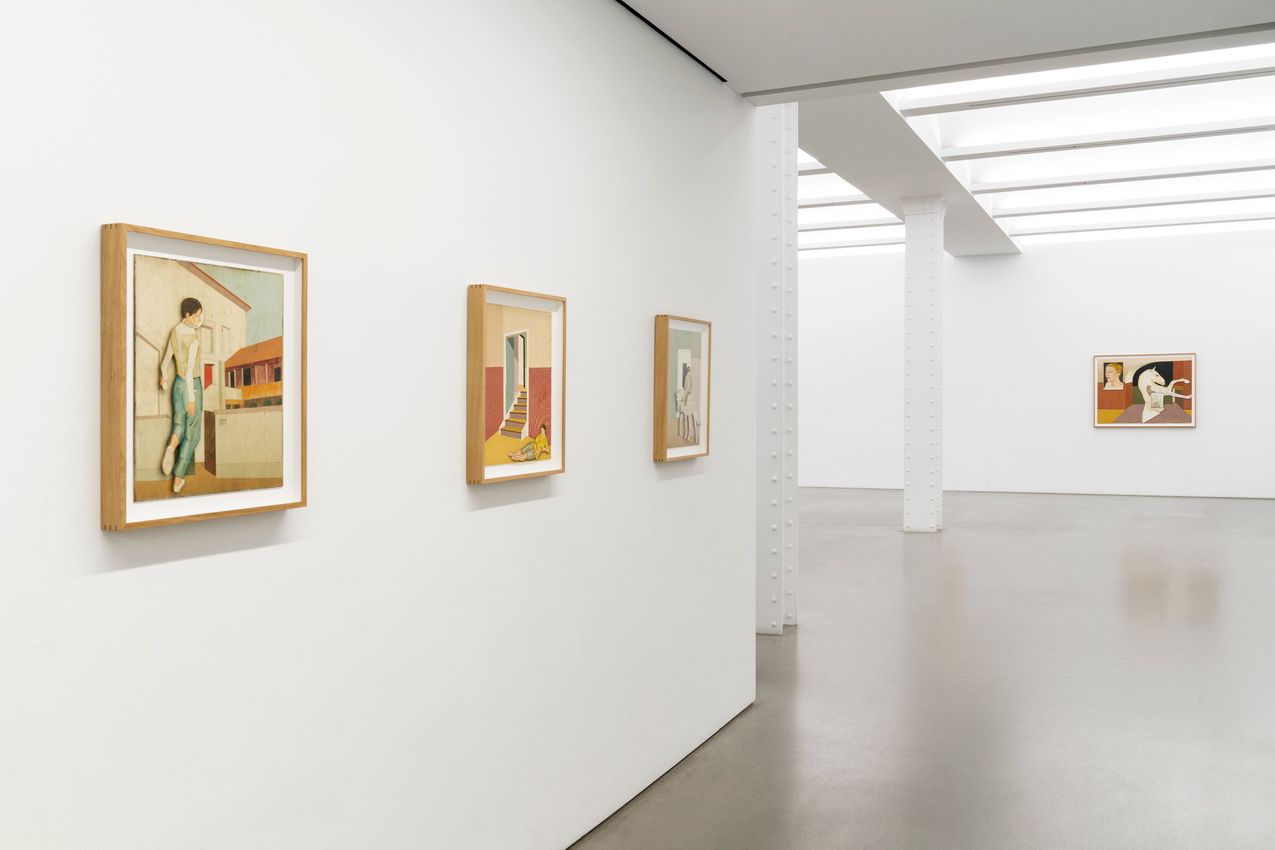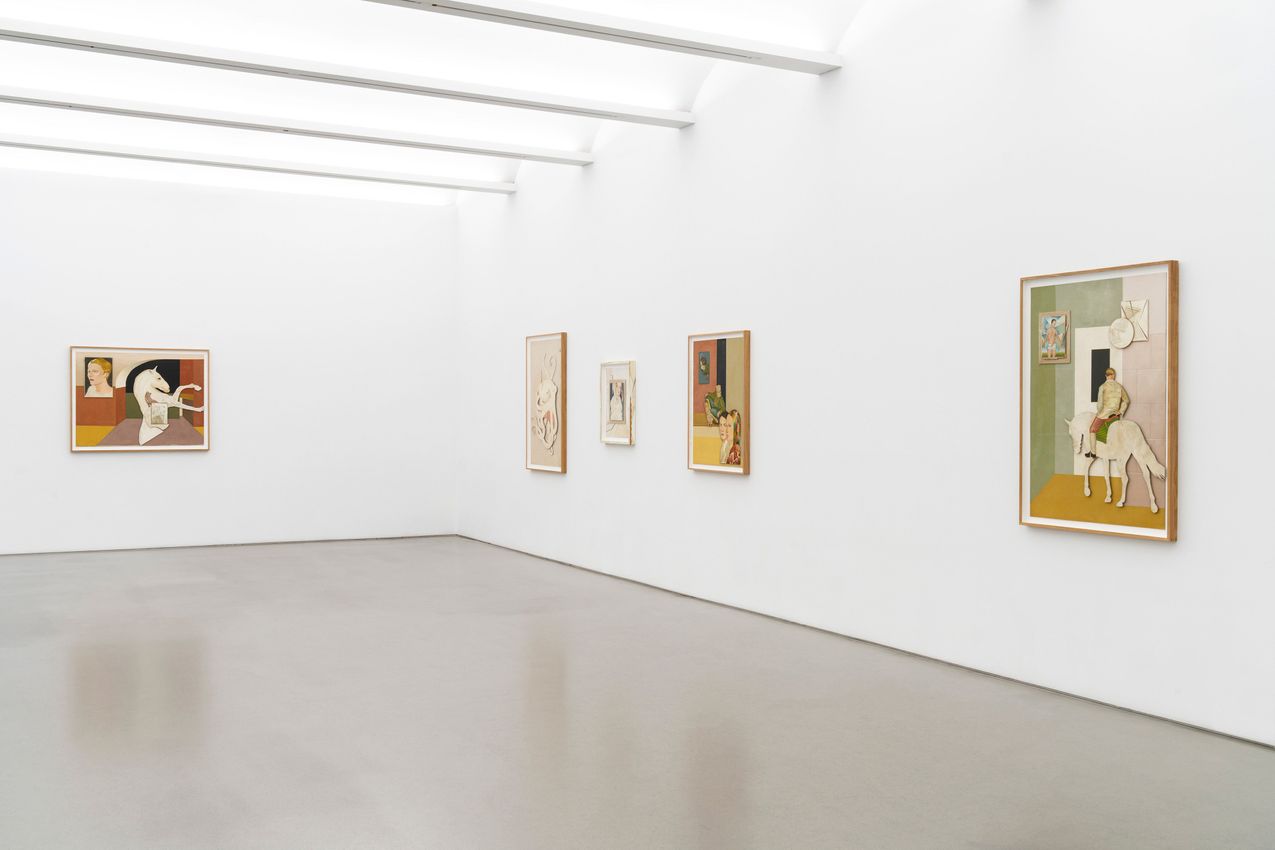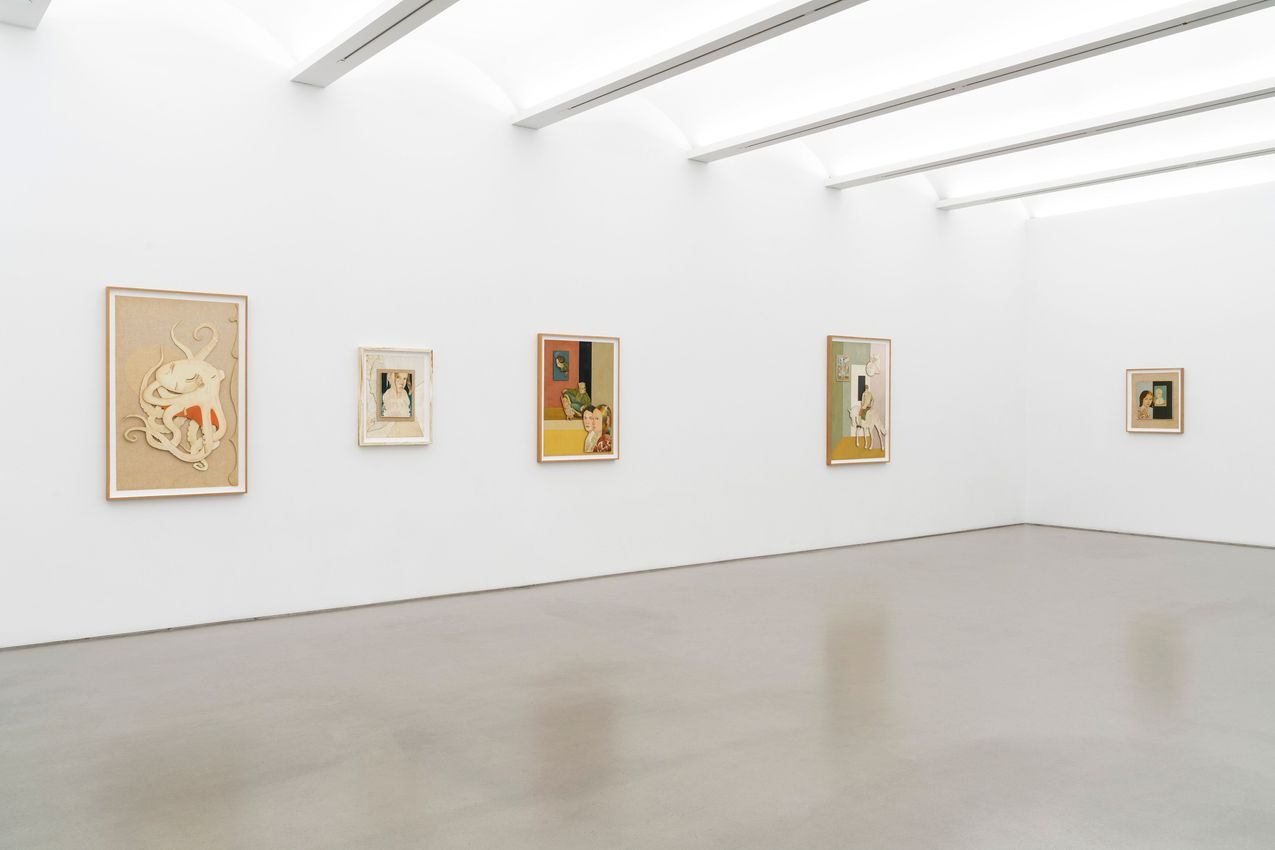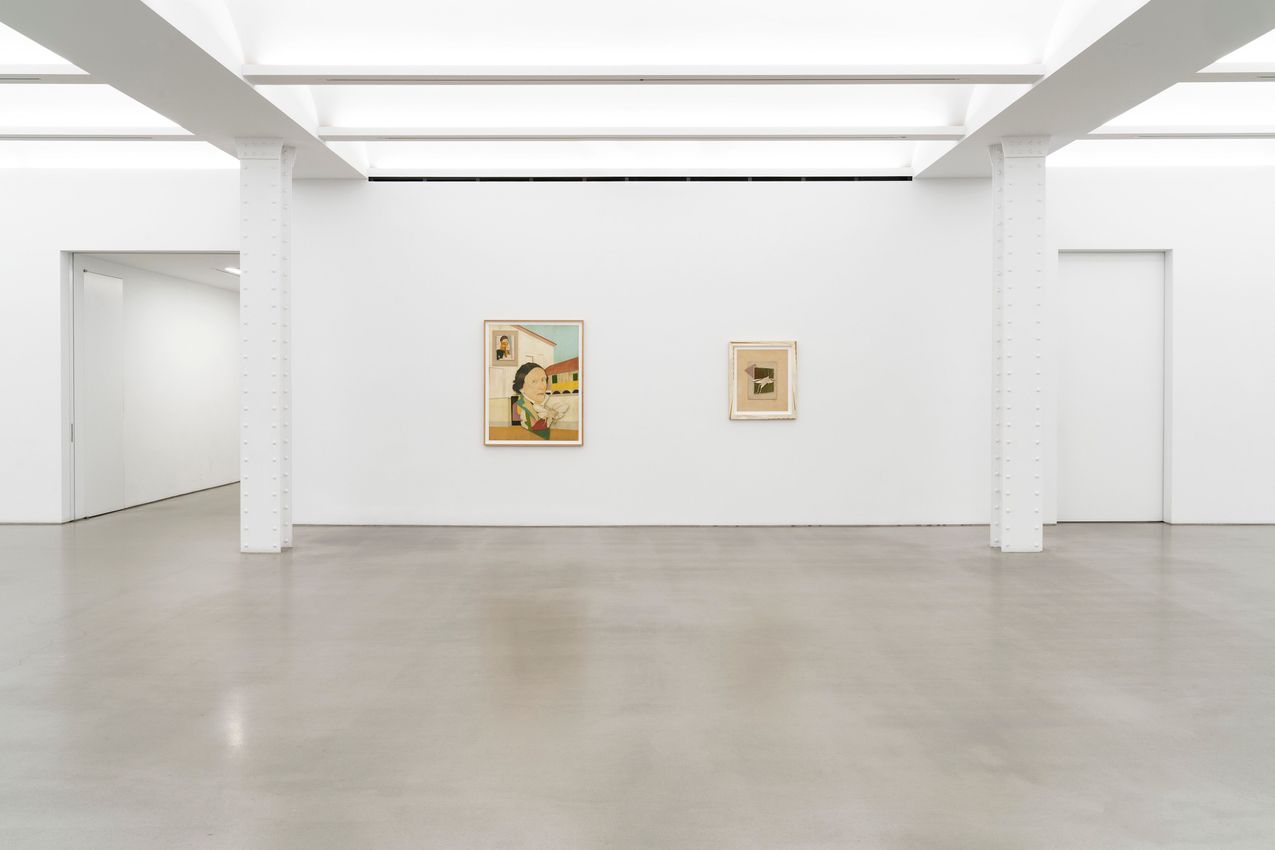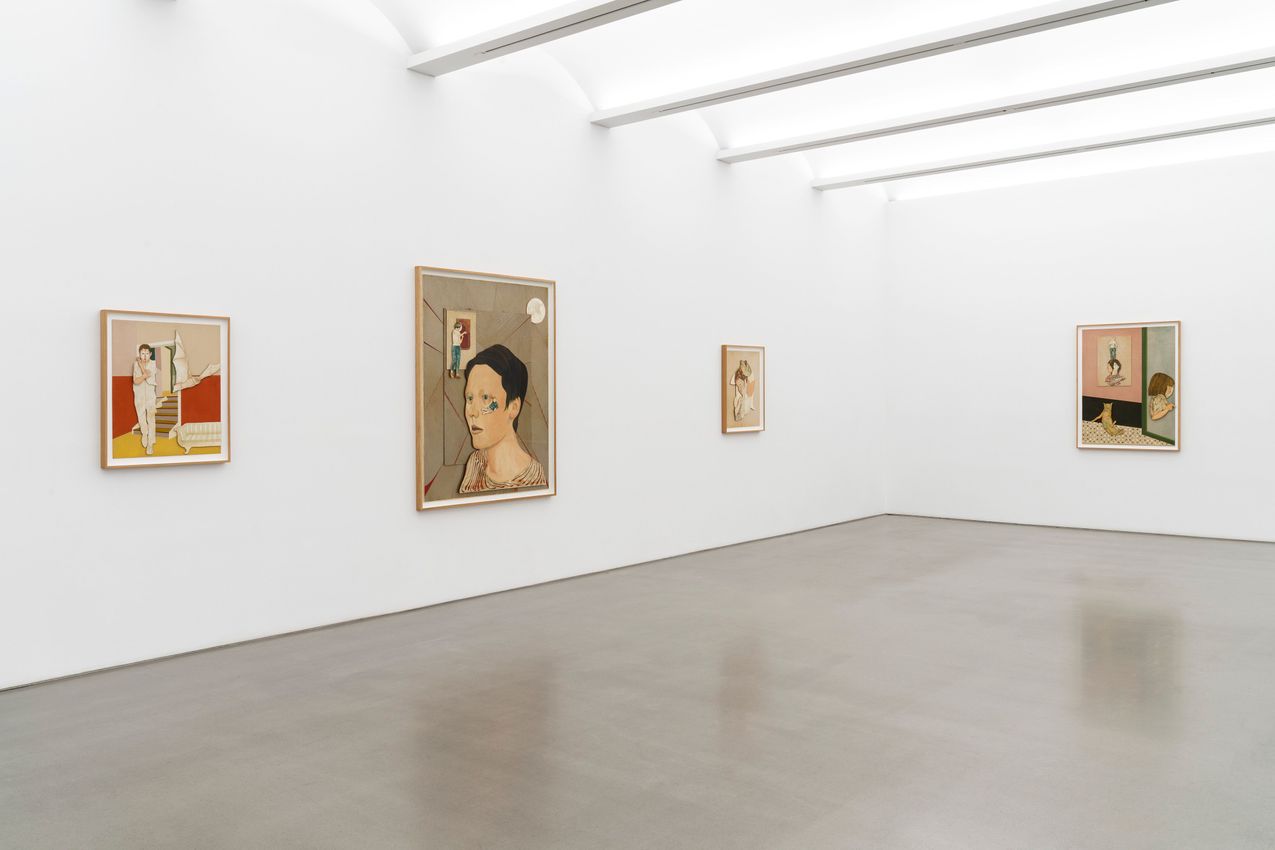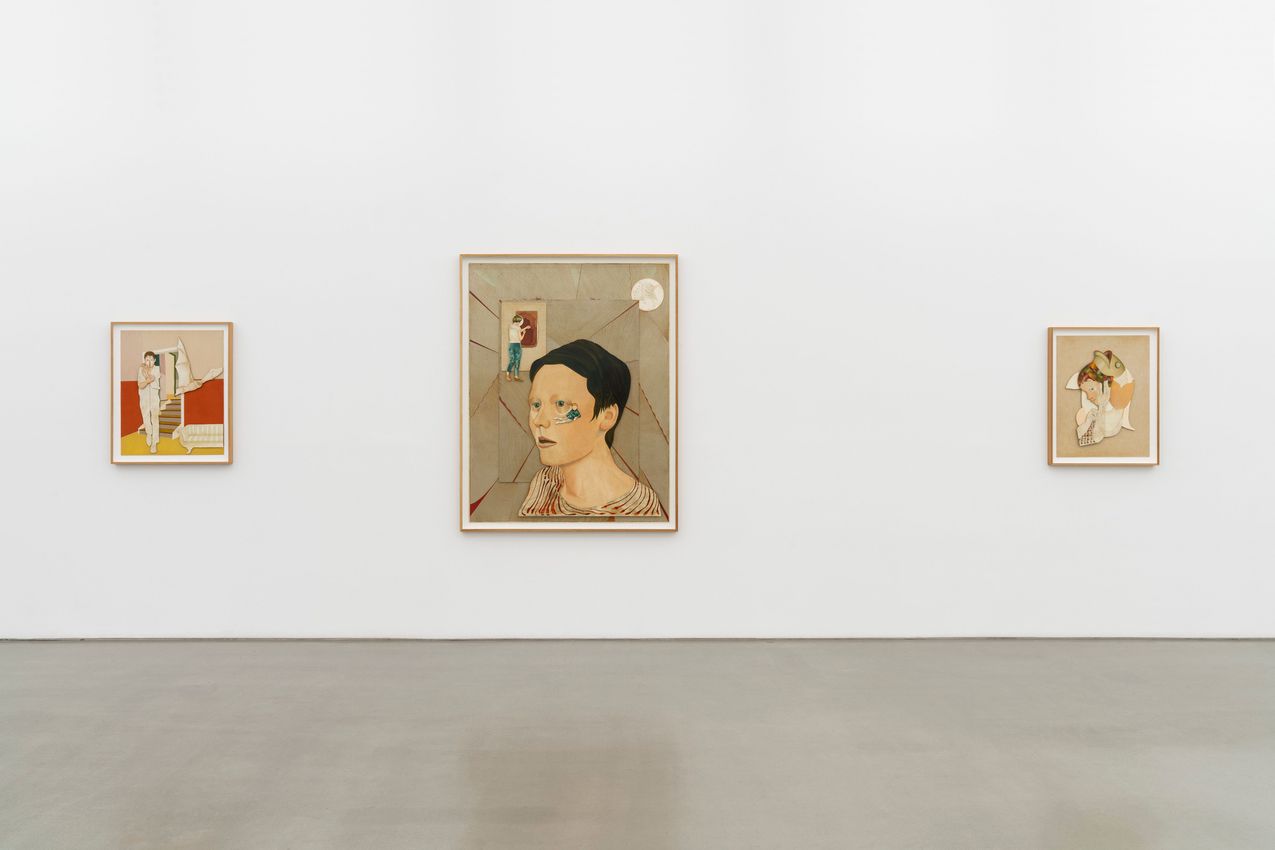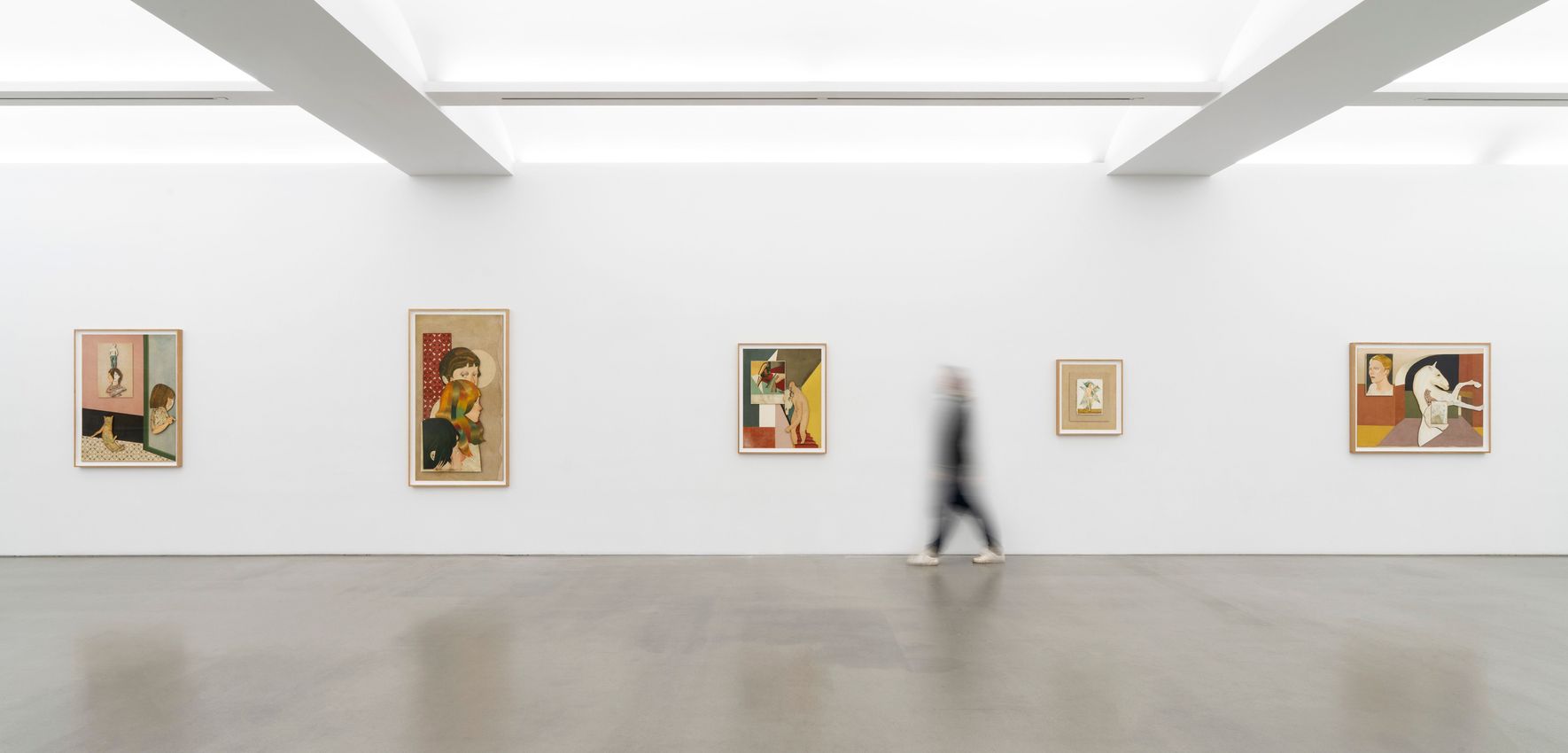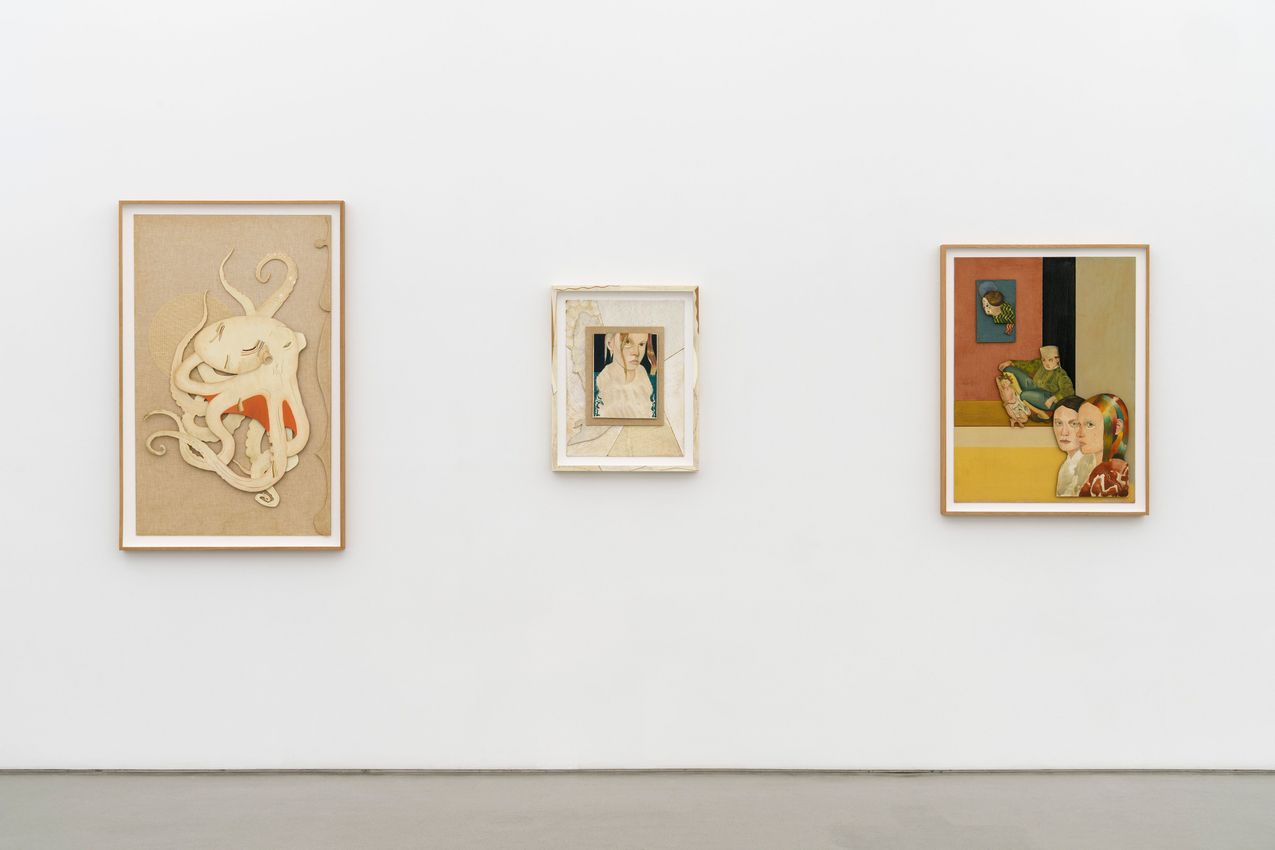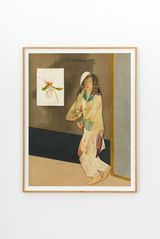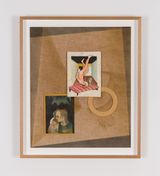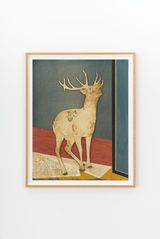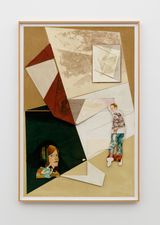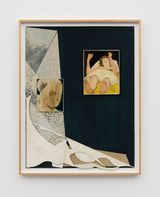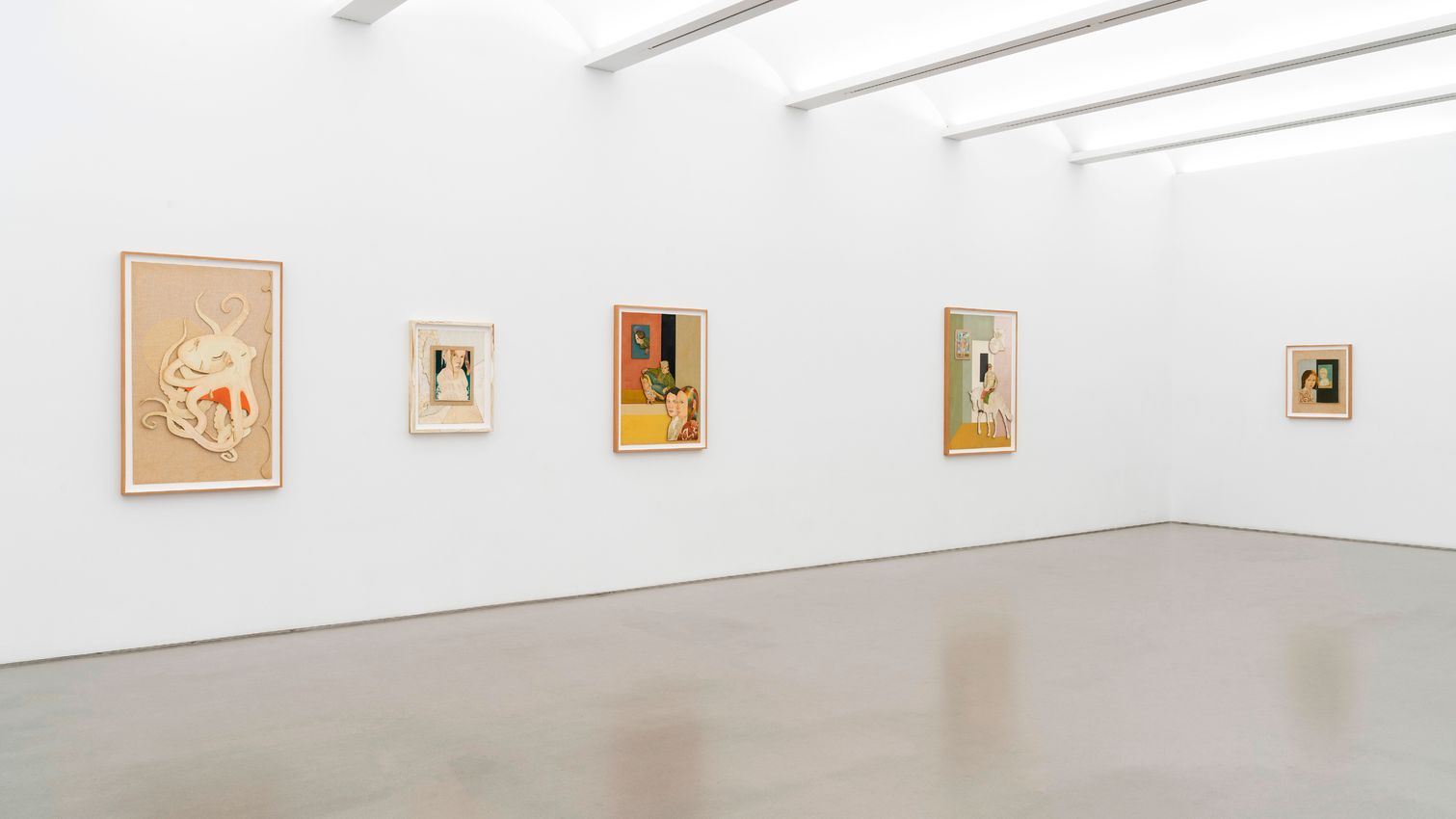
Perrotin New York is pleased to present Antechamber, an exhibition by Swedish artist Jens Fänge that features labyrinthine architectural settings populated by people, animals, and mannequins. In the artist’s distorted interiors, walls collapse into one another, objects float in space, and recurring motifs shift meaning depending on their context. Across more than twenty new paintings, each work functions like a visual experiment, generating paradoxes rather than answers.
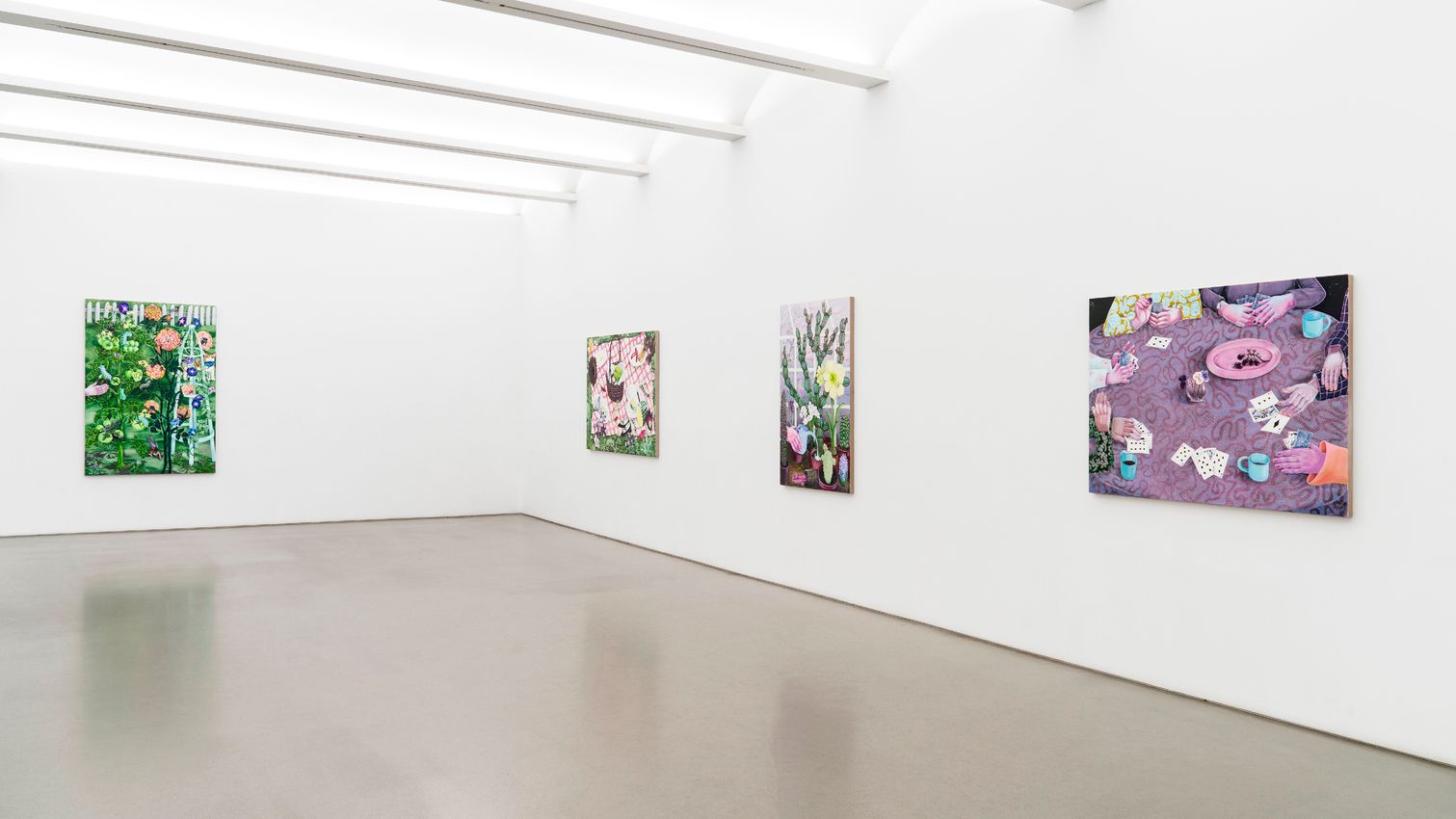
Fänge grounds viewers in familiar interiors that quickly dissolve into abstraction, feeling more like fragmented memories rather than solid spaces. Diagonal lines and blurred boundaries between figure and ground create unstable compositions that feel on the verge of collapsing, evoking fragility. The artist’s protagonists shift between being controlled by their surroundings and asserting control over them.
The depth on Fänge’s compositions is heightened by a complex layering process. Each work begins with a flat background, which the artist builds upon with materials including oil, vinyl, linen, and burlap. Appearing flat from a distance, there is a physical depth between the background and figures that evokes a relief or carving.
Throughout the exhibition, paintings lead into one another like scenes in a film or play. Doors and windows become portals or passageways, recalling the way dreams and memories distort reality. In Kammerspiel, a masked figure is split in half along the frame of a doorway, surrounded by disjointed elements—a chair silhouette, a bat, a floating mask—arranged like cutouts. The German title translates to “chamber play,” referring to a genre of theater drama that is characterized by intimate settings and an intense focus on character psychology.
The exhibition’s titular work, Antechamber, depicts a disembodied horse in motion, framed by an archway, alongside a contemplative portrait gazing into the distance. Defined as a small room leading into another, Fänge’s antechamber becomes an entryway into the psyche. The work draws inspiration from Nathanael West’s surrealist novels The Day of the Locust and The Dream Life of Balso Snell, the former a satire of the dark underbelly of Hollywood during the Great Depression and the latter an absurd journey of a poet searching for meaning in what ends as a dream within a dream. Fänge employs West’s nonlinear plot structures to create compositions that resemble a mind at work—analyzing, fragmenting, and reassembling.
A related work, titled Locust, is encased in a hand painted frame that extends the image into three-dimensional space. The locust is deeply rooted in biblical and agricultural contexts, often a symbol of destruction, divine judgement, or renewal. This spiritual lens is found in other works in the exhibition—such as Exteriors, Sister Feelings Call, or The Sundays—where halos illuminate figures, suggesting moments of mystical or subconscious realization.
Fänge is interested in the dichotomies found in fairytales, memory, religion, and history. In The Improvisatore (Hans Christian Andersen), an image of the Danish author appears as a central figure. Known for fairytales that blend fantasy with poignant moral lessons, Andersen’s 1835 autobiographical novel The Improvisatore focuses on themes of love, loss, and self-discovery. Another work, titled Lisboa, is inspired by allegorical maps that depict human or animal forms, transforming accurate geography into symbolic narratives. The figures in the center of Fänge’s painting are arranged in the form of an 1877 map of Portugal and Spain. Similar to Andersen’s fairytales, these maps translate emotional experience into visual journeys.
Fänge’s exhibition Antechamber reflects a natural human desire to make sense of reality, especially in an age of information overload. As children, we assume that adults possess certainty and understanding, yet this belief fades over time. Fairytales, dreams, and religion offer ways to interpret what often feels nonsensical. However, Fänge suggests that meaning may lie in ambiguity, proposing a space where uncertainty becomes a form of resolution.
Courtesy Perrotin.


Somewhere at the crossroads between the early 20th century practice of collage and the ancient art of shadow play, Jens Fänge has developed a surrealistic matryoshka-like aesthetics, which consists of assembling paintings within paintings. A master of eclecticism, he precipitates–so it seems–an entire hierarchy of genres into his composite works, converging iconic portraits, still lifes, domestic interiors, cityscapes and landscapes with geometric abstractions, all of which he renders using a variety of mediums and materials such as oil paint, pencil, vinyl, cardboard and fabric on panel. The contoured, often cut-out protagonists of the artist’s refined pictorial plays appear as if drifting into these multiple stage-like layers of representations overlapping each other, which give rise to an intricate, possibly endless maze of shifting perspectives not only within each composition, but also within each series taken as a whole.


A respected voice in contemporary art discourse.
Focusing on ambitious storytelling and insightful art-world commentary. Ocula Magazine publishes in-depth interviews, critical essays and timely analysis on the artists, exhibitions and ideas driving the global art world.
Learn more about Ocula Magazine
Showcasing the best of the art world.
Ocula partners with galleries from around the world to highlight their artists, artworks and exhibitions. Gallery membership is by application and invitation, with each member vetted by an independent panel.
Learn more about Ocula Membership

Specialises in the sale of major artworks.
Led by a team with deep ties to the world’s leading auction houses, galleries and collectors. Ocula’s advisory team offers bespoke services to high-net-worth clients from around the world who are looking to acquire the best of contemporary and modern art.
Learn more about our team and services