Press Release

Perrotin Tokyo is pleased to present Seminarium, Jesper Just‘s first solo exhibition in Japan. The Danish artist is known worldwide for his films and multi-projection video installations. Here, his works Seminarium and Interpassivities create a new dialogue with the space.

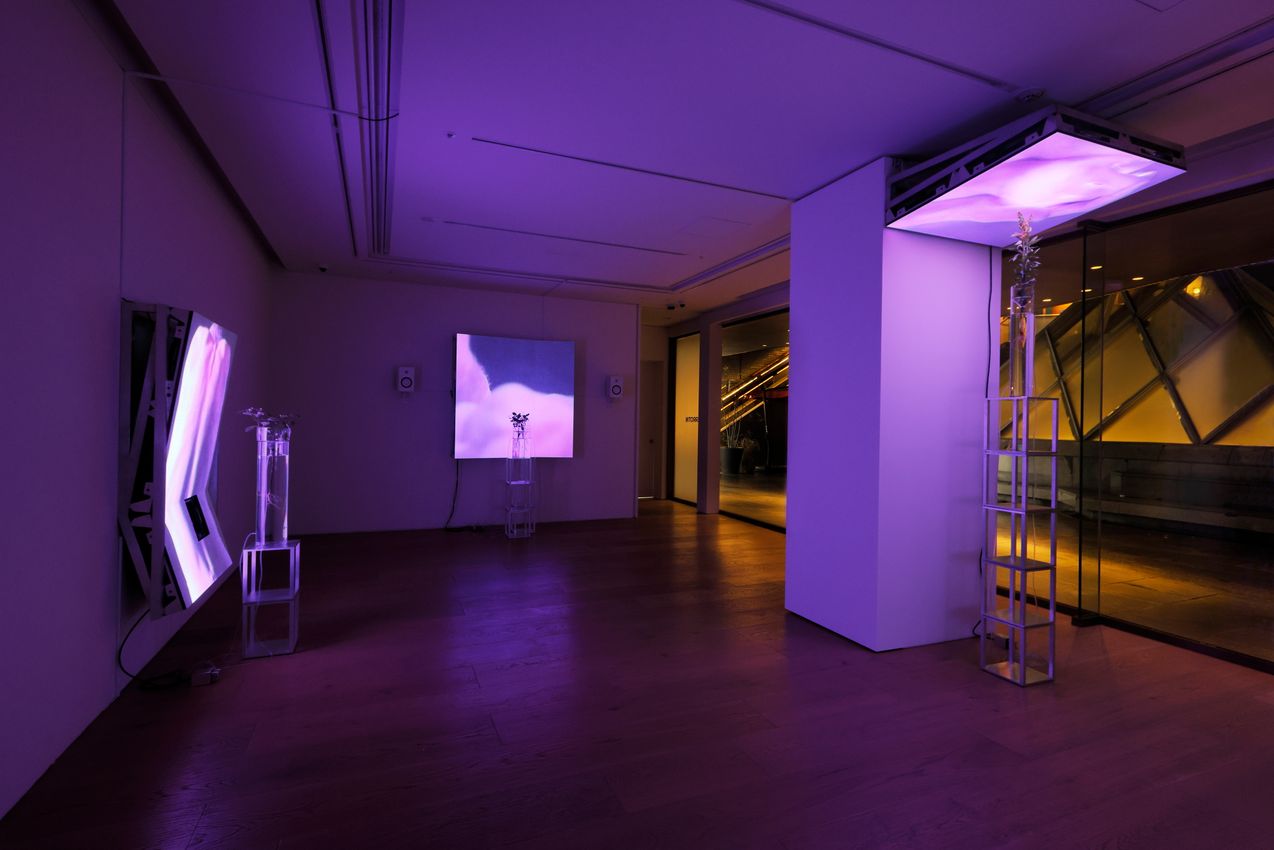
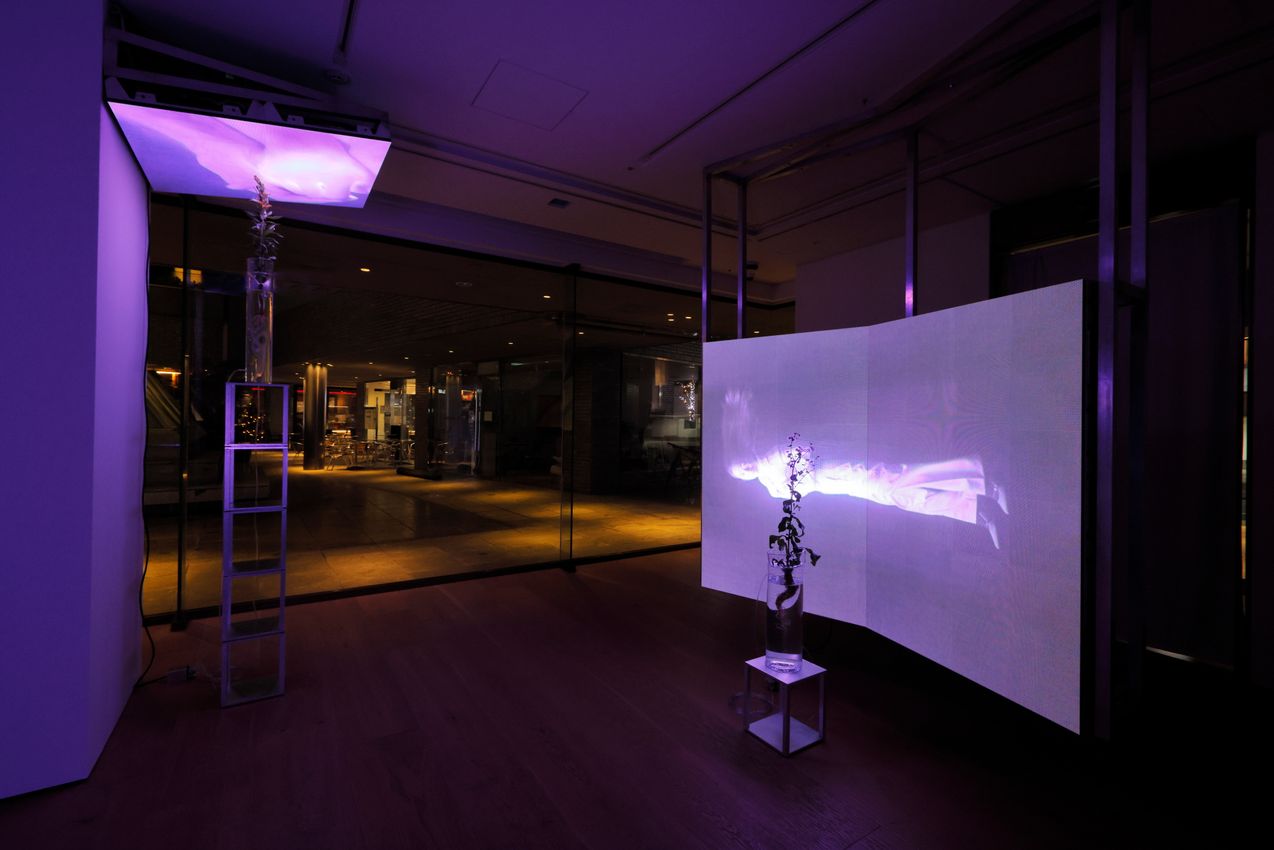
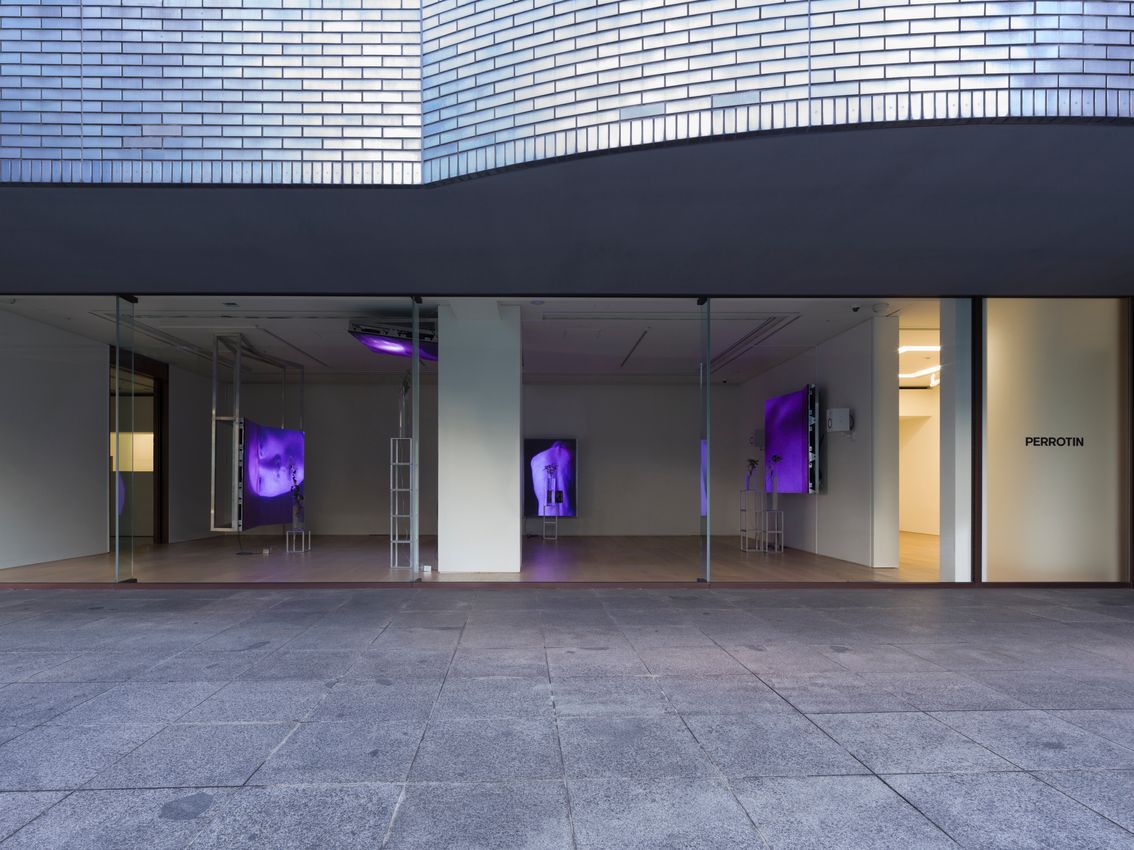
Seminarium is an amalgamated installation of four recently produced film works extending throughout the gallery. The viewer is part of an intimate and sensual encounter with luminous violet bodies and a floating woman whose voice fills the exhibition like a commercial voice-over for a body-optimising product. ‘Experience emotional wellness with clinically proven biofeedback technology,’ the voice intones. ‘Ready. Play. Feel...’ Seminarium addresses the perpetual human drive—past and present—to cultivate super-plants and superbodies: to control nature and force it to assume specific shapes and properties.

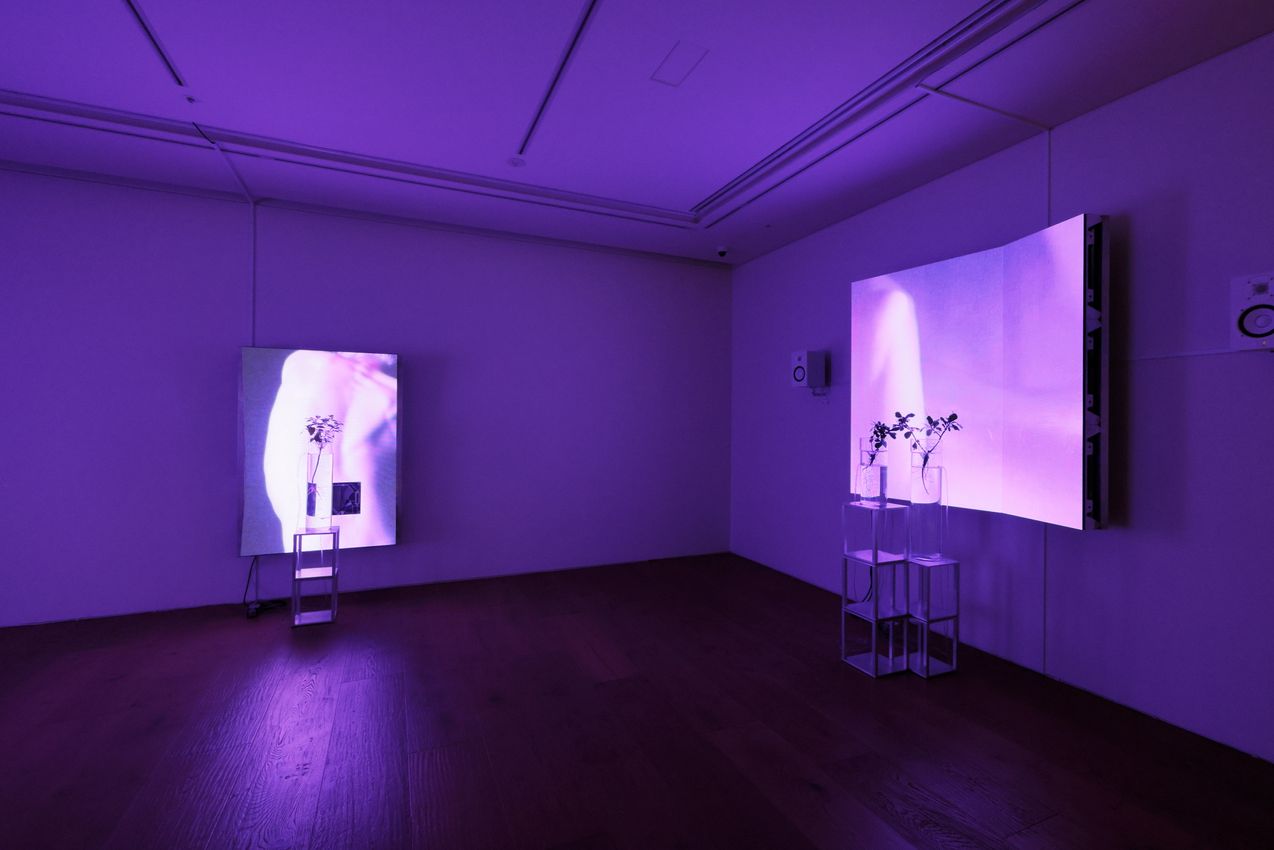
The work’s title Seminarium derives from Latin and originally held the meaning of ‘plant nursery’, later also being used to refer to educational institutions where new knowledge and cognition are nurtured. Just’s total installation incorporates the ideas behind this sociocultural reference in an elaborate, sculptural ecosystem of plants and video screens. A complex network of plastic tubing, cables and glass vases twist and turns through the gallery, creating a hydroponic cultivation system where plants grow in water and are fed by the light emitted by the filmed bodies on screen. From fragmented LED screens hacked to function as grow-lights, violet human bodies transmit precisely the right light waves the plants need to make photosynthesis possible.

Film imagery, technology and organic processes form multiple minicircuits within the installation. Just as the LED screens emit growth-enhancing light waves for the plants, the specific species of plant they feed can in turn provide a potential boost or cure to the human body, by either eaten or applied to the skin, completing a reciprocal exchange between plant forms and the human body. Using hard technology and soft poetry, the artist paints a science-fiction scenario in which nature, technology and the human meet in what the artist himself calls tech-poetics.

The exhibition continues to the second room where visitors encounter still images from the artist’s ongoing Interpassivities series. In this performance series, Just explores ideas of agency, performativity, and interpassivity, using the formal language of ballet to discuss the body in both its idealised and fractured forms. For the presented images, Just collaborated with a set of dancers from the American Ballet Theater and the Royal Danish Ballet. All dancers connect to each other as in a circuit—hand to foot, head to toe, hand to hand. Music is sent through an electronic muscle stimulation system (EMS), in which electrical impulses are sent via electrodes into the dancers’ muscles, which contract in reaction. The camera’s intimate gaze focuses on close-ups of the body—the blink of an eye, a flexed pelvic muscle, hairs standing on end atop a dancer’s forearm. The electrical impulses that affect the filmed muscles are one rather direct, almost invasive, intervention to the body, making the dance a passive display of spasms. In fact, the bodies do not dance here, they are being danced by the music. The zoom of the lens renders genders and identity ambiguous, blurring the boundaries between different body types. Just has employed the idiom of the entertainment industry to break the barriers between fiction and reality to reflect on the objectification of the body in the various contexts it is presented.

Read More

Installation Views

About the Artist

Jesper Just uses the language of cinema to confront and divert the stereotypical Hollywood constructs of masculinity and femininity, as well as the biased representation of minorities and people with disabilities in mainstream culture. His short films and multi-projection video installations question the mechanisms of cinematic identification and break the viewers’ expectations of narrative closure by unfolding surreal-like, emotionally ambiguous, open-ended, and often silent situations of encounters. Whereas his use of lush, elaborated film scores plays a crucial part in creating an overall deceitful sense of narrative progression, music rather than speech also often serves as the sole means of communication between the protagonists of his unfathomable plots. Being interested in how public and private spaces define and shape the nature and extent of human interactions, Jesper Just further plays with the notion of architecture performing in his films and installations to echo and expand his characters’ enigmatic journeys.

View Artist Profile

Also Exhibiting at Perrotin

About the Gallery
Emmanuel Perrotin founded his first gallery in 1989 at the age of 21. He has opened since then over 17 different spaces, with the aim of continuing to offer increasingly vibrant and creative environments to experience artists work. He has worked closely with his roster of artists, some since more than 25 years, to help fulfill their ambitious dreams and projects. The gallery is now based in New York, Paris, Hong Kong, Seoul, Tokyo, and participates in all the significant worldwide art fairs each year (Art Basel (Hong Kong, Miami, Basel), Frieze (London, New York), FIAC (Paris), Dallas Art Fair, Art Cologne, Art Stage Jakarta, Expo Chicago, Art021 & West Bund Art & Design, Shanghai, Zona Maco Mexico, amongst others).
View Gallery Profile
Address
Piramide Building 1F
6-6-9 Roppongi
Minato-Ku
Tokyo
Japan
Opening Hours
Tuesday – Saturday
11am – 7pm
(1)
Tokyo Piramide Building 1F, 6-6-9 Roppongi
Perrotin
Piramide Building 1F, 6-6-9 Roppongi, Minato-Ku, Tokyo, Japan
+81 367 210 687
http://www.perrotin.com

Opening hours
Tuesday – Saturday
11am – 7pm
The art world in focus