




WIM DELVOYE
b. 1965Moving between the sacred and the profane, inflections of gothic drama and high technology imbue artist Wim Delvoye’s drawings, sculptures, and installations. He frequently swings from fine art to the decorative, applying Belgian ornamental elements such as coats of arms or porcelain patterns to objects such as shovels, ironing boards, or—in Gas Cannisters (1988)—a collection of white cannisters embellished with blue and white pictorial scenes, reminiscent of Delftware.
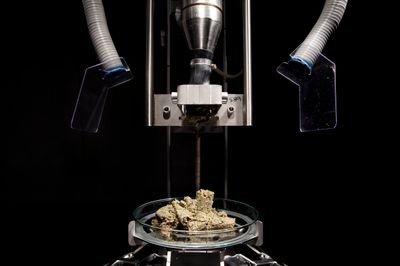
Over the years, the decorative has swung to the downright outrageous, with Delvoye realising baffling concepts on a broadening scale. The artist is perhaps most well known for his complex installation Cloaca, a machine that has been reconstructed in multiple iterations since 2000, that is ‘fed’ food, replicating the human digestive process to create faeces. The mechanical organ has been pampered throughout its museum tours, attended to by local caterers during its run at Casino Luxembourg–Forum d’art Contemporain (30 September 2007–6 January 2008), and fed by Lyonnais chefs during a stint in the French capital of gastronomy in 2003—efforts that contradict its futile production: a visual manifestation that supports the artist’s infamous statement that ‘all art is useless’.
Other provocative artworks include his Sex-Rays (2002)—a series of x-rays of people performing sexual acts—and tattooed pigs, for which he began with tanned skins and graduated with a full-scale Art Farm of live, decorated pigs outside of Beijing. Established in 2004, the farm ran until 2010 in a country the artist claims as more accepting of his practice. From the Louis Vuitton monogram to skulls, hearts, and crosses, the pigs—who were sedated and lathered in Vaseline before having their hides gilded—were purchased while still alive by collectors who procured the skins once the animals died of old age.
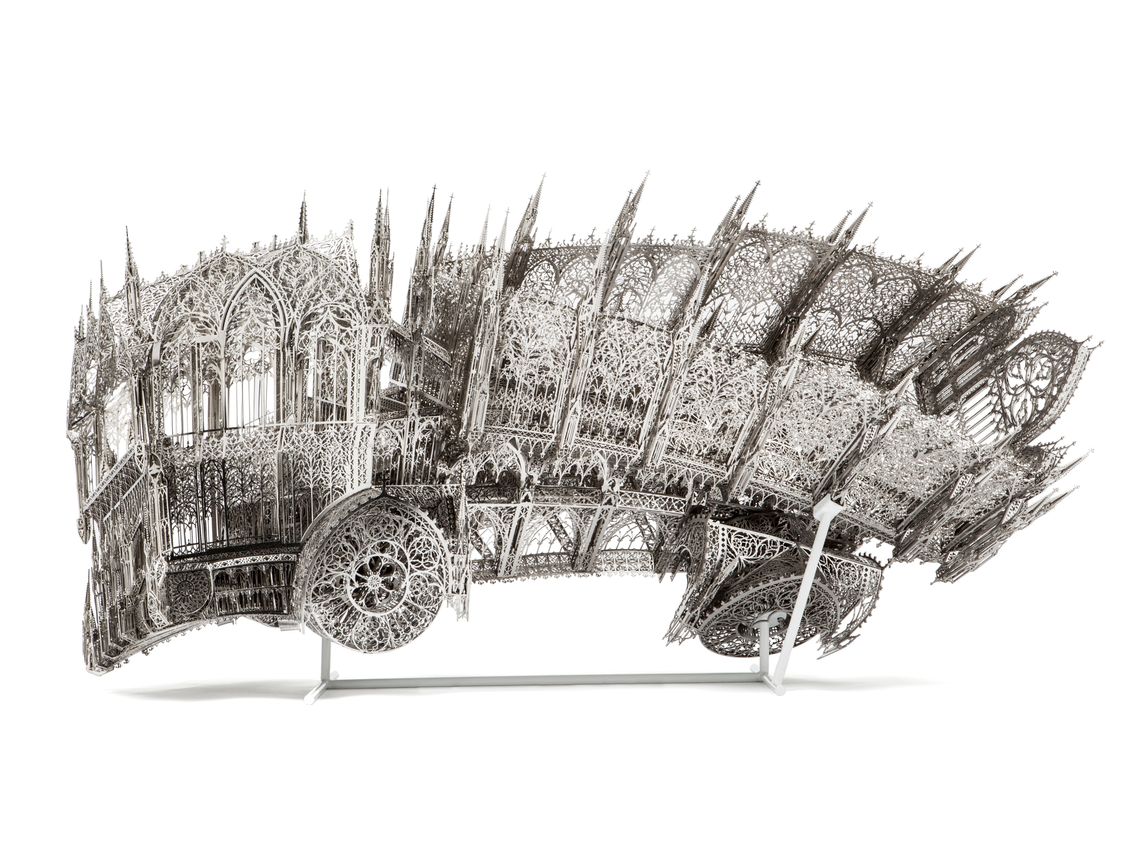
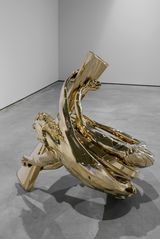
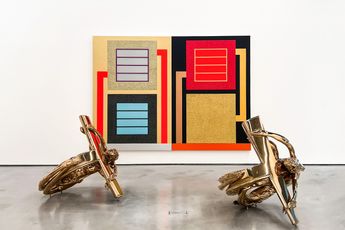
Wim Delvoye continues to exhibit around the world, from China to Iran—where a retrospective of his work at the Tehran Museum of Contemporary Art in 2016 marked the first time since the revolution that work by a non-Iranian artist was shown in the country. Between 9 November 2018 and 9 February 2019, Gary Tatinstian Gallery in Moscow presented embossed, cut, and twisted objects that employ neo-Gothic tracery and Middle Eastern designs, as in the case of the late-1950s’ Maserati 450S racing car for which the artist invited Iranian artists to create its intricate patterns. Also on view is the tattooed pig Sylvie (2006), looking out from a glass case on a plinth with beady black eyes; and a set of three bicycle tyres, twisted into the Mobius puzzle, thus rendering them ineffective.
Wim Delvoye lives and works in Brighton.
Tessa Moldan | Ocula | 2019




Explore Wim Delvoye's Exhibitions










Explore and Follow Artists Shaping Contemporary Art
A respected voice in contemporary art discourse.
Focusing on ambitious storytelling and insightful art-world commentary. Ocula Magazine publishes in-depth interviews, critical essays and timely analysis on the artists, exhibitions and ideas driving the global art world.
Learn more about Ocula Magazine
Showcasing the best of the art world.
Ocula partners with galleries from around the world to highlight their artists, artworks and exhibitions. Gallery membership is by application and invitation, with each member vetted by an independent panel.
Learn more about Ocula Membership
Specialises in the sale of major artworks.
Led by a team with deep ties to the world’s leading auction houses, galleries and collectors. Ocula’s advisory team offers bespoke services to high-net-worth clients from around the world who are looking to acquire the best of contemporary and modern art.
Learn more about our team and services