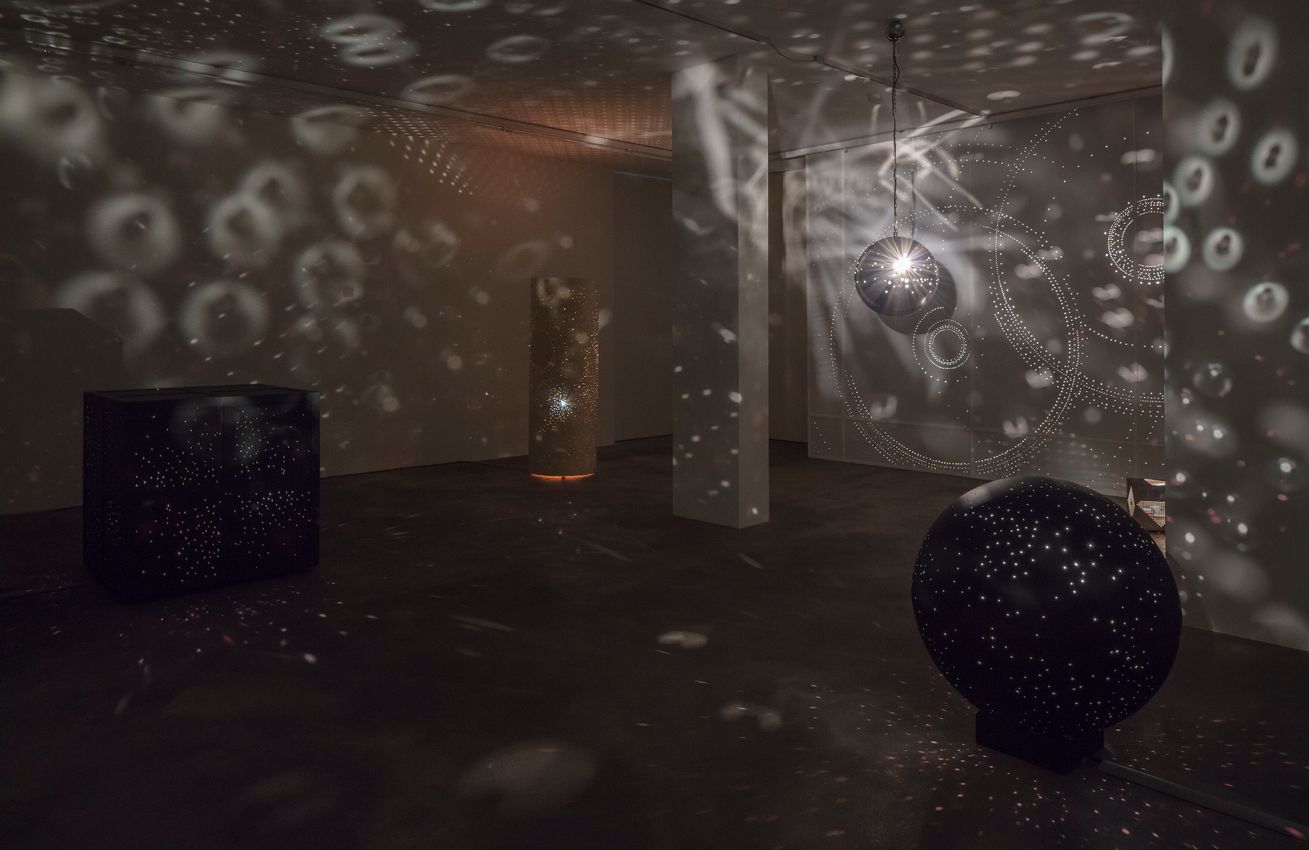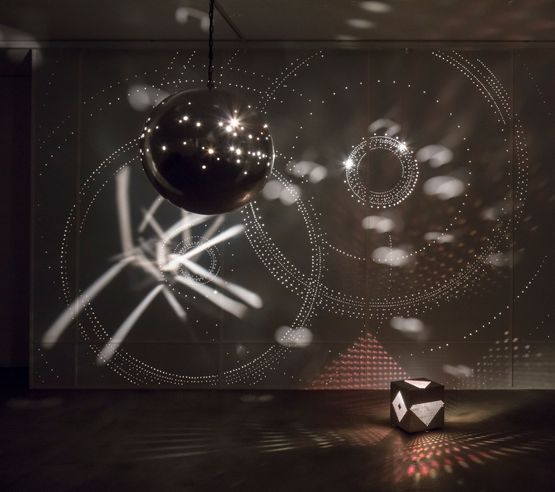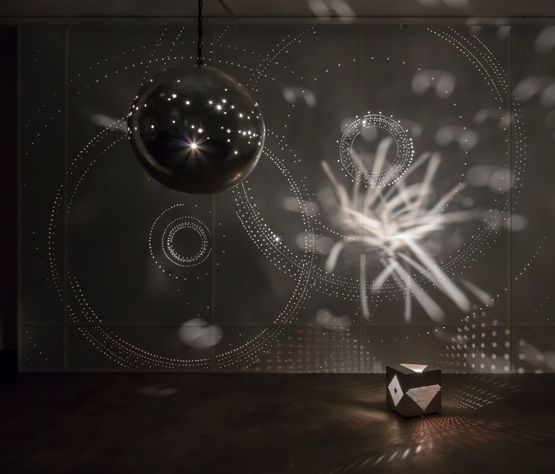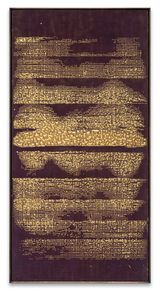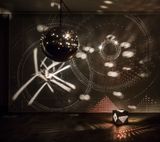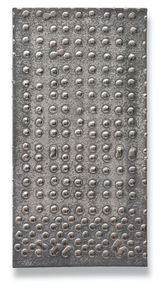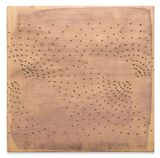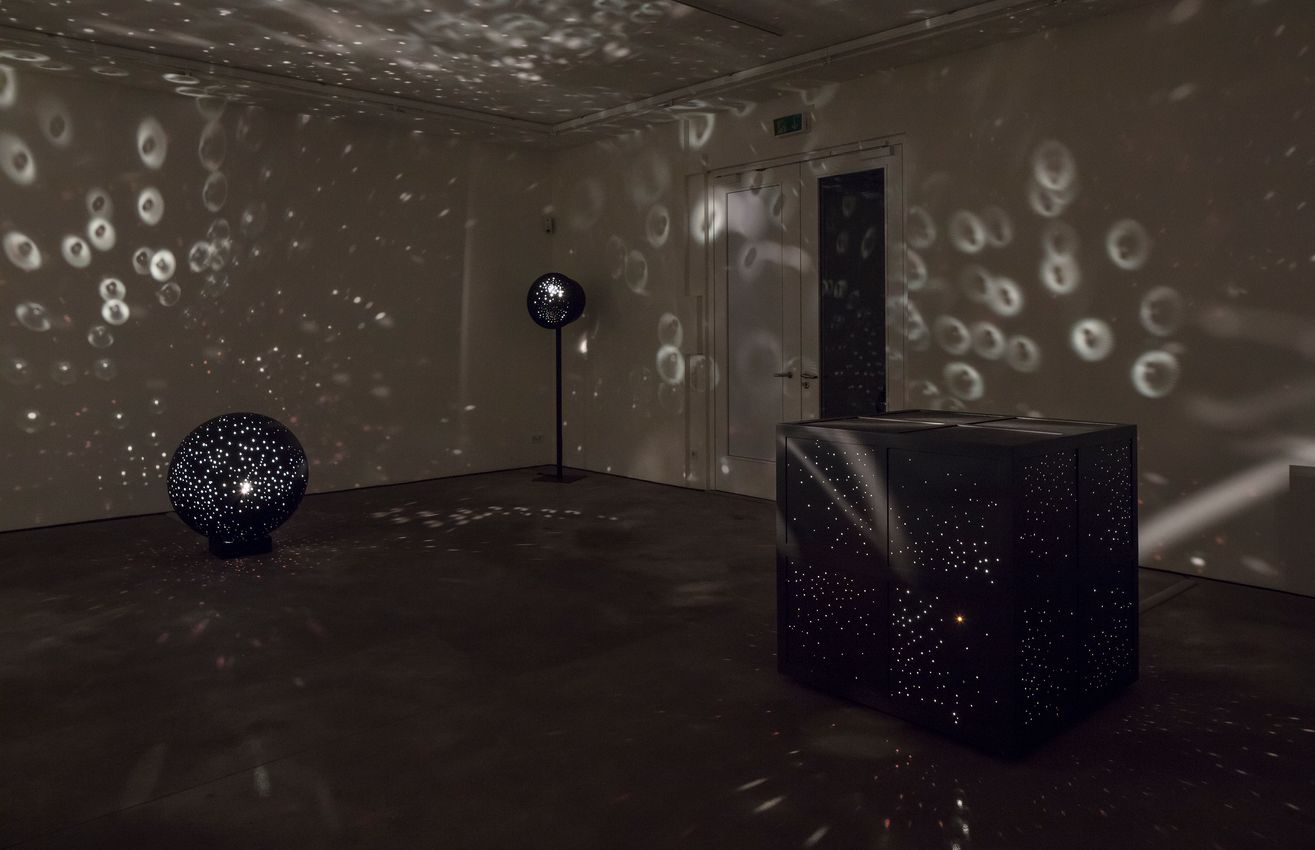
Otto Piene’s use of light developed in the late 1950s with works utilising earlier experiments of printing onto canvas using punctured screens of many small holes, producing a grid of small, elevated pigment dots on the surface. These perforated ‘raster sieves’ were used in early works as hand-held tools through which to shine light from candles. This rudimentary apparatus soon developed into more complex means in 1960-61, employing metal screens, discs, motors, timers, and rotating electric lights, coming to a theatrical climax in room size installations. A selection of these elements will be presented in this exhibition, his first with Sprüth Magers and the start of the collaboration between the Otto Piene Estate and the gallery.
Piene was a choreographer of light, forcing it to ‘dance’ across the room, first by his own hand but later with these sophisticated mechanical arrangements. These perforated screens and stencils vary in size and complexity, some taking up whole false walls and others more modest spheres and cubes. A single light source is fractured into multiple dots that change size simply by how far the bulb is from the punctured screens. The light appears to come from all directions as it moves from one wall to the next, constantly changing its clarity and scale, with the use of timers to fade lights in and out creating a variety of environments that range from near darkness to full multi-source discotheque theatrics.
The experience for the spectator is one of total immersion as the light moves across the room and their body. This aspect of filling the space differs from the formal restrictions of theatre and film, in which light is projected and viewed from one point, bound to one end of the room with the spectator at the other.
Piene used the term ‘painting with light’, distancing himself from a recent history of gestural painting in the 1950s to a more technologically optimistic utilisation of light, in relation to recent experience. The light spectacles with which Piene was familiar were in the context of war and his experience as an anti-aircraft assistant aged sixteen, the blazes of fire and the searchlights that populated the night sky in the hunt for the Allies’ bombers.
This recent history of technology, and specifically light, as a medium of war is a premise that Piene looks to investigate and rewrite on a clean slate with light presented as a source of life rather than destruction. This was a core ideology of Group ZERO, founded with Heinz Mack in 1957, as ‘a zone of silence and of pure possibilities for a new beginning... The incommensurable zone in which the old state turns into the new’, following the trauma of World War II.
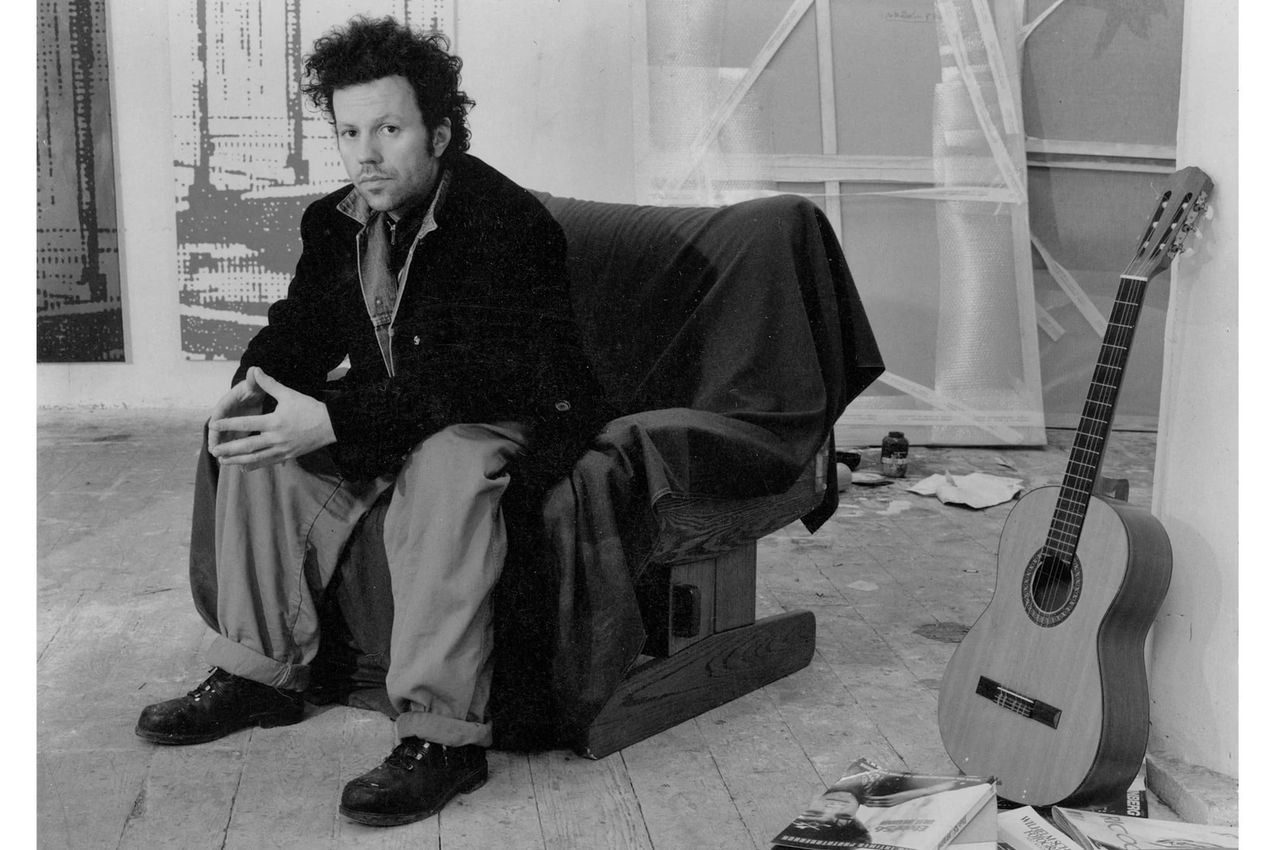
Otto Piene (1928-2014) was born in Laasphe, Germany and died in Berlin, Germany. He lived and worked in Düsseldorf, Cambridge and Groton, Massachusetts. Retrospective exhibitions include the Museum am Ostwall, Dortmund (2008-2009), the Prague City Gallery (2002), and Kunstmuseum im Ehrenhof, Düsseldorf (1996). Recent solo exhibitions include LWL Museum für Kunst und Kultur, Münster (2015), Neue Nationalgalerie, Berlin (2014), ZKM Museum Für Neue Kunst, Karlsruhe (2013), and MIT List Visual Arts Center, Cambridge (2011). In 2014, The Solomon R. Guggenheim Museum, New York held a comprehensive retrospective of Group ZERO.
The Berlin gallery is concurrently presenting solo exhibitions by Pamela Rosenkranz and Lucy Dodd.
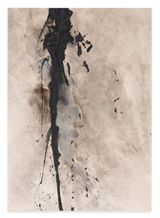
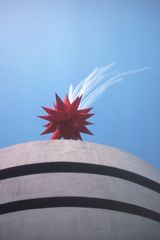
A founder of the 1960s Dusseldorf-based Group Zero, Otto Piene is best known for his paintings made with smoke and fire. Called Rauchbilder (smoke pictures), Piene applied solvent to pigmented paper and lit it on fire, developing images in the residual soot. Piene also created outdoor figures made from smoke that floated overhead—what he coined as Sky Art—including Olympic Rainbow, a project created for the ill-fated 1972 Summer Olympics in Munich. For nearly 20 years, Piene served as the director of the Center for Advanced Visual Studies at the Massachusetts Institute of Technology, and in 2008, with Heinz Mack and Mattijs Visser, he co-founded the International ZERO Foundation to archive documents, projects, and images produced by the famous Dusseldorf collective.
Sprüth Magers has expanded from its roots in Cologne (Germany) to become an international gallery dedicated to exhibiting the very best in groundbreaking modern and contemporary art. With galleries located in Berlin Mitte, London’s Mayfair and the Miracle Mile in Los Angeles–as well as an office in Cologne and an outpost in Hong Kong–Sprüth Magers retains close ties with the studios and communities of the German and American artists who form the core of its roster.

A respected voice in contemporary art discourse.
Focusing on ambitious storytelling and insightful art-world commentary. Ocula Magazine publishes in-depth interviews, critical essays and timely analysis on the artists, exhibitions and ideas driving the global art world.
Learn more about Ocula Magazine
Showcasing the best of the art world.
Ocula partners with galleries from around the world to highlight their artists, artworks and exhibitions. Gallery membership is by application and invitation, with each member vetted by an independent panel.
Learn more about Ocula Membership

Specialises in the sale of major artworks.
Led by a team with deep ties to the world’s leading auction houses, galleries and collectors. Ocula’s advisory team offers bespoke services to high-net-worth clients from around the world who are looking to acquire the best of contemporary and modern art.
Learn more about our team and services