Press Release

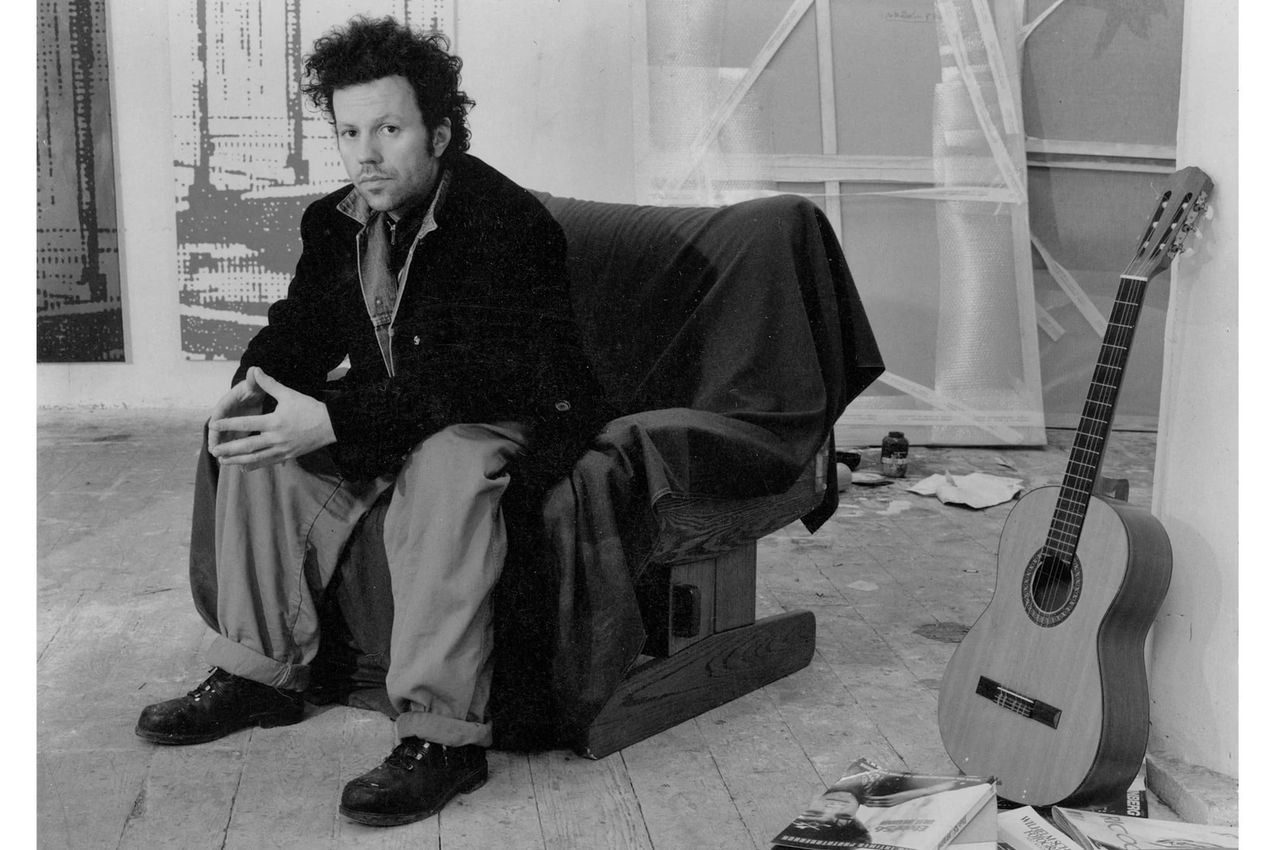
If there is a common theme in Düsseldorf-based sculptor and conceptual artist Reinhard Mucha’s work, it is his patient and visually striking exploration of our collective amnesia. Employing a subtle sense of humour, he creates sculptures and installations that seem to retain both time and history, and that the viewer will not forget quickly.

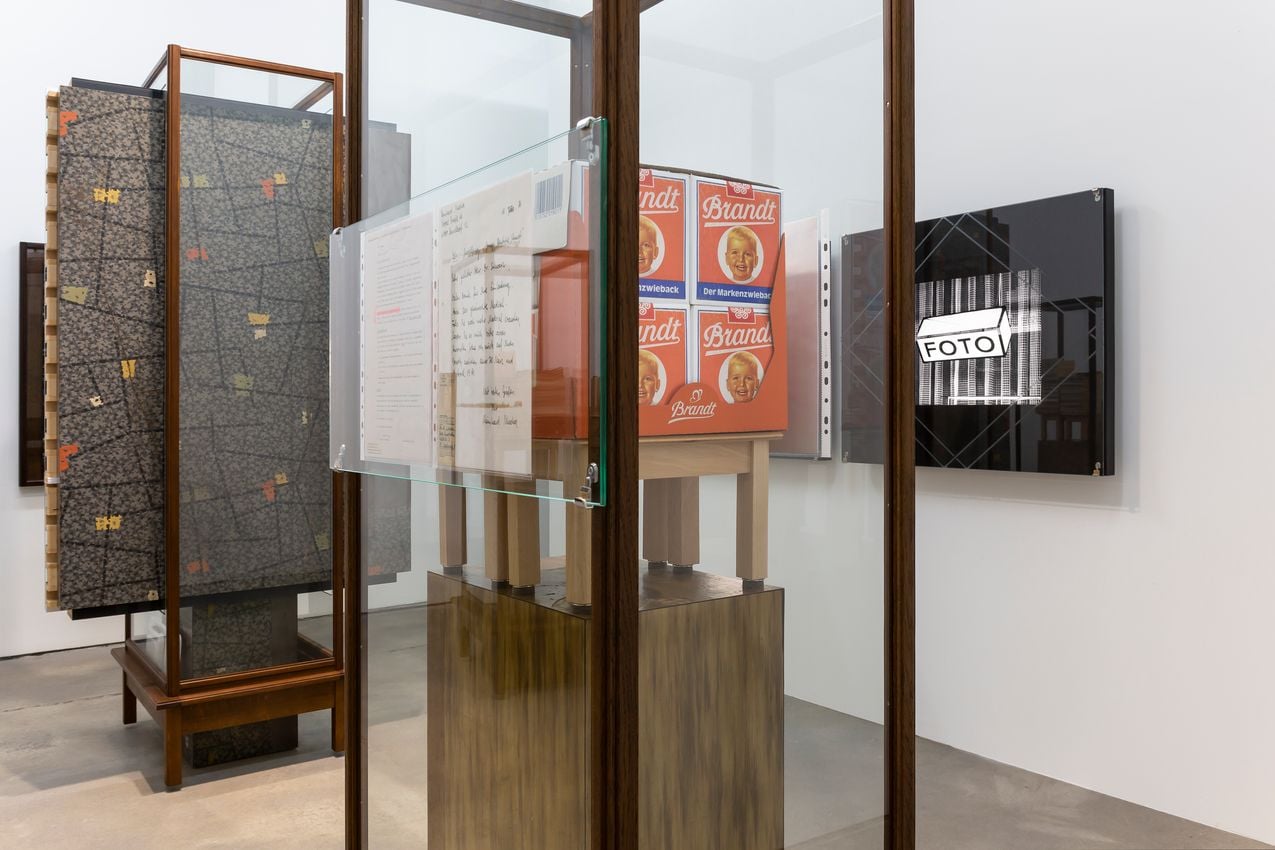
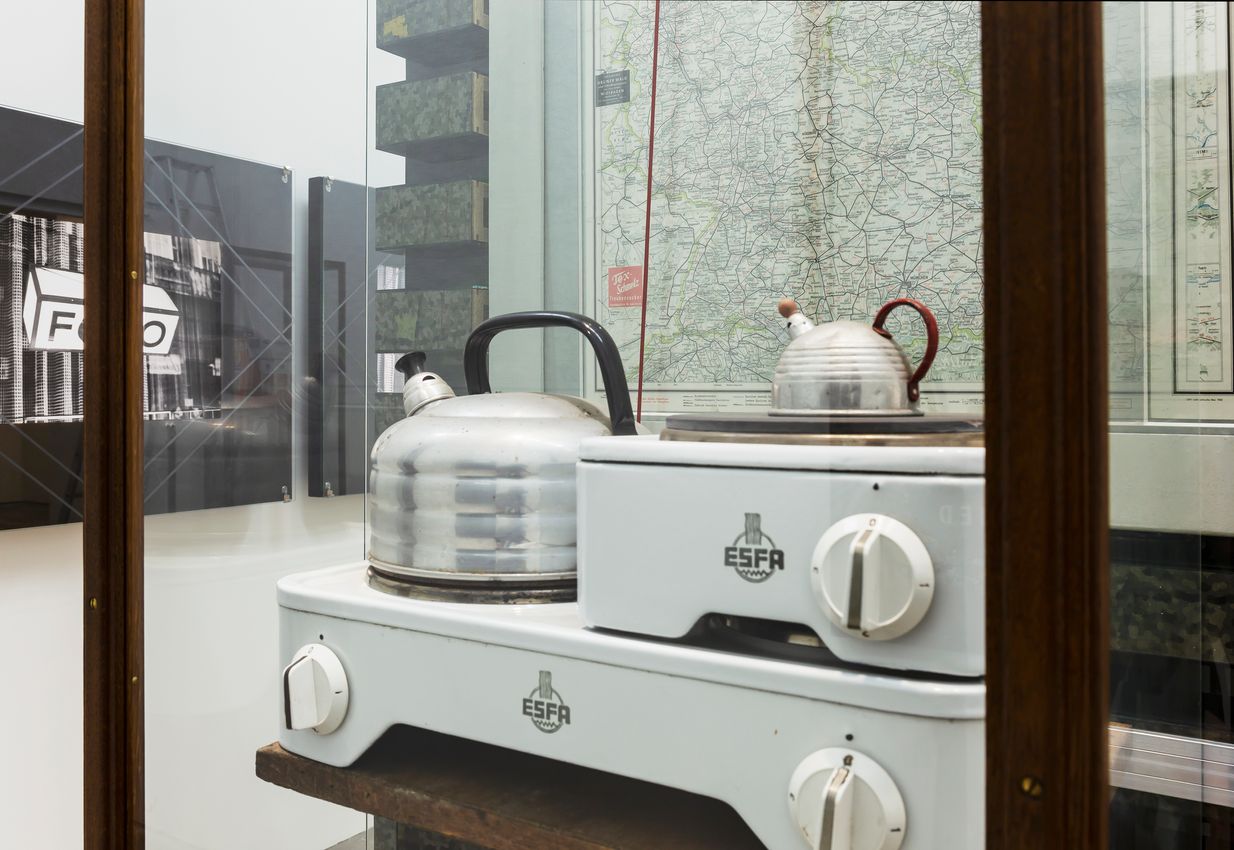
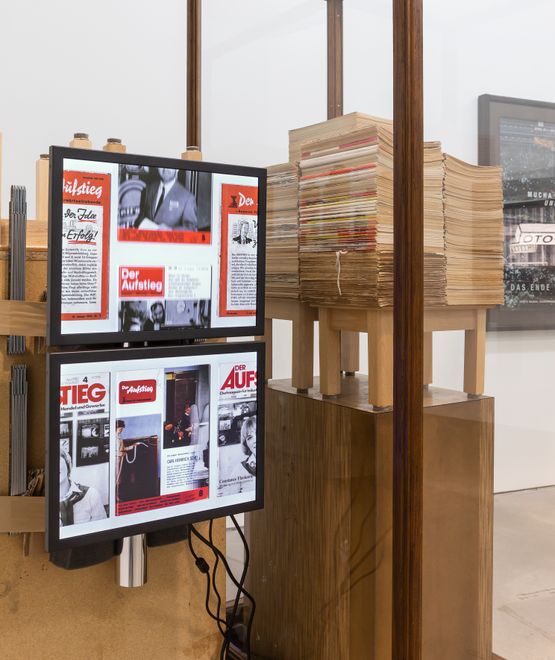
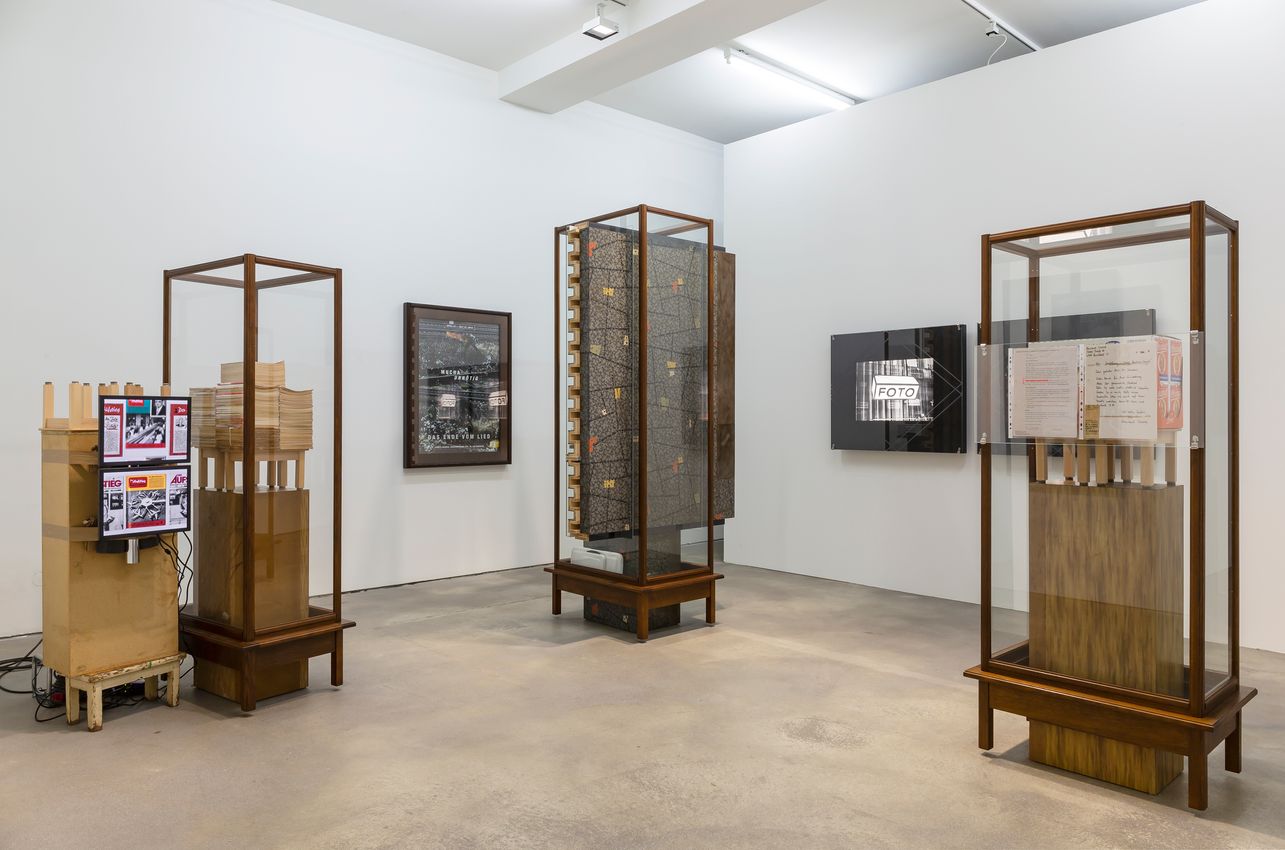
The use of footstools, pedestals, fluorescent lamps and showcases pervades Mucha’s entire oeuvre. They are concrete references to the basic architectural forms of the (museum) exhibition space, while at the same time undermining the institutional authority of the very space whose architecture becomes an integral part of the work. With Mucha, an exhibition is always self-exhibiting; lighting often illuminates only itself. Here it is not just the institution (museum) showing art, it is art showing the institution.

Mucha is often placed in close aesthetic proximity to Joseph Beuys, not least on account of his explicit, often antagonistic references in the naming of his works or his use of felt and found objects from German post-war everyday life. But this parallel is misleading. Mucha’s work has nothing in common with Beuys’s artfully shabby works, nor does it seek to conjure anything. On the contrary. Sensitive and sophisticated, it more closely resembles Minimalism and Conceptual Art and artists such as Blinky Palermo, Donald Judd, Frank Stella and Bruce Nauman. Hardly any other sculptor has so consistently used the zero-point of sculpture after Minimalism as a conceptual stepping stone. Mucha’s sculptures are much more than sculptures; they are melancholic apparatuses that archive history. They are sad machines confronting the largely doomed task of saving the more recent present from oblivion. They are batteries that have absorbed real-life and artistic energies to capacity and now only release them in small amounts. They are discreetly controlled stagings of showing and concealing, of history and anonymity. And last but not least, they are works that enter the world with a unique presence and an unusual resistance.

Reinhard Mucha (*1950) lives in Düsseldorf. His work has been the subject of institutional solo exhibitions, including those at Kunstmuseum Basel (2016); ifa - Galerie Friedrichstraße, Berlin (1996); Museum Haus Esters, Krefeld (1990); Kunsthalle Basel (1987); Kunsthalle Bern (1987); Musée National d’Art Moderne, Centre Georges Pompidou, Paris (1986); Württembergischer Kunstverein, Stuttgart (1985); Kabinett für aktuelle Kunst, Bremerhaven (1983). He participated in documenta X (1997), documenta IX (1992) and represented Germany at the 44th Venice Biennale (1990). Mucha’s work is included in important international museum collections such as Art Gallery of Ontario, Toronto; Art Institute of Chicago; Castello di Rivoli, Turin; Dallas Museum of Art; Hamburger Kunsthalle; Hirshhorn Museum and Sculpture Garden, Washington; Institut für Auslandsbeziehungen, Stuttgart; Kaiser Wilhelm Museum, Krefeld; Kunstmuseum Basel; Kunstmuseum Bonn; Kunstsammlung Nordrhein-Westfalen, Düsseldorf; Musée National d’Art Moderne, Centre Georges Pompidou, Paris; Museo National Centro de Arte Reina Sofía, Madrid; MoMA, New York; Nationalgalerie, Berlin; SFMOMA, San Francisco; S.M.A.K., Gent; Staatsgalerie, Stuttgart; Städelmuseum, Frankfurt a.M.; Tate Modern, London; The Walker Art Center, Minneapolis.

Read More

Installation Views

About the Artist

Working through the history of contemporary Germany with an acute understanding of the importance of place, Reinhard Mucha produces sculptures, installations, films and photographs that reflect upon collective identity, memory and the structures of institutional power. Many of his works incorporate aged materials from his own past; studio floorboards, unopened letters, or even whole bicycles, supplemented by a devotion to craftsmanship that manifests itself in a humble aesthetic that merges past with present. In his multifaceted installations, Mucha concocts a form of site-specificity with meticulous detail. Whole rooms may be recreated within rooms, mining his own past to stage again objects, works or whole exhibitions. His sculptures make use of industrial materials – aluminium, glass, felt, steel, board – that bridge a gap between functional object, recalling museum showcases, or baroque theatrical installations that saturate the language of minimalist sculpture with history. Uniting these different elements of his practice is an awareness of the passing of time, imparting the weight of history upon his materials to draw attention to how they inhabit as many lives as the spaces in which they exist.

View Artist Profile

Also Exhibiting

About the Gallery

Sprüth Magers has expanded from its roots in Cologne (Germany) to become an international gallery dedicated to exhibiting the very best in groundbreaking modern and contemporary art. With galleries located in Berlin Mitte, London’s Mayfair and the Miracle Mile in Los Angeles–as well as an office in Cologne and an outpost in Hong Kong–Sprüth Magers retains close ties with the studios and communities of the German and American artists who form the core of its roster.

View Gallery Profile
Address
Oranienburger Straße 18
Berlin
Germany
Opening Hours
Tuesday - Saturday
11am - 6pm
(1)
Berlin Oranienburger Straße 18
Sprüth Magers
Oranienburger Straße 18, Berlin, Germany
+49 302 888 4030
http://www.spruethmagers.com

Opening hours
Tuesday - Saturday
11am - 6pm
The art world in focus