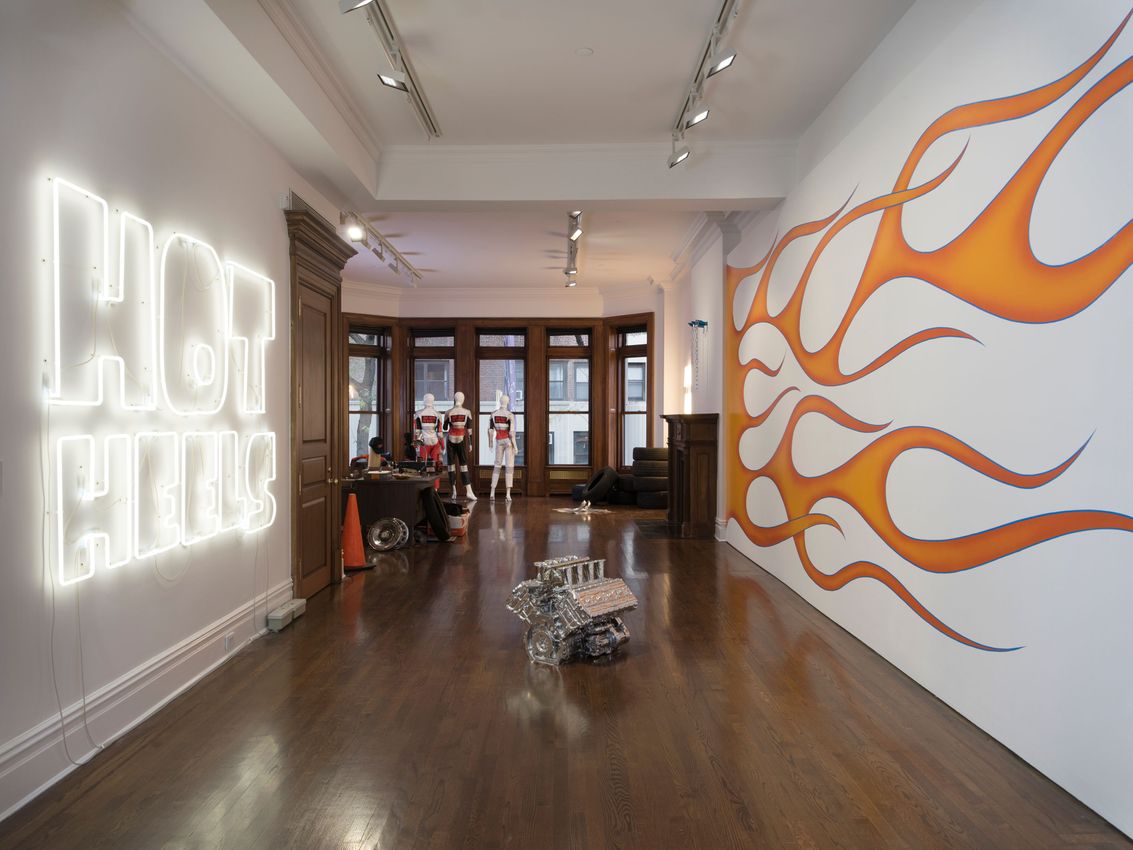
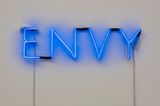
Sylvie Fleury’s neon works are meditations on consumer culture, desire and the construction of value in contemporary society. They employ familiar commercial slogans, brand names and commands – such as “Égoïste,” “Hydrate” and “Eternity Now” – transforming the language of consumption into poignant statements that question and expose the mechanisms of luxury, self-perfection and identity.
Her neon YES TO ALL, among her most recognized pieces, references a computer prompt, encapsulating the excess and anxiety characteristic of our times. By adopting neon – a quintessential advertising medium – she fuses art with commerce and text with sculpture. Continuing their collaboration of over three decades, Sprüth Magers is pleased to present a solo exhibition dedicated entirely to Fleury’s neon sculptures at the New York gallery. This focused presentation immerses the space in radiant light, with glowing texts forming an uncanny poem throughout the gallery.
Premiering concurrently, Fleury’s Performa Biennial 2025 commission will combine sculpture, movement and sound in a series of tableaux vivants, staged on the forty-third floor of an unfinished Manhattan skyscraper.


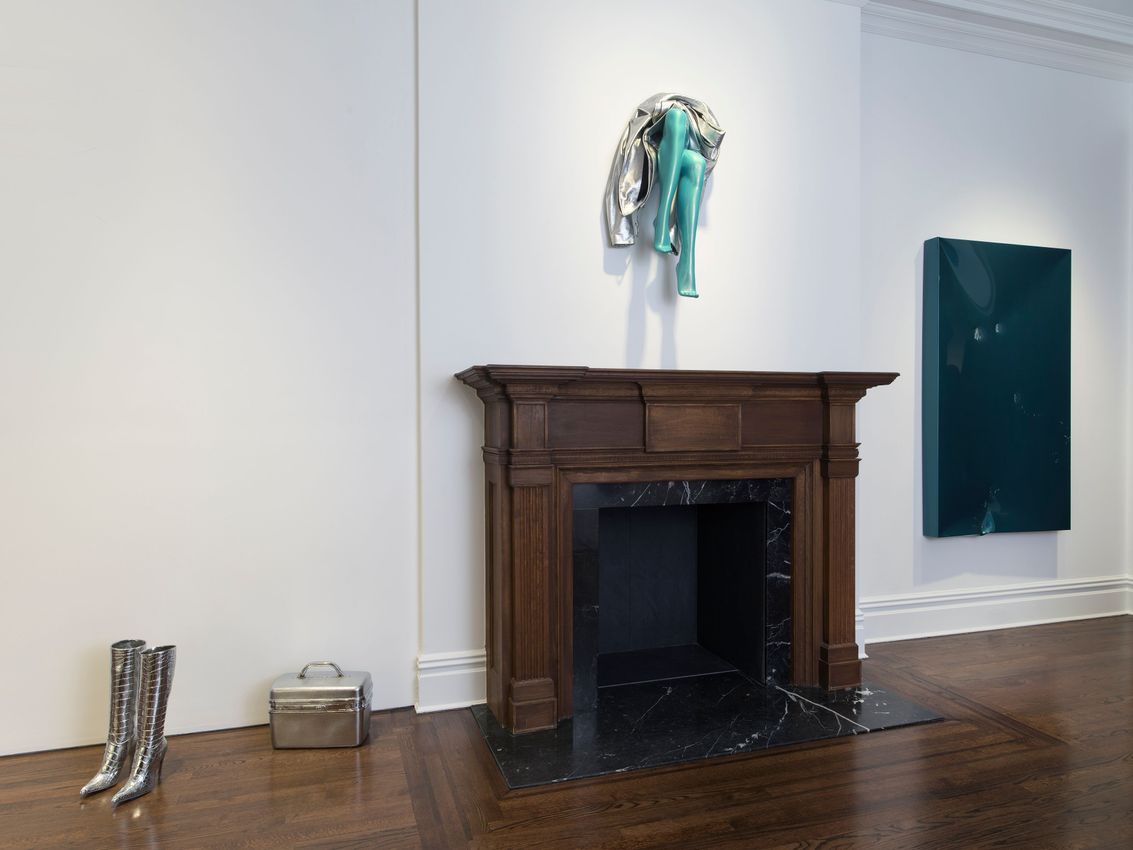
Sylvie Fleury mines twentieth-century Modernism and contemporary consumer culture to produce ambiguous works of sculpture, painting and installations. An approximation of high and mass culture often runs through her practice, as a way to expose the familiarities between the art market and the circulation of consumer commodities. Fleury is well known for her playful customisation of iconic Modernist works. For instance, in Pucci Paintings, 1992, she reinserted into the art world, a pattern that had been appropriated from early Modernist abstraction by the famed fashion house. In Walking on Carl Andre, 1997, she filmed the stiletto-clad legs of models as they strutted over floor pieces by the artist, and the concept of her Zylon Paintings – spray painted canvases in the vein of American Action painting – permitted the owner to modify the colour scheme of the work according to seasonal trend. Further customisation pieces include: denim canvases mounted on stretchers that bear Fontana-like slashes, brightly coloured fake fur patches forming a series of Schmusebild (Cuddly Paintings) that imitate Malevich’s infamous Black Square and, in works such as Tableau No. 1, 1992, fur adorns geometric designs akin to Mondrian. Upscaling the canonical works of male-centric Modernism with sensual, feminine flourishes serves a dual-purpose for the artist. Not only does it renegotiate the hierarchies of gender within artistic tradition, it also draws attention to the failures of radical twentieth-century avant-garde gestures, whose motifs have long-been co-opted by consumer culture in a deluge of copycat home wares and soft furnishings.

A respected voice in contemporary art discourse.
Focusing on ambitious storytelling and insightful art-world commentary. Ocula Magazine publishes in-depth interviews, critical essays and timely analysis on the artists, exhibitions and ideas driving the global art world.
Learn more about Ocula Magazine
Showcasing the best of the art world.
Ocula partners with galleries from around the world to highlight their artists, artworks and exhibitions. Gallery membership is by application and invitation, with each member vetted by an independent panel.
Learn more about Ocula Membership

Specialises in the sale of major artworks.
Led by a team with deep ties to the world’s leading auction houses, galleries and collectors. Ocula’s advisory team offers bespoke services to high-net-worth clients from around the world who are looking to acquire the best of contemporary and modern art.
Learn more about our team and services