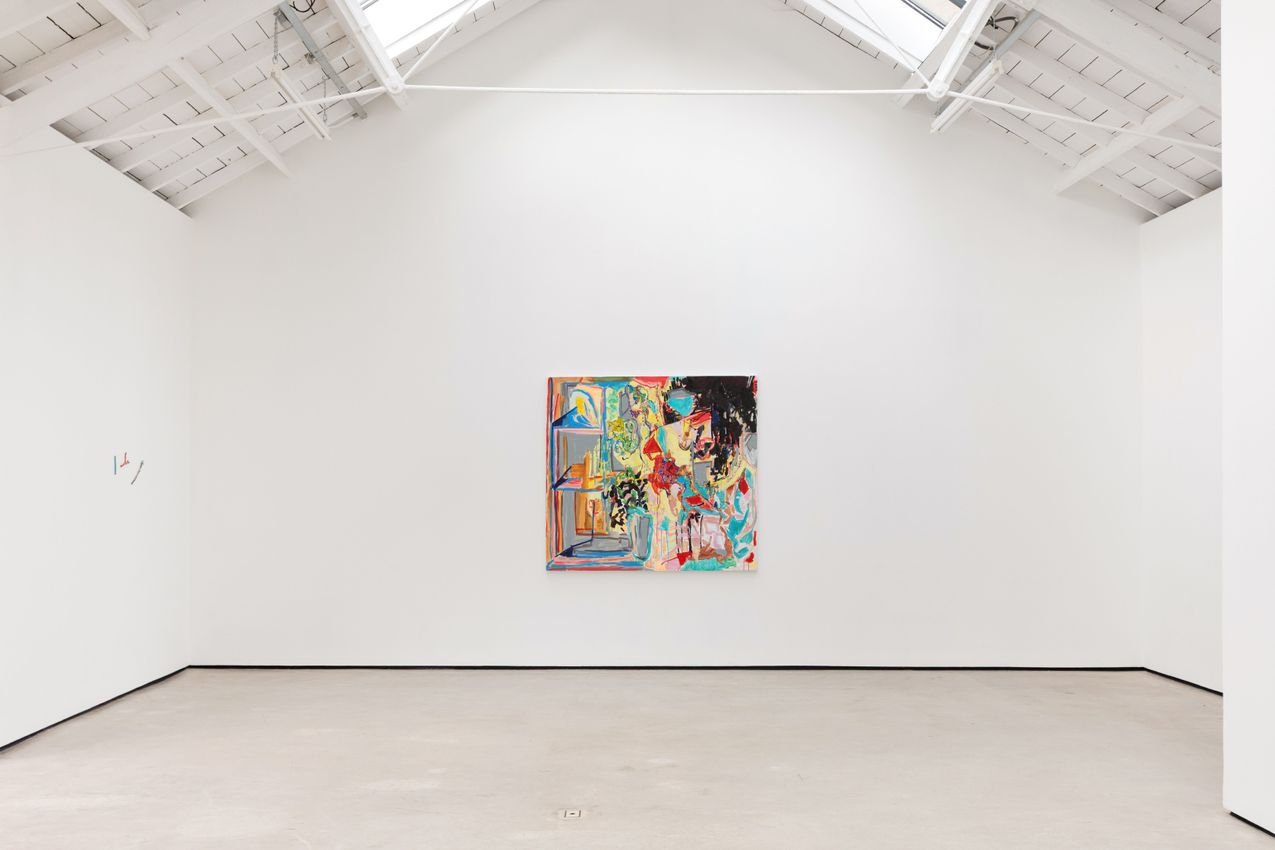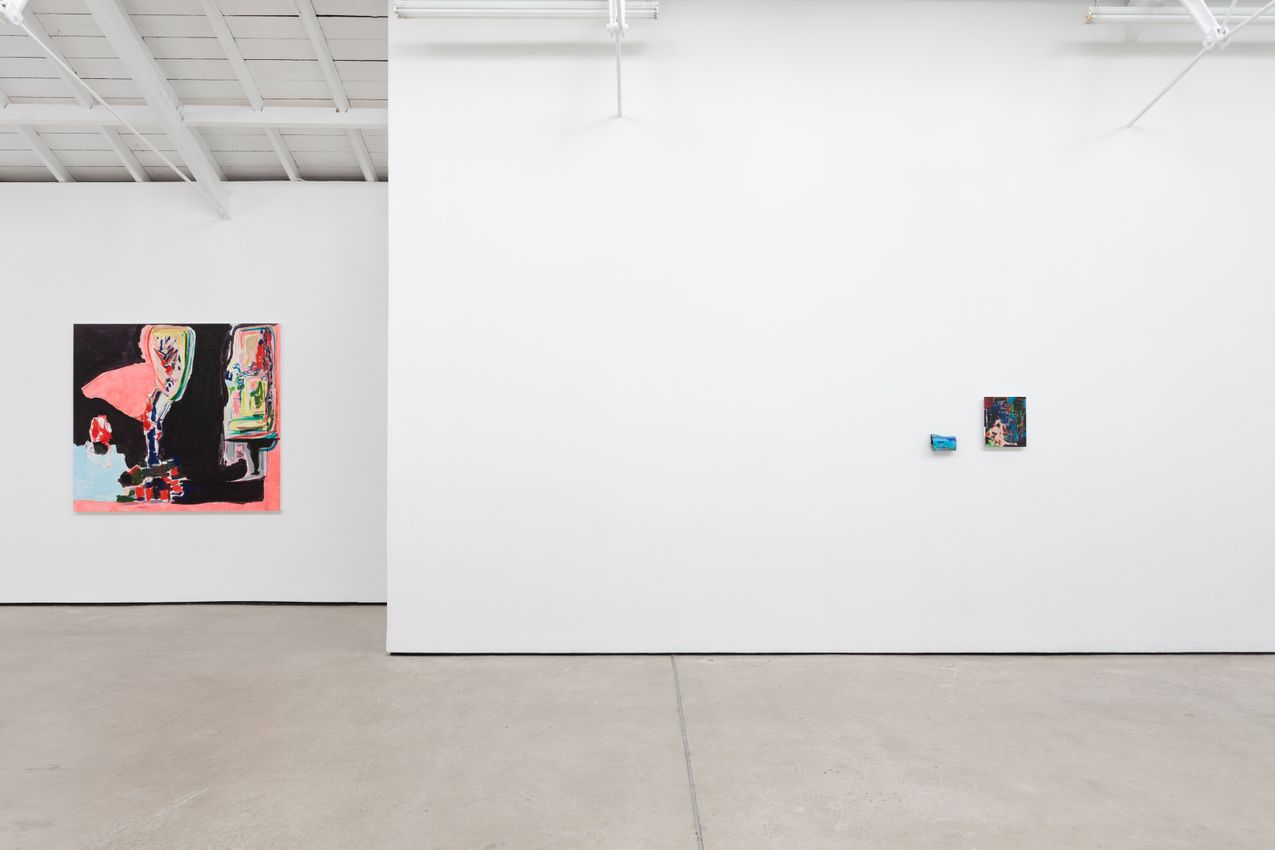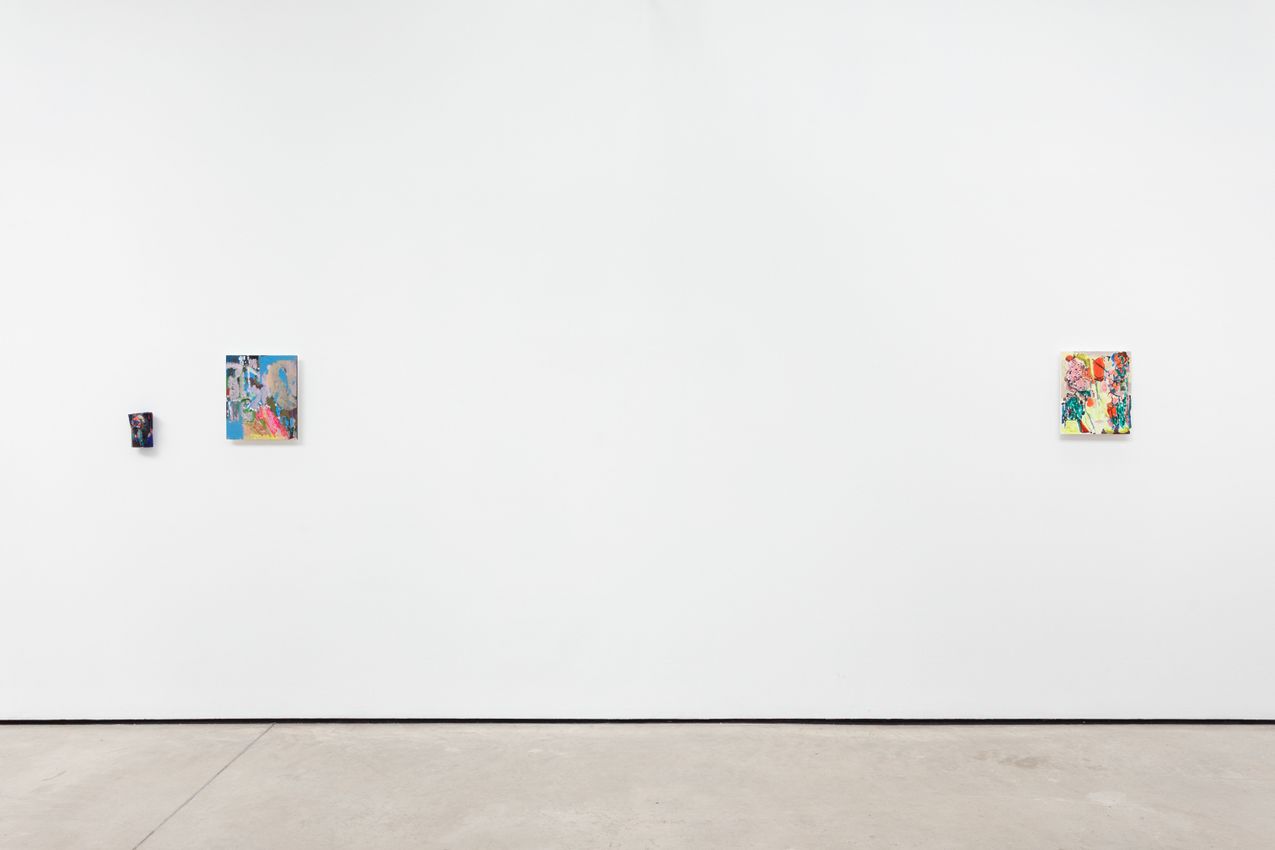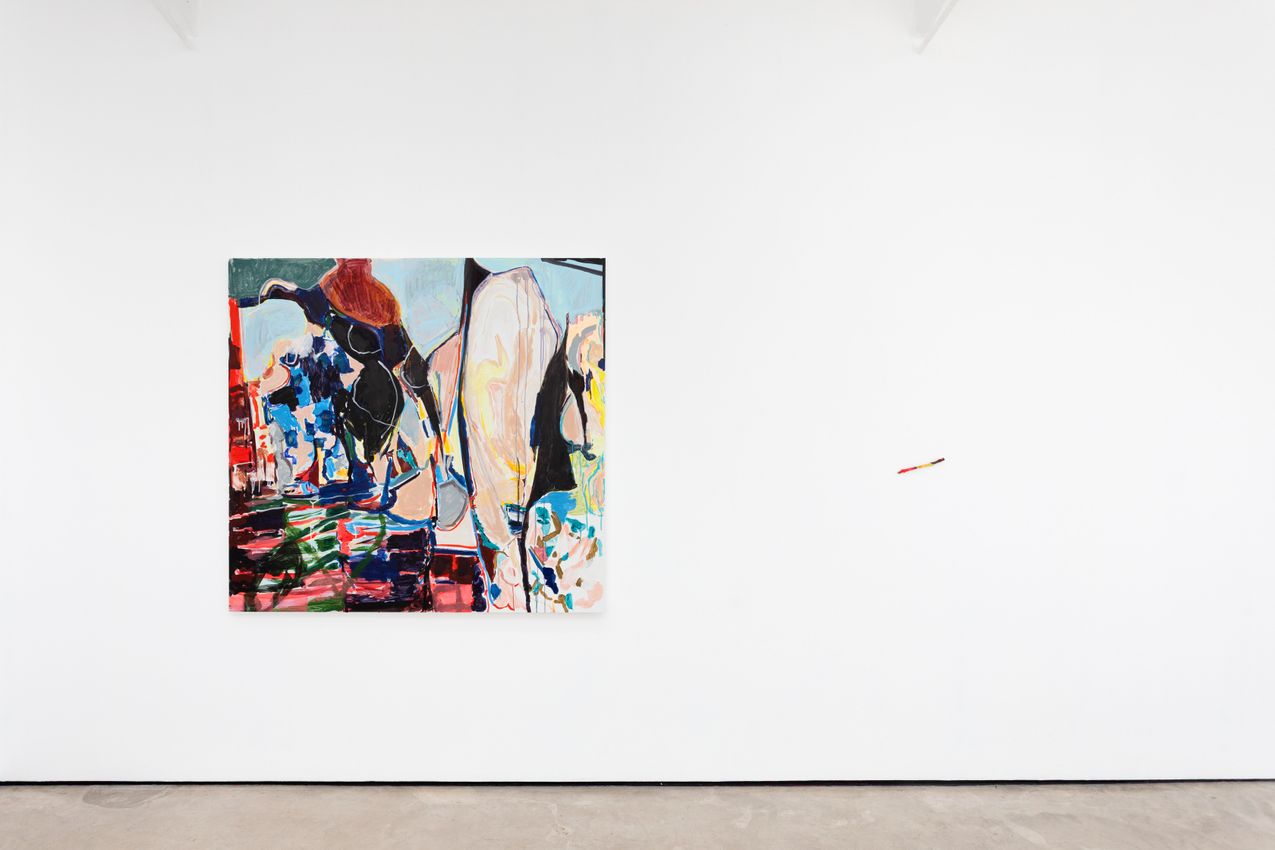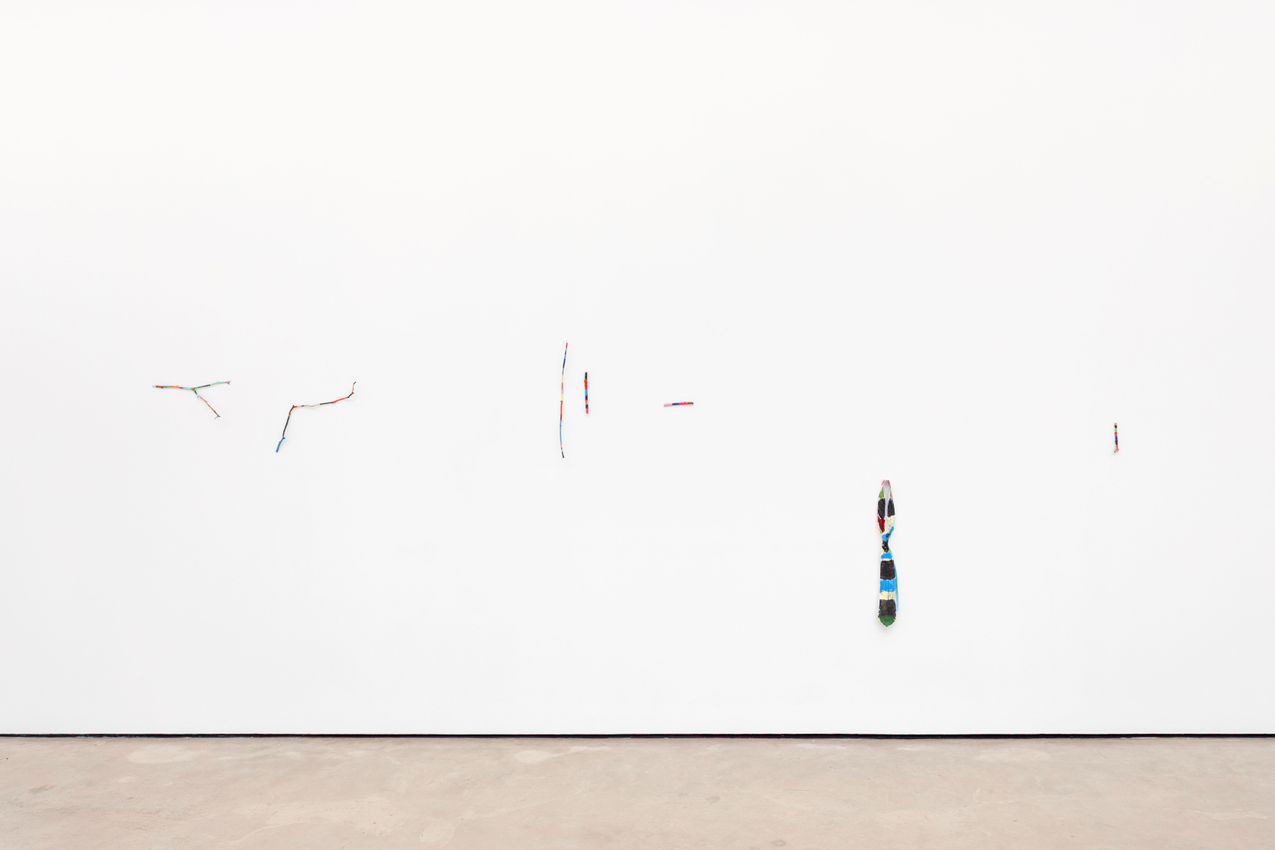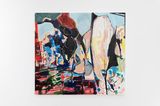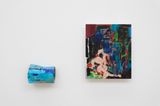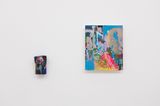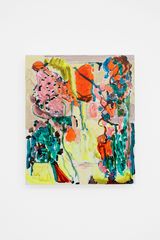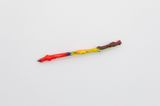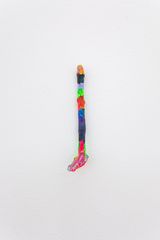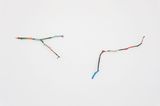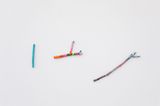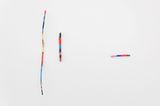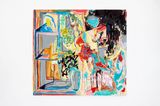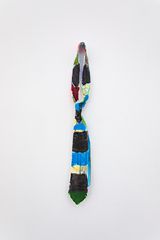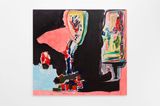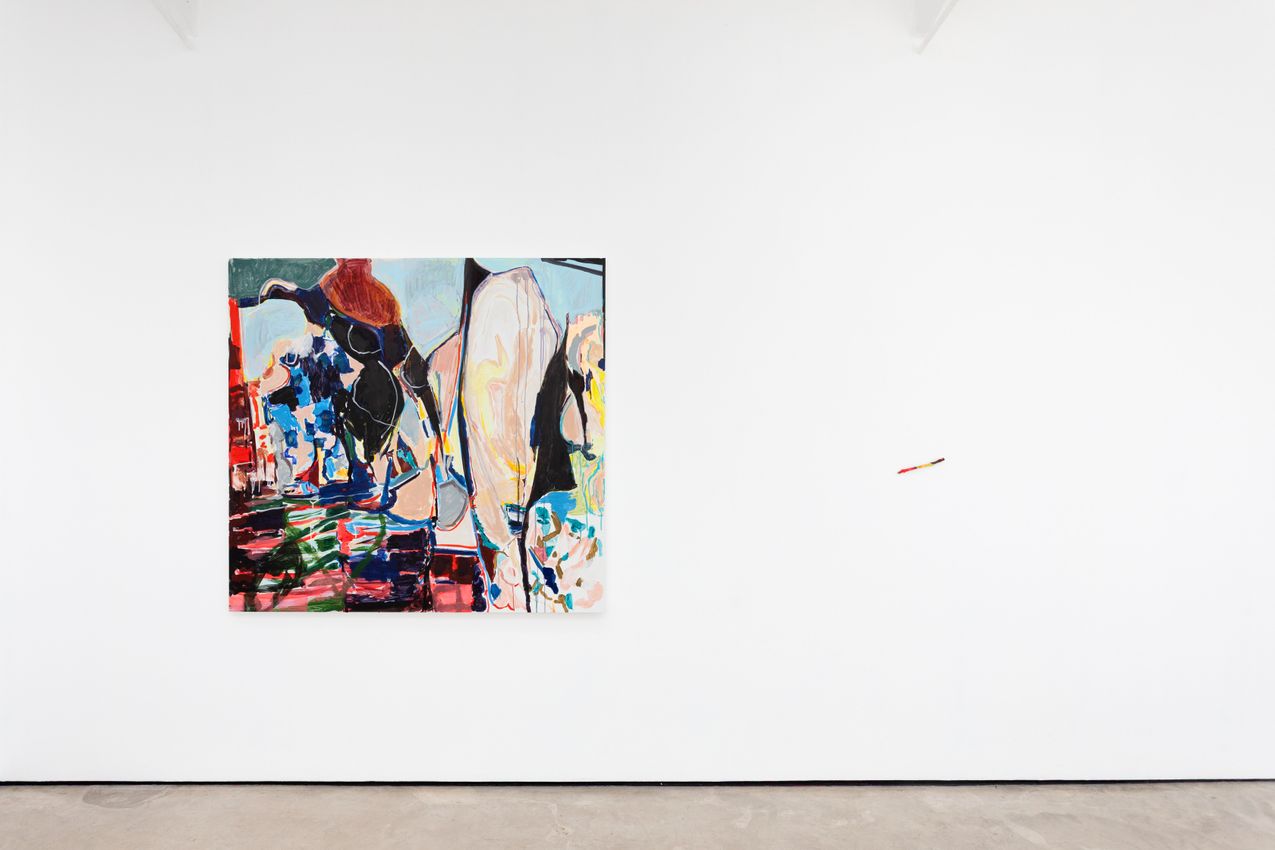
For surroundings, Hayley Tompkins brings together a new suite of acrylic paintings on wood panels, incorporating them into an installation with painted sticks and fabric pieces. These transfigured common objects and gestural, abstract paintings mix a dreamlike quality with a sense of the ordinary. Tompkins’ exhibition title provides no specifics or location, and instead suggests an ever-changing set of circumstances, conditions and possibilities; both a position unique to each person and a shared set of coordinates for seeking commonalities and sympathies with others. In this way, the title speaks to the act of installing the works to create a temporary environment for the viewer.
The expressive paintings often feature a staccato line and sections of rhythmic colour, evocative of unrest and fracture but also the optical effects of dappled light falling on the surfaces of a room. They show a subtle but decisive shift towards figurative depictions, with areas suggestive of landscapes, plants and windows, and also biomorphic forms recalling heads or limbs. The compositions never insist upon representation, instead the florid, brightly coloured nature of their surfaces are aligned with Symbolist painting, foregrounding gesture and dreamlike forms which can act as a metaphors for ideas around interpersonal relationships, and the coexistence of love and loss.
The paintings are developed intuitively, products of imagination as well as intensive bursts of physical energy. Their starting point is often a feeling, with Tompkins recollecting and responding to associated interiors, places and artworks. They also have a complex and questioning dialogue with historical painting, specifically artists who worked at the intersection of abstraction and figuration, merging interior thoughts with external representations. There are current affinities to be found with Graham Sutherland’s surrealist landscapes from the 1930s and 40s, the lyrical abstraction of Joan Mitchell’s oeuvre and Henri Matisse’s rich interiors and cityscapes.
The playful sticks, transfigured fragments from a dérive, create a journey through the space. A touchstone for their other-worldly properties is Romanian conceptual artist André Cadere’s (1934-1978) colourful barres de bois rond (round bars of wood), which he made hundreds of, taking them around Paris and exhibiting them. As with Cadere’s use of his bars, leaning them against a wall or walking them somewhere, Tompkins’ installation of the sticks draws attention to the space itself, creating a lively set of chromatic connections with their environment and neighbouring works. In turn, the shirt fragments and sections of fabric invoke an absent body. Their colouring and mark making chime with the paintings, blurring associations with punk clothing alterations and accidentally stained garments. Collectively, there is a sense of intimacy across the constellation of works – each seems to denote a small thing remembered or noticed, collected, kept, and altered. Tompkins’ surfaces bring a consideration of time, touch and use to the fore – daily tasks and the mystical in repeated action.


The Modern Institute was founded in Glasgow in 1997. The gallery works with internationally established and emerging artists including Martin Boyce, Jim Lambie, Richard Wright, Anne Collier, Cathy Wilkes, Simon Starling, Urs Fischer, Luke Fowler and Nicolas Party.

A respected voice in contemporary art discourse.
Focusing on ambitious storytelling and insightful art-world commentary. Ocula Magazine publishes in-depth interviews, critical essays and timely analysis on the artists, exhibitions and ideas driving the global art world.
Learn more about Ocula Magazine
Showcasing the best of the art world.
Ocula partners with galleries from around the world to highlight their artists, artworks and exhibitions. Gallery membership is by application and invitation, with each member vetted by an independent panel.
Learn more about Ocula Membership

Specialises in the sale of major artworks.
Led by a team with deep ties to the world’s leading auction houses, galleries and collectors. Ocula’s advisory team offers bespoke services to high-net-worth clients from around the world who are looking to acquire the best of contemporary and modern art.
Learn more about our team and services