



Press Release

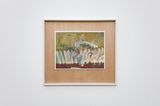
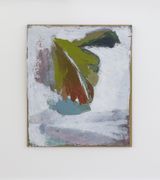
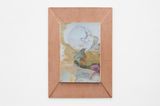
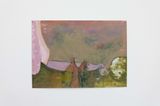
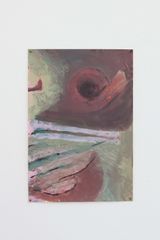
Andrew Kerr’s practice is rooted in drawing. His pencil drawings, exploring letterforms, text and shape, provide both pictorial ideas and a technique which move into painting. In Capture Builthis, there are pairs of paintings which share a common origin, following the approach of his drawings where the same word or set of forms are repeated and reshaped across different sheets. This intuitive method, one which relies on following an unfolding process rather than a strict logic, extends into Kerr’s investigations of sculpture and architecture too. Shapes chime between the dancing vessels, column-like emblems, and pleated spaces in the paintings and the interventions in the space.

Set design formed a key part of the output of many artists in the 20th century, with the interplay between the fine arts and performing arts producing experimental results both on the canvas and stage. In the lead-up to the exhibition, Kerr chanced upon theatre commissions by André Derain (1880–1954), Balthus (1908–2001) and Alberto Giacometti (1901–1966), delighting in the teasing of perspective and confident artifice found in their designs. The notion of mise-en-scène as well as the constraints of framing are shared by staging and painting, as well as the central role of play.

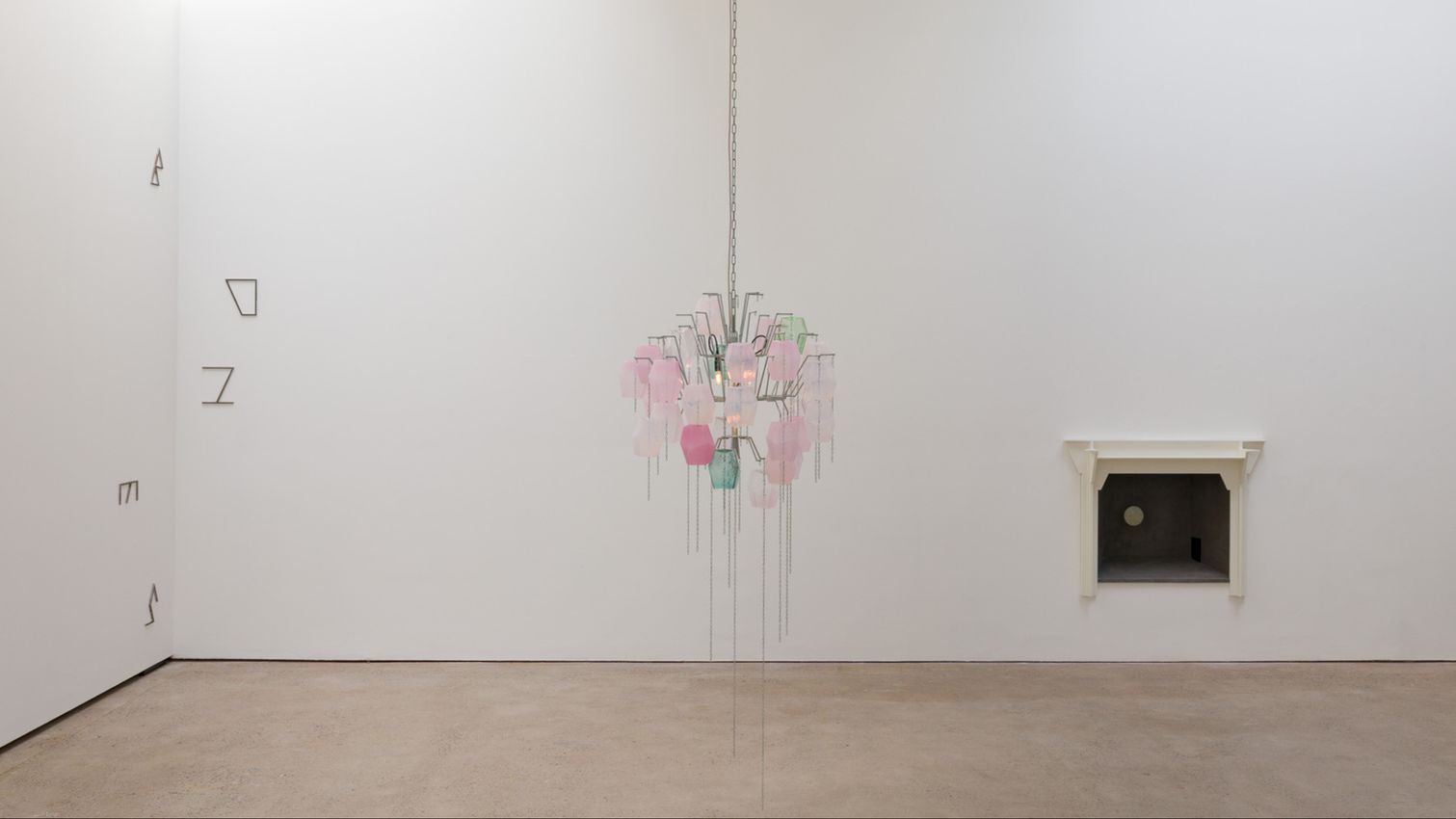
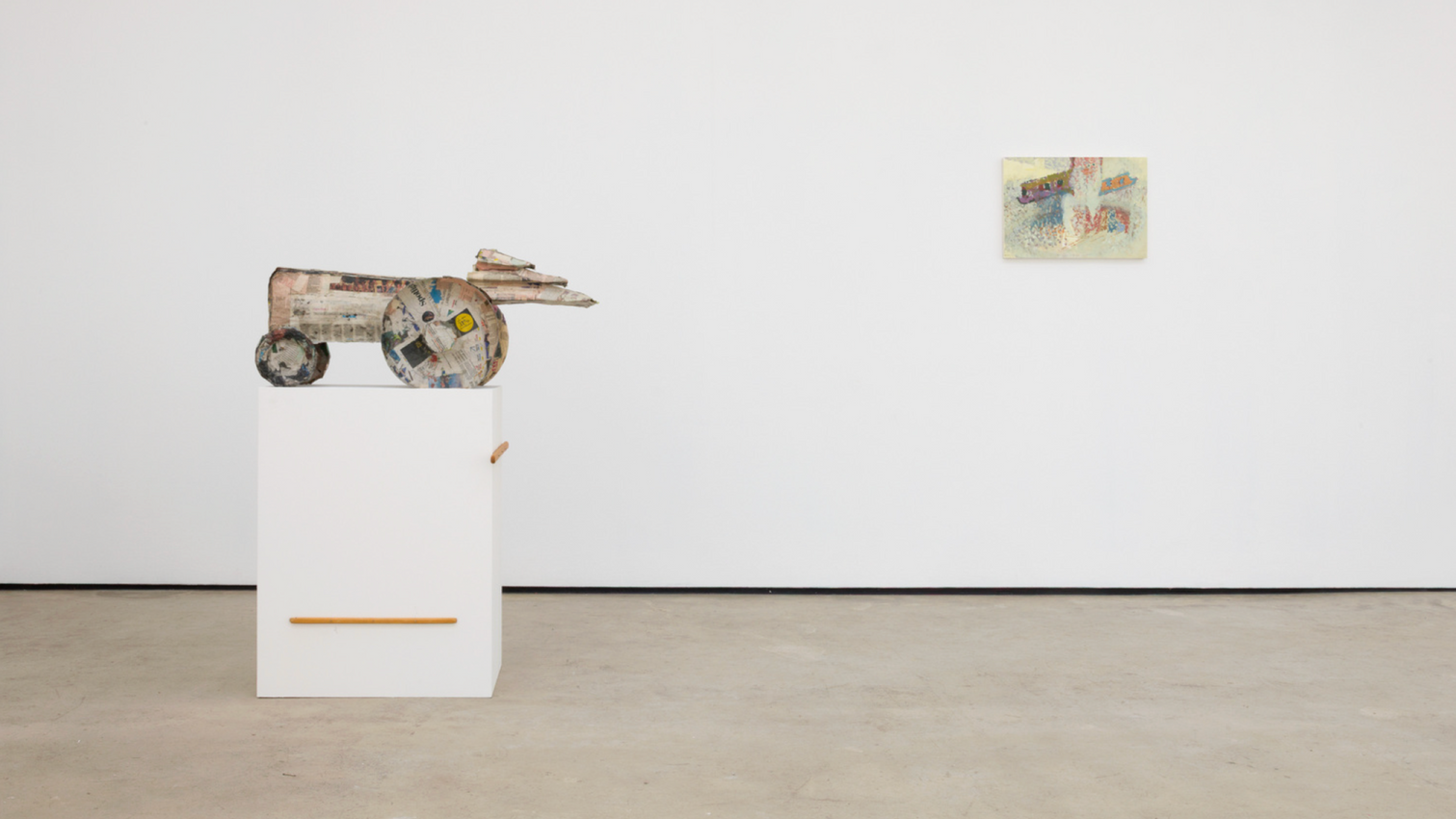
In the exhibition there is the hint that painting, too, happens ‘live’ and has its own audience to address. Further allusions to performance appear: the inverted arch which occupies the doors down one side of the gallery, allowing only a sliver of light through under its polygonal base, recalls the velvet drapes of a theatre curtain; or perhaps it is a simplified backdrop, inspired by the decorative flourishes that adorn Glasgow’s sandstone buildings. (This piece, and the other alteration to the gallery, were made with the help of Louis Brown.) Another sculpture, atop an embellished plinth, is a vehicle of some kind and entertains the possibility of either prop or toy, invoking childhood play. In their creations, children and artists share common cause; both in some sense orchestrate alternative, accentuated visions of their world and relationships.

The overall effect of the exhibition is enigmatic and the connections between the various elements remain provisional, grounded in Kerr tentatively following his instincts and interests – looking, noticing, recording, revising.Andrew Kerr would like to thank Katie O’Brien and Louis Brown.

Andrew Kerr lives and works in Glasgow, selected solo exhibitions include: ‘Much in the Way of June’, BQ, Berlin (2025); ‘Mitty Mag’, Matthew Brown, Los Angeles (2024); ‘Flattening the Penny’, The Modern Institute, Airds Lane, Glasgow (2023); Kerry Schuss, New York (2022), ‘Bridge for July’, Matthew Brown, Los Angeles (2021); ‘Mist at the Pillars’, The Modern Institute, Osborne Street, Glasgow (2019); ‘Wyndham School of Dancing’, The Modern Institute, Aird’s Lane Bricks Space, Glasgow (2016); ‘Away with Nora’, BQ, Berlin (2015).

Courtesy The Modern Institute.

Read More

Installation Views

Also Exhibiting at The Modern Institute

About the Gallery

The Modern Institute was founded in Glasgow in 1997. The gallery works with internationally established and emerging artists including Martin Boyce, Jim Lambie, Richard Wright, Anne Collier, Cathy Wilkes, Simon Starling, Urs Fischer, Luke Fowler and Nicolas Party.

View Gallery Profile
Address
14–20 Osborne Street
Glasgow
United Kingdom
Opening Hours
Mon - Fri, 10am - 6pm
Sat, 12pm - 5pm
(1)
Glasgow 14–20 Osborne Street
The Modern Institute
14–20 Osborne Street, Glasgow, United Kingdom

Opening hours
Mon - Fri, 10am - 6pm
Sat, 12pm - 5pm
The art world in focus