Press Release

Weight of Matter is Polish artist Monika Sosnowska’s (b. 1972) first solo show in a London institution for more than twenty years. She is internationally known for her sculptural practice which explores urban transformation, and the impact of architecture on how people live and feel. Having witnessed the implosion of the communist regime in Poland in 1989, Sosnowska became fascinated by the social and architectural changes which followed. Her works are rendered in steel, concrete, rebar and other materials associated with the functional, minimalist design of modernist buildings. She tests the capability of these materials to take on surprising new forms, stripped of function and often captured in various states of collapse.

Sosnowska’s early works distorted conventional forms of interior spaces to explore the potential for disorientation, disruption, and even fear. Installations and sculptures featured wonky floors, walls and ceilings; lopsided corridors leading nowhere; and doors opening onto another door, and another, and another. There’s an absurdity to these works which highlighted the challenges involved in transitioning from one space, ideology or social system, to another. The implication is that change doesn’t necessarily result in progress. As Sosnowska’s practice evolved it included deconstructed staircases, handrails and gates, twisted and contorted almost beyond recognition. Defying our expectations of how certain materials can be used, and eradicating functionality from these familiar architectural features, Sosnowska created her own, distinctive visual language. An enormous cardboard cube with a cutout doorway, squashed between two walls, was in fact an enamelled steel replica of a makeshift shop, typical of those which sprung up in Poland in the post-communist era.

For the 2007 Venice Biennale, Sosnowska re-constructed the steel frame of a 1960s office building, twisted and skewed to fit into the Polish Pavilion. Challenging the power dynamics between institutions and artists, the work spilled out beyond the gallery walls, refusing to be confined within them.

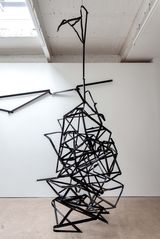
For her South London Gallery exhibition, Sosnowska brings a selection of works made over the past 14 years into dialogue with the architecture and history of the SLG’s buildings. A monumental new installation in the Main Gallery unites a group of largescale sculptures suspended from the ceiling beams of the purpose-built Victorian gallery. This huge display, in which some of the works weigh over half a tonne, tests the fabric of the 135-year-old institution. It also upturns the age-old tradition of sculptures being shown on plinths or the floor, influencing the way in which viewers interact with the works and introducing an impression of precarity. The skeletal forms hang from the rafters like carcasses, remnants of architectural and broader histories merged into an intertwined mass. Some of the works are to scale replicas of the stalls from one of the many markets which sprung up following the fall of the communist regime and the easing of restrictions on trading.

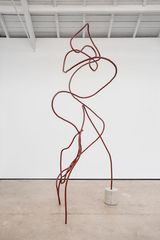
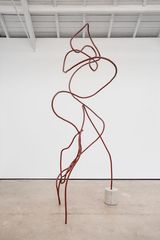
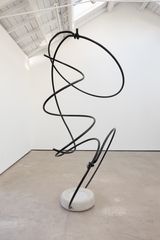
Eventually, however, new buildings, supermarkets and department stores took over and many of the markets closed. Sosnowska’s market stalls are strung up and redundant, in various states of ruin. Another suspended metal sculpture mimics a huge curl of paper, whilst a three-dimensional scribble in mid-air is made of lengths of rebar, manipulated into elegantly intertwining curves.

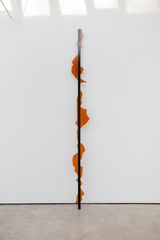
At the SLG’s Fire Station annexe Sosnowska’s works are positioned to be in direct response to the architecture and history of the building, which dates back to 1867. In Gallery 1, the former engine room, a twisted black metal staircase is slumped on the floor, in stark contrast to the functioning white stairs which are a prominent architectural feature in the Fire Station. In Gallery 2, which overlooks a leafy outdoor space, sculptures with plantlike forms create a concrete jungle of rebar branches and collapsing trees. Drawing on the materials and visual language of demolition, these works reflect on the predominance of construction sites in Warsaw where the artist lives.

Read More

Installation Views

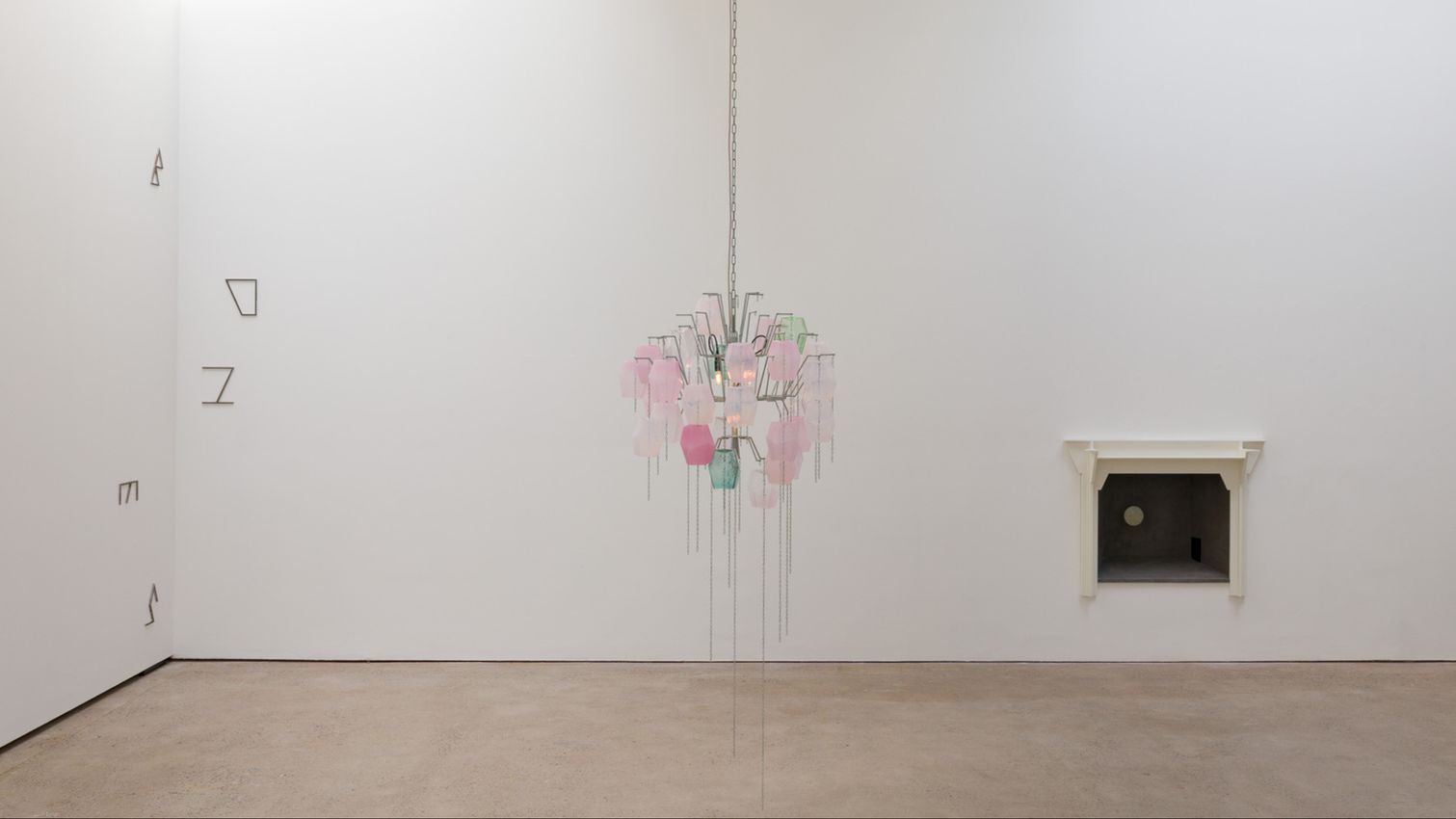
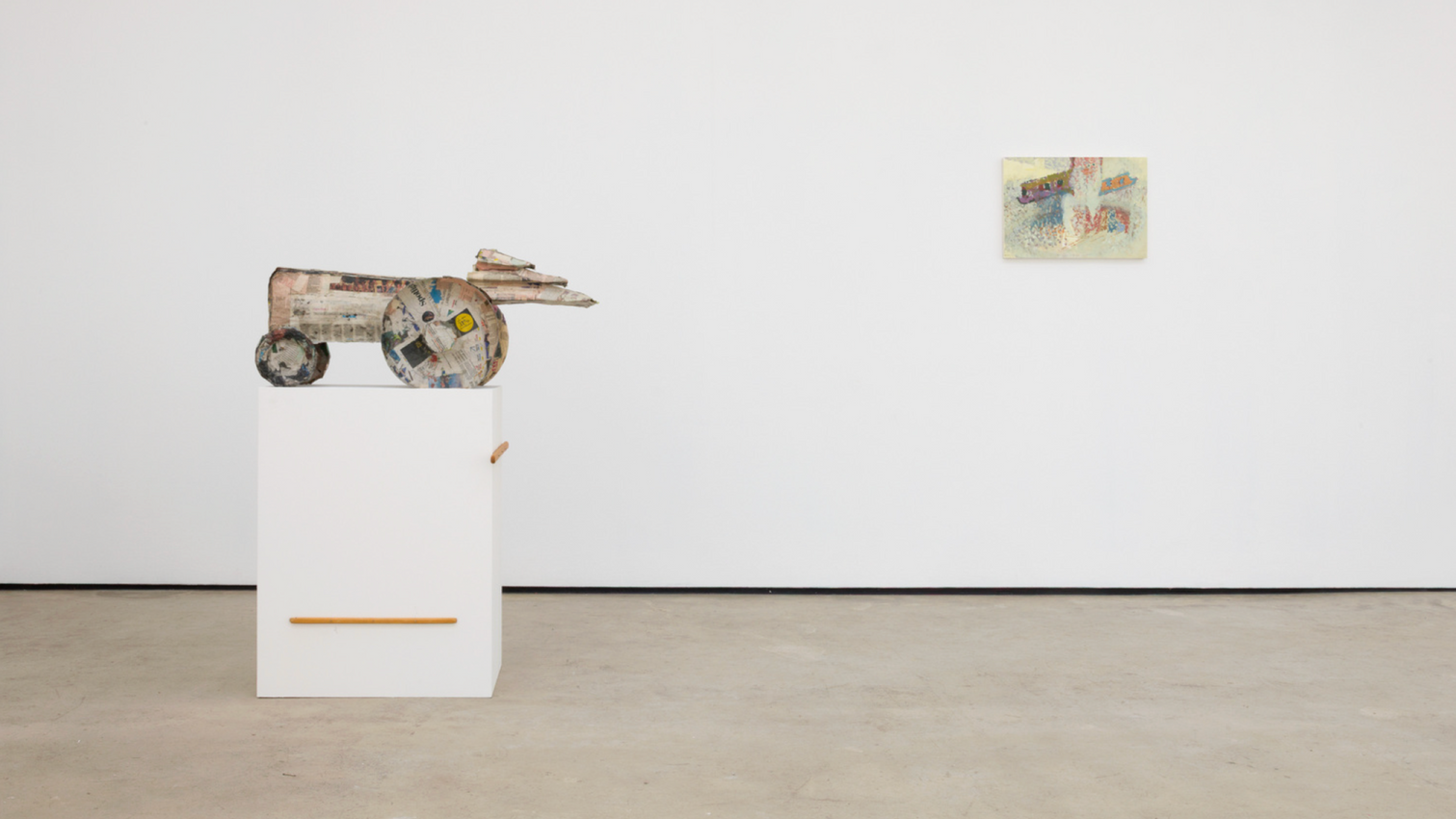
Exhibition view: Monika Sosnowska, Weight of Matter, at the South London Gallery (10 September–22 November 2026). Photo: Jo Underhill.
About the Artist

Using construction materials such as concrete and steel beams, Monika Sosnowska creates enormous, site-specific installations that engage with the psychological properties of architecture and the legacies of post-war modernism.

View Artist Profile

Also Exhibiting at The Modern Institute

About the Gallery

The Modern Institute was founded in Glasgow in 1997. The gallery works with internationally established and emerging artists including Martin Boyce, Jim Lambie, Richard Wright, Anne Collier, Cathy Wilkes, Simon Starling, Urs Fischer, Luke Fowler and Nicolas Party.

View Gallery Profile
Address
South London Gallery

65 Peckham Rd, London SE5 8UH

(1)
Glasgow 14–20 Osborne Street
The Modern Institute
14–20 Osborne Street, Glasgow, United Kingdom

Opening hours
Mon - Fri, 10am - 6pm
Sat, 12pm - 5pm
The art world in focus