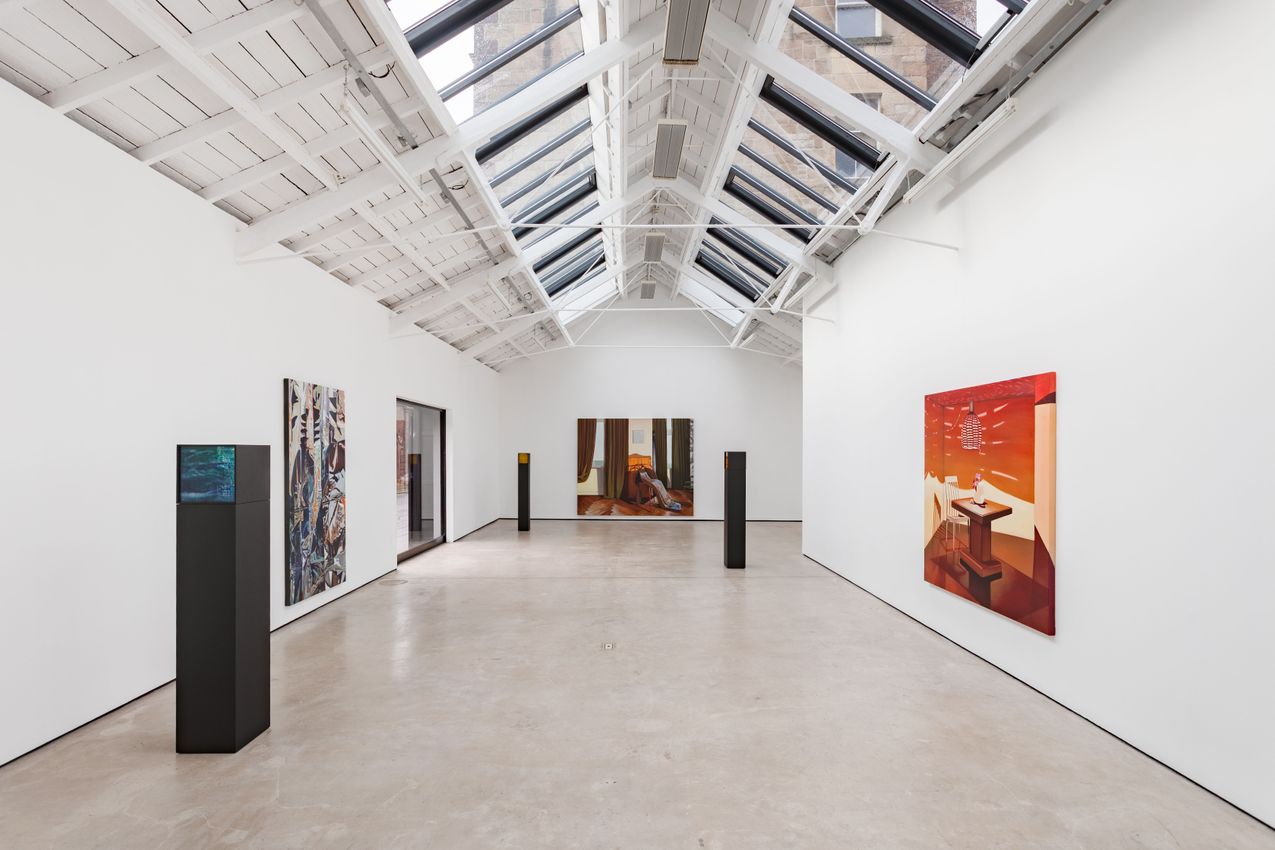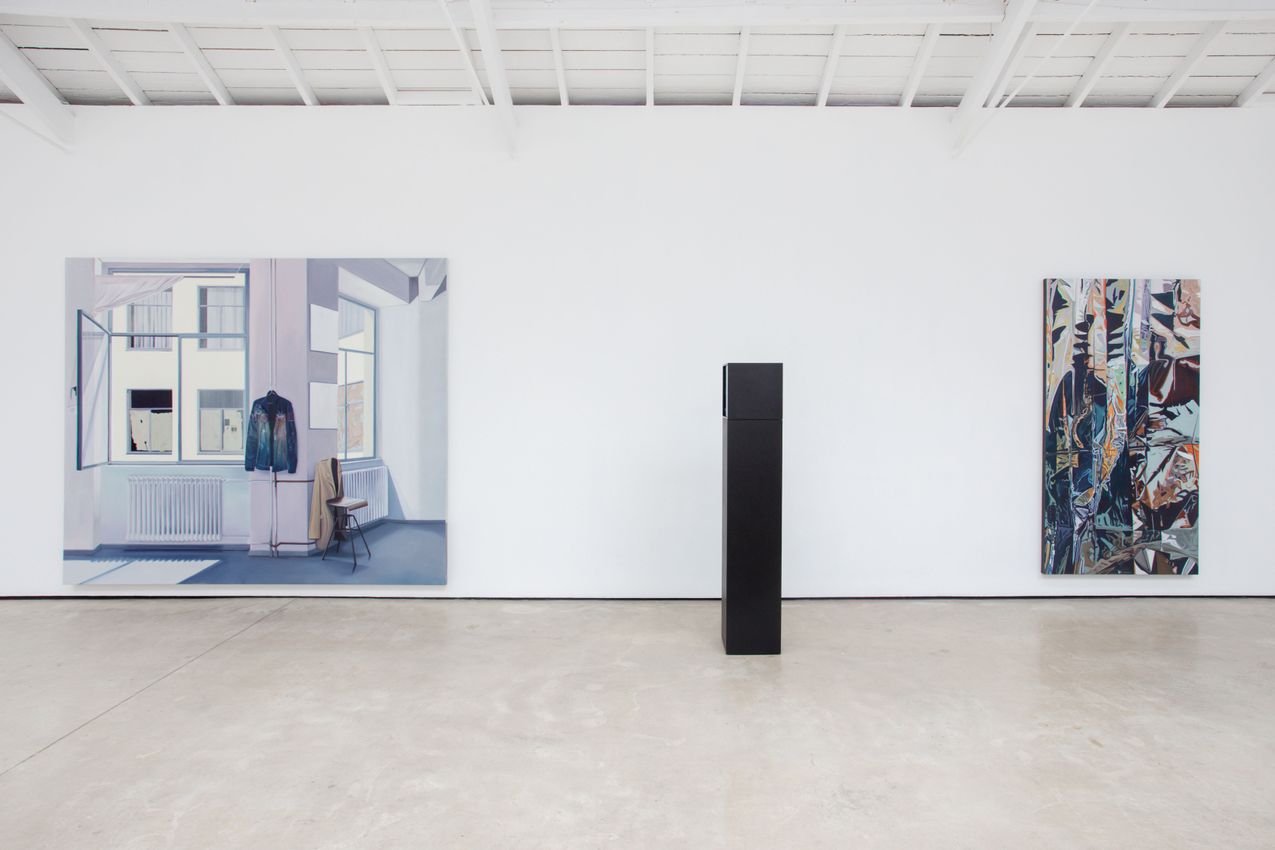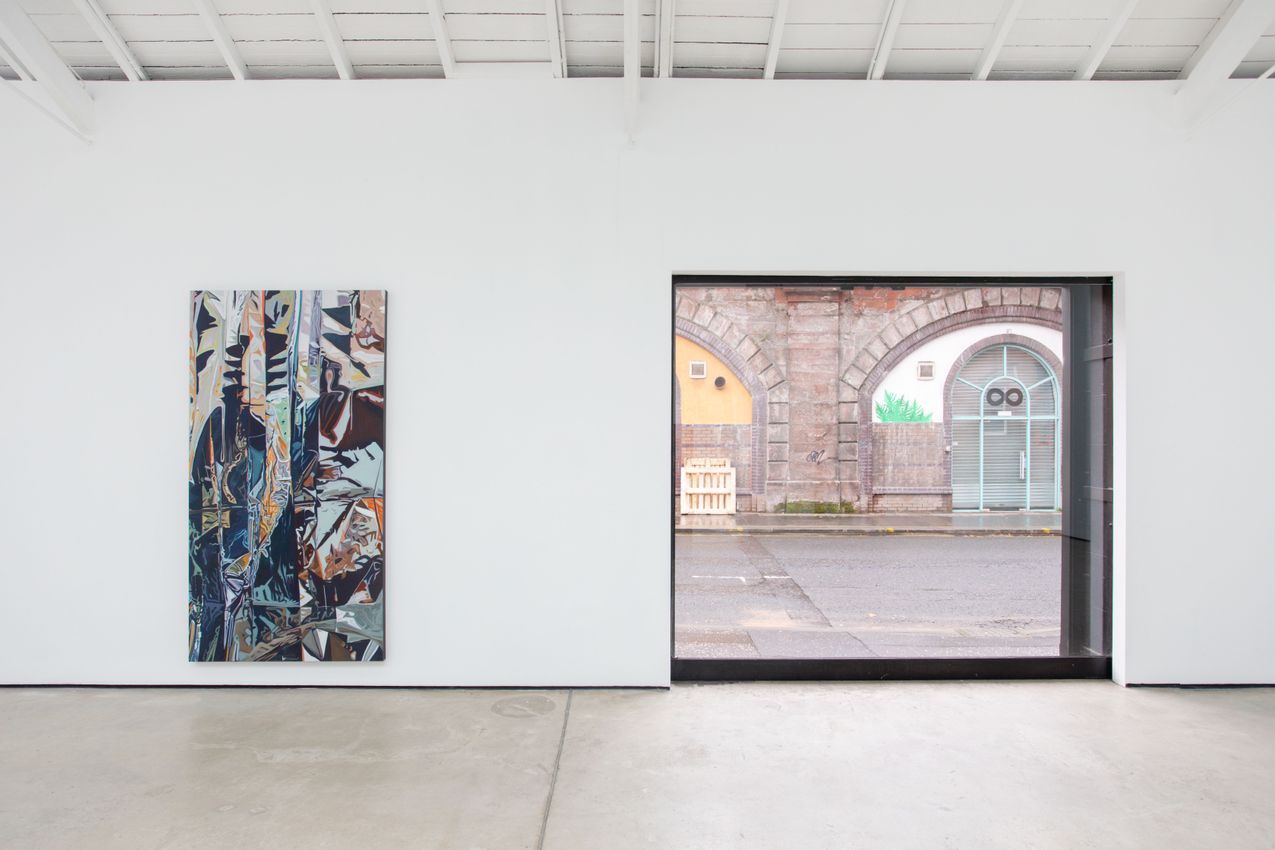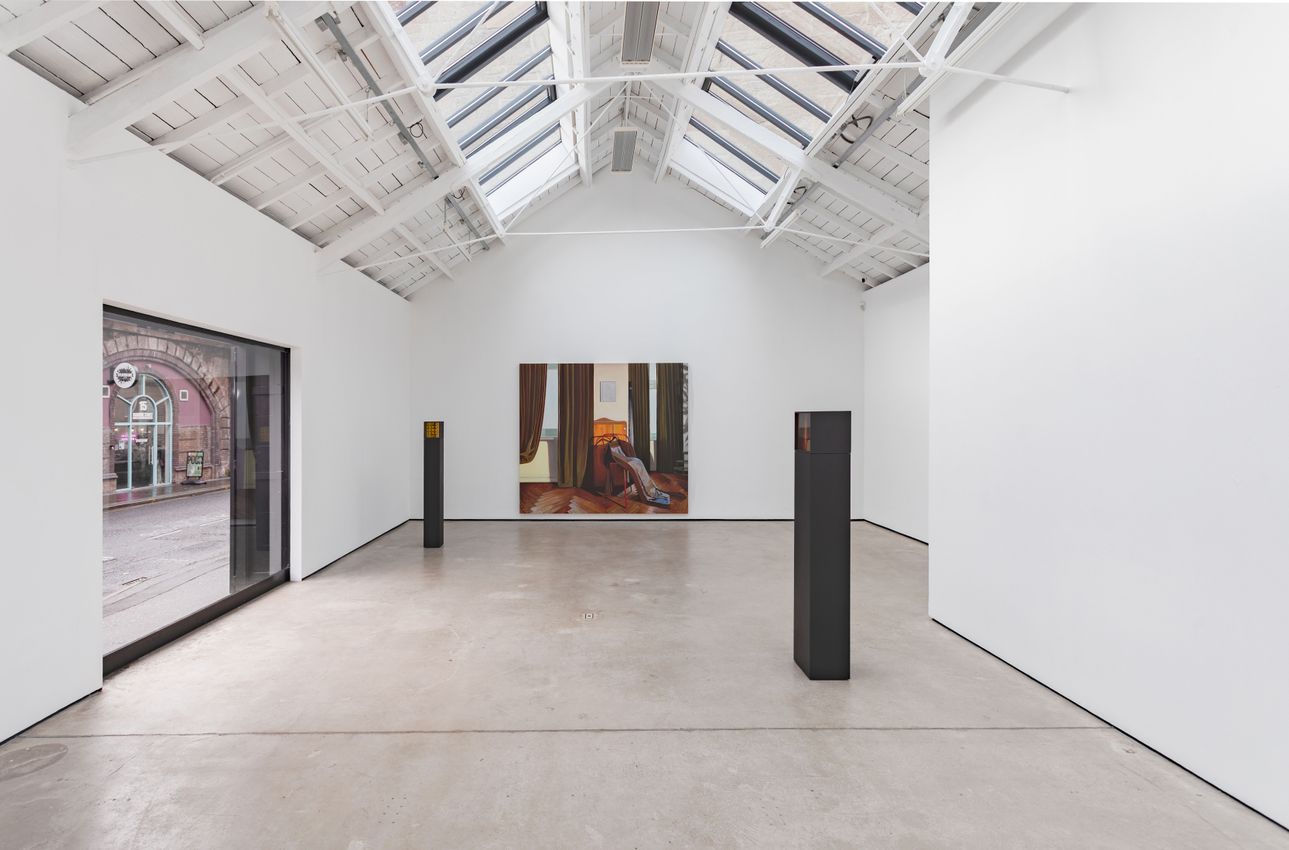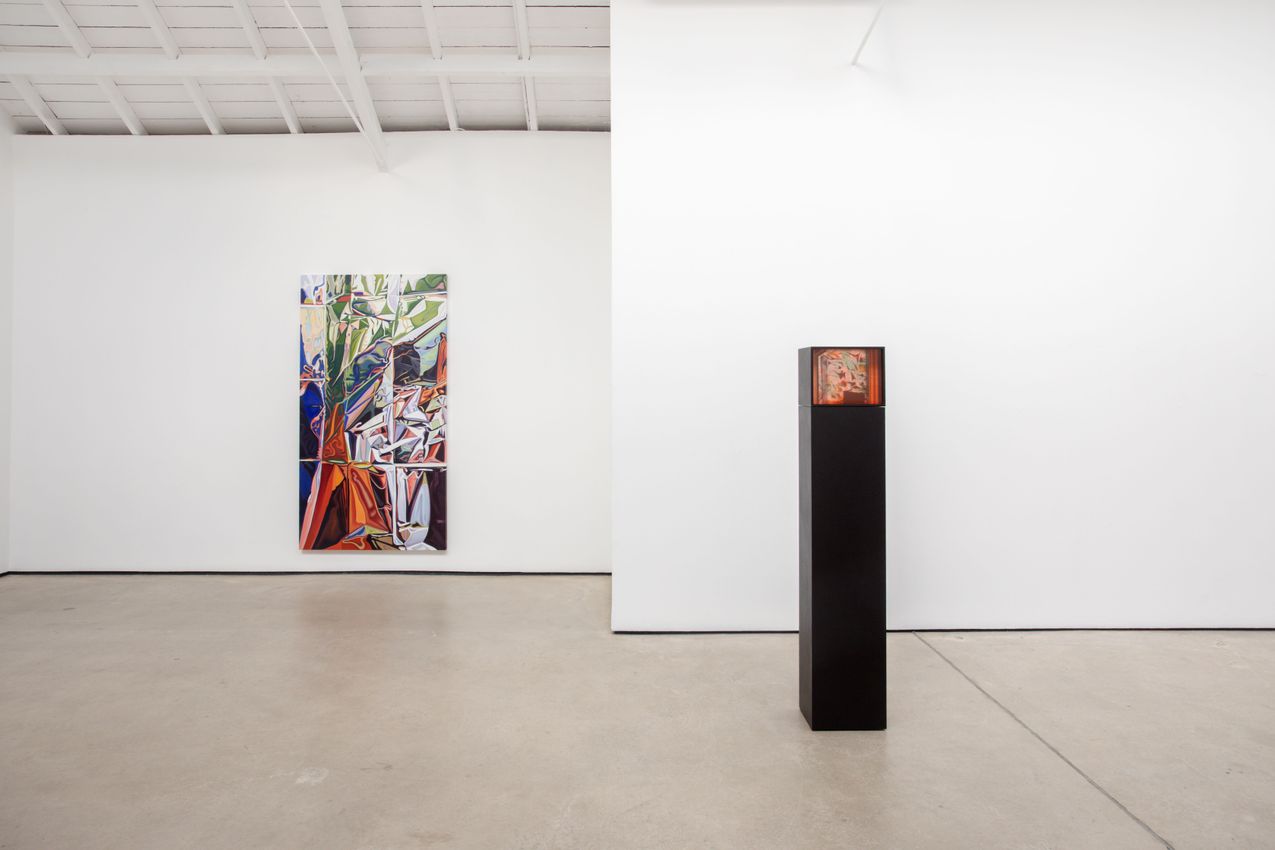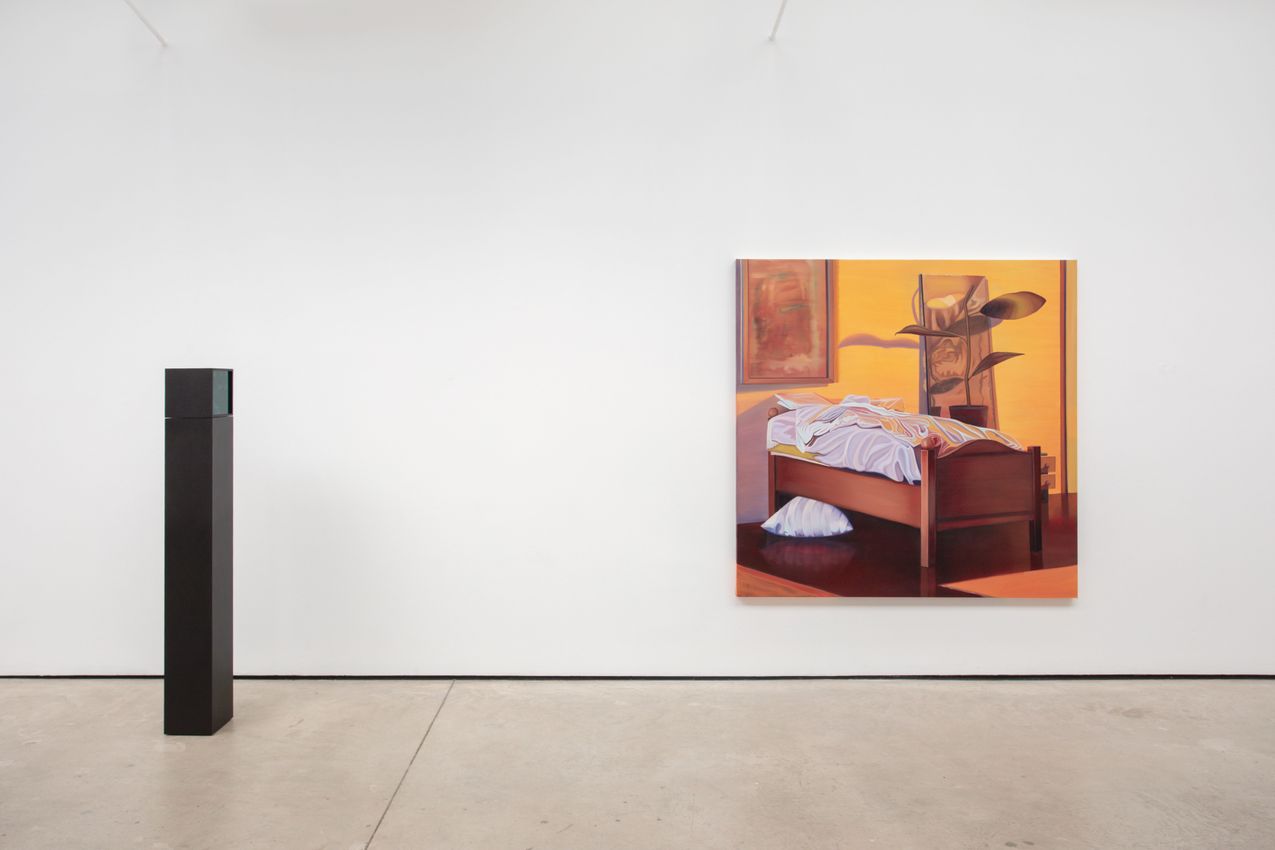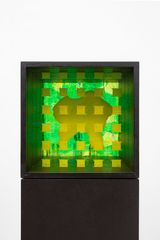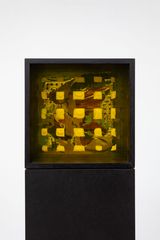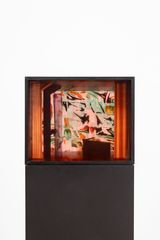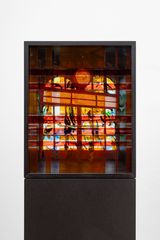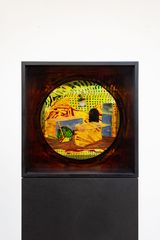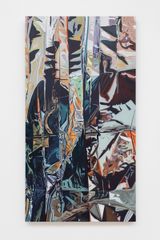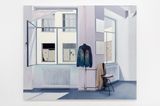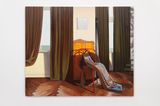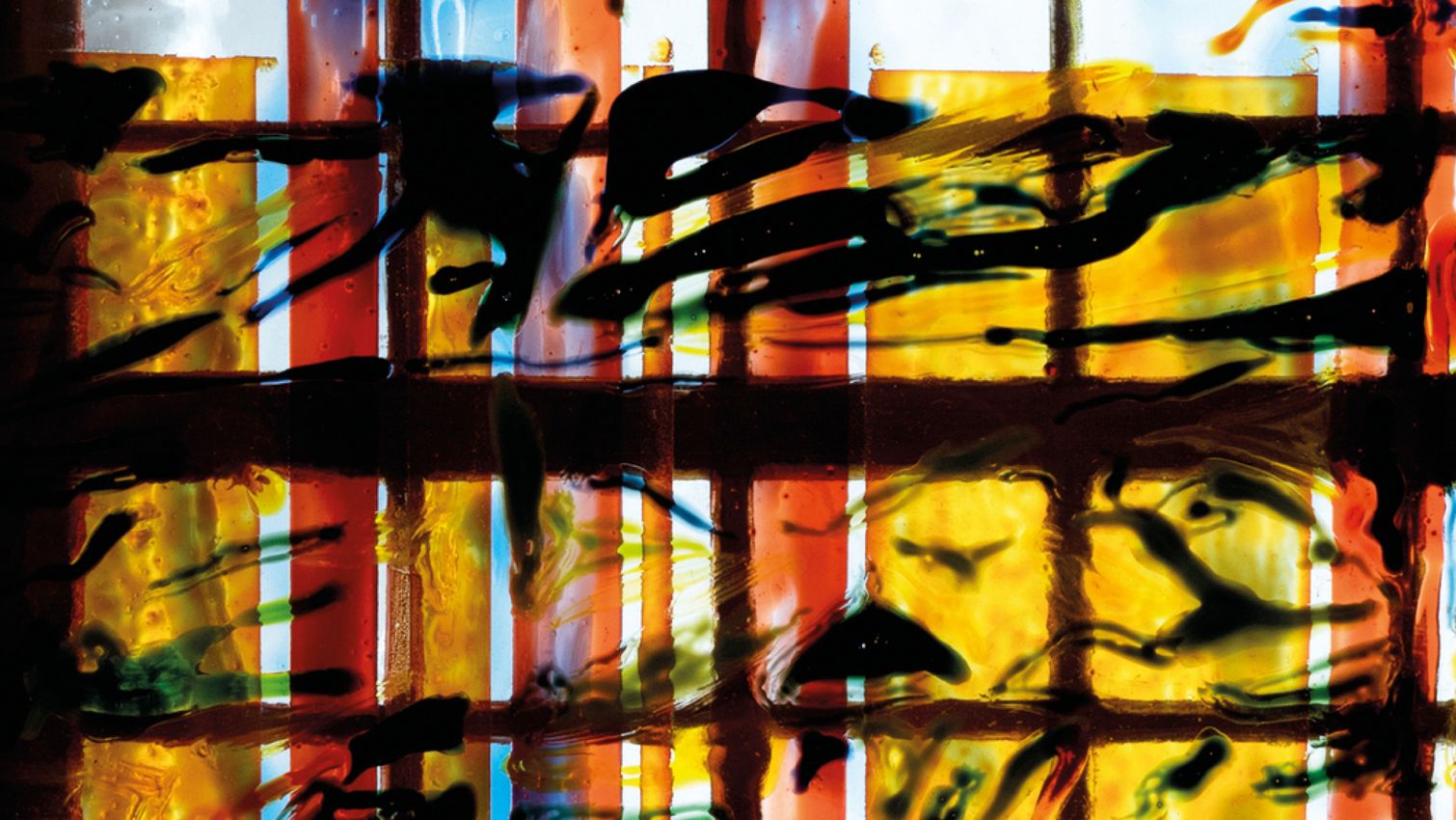
Lewis Miller’s A Doll’s Room comprises a group of oil paintings and a series of painted and framed glass panes displayed on plinths. The title points to Miller’s interest in the simulation of reality played out within doll’s houses and still life painting. Both are models of domestic and interior life – containers for ideals that blur the boundary between reality and fiction. Pictures within pictures or plays within plays, they echo the material reality of their own surroundings as well as societal conventions and aspirations more broadly. Throughout the exhibition, the act of painting draws the life-sized and the minute together on canvas, pushing the real into a fictive realm, and allowing miniaturised spaces to be articulated more concretely at scale.
Miller’s concern with the everyday and mise en scène is manifested in the quietude of his composed interiors; they are emptied of figures yet invoke their presence, allowing the viewer to focus on the objects which occupy his rooms – their strange and evocative surfaces. In the absence of actors, fabrics come to play a central role: the heavy folds of a velvet curtain, an iridescent flash of coat lining, the twisted tissue of bed linen. In Double Figure Night, 2025, and Fabric, 2025, dark cyan and chartreuse grids give way to bright triangular creases and folds. In each, the contours of the depicted surface converge with the light they appear to reflect, bringing about an oblique hybrid image.
The play of scale continues in Miller’s glass works which again evoke the close quarters of the doll’s house. Across their panes, interior and domestic fragments coalesce or otherwise collide with abstract patterns, drips and fields of colour. Light passes through them via open ended apertures, rendering the layers partially visible, partially obscured. Each one distorts and effects the next and the collective image shifts in response to the viewer’s orientation and the lighting of the surrounding environment. While these assemblages embody a more spontaneous approach to painting than the works on canvas, they share a concern with imaginary space – its potential to shift one’s perception of reality.


Lewis Miller (b. 1959), artist, won the Archibald Prize in 1998 with one of his many portraits of fellow artist Allan Mitelman, and has been a finalist seventeen times. After training at the Victorian College of the Arts in the 1970s, he won the Hugh Ramsay Portrait Prize in 1981. An exhibition of his portraits was held at Deakin University in 2003. That year, Miller was appointed by the Australian War Memorial as Australia’s official artist to the conflict in Iraq, recording mine clearing undertaken by the Royal Australian Navy in the Persian Gulf and by members of the SAS at Al Qusayr and on the Al Ifziiyah peninsula.
The Modern Institute was founded in Glasgow in 1997. The gallery works with internationally established and emerging artists including Martin Boyce, Jim Lambie, Richard Wright, Anne Collier, Cathy Wilkes, Simon Starling, Urs Fischer, Luke Fowler and Nicolas Party.

A respected voice in contemporary art discourse.
Focusing on ambitious storytelling and insightful art-world commentary. Ocula Magazine publishes in-depth interviews, critical essays and timely analysis on the artists, exhibitions and ideas driving the global art world.
Learn more about Ocula Magazine
Showcasing the best of the art world.
Ocula partners with galleries from around the world to highlight their artists, artworks and exhibitions. Gallery membership is by application and invitation, with each member vetted by an independent panel.
Learn more about Ocula Membership

Specialises in the sale of major artworks.
Led by a team with deep ties to the world’s leading auction houses, galleries and collectors. Ocula’s advisory team offers bespoke services to high-net-worth clients from around the world who are looking to acquire the best of contemporary and modern art.
Learn more about our team and services