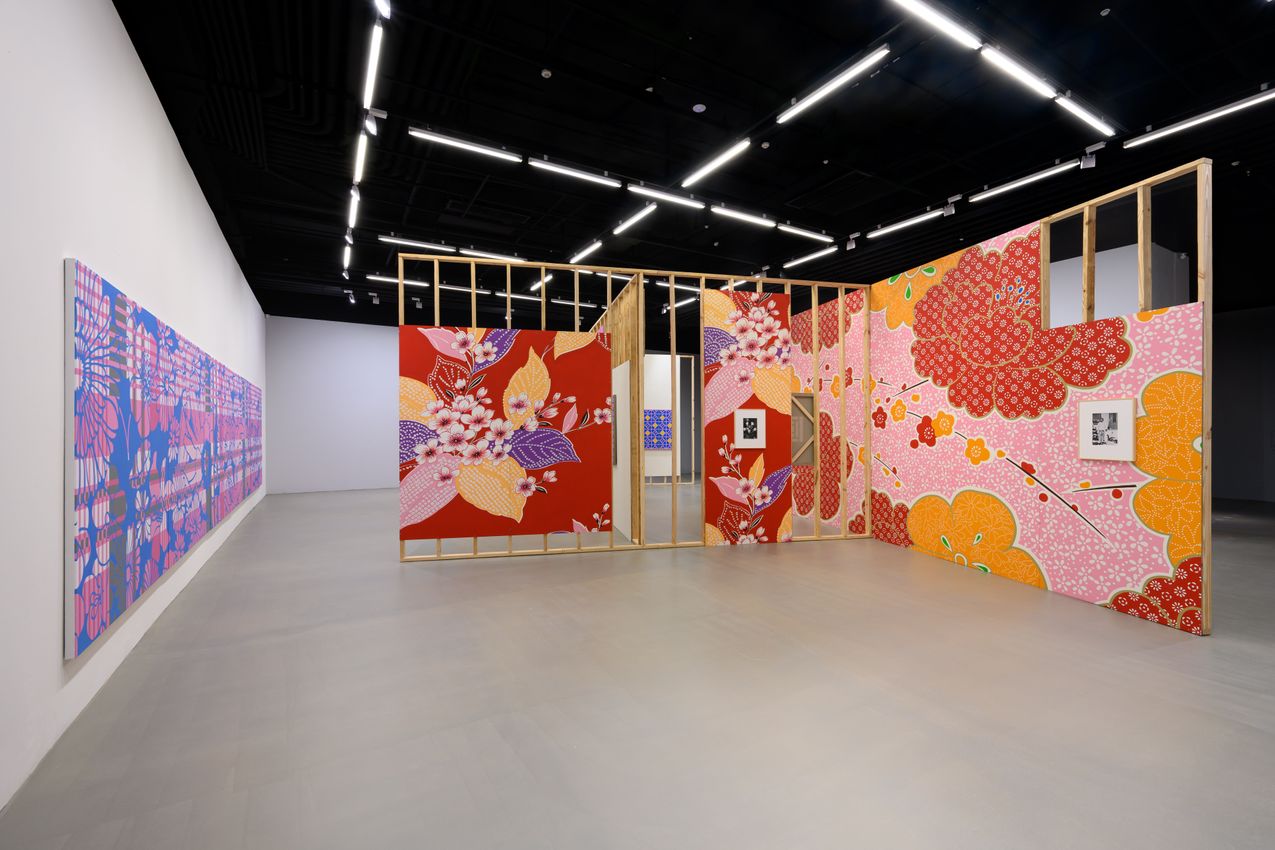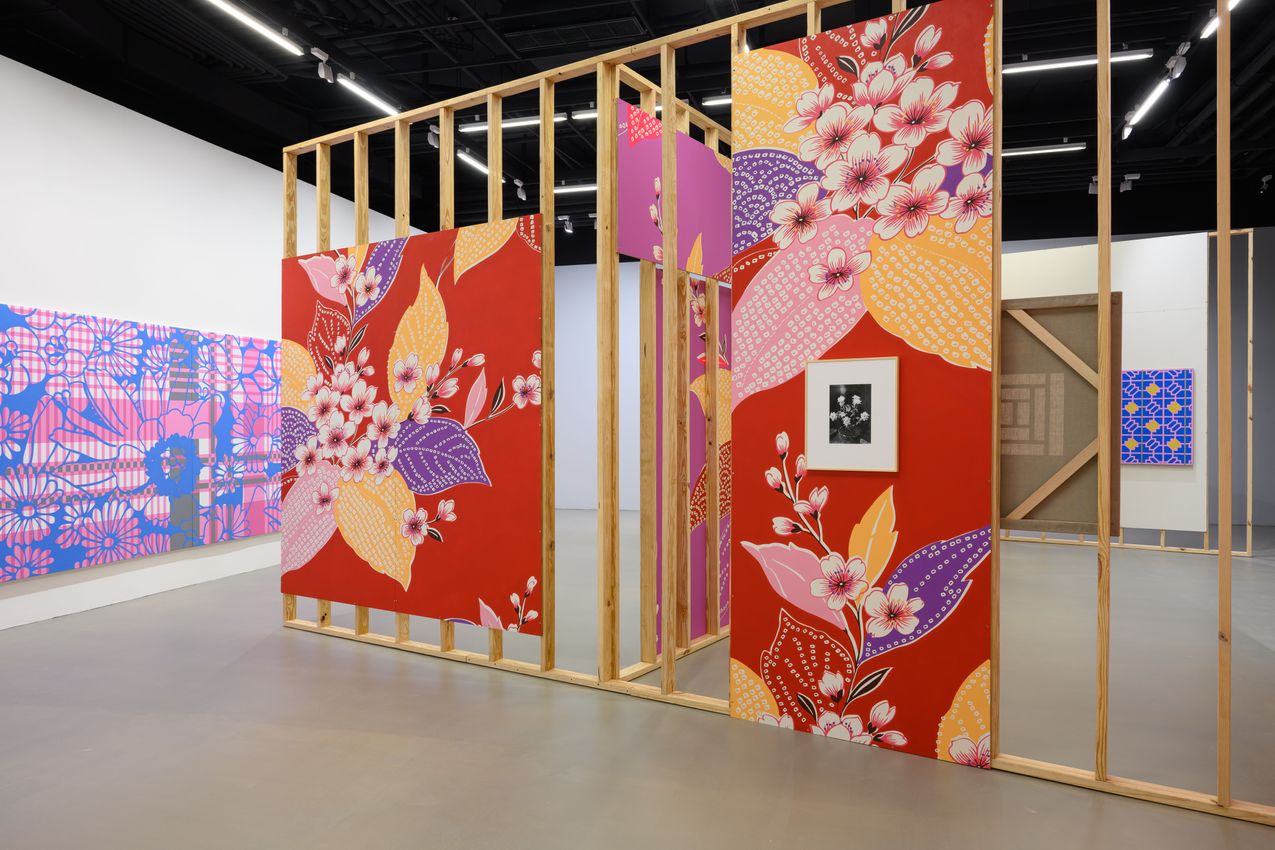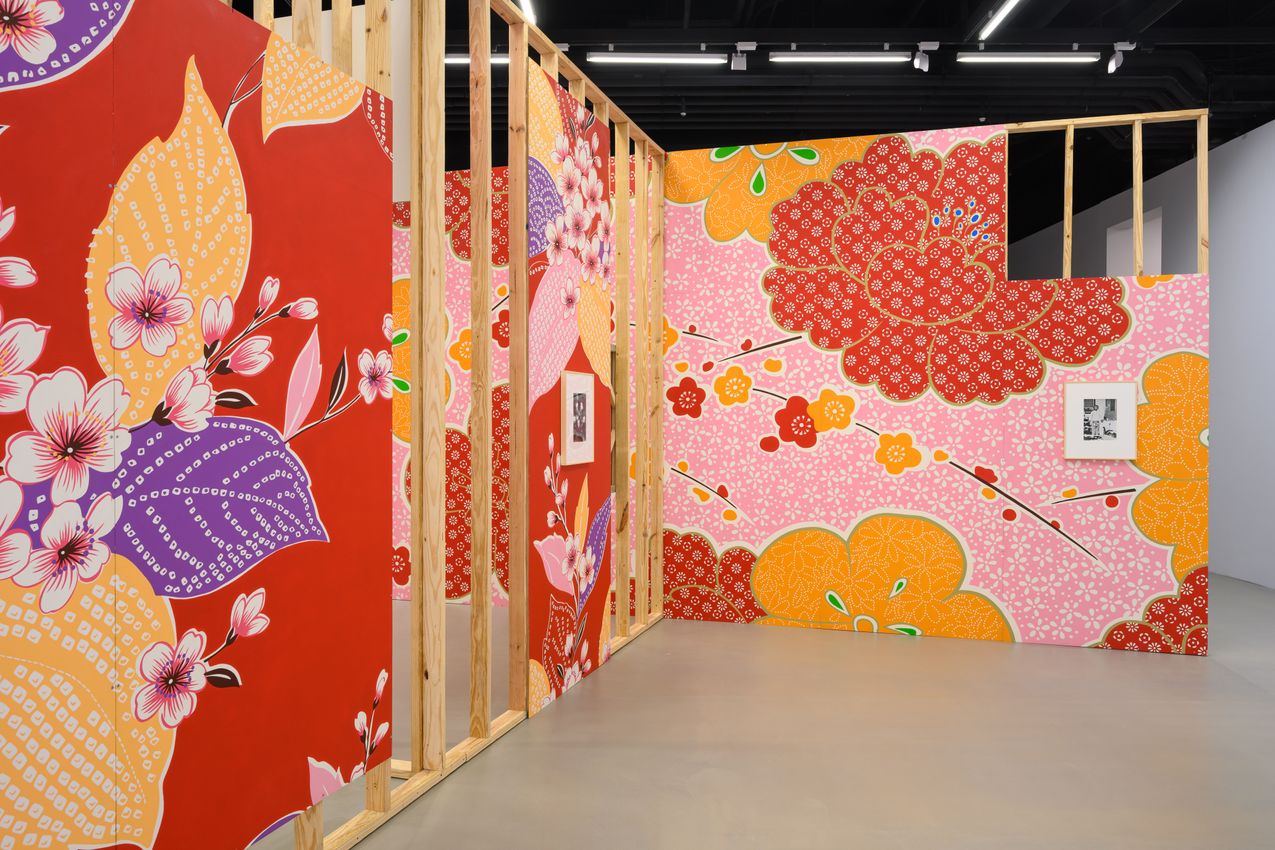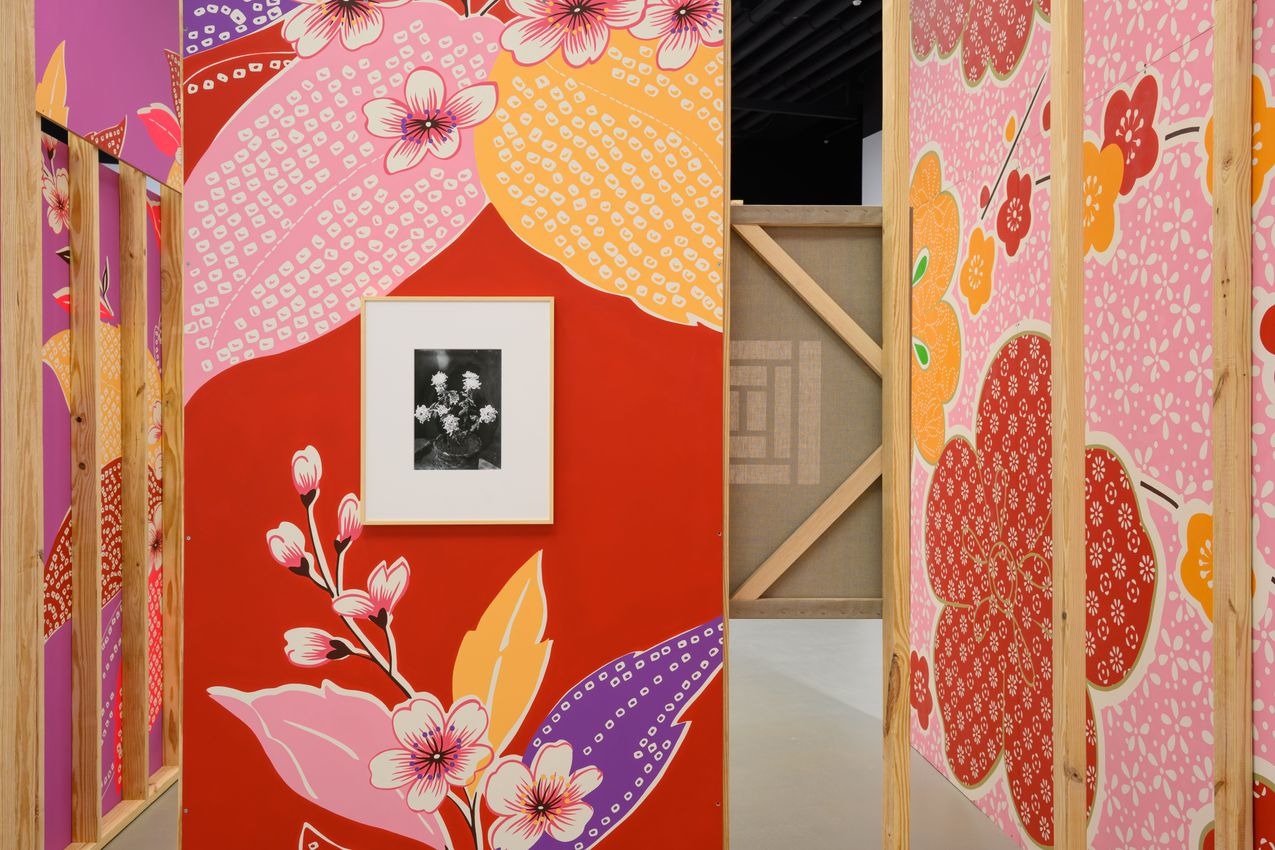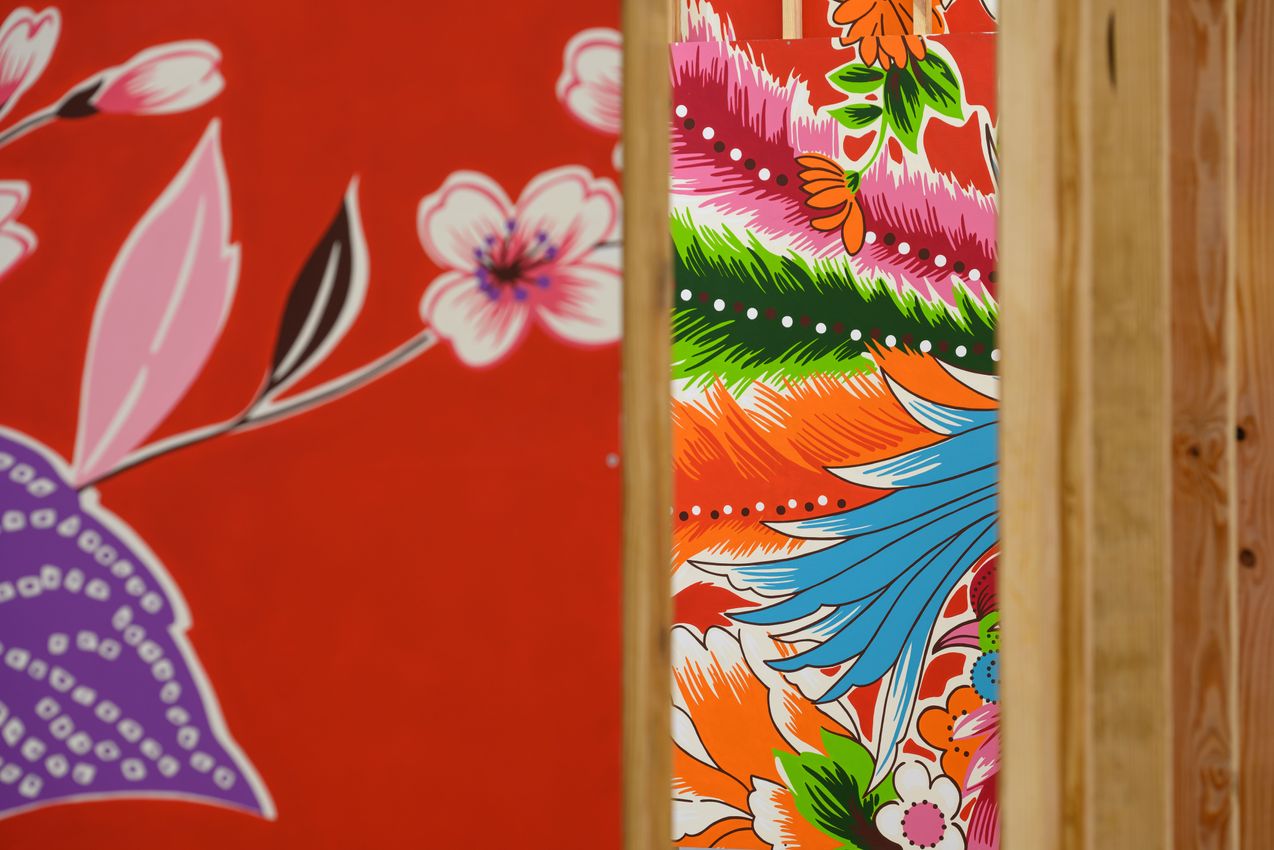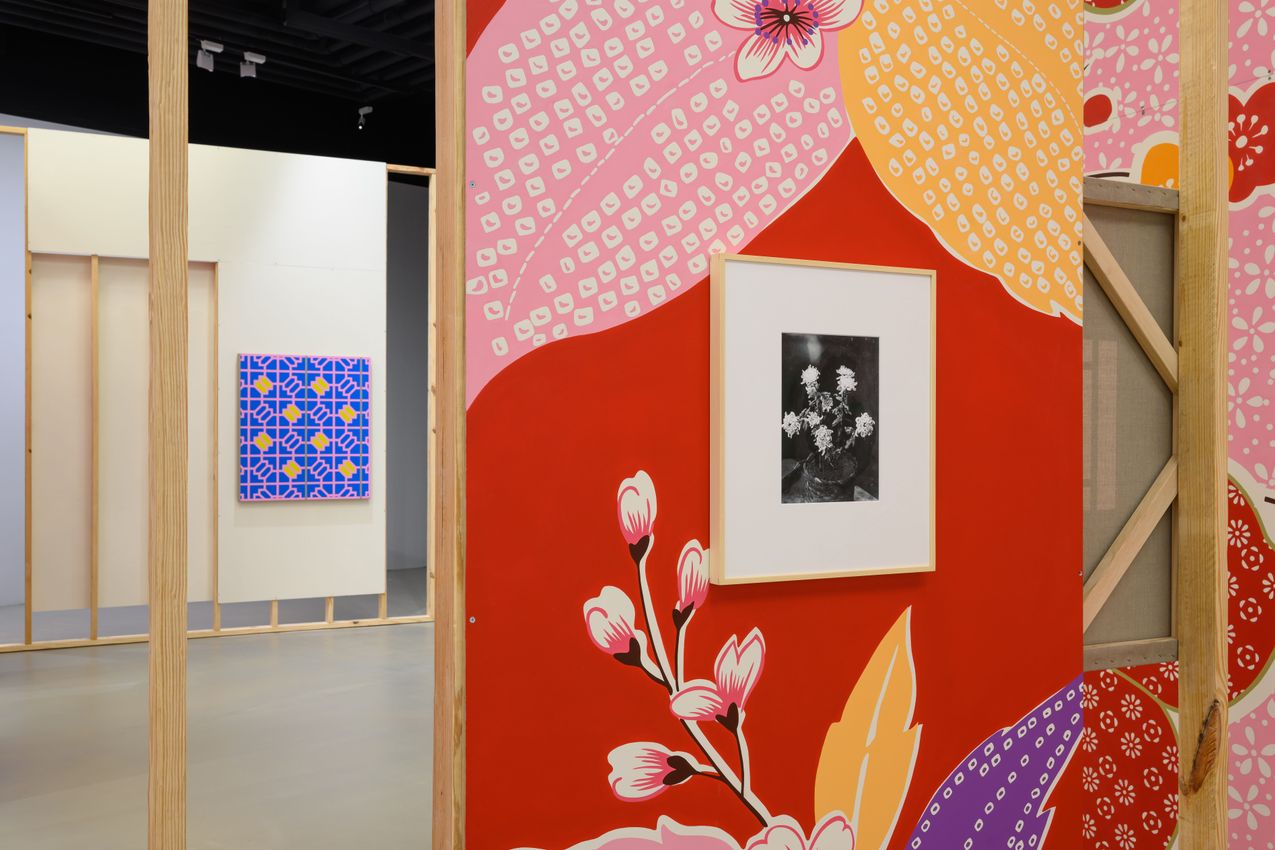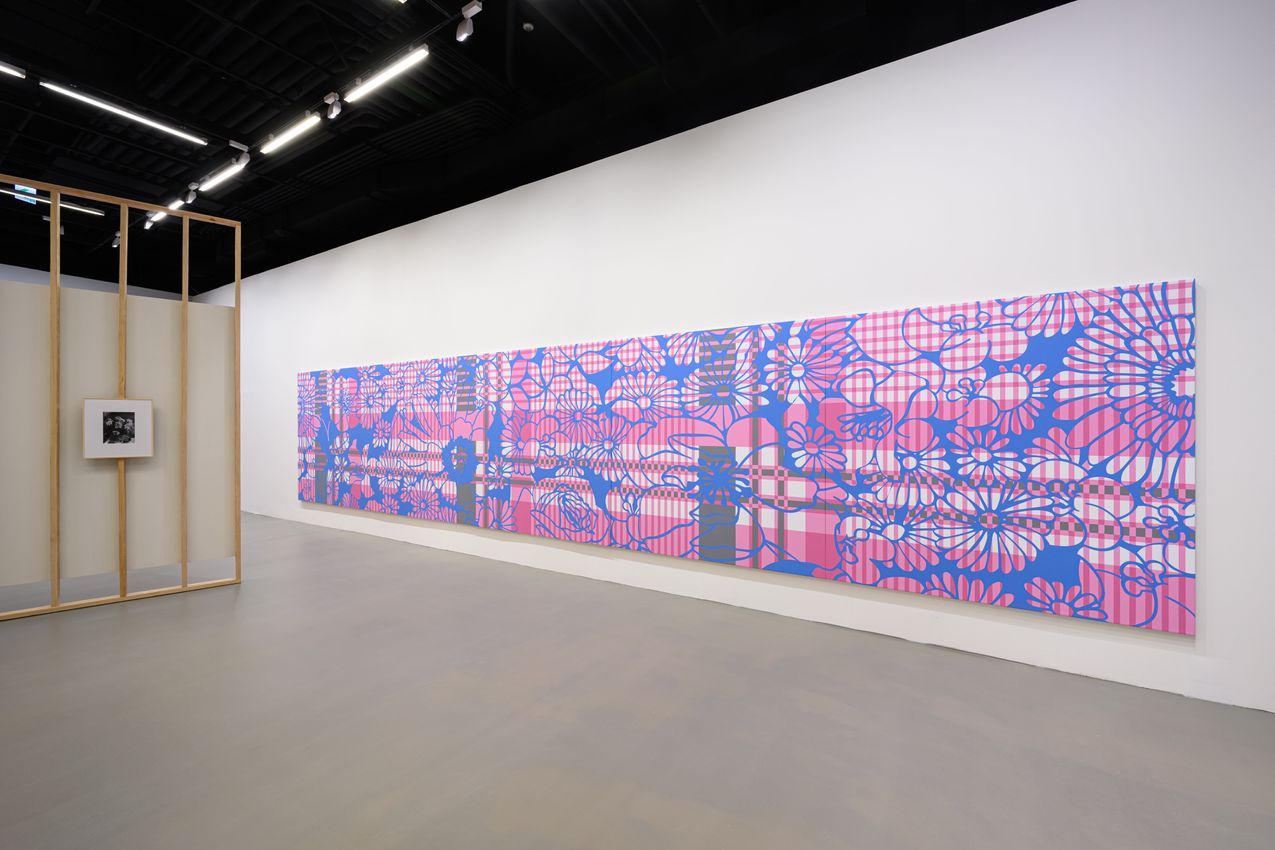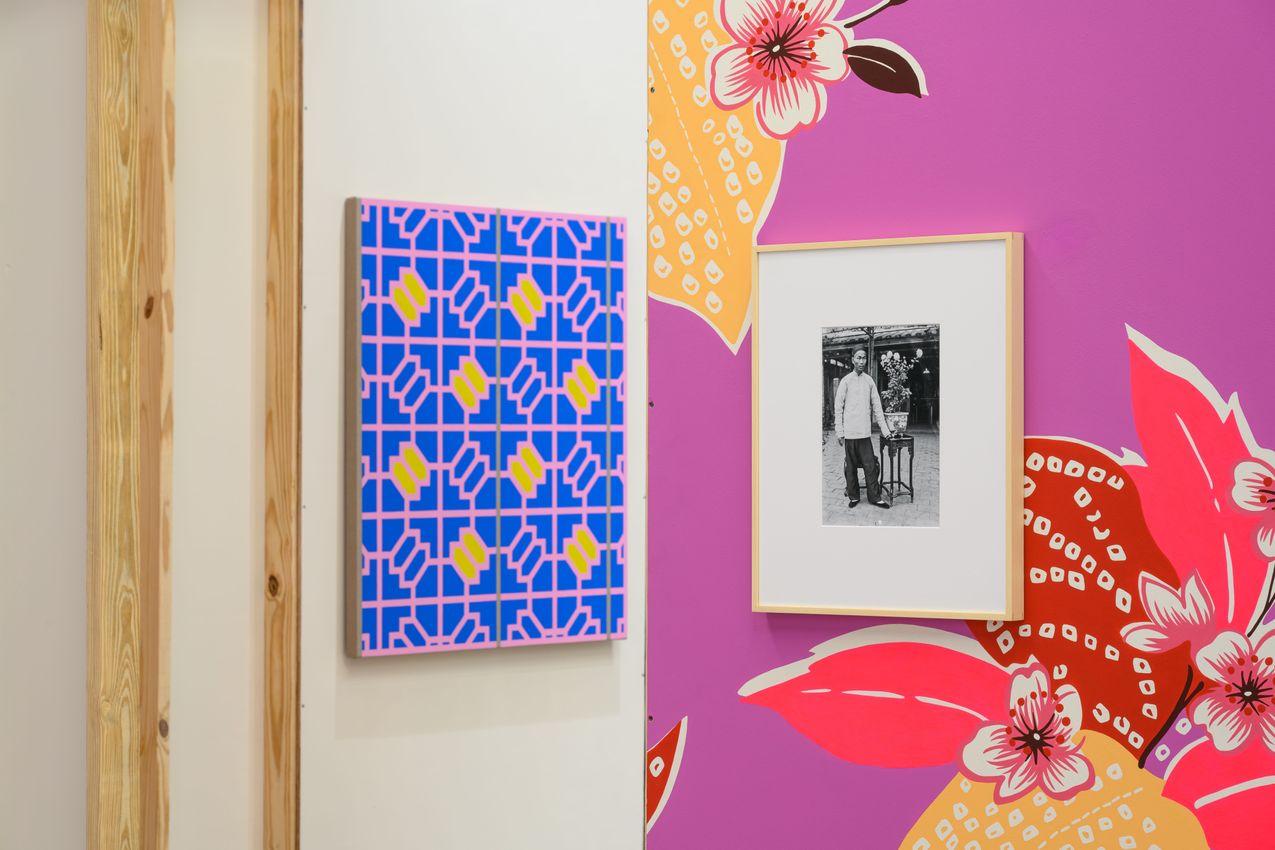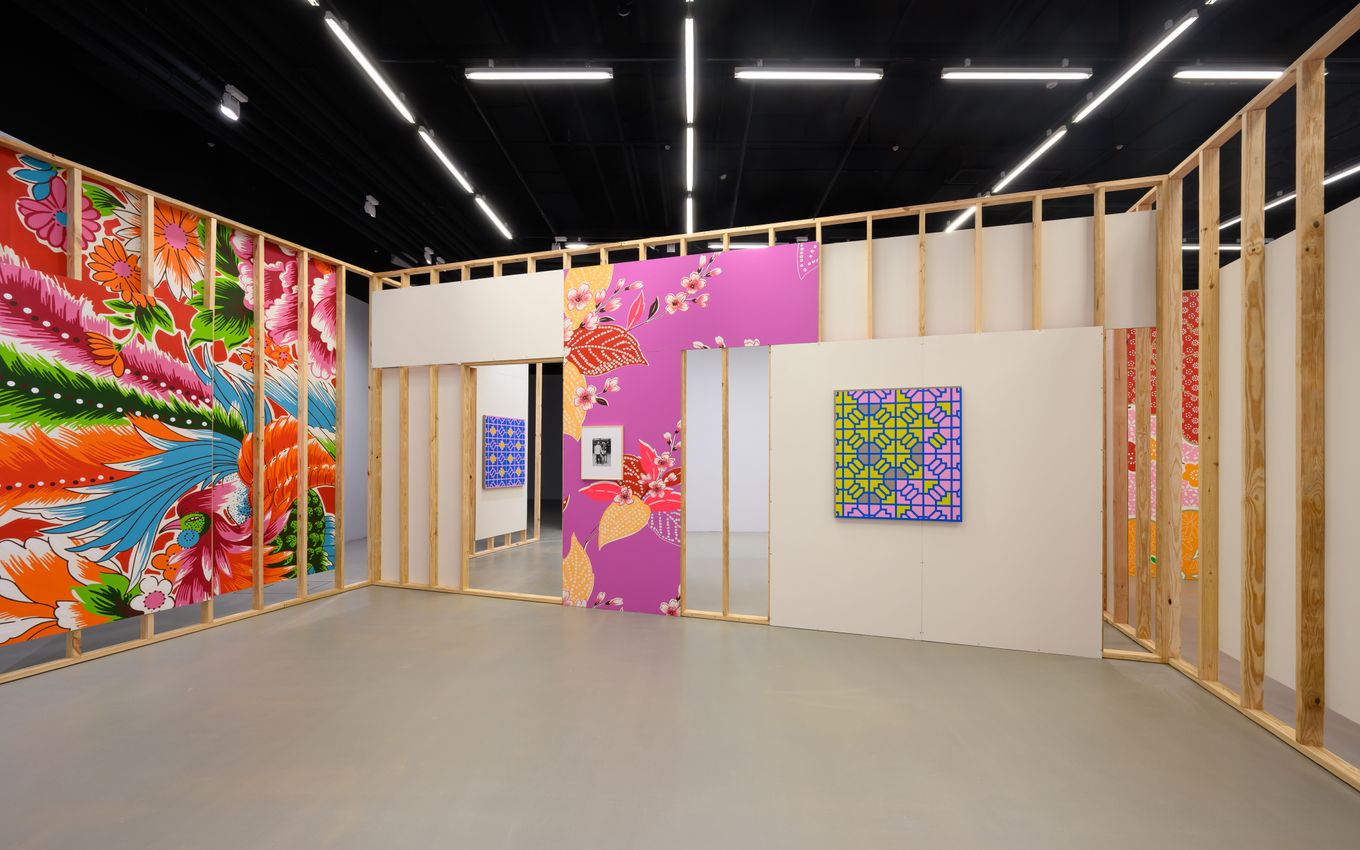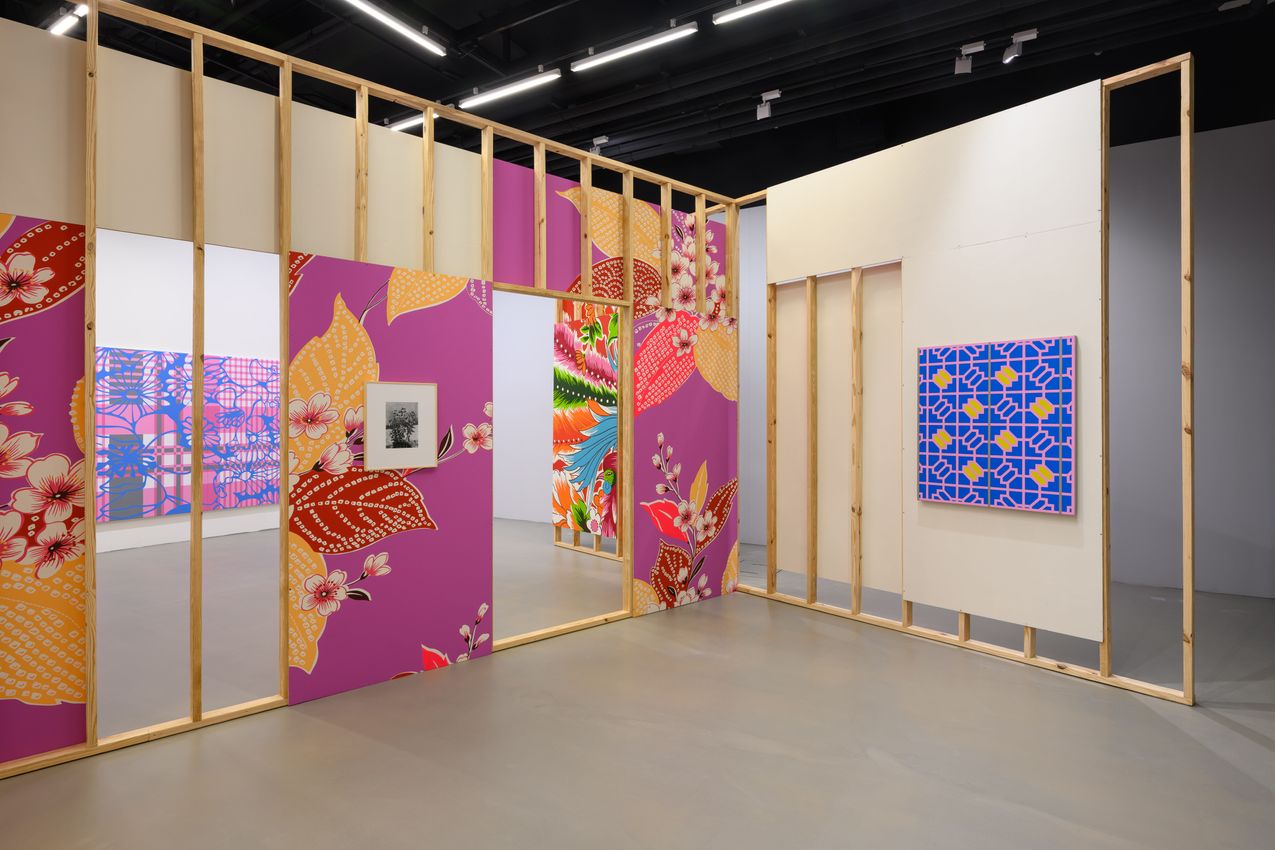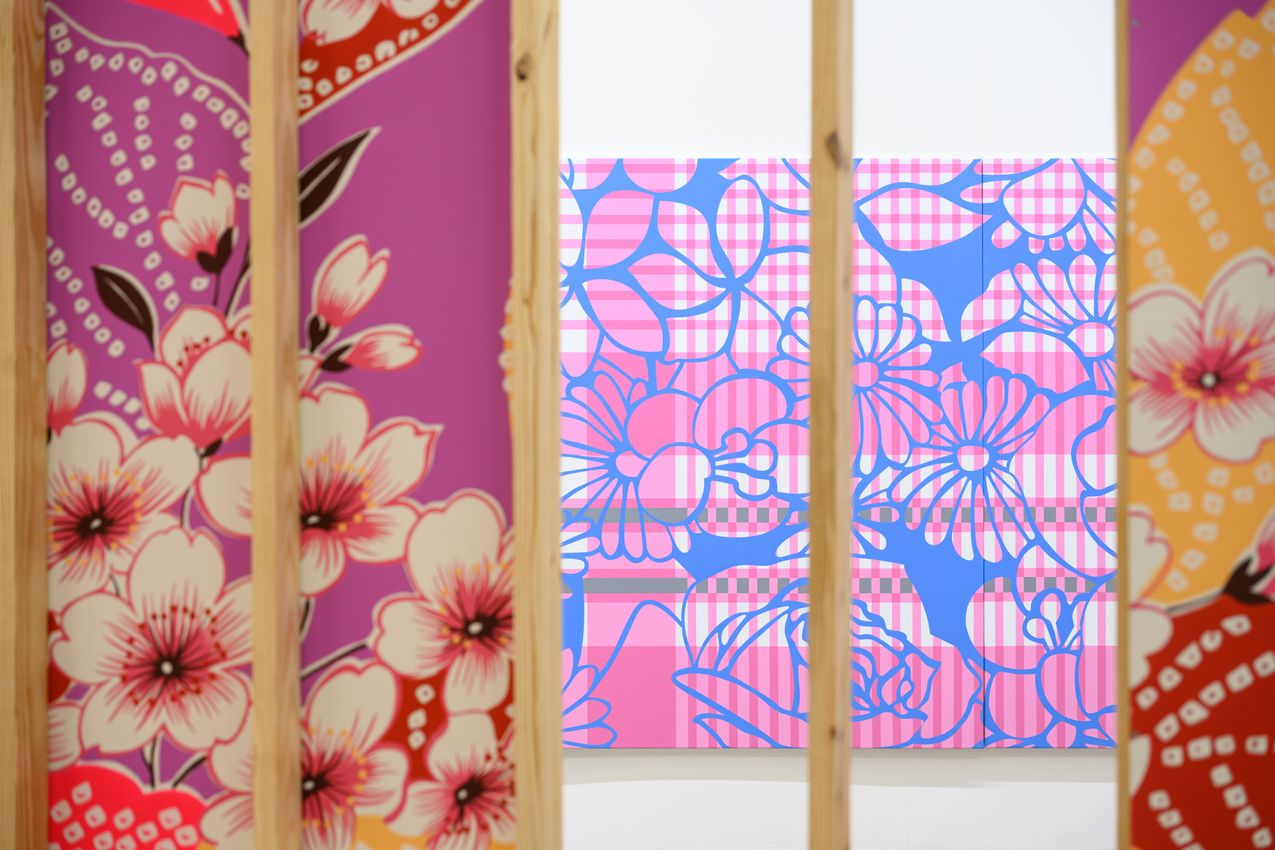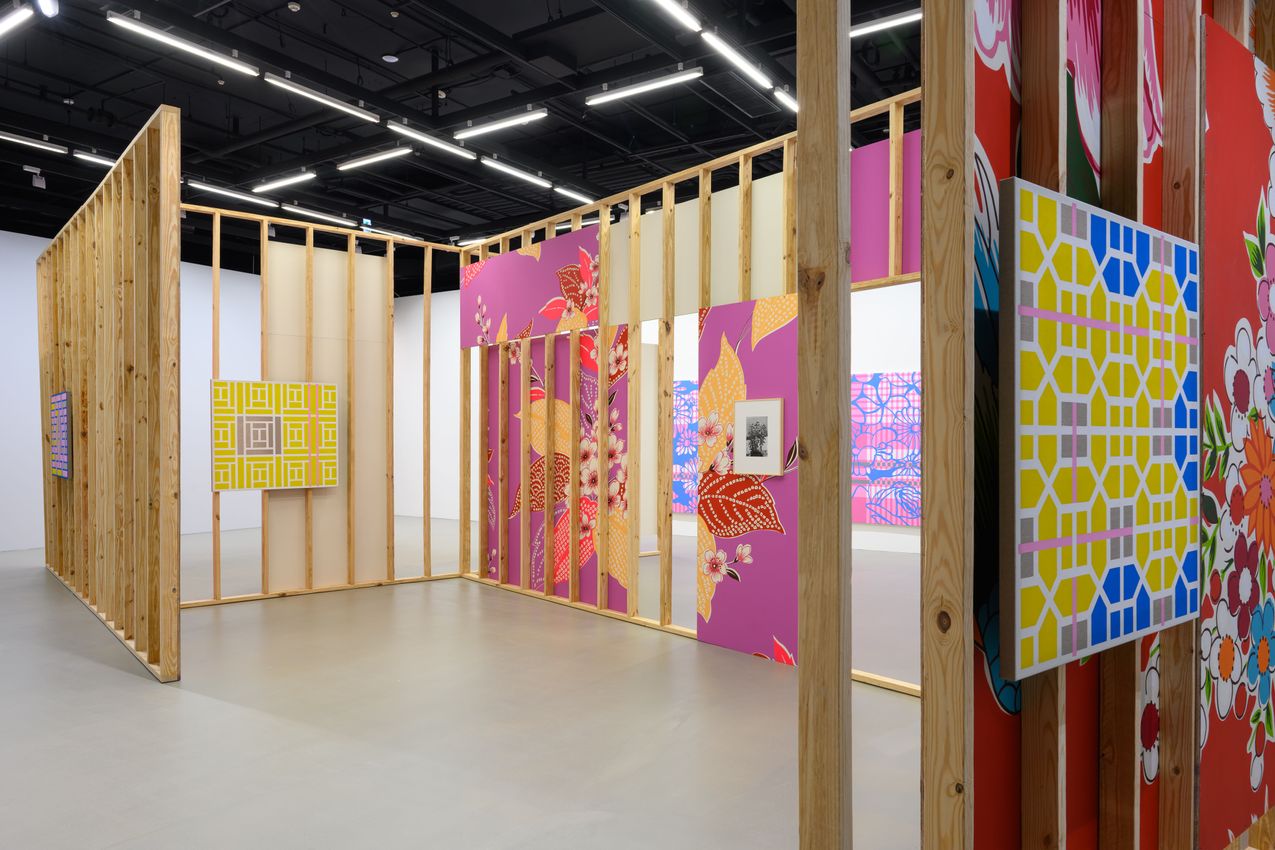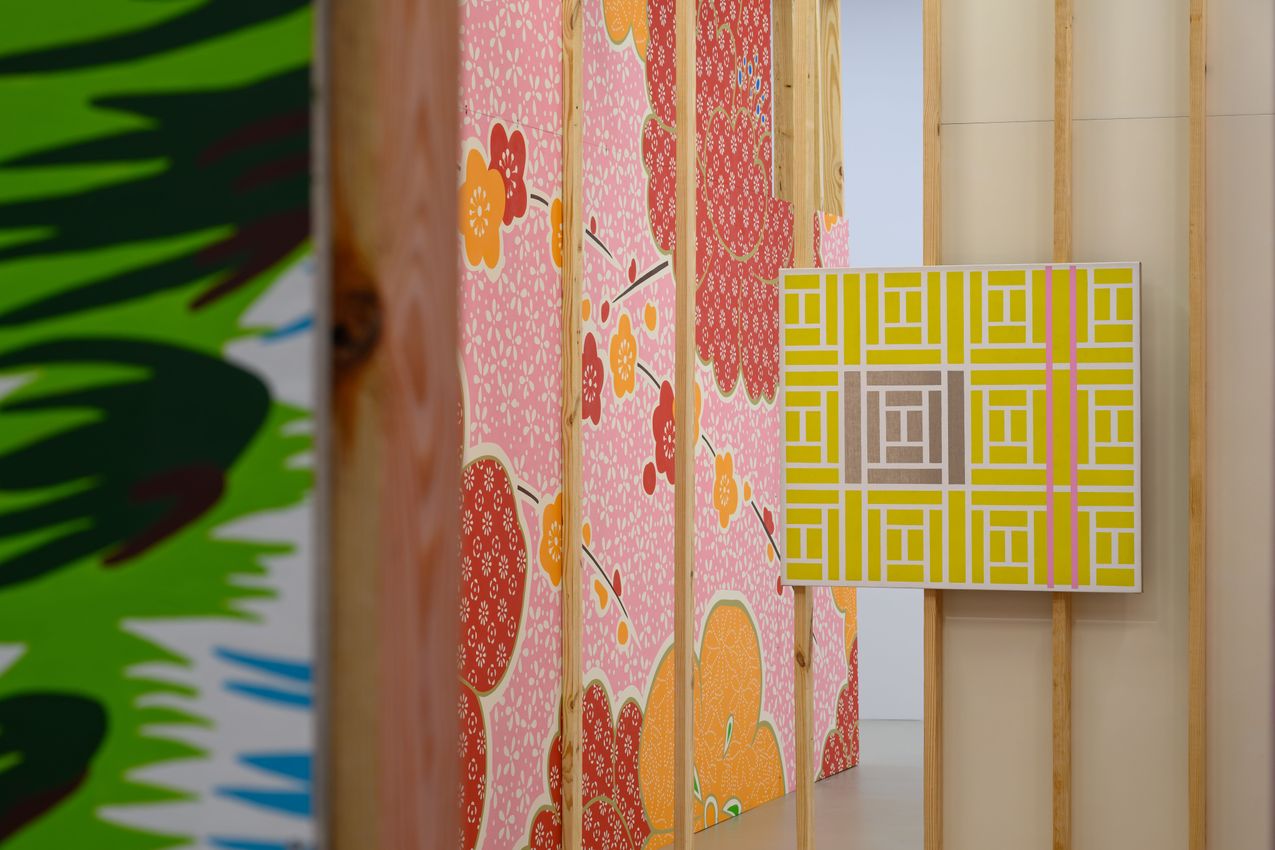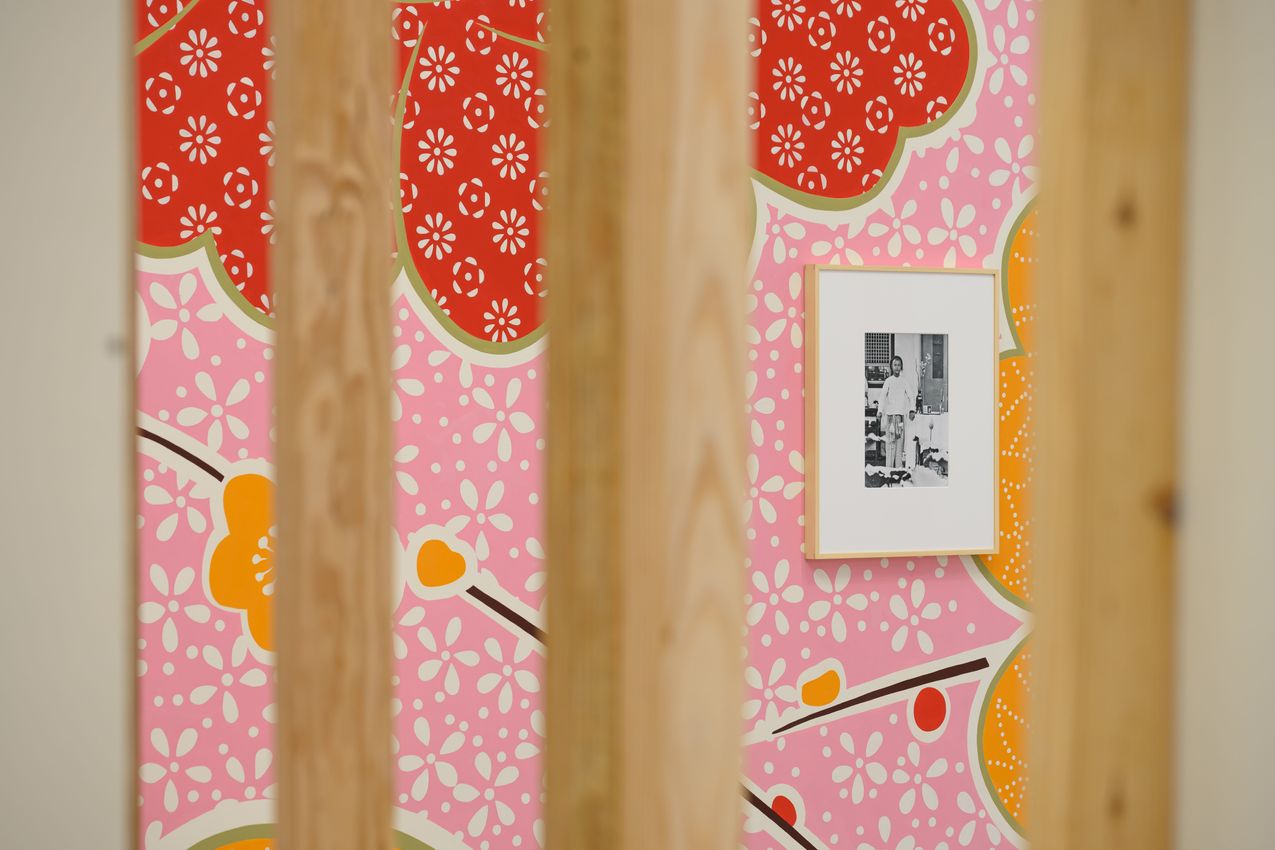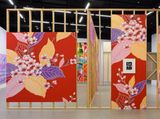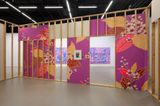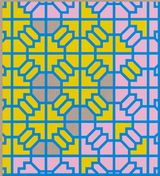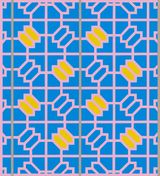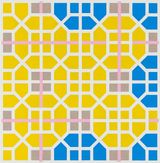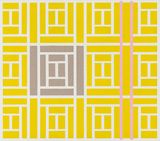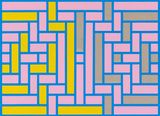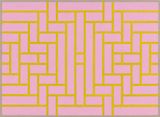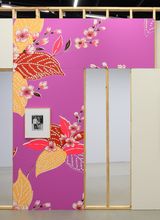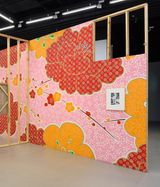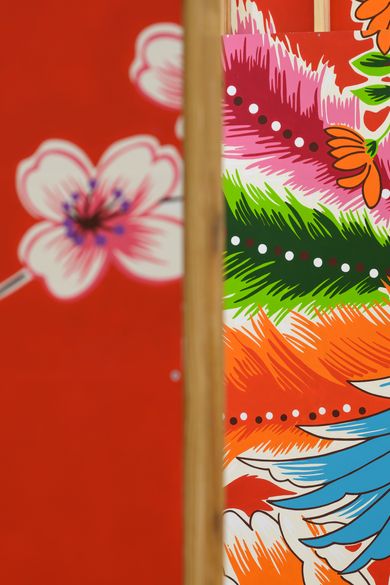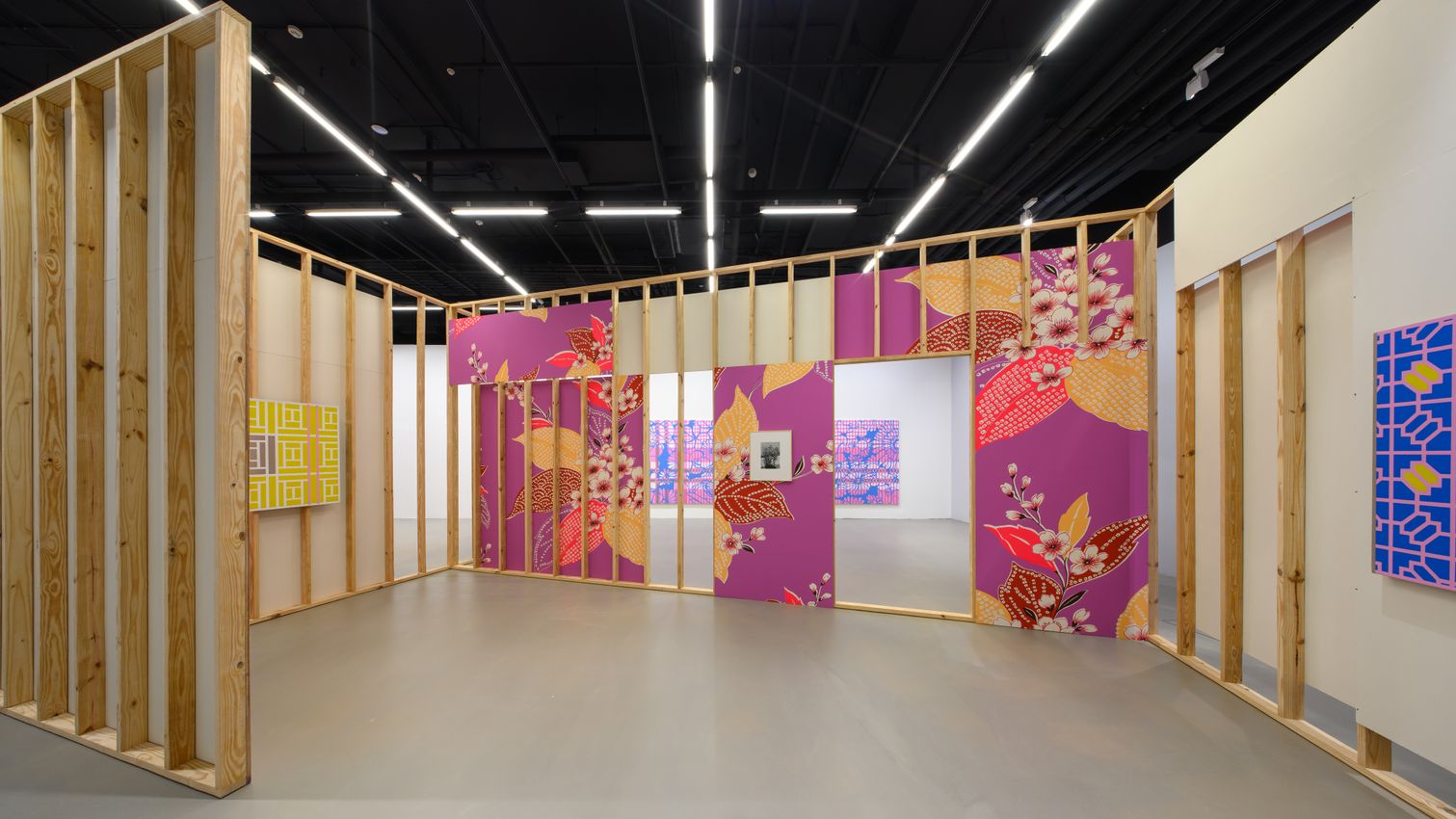
TKG+ is pleased to announce its first collaboration with Michael Lin in a solo exhibition. In Raem, Lin explores the interplay between perception, space, memory, and presence through a new body of work. Central to the exhibition is a freestanding structure—a “booth,” whose walls function as both material and conceptual elements rather than mere backdrop. By treating these walls as permeable, Lin reveals and conceals their internal construction interchangeably, thus inviting reconsideration of vision’s limits and mediation. Expanding on this inquiry, Lin incorporates painted motifs derived from lattice windows found in traditional Taiwanese architecture. These paintings act as visual interfaces, guiding the gaze and foregrounding the act of looking.
The exhibition title, Raem, is a Middle Dutch word from the 13th century meaning both “window” and “a frame with canvas stretched across it,” suggesting a link between architecture and painting. Since the invention of perspective in the Renaissance, paintings have often been regarded as windows to another world. Meanwhile, the Chinese title, “窗花” (chuāng huā), refers to ornamental lattice window but literally translates to “window flower.” It introduces a layer of playful ambiguity, as these lattice windows are neither functional windows nor literal flowers. While they serve to divide private and public spaces—often obstructing the view for both sides— they may carry cultural associations with blessings and prosperity or even take on a pictorial quality. Lin, known for adapting patterns drawn from everyday life, transposes these vernacular motifs onto canvas. In doing so, he repositions traditional visual symbols within a contemporary artistic vocabulary, opening a dialogue between interaction and space.
Included in this exhibition are photographs by Lin Tsao, whose work offers a parallel consideration of vision and spatial intimacy. Although not a member of Lin’s family, Lin Tsao lived for many years in the family’s residence in Wufeng, Taichung, during the Japanese colonial period. His still lifes of flowers, selected for this exhibition, emerge from long-term observation, reflecting a tender familiarity with the site and its inhabitants. His lens becomes a portal through which the Lin family’s life in those times are inconspicuously revealed. Suggesting looking in from the outside—mirroring us as viewers—the photographs offer a contemplative counterpoint to Michael Lin’s construction.
Throughout Raem, Michael Lin dissolves the line between mural painting (caihui), which is integrated into architecture, and portable painting (huihua), which exists independently. His works consistently oscillate between these modes: site-specific and inseparable from their architectural contexts, they render space integral to both the work and its reception. Within this framework, windows and walls are conceptual prompts. Floral imagery recurs, meanings intersect, and boundaries are continually renegotiated. As viewers move through thresholds— between interior and exterior, seeing and being seen—perception becomes fluid, enticing an encounter with space, memory, and presence, an experience ever unfolding.


Michael Lin orchestrates monumental painting installations that re-conceptualize and reconfigure public spaces. Transforming the institutional architecture of the public museum, his unconventional paintings invite visitors to reconsider their usual perception of those spaces, and to become an integral part of the work, giving meaning to its potential as an area for interaction, encounter, and re-creation.
A forerunner of Taiwanese modern art, the Tina Keng Gallery hinges upon the philosophy that art is a reflection of the times. The Tina Keng Gallery has its roots in the Lin & Keng Gallery (1992–2009) based in Taipei, Taiwan and Beijing, China. Delving into Western painting and Chinese art history, Lin & Keng tirelessly promoted the work of Asian classical masters, cultivating a critical thought on Greater Chinese modern art. The Tina Keng Gallery has continued this tradition by centering its focus on Asia, further excavating art history and rediscovering modern aesthetics. Upon this foundation, the Tina Keng Gallery is steadfast in nurturing Taiwanese modern and contemporary art, with hopes to capture the changing states of art through writings of history, in so doing highlighting the cultural underpinnings of its worldview. Art arises from culture, and culture mirrors the times. The Tina Keng Gallery endeavors not only to support Greater Chinese modern and contemporary art, but to shape a perspective that is elementally Asian.

A respected voice in contemporary art discourse.
Focusing on ambitious storytelling and insightful art-world commentary. Ocula Magazine publishes in-depth interviews, critical essays and timely analysis on the artists, exhibitions and ideas driving the global art world.
Learn more about Ocula Magazine
Showcasing the best of the art world.
Ocula partners with galleries from around the world to highlight their artists, artworks and exhibitions. Gallery membership is by application and invitation, with each member vetted by an independent panel.
Learn more about Ocula Membership

Specialises in the sale of major artworks.
Led by a team with deep ties to the world’s leading auction houses, galleries and collectors. Ocula’s advisory team offers bespoke services to high-net-worth clients from around the world who are looking to acquire the best of contemporary and modern art.
Learn more about our team and services