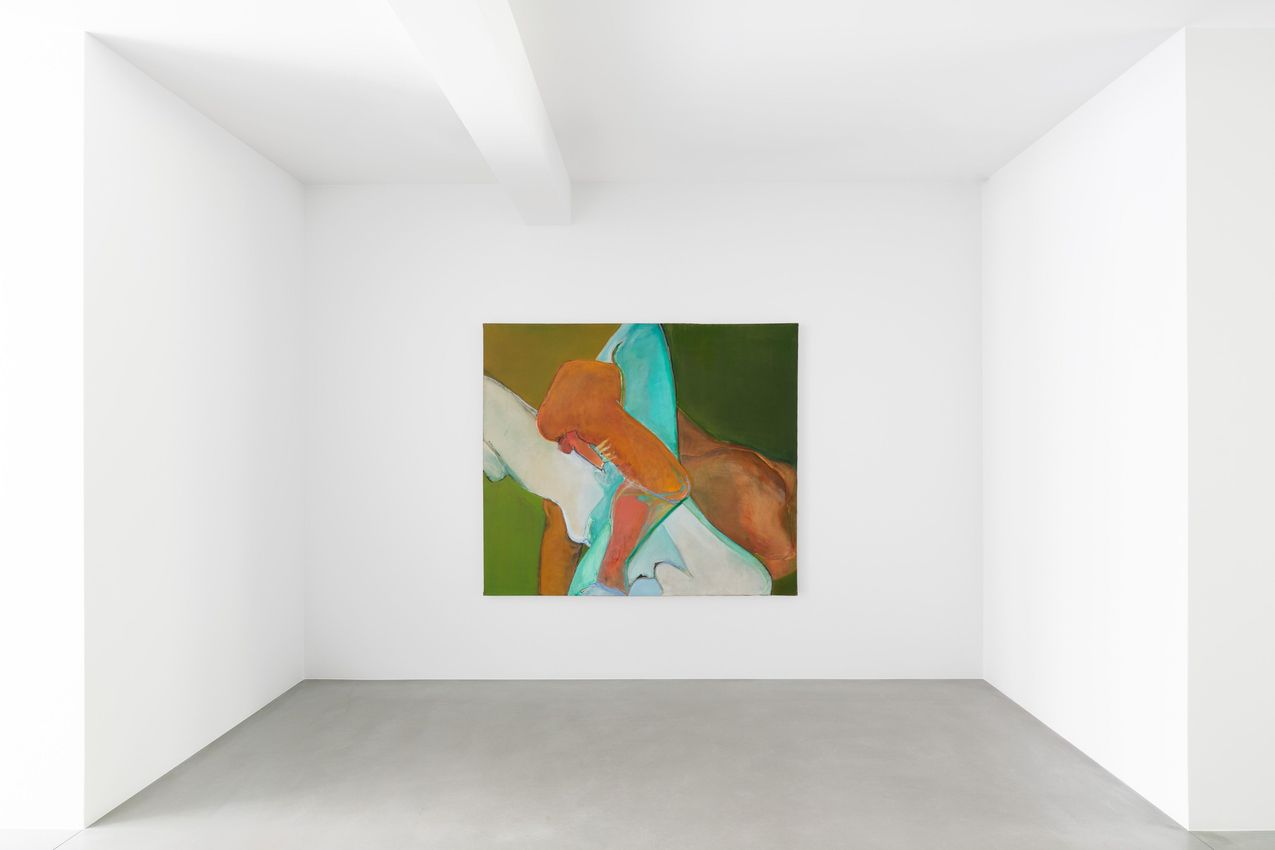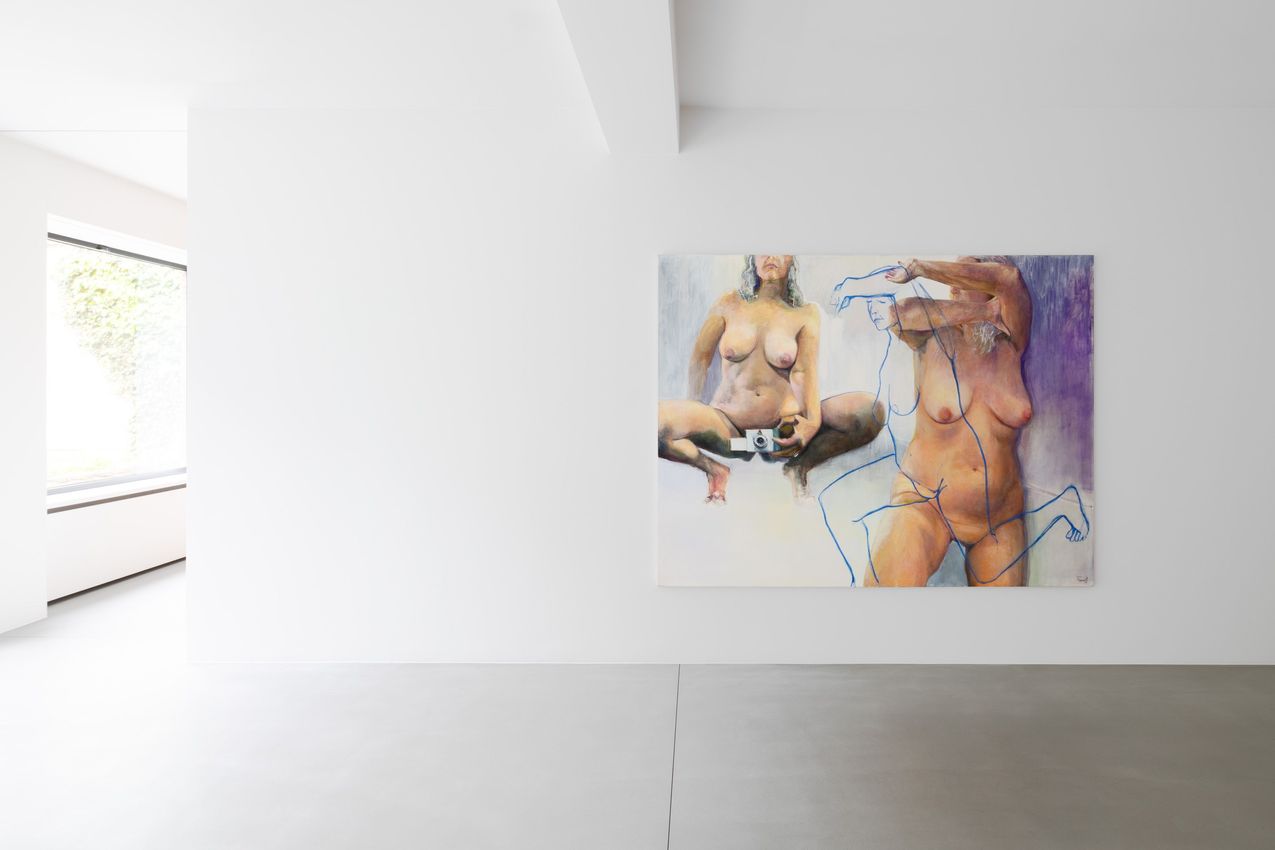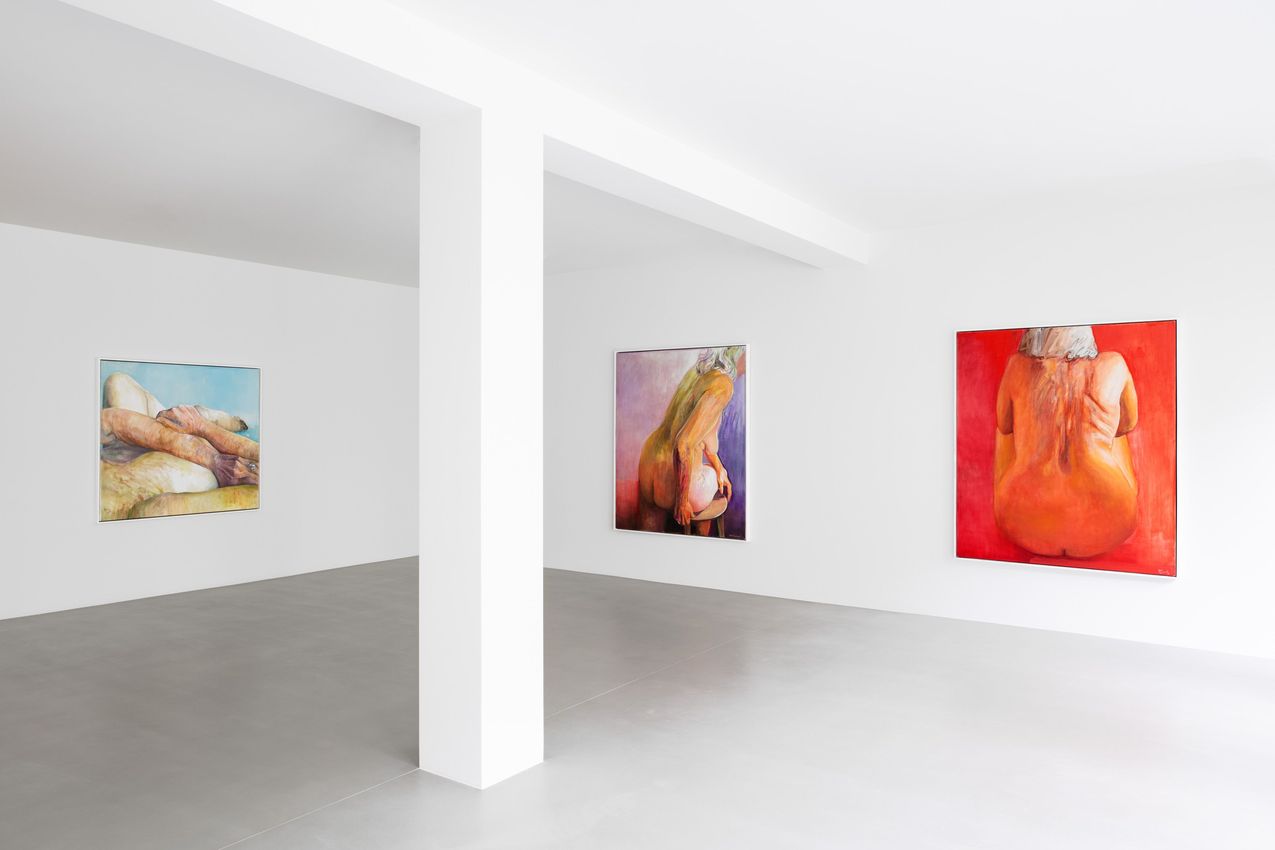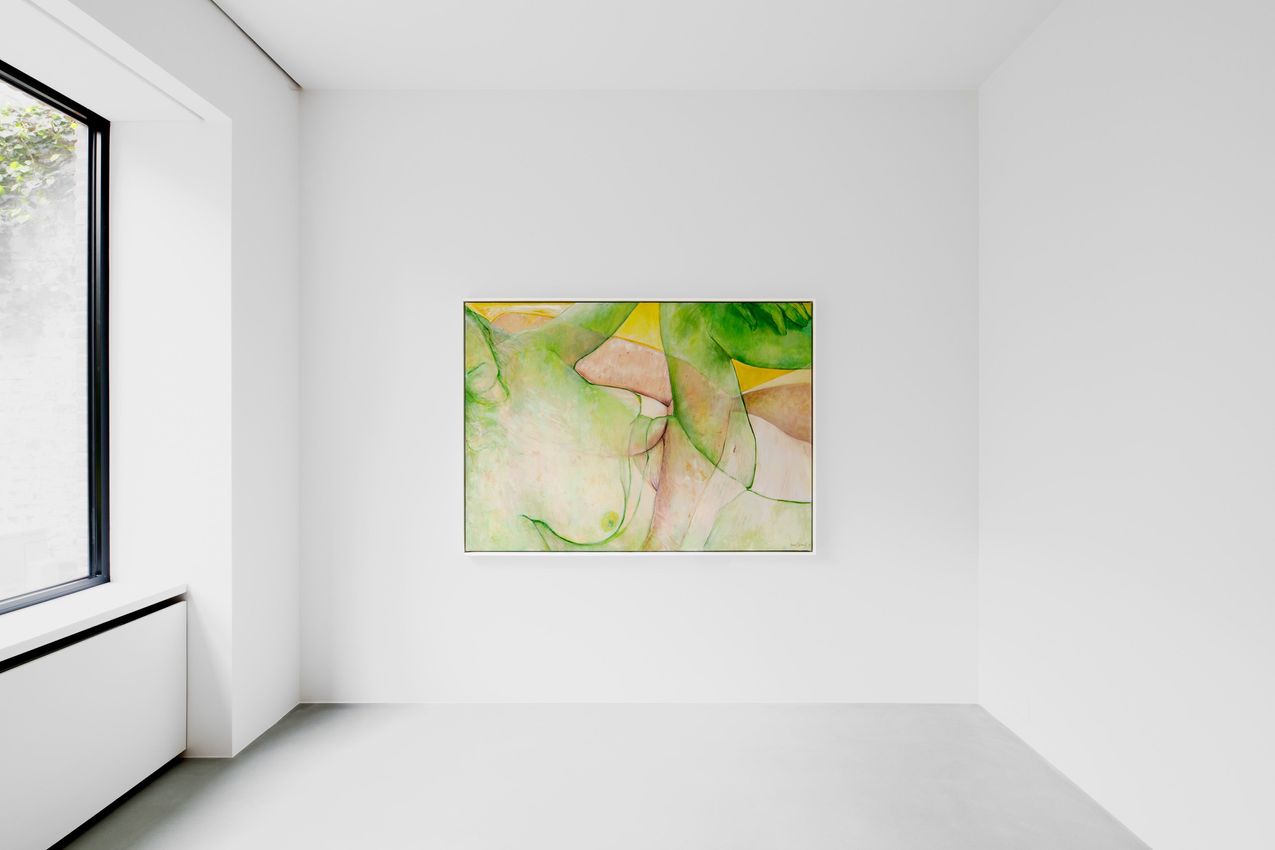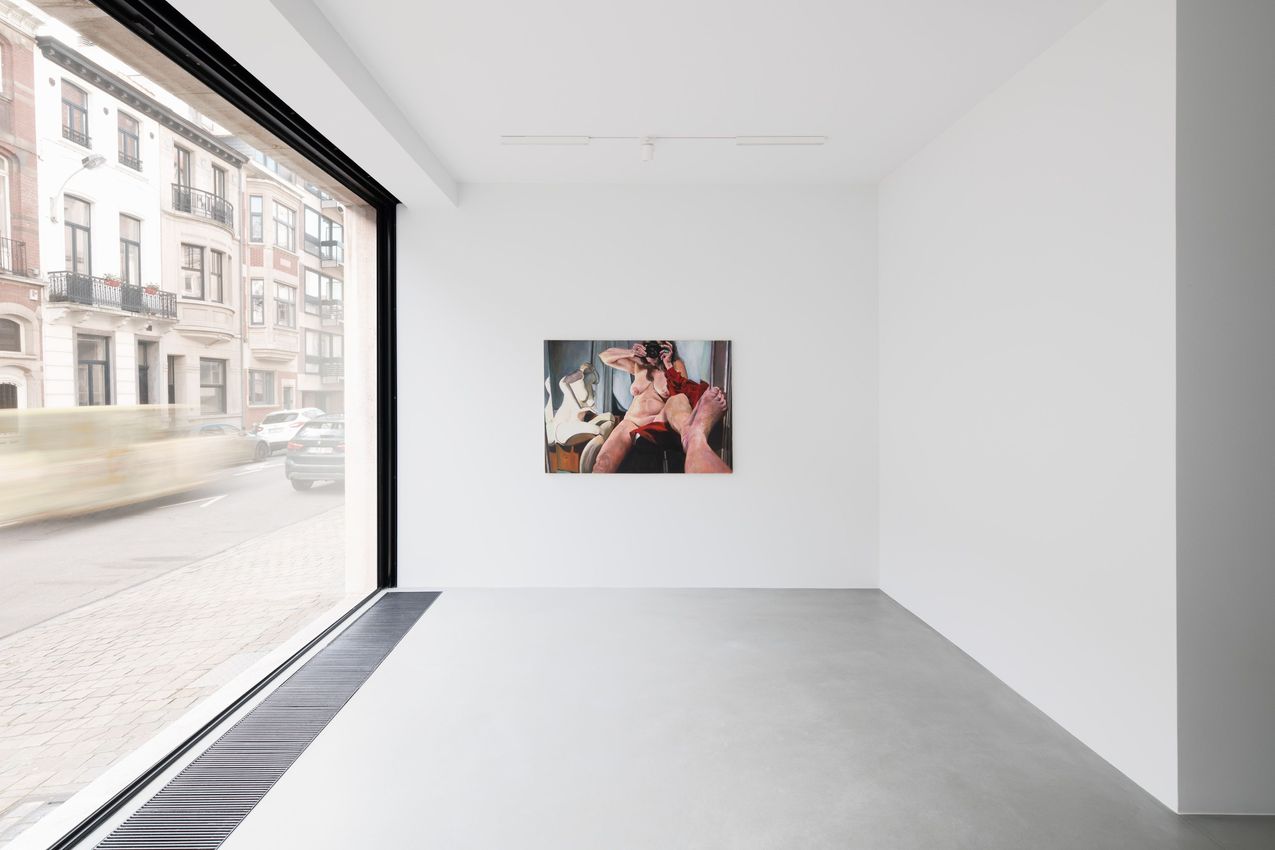
Xavier Hufkens is pleased to present An Other View, American painter Joan Semmel (b.1932)‘s inaugural exhibition with the gallery. Her first solo show in Europe since the 1960s, the exhibition spans a period of five decades, showcasing the major developments in the artist’s oeuvre. The twelve large-format oil paintings on display, created between 1971 and 2021, collectively attest to Semmel’s decades-long commitment to the representation of women, largely through the medium of her own body. The passage of time, permits the viewers to take an unvarnished look at natural ageing, as well as consider the socio-political engagement of ‘the personal is the political’ and the evolution of feminist issues across multiple decades, from the sexual liberation of the 70s to contemporary society’s veneration of youth.
By adopting a resolutely non-objectifying stance—her own body as the subject—Semmel has created an oeuvre that not only challenges traditional representations of women but also explores themes such as identity, sexuality, and censorship. She does not consider her paintings to be self-portraits, but rather as touchstones: images that bring critical issues into focus, so that they can be confronted. While Semmel tends to work in series, the element that binds the oeuvre together—in addition to the focus on selfhood and self-representation—is the use of colour. Semmel’s approach to colouration is abstract, whereas her approach to figuration is unapologetically realistic.
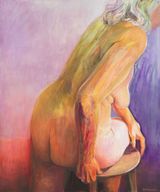
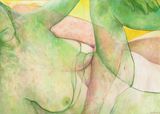
The earliest work in the exhibition is one of Semmel’s iconic sex paintings from 1971. Painted in reaction to the commercial exploitation of female bodies, Semmel sought to create an erotic visual language that would speak to women. Her belief that female repression begins in the sexual arena was another catalyst. Using the body as a structural form, and colours that betray her Abstract Expressionist roots, these pioneering works are intimate yet devoid of sentimentality. The contemporaneous Self-Image series, represented by two works on paper, mark a turning point in her practice: the beginning of the intense focus on her own body. A key aim was to challenge the male gaze in Western painting and popular culture. Hence her decision to become both observer and subject in her work, transcending the traditional themes of vulnerability and seduction. Crucially, she opted to paint her body from her own point of view, both in a literal and figurative sense. This is clear in a work like Weathered (2018): the viewer observes the female body from within the frame, so to speak, as if looking through the eyes of the artist.
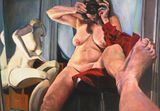
Works such as Odalesque (1998), Baroque (2002) and Disappearing (2006) highlight three important devices in Semmel’s work: mannequins, mirrors and cameras. Each object has a clear purpose. Odalesque is one of a series of works featuring discarded mannequins, which Semmel found on the streets of New York. These paintings are a dark critique on consumer culture and, in her own words ‘the mass production of the desirable female image’. The lifeless forms allude to the cult of youth and how women can be ‘discarded’ once they reach a certain age. Mirrors and cameras, on the other hand, have an empowering function. Both are included in Baroque, alongside a mannequin. Semmel points the camera at a mirror to take a self-portrait but, via the reflection, simultaneously trains it on the viewer. A tripling of the female body—real (the foot on the glass), artificial (mannequin) and illusory (reflection)—but also a reversal of the female gaze: through the camera, the viewer also becomes a subject of the work. A painting about looking and being looked at. The mirror alludes to the artificiality of images and the construction of identity, but also to art itself: paintings and photographs are illusions, never the reality. Disappearing, which is based on a photograph, is noteworthy for replicating the blur of the original image in pigments, thereby creating a sense of movement.
Joan Semmel’s work invites viewers to reconsider the ways in which women’s bodies are perceived and represented in art, in society, and in contemporary culture. Says the artist: ‘Reimagining the nude without objectifying the person, using my own body, made it clear that the artist was female and undercut the stereotypes of the male artist and the female muse. I wanted to subvert that tradition from within.’
Joan Semmel (b. 1932, New York) lives and works in New York and East Hampton. She was recently the subject of a large-scale retrospective Skin in the Game that opened at the Pennsylvania Academy of the Fine Arts in 2021 and toured to the Herbert F. Johnson Museum of Art, Cornell University, Ithaca, in 2022. She presented A Lucid Eye at the Bronx Museum of the Arts, New York, in 2013. Public collections include the Art Institute of Chicago, IL; Brooklyn Museum, NY; The Museum of Modern Art, NY; Tate, London, United Kingdom; and Whitney Museum of American Art, NY, among others.
Joan Semmel is an American painter whose work has transformed how the female body is seen in contemporary art. Best known for large-scale nude self-portraits painted from her own point of view, she presents the body as a site of agency, desire, and ageing rather than an object of spectacle. Over six decades, and across series such as the Erotic Series (1970–73) and Transparencies (2014–ongoing), Semmel has developed a distinctive language of vivid colour, tight cropping, and layered imagery that confronts the male gaze and foregrounds lived bodily experience. Her paintings have been featured in major exhibitions including the retrospective Joan Semmel: Skin in the Game at the Pennsylvania Academy of the Fine Arts (2021–22) and Joan Semmel: In the Flesh at the Jewish Museum, New York (2025–26).


A respected voice in contemporary art discourse.
Focusing on ambitious storytelling and insightful art-world commentary. Ocula Magazine publishes in-depth interviews, critical essays and timely analysis on the artists, exhibitions and ideas driving the global art world.
Learn more about Ocula Magazine
Showcasing the best of the art world.
Ocula partners with galleries from around the world to highlight their artists, artworks and exhibitions. Gallery membership is by application and invitation, with each member vetted by an independent panel.
Learn more about Ocula Membership

Specialises in the sale of major artworks.
Led by a team with deep ties to the world’s leading auction houses, galleries and collectors. Ocula’s advisory team offers bespoke services to high-net-worth clients from around the world who are looking to acquire the best of contemporary and modern art.
Learn more about our team and services