Yeo Workshop, is pleased to announce the solo exhibition of Priyageetha Dia. Curated by Anca Rujoiu, Forget Me, Forget Me Not is the artist’s debut presentation at the gallery following the announcement of her representation at Yeo Workshop.
In Forget Me, Forget Me Not, Priyageetha Dia pursues a mindful encounter mediated by technology with colonial representations of labouring bodies. How does one attend to difficult imagery —visual and textual— that continue to dispossess colonial subjects of dignity and agency? Amid the sea of information and data prone to racialised terminology, what are the possibilities for an artistic engagement to eschew or hijack the perpetuation of violence? While the exhibition title calls to question what to remember and forget, it is concerned in equal manner with the how to do it. Forget Me, Forget Me Not is a plea for new forms and ethics of remembrance by an artist whose use of technology consciously dismisses its claims to neutrality and immateriality.
A booklet dated 1923 outlining the process of Indian labour migration to meet the demands for workforce in rubber plantations in Malaya, foregrounds the artist’s research. Confronted with the blatant rhetorical performance of decent conditions of work, expectations of healthcare and education provisions by the official colonial authority in the description of what was otherwise an exploitative industry and British Empire’s largest money making enterprise, the artist explores the possibility of a counter-narrative. The voices of the workers inflected by Malay and Tamil, traces of these labouring bodies, particularly women of the Indian diaspora permeate throughout the exhibition and fuse into a unified environment.
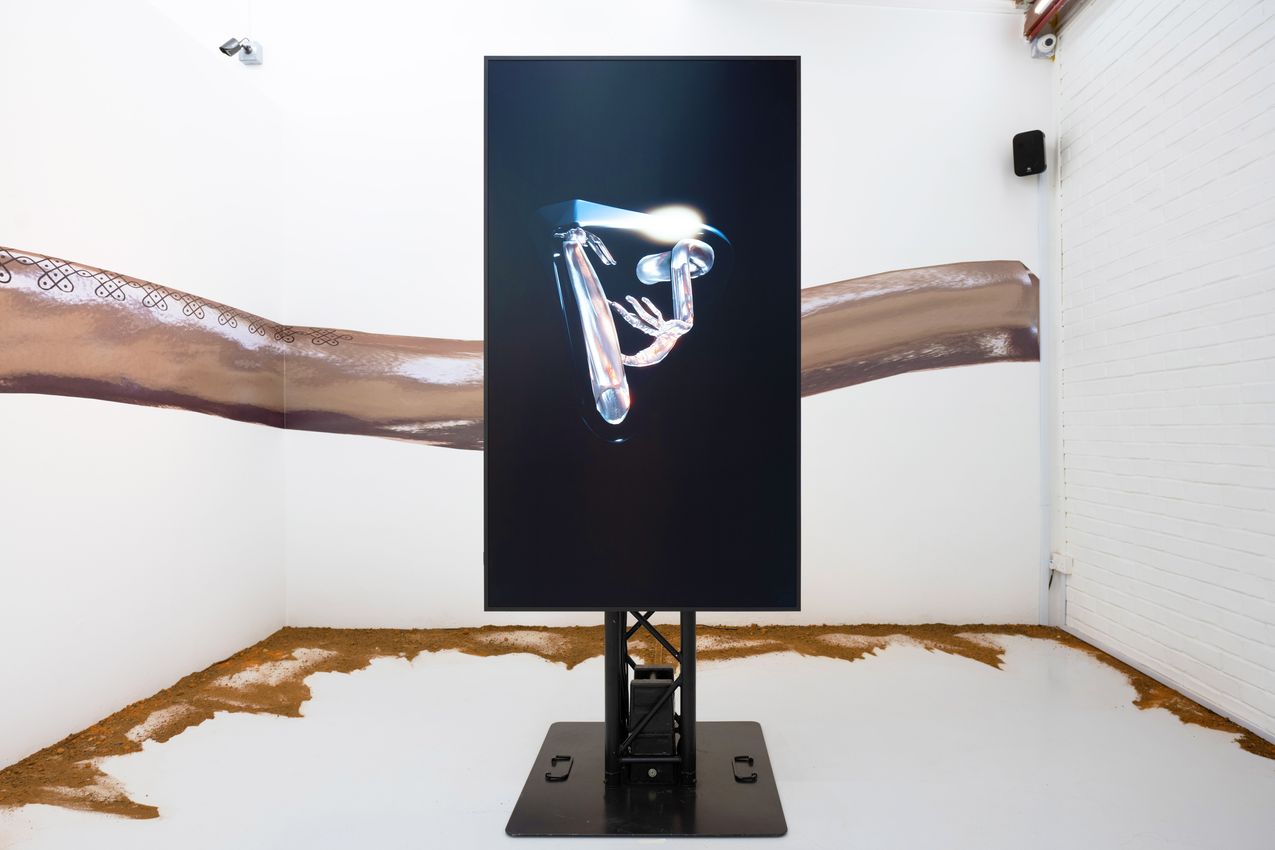
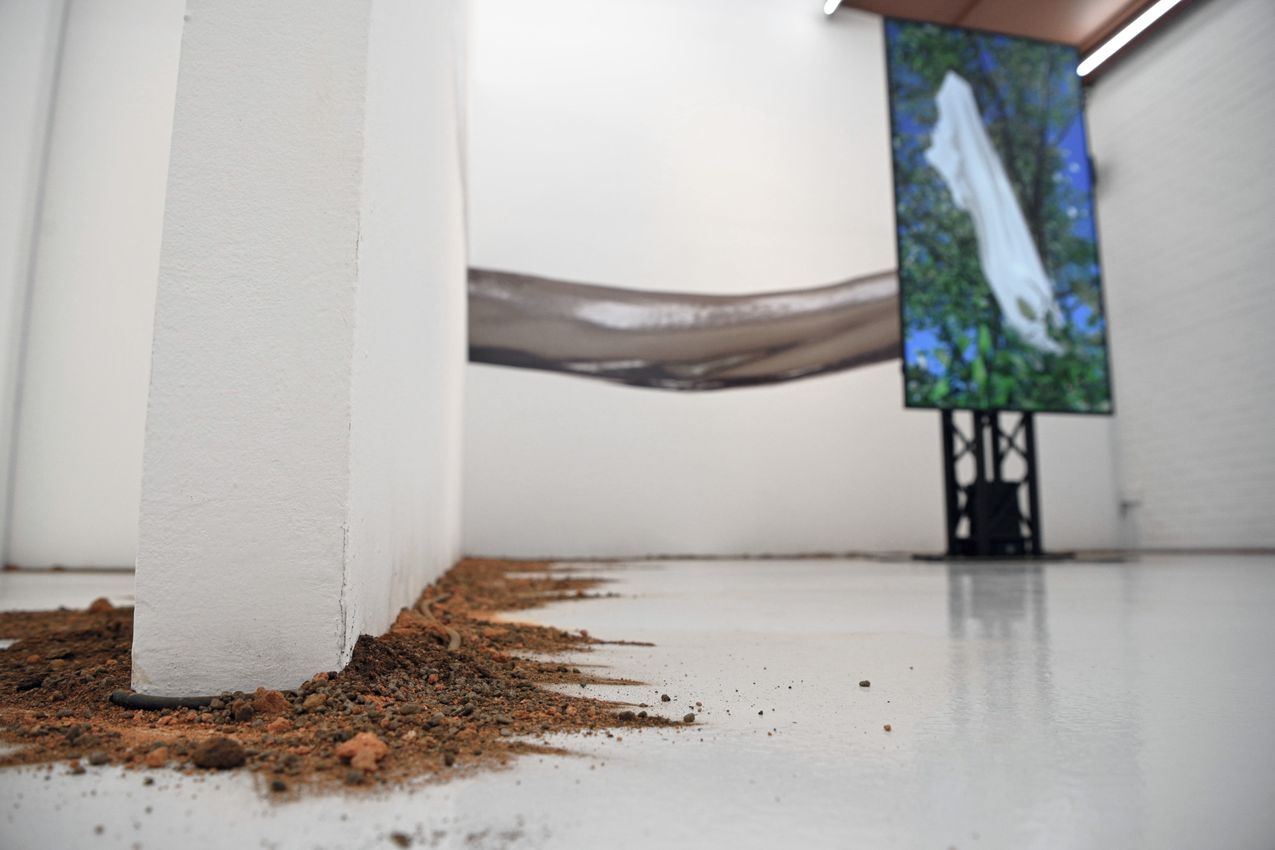
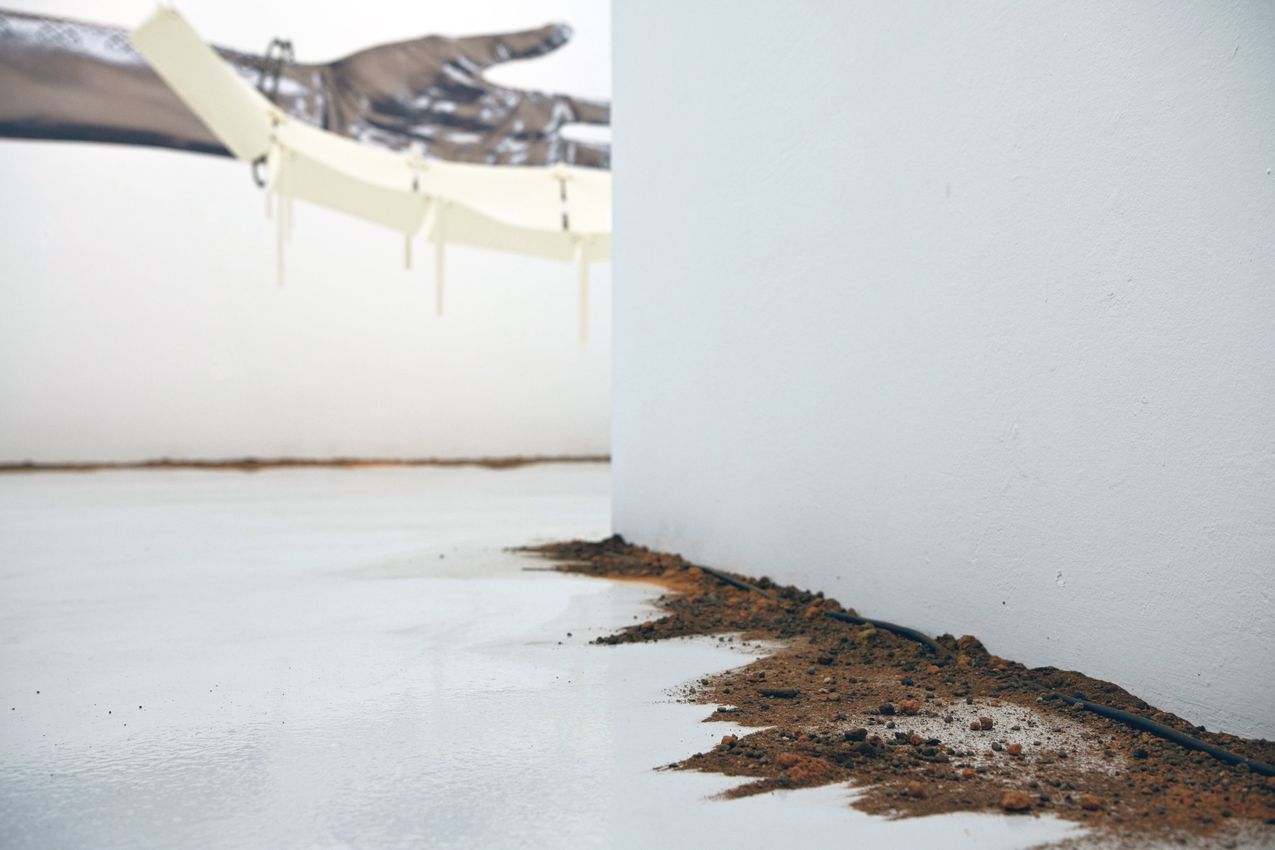
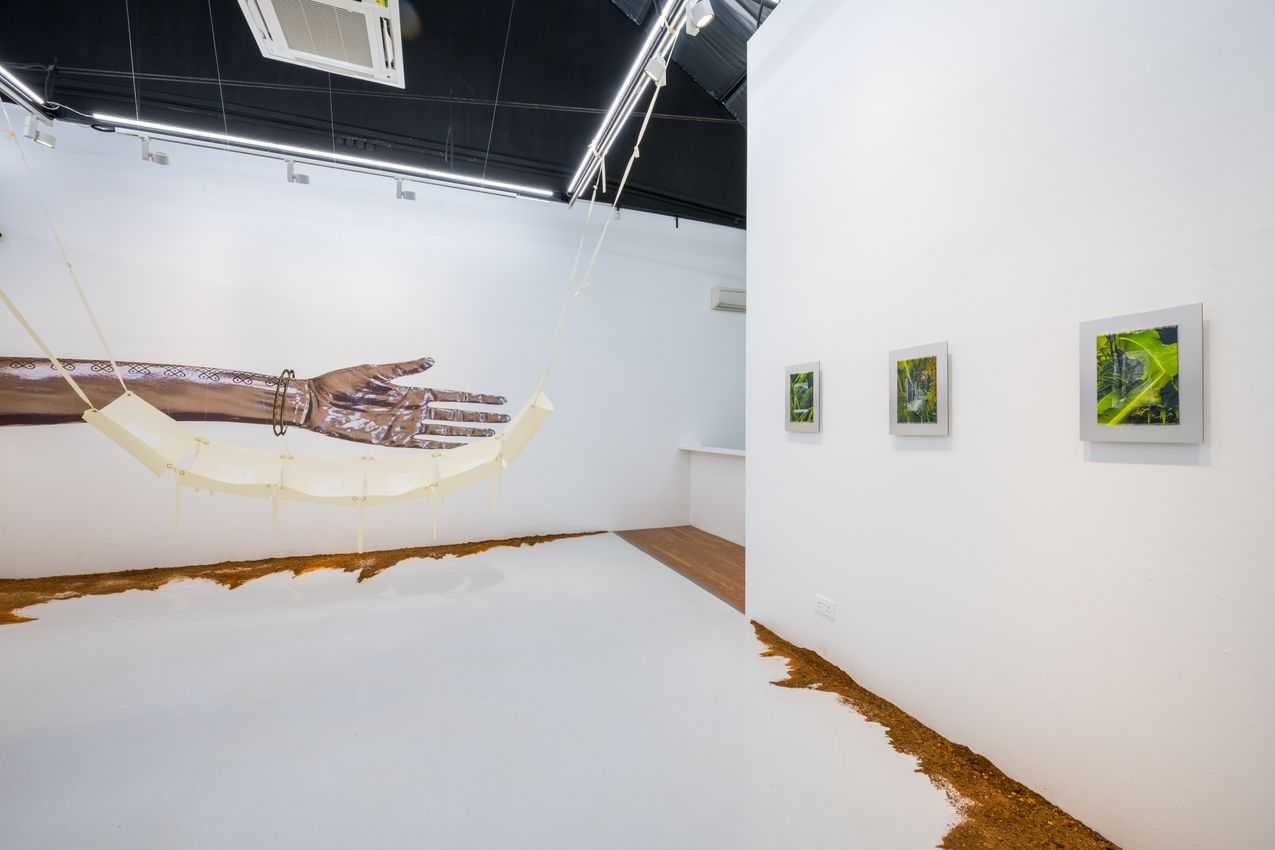
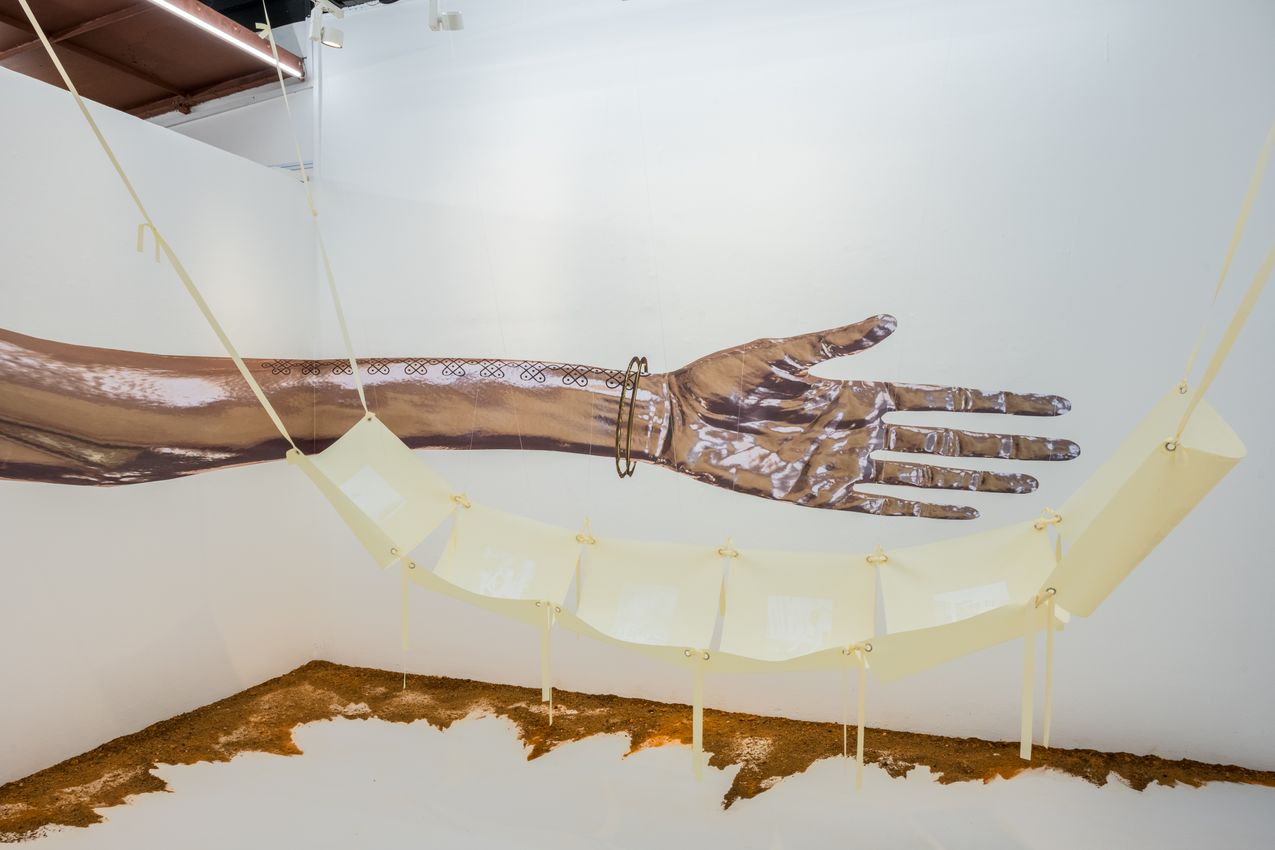
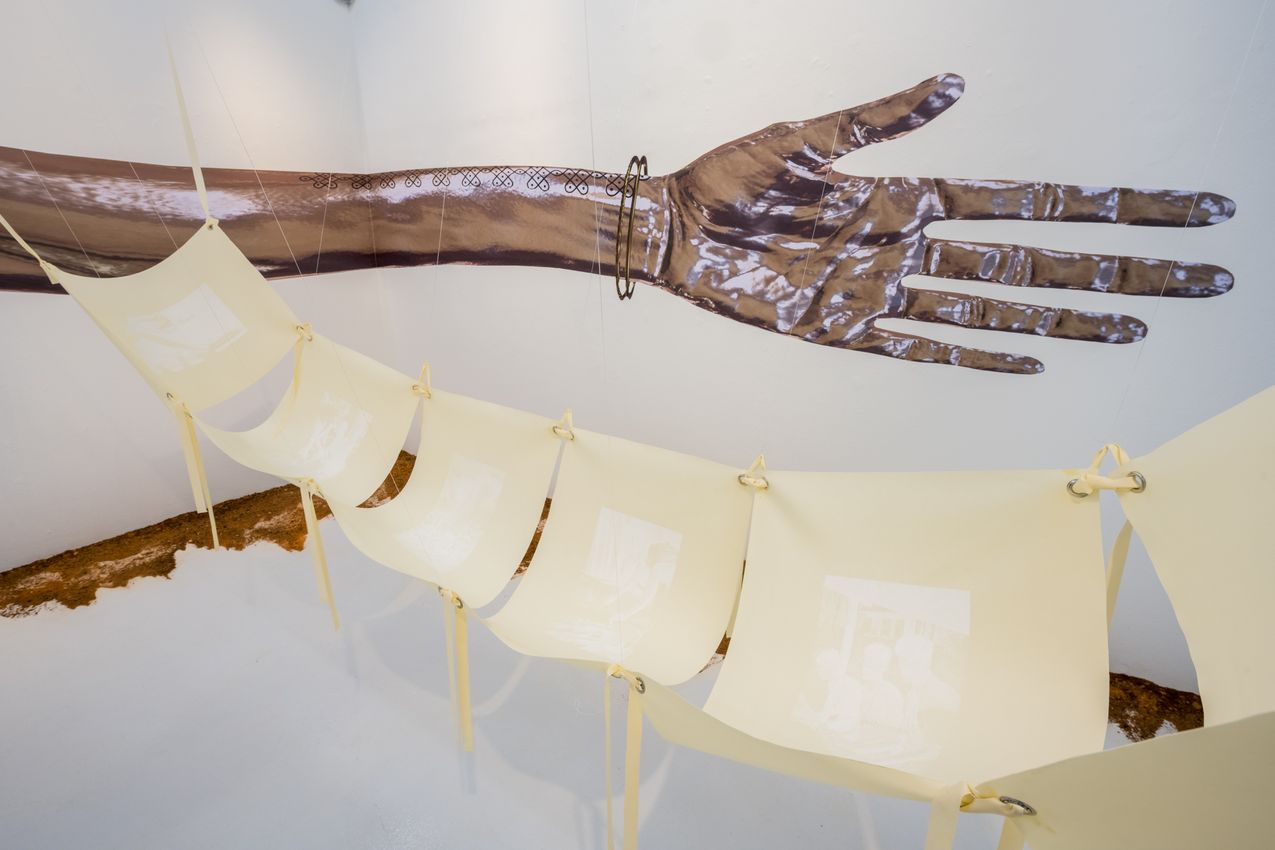
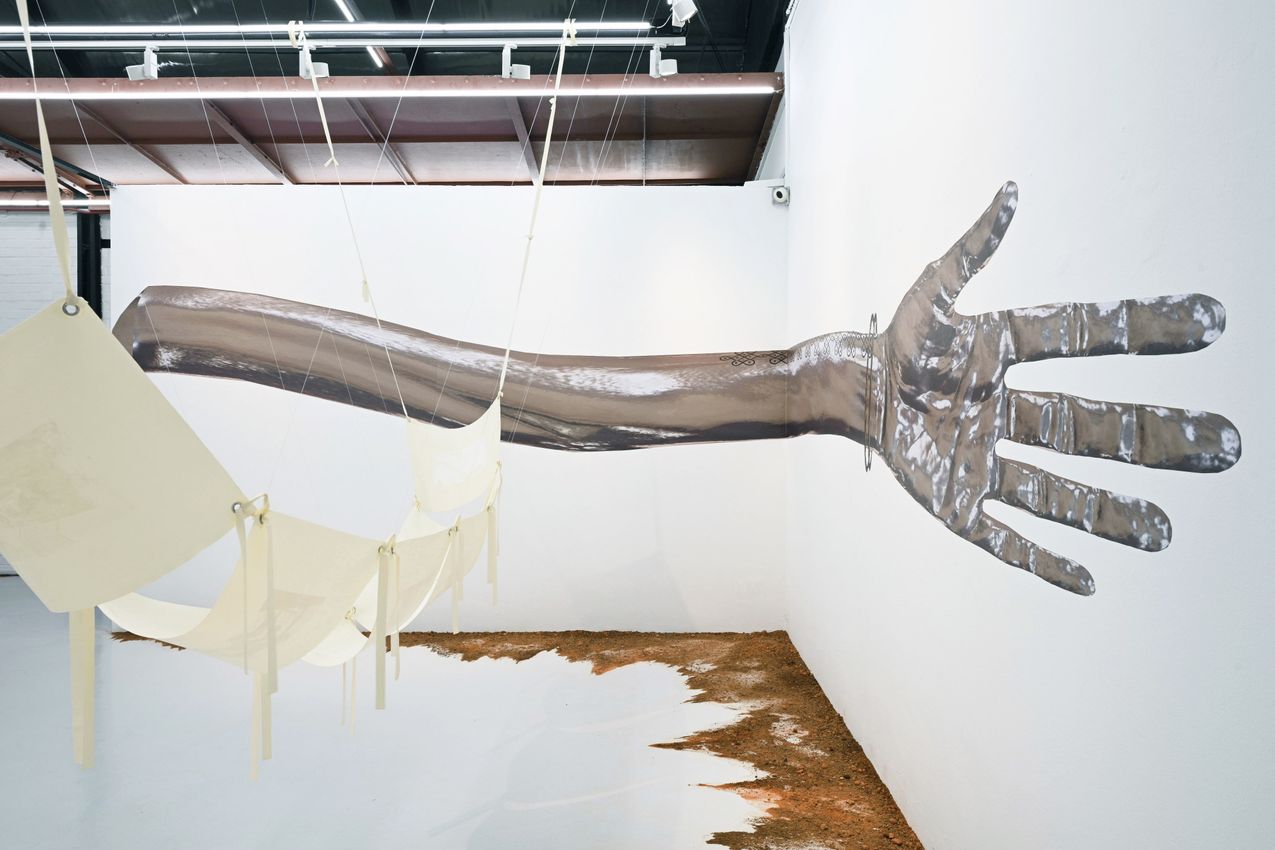
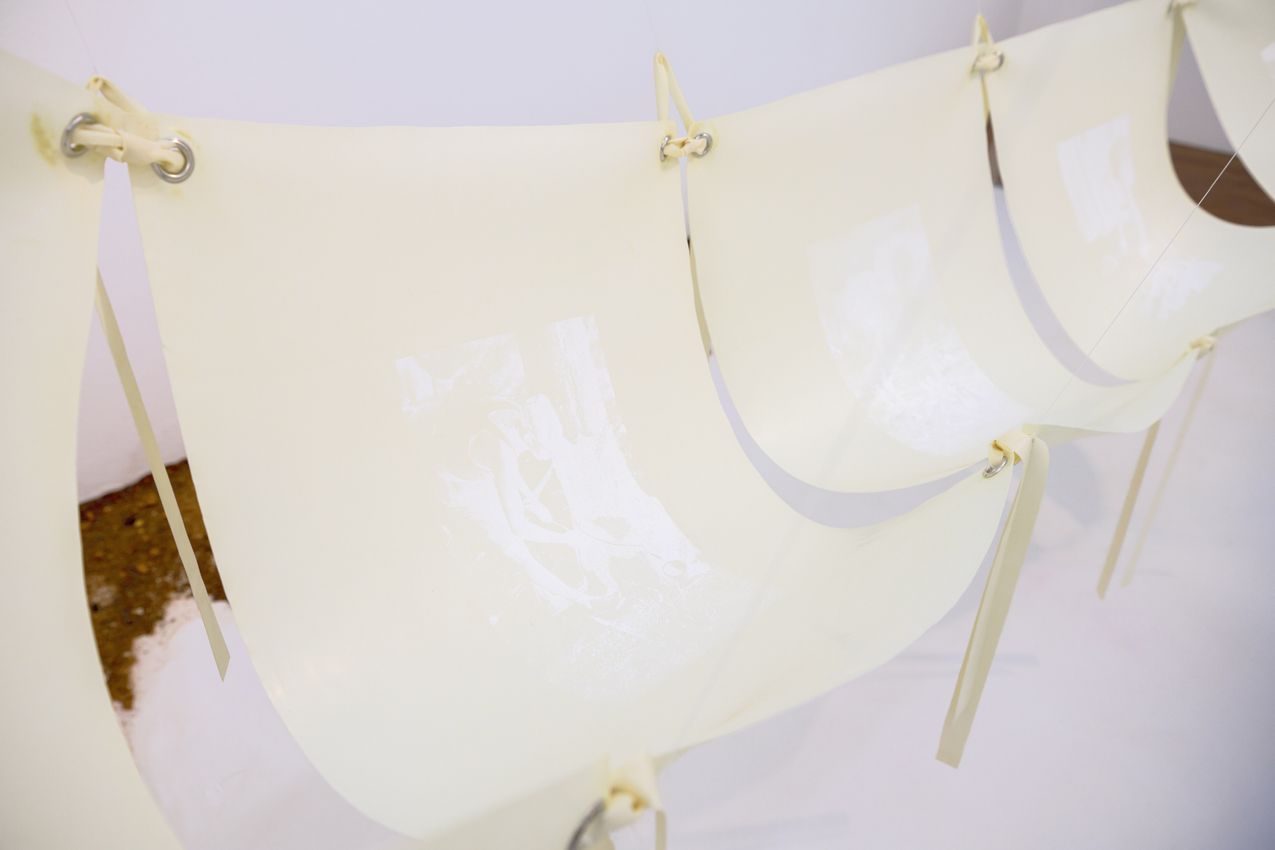
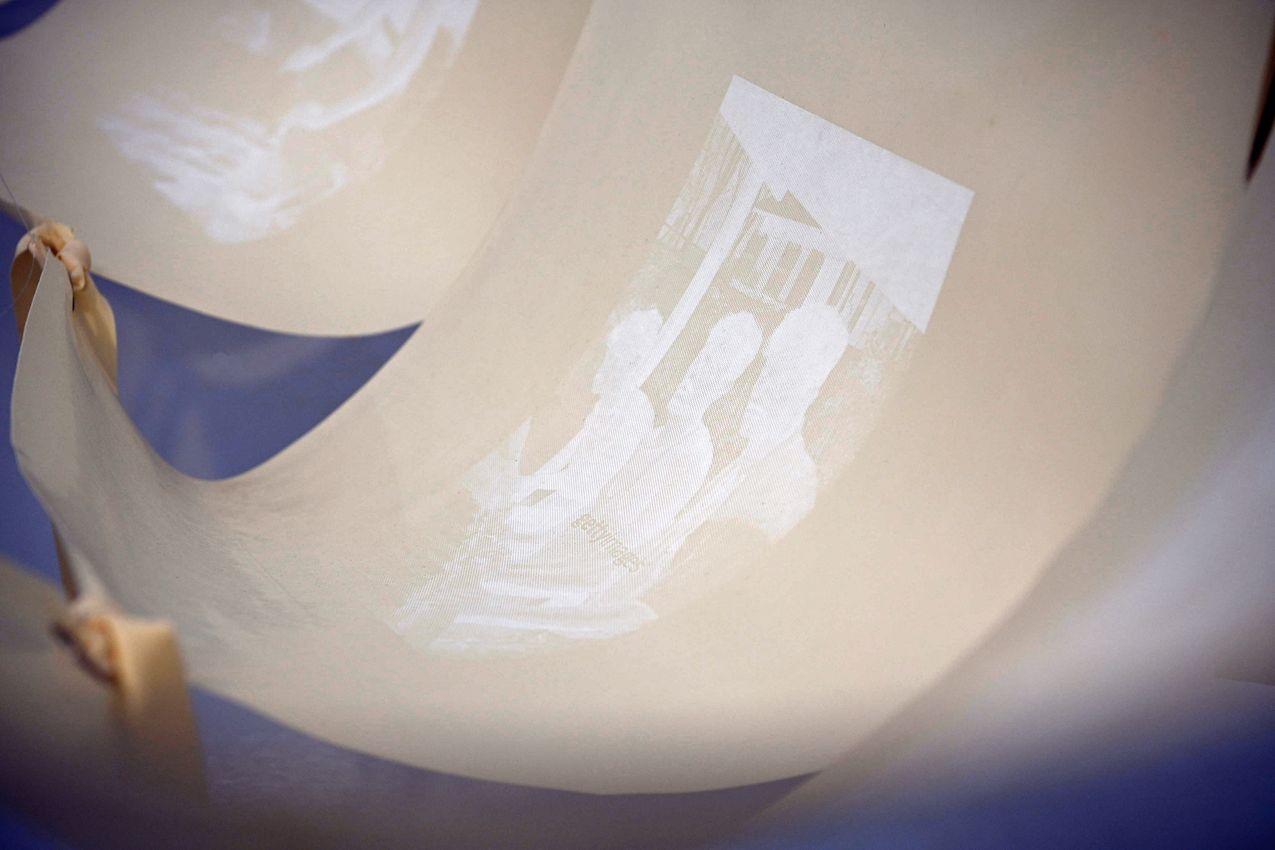
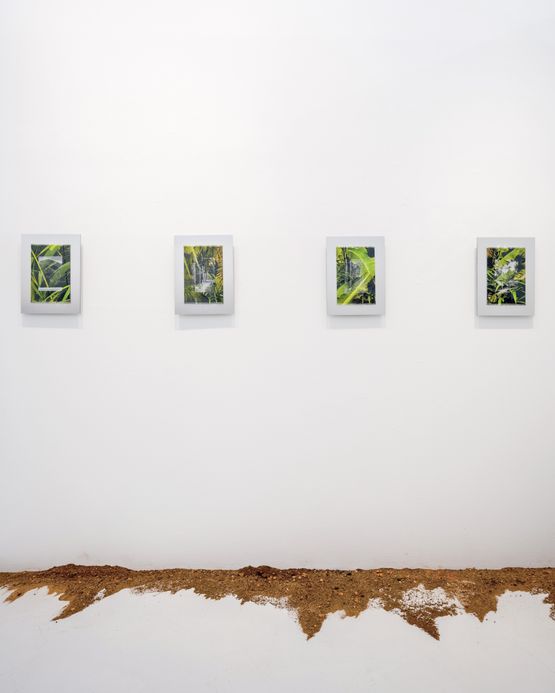
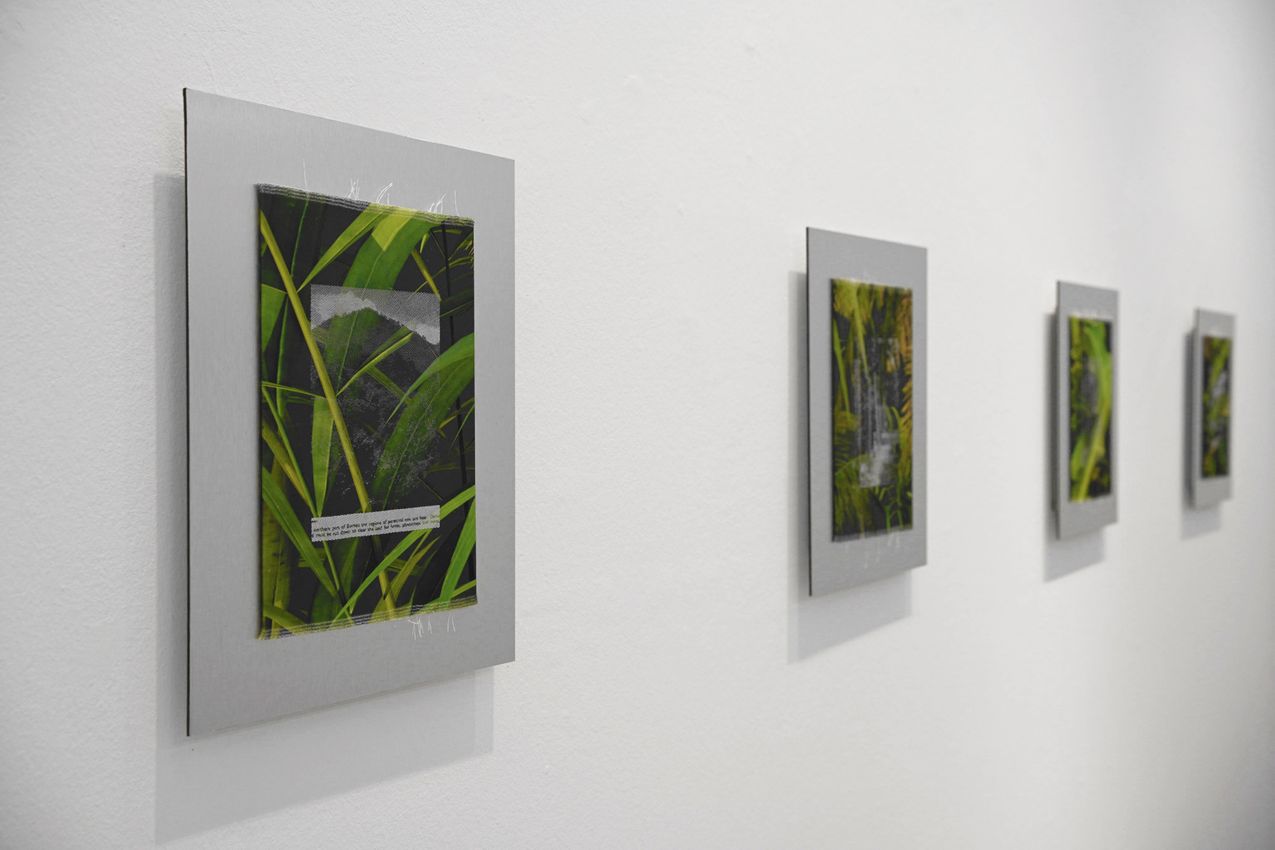
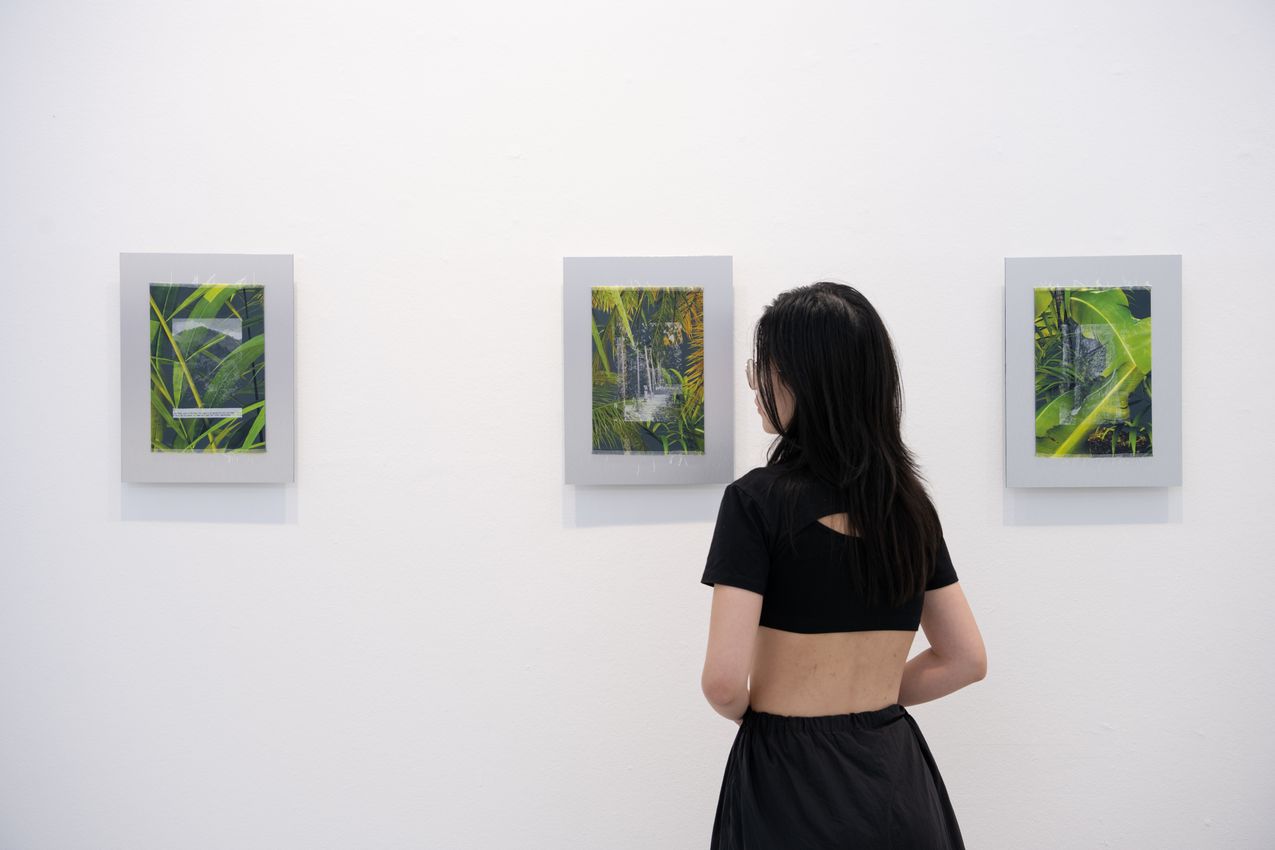
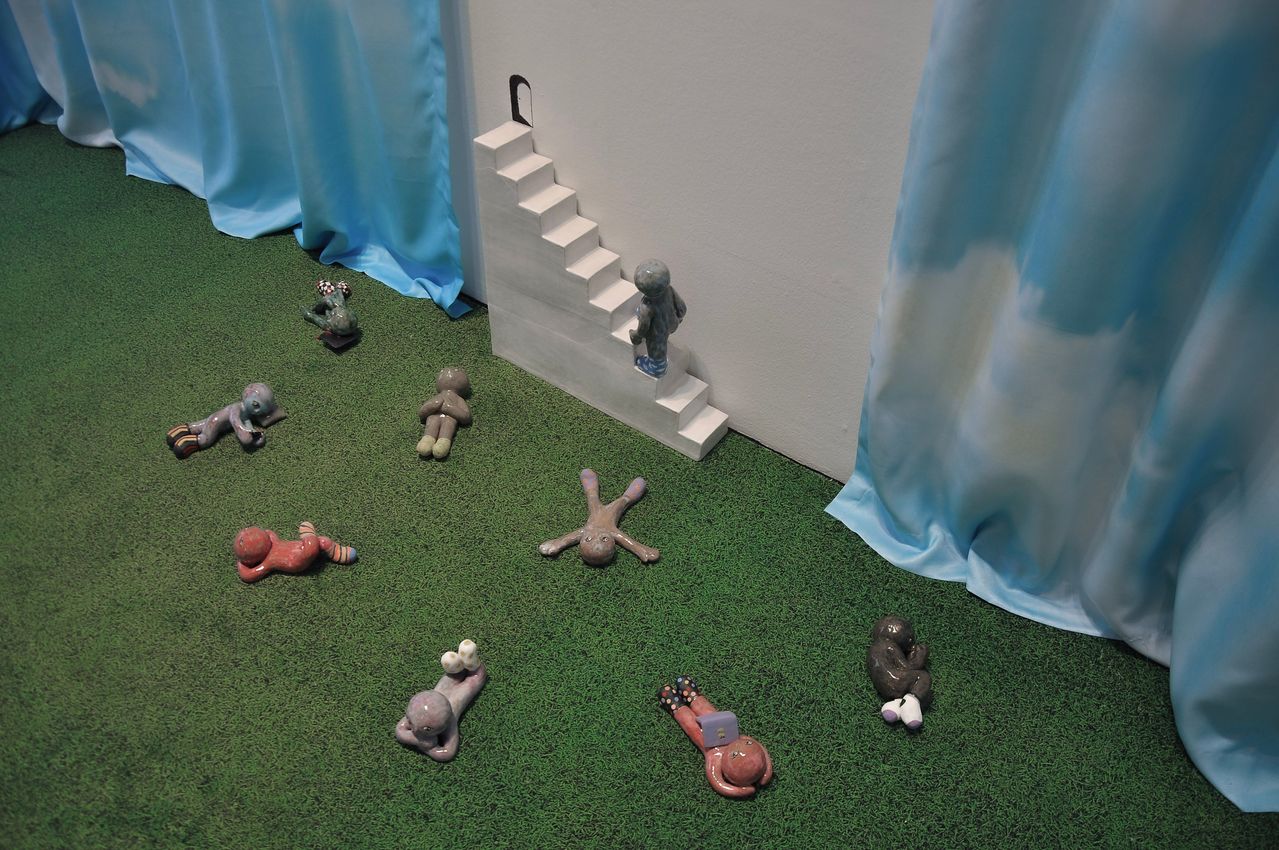
Computer-generated imagery (CGI) sits in a continuum with other materials, from screen printed works on latex, sublimation fabric prints to vinyl on walls and barren soil. The mechanisms of continuity are key to the artist’s argument: corporate digitisation and commodification of colonial archives contribute to a legacy of control and dispossession; digital technologies persist in the exploitation of natural resources and labour while concurrently obscuring their physical presence. This is further attested by Dia’s appropriation of stock images of Malayan rubber plantations that one can easily excavate from search engines. A hammock created out of such stock photography printed with white ink on off-white latex sheet and suspended across the gallery, becomes an archive of labouring bodies imprinted on rubber for eternity.
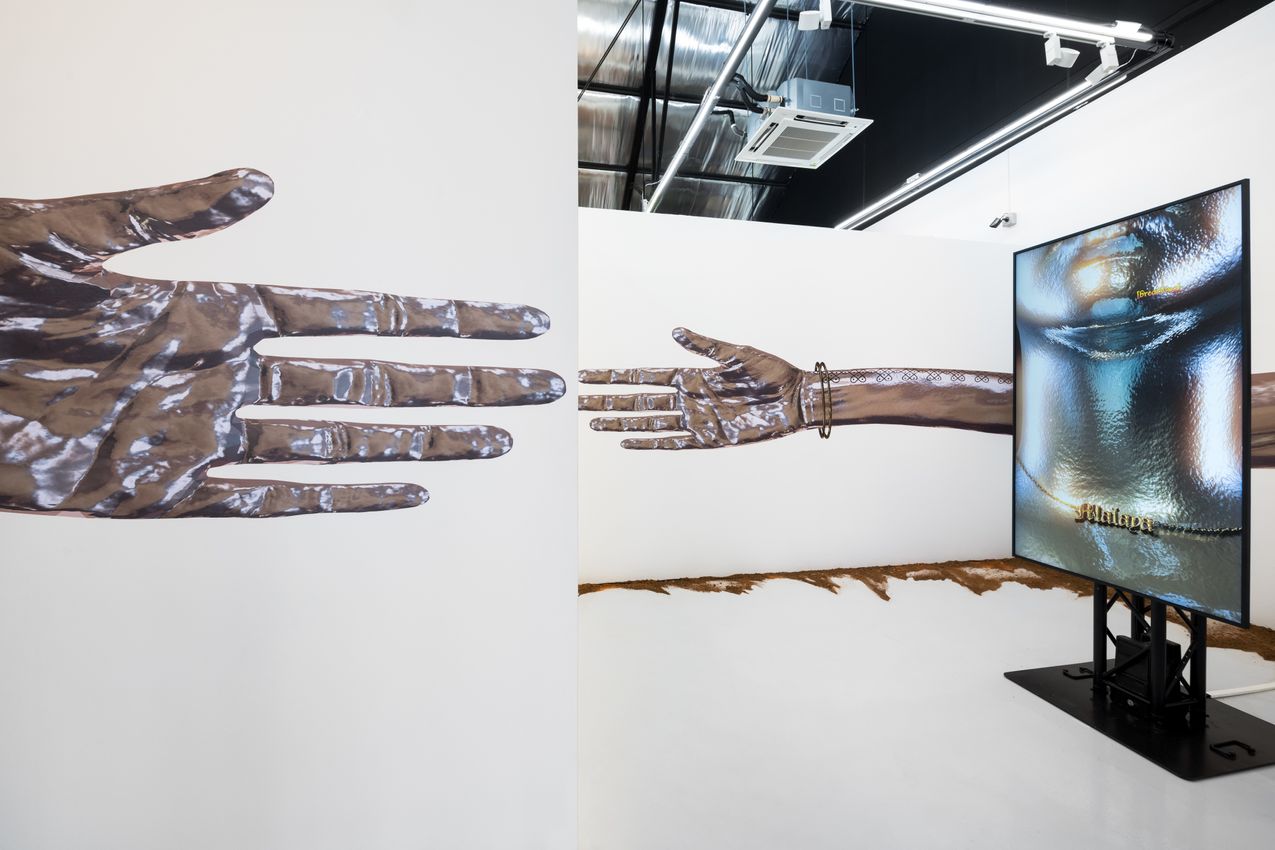
Echoing previous works by Priyageetha Dia (Blood Sun, 2022; Long Live the New Fle$h, 2020), the animation created for this exhibition features a single-computer generated protagonist with female bodily attributes. While CGI is often deployed in mass entertainment for naturalistic depictions of characters and believable performances, Dia’s protagonist never fully feels or aspires to be real. As viewers, we are constantly brought to acknowledge the protagonist’s discernable materiality. Whether gently touching the water, caressing the land, or sensing the marks of incision on a rubber tree, the protagonist evokes, in the words of cultural theorist Laura U. Marks, an experience of haptic visuality. Marks defines this form of perception as a tactile mode of looking, a way in which the eyes use the organs of touch. The sense of haptic in the artist’s animation is amplified by her relinquishment of a linear perspective and resistance to depth vision to which Western’s modern traditions of representation are tied. Besides, the interactions between her protagonist and the environment enhance the haptic sensibility in the artist’s work. Transferring the ritual drawing of kolam that traditionally marks the thresholds of homes or the margins of the streets onto the body, the artist continuously strives to dissolve the boundaries between body and environment. This spatial merging is amplified in the architecture of the exhibition where enlarged hands on the wall guide, embrace, or entrap the viewers inside.
When archives of colonial histories are filled with omissions, gaps, and prejudices, one has to acknowledge in the words of the writer Saidiya Hartnam, an impossibility. The impossibility to know what has not been told, recorded or experienced. The challenge, asserts Hartnam, is not to give voice to what remains untold, but rather to “imagine what cannot be verified”. Combining mass-production techniques such as screenprinting in the treatment of digitised archival photography, with the world-building and speculative capacities of CGI modelling, Forget Me, Forget Me Not posits that to resist forgetting, one needs to conjure new forms of telling. (Anca Rujoiu).


Yeo Workshop is a contemporary art gallery based in Singapore’s Gillman Barracks, dedicated to showcasing Southeast Asian artists who push the boundaries of visual culture. From traditional painting and sculpture to cutting-edge digital media, the gallery fosters a bold and diverse program that engages with pressing socio-cultural issues, encouraging critical dialogue and fresh perspectives.

A respected voice in contemporary art discourse.
Focusing on ambitious storytelling and insightful art-world commentary. Ocula Magazine publishes in-depth interviews, critical essays and timely analysis on the artists, exhibitions and ideas driving the global art world.
Learn more about Ocula Magazine
Showcasing the best of the art world.
Ocula partners with galleries from around the world to highlight their artists, artworks and exhibitions. Gallery membership is by application and invitation, with each member vetted by an independent panel.
Learn more about Ocula Membership

Specialises in the sale of major artworks.
Led by a team with deep ties to the world’s leading auction houses, galleries and collectors. Ocula’s advisory team offers bespoke services to high-net-worth clients from around the world who are looking to acquire the best of contemporary and modern art.
Learn more about our team and services