ShanghART Beijing is pleased to present Guo Gong & Liang Shaoji: Soliloquize, on view from 3 July through 8 August. Tracing its conceptual lineage through Liang Shaoji’s idiosyncratic sericultural art experiments initiated in the late 1980s, it also showcases Guo Gong’s profound exploration of material language through installation creations. The two artists’ works mirror each other in the space, creating a silent resonance revolving around time, life and matter.
Confronted by the vital flux of life and the ontological certitude of matter, both artists choose to renounce the impulse toward dialogic exchange. Instead, they devolve the agency of expression back to the object, submerging into an internal, self-contained loop to address their respective propositions through a mode of mute enunciation.
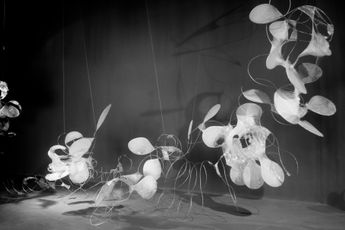
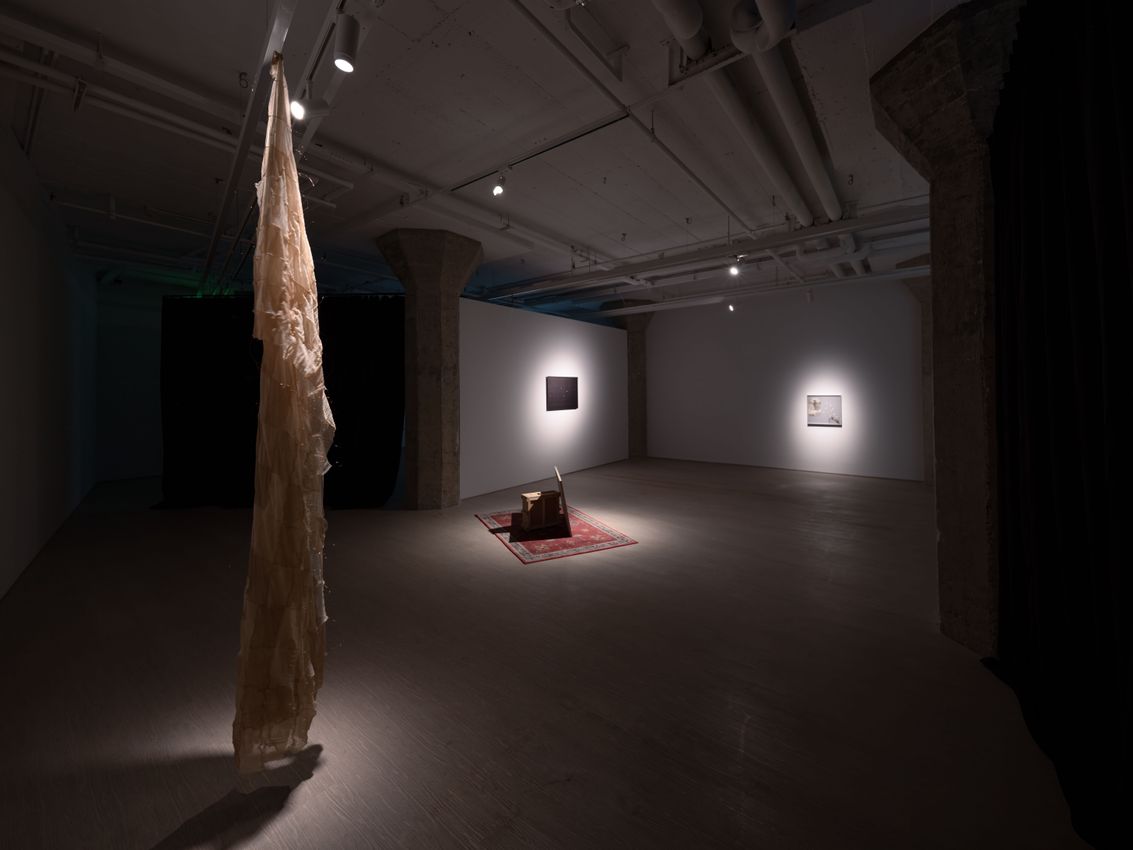
In Liang Shaoji’s Lonely Cloud (2015–2016), ancient wood, silkworm silk, and scaffolding interweave into a silent material landscape. Ancient wood stands as a historical fragment, while clinging silk serves as its extension; Lonely Cloud embodies both ruin and reincarnation. Fragile threads impose no physical weight, instead entwining in an incredibly light, upward manner. As a temporary auxiliary structure of modern construction, scaffolding supporting this timber inherently carries attributes of mutability and incompletion. Countless life trajectories superimpose here, drawing out a slow, protracted temporal dimension across cold metal grids. Entrusting labor to nature through an almost Zen-like withdrawal, Liang Shaoji allows these gossamer-enshrouded elements to slowly dissolve boundaries between living traces and industrial ruin.
Ancient wood is a relic of history and decay, while silk is the boundless extension of new life. The cocoon encapsulates the very substance of time. Imagine the faint, ceaseless rustling of silk being spun—it is the whisper of primal instinct.
Nature Series No.106, composed of 24 silk mirrors, is spread gently on the ground. The mirrors are veiled by silk. These pieces give flashes of light and bring a cloudy and well-proportioned atmosphere. When the audience moves around, the lights and shades of the mirror keep shifting, like glittering stars. Immersed in the space that is filled with the interaction between humans and nature, the universe starts to work.
Liang Shaoji wraps ruins with life in Floating Life (2026), using silk to “soothe trauma.” Ceaseless filaments gradually envelop sharp edges; Thousands of taut, ethereal threads bridge overlapping metallic gaps, transforming into soft biological arcs. Yielding and deforming under immense pressure reveals profound, hidden “calligraphic expression” within rebar. Fragmented lines wandering randomly through space freeze ultimate postures of ruin in singular, decisive instants.
Guo Gong’s work, Qie-Wen - Stainless Steel A-1, is the overlay of pieces of stainless steel cut to the mechanism of a hill-stone, one side of which was polished to a mirror. It possesses the luster and the texture of being invited to the civilization and the epoch; meanwhile, it manifests the aesthetic value of the original material and the human heritage.
Guo Gong continuously confronts immutable physical presence in steel and stone. Qie-Wen - Granite D-1 (2015) originates from solid, unhewn granite. Monolithic internal order unravels layer by layer, ultimately yielding five stacked tiers expanding outward and upward. Solemn and monumental, forms remain distinct yet unified, juxtaposing natural creation with artificial order. Upward progression intends no defiance of gravity; rather, absolute materiality accumulates massive, somber downward potential energy. Cutting and forging draw soundless, muffled resonance from heavy steel and raw stone, while rational extraction establishes intensely definitive “space.” Distant dialogue emerges with metal scaffolding in Liang Shaoji’s Lonely Cloud (2015). Geological bedrock meets depletion-imbued industrial relics, contrasting hard, heavy “downward gravity” against soft, ethereal “upward diffusion”.


ShanghART gallery was initiated in 1996 in Shanghai. It has since grown to become one of China’s most influential art institutions and a vital resource to the development of contemporary art in China with two spaces in 50 Moganshan Road (Main Space and H-Space), a public warehouse space in West of Shanghai (ShanghART Taopu), and a gallery space in Beijing and representing over 40 artists.
Being recognized for its importance ShanghART became the initial gallery from China participating in major international art fairs like Art Basel and Fiac, Paris. ShanghART gallery also enjoys the great respect of being among the 75 most influencial galleries selected in Thames & Hudson’s publication ‘International Art Galleries: Post-war to Post-millennium.’

A respected voice in contemporary art discourse.
Focusing on ambitious storytelling and insightful art-world commentary. Ocula Magazine publishes in-depth interviews, critical essays and timely analysis on the artists, exhibitions and ideas driving the global art world.
Learn more about Ocula Magazine
Showcasing the best of the art world.
Ocula partners with galleries from around the world to highlight their artists, artworks and exhibitions. Gallery membership is by application and invitation, with each member vetted by an independent panel.
Learn more about Ocula Membership

Specialises in the sale of major artworks.
Led by a team with deep ties to the world’s leading auction houses, galleries and collectors. Ocula’s advisory team offers bespoke services to high-net-worth clients from around the world who are looking to acquire the best of contemporary and modern art.
Learn more about our team and services