A Kassen’s works are reminiscent of 1960s conceptual art in that they often erase any evidence of the artist’s hand. Toying with the notion of originality, their practice re-examines the properties of their chosen medium—from cast bronze to concrete to lampposts—by removing them from their original context. Often with an element of the absurd, A Kassen’s artworks ask the viewer to consider how arbitrary their preconceived associations with these materials are by reframing them in new and unexpected locations and forms.
‘Permanent Reflections’
A Kassen’s New Works exhibition at Galleri Nicolai Wallner in Copenhagen in 2013 captured the often undesirable side effect of reflective surfaces and made it their subject matter. The show featured four framed photographs of the gallery space. Placed perpendicular to each other at opposing corners of the room, the works at first appeared to be empty blocks of colour, refracting the overhead lights from their glass-plated frames. However, the artworks actually comprised of photographed reflections of light, almost unnoticeably doubling the reflection that was simultaneously the real reflection within the room.
‘The Color of Things’
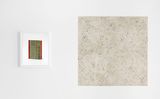
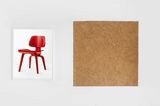
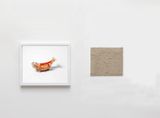
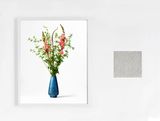
One of A Kassen’s best-known series ‘The Color of Things’—their Third-Prize-winning entry to the Carnegie Art Award (2013)—featured images of an object displayed next to a panel that was covered with the pulverised material of the same objects, creating large monochromatic fields of colour.
In the 2014 iteration at the Den Frie Centre of Contemporary Art, however, the collective sent a digital image of each work that had appeared in the original Carnegie Art Award exhibition to a factory in China’s Xiamen Painting Village, which specialises in reproductions. These reproductions also included works by well-known contemporary artists, but the resulting copies were mistranslated and copied purely for their formal qualities.
A Kassen claimed authorship not of the individual pieces but of the process of creating them, declaring the exhibition a work of art in itself.
Installations
Like their sculptures and photographs, A Kassen’s installations are playful and discrete in the way that they involve the viewer’s participation almost without their noticing it. Exterior (2016) at Sort Kunstmuseum, Denmark took elements from the urban space and repositioned them within the gallery. Lampposts were hung upside down from the ceiling, illuminating the space while also creating an obstacle course for the viewer to navigate. Cement clusters normally used as anchors were left attached to poles and protruded through the gallery walls, while door handles were positioned at random.
Aluminium Puddles and Bronze Pours
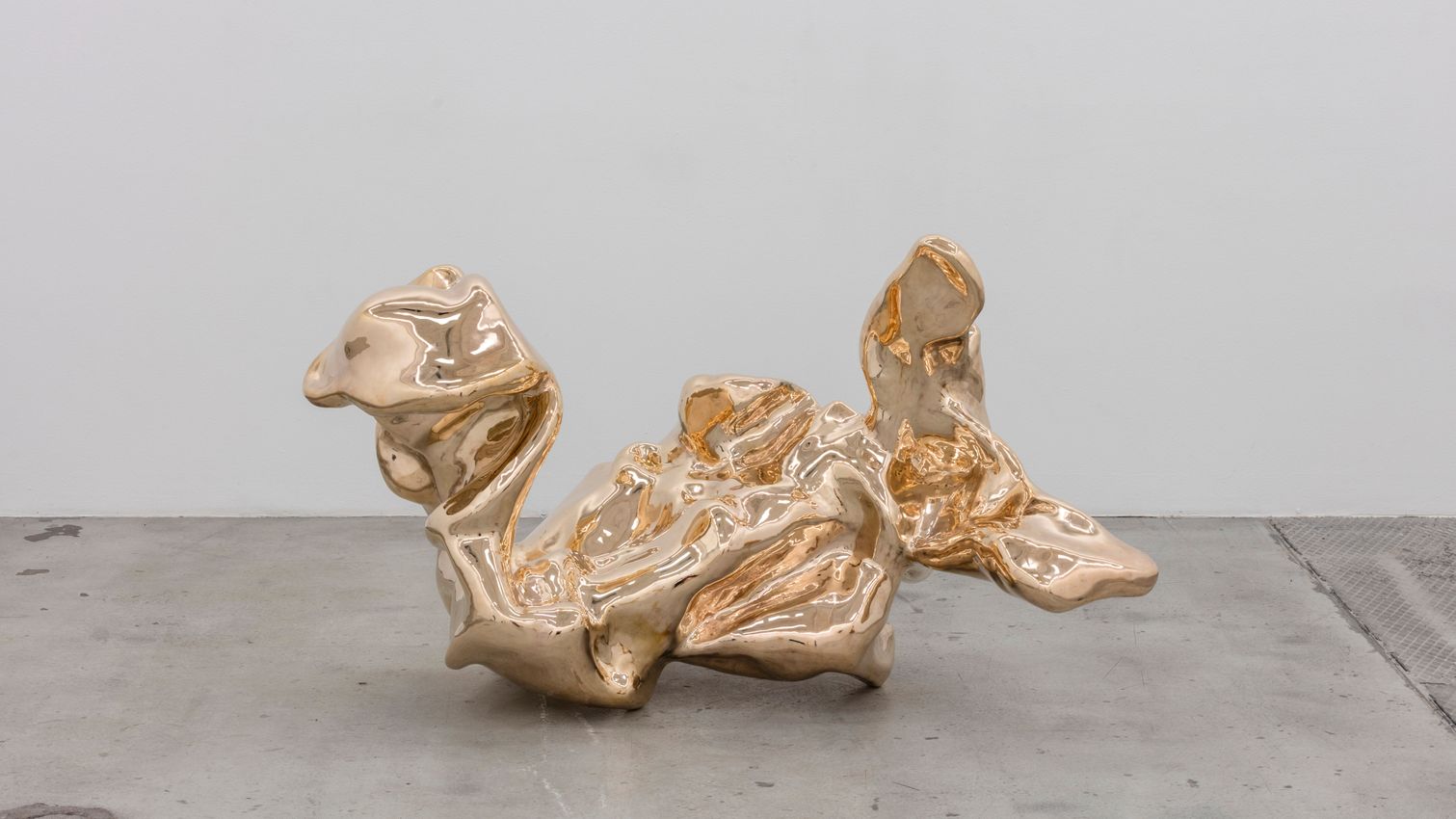
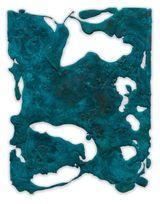
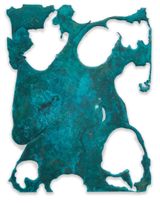
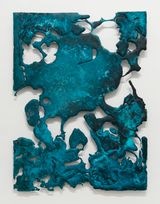
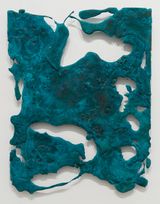
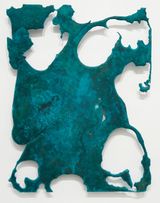
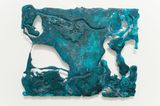
A Kassen’s ‘Puddle’ and ‘Pour’ series (2016–ongoing) experiment with the unpredictability of their chosen medium, leaving natural processes to shape the finished product. Their bronze pours are the result of the 1000º Celsius liquid metal being poured into cold water and reproduced on a larger scale, meaning the pour itself is both the action and the inevitable outcome. The result of this technique produces organic, flowing shapes that ask the viewer to form associations.
The aluminium puddles are created using a similar technique, but instead of creating amorphous, organic shapes, the chemical interaction produces flat and reflective shapes not unlike a puddle. In the 2016 exhibition PUDDLES & POURS at Galeri Nicolai Wallner, a selection of puddles were displayed leaning against the gallery wall, making the viewer’s reflection a part of the artwork.
Public Commissions
In 2017, A Kassen completed Poseidon at Dokk1 in Aarhus, Denmark and Swap for the Gymnasieskolan Spykens in Lund, Sweden. In 2016, River Man was permanently installed at the Kistefos Museum in Jevnaker, Norway.