





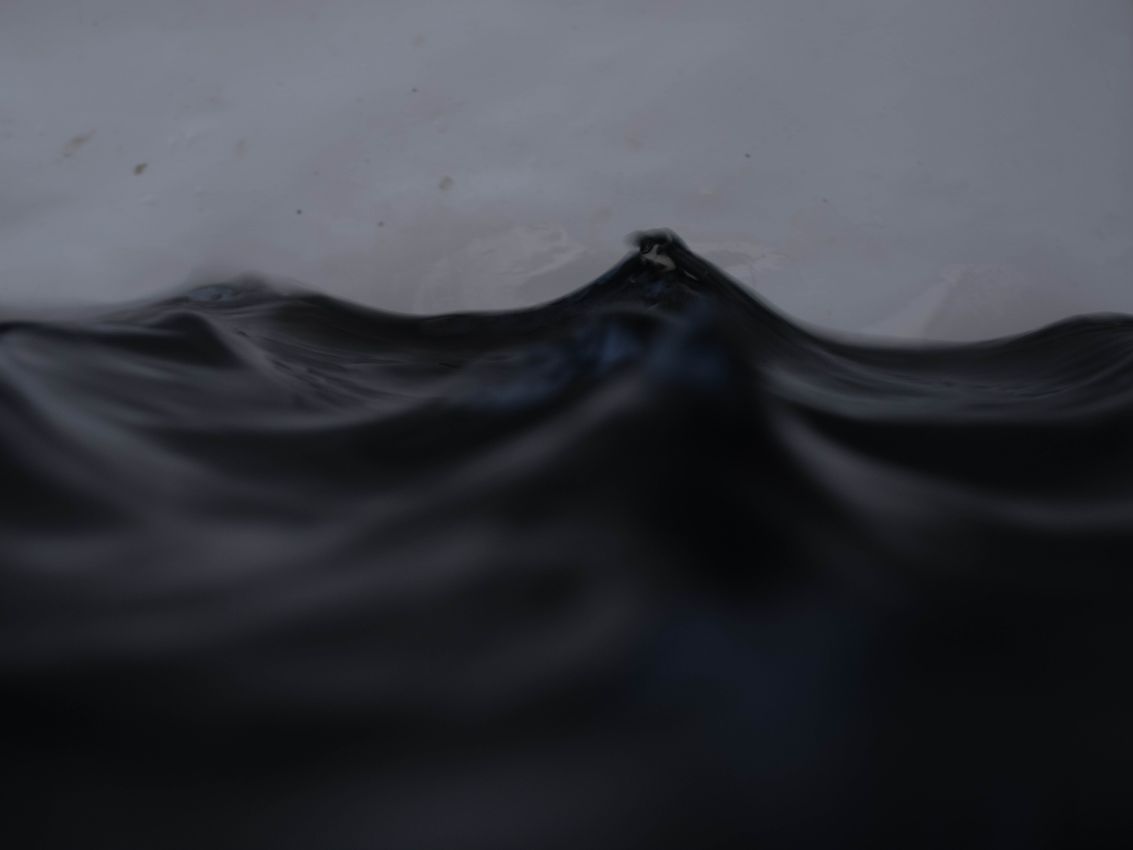
Chen Xiaoyi
b. 1992, China“Photographic thinking” centres Chen Xiaoyi’s artistic practice, which is also influenced by the aesthetics of nature, as well as Eastern philosophy. During the 2020s, she spent time in the Hengduan Mountains, considering how the geographical elements around her are always transforming, and how humans and time interact with the environment.
Early Years
Chen Xiaoyi was born in Sichuan in 1992. Her maternal grandfather was a key influence on her: not only did he encourage her creativity, but he allowed her to play with his camera, which sparked an interest in photography. Leaving China for England, she studied at Leeds Metropolitan University between 2010—2013, gaining a degree in photographic journalism. However, she realised that the narrative method of news photography was not how she personally understood images, and for her MA (at the University of the Arts London) she switched her focus to fine art photography and became fascinated by the creative process of developing images in the darkroom.
Chen Xiaoyi: Artworks
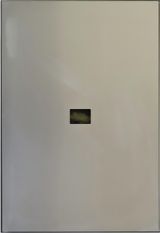
Across photography, photogravure, sculpture, sound and video installations, Chen Xiaoyi’s works examine the intersection of different forms of existence within geological and cosmological timeframes. She plays with scale—for example, magnifying water drops in her Hidden Time (2015—2016) series—and draws inspiration from her environment. She has spent a great deal of time in the Hengduan Mountains, yet this is not her only geographical influence: in 2018 she lived in Switzerland and became fascinated by glacial erratics. Her 2025 exhibition Moths and Butterflies/Goodbye/All the Weight of the World considers ecological memory and how humans occupy the Earth: “It is an attempt to re-understand how to continue existing in a world that is vast, silent, indifferent, and ancient.”
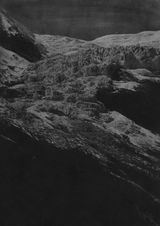
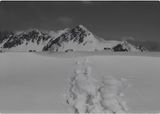
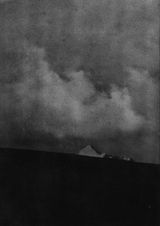
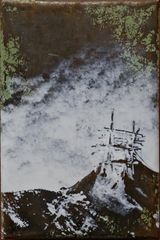
- 2014’s Koan series, which won the Three Shadows Photography Award in 2015, was inspired by a trip to Iceland. Chen Xiaoyi used photogravure to create black-and-white prints that add an imaginative layer to the Icelandic landscape.
- In 2017’s Never Measure the Measure, 80 unmarked thermometers are arranged together, with no precise readings. Removing the temperature markers asks the viewer to consider perception and meaning.
- Foam, Form—Phase II (2020) features an image of a bubble just before it bursts, which condenses on a series of curled aluminium plates, emphasising the fragility of the bubble at its critical point.
Chen Xiaoyi: Select Awards
- winner of the Photofusion Prize 2014
- winner of the Three Shadows Photography Award 2015
- nominated for the Foam Paul Huf Award in 2017, 2020 and 2025
Chen Xiaoyi: Exhibitions
Select Solo Exhibitions
- Moths and Butterflies/Goodbye/All the Weight of the World, A Thousand Plateaus Art Space, Chengdu (2025)
- Spoken Leaves, Matèria Gallery, Rome (2024)
- The Epoch of Rippling Hengduan Mountains: The Nameless Lands, Chronus Art Centre, Shanghai (2023)
- The Epoch of Rippling Hengduan Mountains: I am supposed to tell you some of the words I heard deep down in the sea..., Jimei X Arles Discovery Award, Xiamen (2022)
- The Epoch of Rippling Hengduan Mountains: I am supposed to tell you some of the words I heard deep down in the sea..., A Thousand Plateaus Art Space, Chengdu (2022)
- Streit, Chengdu Contemporary Image Museum, Chengdu (2020)
- The stranger:...and while I blossomed all alone, the world slumbered..., Three Shadows Photography Art Centre, Beijing (2018)
- The stranger:...and while I blossomed all alone, the world slumbered..., Theatre Crochetan, Monthey (2018)
- One Giant Leap, Matèria Gallery, Rome (2017)
- “Never!”, A Thousand Plateaus Art Space, Chengdu (2017)
- The Inadequacy of Language, Matèria Gallery, Rome (2016)
Select Group Exhibitions
- After Fire, Aranya Art Centre, Aranya (2026)
- Stay Connected: Supplying the Globe, JC Contemporary, Hong Kong (2026)
- Conversation with the Stone, ShanghART WestBund Central, Shanghai (2025)
- You light, My light, Centru Cultural Chinez din Bucuresti, Bucharest (2024)
- Mercury’s Tail, Wuhan Art Museum, Wuhan (2023)
- Celestial Bodies, La Biennale de la Photographie de Mulhouse, Mulhouse (2022)
- Quartet—Polyphonic Narration of Contemporary Art, A Thousand Plateaus Art Space, Chengdu (2021)
Further reading
- Chen Xiaoyi’s website
- Chen Xiaoyi’s Instagram
- Artist profile page at 1,000 Plateaus
- A 2024 interview by Qi Jinian in Art Review
Chen Xiaoyi FAQs
Has Chen Xiaoyi published any photobooks?
Yes, she has published the photobooks Koan (2014/2017), Clouds Dictionary (2015) and Paperbush (2024). She has said that she considers all the elements of a book—space, layout and typeface—and that creating a book is similar to planning an exhibition: “The photobook is another form of an exhibition which allows more privacy.”
What is the significance of the Hengduan Mountains in Chen Xiaoyi’s work?
During the early 2020s, Chen Xiaoyi began spending time exploring the Hengduan Mountains and this moved the focus of her work to considering the ecological issues surrounding the mining industry. In February 2026 she posted on Instagram that she had crossed Baima Snow Mountain 14 times during the past year.
What materials and techniques does Chen Xiaoyi use?
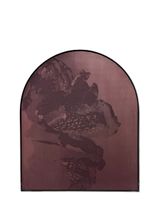
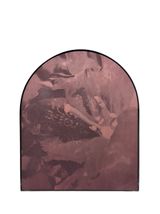
Chen Xiaoyi’s work is based on photography, but she also produces sculpture and sound and video installations. She also uses photogravure on paper and zinc plates.
Ocula

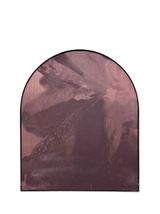
View Chen Xiaoyi's Artworks




















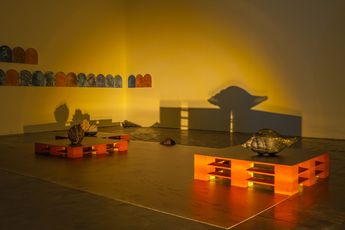
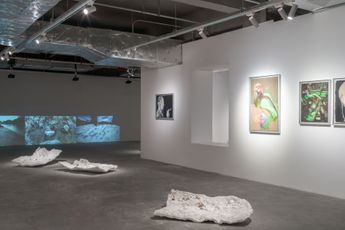
Explore Chen Xiaoyi's Exhibitions




Explore and Follow Artists Shaping Contemporary Art
A respected voice in contemporary art discourse.
Focusing on ambitious storytelling and insightful art-world commentary. Ocula Magazine publishes in-depth interviews, critical essays and timely analysis on the artists, exhibitions and ideas driving the global art world.
Learn more about Ocula Magazine
Showcasing the best of the art world.
Ocula partners with galleries from around the world to highlight their artists, artworks and exhibitions. Gallery membership is by application and invitation, with each member vetted by an independent panel.
Learn more about Ocula Membership
Specialises in the sale of major artworks.
Led by a team with deep ties to the world’s leading auction houses, galleries and collectors. Ocula’s advisory team offers bespoke services to high-net-worth clients from around the world who are looking to acquire the best of contemporary and modern art.
Learn more about our team and services