




In a State of Luxe
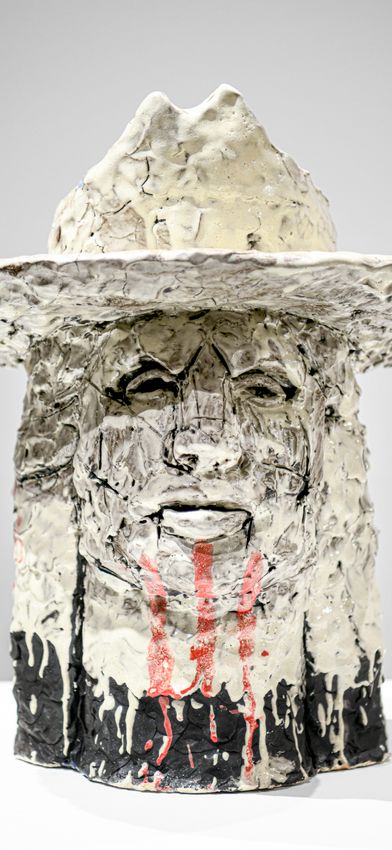
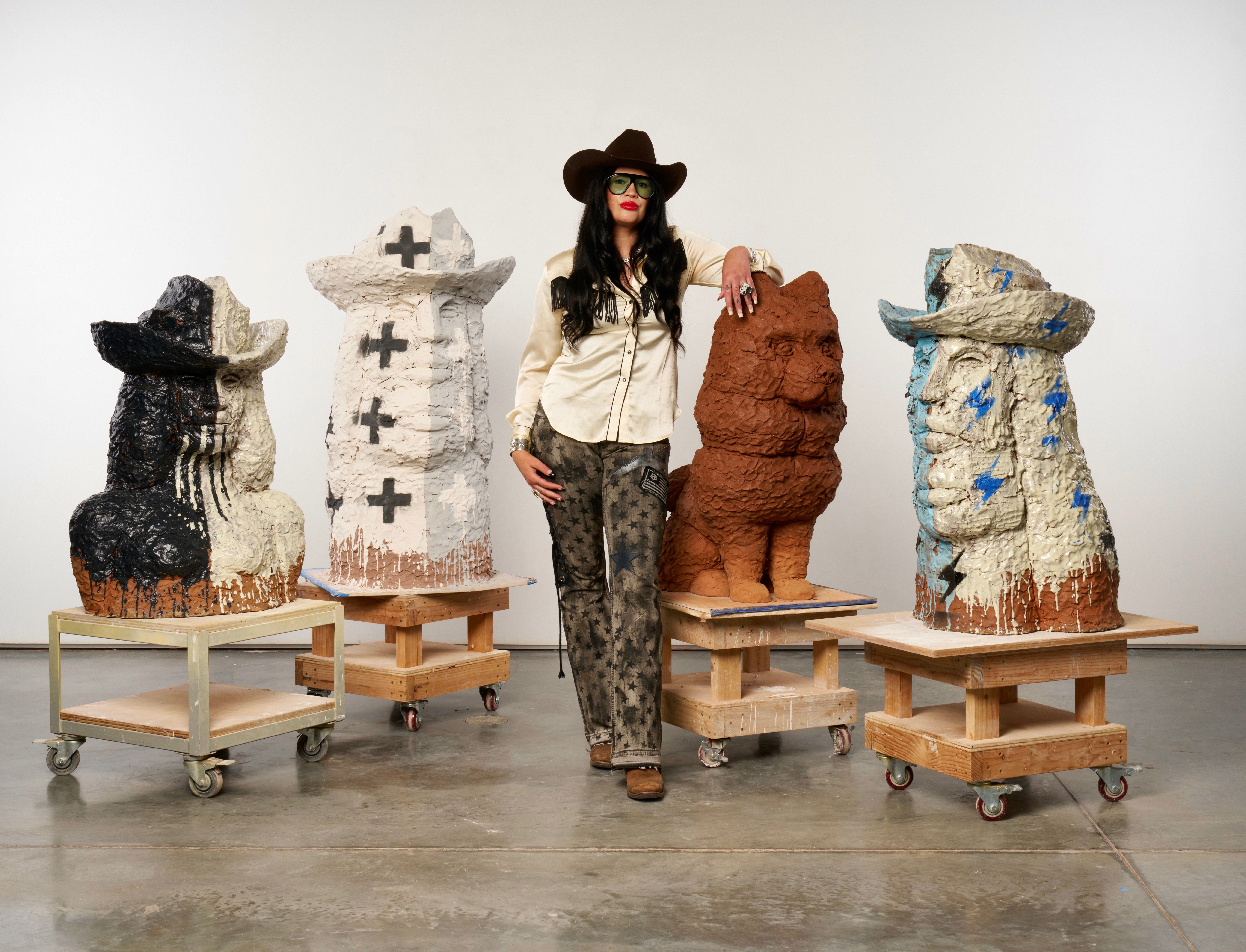
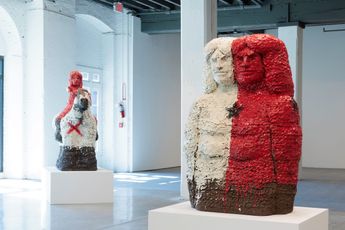
What do designer goods and global consumerism mean to artists currently exhibiting at the Whitney Biennial? Aimee Walleston talks to Raven Halfmoon and the CFGNY collective about access to art, capitalism and power dynamics, and how to define “luxury”. Save to My OculaOklahoma-based sculptor Raven Halfmoon creates monumental stoneware sculptures. Sun Twins (2023) stands almost two metres tall and was made using a clay coil technique rooted in her Caddo Nation heritage. While tradition informs her practice, Halfmoon also includes brand signifiers in her work that reveal her identity as a millennial American woman who loves luxury fashion labels.
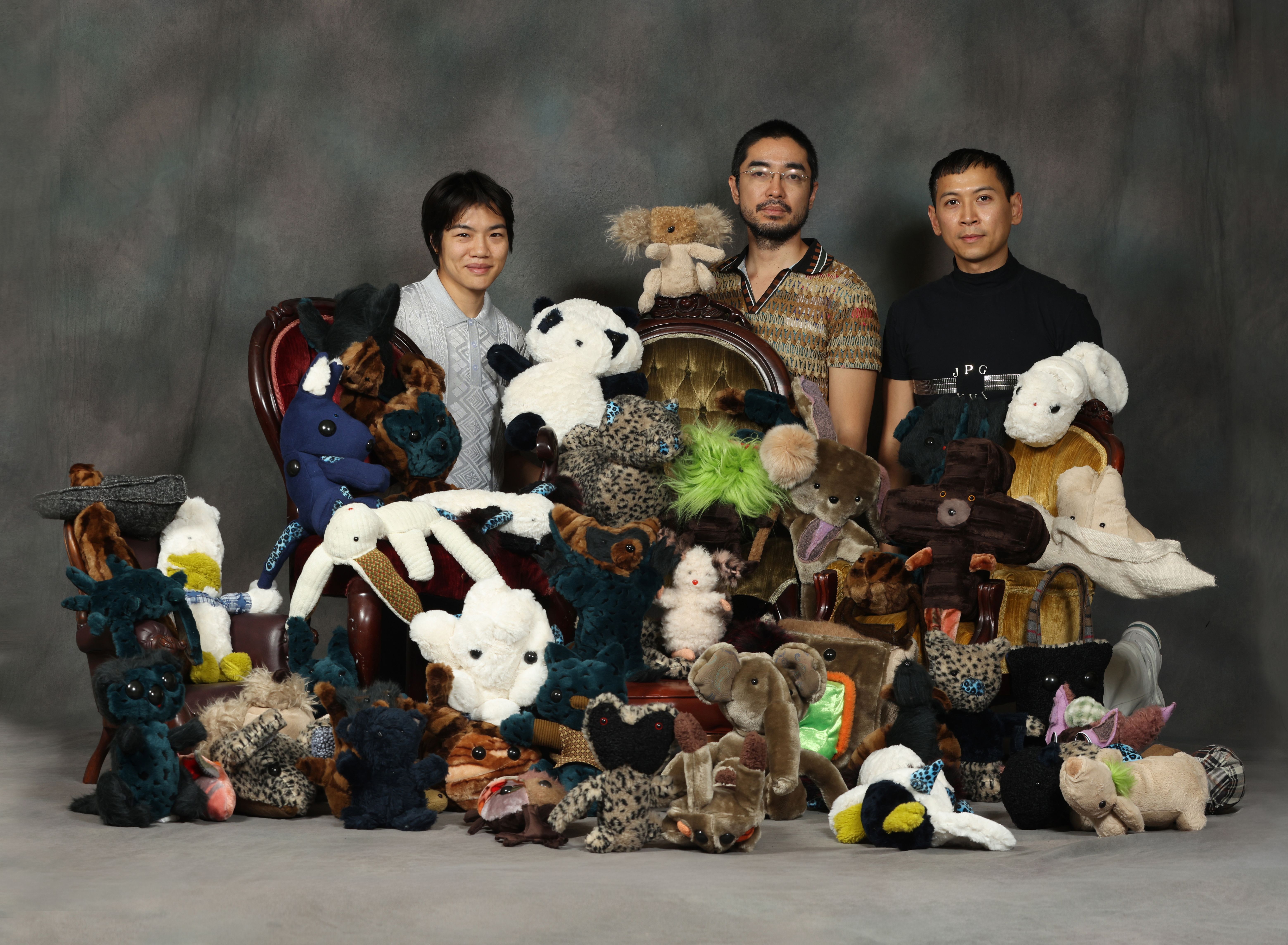
Halfmoon’s work is currently on display at the Whitney Biennial in New York City. Her interest in the signifiers of luxury and the pervasive reach of fashion branding is echoed by artist collective CFGNY, an acronym that stands for Concept Foreign Garments New York. Artists Daniel Chew, Ten Izu and Tin Nguyen explore the seductive forces of fashion in their work and everyday lives through the lens of their self-described “vaguely Asian” collective identity and aesthetics. An installation by the group is also on display in the Whitney Biennial: titled Continuous Fractures Generating New Yields (2025), it features porcelain sculptures cast from the imprints of cheap household objects manufactured in China, alongside a stuffed toy caterpillar.
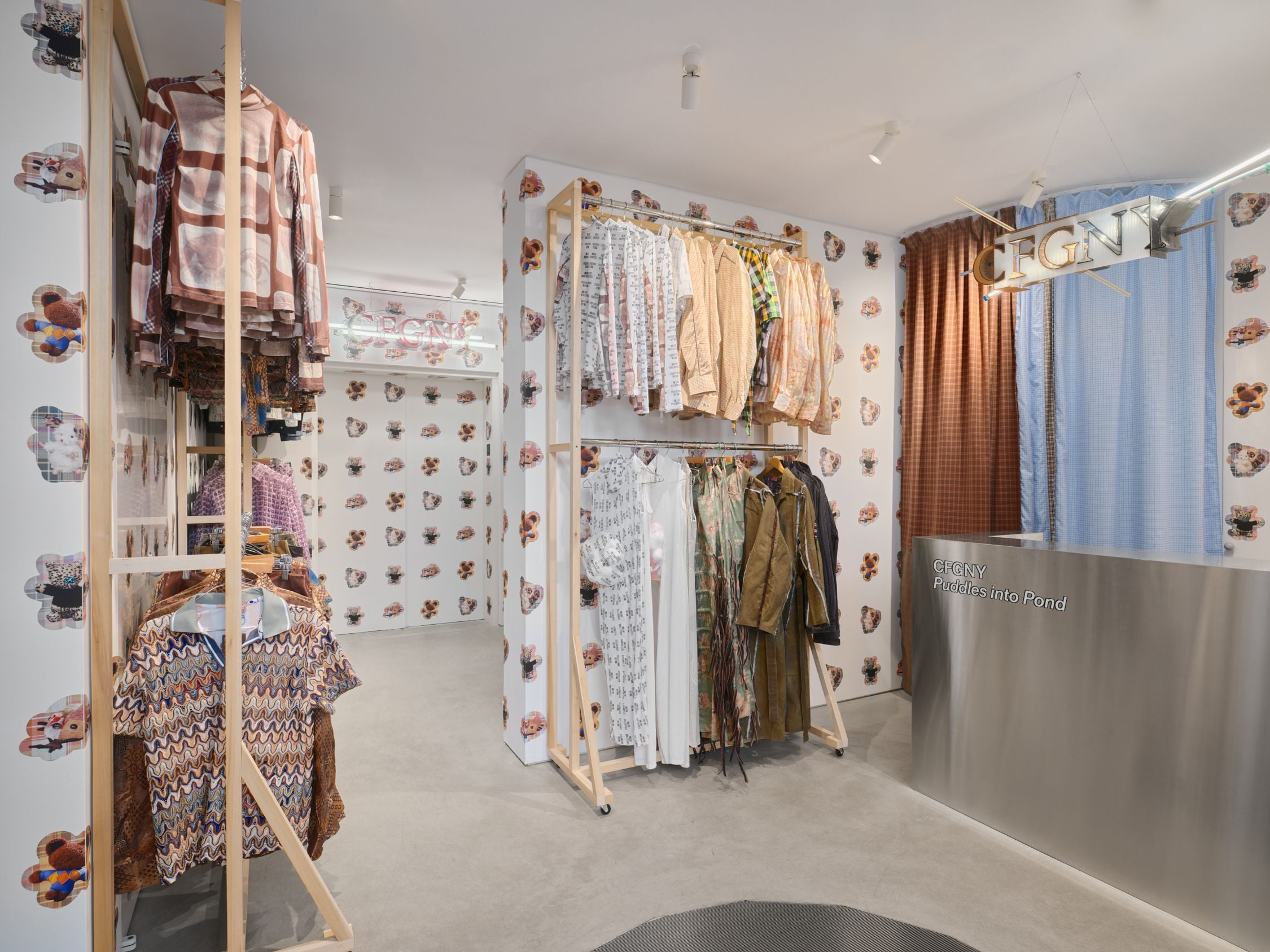
Both CFGNY and Halfmoon have experienced a new wave of attention this year. Halfmoon currently has a solo exhibition on view at Ballroom Marfa, Flags of Our Mothers, while CFGNY is exhibiting work at Amant in Brooklyn, Puddles into Pond. Last week the collective debuted CFG- 20260717, a performance at Amant exploring video technology that features the artists’ latest fashion collection, produced with tailors in Ho Chi Minh City.
Halfmoon and CFGNY share an understanding of how the shifting tides of global power dynamics can be traced through the production and circulation of luxury and designer goods, and the ways in which personal identity can become entangled with signifiers of contemporary consumerism.
Aimee Walleston: Fashion and luxury are central themes in each of your practices. Take Raven’s sculpture, Caddo x Couture (2019), which features the interlocking Cs of the Chanel logo, while more recent sculptures are often marked with her own name in a similar gesture of branding. And CFGNY is a fashion line that consumers can buy...
CFGNY (Daniel Chew): Our work looks at the way luxury goods have racialised associations and what that means in the globalised world that we live in now. “Made in Italy”: that’s the “brand of luxury”, you know? But now that the structure of global capitalism and production chains has shifted, a lot of these products are not even made in Italy any more; they’re “finished” in Italy. The last step in the process is made in Italy so they can use that label. And there’s also the fact that Chinese factories have opened up in places like Prato.
CFGNY (Ten Izu): There are different types of aspirational luxury. Coming from a middle-class Asian background, Coach was a signifier of luxury for me. Later, when I worked as a personal assistant to someone who had a lot of money, I saw what luxury means when you can easily afford a million Coach bags. Coach is not a luxury for them; it’s pretty trashy.
When someone is regularly buying Louis Vuitton bags or has a private shopper at Marni, I came to understand that luxury really means access to people’s time. And being treated in a certain way that signifies that you have access to people as resources, rather than just the objects themselves.
“We’re not exactly a fashion label; we’re artists who make fashion”
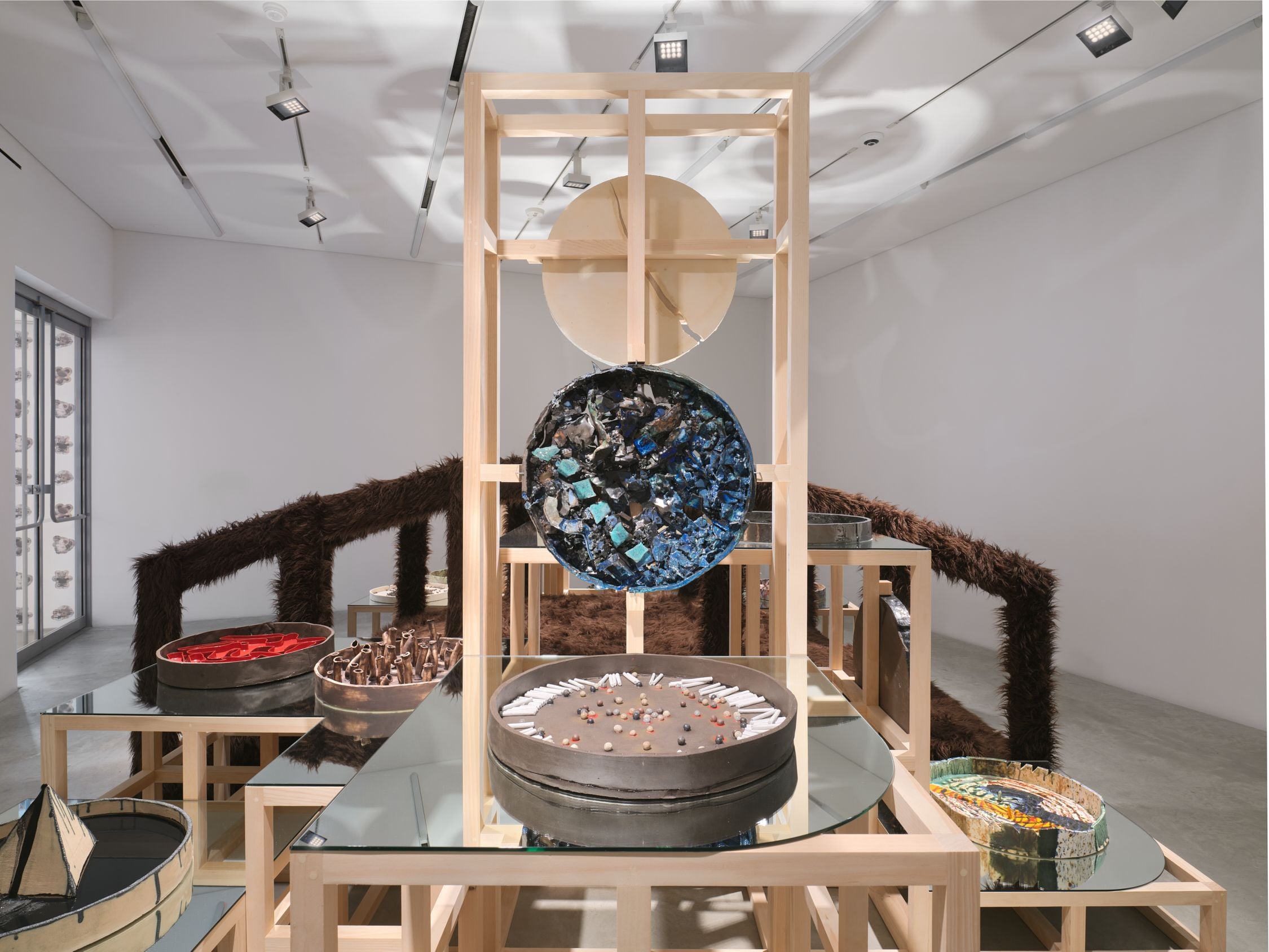
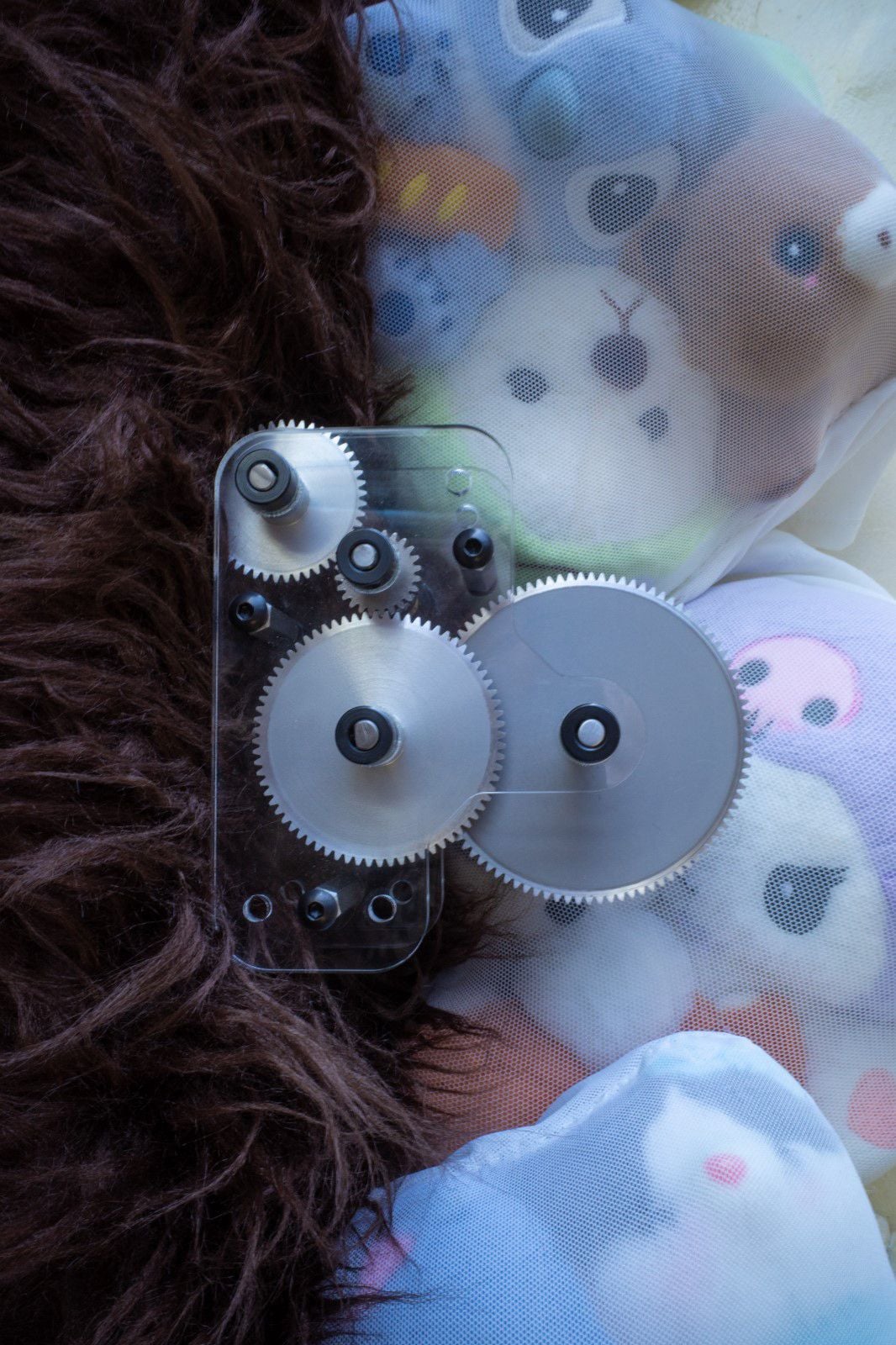
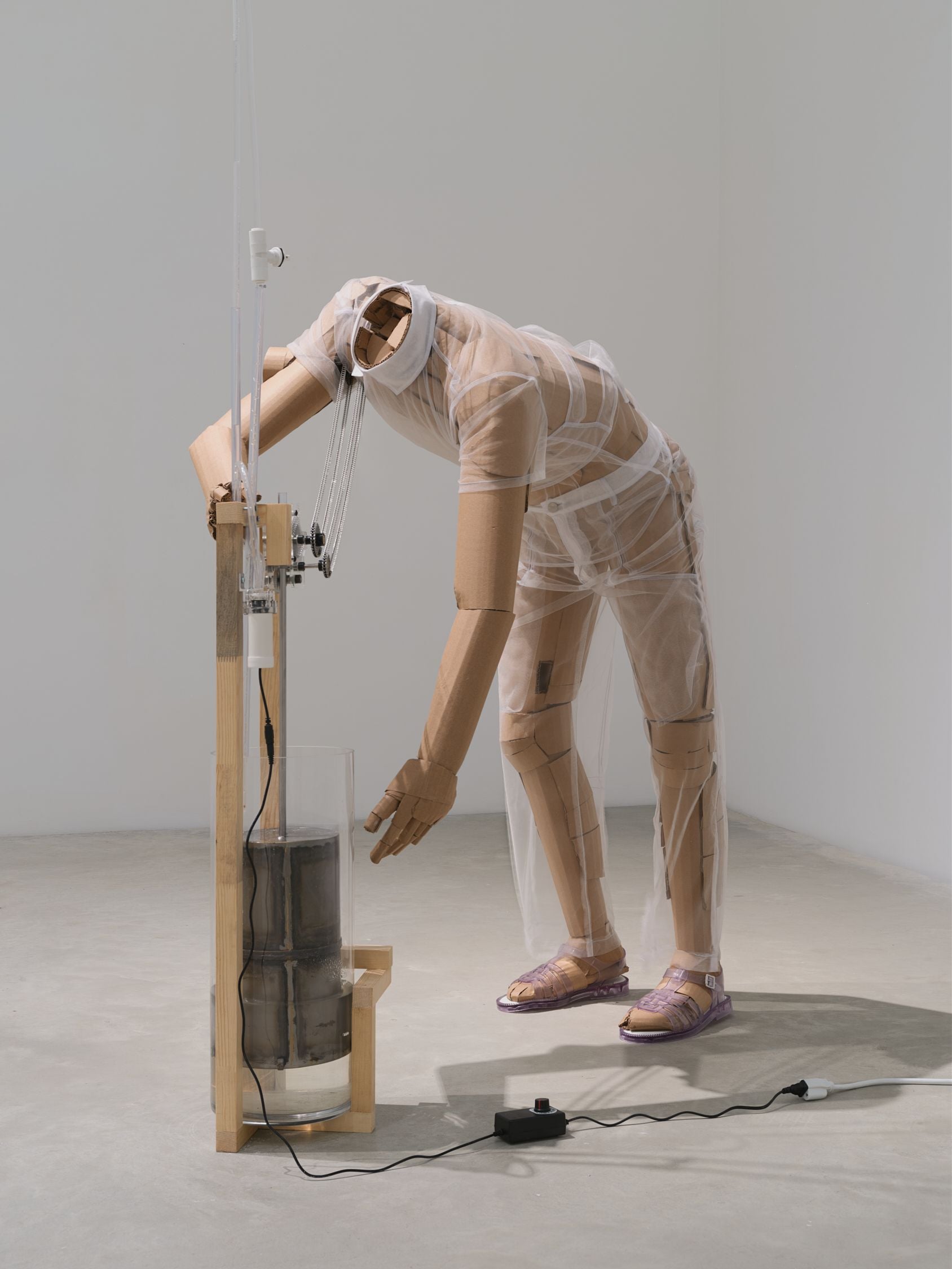
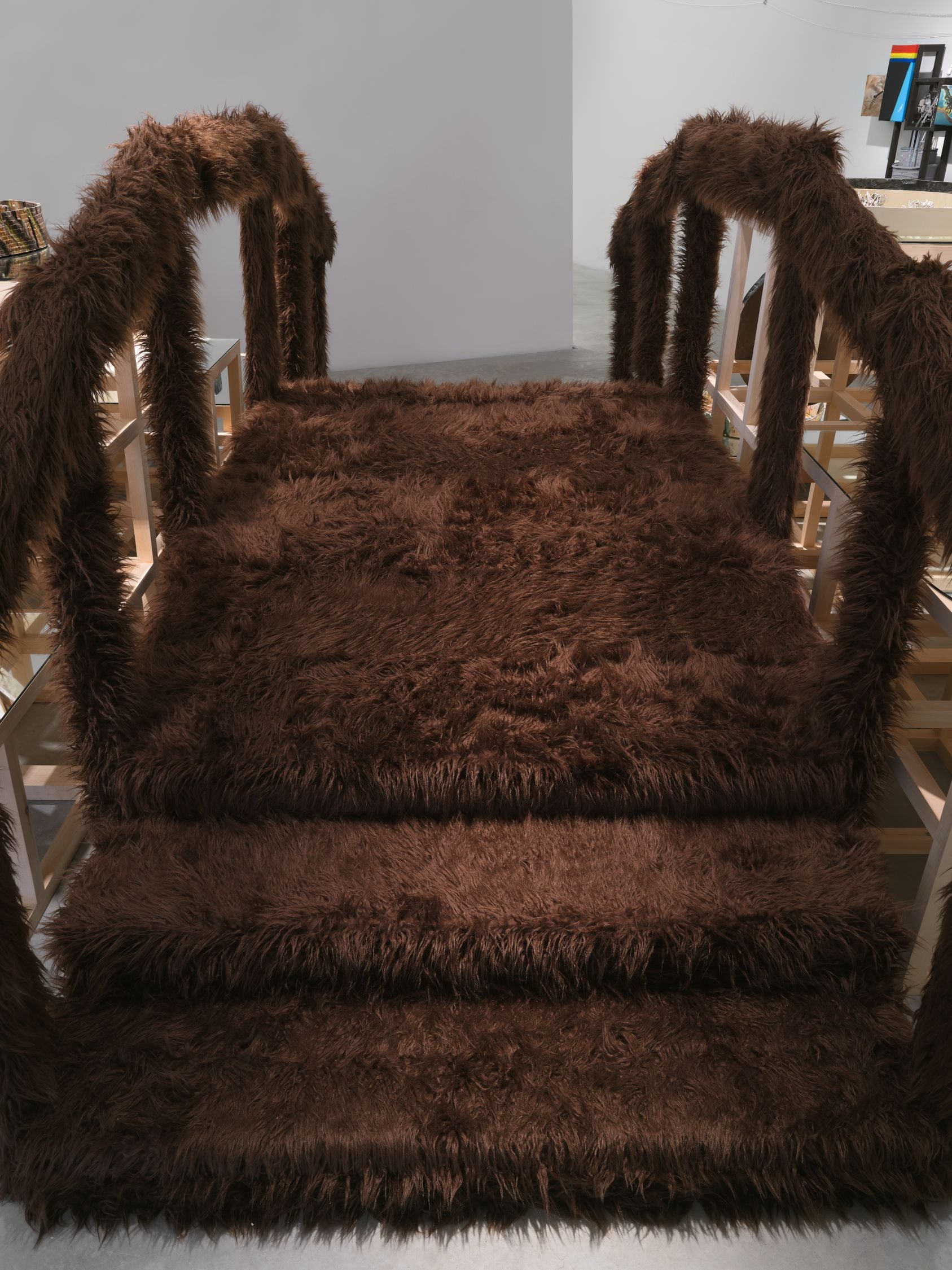
CFGNY (Tin Nguyen): Growing up in the Vietnamese community, I thought of luxury from a racialised perspective. I do wear some of it but I also wear bootlegs of it, and we’ve done projects with ideas around the bootleg. I think we’re really interested in dismantling ideas around luxury and branding, trying to create transparency between production and value and material.
Raven Halfmoon: There are no designer stores anywhere in Oklahoma and my family didn’t own luxury items. When you did see it around, you would maybe see someone with a Chanel or Gucci purse. But it’s a way of marking yourself in community.
I started to pick up on that branding and look at that through an Indigenous lens. My ancestors have been putting the same iconography on pots throughout time. Anthropologists can narrow down that this one image comes from this one time and place in this culture, just based on that one motif. I love this idea that there was already branding happening thousands and thousands of years ago.
To me, it’s not just luxury, not just designer clothes or bags. Branding is a strong way to put your ideas out there and to mark something in time and place. I like that concept of combining both these ancient motifs within my work, but then also pulling in contemporary motifs that exist within my time.
AW: Does CFGNY think of branding in this way?
CFGNY (Ten Izu): As a collective, we draw a lot of our lineage from [NYC art and fashion collective] Bernadette Corporation, which was active in the 1990s. We are interested in the way they used the idea of a corporation to anonymise themselves.
Working collectively also allows us to move through different systems more easily. We’re not exactly a fashion label; we’re artists who make fashion. To loop it back to luxury, we make garments because we want people to actually wear them. Very few people can buy our art or buy our sculptures, but the clothing is much more accessible.
RH: As a collective, with your pieces and the items you sell, is it important for your audience to understand and recognise that they’re wearing your products? CFGNY (Daniel Chew): I think we’re happy if someone just likes a shirt and doesn’t care at all about who we are or what we do. We’re really interested in the production side of an art practice, but then we’re also interested in the conceptual output. At the Whitney, if people don’t really know who we are, they still might just like the bag or the shirt. Their interest then might lead them to look up what CFGNY is, learn more about it, and then start to follow the practice and the research that we do. That is my hope in terms of distribution of an object.
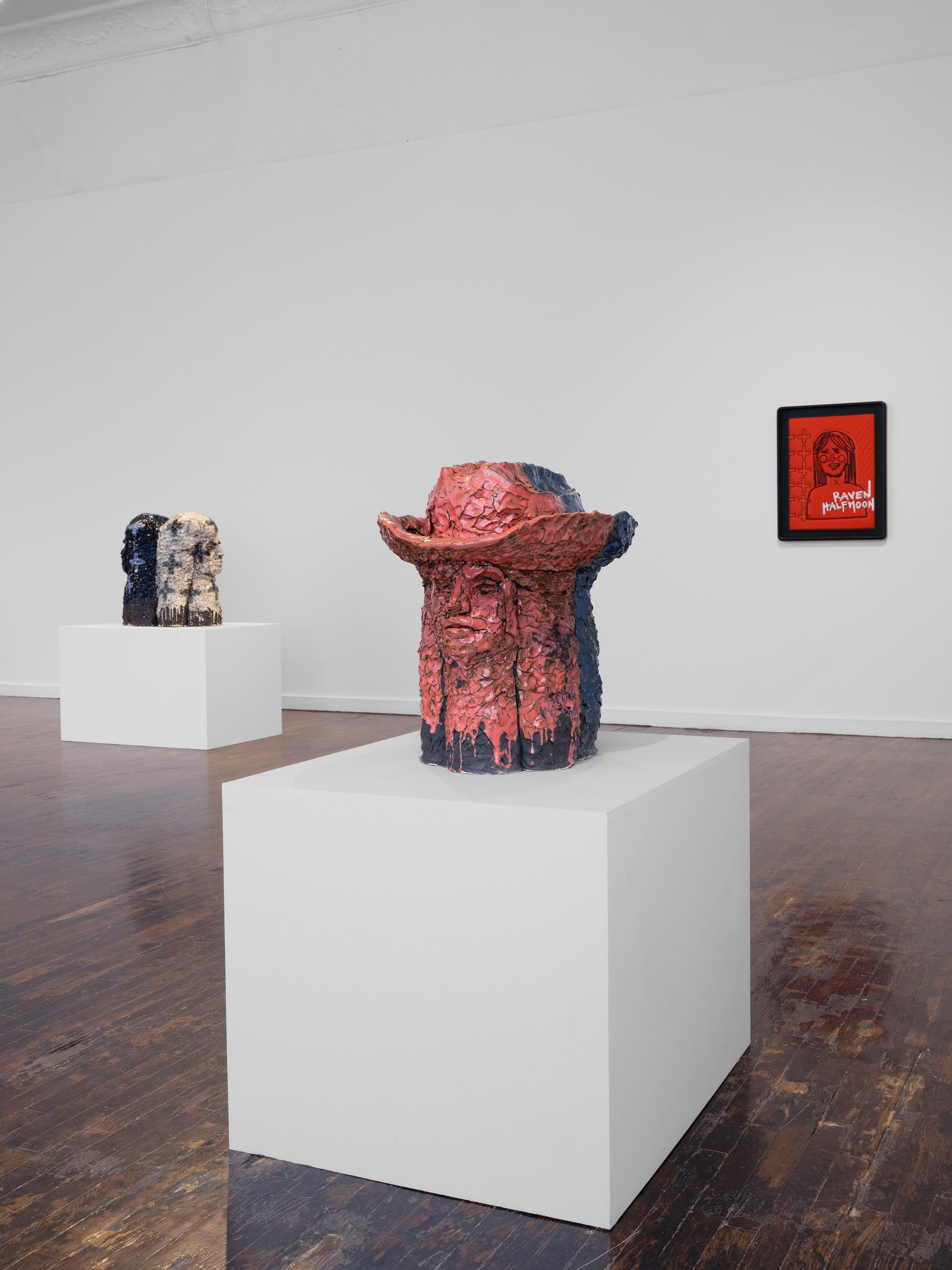
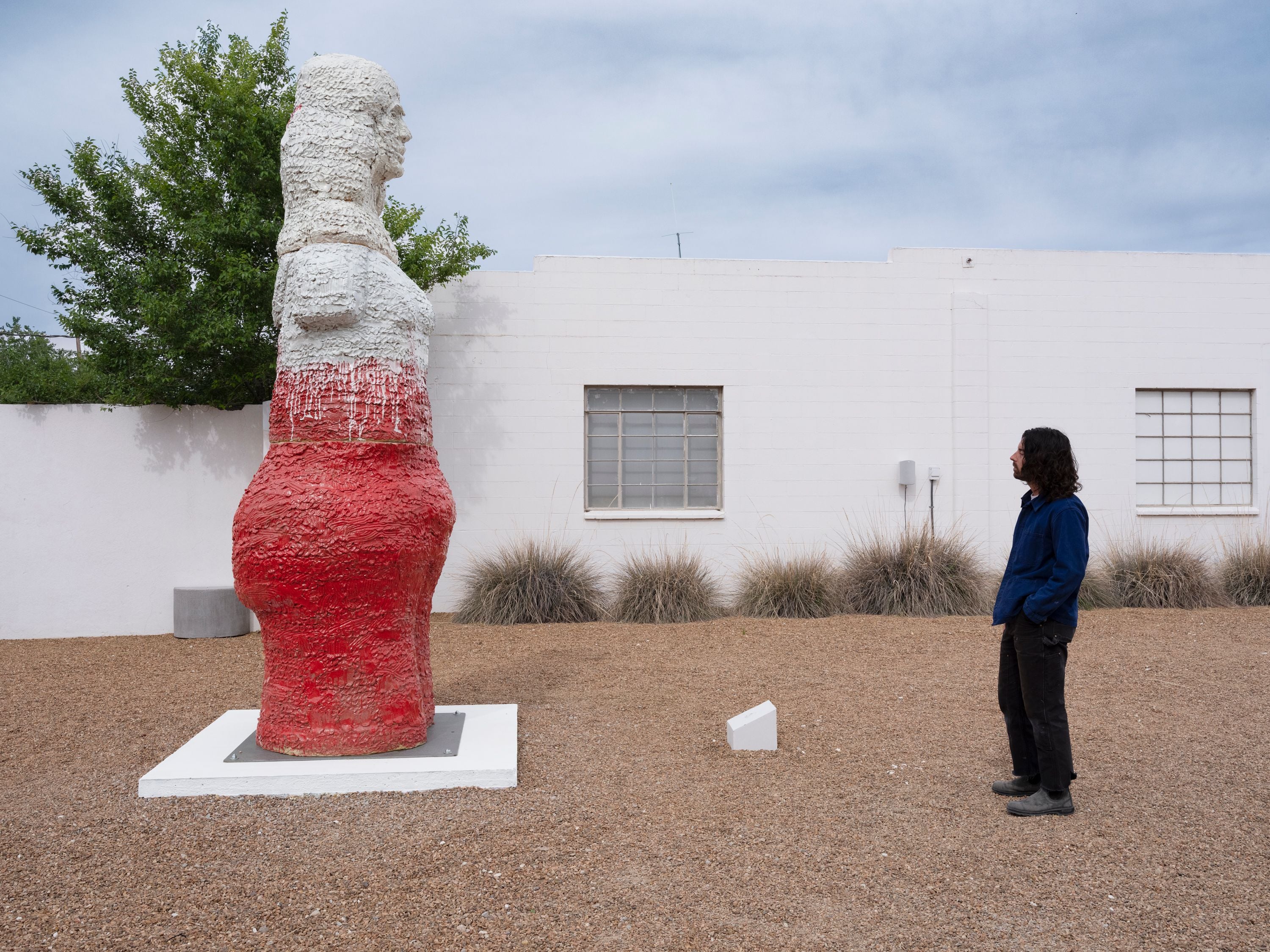
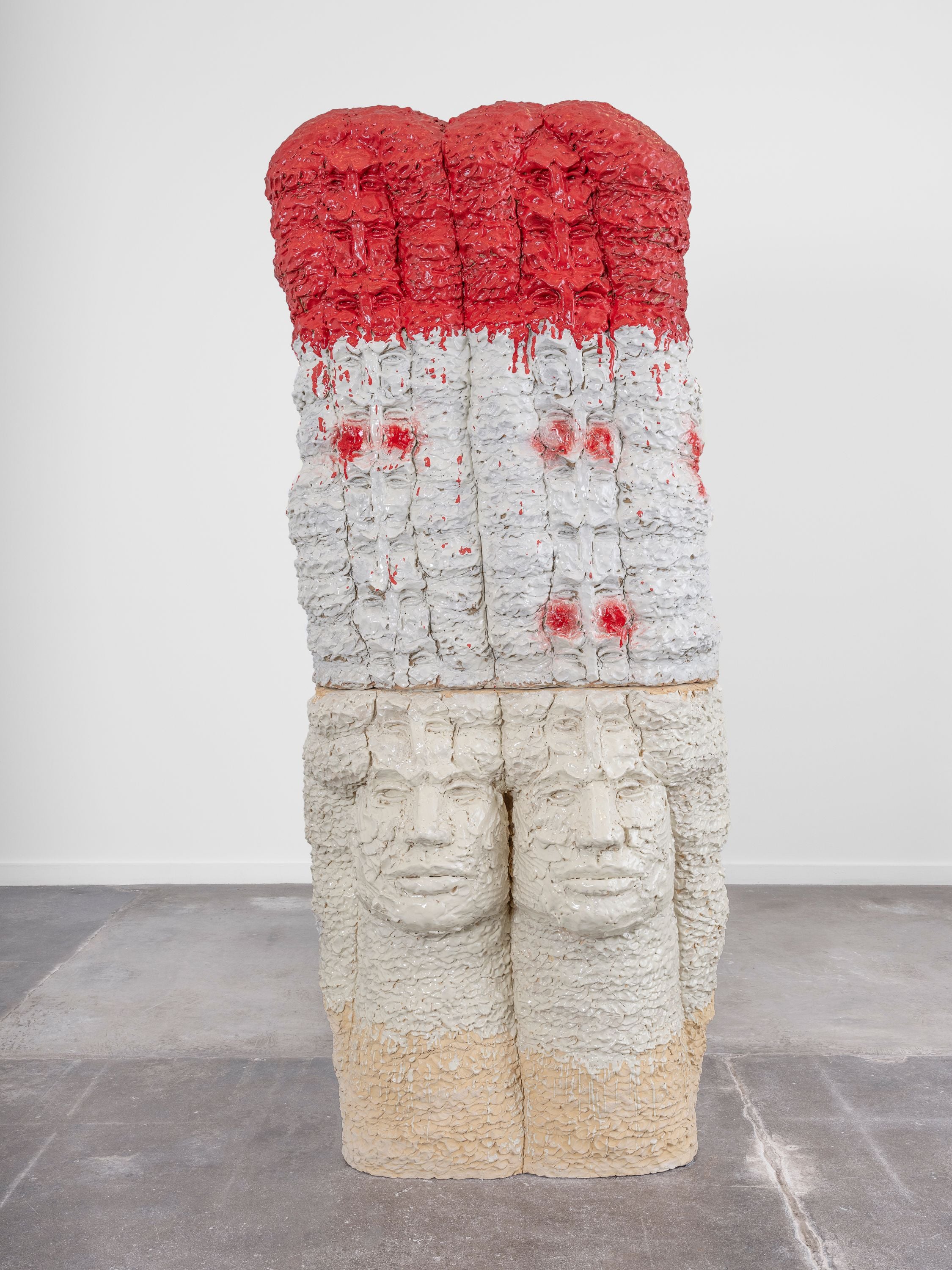
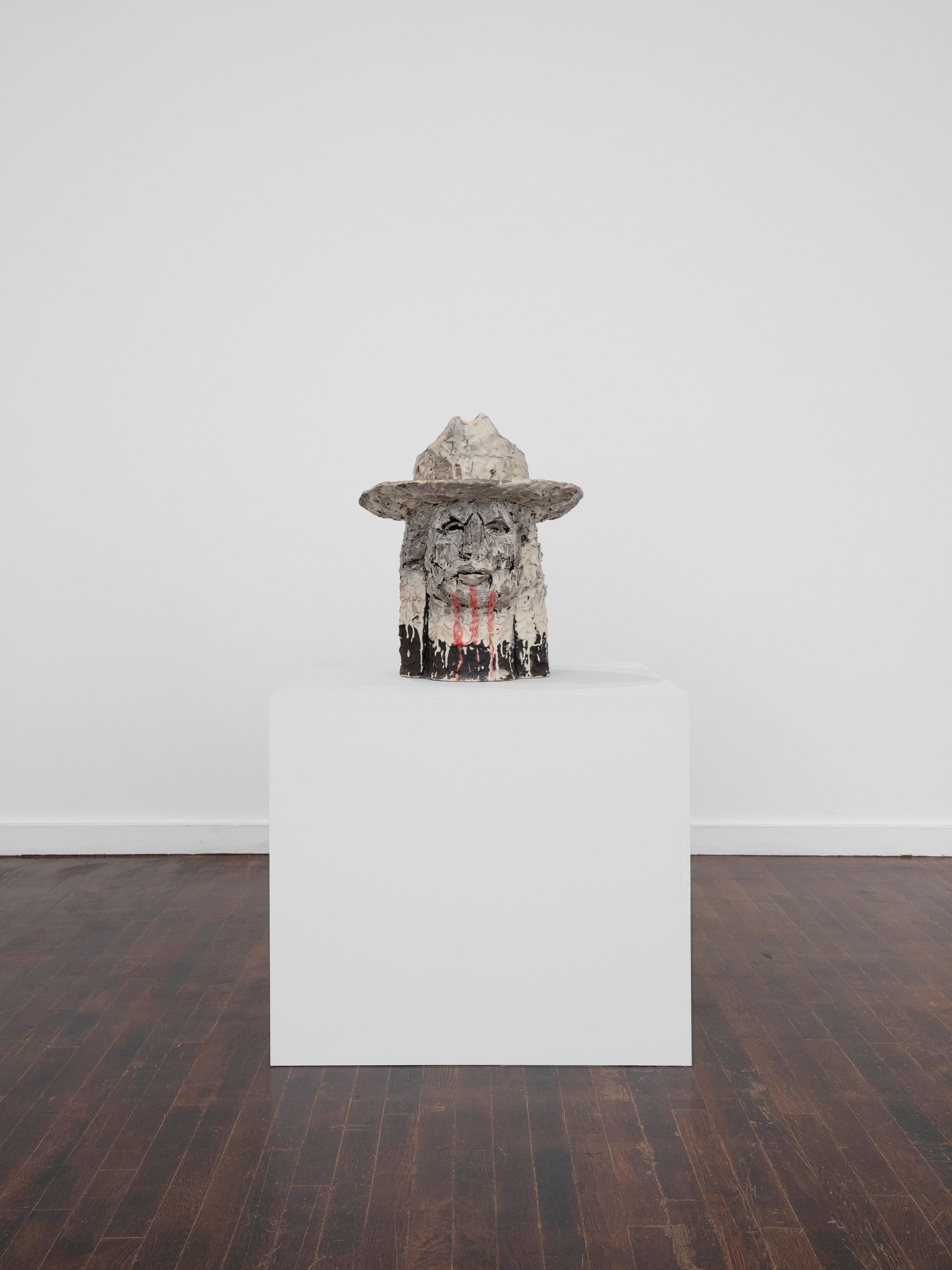
RH: I love the idea of access and luxury. With art, only certain people can afford this huge sculpture, so it’s great to think of other avenues where the everyday person can access it as well.
CFGNY (Tin Nguyen): As part of our practice, we also make stuffed animals. We just visited friends in Berlin, and the kids brought out their old CFGNY stuffed animals. It’s really cute to see that those have a life as just kids’ stuffed animals, but then those stuffed animals have siblings being shown at the Whitney, where they are being treated in a very different way.
“There was already branding happening thousands and thousands of years ago”
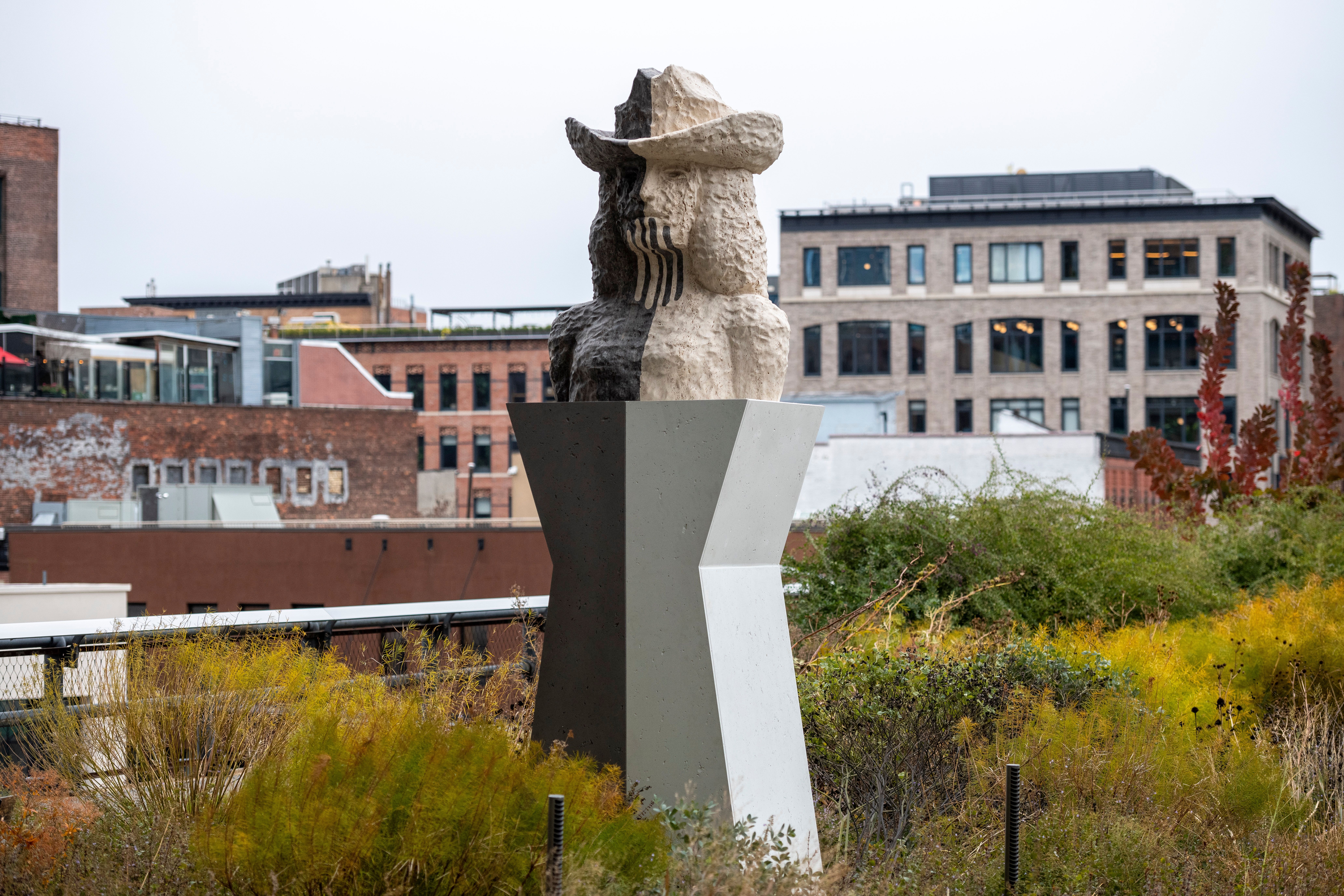
AW: Raven, your work isn’t analogous to CFGNY in terms of stuffed-animal accessibility at this point. Although you have public sculptures, like West Side Warrior (2025) up on the High Line right now, which anyone in NYC can go hang out with if they want to...
RH: The sculptures are huge and they’re supposed to be unattainable. I will continue to make them, but I keep thinking about who deserves access and who gets access to art. I’m still making these monolithic, large pieces but I really want them to be in spaces that are free and open to the public.
The idea of being able to go to the Whitney store and buy something by CFGNY is really exciting. I’m currently working on ways in which my own family can get something of mine, or maybe one day I can have something of mine. Because right now I can’t even afford my stuff. Buying art, that’s a luxury. —[O]
Raven Halfmoon, Flags of our Mothers (until 11 October) at Ballroom Marfa, Marfa, Texas CFGNY, Puddled into Pond (until 16 August) at Amant, Brooklyn, New York City
Raven Halfmoon, Flags of our Mothers (until 11 October) at Ballroom Marfa, Marfa, Texas
CFGNY, Puddled into Pond (until 16 August) at Amant, Brooklyn, New York City
Main image: A model walks down the runway in CFGNY’s CFG- 20260717, a performance at Amant featuring the collective’s latest fashion collection (2026). Courtesy CFGNY and Amant, Brooklyn, New Y.









A respected voice in contemporary art discourse.
Focusing on ambitious storytelling and insightful art-world commentary. Ocula Magazine publishes in-depth interviews, critical essays and timely analysis on the artists, exhibitions and ideas driving the global art world.
Learn more about Ocula Magazine
Showcasing the best of the art world.
Ocula partners with galleries from around the world to highlight their artists, artworks and exhibitions. Gallery membership is by application and invitation, with each member vetted by an independent panel.
Learn more about Ocula Membership
Specialises in the sale of major artworks.
Led by a team with deep ties to the world’s leading auction houses, galleries and collectors. Ocula’s advisory team offers bespoke services to high-net-worth clients from around the world who are looking to acquire the best of contemporary and modern art.
Learn more about our team and services