Press Release

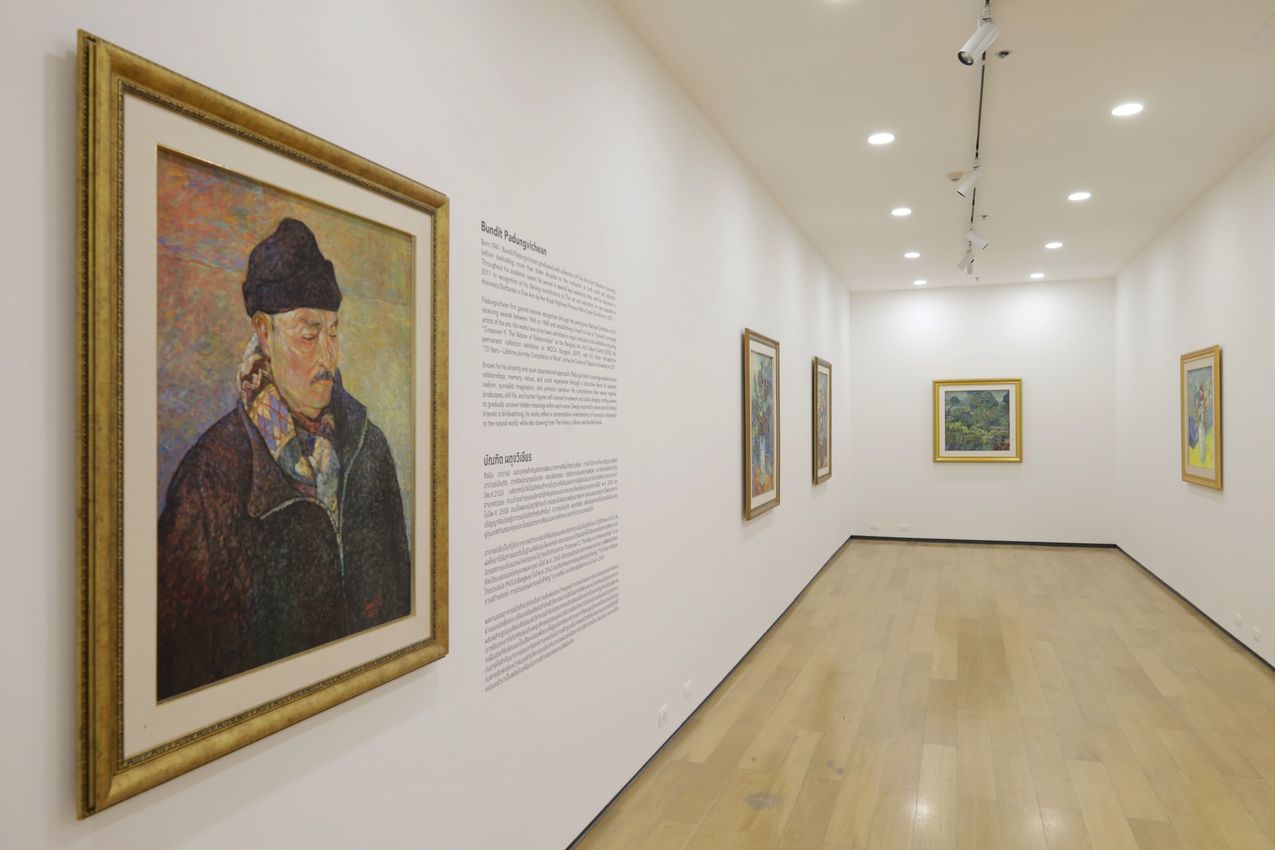
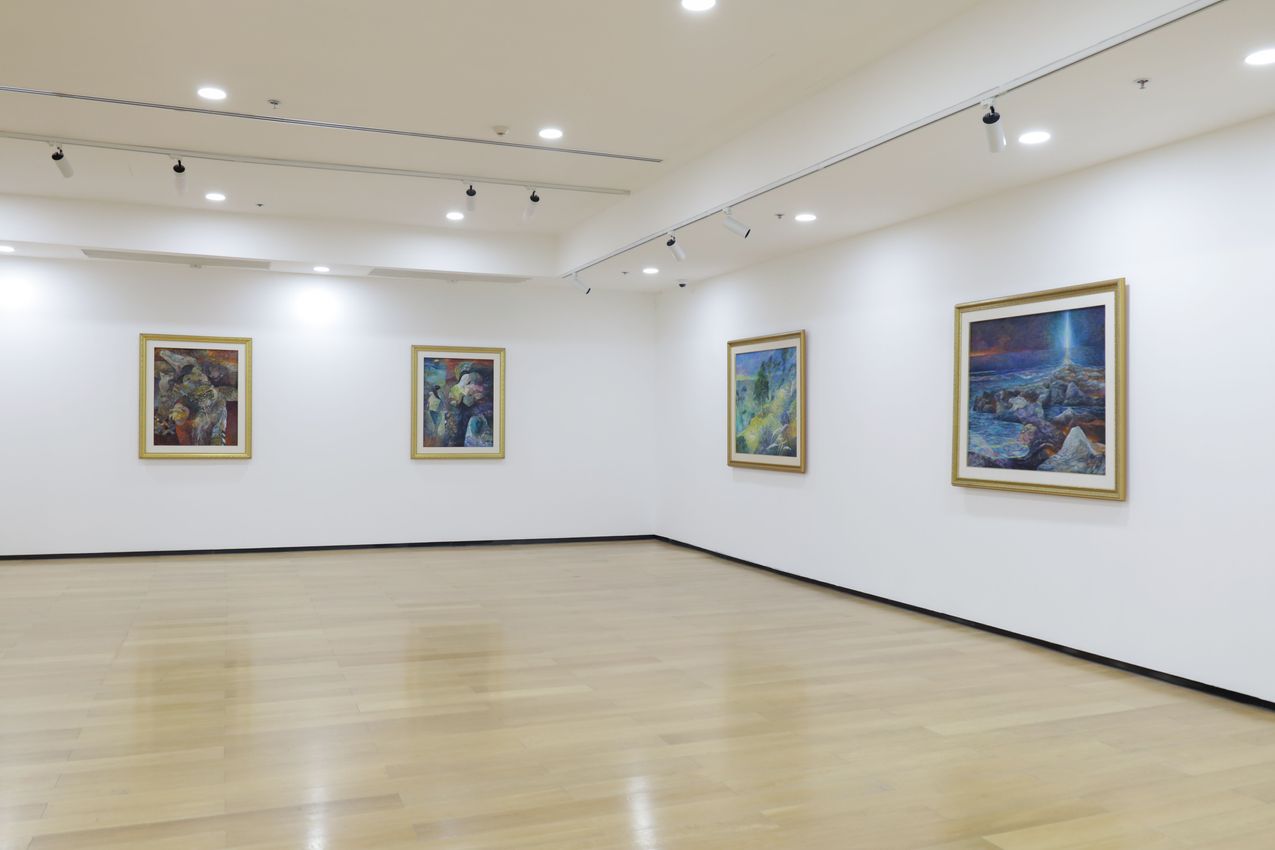
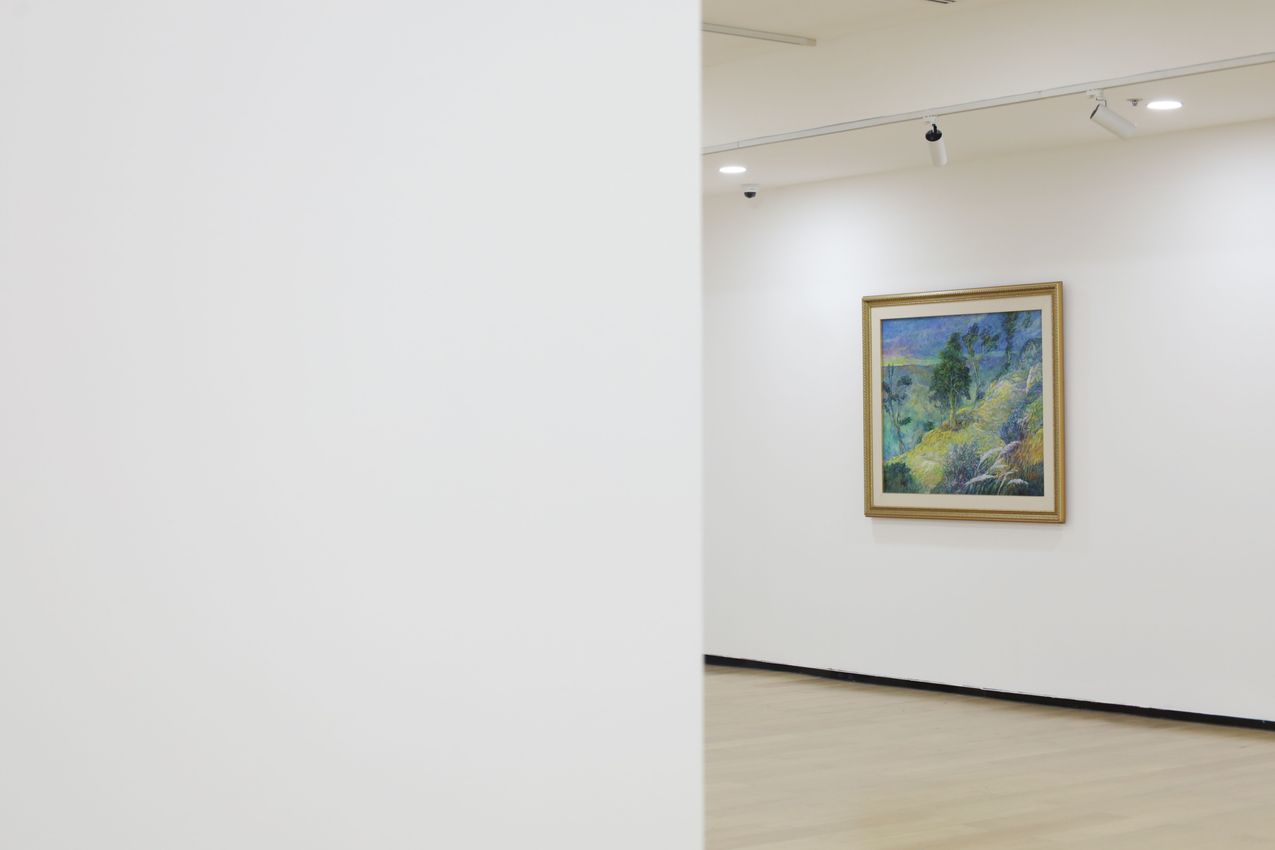
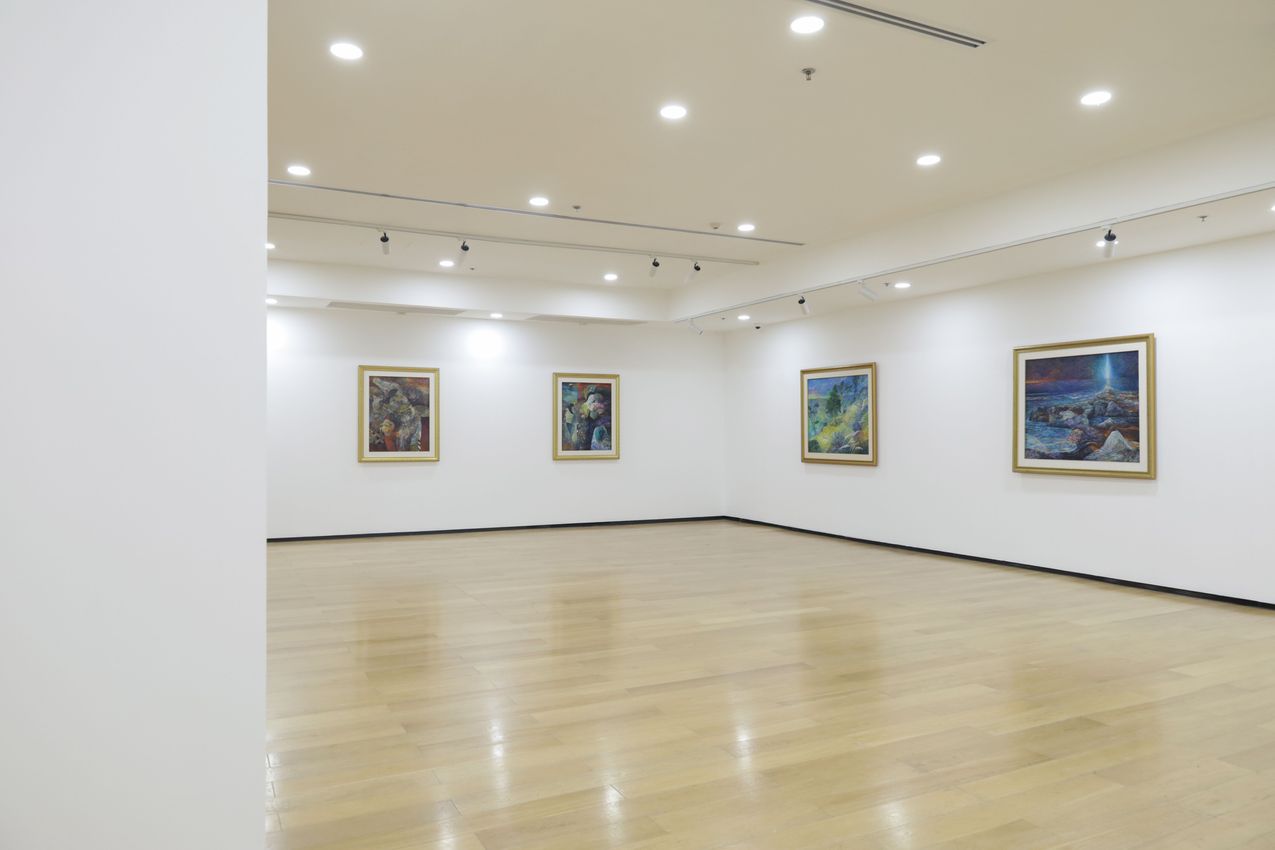
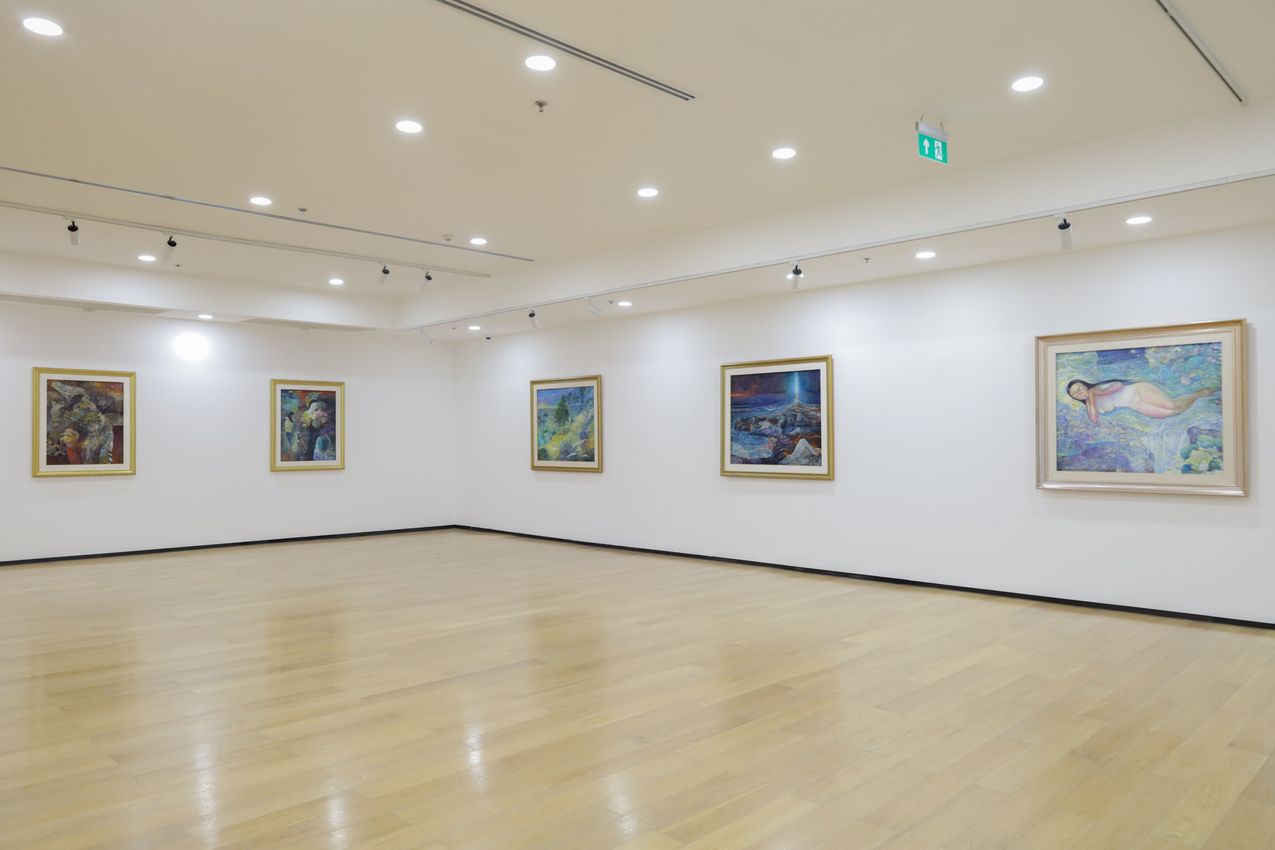
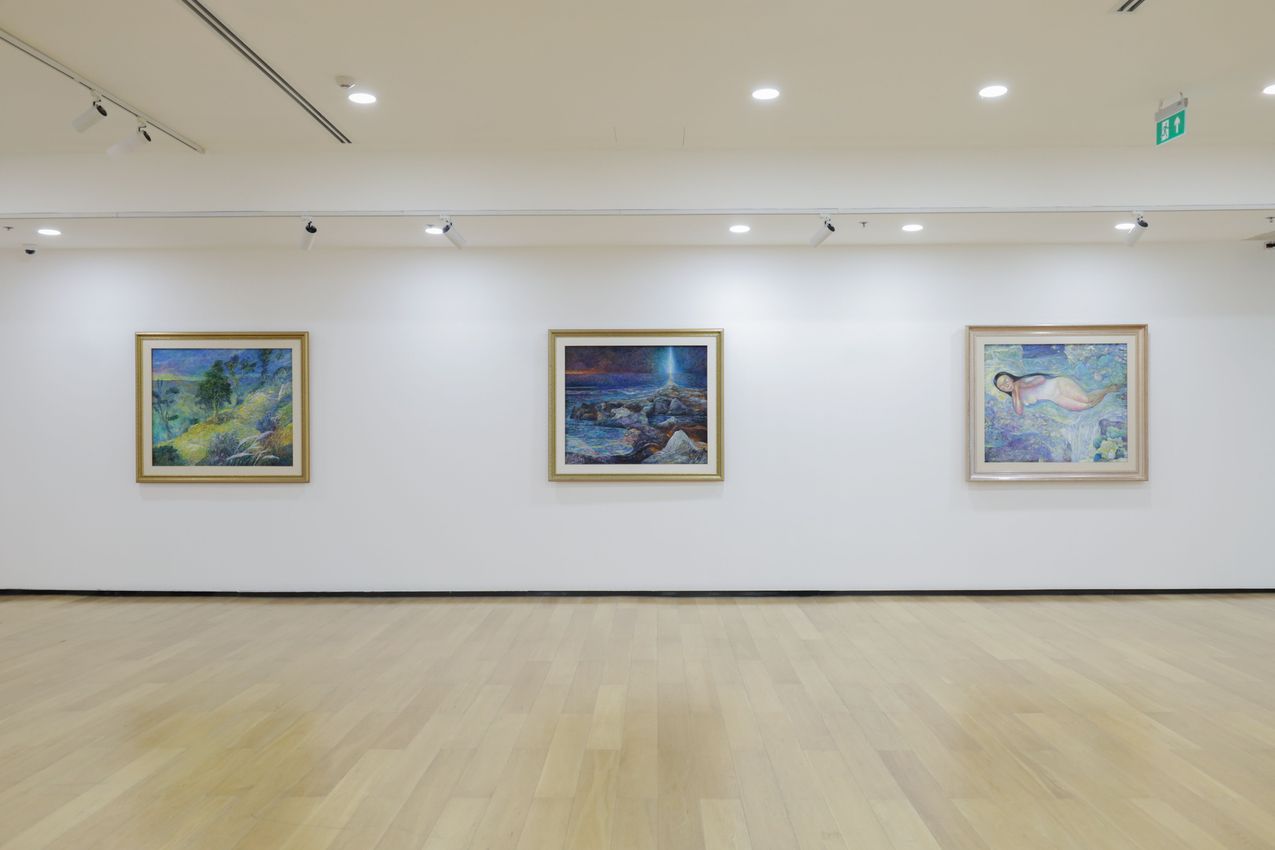
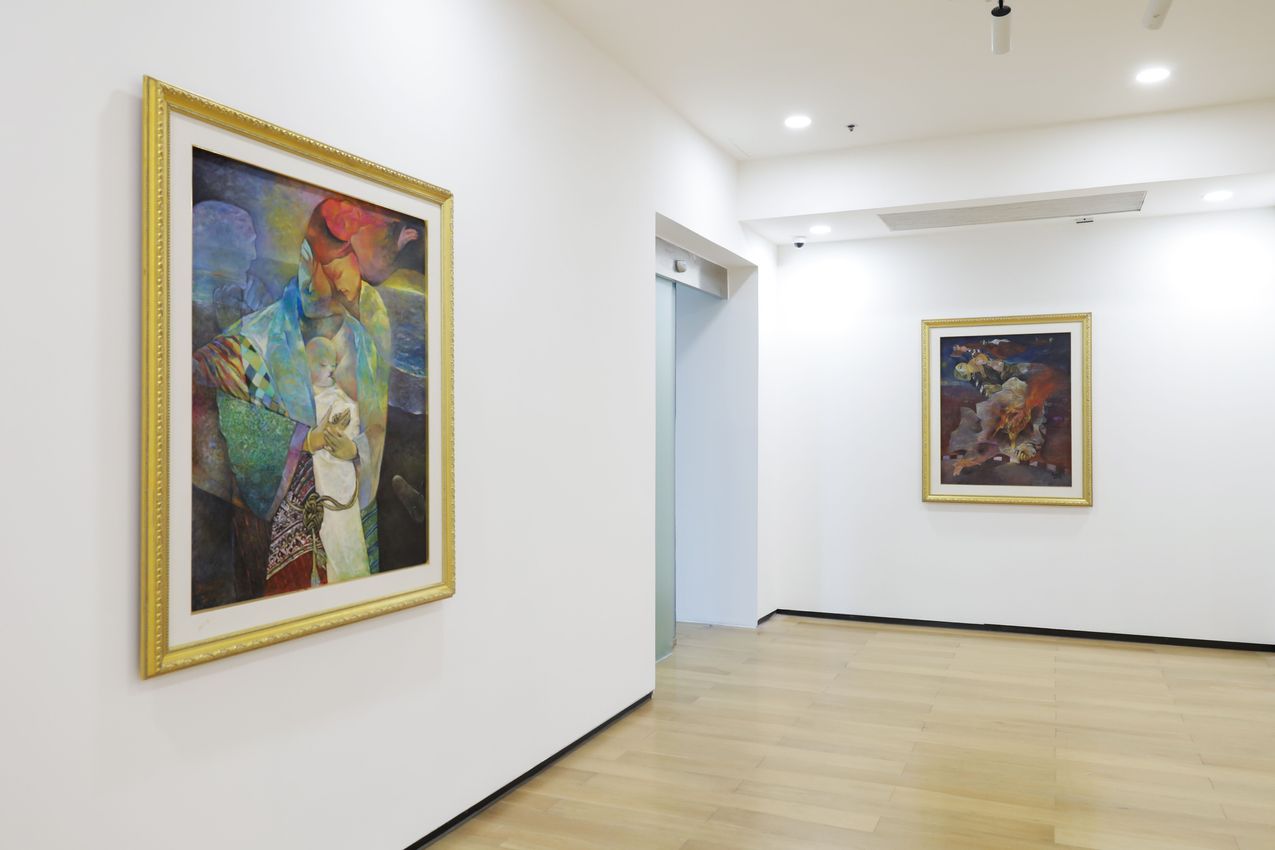
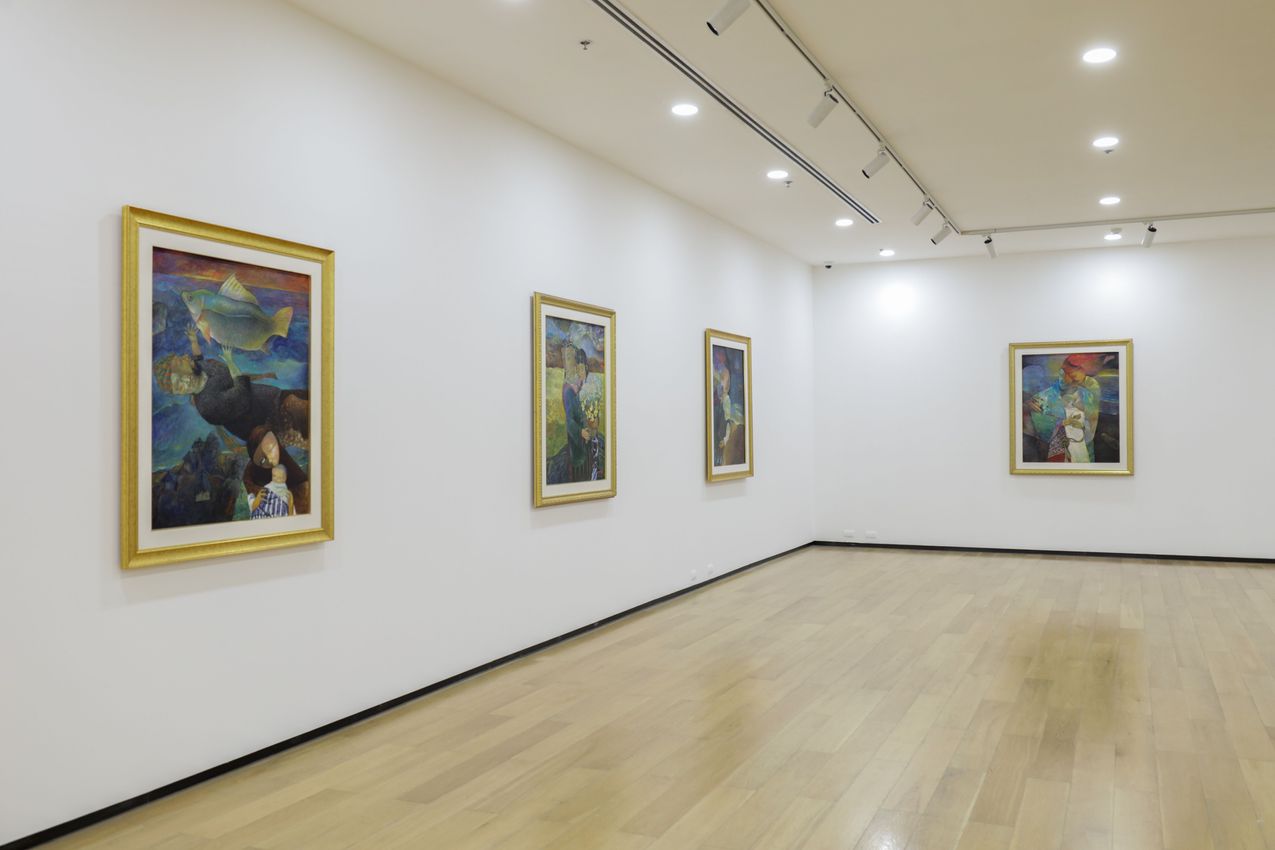
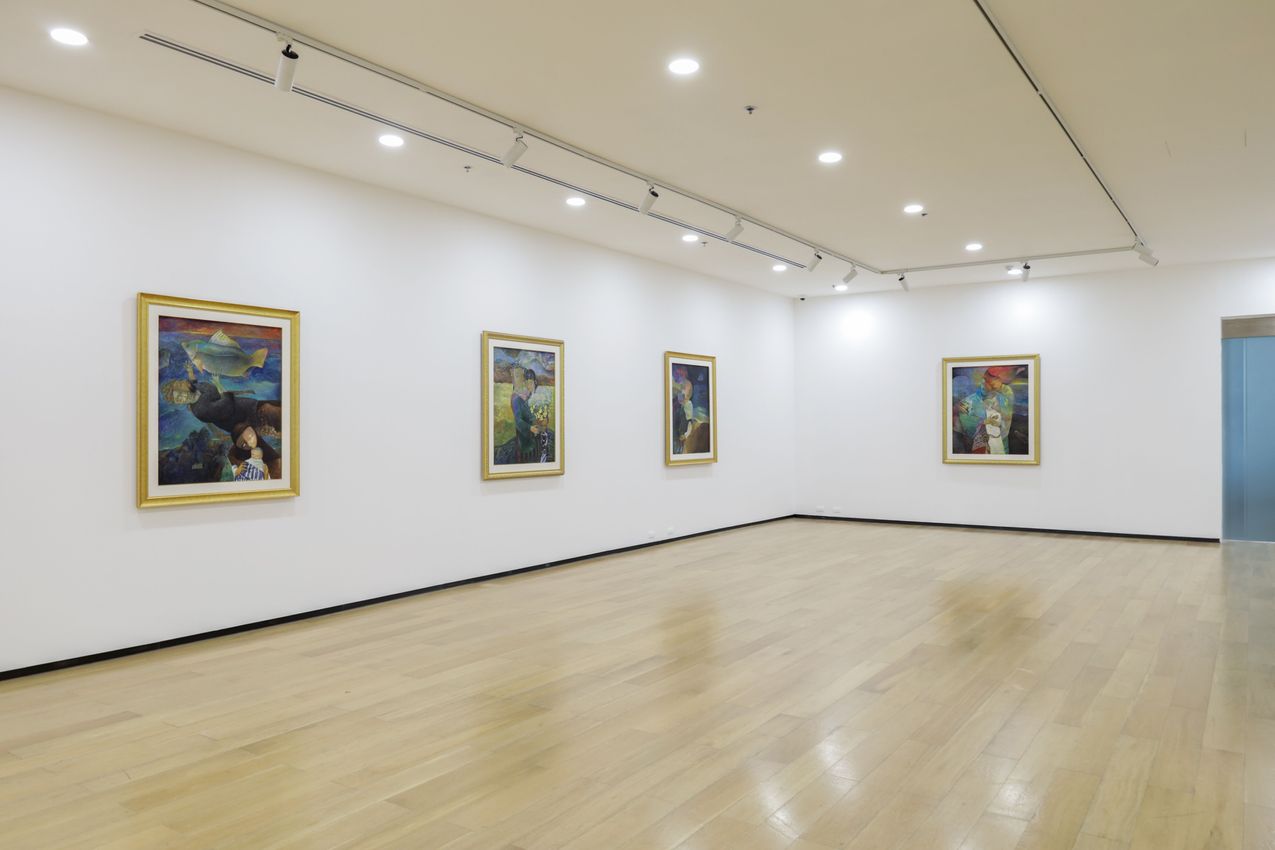
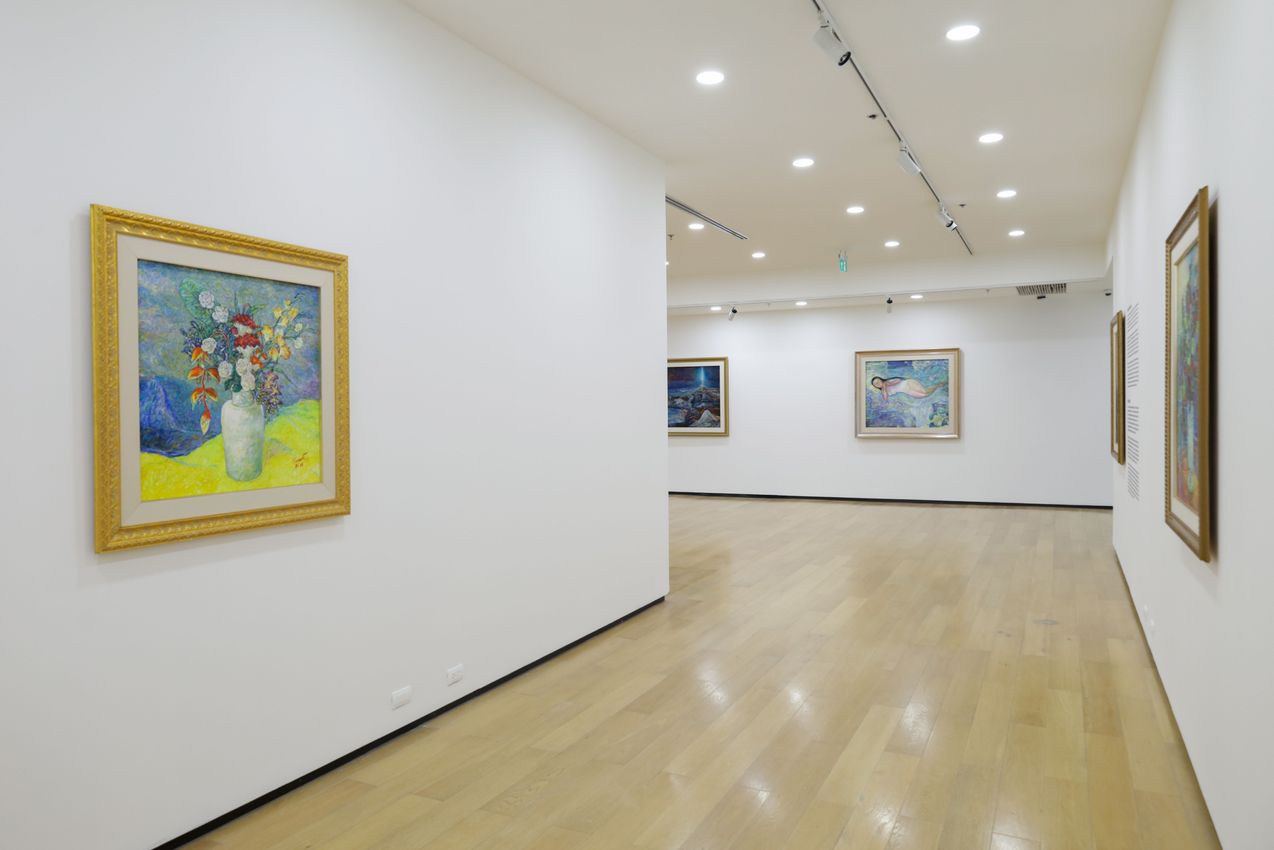
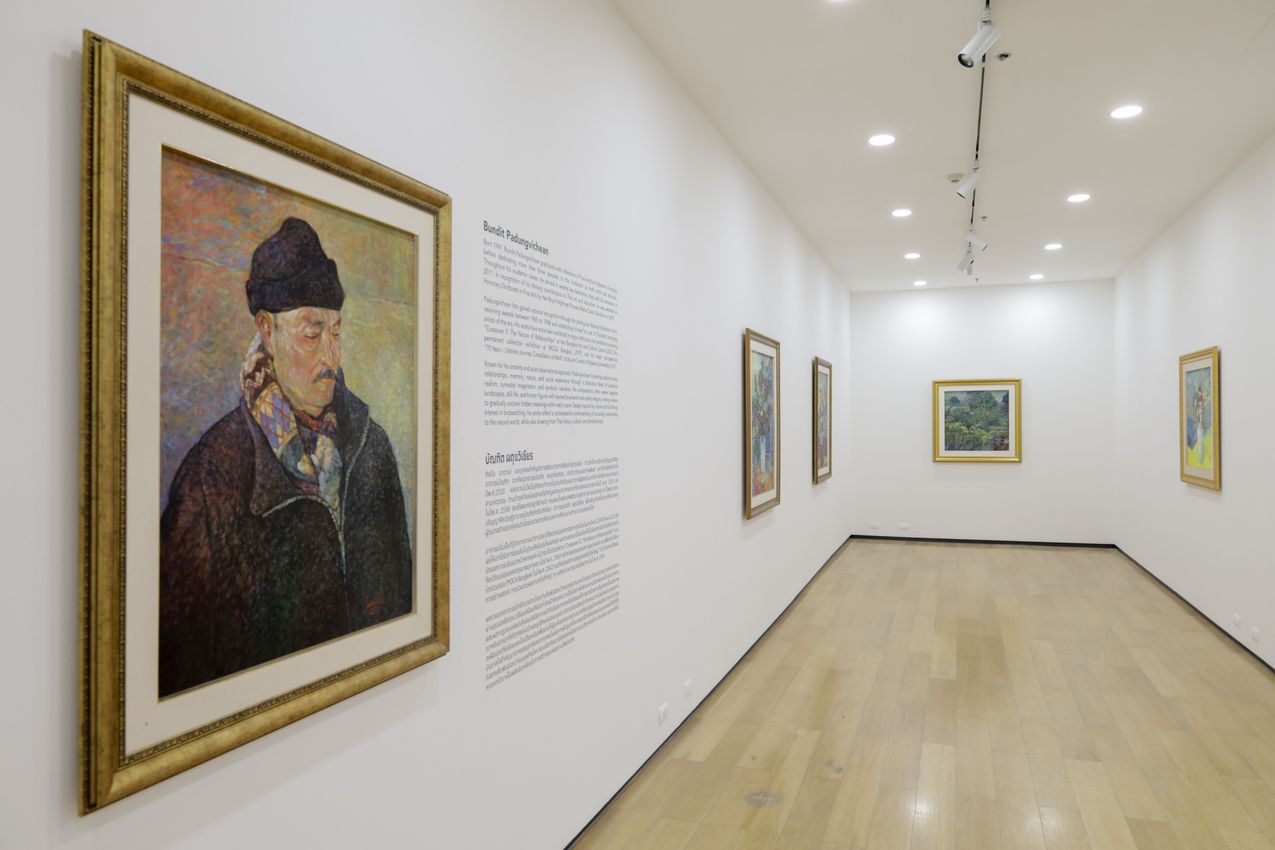
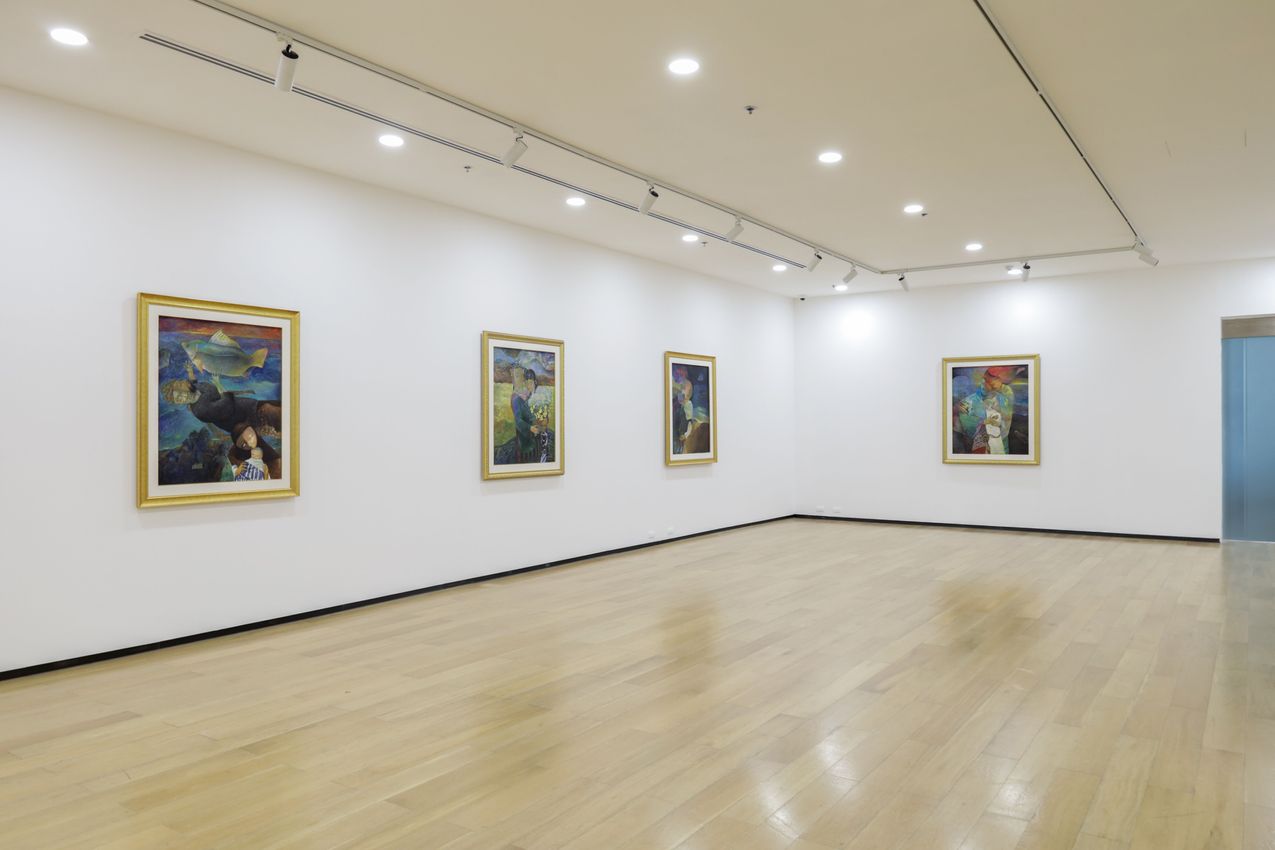
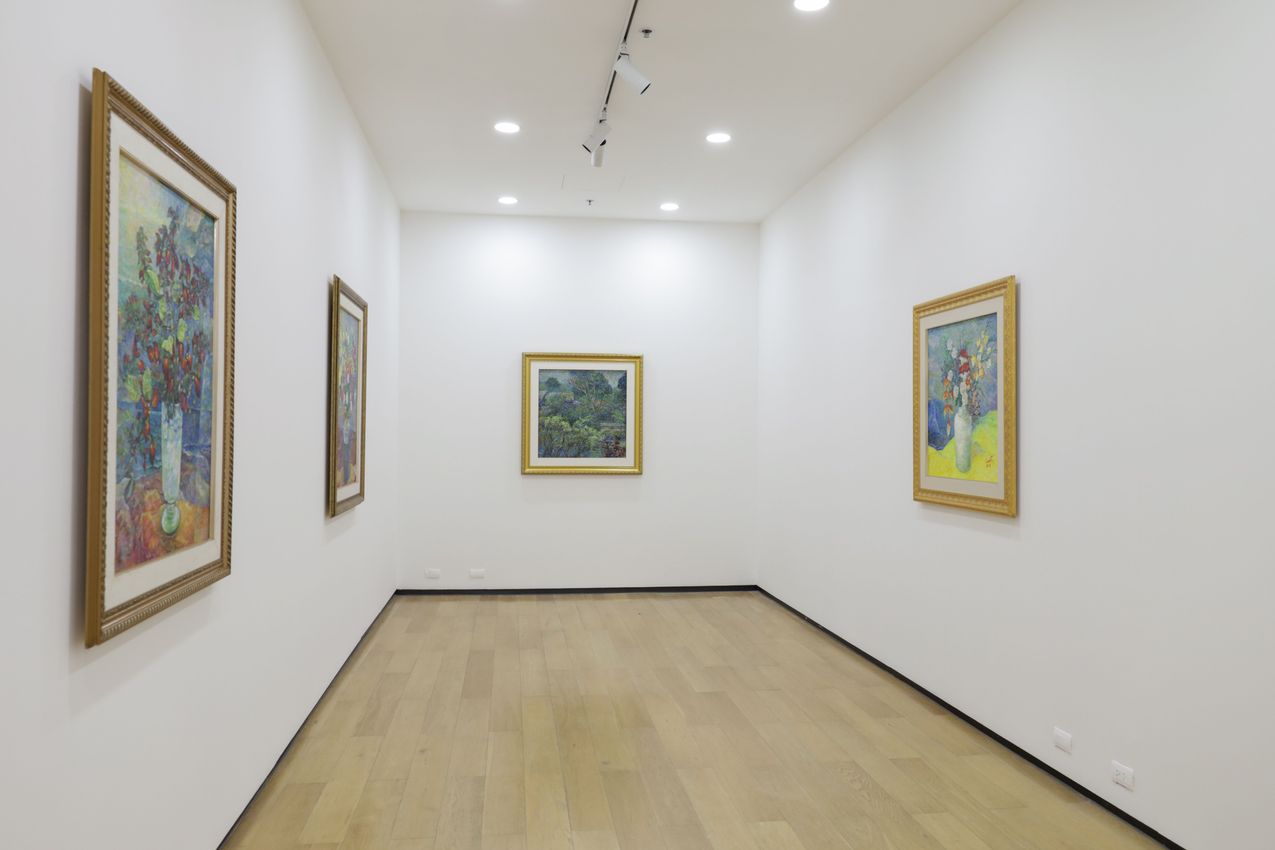
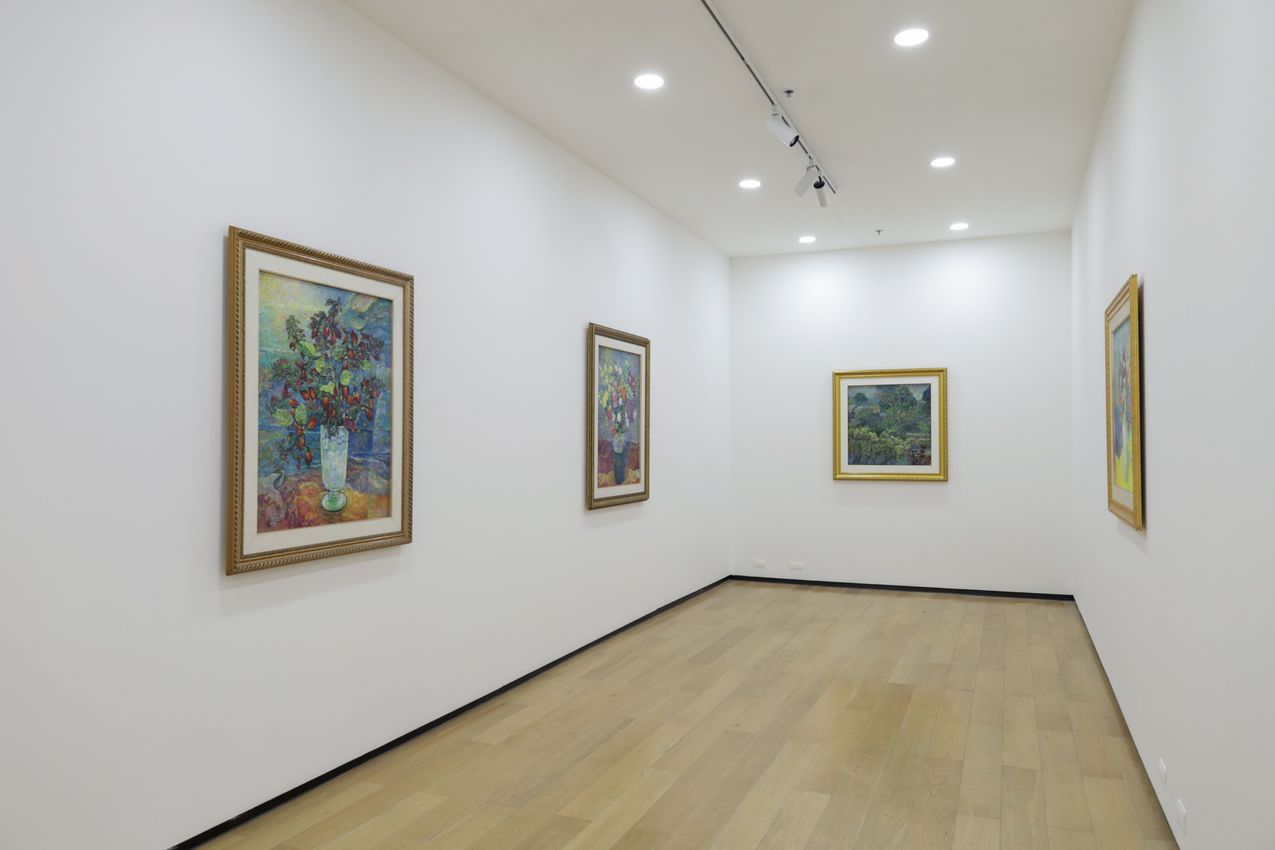
Tang Contemporary Art Bangkok presents a landmark solo exhibition of Bundit Padungvichean, A Lifetime Between Realities, at Tang Contemporary Art Bangkok, between 13 June–19 July 2026. A pivotal figure in the development of modern and contemporary Thai art, Bundit Padungvichean will present new spanning works created over the past decade—reaffirming his enduring legacy within Thai contemporary art. Now in his eighties, Padungvichean continues to paint between Bangkok and Ratchaburi—this exhibition will mark his first major show in fifteen years since his celebrated retrospective in 2011. The exhibition will offer a rare opportunity to reconsider his artistic legacy through the lens of time, reflection, and continued creative vitality.
Bundit Padungvichean’s career is inseparable from the evolution of modern Thai art itself. Born in 1941, he came of age during a transformative period in the 1960s, when Thailand began shifting from traditional artistic conventions toward modernist experimentation. He studied at Silpakorn University, earning his Bachelor of Fine Arts in 1967, and was part of a generation directly shaped by the teachings and influence of Corrado Feroci (Silpa Bhirasri), whose introduction of Western academic realism into Thailand laid the groundwork for a new visual language.

Bundit emerged early as a distinctive voice. His participation in the National Exhibition of Art between 1965 and 1968—where he received awards—positioned him among the most promising young artists of his time. Notably, his early painting Crossing the Zebra Crossing—originally graded below passing during his studies—went on to receive national recognition, encapsulating both his unconventional approach and his sensitivity to the psychological undercurrents of a rapidly modernizing society.

Following his graduation, Bundit dedicated decades to teaching at Silpakorn University, where he played a foundational role in shaping art and design education in Thailand. His academic career was marked by leadership positions including Head of the Graphic Design Department and Deputy Dean. At the same time, he participated in numerous charity exhibitions supporting youth education and environmental causes—reflecting a lifelong commitment to social responsibility. In recognition of his contributions, he was awarded an Honorary Doctorate in Fine Arts in 2015, granted by Her Royal Highness Princess Maha Chakri Sirindhorn.

Yet, despite his institutional achievements, Bundit has consistently positioned himself as an artist of observation—one who turns to everyday life, human relationships, and social realities as the foundation of his work.

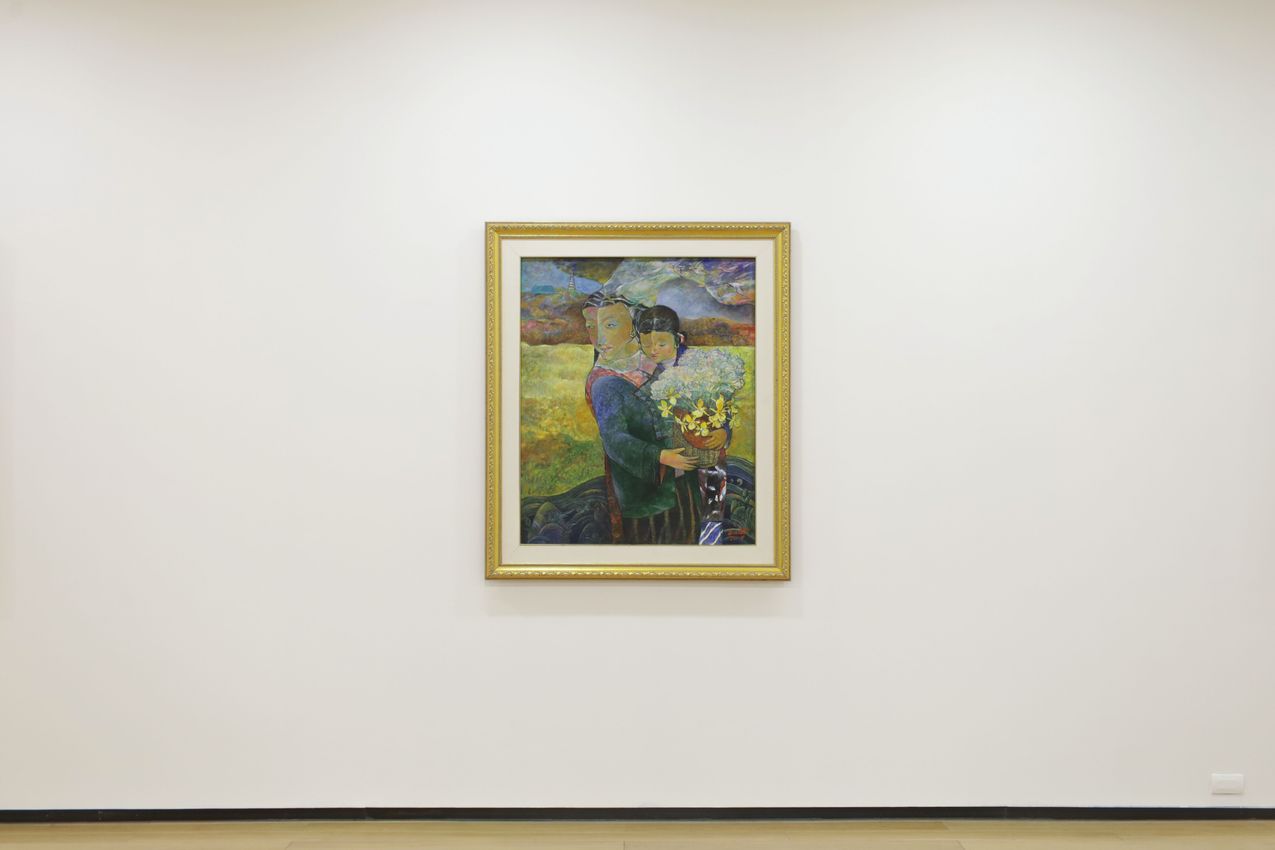
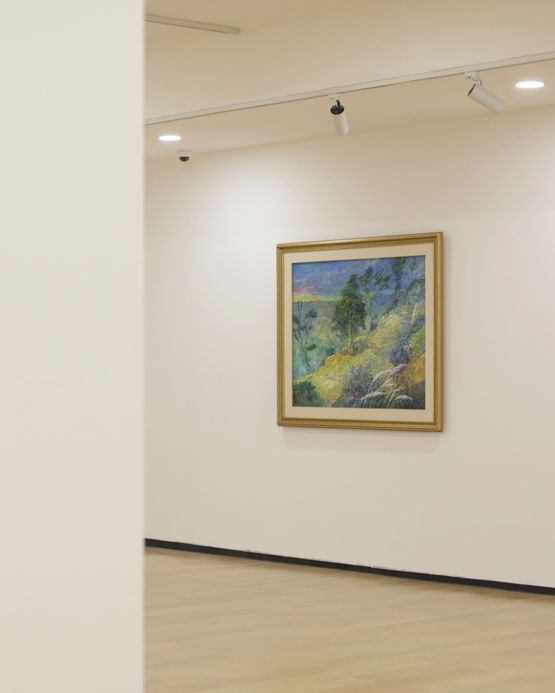
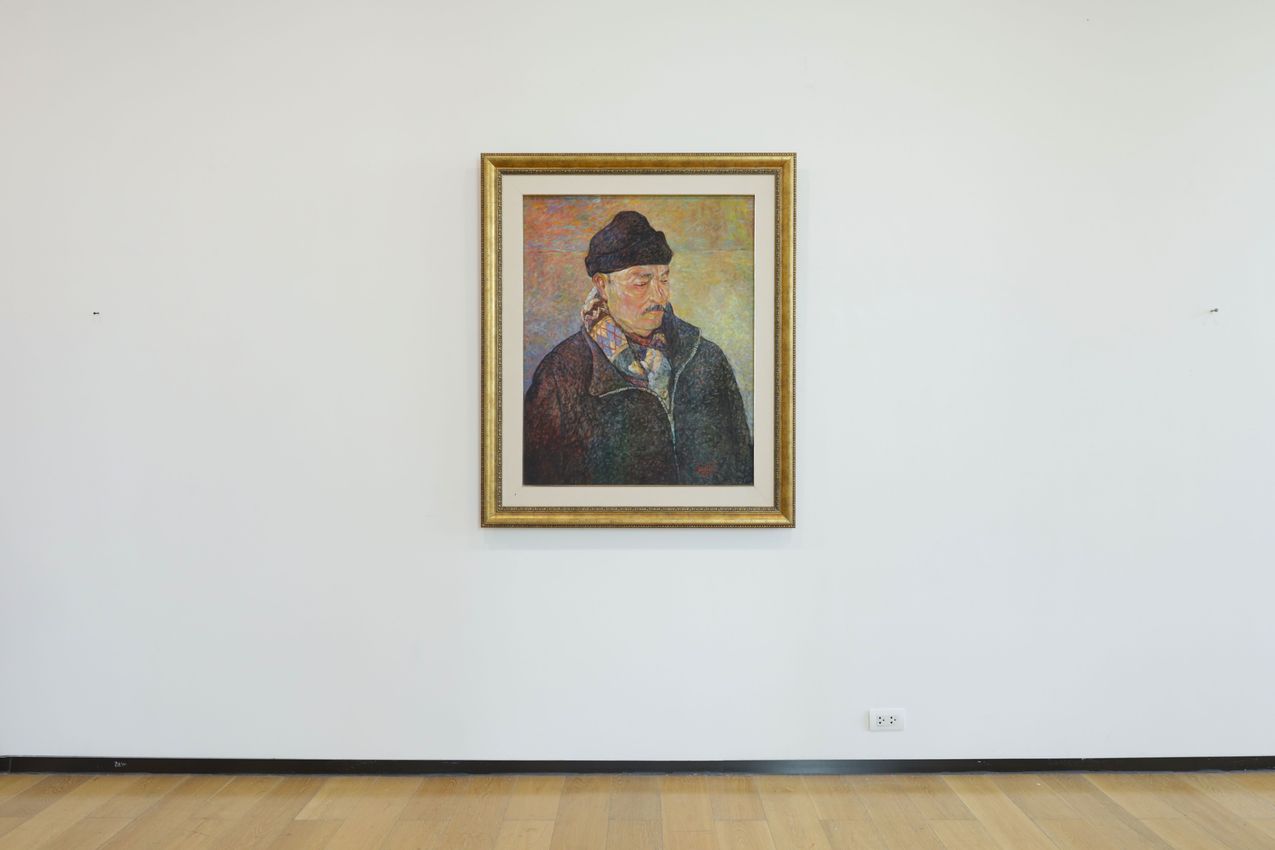
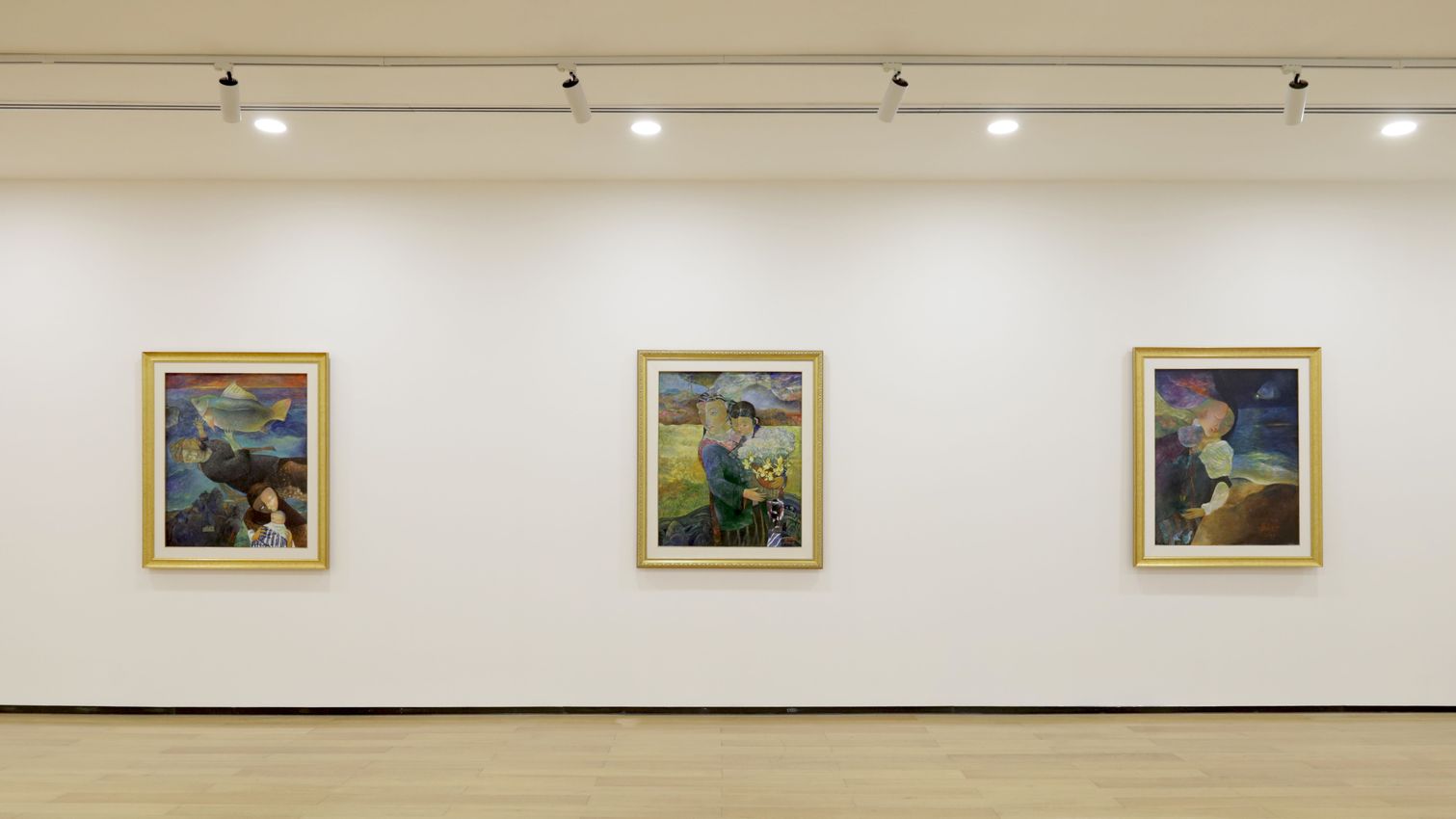
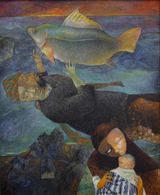
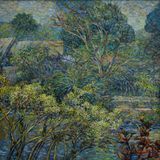
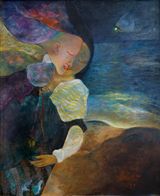
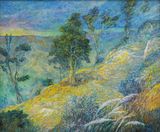
Bundit Padungvichean’s paintings occupy a unique space between figuration and imagination, where reality is continuously reshaped through emotion, memory, and symbolism. His works are characterized by expressive distortion of the human figure, often elongated, fragmented, or mask-like as well as layered, textural brushwork, revealing hidden imagery and symbolic details, which allows viewers to consistently return to investigate and see something new each time. His works create dreamlike atmospheres, where time and space dissolve, while embedding symbolic juxtapositions, blending human, animal, and natural elements. While grounded in academic training, his practice moves beyond realism into a psychological and poetic domain. His paintings do not depict the world as it appears, but as it is felt, remembered, and imagined.

Throughout his career, Bundit has explored themes of human relationships and emotional bonds, social change and inequality, memory, longing, and the coexistence of beauty and hardship.

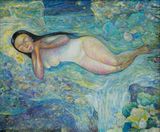
The works presented in this exhibition—created over the past decade—represent a mature and contemplative phase in Bundit’s practice. In paintings such as Tsunami, the artist revisits a moment of national tragedy not through spectacle, but through quiet reflection. Rather than emphasizing destruction, the work conveys hope, transformation, and the cyclical nature of life, suggesting a movement from loss toward peace.

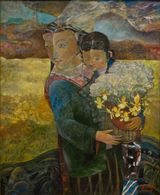
Similarly, Making Merit reflects an encounter with rural life, capturing a moment of purity and spiritual calm. The figures are embedded within a landscape rich with cultural and natural symbolism, emphasizing the enduring values of Thai tradition.

In Kiss, Bundit explores intimacy and emotional connection through surreal imagery—merging faces, juxtaposing incompatible elements such as fish and moon, sea and sky. The work embodies his belief that love transcends logic, existing within a poetic and dreamlike space.

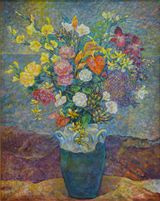
Still life compositions such as Summer Dream extend this emotional vocabulary. While seemingly simple, the painting carries layered meanings—of fleeting beauty, impermanence, and relationships that cannot fully materialize. Recurring motifs of fish, birds, sun, and moon create a network of symbolic contrasts, reinforcing the tension between connection and separation.

Other works, including Addiction and Homeless, return to social commentary. Here, Bundit uses metaphor—transforming animals into symbols of strength corrupted by external forces—to reflect on contemporary societal issues. These works demonstrate that his engagement with social reality remains as urgent as ever.

Across these works, a consistent thread emerges: Bundit’s ability to transform observation into universal emotional experience. This exhibition is not merely a presentation of recent works—it is a culmination of a lifetime of artistic inquiry. As Bundit Padungvichean’s first major exhibition since 2011, it marks a return to the public sphere after years of private creation. It offers insight into how an artist, deeply rooted in history and tradition, continues to evolve while remaining faithful to his core concerns. More importantly, it reaffirms his position within Thai art history as a bridge between generations, as both educator and practitioner, and also as a witness to social and cultural transformation. In a contemporary context increasingly defined by rapid change, Bundit’s work invites a different kind of engagement—one that is slower, reflective, and deeply human. His paintings ask us not only to look, but to feel, remember, and interpret.

Cynthia Liu | Tang Contemporary Art

Read More

Installation Views

Selected Works

Loading...

Also Exhibiting at Tang Contemporary Art

About the Gallery

Tang Contemporary Art was established in 1997 in Bangkok, later establishing galleries in Beijing and Hong Kong. Tang Contemporary Art is fully committed to producing critical projects and exhibitions to promote Contemporary Chinese art regionally and worldwide, and encourage a dynamic exchange between Chinese artists and those abroad.

View Gallery Profile
Address
Room. 201–206, River City Bangkok
23 Soi Charoenkrung 24
Talad noi, Sampantawong
Bangkok
Thailand
Opening Hours
Tuesday – Saturday
11 am – 7 pm

Closed on Public Holidays
(1)
Bangkok Room. 201–206, River City Bangkok, 23 Soi Charoenkrung 24
Tang Contemporary Art
Room. 201–206, River City Bangkok, 23 Soi Charoenkrung 24, Talad noi, Sampantawong, Bangkok, Thailand

Opening hours
Tuesday – Saturday
11 am – 7 pm

Closed on Public Holidays
The art world in focus