





Cho Yong-Ik
b. 1934, South KoreaFollowing the period of political turmoil that pervaded Korea in the 50s, a need amongst several artists in the newly established South Korea emerged for reconnecting with their roots of the Chosun Dynasty; those sentiments and habits associated with Daoism, Confucianism and Buddhism[3]. Dansaekhwa provided an articulation for this resurgence, through its characteristic of ‘manipulating’ the materials of painting: pushing, painting, dragging it. All, however, without aggression; the effect was rather one of meditative catharsis, an aspect of art production that permits the exploration of soft objects, from rice paper to the pigments used, to the delicate canvas. Melding both pictorial articulation and a level of performance, the works convey a timeless, universal language whilst equally symbolising a ‘liberation’ from strict traditions of Korea’s artistic heritage.
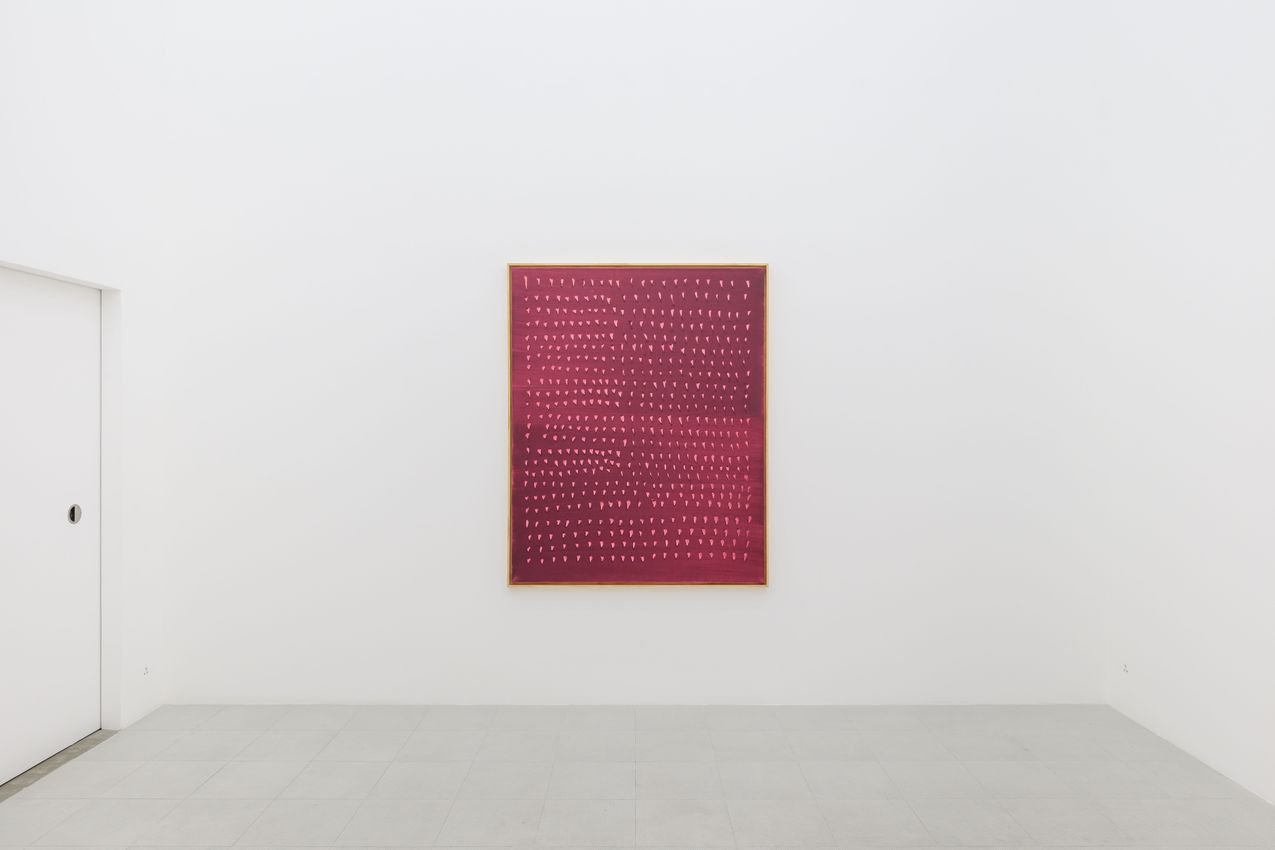
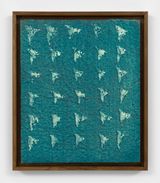
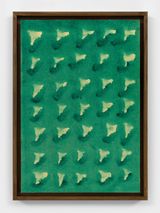
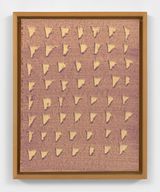
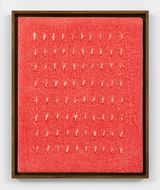
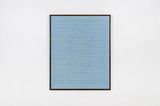
Cho followed the key tenets of the Dansaekhwa rubric whilst adding elements of his own. The ‘Scratch Series’ from the 70s, for example, shows his rhythmic gesturing across the canvas, as he pressed off the top layer of paint with his bare thumb to reveal the alter undertone. Whilst following at times the monochromatic painting values ascribed to by other Dansaekhwa artists, Cho equally diverted from it, experimenting with dual tones of vivid reds, oranges and occasionally blues. As such, he added a further layer of vitality to his paintings, emphasising their gestural qualities, whilst bridging a gap with the tonal properties of his ‘Geometric Abstract’ paintings of the 60s.
Following through Cho’s ‘Wave Series’ of the 80s and his later ‘Bamboo Series’ of the 90s, one continues to see this constant push and pull between the monochromatic tendencies of his peers and his more vivacious channeling of the techniques. For the ‘Waves Series’ he delicately, yet with great physical exertion and in a single exhalation, whisked at the surface of each painting, creating minimalist, repeated yet ad hoc sweeps across the surface. Suggesting rather than depicting the sea or the ocean, the viewer at once senses it through the works’ gesturality, and is also left to complete the paintings’ pictorial equation both through their physical presence and gaze. Equally with the ‘Bamboo Series’, the leaves finely appear on the paper, revealing the textures of the materials used. Whereas the image of the bamboo itself is minimalist, two-dimensional and nearly naive, the quality of execution gives the entire series a textural sense of three dimensionality.
Overall, Cho introduces an important angle to the discussion surrounding Dansaekhwa: he identifies as such an artist – his thoughts as well as techniques certainly associate him with this line of action heralding repetition, meditation, and tranquility – yet, he permitted for the insertion of colour. Rather than it distracting from the rubric’s emphasis on meditation, however, it seems to convey the possibility of multiple emotional states, from one of warmth to others of detachment. As such, Cho’s work probes us to consider the diverse formal languages of Dansaekhwa and fleshes out to a greater extent its associations with tactility, spirit and performance.
Cho Yong-Ik has been highly lauded as one of South Korea’s most important painters and recently held a major solo exhibition at the Sungkok Art Museum, Seoul (2016). Further exhibitions include the Leeum Museum of Art, MMCA Seoul & Gwacheon, Arko Art Center Seoul and Fukuoka Museum of Art. Cho’s work has additionally been exhibited in various Biennales, including Paris (1961, 1969), Sao Paulo (1967) and is held in multiple permanent collections, including M+, Hong Kong; National Museum of Modern and Contemporary Art, South Korea; Seoul Art Museum; Leeum Museum of Art, Seoul and Gwangju Museum of Art.
[1] Jung Yu-Jin, ‘Korea Painting Now’, 2012
[2] Yoon Jin Sup, Joan Kee, Till Fellrath, Sam Bardaouil, ‘Skin and Surface’, Frieze, Feb 2015
[3] Henry Meyric Hughes, ‘The International Art Scene and The Status of Dansaekhwa’, Art in Asia, 2014
Courtesy Kiang Malingue


Works at Kiang Malingue









Explore and Follow Artists Shaping Contemporary Art
A respected voice in contemporary art discourse.
Focusing on ambitious storytelling and insightful art-world commentary. Ocula Magazine publishes in-depth interviews, critical essays and timely analysis on the artists, exhibitions and ideas driving the global art world.
Learn more about Ocula Magazine
Showcasing the best of the art world.
Ocula partners with galleries from around the world to highlight their artists, artworks and exhibitions. Gallery membership is by application and invitation, with each member vetted by an independent panel.
Learn more about Ocula Membership
Specialises in the sale of major artworks.
Led by a team with deep ties to the world’s leading auction houses, galleries and collectors. Ocula’s advisory team offers bespoke services to high-net-worth clients from around the world who are looking to acquire the best of contemporary and modern art.
Learn more about our team and services