





‘Photography Has Consequences’: Ikram Abdulkadir on Visibility, Sisterhood and Nostalgia
The self‑taught photographer talks to Shanyu Zhong about paradise, connection and sisterhood. Save to My OculaIn Ikram Abdulkadir’s photographs, young Black Muslim women are often framed in close-up portraits, their gazes lowered or averted, suspended against softly blurred, desaturated backgrounds. The clarity of her photographs, almost commercial at first glance, quickly shifts into something more unsettled: a quiet tension between surface and depth, where the everyday edges into the ritualistic and there is a stillness that reveals the artist’s tenderness and restraint.
Her practice did not emerge from institutional training but from an Instagram account, @ikramaniasm, where she would post photos. Born in Nairobi to Somali parents and raised in Sweden from the age of two, Abdulkadir began taking photographs in high school, working without access to the art world. She had never attended an exhibition opening before presenting her own series We Will Meet in Paradise (2019) at Skånes Konstförening in Malmö, the city where she grew up. Her trajectory from self-initiated digital practice to commissioned portraits of figures such as Zanele Muholi, and to institutional recognition, runs alongside a broader context in which questions of migration, visibility and representation in Sweden have become increasingly charged in recent years.
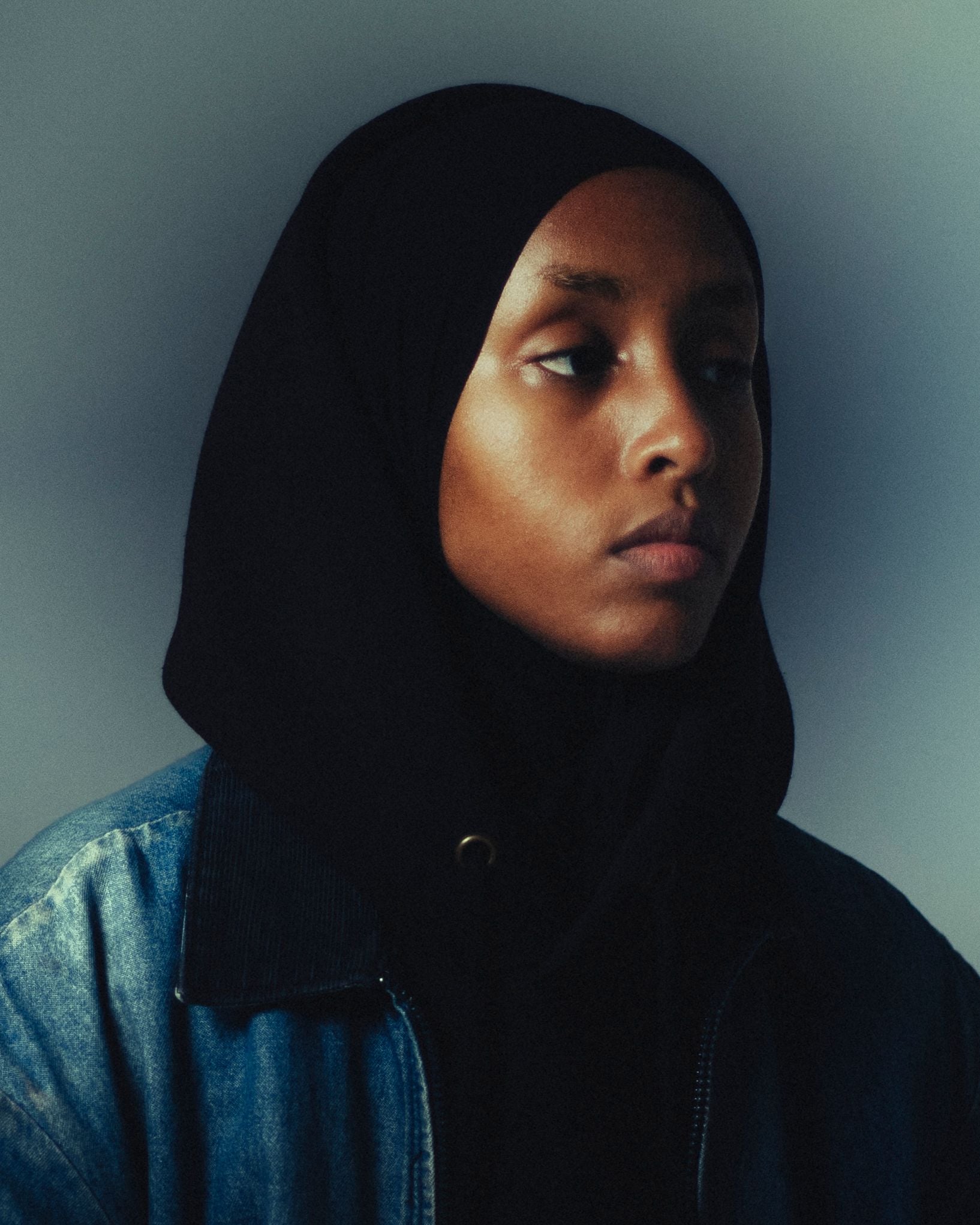
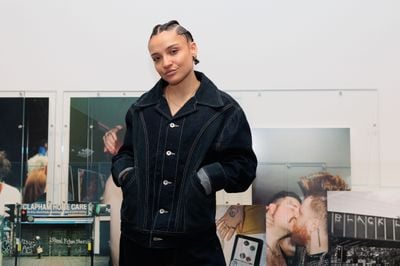
At Moderna Museet Malmö, Ikram Abdulkadir—Soft Focus brings together works spanning the journey from her early Instagram practice to the present, marking a homecoming the artist describes simply as “warm”. We spoke about growing up in Rosengård (a district of Malmö) and her evolving sense of responsibility toward the communities that shape her work.
Shanyu Zhong: Growing up in Rosengård… when I looked it up, I found the district is often described using terms such as “vulnerable” or “high-crime”. How would you describe it?
Ikram Abdulkadir: Rosengård is a working-class area in Malmö with a large immigrant population, and I think being working-class is a very racialised position in Sweden today. Socioeconomically, it may be more vulnerable than other parts of the city, but when I think about growing up there, I remember green spaces, parks and libraries. It gets a certain reputation, but for me it’s simply home.

SZ: How did you become a photographer? I read that you first started taking pictures on your father’s Nokia phone.
IA: I’m self-taught. My path into photography wasn’t very straightforward. It was mostly about exploring on my own and learning by doing. In 2017, when I was 21, I started an Instagram account because I had accumulated too many photos and needed somewhere to store them. My friends encouraged me to share them, which felt embarrassing at the time.
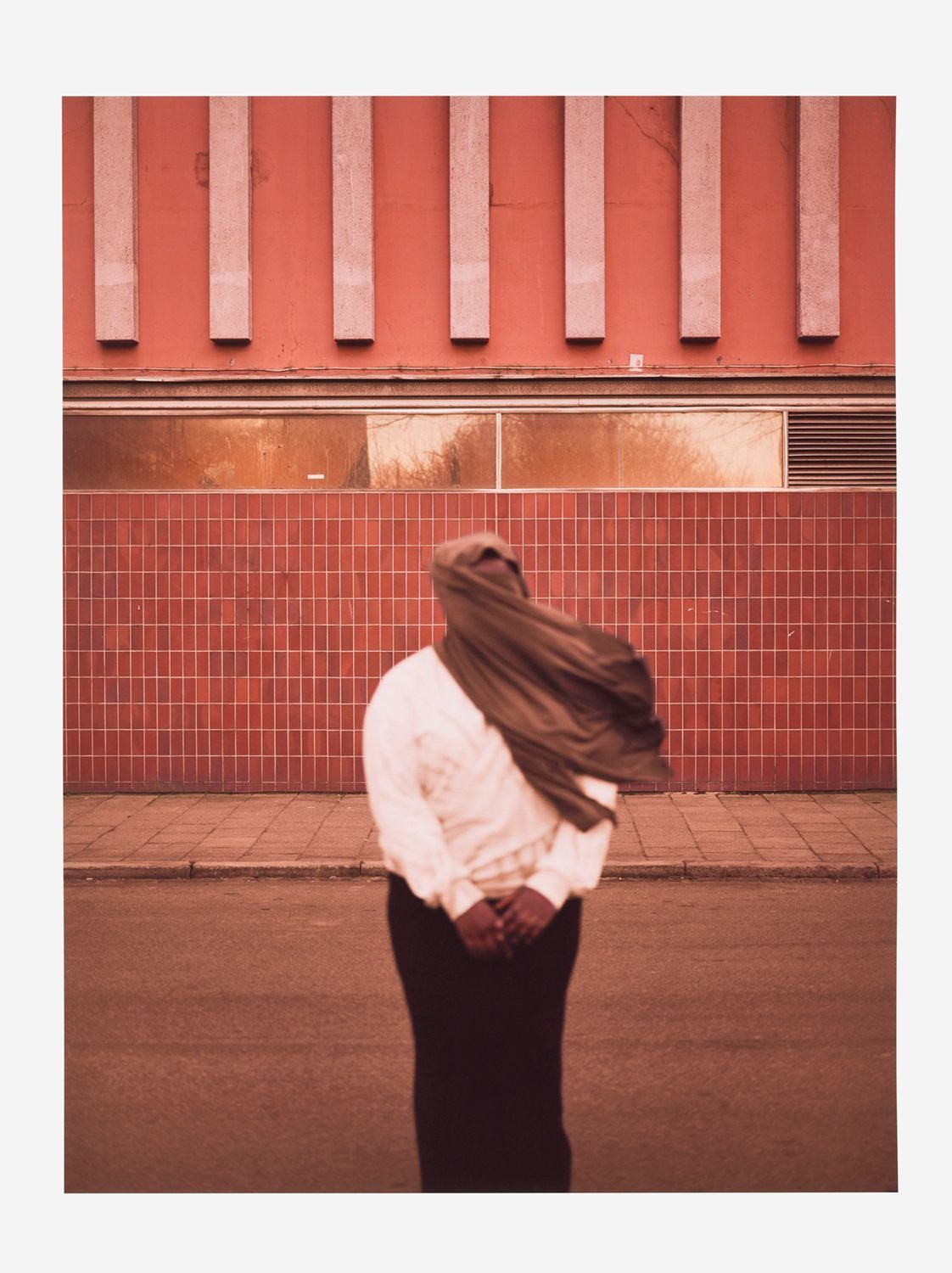
SZ: Instagram was your primary channel early on. When you’re making an exhibition now, you’ll need to think about materialising the digital (scale, framing, print finish). The exhibition centres a large-scale work, Subax Aliseey (2020), which has an almost apocalyptic, surreal, cinematic quality that feels different from much of your other work. Could you tell me about it?
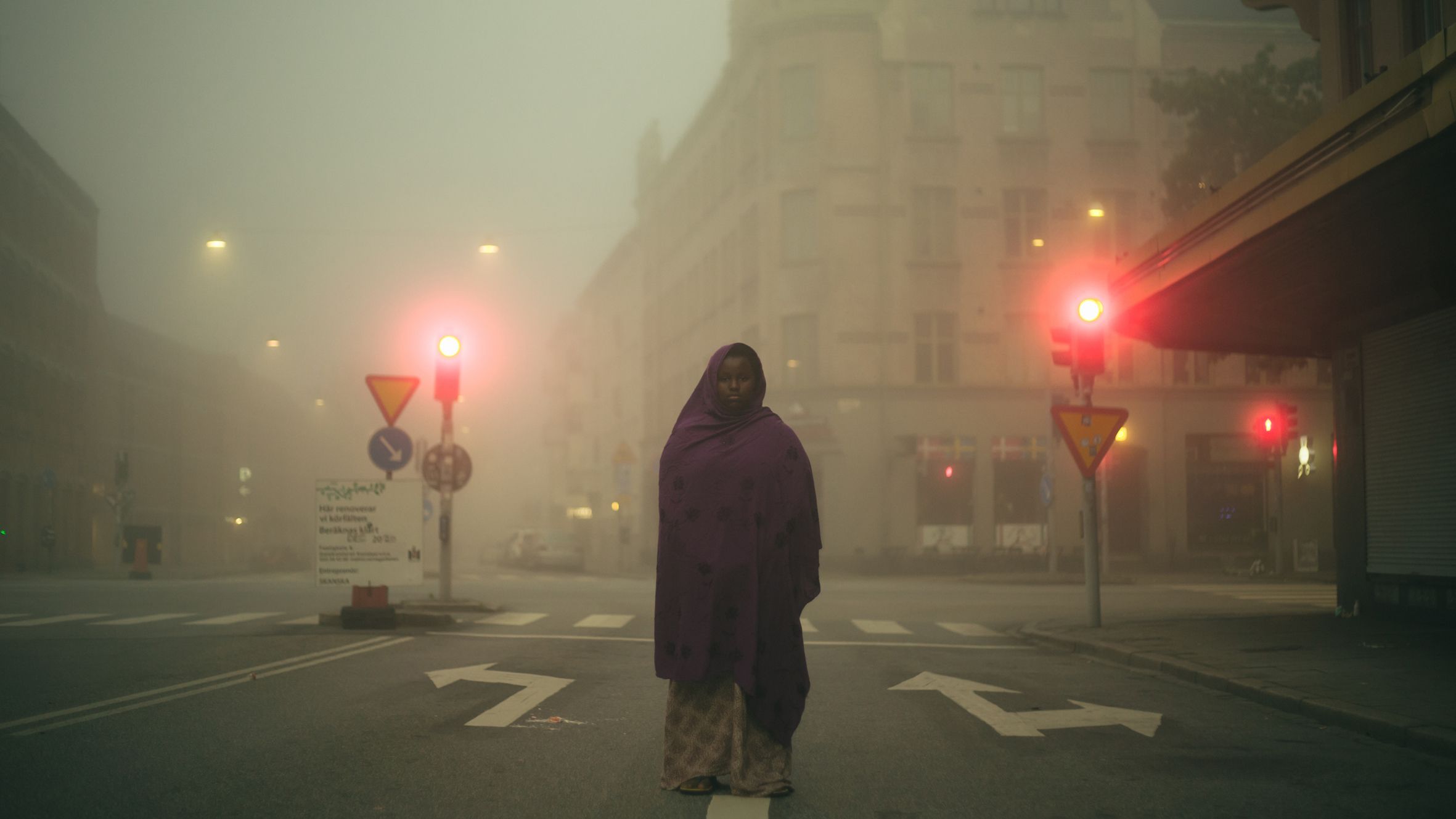
IA: Working with print has made me much more intentional. Maybe because I’ve spent so much time on digital platforms, I love seeing an image grow into something large-scale. It creates a completely different encounter—it demands more from the viewer.
Subax Aliseey depicts my little sister, photographed on the street just outside my home. It’s funny that people in Malmö would immediately recognise the location because it’s such a central street, but turning familiar places into something more mystical is also my interest.
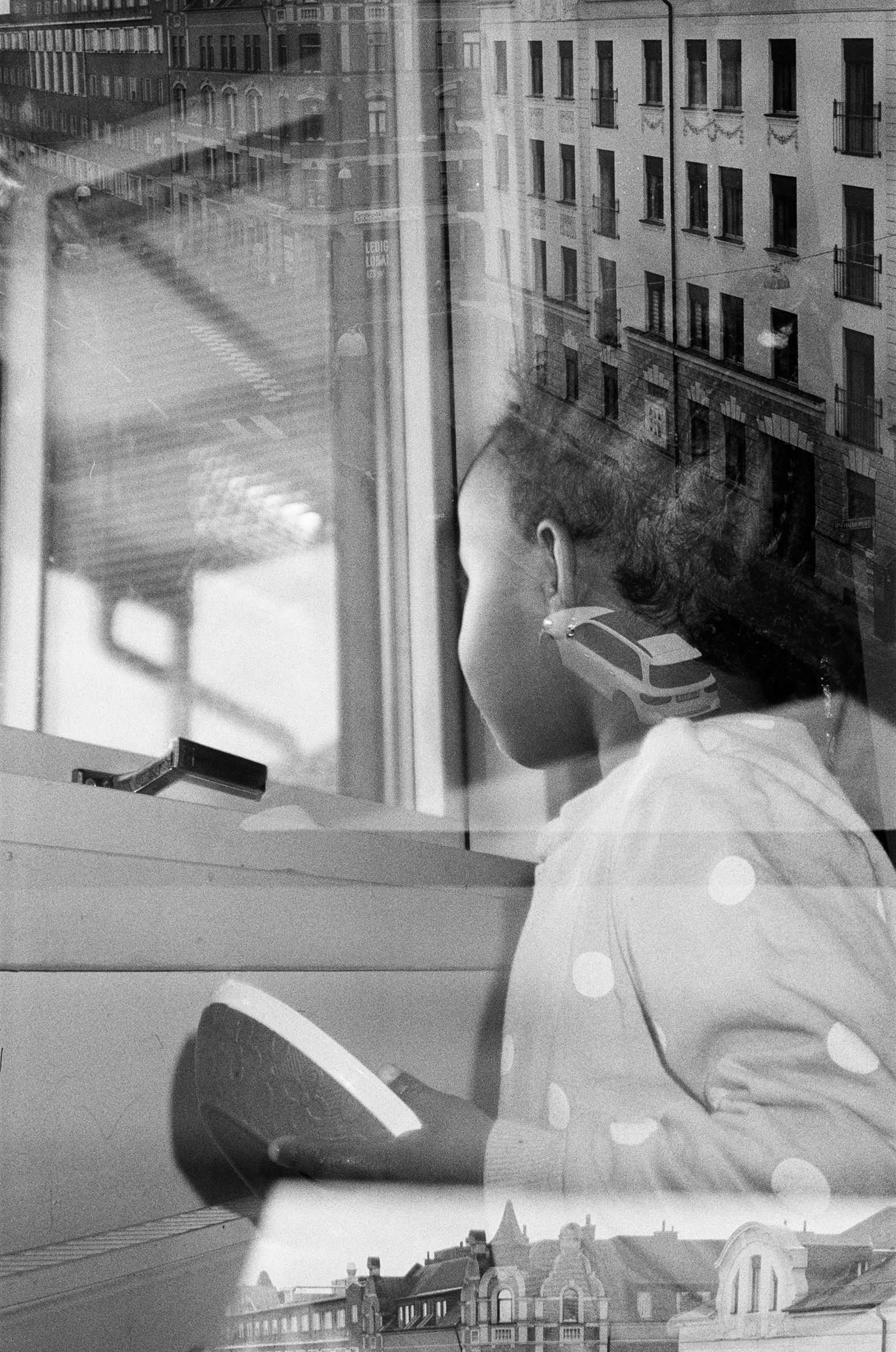
I often think of photographs as frames from a film—maybe a film about my family, or about myself. That idea of freezing a moment is very important to me. I’m quite nostalgic. I grieve moments before they end, and photography becomes a way of holding on to them.
“I grieve moments before they end, and photography becomes a way of holding on to them”
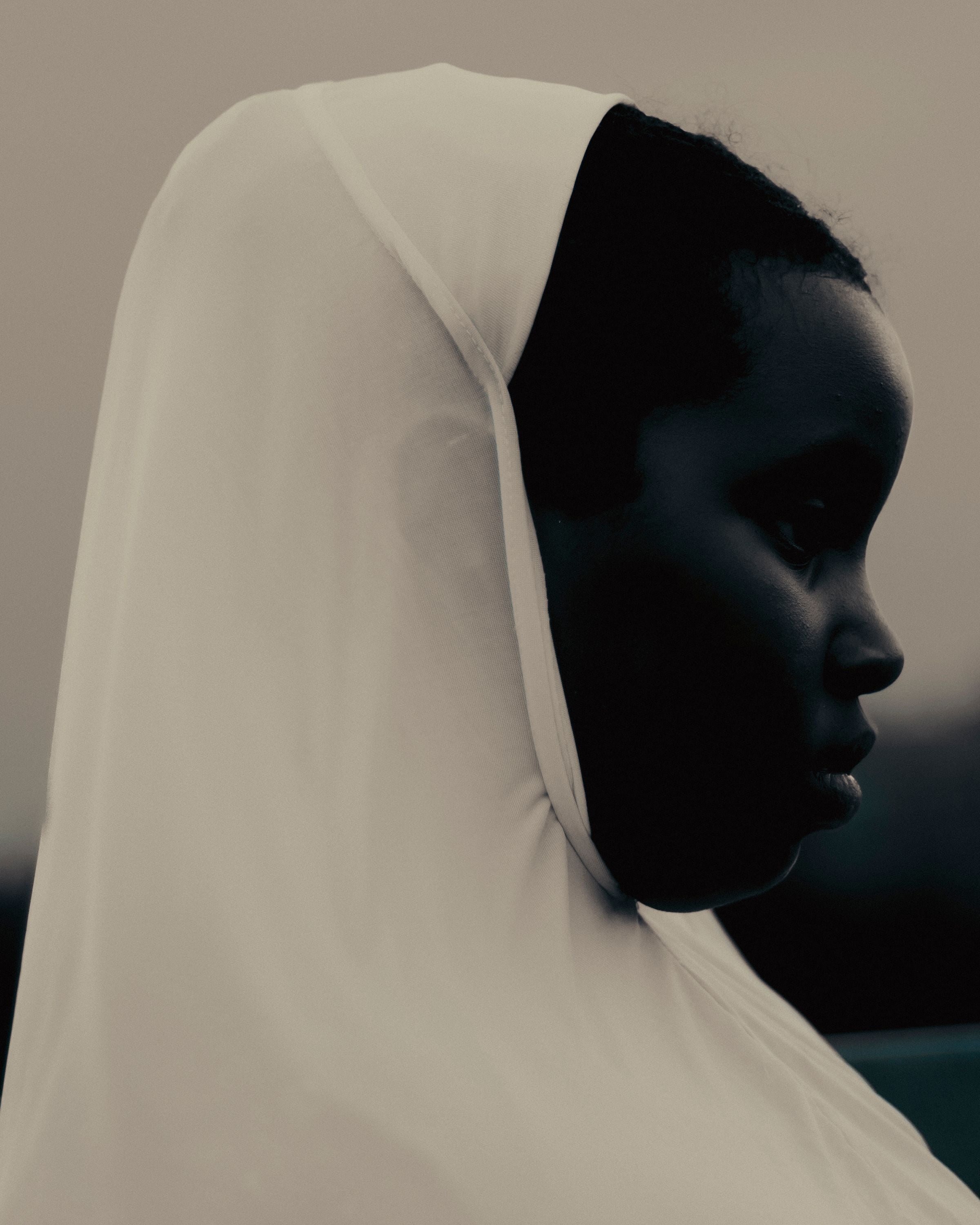
Ikram Abdulkadir, Salma cadeey (2018). © Ikram Abdulkadir Bildupphovsrätt, 2026.
SZ: Your work often carries a sense of intimacy and solidarity: sisterhood, friendship, care. Would you say it is celebratory?
IA: I wouldn’t describe it as celebratory. It comes from a very intuitive place—an urge to capture something, document it, and preserve how it felt. It’s more about memory than celebration or critique.
What I appreciate in photography is truth, though not necessarily factual truth. I’m interested in an emotional or abstract truth.
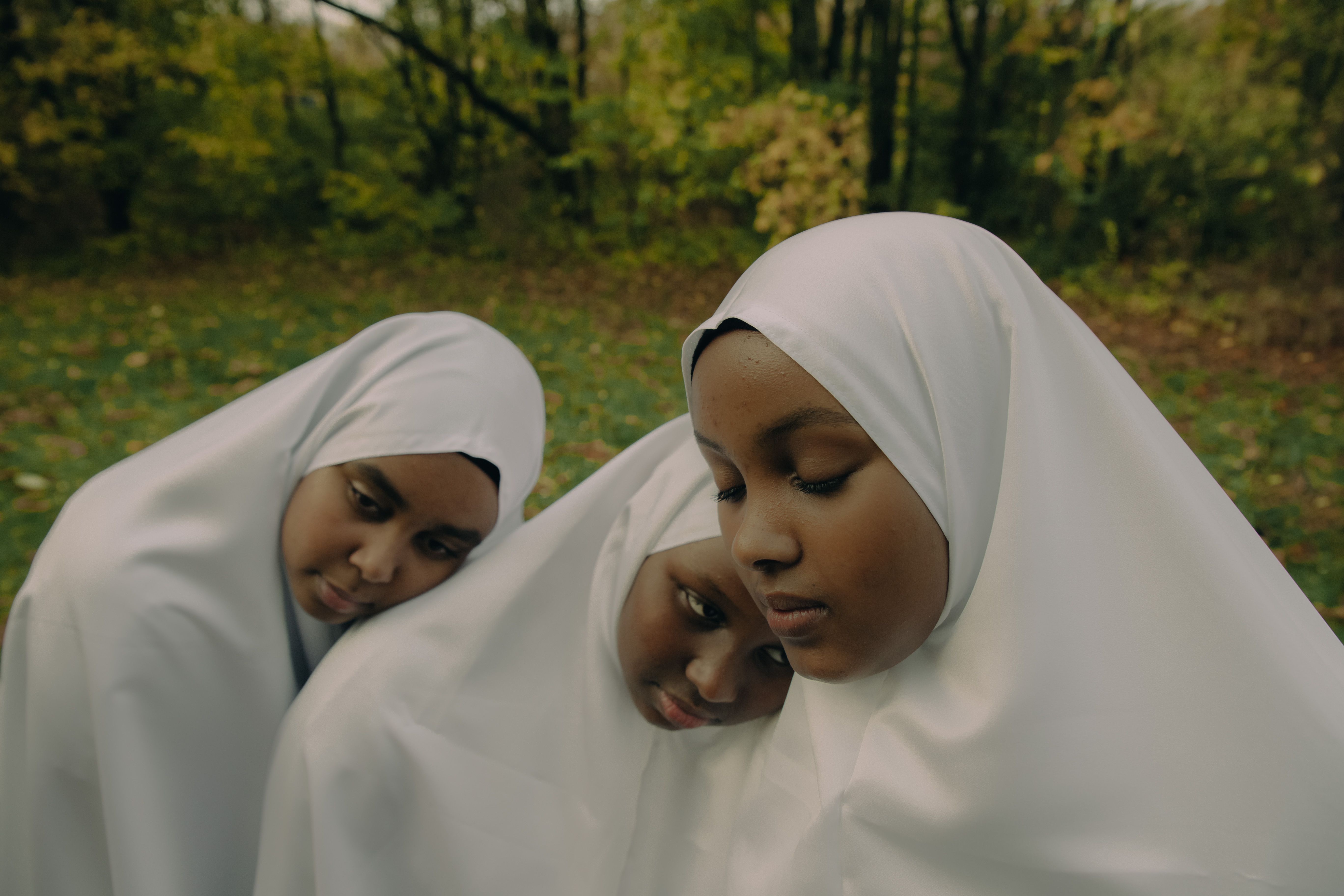
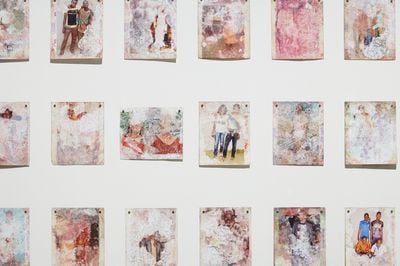
SZ: Your sisters are central to your work, but they appear very differently across series. In We Will Meet in Paradise, they wear white jilbabs and appear before the camera. In Do You Remember the Ocean, Abaayo? (2023), they become like enigmatic silhouettes dissolving into the landscape, seemingly reflecting your journey from Nairobi to Sweden. How have they shaped those projects?
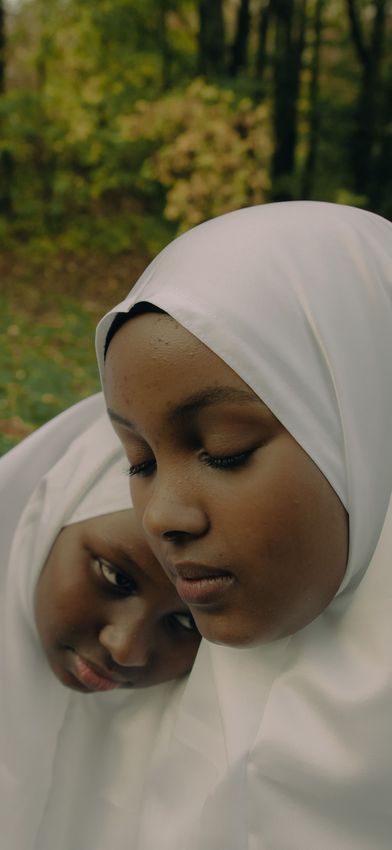
IA: We Will Meet in Paradise was the first time I really developed a project from beginning to end. I had received the Sven and Ellida Hjorts Exhibition Grant [in 2019] after being nominated by someone who followed me on Instagram. Suddenly, I had the resources and freedom to think through an idea that I couldn’t stop returning to: paradise and sisterhood.
I imagined paradise as a warm and beautiful place of acceptance, somewhere you carve out a place for yourself. At the same time, it carries associations with death. In Islamic burial traditions, the body is wrapped in white cloth, and that symbolism found its way into the photographs.

Do You Remember the Ocean, Abaayo? is less about migration than about our relationship to the ocean. During the pandemic, my sisters and I spent a lot of time visiting beaches along the Skåne coastline. I’ve always felt drawn to water: everything it contains, everything it can give, and everything it can take away. Those trips made me wonder whether my sisters experienced those places in the same way that I did. On the surface, we were simply escaping the city, but it also led me to think about the journeys people make in order to survive.
My father grew up in Mogadishu, also by the sea. He would tell us stories about swimming there with friends, and one of those friends drowned. My own relationship to the ocean is much more privileged than his, or than that of many people who have had to leave their homes. The project became a way of exploring those different relationships to water.
SZ: How do you think about your relationship with—and responsibility to—the communities you photograph?
IA: I recently read Judith Butler’s reflections on Susan Sontag’s On Photography, particularly her ideas about grievability, visibility, and how photographs shape who is recognised as fully human.
I do feel a greater sense of responsibility now. What I say is being heard, and what I do is being seen. I know I have a level of visibility that isn’t common for a Black Muslim woman in Sweden.
Photography has consequences. I always ask permission, and I think carefully about how images are shown. In that sense, my relationship to community has become more conscious. But in many ways, the people I photograph are still simply my friends and family.
“I know I have a level of visibility that isn’t common for a Black Muslim woman in Sweden”
The reason I photograph so many Black women and Muslims is largely because those are the communities around me, not because I’ve consciously chosen them as subjects. What matters most to me is human connection. You have to build trust and make people feel comfortable. —[O]
Ikram Abdulkadir—Soft Focus (until 27 September 2026) at Moderna Museet Malmö.
Main image: Ikram Abdulkadir, We will meet in paradise (2020). © Ikram Abdulkadir.






A respected voice in contemporary art discourse.
Focusing on ambitious storytelling and insightful art-world commentary. Ocula Magazine publishes in-depth interviews, critical essays and timely analysis on the artists, exhibitions and ideas driving the global art world.
Learn more about Ocula Magazine
Showcasing the best of the art world.
Ocula partners with galleries from around the world to highlight their artists, artworks and exhibitions. Gallery membership is by application and invitation, with each member vetted by an independent panel.
Learn more about Ocula Membership
Specialises in the sale of major artworks.
Led by a team with deep ties to the world’s leading auction houses, galleries and collectors. Ocula’s advisory team offers bespoke services to high-net-worth clients from around the world who are looking to acquire the best of contemporary and modern art.
Learn more about our team and services