





DANIEL RICHTER
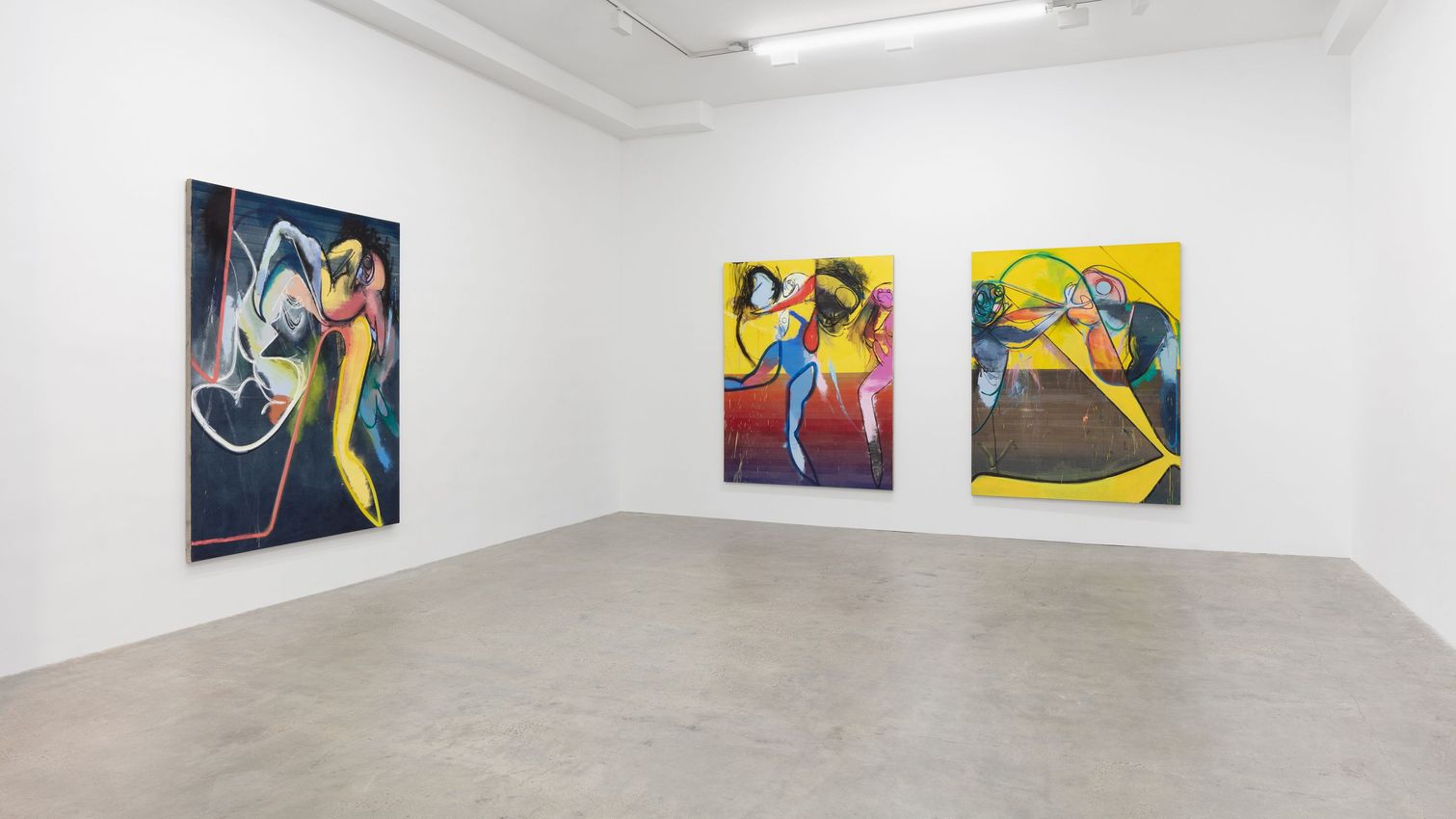
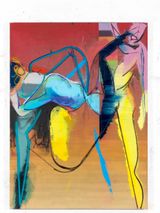
b. 1962, GermanyDaniel Richter (b. 1962, Eutin, Germany) is a painter whose career bridges counterculture and fine art, merging figuration and abstraction to create works that are both haunting and playful. His improvisational process, fueled by irreverence and self-doubt, results in vibrant, surreal compositions that reflect the complexities of contemporary life. Richter has exhibited globally, cementing his reputation as a key figure in contemporary painting.
Richter is often associated with peers Tal R, and Jonathan Meese—who share a vibrant, expressionist approach to painting. The artists have collaborated and exhibited together several times.
How did Daniel Richter transition from Hamburg’s punk scene to fine art?
Emerging from Hamburg’s punk and squatter scenes in the 1980s, Daniel Richter transitioned from designing posters and album covers to studying at the University of Fine Arts, where he was a student of Werner Büttner. The artist was later an assistant to Albert Oehlen.
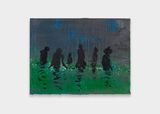
Richter’s paintings from the early 2000s, such as Gedion (2002) and Those who are here again (2002), are layered and atmospheric, referencing the rich and complex narrative tableaux of history paintings.
What influences Daniel Richter’s art?
Daniel Richter’s painting process is rooted in the tension between control and spontaneity. Over three decades, Richter has developed a rich practice of exploring politics, culture, and art history through bold, improvisational, yet disciplined, canvases.
Art Historical influences
Richter’s earlier paintings, such as those exhibited in a mid-career survey, Lonely Old Slogans, at the Louisiana Museum of Modern Art in Humlebæk, Denmark, (8 September 2016—8 January 2017), have been thematically and formally related to German Expressionist painters such as Max Beckmann, and George Grosz. The unsettling and psychological qualities within the artist’s work have also been compared to Symbolists such as James Ensor and Edvard Munch.
Figuration
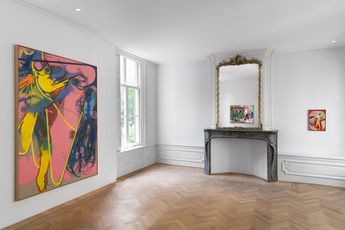
Around 2002, figures started to appear more prominently in Richter’s works, with multiple figures often set against vibrant and hallucinatory environments.
From the mid-2010s, Richter’s compositions reduced in pictorial scope, away from the narrative implications of prior work based on history paintings, to a more formalist approach. Richter instead becomes drawn to more closely examining the mechanics and conveyance of reduced human forms. In some cases, entire series are derived from only a single reference image, such as the exhibition Furor I, shown at Thaddaeus Ropac, Paris Marais (21 Oct—20 Nov 2021), based on a photograph of wounded soldiers from World War I.
Paint application
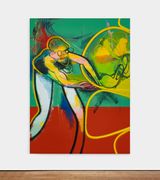
In works from the 2020s, Richter has noted in a video interview for Thaddaeus Ropac, that he has become less reliant on paintbrushes, instead favoring the application of oil sticks and palette knives. The flatness of application and the control afforded by these tools define further pictorial developments in the artist’s ever-evolving contemporary art practice.
Use of colour
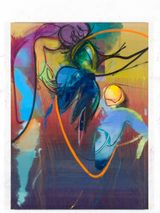
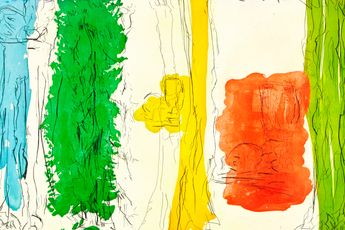
In an interview with Toby Kamps for the Brooklyn Rail, Richter has noted that in paintings such as Jahresdaten meiner Langeweile (2023), the vivid unrelenting blocks of colour confuse the traditional perceptions of foreground and background. Richter’s use of vivid, contrasting pigments gives both a sense of playfulness and aggression to his often large-scale paintings, integral to the narrative and emotional tone of each piece.
What are Daniel Richter’s notable exhibitions?
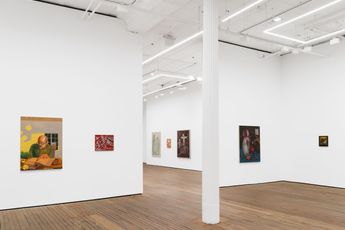
Daniel Richter has been the subject of both solo exhibitions and group exhibitions. Solo exhibitions include Lonely Old Slogans, Louisiana Museum of Modern Art, Humlebæk, Denmark (8 September 2016—8 January 2017); Hello, I Love You, Schirn Kunsthalle Frankfurt, Germany (9 October 2015—17 January 2016); Die Idealisten, David Zwirner, New York 25 March—3 May 2008).
Group exhibitions include something new, something old, something desired, Hamburger Kunsthalle, Germany (18 February 2022—15 September 2024); Radical Figures: Painting in the New Millennium, Whitechapel Gallery, London (6 February 2020—30 August 2020); Jonathan Meese, Daniel Richter, Tal R: The Men Who Fell from Earth, EMMA | Espoo Museum of Modern Art, Espoo, Finland (30 January 2019—7 July 2019).
Hazel Ellis | Ocula | 2025













Explore and Follow Artists Shaping Contemporary Art
A respected voice in contemporary art discourse.
Focusing on ambitious storytelling and insightful art-world commentary. Ocula Magazine publishes in-depth interviews, critical essays and timely analysis on the artists, exhibitions and ideas driving the global art world.
Learn more about Ocula Magazine
Showcasing the best of the art world.
Ocula partners with galleries from around the world to highlight their artists, artworks and exhibitions. Gallery membership is by application and invitation, with each member vetted by an independent panel.
Learn more about Ocula Membership
Specialises in the sale of major artworks.
Led by a team with deep ties to the world’s leading auction houses, galleries and collectors. Ocula’s advisory team offers bespoke services to high-net-worth clients from around the world who are looking to acquire the best of contemporary and modern art.
Learn more about our team and services