





FEMKE HERREGRAVEN
b. 1982, NetherlandsWorking across the genres of painting, scultpure, installation, video, and the digital, Femke Herregraven investigates the impact of contemporary financial technologies and infrastructure on emerging value systems and geographies.
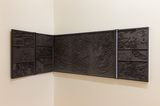
Femke Herregraven’s Hinged Collisions (2018), presented at Taipei Biennial 2020, uses the shapes of medieval European altarpieces, framed in server racks, which also allude in their configuration to monitors on the desks of traders. The content of the cut reliefs represents various data visualisations, such as the spread of the plague in the Middle Ages or an unstable geologiccrypto-depression in North Ethiopia.
In an important shift in the history of images, none of the motifs have been derived from illustrations, images, or photographs as we know them. Herregraven asks what actually constitutes an image today. Data can be converted into pixels so that we can see it. However, this visible form is completely arbitrary and serves to aid our better understanding. Nowadays, machines—such as satellites—gather data, which they stream to other machines. This data is neither meant for nor legible to the human eye. Although the Hinged Collisions are not predicated upon our reality, we still think that we can recognise landscapes or figurative elements. For Herregraven, the dominance of data collection over the image per se poses new questions: What is an image when it is no longer about what we see but rather about the value of the underlying data that we cannot see? Does this not mean that we are forcibly alienated from our own environment if we are no longer able to recognise it in images?
‘Subsecond Flocks’ (2016), which was also included in Taipei Biennial 2020, is a series of works that explores extreme ultrafast financial events that take place. The artist hand-engraved all the transactions that occurred in one millisecond, resulting in over30,000 dots, thereby creating a ritual that brings in time, flaws, meditative tedious process.
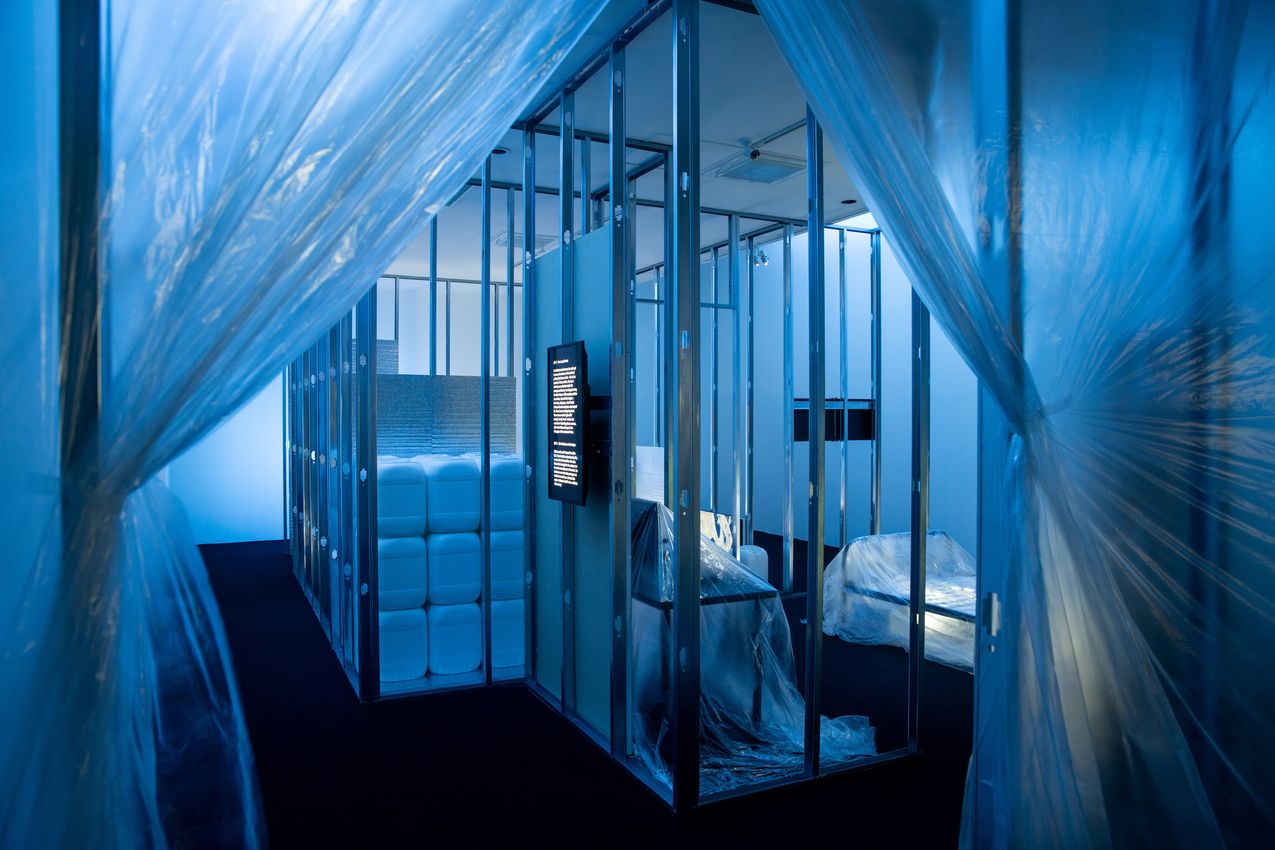
Among other works exhibited in Taipei Biennial 2020 was Corrupted Air—Act VI (2019), a survivalist bunker that invites the viewer into an installation that explores the imaginary of the ‘panic room’ in case of catastrophe. As the glass doors of the room of the installation open, the visitor notices that the space remains uninhabited, except for three strange creatures: the avatars of extinct elephant bird, trilobite, and lizard. They came back to ‘life’ thanks to highly precise scanned digital models and they engage in a discussion based on a scenario written by the artist. In the course of the exchange, they keep mentioning the ‘Last Man,’ a sort of prophetic figure, who nevertheless brings no salvation: ‘when he arrives, I’ll be even more bored’ says the digital trilobite. As they are waiting for an end that does not come, they indulge in existential heart to heart reflections: ‘You can only die twice. First when you stop breathing and second when somebody says your name for the last time.’
Courtesy Taipei Fine Arts Museum and Ocula







Explore and Follow Artists Shaping Contemporary Art
A respected voice in contemporary art discourse.
Focusing on ambitious storytelling and insightful art-world commentary. Ocula Magazine publishes in-depth interviews, critical essays and timely analysis on the artists, exhibitions and ideas driving the global art world.
Learn more about Ocula Magazine
Showcasing the best of the art world.
Ocula partners with galleries from around the world to highlight their artists, artworks and exhibitions. Gallery membership is by application and invitation, with each member vetted by an independent panel.
Learn more about Ocula Membership
Specialises in the sale of major artworks.
Led by a team with deep ties to the world’s leading auction houses, galleries and collectors. Ocula’s advisory team offers bespoke services to high-net-worth clients from around the world who are looking to acquire the best of contemporary and modern art.
Learn more about our team and services