





GUILLERMO LORCA
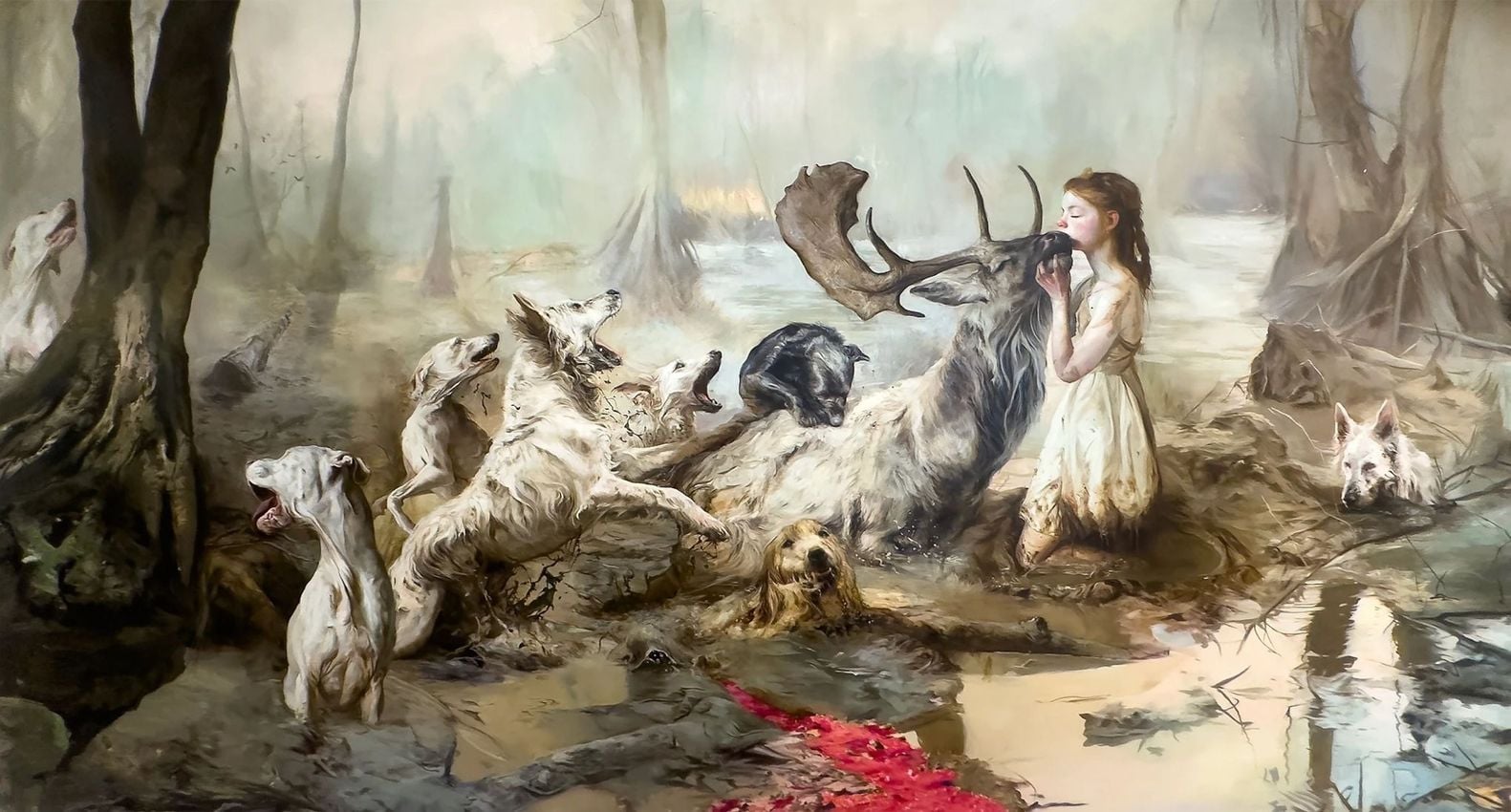
b. 1984, ChileChilean painter Guillermo Lorca García-Huidobro’s large-scale figurative works are known for combining realism with magic, intertwining human figures and nature and creating a sensual world. Juxtaposing innocence and threat, his dreamlike scenes prompt us to question who is the hunter and who is the hunted.
Guillermo Lorca: Early Years
Born in 1984 in Santiago, Chile, Guillermo Lorca García-Huidobro spends time between Chile and Barcelona, Spain. He has said that he realised he wanted to be an artist when he was 16—he trained under Chilean painter Sergio Montero and between 2002–2006 he studied at the Catholic University of Chile, gaining a Bachelor of Arts degree. In 2006 he moved to Norway to become an apprentice and assistant to the figurative painter Odd Nerdrum, during which time he deepened his understanding of oil-painting techniques. In 2009, Lorcan became the youngest artist to exhibit at Baquedano Metro station in Santiago—his six large murals about Chilean culture are still on display. He was propelled further into the spotlight when curator and art dealer Simon de Pury discovered his work on Instagram; de Pury curated Esplendor de la Noche (Splendour of the Night), Lorca’s solo European exhibition in Barcelona in 2021–2023.
Guillermo Lorca: Artworks
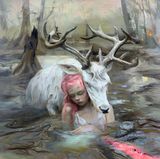
Guillermo Lorca’s figurative artworks are often described as magical realism, combining fantasy with precision. His use of chiaroscuro and the vivid colours he favours bring to mind Baroque art. He frequently features children and animals in bright, dream-eqsue, surreal situations, asking us to think about the emotional complexity of life, as well as to question who is prey and who is a predator. His meticulously planned paintings feature innocent figures stand amid swirling skies, animals dripping blood or molten lava, creating theatrical, fantastical scenes reminiscent of classic fairy tales.
Combining giant-sized scenes with intricate detail, he layers colour to create effects of light and shade. Symbolic of nature, myth and emotion, his works conjure thoughts of desire, death and danger. In a 2023 interview, he said: “My career has always been focused on my absolute love for painting and details, without losing sight of the importance of expressiveness and complexity in each brushstroke.”
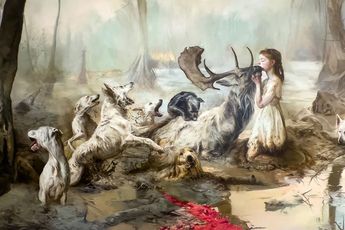
- Laura and the Dogs (2016) is a large-scale work (around 280cm x 180cm) that once again merges reality and fantasy; blue-haired Laura is surrounded by a pack of dogs but they are not aggressive—in fact, they seem calm and minding their own business. Lorca uses light and shade to create drama (chiaroscuro).
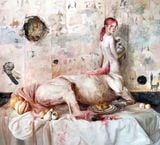
- Children and animals take centre stage in The Healer (2020), where a girl looks after an injured, bloodied gorilla on a table, while domestic cats and dogs sniff at the food dropped on the floor around them.
- The Little Gardeners (2021), which one profile suggests was inspired by the Baroque concept of horror vacui (fear of empty space) also pairs children and animals, in a scene featuring both innocence and danger—one of the human girls has bloodstains on her clothes and the other float on butterfly wings.
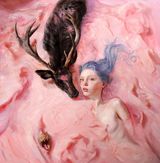
- Amid the pink clouds of My Little Brother (2023) is another blue-haired figure, surrounded by intricately painted white birds (with blue and pink beaks) and cats.
Guillermo Lorca: Public Commissions
- Six large-scale (340cm x 300cm each) portraits to mark the Chilean Bicentennial, Baquedano subway station, Santiago de Chile, Chile (2009)
- Mural at Casino Marina del Sol (3m x 32m) in Concepción, Chile (2008)
- Mural at Tabalí vineyard (4x45m), Ovalle, Chile (2005–2006)
Guillermo Lorca: Exhibitions
Select Solo Exhibitions
- Beyond the Wonder, National Gallery, Sofia (2025–2026)
- The Shine in the Other Room, Tang Contemporary Art, Seoul (2024)
- Esplendor de la Noche (Splendour of the Night), Moco Museum, Barcelona (2021–2023)
- Nocturnal animals, Gabriela Mistral Cultural Centre, Santiago de Chile (2014)
Select Group Exhibitions
- Ritual, Trauma and Allegory, Tang Contemporary Art, Hong Kong (2025)
- Web of Being: The Living Network, Tang Contemporary Art, Singapore (2025)
- Realism Now, Meam Museum, Barcelona (2024–2025)
- Unpack Reveal Unleash, Tang Contemporary Art, Seoul (2023)
- Dogs in Pose, La Venaria Reale, Turin (2018–2019)
Further reading
- Guillermo Lorca’s website
- Guillermo Lorca’s Instagram
- Meeting the subjects of Guillermo Lorca’s murals at Baquedano station (2018)
- The story behind Esplendor de la Noche (2021)
- This 2024 article finds out more about Laura and the Dogs (2016)
- Lorca’s biography at Tang Contemporary Art
Guillermo Lorca FAQs
What are Guillermo Lorca’s influences?
Guillermo Lorca’s dreamlike paintings are inspired by Gustave Doré, Peter Paul Rubens, Franz Von Byros, Goya, Ilya Repin, Odd Nerdrum and Rembrandt. In a 2023 interview he also cited “the symbolists and decadents in general, the pre-Raphaelites and the Victorians” and the culture of the Chilean countryside.
What subjects does Guillermo Lorca depict?
Guillermo Lorca’s artworks are rich in mythological and psychological symbolism. Animals and human figures co-exist in his magical realist worlds, asking viewers to question who is the predator. Children are often depicted as figures of innocence. For example, in Bird of Paradise (2020–2023), enormous cats descend a staircase while two girls sit serenely in peach sheets, seemingly untroubled by the apparent threat.
Where does Guillermo Lorca live?
Guillermo Lorca was born in Santiago, Chile, but spends time between Chile and Barcelona, Spain.
Ocula

Works at Tang Contemporary Art











Explore and Follow Artists Shaping Contemporary Art
A respected voice in contemporary art discourse.
Focusing on ambitious storytelling and insightful art-world commentary. Ocula Magazine publishes in-depth interviews, critical essays and timely analysis on the artists, exhibitions and ideas driving the global art world.
Learn more about Ocula Magazine
Showcasing the best of the art world.
Ocula partners with galleries from around the world to highlight their artists, artworks and exhibitions. Gallery membership is by application and invitation, with each member vetted by an independent panel.
Learn more about Ocula Membership
Specialises in the sale of major artworks.
Led by a team with deep ties to the world’s leading auction houses, galleries and collectors. Ocula’s advisory team offers bespoke services to high-net-worth clients from around the world who are looking to acquire the best of contemporary and modern art.
Learn more about our team and services