





RICHARD ALDRICH
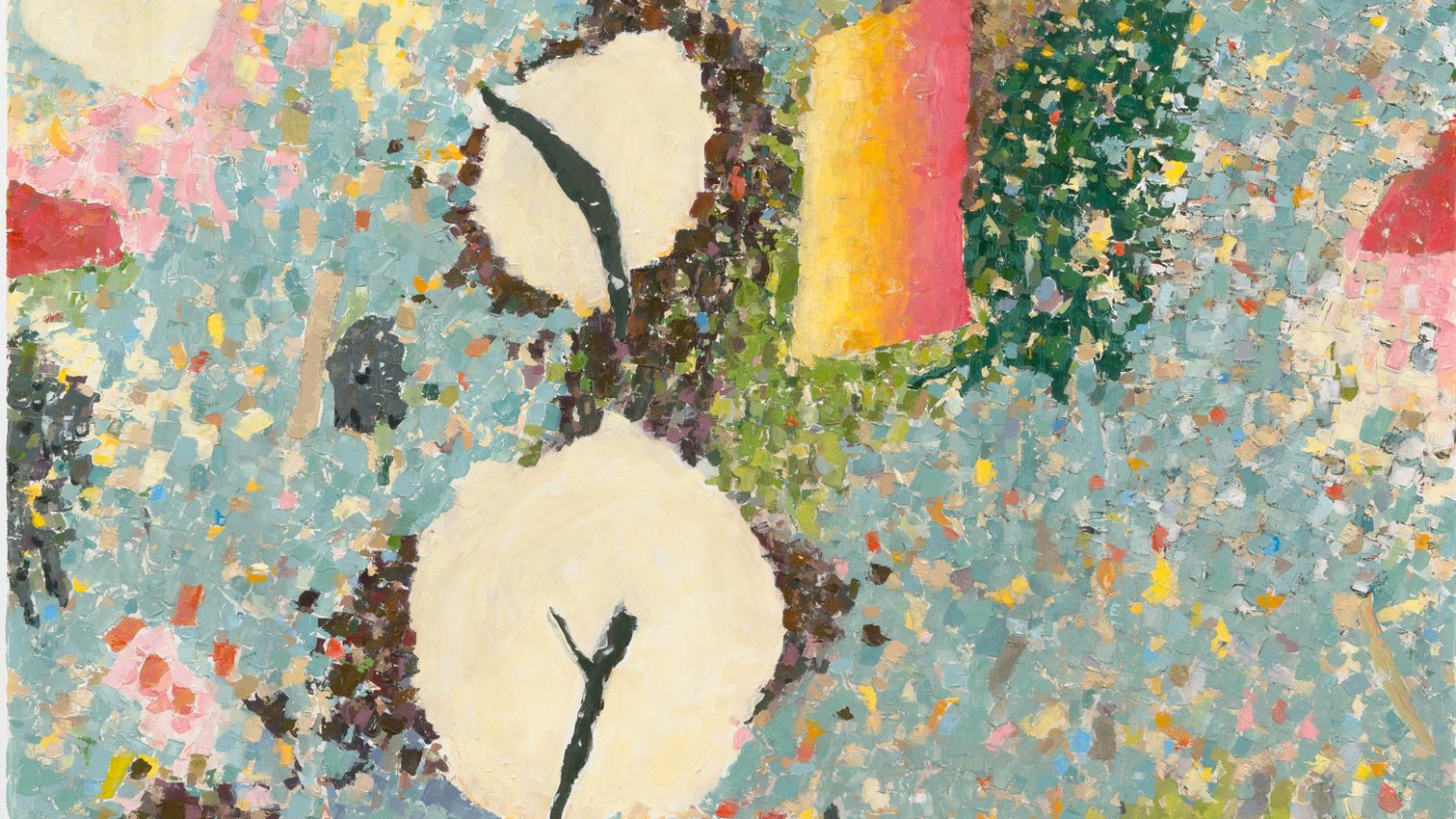
b. 1975, United StatesIn Richard Aldrich’s paintings, meaning is not delivered; it gradually takes shape. Attentive to how images are made and encountered, his approach carries an intimacy that resists spectacle. A gestural flourish might sit beside a rudimentary figure, or a patch of colour might feel both incidental and entirely necessary. References to abstraction, figuration, and art history at large surface and dissolve without hierarchy, shifting and receding as they appear. These juxtapositions remain open-ended, inviting a mode of looking that is patient and willing to entertain uncertainty.
This sense of openness is not only pictorial, but structural. Aldrich treats painting as a space of ongoing negotiation, where decisions are revised, interrupted, or left unresolved. His canvases rarely settle into a single intention; passages are reworked, layered, or undone, often within the same surface. At times, he cuts into the canvas, exposing what lies beneath and folding process back into the image itself. What emerges is less a fixed composition than a record of decisions, giving the work a soft elasticity, as if it could continue beyond its edges. Rather than seeking closure, the paintings unfold slowly and reward sustained attention. They are not meant to be decoded, but to be spent time with—shifting the focus away from what a painting presents toward how it comes into being, and how we come to recognise it.
Richard Aldrich (b. 1975, Hampton, VA, USA) lives and works in New York, NY. His work has been the subject of solo exhibitions at Fondazione Giuliani, Rome (2022); Museum Dhondt-Dhaenens, Deurle (2016); San Francisco Museum of Modern Art (2011); and the Contemporary Art Museum St. Louis (2011). He has participated in recent group exhibitions at the Museum of Contemporary Art Busan (2022); the National Museum of Art, Osaka (2019); A.shti Foundation, Beirut (2018); and the Wexner Center for the Arts, Columbus (2018). Aldrich’s works are held in collections including MoMA, New York; the Smithsonian American Art Museum, Washington, D.C.; San Francisco Museum of Modern Art; the Dallas Museum of Art; the ICA Miami; the Whitworth Art Gallery, University of Manchester; the Whitney Museum of American Art, New York; and the National Museum of Art, Osaka, Japan.
Courtesy Xavier Hufkens





Explore and Follow Artists Shaping Contemporary Art
A respected voice in contemporary art discourse.
Focusing on ambitious storytelling and insightful art-world commentary. Ocula Magazine publishes in-depth interviews, critical essays and timely analysis on the artists, exhibitions and ideas driving the global art world.
Learn more about Ocula Magazine
Showcasing the best of the art world.
Ocula partners with galleries from around the world to highlight their artists, artworks and exhibitions. Gallery membership is by application and invitation, with each member vetted by an independent panel.
Learn more about Ocula Membership
Specialises in the sale of major artworks.
Led by a team with deep ties to the world’s leading auction houses, galleries and collectors. Ocula’s advisory team offers bespoke services to high-net-worth clients from around the world who are looking to acquire the best of contemporary and modern art.
Learn more about our team and services