

RONALD VENTURA
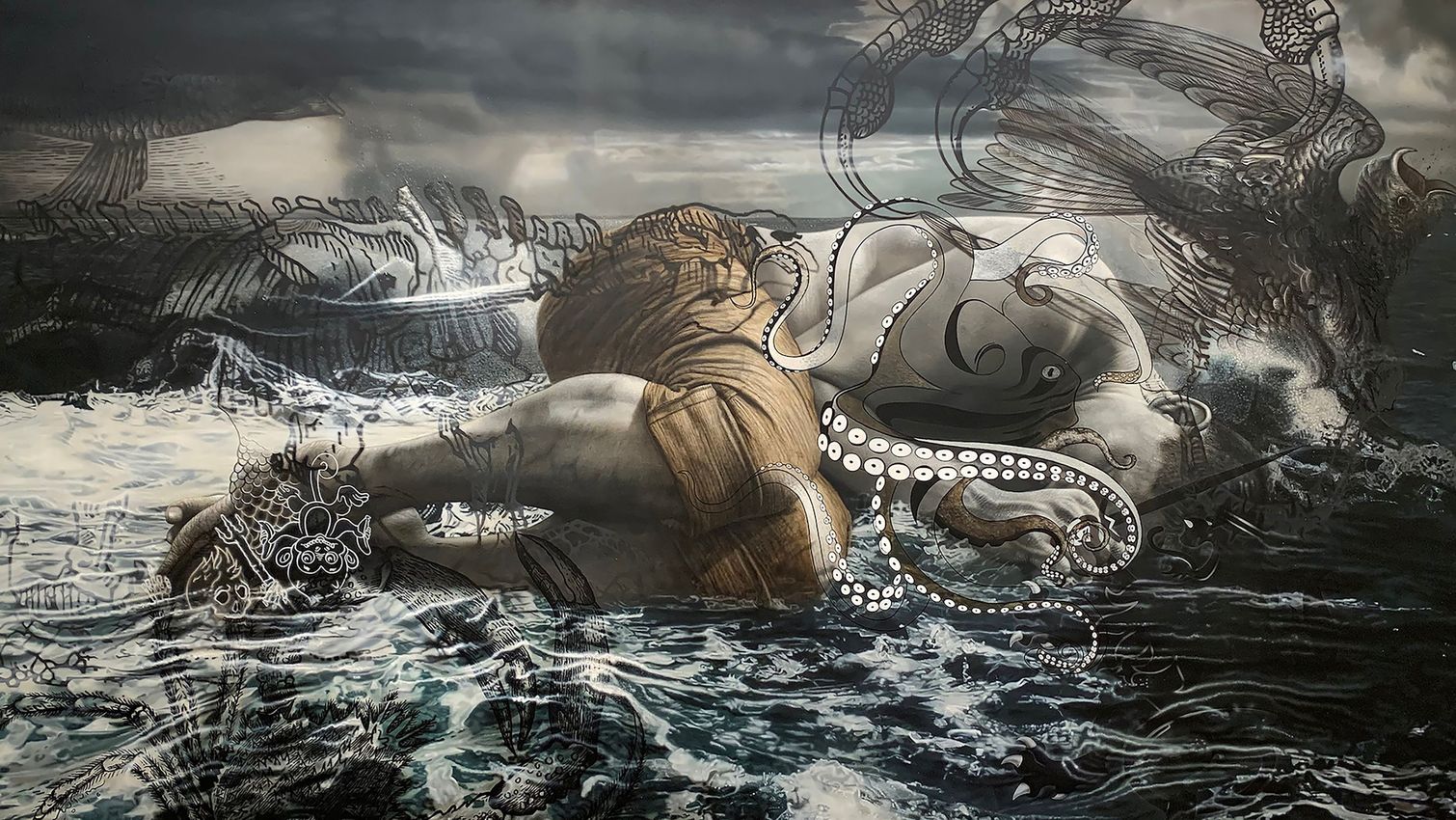
b. 1973, PhilippinesRonald Ventura’s layered, intricate artworks, blending Eastern and Western aesthetics, hyperreal figures and references to Old Masters, could perhaps be seen as a metaphor for the multifaceted national identity of the Philippines, his home country. Combining figurative motifs, he creates worlds that make space for both fantasy and conflict.
Early Years
Ronald Ventura was born in Manila in 1973. He has a childhood memory of a friend inviting him to a free art workshop that taught him form and composition, as well as giving him the opportunity to work with different artistic materials. Ventura obtained his BFA in painting from the University of Santo Tomas in Manila in 1993.
Ronald Ventura: Artworks
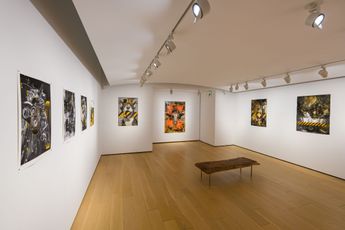
In a practice spanning painting, sculpture, drawing and installation, Ventura’s visual language blends the contradictions of pop culture, history, fiction and realism to create his signature layered pieces. Cartoons appear alongside references to art history, and Ventura creates physical and metaphorical spaces that could represent the constant evolution of society and identity. Although the artist has said that there are many ways to read his works. Speaking in 2026, he said: “Once the work leaves the studio, it no longer belongs entirely to me. People bring their own histories, beliefs, and emotions into the encounter. It reminds me that art doesn’t have fixed meanings. Sometimes viewers discover possibilities that even the artist couldn’t see. Those moments are gifts because they keep the work alive.”
- The In Between Nest (2013) is a great example of Ventura’s use of Photoshop to create his artworks. Alongside a fight between birds of different species, a face appears from the undergrowth, a gun-toting Mickey Mouse looks to the left and a central figure wears a gasmask.
- Ronald Ventura set an auction record in 2024 with his 2021 painting State of Bloom, which sold for $36.7 million HKD (£3.5 million). The painting discusses the ways organic and synthetic areas of life intersect, layering butterflies, humans, animals and signage. It could also be seen as a commentary on the way wealth creates materialistic desires.
- At the 61st Venice Biennale, Ronald Ventura worked with curator Ruel Caasi to create Luna, an exhibition that created a dialogue between the Italian city and Malabon, where Ventura grew up. The rhythms of both places have been shaped by the flow of water in and around them and Ventura created connections between the two locations, highlighting stories of migration and trade. The title Luna came from the role of the moon in governing tides.
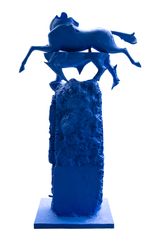
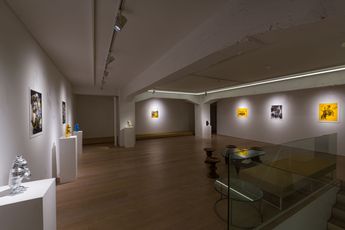
Ventura also took part in the Venice Biennale-adjacent event Glasstress 2026, produced in association with Murano glass. Ventura produced glass sculptures including the expressively spiky blue Dog (2026).
Ronald Ventura: Select Exhibitions
Select Solo Exhibitions
- Ronald Ventura: Pressure and Pleasure, Ginza New Gallery, Tokyo (2025) (and touring)
- Grey Avenue, Whitestone Ginza New Gallery, Tokyo (2024)
- Ronald Ventura: An Introspective, New Art Museum Singapore (2023)
- Ronald Ventura: An Introspective, Karuizawa New Art Museum (2021)
- Comic Stripes, Whitestone Ginza New Gallery, Tokyo (2021)
- Comic Lives, Whitestone Ginza New Gallery, Tokyo (2018)
- Shadow Forest: Encounters and Explorations, The Metropolitan Museum of Manila (2017)
- Project: Finding Home, Museum of Contemporary Art (MOCA), Taipei (2017)
- Recent Works, Primae Noctis Art Gallery, Lugano (2016)
- Behind the clouds, The Drawing Room, Manila (2016)
- Ronald Ventura: Big and Small, Ayala Museum, Makati City (2015)
- The Hunting Ground, Primo Marella Gallery, Milan (2015)
- ER (Endless Resurrection), Tyler Rollins Fine Art, New York City (2014)
- Bulul. Ronald Ventura and the traditional art of the Philippines, Museo delle Culture, Lugano (2014)
- Voids and Cages, Galerie Perrotin, Hong Kong (2013)
- Watching the Watchmen, Vargas Museum, Quezon City (2012)
- Recyclables, Singapore Tyler Print Institute (2012)
- Fiesta Carnival, Primo Marella Gallery, Milan (2012)
- A Thousand Islands, Tyler Rollins Fine Art, New York City (2011)
- Ronald Ventura: Fragmented Channels, Primo Marella Gallery, Milan (2010)
- Major Highways, Expressways and Principal Arterials, Akili Museum of Art, Jakarta (2009)
- Zoomanities, The Art Centre Megamall, Mandaluyong City (2008)
- Under The Rainbow, West Gallery Megamall, Mandaluyong City (2007)
- Dialogue Box, West Gallery Megamall, Mandaluyong City (2006)
- Human Study, The Cross Art Projects, Sydney (2005)
- Contrived Desires, West Gallery Megamall, Mandaluyong City (2004)
- X-Squared, West Gallery and Big and Small Art Co (2003)
- Visual Defects, West Gallery Megamall, Mandaluyong City (2002)
- The Other Side, The Drawing Room, Makati City (2001)
- All Souls Day, The Drawing Room, Makati City (2000)
Select Group Exhibitions
- Resonance, Whitestone Gallery, Hong Kong (2026)
- 61st Venice Biennale (2026)
- Contemporary Chaos, Vestfossen Kunstlaboratorium (2018)
- Nuove Frontiere della Pittura, Fondazione Stelline, Milan (2017)
- Wasak! Reloaded, Arndt, Singapore (2016)
- Surreal Versus Surrealism in Contemporary Art, Institut Valencià d’Art Modern (2011)
- First Nanjing Biennale (2010)
- Fourth Prague Biennale (2009)
- Cross Encounters: The 2005 Ateneo Art Awards Exhibition, Power Plant Mall Rockwell Centre, Makati City (2005)
- Korea Asian Art Festival, Inza Plaza, Seoul (2004)
- 19th Asian International Art Exhibition, Fukuoka Asian Art Museum (2004)
- Philip Morris Asean Art Awards, Nusa Dua, Bali (2002)
- The Eighth Annual Filipino-American Arts Exposition, Yerba Buena Centre for the Arts, San Francisco (2001)
- Mad About Lithographs, Ayala Museum, Makati City (2000)
- Ninth International Biennial Print and Drawing Exhibit, Taipei (1999)
Further Reading
- Ronald Ventura’s Instagram
- Artist profile page at Whitestone Gallery
- Artist profile page at Primo Marella Gallery
- Profile in BluPrint (2026)
- 2026 interview for Venice Biennale
Ronald Ventura FAQs
What is Ronald Ventura’s “second skin”?
While Ventura has used the idea of “skin” as a metaphor to consider Filipino identity shaped by the ways traditions have mingled with Japanese, American and Spanish colonialism, he has also taken idea directly into artwork. Second Skin (2009) created a contrast between a monochromatic figure and colourful graphic elements, perhaps symbolising the many facets personal identity can take (those we show and those we hide).
Did Ronald Ventura teach art?
Yes, Ventura worked at the University of Santo Tomas for nine years, basing his academic practice on open dialogue and intellectual exchange, and observing how his students produced and conceptualised their own work. Quoted in 2026, he said: “There are learnings in those conversations, such as in how he or she responds to your questions. In their answers, that’s also a question for them because they’re from a different generation.”
What is Ronald Ventura’s creative process?
“Most works begin with fragments,” Ventura [said][Venice] in 2026. A “fragment” could be a photograph, a sketch, a sentence, something he discovers while reading or maybe a particular material he would like to use. He collects the fragments over time, waiting patiently for connections to appear between them.
Ocula

Works at Whitestone Gallery








Recently Exhibited



Works Elsewhere




Explore and Follow Artists Shaping Contemporary Art
A respected voice in contemporary art discourse.
Focusing on ambitious storytelling and insightful art-world commentary. Ocula Magazine publishes in-depth interviews, critical essays and timely analysis on the artists, exhibitions and ideas driving the global art world.
Learn more about Ocula Magazine
Showcasing the best of the art world.
Ocula partners with galleries from around the world to highlight their artists, artworks and exhibitions. Gallery membership is by application and invitation, with each member vetted by an independent panel.
Learn more about Ocula Membership
Specialises in the sale of major artworks.
Led by a team with deep ties to the world’s leading auction houses, galleries and collectors. Ocula’s advisory team offers bespoke services to high-net-worth clients from around the world who are looking to acquire the best of contemporary and modern art.
Learn more about our team and services