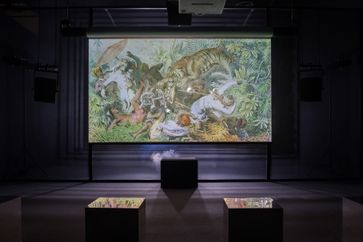
Art Sonje Center is delighted to present Ho Tzu Nyen: Time & the Cloud, a comprehensive solo exhibition showcasing the artistic journey of Singaporean artist Ho Tzu Nyen. Spanning two decades of his practice, this expansive exhibition explores complex layers of modernity in the postcolonial contemporary Asia.
For Ho, modernity in Asia is a complex and multilayered cultural phenomenon that cannot be explained solely by the Western dialectical logic of progress. This artistic perspective is evident in his seminal work, The Critical Dictionary of Southeast Asia(2012–2017). This groundbreaking research serves as the foundation for Ho’s latest endeavor, T for Time (2023–2024) and Timepieces (2023–2024), presented for the first time in Korea. Coproduced by Art Sonje Center and the Singapore Art Museum, T for Time expands Ho’s algorithmic methodology. In this two-channel video installation, Ho embarks on an epic journey through his personal experiences and artistic evolution, exploring the mythical and cultural perceptions of time in both Eastern and Western contexts. This comprehensive research project invites audiences to delve into the complex tapestry of historical narratives and contemporary realities that shape our understanding of temporality.
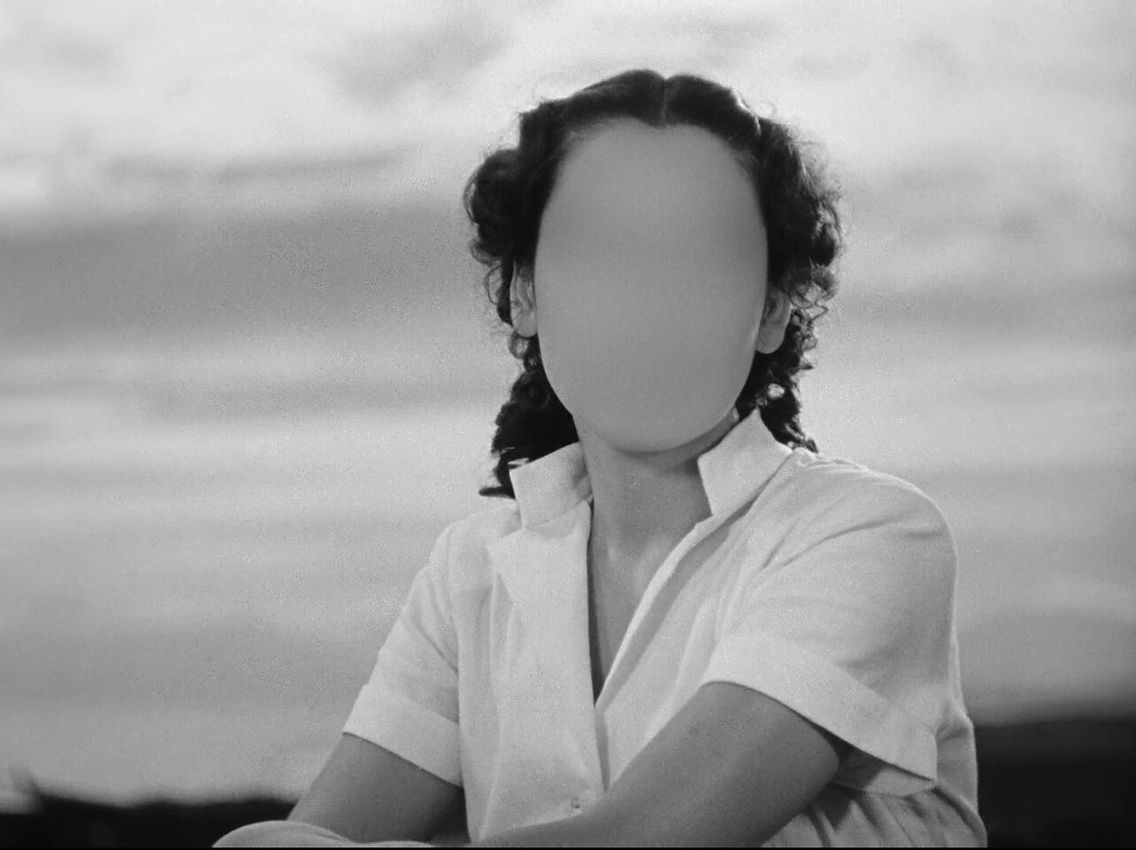
Hotel Aporia (2019) presents a rich collage of narratives, offering a critical perspective on the hegemonic Asianism forged by Japanese Imperialism. Site-specifically produced for Aichi Triennale 2019 at the Kiraku-Tei, where pilots from the Kusanagi Unit had a final dinner before their suicide mission, _Hotel Aporia_presents diverse cast of characters, including a group of Kyoto School philosophers. Furthermore, _Hotel Aporia___weaves together the wartime experiences of filmmaker Yasujiro Ozu and animation director Ryuichi Yokoyama, poetically revealing both the narcissism and the underlying divisions within Japan’s quest of modernity. The artist employs Japanese imperialism as a lens to reflect the turbulent struggles faced by Asian regions during modernization.
Set within a rundown public housing complex, The Cloud of Unknowing (2011) portrays surreal scenes of clouds infiltrating the private apartments of the eight protagonists. The title, derived from a 14th-century Christian mystical manual, alludes to the cloud as a mythological, spiritual, and religious symbol. In this film, clouds act as a visual device constructing scenes, while also evoking the cultural and historical significance associated with them. These multiple meanings of clouds are further explored throughout the exhibition, encompassing references to a natural phenomenon, virtual storage space and a space of new possibilities embodying ambiguous and unknown entities.
Presented along with The Cloud of Unknowing, Newton (2009) and Gould__(2009–2013) twists the two most important inventions of Western modernity: science and art. In Newton, an Asian albino repeats acts of pseudo-scientific research, while in _Gould,_the same actor plays the piano with extreme concentration. Earth(2009-2011), which borrows the iconography of European Baroque and Romantic painting to depict an apocalyptic landscape of the earth after a catastrophe, exposes the future that has already become our present. These works not only comically twist the legacy of Western modernity, but also show us its catastrophic aftermath.
Ho Tzu Nyen: Time & the Cloud unveils the lingering awe, fantasies, fears, and frustrations entwined with the experience of modernity in Asia, casting them as spectral presences hovering over contemporary societies and cultures. Through the exhibition, visitors encounter the echoes of imperialism, the legacies of colonialism, and the paradoxical situations faced by those who navigated these turbulent times. Designed to immerse audiences in the vast stream of cosmic time, the exhibition paints a picture of the present shaped by the collisions, misunderstandings, appropriations, and reconciliations of multiple modernities.
Ho Tzu Nyen was born in Singapore in 1976. He earned a BA in Creative Arts from Victorian College of the Arts, University of Melbourne (2001), and an MA in Southeast Asian Studies from the National University of Singapore (2007). He works primarily in film, video, and performance, and has recently developed environmental multimedia installations. He has also written extensively on art. Ho appropriates the structures of epic myths, invoking their grandeur while revealing them to be not merely stories, but discursive tools.

The Art Sonje Center, founded in 1998, is a private art museum which supports current and experimental contemporary art. Although it is rather a young organisation which just has celebrated its fifth year, its international quality exhibitions and educational programs have been receiving attention by those in the art field and the general public alike. With an open attitude and the spirit to experiment with exhibition methods, we show art from ‘here and now.’ For this, we actively search for the opportunity to collaborate with those in the fields of music, literature, architecture, dance and fashion. We also have the mandate to provide radical exhibition planning to support new projects.

A respected voice in contemporary art discourse.
Focusing on ambitious storytelling and insightful art-world commentary. Ocula Magazine publishes in-depth interviews, critical essays and timely analysis on the artists, exhibitions and ideas driving the global art world.
Learn more about Ocula Magazine
Showcasing the best of the art world.
Ocula partners with galleries from around the world to highlight their artists, artworks and exhibitions. Gallery membership is by application and invitation, with each member vetted by an independent panel.
Learn more about Ocula Membership

Specialises in the sale of major artworks.
Led by a team with deep ties to the world’s leading auction houses, galleries and collectors. Ocula’s advisory team offers bespoke services to high-net-worth clients from around the world who are looking to acquire the best of contemporary and modern art.
Learn more about our team and services