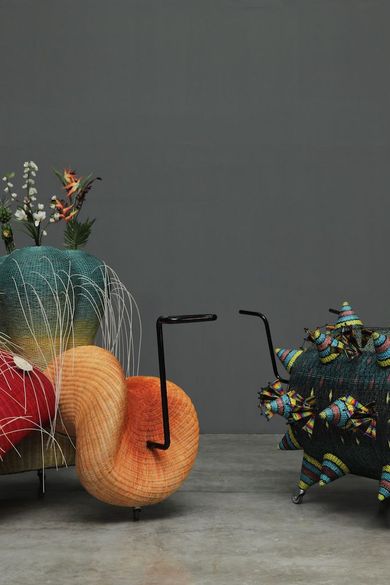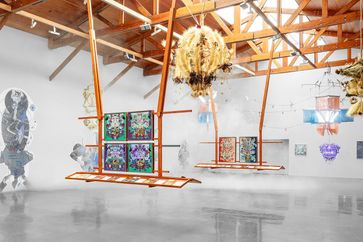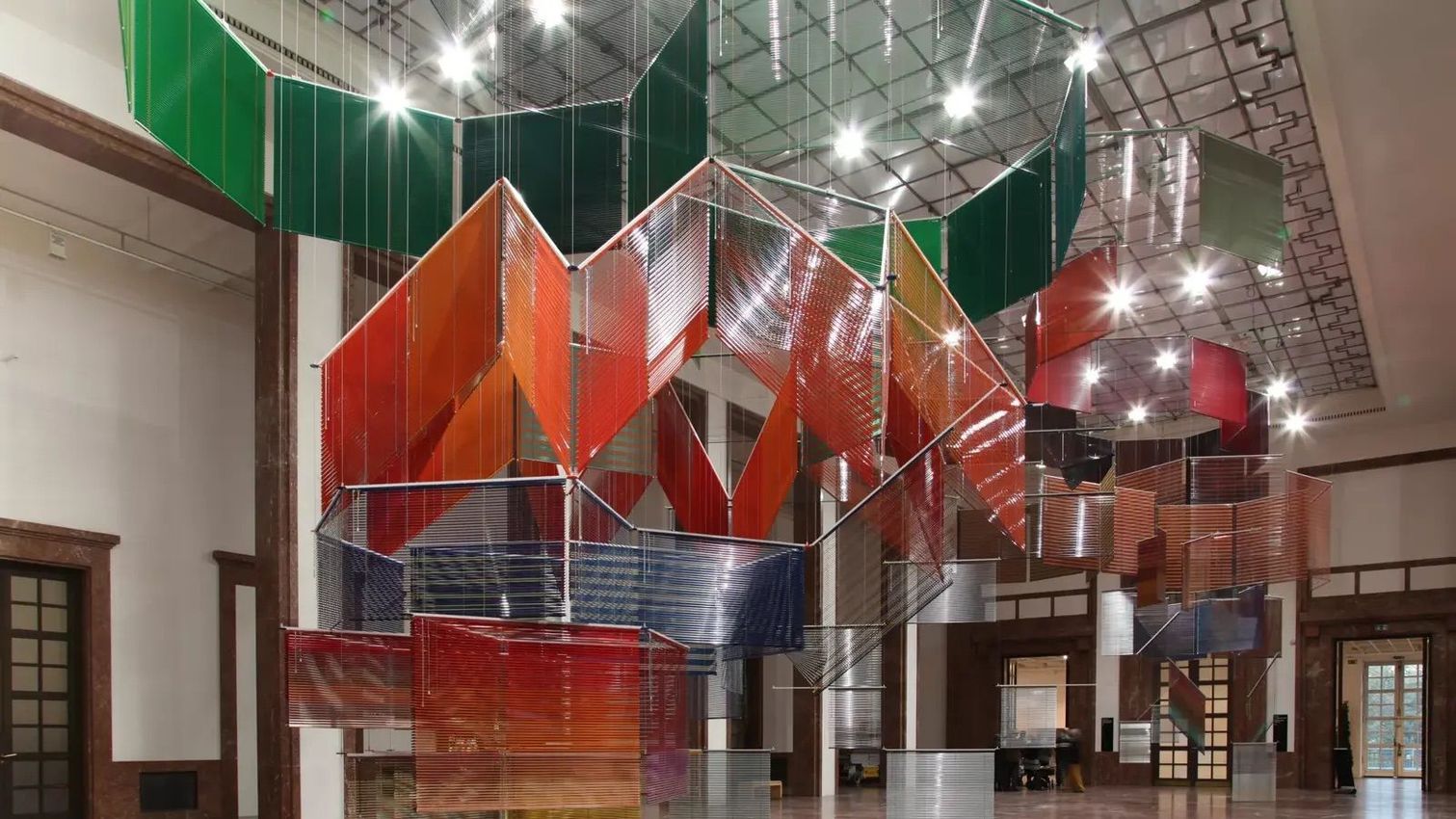
Haegue Yang’s work spans a vast range of media – from paper collage to performative sculpture and immense sensorial installations.
Equally as wide-ranging, her inspiration draws on diverse histories and customs, including East Asian traditions and folklore, modernism, contemporary art history and nature.
Yang uses a variety of crafts, techniques and materials in her work, tapping into the cultural connotations they carry. Her works often feature a variety of household and industrial objects, including drying racks, light bulbs, metal-plated bells, nylon pom-poms, hand-knitted yarn and hanji (Korean paper).
Leap Year is the first major survey of the internationally celebrated artist in the UK. It presents a comprehensive study of Yang’s work from the early 2000s to today, highlighting how her artworks resonate on a personal and sensory level while also speaking to social, political and spiritual ideas.
The exhibition features key works from some of her most notable series, including Light Sculptures and Sonic Sculptures, complemented by three new major commissions and a number of new productions.
These works bring together a wide spectrum of visual and sensory experiences through the mediums of installation, sculpture, collage, text, video, wallpaper, sound.
Yang (born 1971, Seoul) lives and works in both Berlin and Seoul. Her multisensory environments encourage perception beyond the visual, creating immersive experiences that highlight issues such as labour, migration, and displacement.
She has had recent solo exhibitions at Helsinki Art Museum (2024); National Gallery of Australia, Canberra (2023); S.M.A.K., Ghent (2023); and Pinacoteca de São Paulo (2023).

Haegue Yang is an artist known for her subtle use of mundane objects within sensory installations. Yang graduated with a BFA from Seoul National University, then attended Städelschule Frankfurt am Main, Germany, receiving an MFA in 1999. Today, she lives and works in Seoul and Berlin.

Hayward Gallery is a world-renowned contemporary art space in central London, housed within the Southbank Centre and known for its striking Brutalist architecture. Opened in 1968, it was designed under chief architect Norman Engleback with key contributions from Ron Herron, Warren Chalk, and John Attenborough of the Greater London Council’s Architecture Department. Today, it remains a dynamic venue for bold, large‑scale exhibitions of contemporary visual art, both inside the gallery and across the wider Southbank Centre site.
A respected voice in contemporary art discourse.
Focusing on ambitious storytelling and insightful art-world commentary. Ocula Magazine publishes in-depth interviews, critical essays and timely analysis on the artists, exhibitions and ideas driving the global art world.
Learn more about Ocula Magazine
Showcasing the best of the art world.
Ocula partners with galleries from around the world to highlight their artists, artworks and exhibitions. Gallery membership is by application and invitation, with each member vetted by an independent panel.
Learn more about Ocula Membership

Specialises in the sale of major artworks.
Led by a team with deep ties to the world’s leading auction houses, galleries and collectors. Ocula’s advisory team offers bespoke services to high-net-worth clients from around the world who are looking to acquire the best of contemporary and modern art.
Learn more about our team and services