





Forward-looking Helsinki Biennial Engages AI Curator

Emilija Škarnulytė, still from Hypoxia (2023). Courtesy the artist.

Helsinki Art Museum will host the second edition of the city’s environmentally and technologically conscious Biennial from 12 June to 17 September.
The title of this year’s show, New Directions May Emerge, quotes American Anthropologist Anna Tsing, who advocated for ‘the art of noticing’ in understanding the world and its inhabitants.
In addition to 29 artists, the exhibition features five design, art and technology collaborators who will work with the Biennial’s lead curator, Joasia Krysa. One of them is an ‘AI Entity’ created by South Korean web artist Yehwan Song and the Digital Visual Studies project at the University of Zurich.
The AI curator’s insights can be accessed through an adaptive web-based 3D map of the Helsinki Art Museum‘s collection that formulates new and unexpected artwork groupings. The groupings respond to inputs including the AI’s analysis of the artworks, Biennial visitors, and Helsinki’s geography.
Among the highlights of the Biennial is Keiken’s Ángel Yōkai Atā (2023), which includes a spirit house on the Isthmus between Vallisaari and Kuninkaansaari islands that acts as a portal to speculative digital worlds.
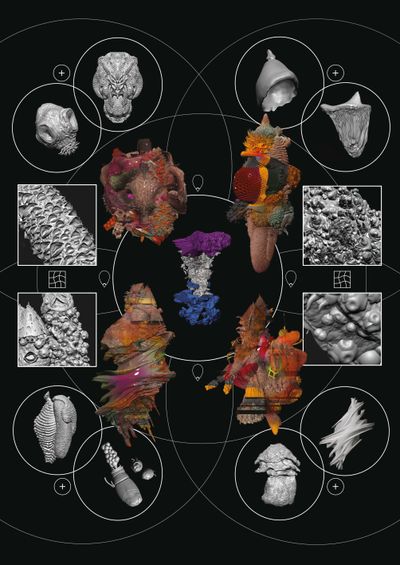
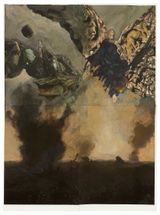
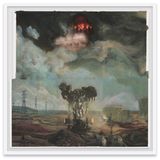
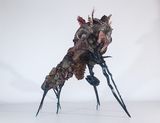
For his series ‘The End of Imagination’ (2023), Adrián Villar Rojas’ created highly detailed virtual worlds using a collection of software tools the artist describes as the ‘Time Engine’. He introduces his own digital sculptures to these worlds—which simulate hours to centuries of decay, altered gravities, fire, war, unrest and intersections with new life forms—to create new forms, which will then be created IRL and installed on Vallisaari Island, where they will continue to change in response to forces on our own world.
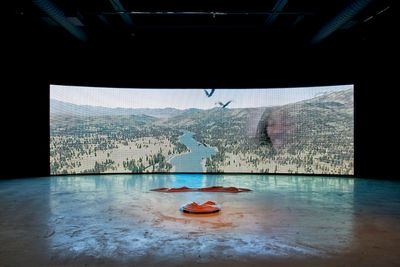
Emilija Škarnulytė’s Hypoxia (2023) views the world from the perspective of ‘alien archeology’. Showing in Vallisaari Island’s former gunpowder magazine, the film installation references the Baltic Sea anomaly—believed by some to be an alien spacecraft—the mythology of the Lithuanian sea goddess Jūratė, and hypoxia, oxygen-less dead-zones appearing in the world’s oceans.
Other new commissions for the Biennial include: PhosFATE’s sandophonic garden, modelled on the sand gardens of the Sahrawi in southwest Algeria; sound works by the Red Forest collective, whose practice stems from explorations of the radioactive Chernobyl zone; and an augmented reality work by Ahmed Al-Nawas and Minna Henriksson that addresses the geopolitical significance of the Saimaa channel between Finland and Russia.
In a statement, the Helsinki Biennial‘s new director, Arja Miller, said, ‘the artists and artworks participating in this second edition are directly responding to the world around us, employing a future-oriented vision which is at the core of the biennial itself.’ —[O]
Main image: Emilija Škarnulytė, still from Hypoxia (2023). Courtesy the artist.


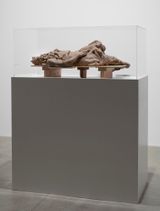

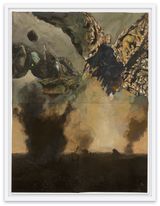



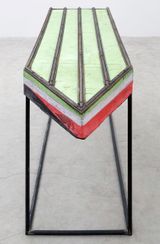
70 x 48 x 51 cm
Marian Goodman Gallery Request Price & Availability



A respected voice in contemporary art discourse.
Focusing on ambitious storytelling and insightful art-world commentary. Ocula Magazine publishes in-depth interviews, critical essays and timely analysis on the artists, exhibitions and ideas driving the global art world.
Learn more about Ocula Magazine
Showcasing the best of the art world.
Ocula partners with galleries from around the world to highlight their artists, artworks and exhibitions. Gallery membership is by application and invitation, with each member vetted by an independent panel.
Learn more about Ocula Membership
Specialises in the sale of major artworks.
Led by a team with deep ties to the world’s leading auction houses, galleries and collectors. Ocula’s advisory team offers bespoke services to high-net-worth clients from around the world who are looking to acquire the best of contemporary and modern art.
Learn more about our team and services