





The art world in focus
Subscribe to our newsletter for news and insights on artists, galleries and exhibitions.


Sami Samawi, Girls 1 (2023). Video still. Courtesy the artist and Ayyam Gallery.
Dubai’s Ayyam Gallery recently held a fundraising exhibition featuring Sami Samawi‘s AI-generated videos of the war in Gaza. Proceeds from sales of limited edition prints derived from the exhibition, Their Voices, Our Dreams, are going to children in Gaza via The Little Wings Foundation.
Some scenes are sentimental, showing children sitting among fruit looking out over rubble, as if Anne Geddes were a war photographer. Others, depicting pumpkin-shaped tanks, for example, are surreal, reminiscent of paintings by Tetsuya Ishida. We asked Samawi about this unusual, contentious approach.
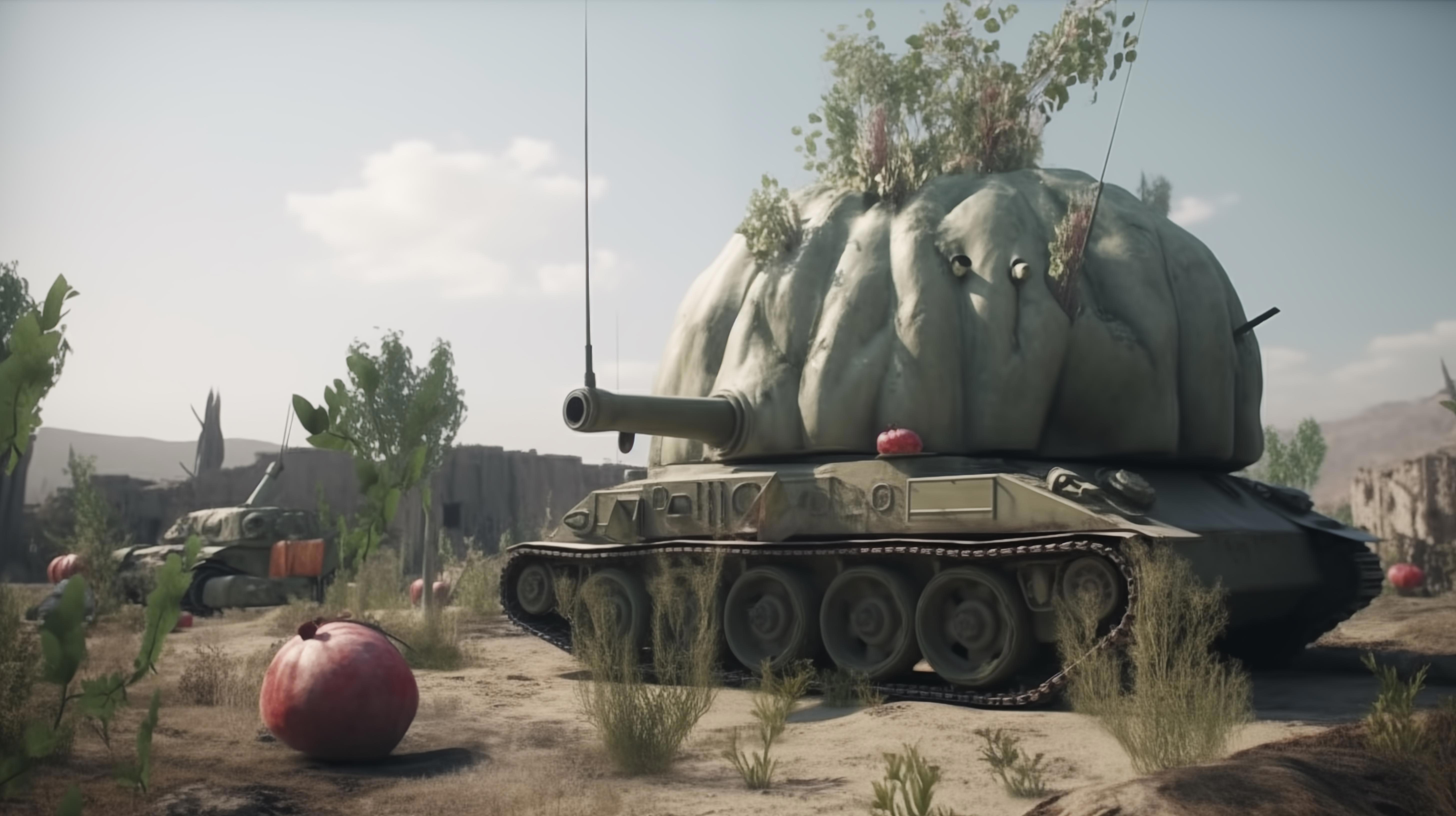
With so much misinformation being shared during Israel’s attack on Gaza, did you have any reservations about using AI to generate images? Is there a concern that they undermine the brutal reality?
Firstly, the aim was not to depict the war itself in a literal sense, but rather to convey the experience of the Arab diaspora. Many of us have engaged with the conflict through digital media, fragmentarily and from a distance. The surreal AI imagery mirrors this mediated experience—it’s another layer of digital interpretation, just as our understanding is shaped by the snippets of war we see online.
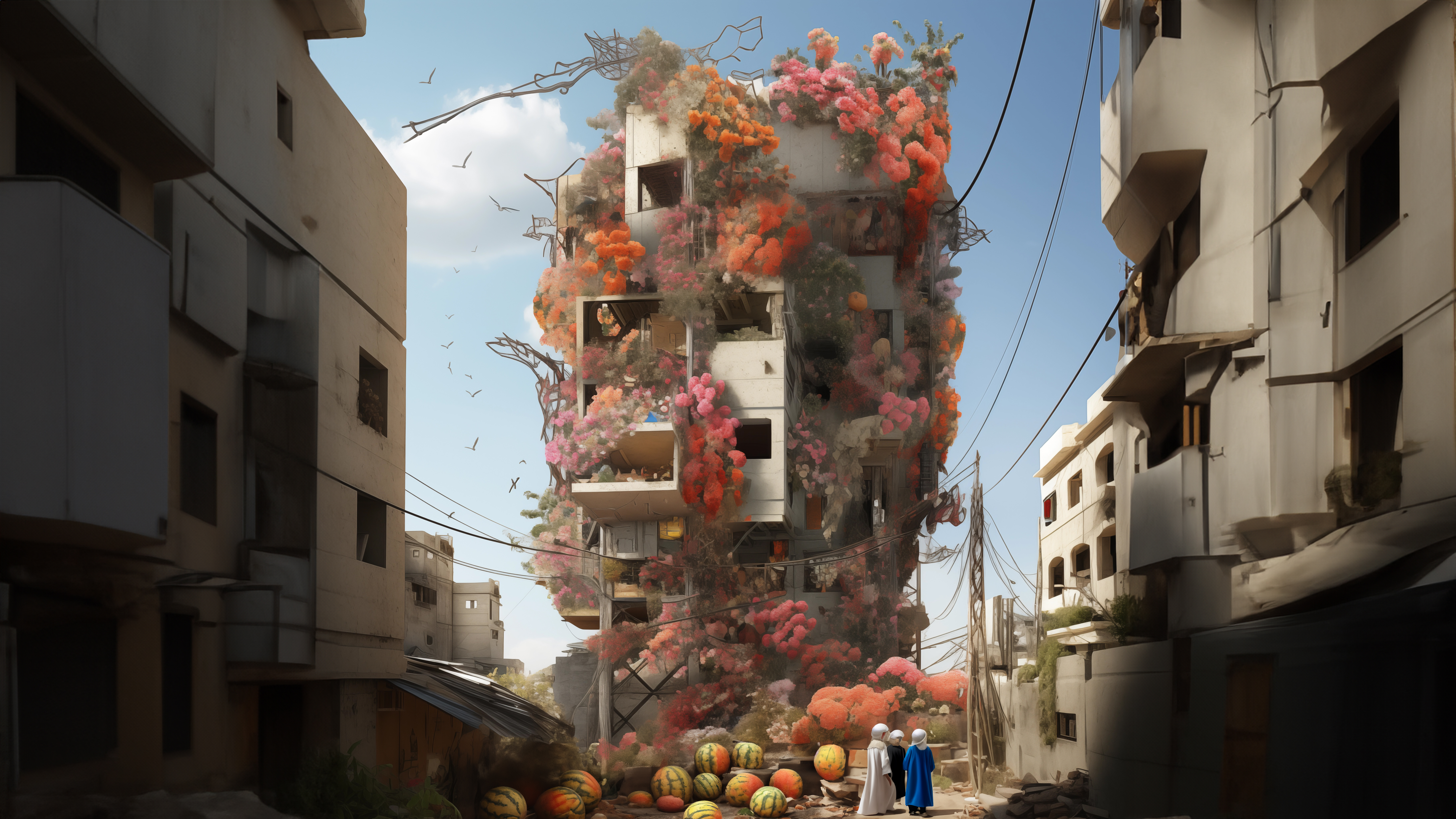
Secondly, by incorporating the actual sounds of war into a surreal, visually softened landscape, the project invites engagement from those who might shy away from more graphic representations. It’s an approach that seeks to communicate the essence of the conflict without inflicting secondary trauma on the viewer.
Thirdly, the use of AI in this context is particularly poignant, especially given the role it has played in this conflict. While AI technology is often employed in warfare for destruction and surveillance, here it’s repurposed for empathy and aid. It’s a reclamation of technology, turning a tool often used for harm into one for healing and support, especially for the disabled children in Gaza who are the beneficiaries of this project.
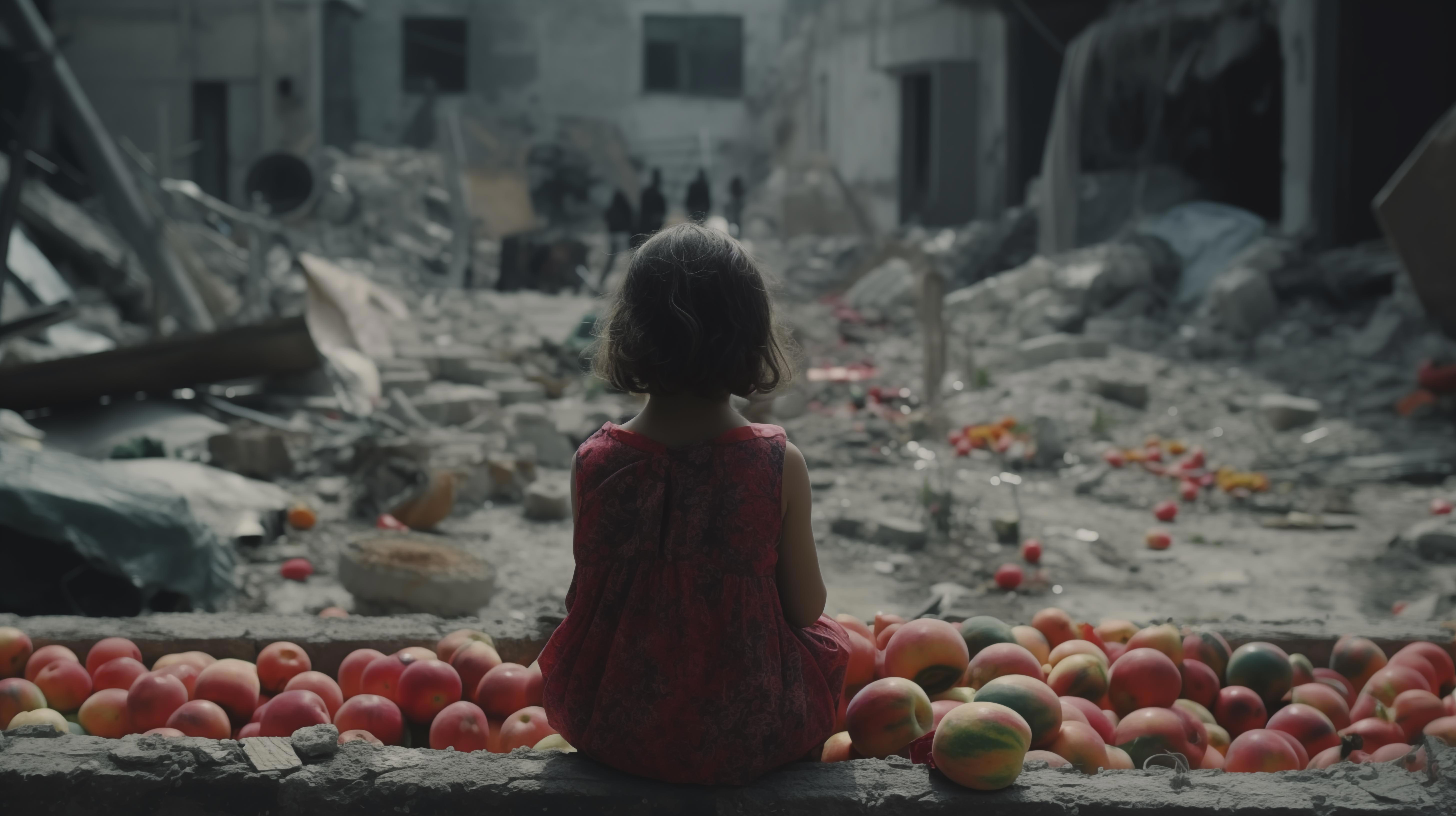
Lastly, this project aims to shift focus from the brutality of the conflict to the resilience and enduring spirit of the Gazan people. It’s a counter-narrative to the often dehumanising, humiliating and compromising portrayals in mainstream media as well as footage from the ground, highlighting strength and hope rather than just victimhood.
In doing so, it serves as its own form of counter-propaganda, challenging prevailing narratives and offering a different lens through which to view the conflict.
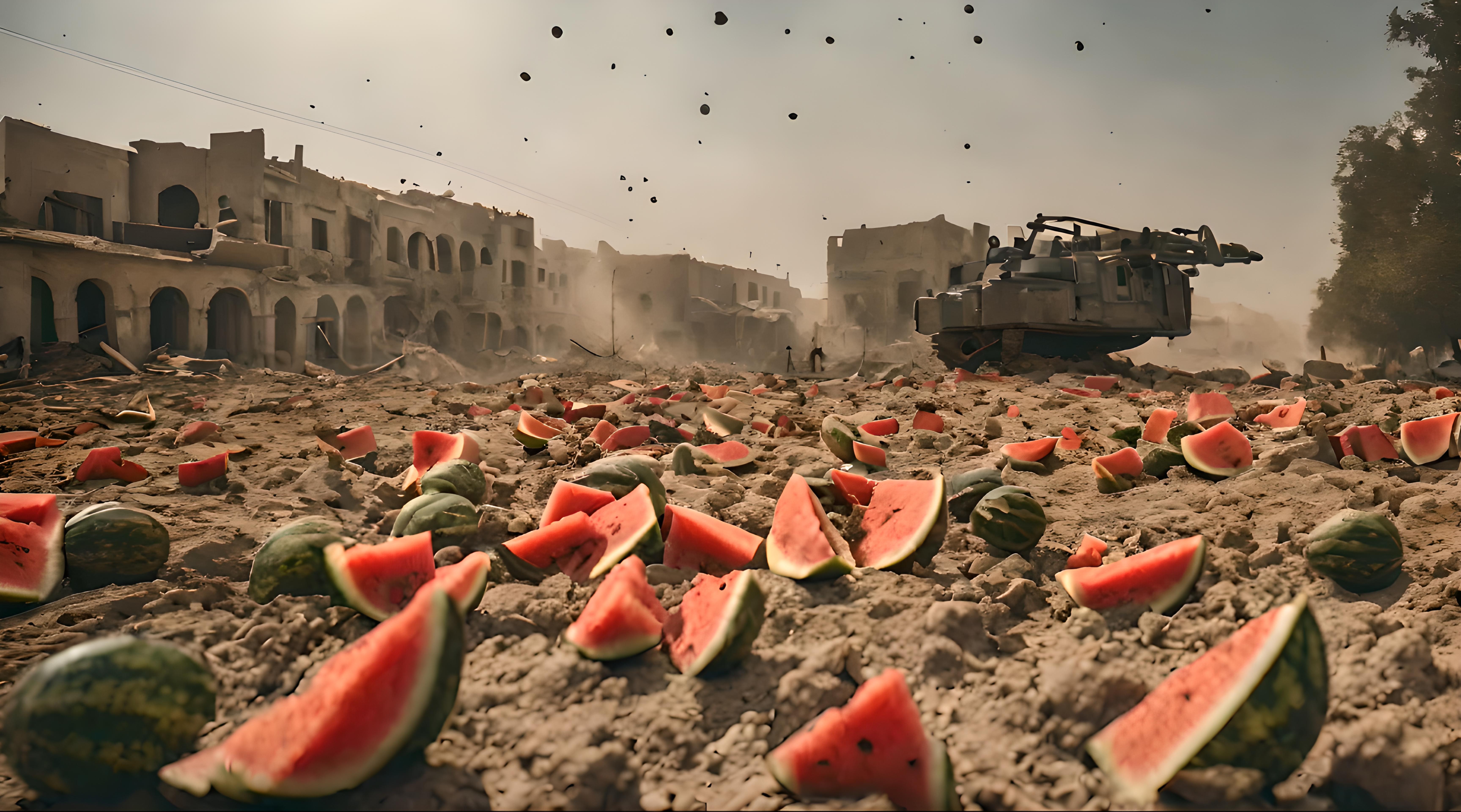
In essence, this project is as much about the medium as it is about the message. The surreal AI-created imagery isn’t just a stylistic choice; it’s integral to how we understand and engage with this complex and ongoing tragedy on social media, footage on the ground interspersed with the abundant presence of keffiyehs and watermelon art.
It’s an attempt to bridge the gap between the immediacy of the conflict and the distant, often disconnected way it’s experienced by the global diaspora and the Arabs residing in neighbouring countries. —[O]
A respected voice in contemporary art discourse.
Focusing on ambitious storytelling and insightful art-world commentary. Ocula Magazine publishes in-depth interviews, critical essays and timely analysis on the artists, exhibitions and ideas driving the global art world.
Learn more about Ocula Magazine
Showcasing the best of the art world.
Ocula partners with galleries from around the world to highlight their artists, artworks and exhibitions. Gallery membership is by application and invitation, with each member vetted by an independent panel.
Learn more about Ocula Membership
Specialises in the sale of major artworks.
Led by a team with deep ties to the world’s leading auction houses, galleries and collectors. Ocula’s advisory team offers bespoke services to high-net-worth clients from around the world who are looking to acquire the best of contemporary and modern art.
Learn more about our team and services
