





Second Thoughts
The novelist Sara Baume never liked paintings. As she writes in her new book, it was only discovering the work of Mollie Douthit in 2020 which taught her to appreciate the medium. In the first of a series about learning to look at paintings, Baume reveals what she learnt from Douthit. Save to My OculaFor many years, I thought of painting as the medium that my favourite artists had cast off early in their careers. Louise Bourgeois, Ana Mendieta and Eva Hesse had all grown frustrated by its limitations and started to experiment with other forms and concepts. Before I became a writer, I studied fine art, but I specialised in sculpture, paying scant attention to the painting department. In museums, I scooted past the paintings, hanging mutely, in search of artworks I could circumnavigate, or be encircled by; pieces that flickered and moved, emitting sound and light. After college, once I had started to write about exhibitions and to interview artists, the work I focused on was reliably three-dimensional and multimedia. But my interests started to shift in the years approaching 2020, and then came the upheaval of the pandemic, and the attendant climate of fear and loss that seemed to be insisting that I look more rigorously at quieter forms of art.
I met Mollie Douthit for the first time in spring 2022. We were both living in the rural, coastal region of West Cork in southern Ireland; a few months earlier, I had encountered two of her paintings in a group exhibition. They were audaciously small in comparison to the other works. Each depicted unpeopled rooms (a bathroom, a bedroom) and I was intrigued by the point of view, which made me feel as if I was peeking through a spyhole in the ceiling. The style might be described as primitive, but there was also a perspicacious attention to detail: a wallpaper pattern of bustling flowers, a cloud of steam floating above a bathtub. I am a solitary person— generally disinclined, at this stage of my life, to attempt to establish new relationships—but this encounter with Mollie’s paintings immediately made me want to meet their maker and, after we met in the local arts centre, we swiftly became close friends.
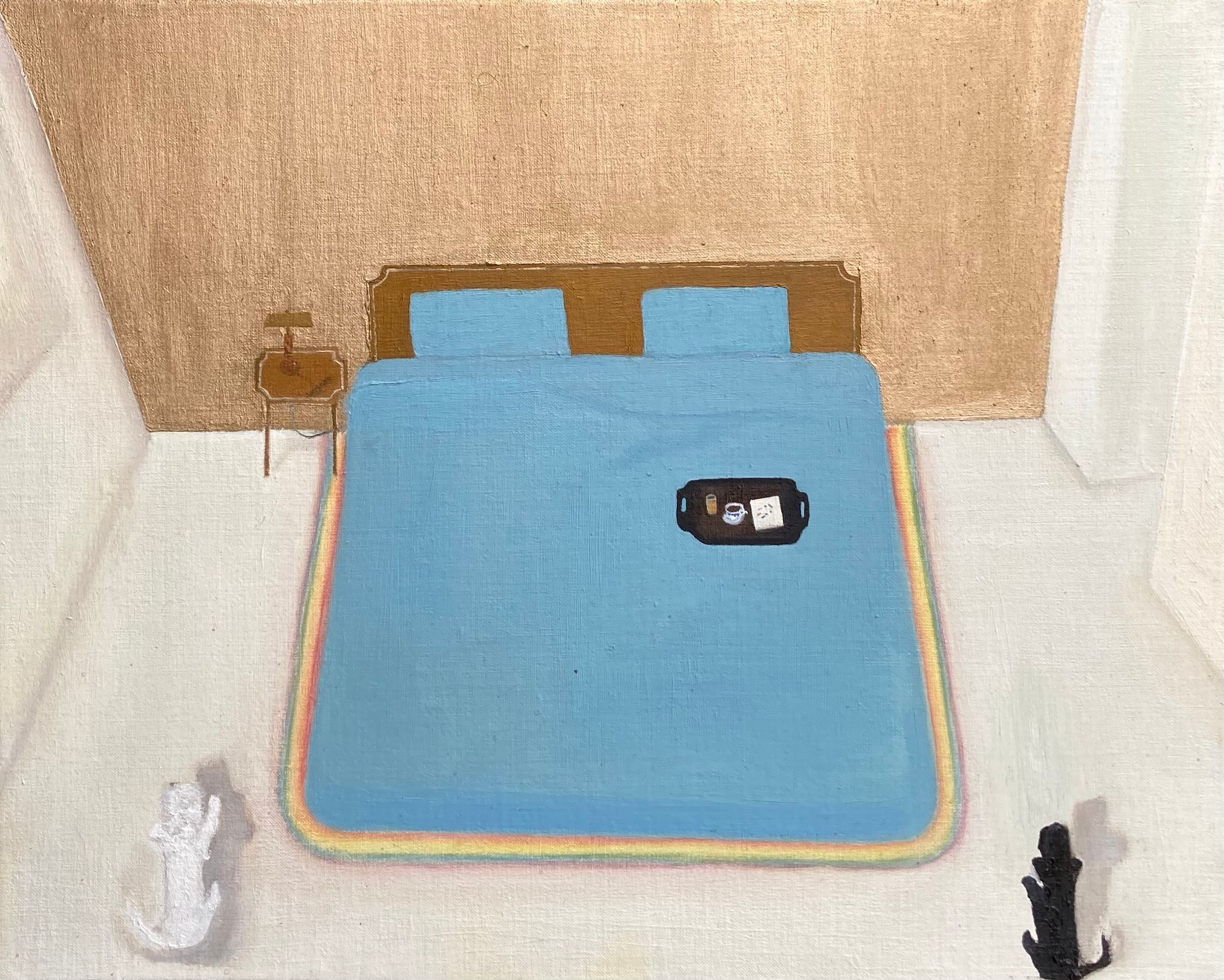
Mollie turned out to be from Grand Forks in North Dakota, but she had spent years bouncing to and fro across the Atlantic, and I was in awe of her ability to repeatedly re-establish herself in an unfamiliar place; to carve out a set of daily rituals in accordance with her given surroundings. At the time we met, she was living in a log cabin at the end of a twisting lane flanked by bracken and cattle. And she was painting, slowly and reverently, scenes reassembled from memories of her Midwestern childhood during the 1990s, subtracting or embellishing elements in order to conjure precisely the right feeling of warmth, or joy, or melancholy, or menace. The finished pictures were often jarring and surreal.
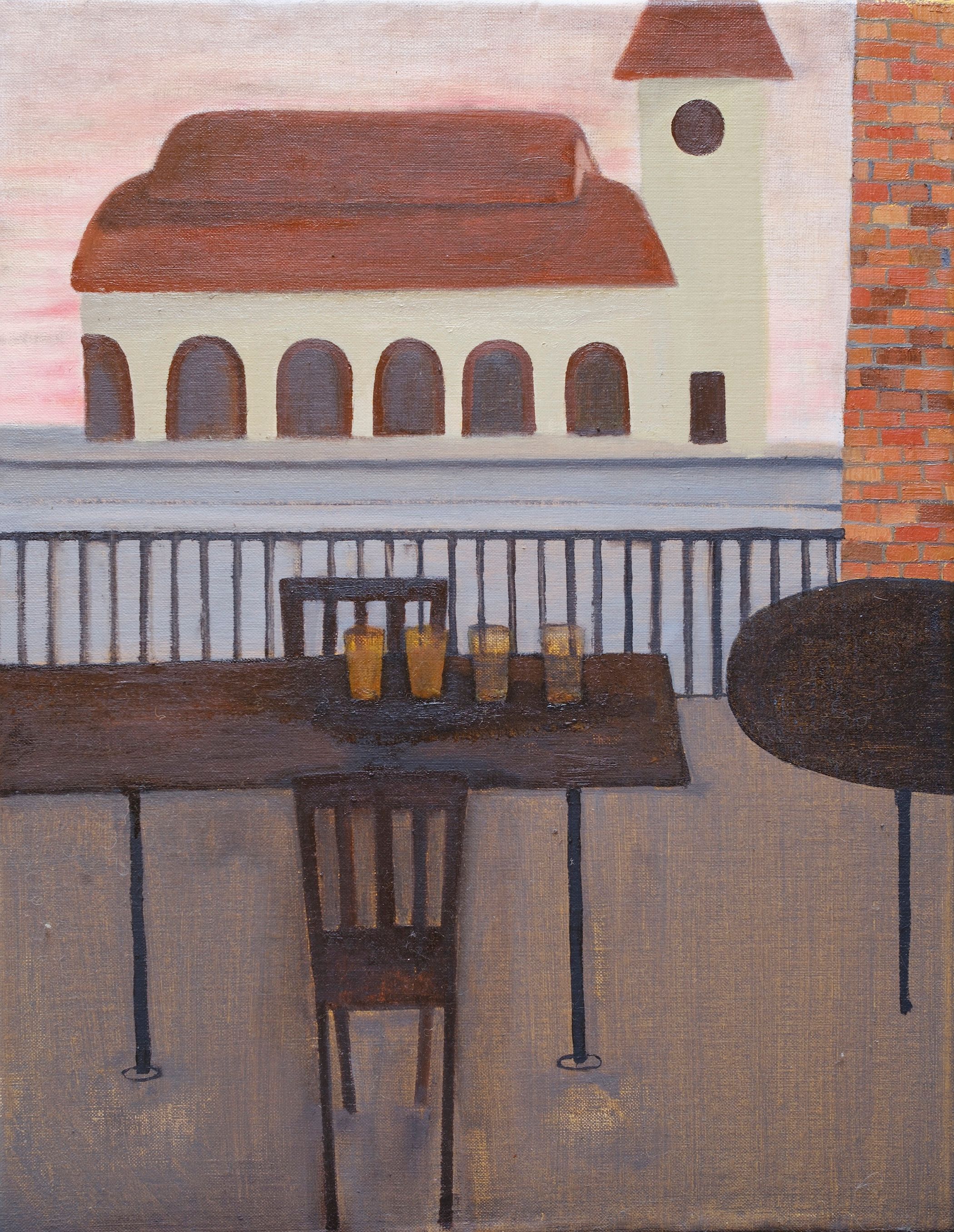
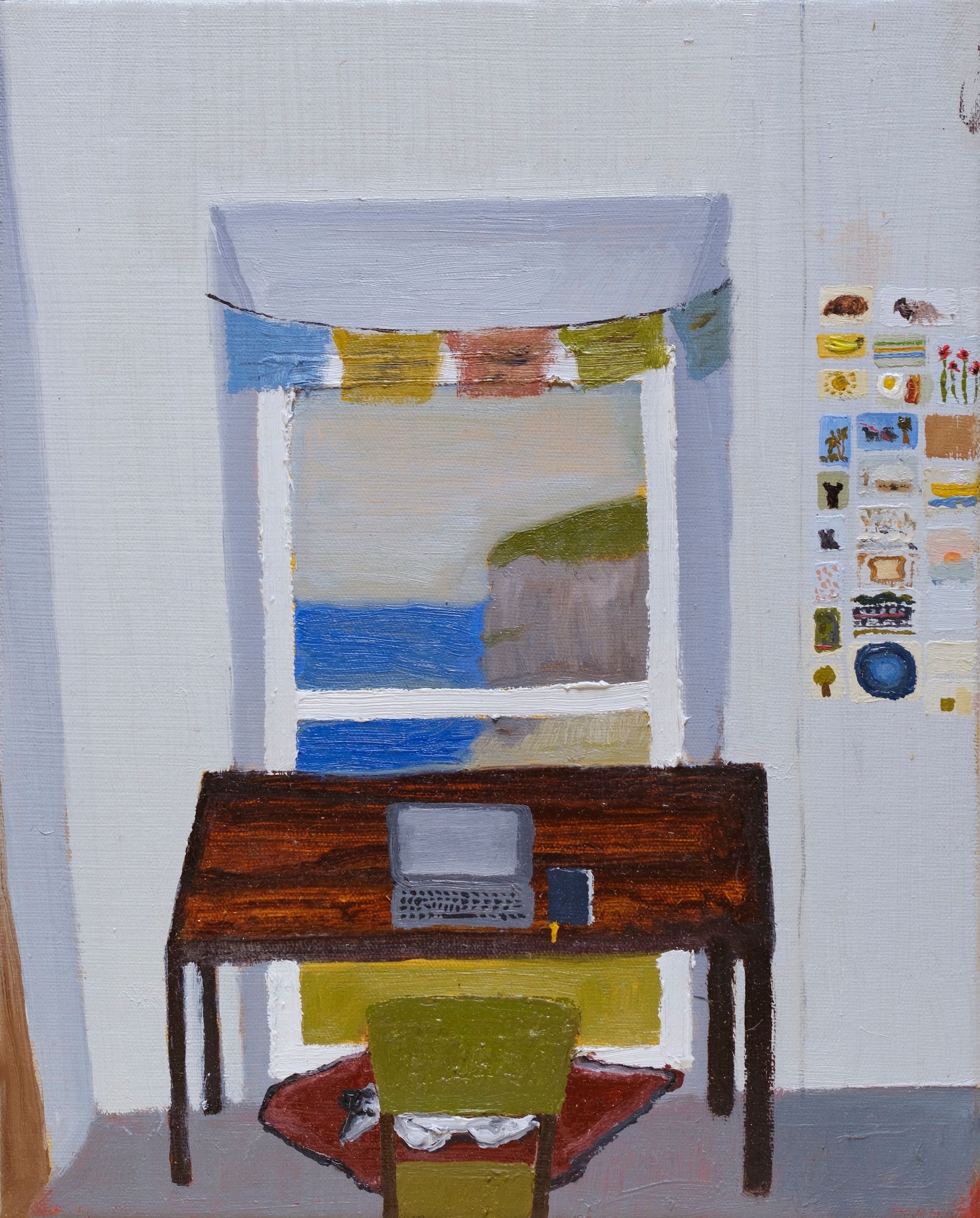
I had become accustomed to artists who were wilfully aloof, reluctant to explain the genesis of their work, whereas Mollie was constantly open and unguarded when I asked her probing questions about her methodologies. She told me about how she hated to use reference material such as old photographs and how nearly every painting began with an undercoat of raw ochre. I grew to love visiting her in the cabin, bearing witness to the fluidity of her existence inside that small space. I was fascinated by how every activity overlapped and flavoured the next. Mollie would make toast and then make a painting of the toast before she had eaten it. Her paintbrushes jumbled together with the cutlery and squashed teabags in her kitchen sink. The line between art and life was indecipherable.
Getting to know Mollie and her work began a process of getting to know the painters who had influenced her: the 19th- and 20th-century Welsh portraitist Gwen John, the 19th- and 20th-century German Expressionist Paula Modersohn-Becker, the 20th Century still life artist Giorgio Morandi and 20th Century American portraitist Alice Neel. Suddenly, through the eyes of my friend, I was able to meet their work with a fresh perspective. I came to understand the infinite solemnity of John’s sitters, the quiet radicalism of a sparse assemblage of pots by Morandi.
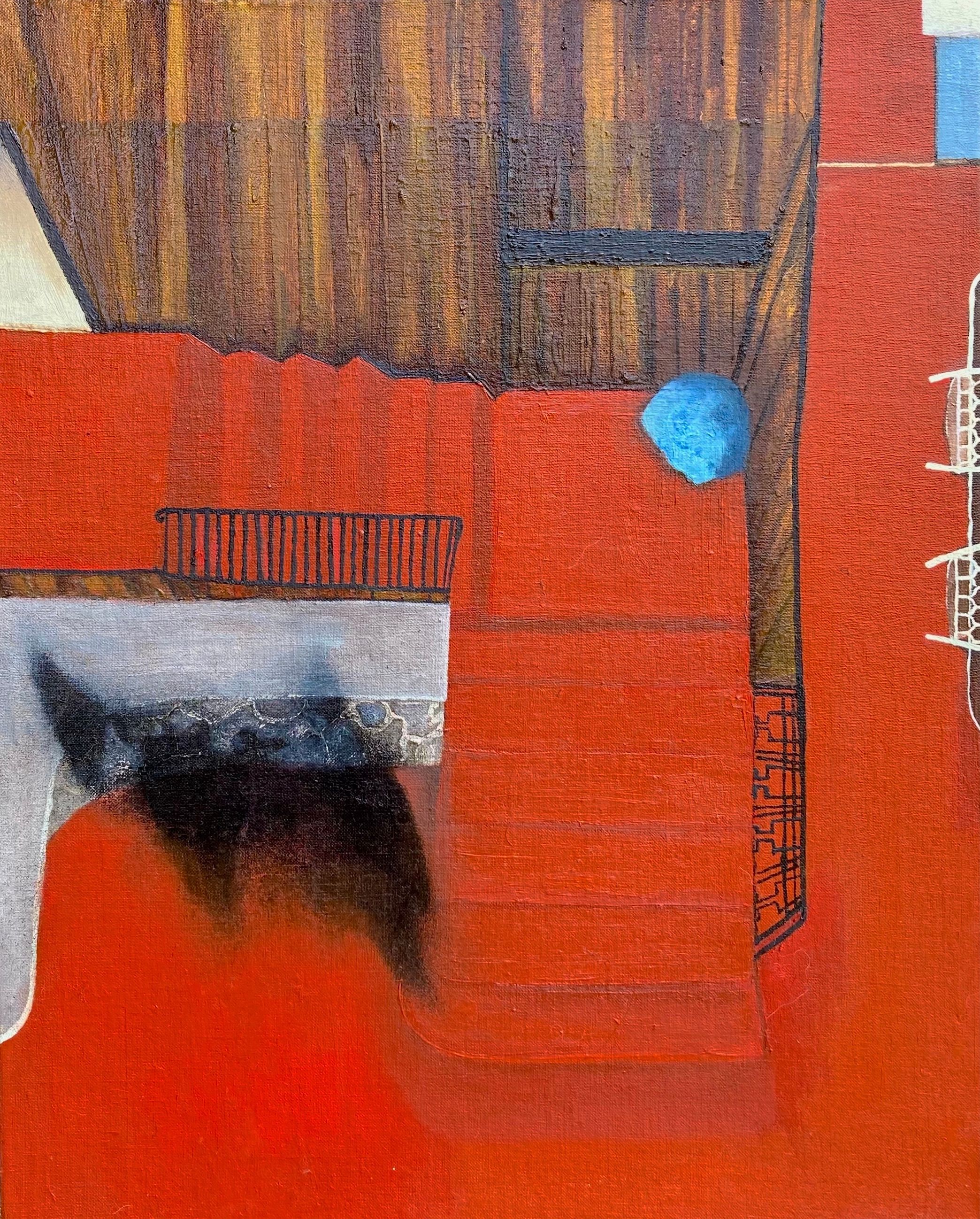
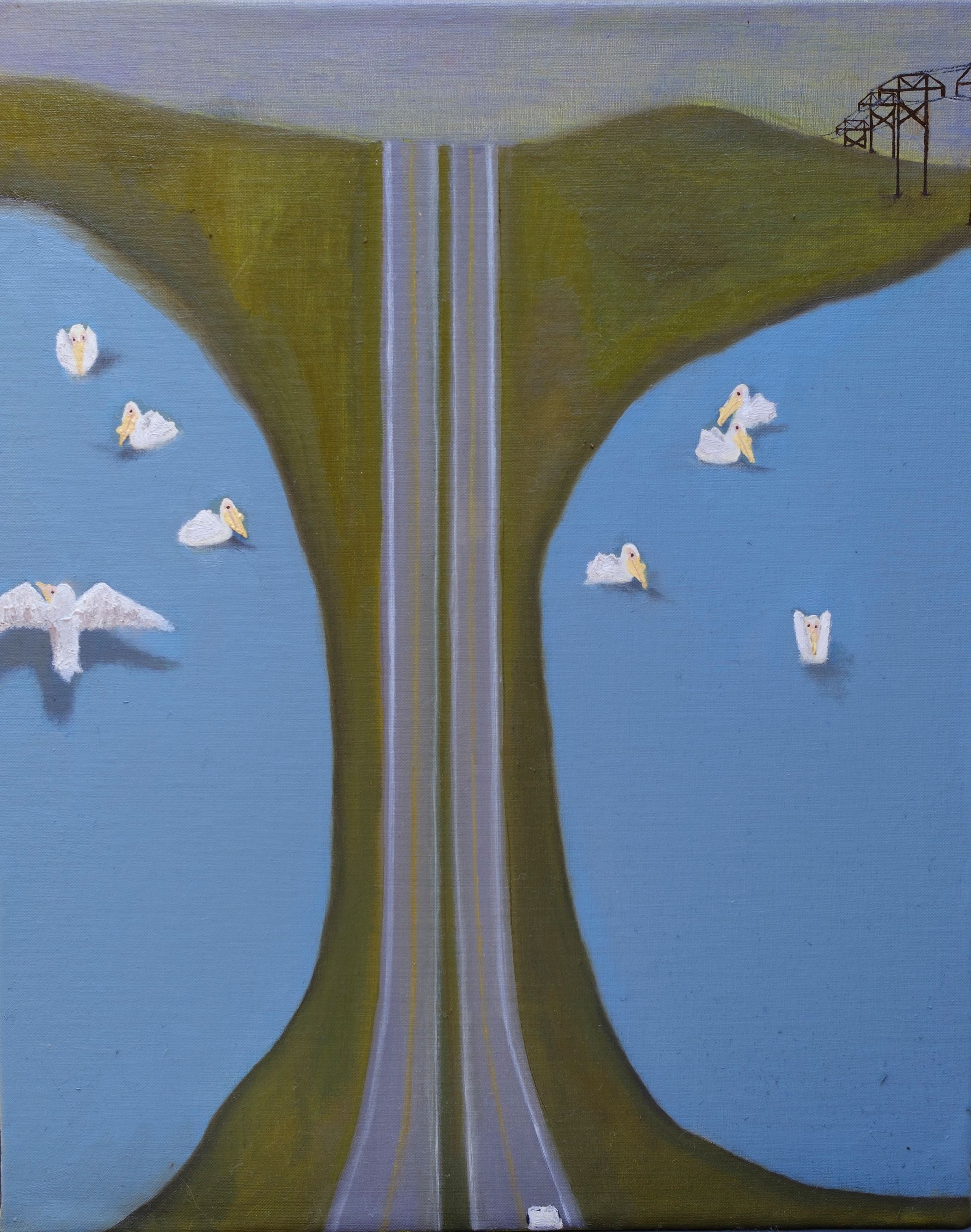
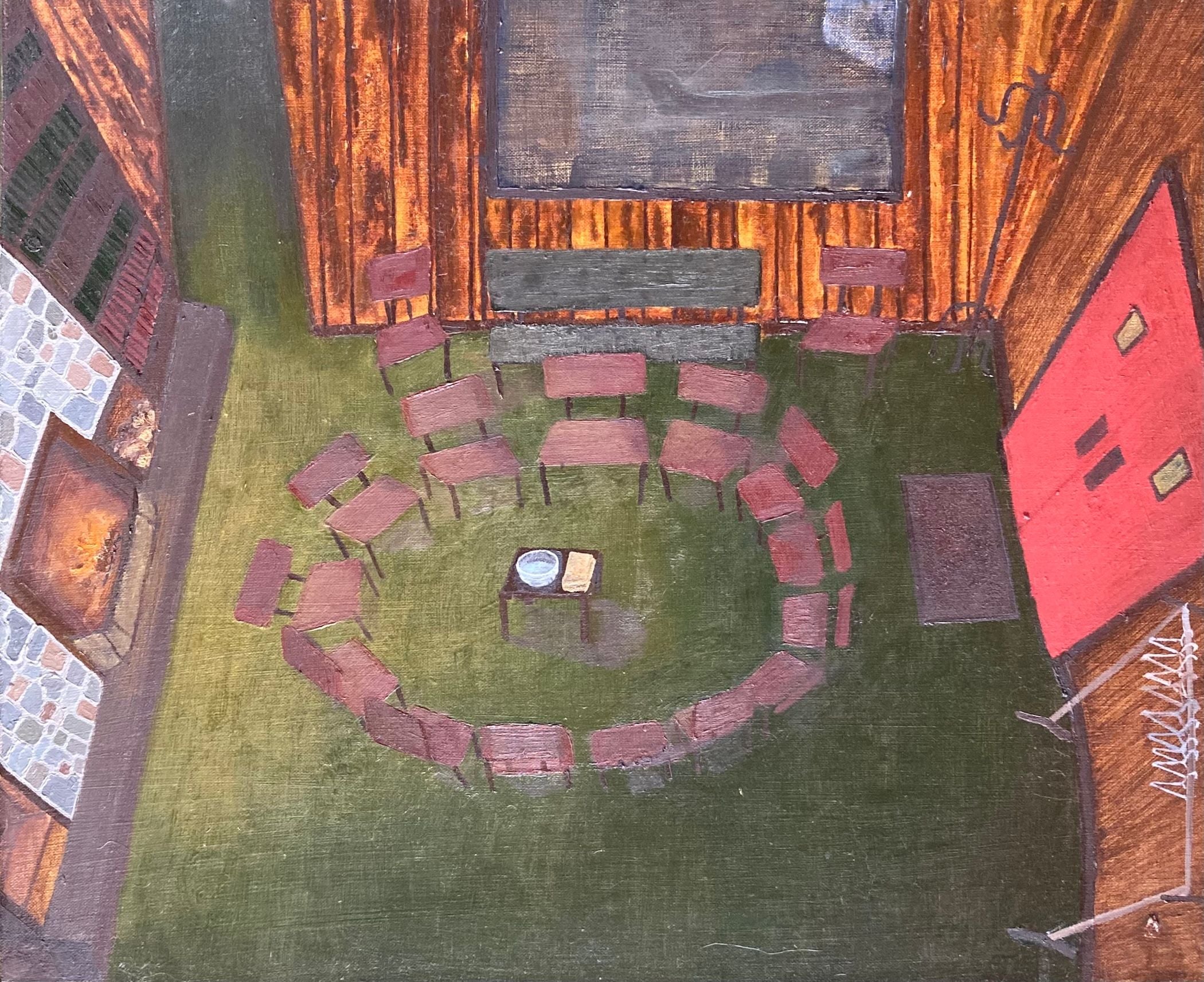
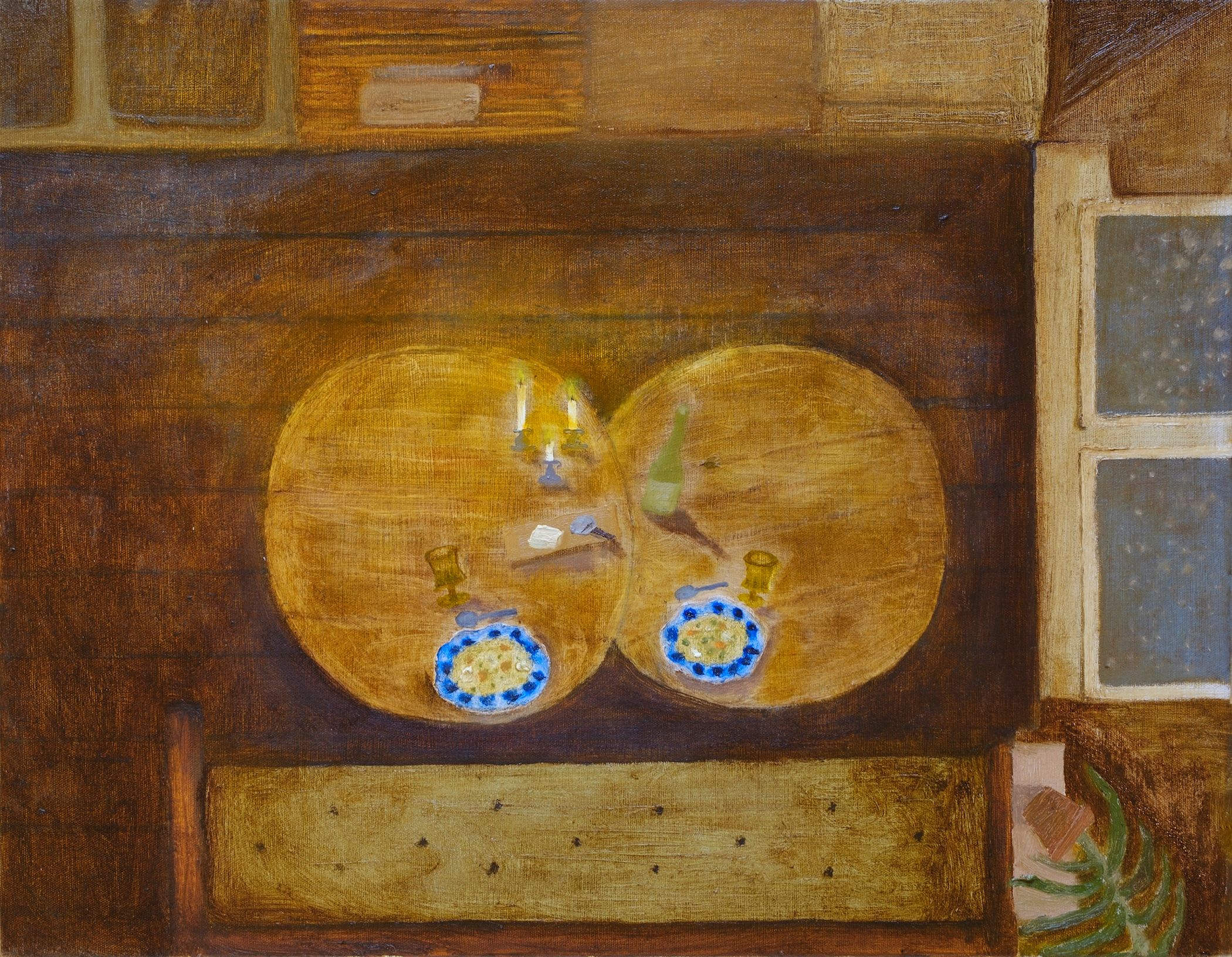
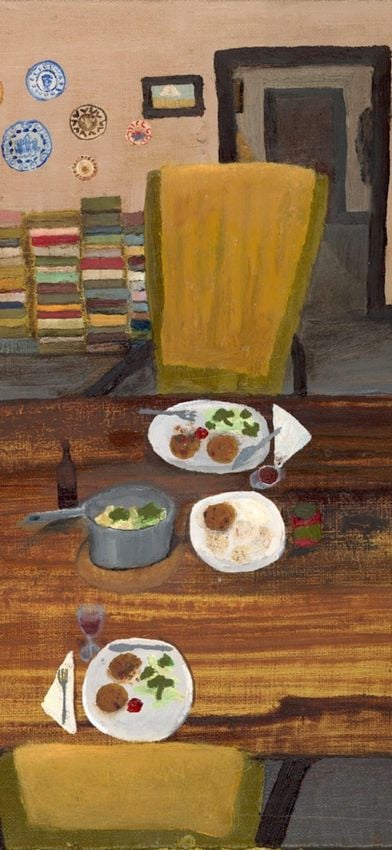
And these conversations started to create an echo across our shared days. There was a winter dinner at my house to which Mollie brought a pumpkin pie and a monograph of the 19th-century Danish painter Vilhelm Hammershoi. We sat at the table together looking at reproductions of his paintings of barely furnished white rooms. She told me how she was particularly infatuated by the way he painted doors and corners; these features took on remarkable prominence in rooms devoid of clutter. And then, during the following weeks, Mollie made a painting of the same room in my house in which we had eaten that night, meticulously reproducing every detail (the pattern on the rug, the teetering book heaps, the contents of our plates) until it seemed to me as if it were a retort to Hammershoi’s cleanliness and restraint. She was always trying to make her work part of a conversation with her predecessors, I realised then, as well as with her own personal and familial mythology.
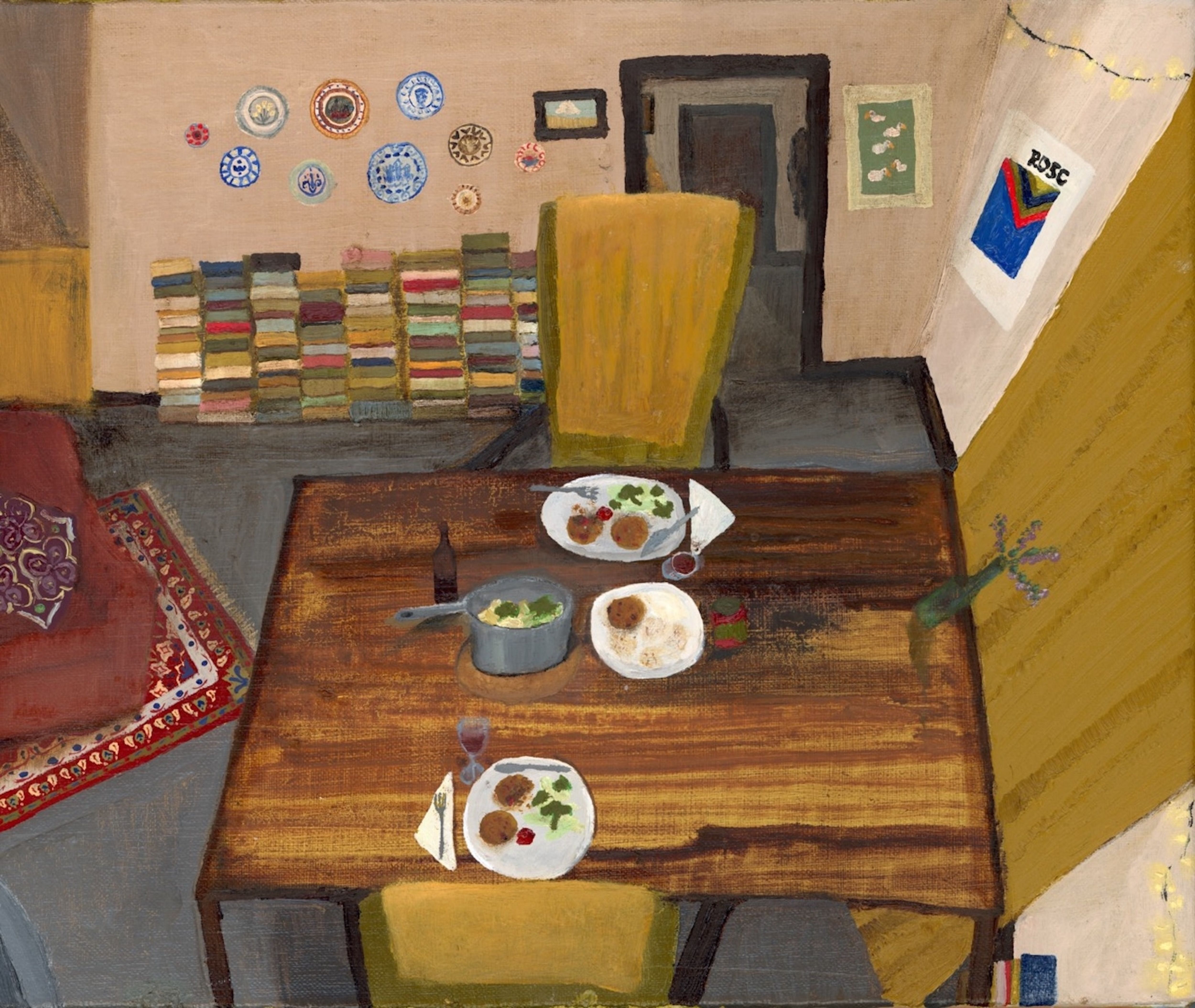
What I had failed to apprehend, and what Mollie helped me to appreciate, about the artworks I had spent years rushing past in museums was all the invisible labour that goes into the making of a good painting. In my own practice, reading is as much a part of my daily routine as writing, and so I share a particular affinity with the idea of unseen effort. It was not only the physical undertaking of stretching canvases, mixing and layering colours, waiting for oil to dry, but also the processes of responding to the history of the medium, and of trial and error. The primitive style Mollie had arrived at in her thirties was the product of years of assiduous practice and self-discovery, a process that had not yet, and likely never would, reach an end point. She had acquired the skills of traditional painting only to learn that conventional representation did not serve her purpose. And so nowadays I am inclined to feel a certain kinship with painters, and to think of the artists who persevere with paint as those most stubborn; those willing to dedicate decades to the investigation of a single medium, the evisceration of its limits. I see painting not as a starting point so much as a state of perpetual devotion, a lily-pad of calm in the great lake of chaos that is the world. —[O]
Sara Baume, Opening Night, out now with Granta
Main image: Mollie Douthit, The Goal (2023). Courtesy the artist.


A respected voice in contemporary art discourse.
Focusing on ambitious storytelling and insightful art-world commentary. Ocula Magazine publishes in-depth interviews, critical essays and timely analysis on the artists, exhibitions and ideas driving the global art world.
Learn more about Ocula Magazine
Showcasing the best of the art world.
Ocula partners with galleries from around the world to highlight their artists, artworks and exhibitions. Gallery membership is by application and invitation, with each member vetted by an independent panel.
Learn more about Ocula Membership
Specialises in the sale of major artworks.
Led by a team with deep ties to the world’s leading auction houses, galleries and collectors. Ocula’s advisory team offers bespoke services to high-net-worth clients from around the world who are looking to acquire the best of contemporary and modern art.
Learn more about our team and services