The art world in focus
Subscribe to our newsletter for news and insights on artists, galleries and exhibitions.

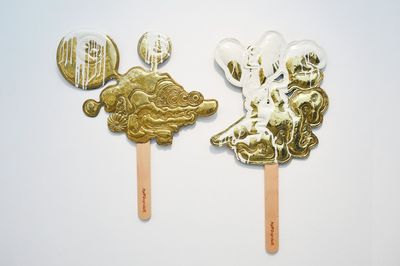
indieguerillas, Seasoning the Issues I (2016). Automotive paint on brass, mahogany wood. 128 × 106 × 4 cm (left) 152 × 81 × 4 cm (right). Installation view: _hyP3<y<lu5_, Mizuma Gallery, Singapore (13 January–19 February 2017). Courtesy the artists and Mizuma Gallery.
Indonesian artist duo indieguerillas, comprised of husband and wife Dyatmiko ‘Miko’ Lancur Bawono and Santi Ariestyowanti, was formed in 1999 in Yogyakarta as a graphic design firm. If the ‘indie’ of their name is an allusion to both Indonesia and their artistic self-determination, the reference to a lawless fighting strategy denotes a defiant, unconventional approach to their work. Both born in the 1970s, Bawono and Ariestyowanti are alumni of the School of Visual Arts at the Indonesia Institute of the Arts in Yogyakarta, and began their partnership as a graphic design team after graduating. Their studio’s philosophy was centred around a combination of work and play—professional design for clients and the personal pursuit of their art, respectively. However, the balance swung towards play in 2007, leading the duo to become full-time artists. They are now best known for using folklore, graphics and interdisciplinary mediums to explore traditional values and contemporary capitalist culture.
indieguerillas belongs to a generation with far different views on Indonesian contemporary art than their predecessors. Responding to their sense of a public preference for increasingly uniform painting in Indonesia (a trend often attributed to a burgeoning art market with limited tastes), the duo’s works aim to communicate various issues faced by Indonesians, many of whom, they feel, are becoming removed from their culture in an increasingly urbanised, capitalistic and technological society.
Through artworks that co-opt the language of commerce, indieguerillas’ goal is to remind young people to preserve their history and culture. Their practice encompasses fashion, product design, animation, painting, sculpture, installations and assemblages that pair unconventional objects with highly graphic and colourful imagery. The duo frequently incorporates icons of traditional and popular culture into their works.
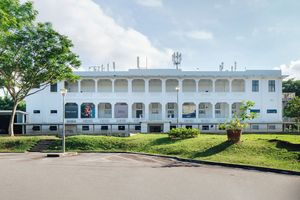
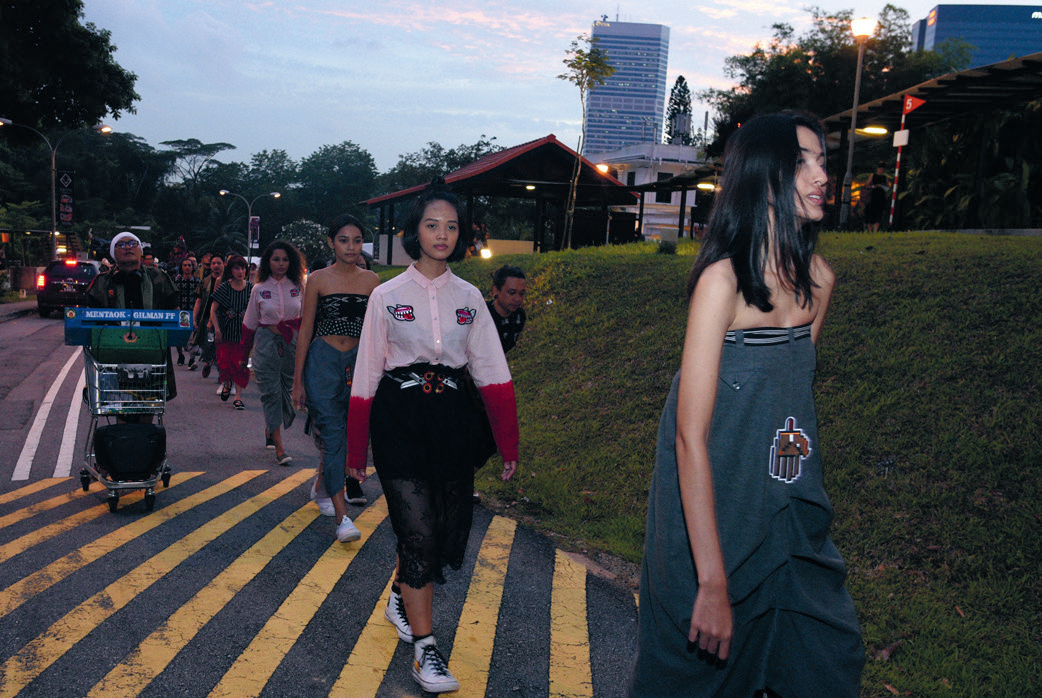
On 13 January, as part of Cities for People NTU CCA Ideas Fest (13 November 2016–22 January 2017), indieguerillas (in collaboration with fashion designer Lulu Lutfi Labibi, and music director Ari Wulu) staged a performance involving model-performers moving along a route from NTU CCA Singapore to various locations in Gillman Barracks, before ending at Mizuma Gallery. The performance, titled Datang untuk Kembali (Arriving to Return) (2017), mimicked the traditional Javanese ceremony component of Sekaten, a celebration of the birthday of prophet Muhammad. The performers wore upcycled secondhand clothes from ’_hyP3<y<lu5_’, indieguerillas’ collection of garments inspired by incessant consumption and a constant desire for whatever is ‘hype’ at the moment.
Our name, indieguerillas, is a fusion of two words: ‘indie’ and ‘guerillas’. We try to work and think independently, without representing anyone’s interests, except for what we think and feel. We work according to the principles of guerillas: fluid, sporadic in choice of medium and free from any restrictions.
We believe that history is an accumulation of collective experience and an important part of our lives. In the local or regional contexts, everything that has happened in Southeast Asia over the last few hundred years, and which now shapes Southeast Asian culture, is a collection of ideas for us as the inhabitants. An example of this can be seen in the traditional architecture along the Ring of Fire in the Indonesian archipelago.
Our ancestors created houses that had no underground footings, contained flexible joints that allowed room for movement, and were made of relatively light materials. Why? Because the region where we live is prone to earthquakes. We should be adaptable to our current situation and conditions. The local values, complemented by global values, can enrich experiences. They are not narrow and outdated, as their essence is more than that. Dig into your roots and you will find plenty of treasures waiting for you.
This was actually an exercise in preserving experience. The new business opportunities that may arise for the local artists, crafters and craftsmen after working with us are, in our view, a positive collateral effect. We work with artists who maintain the slow process of their production mainly to experience the value of the process. Process teaches us to value life. In the future, we plan to continue with this creative work pattern, as the process of art making can also be experienced as a collective practice based on mutual respect, and not necessarily as an individual’s explosion of expression.
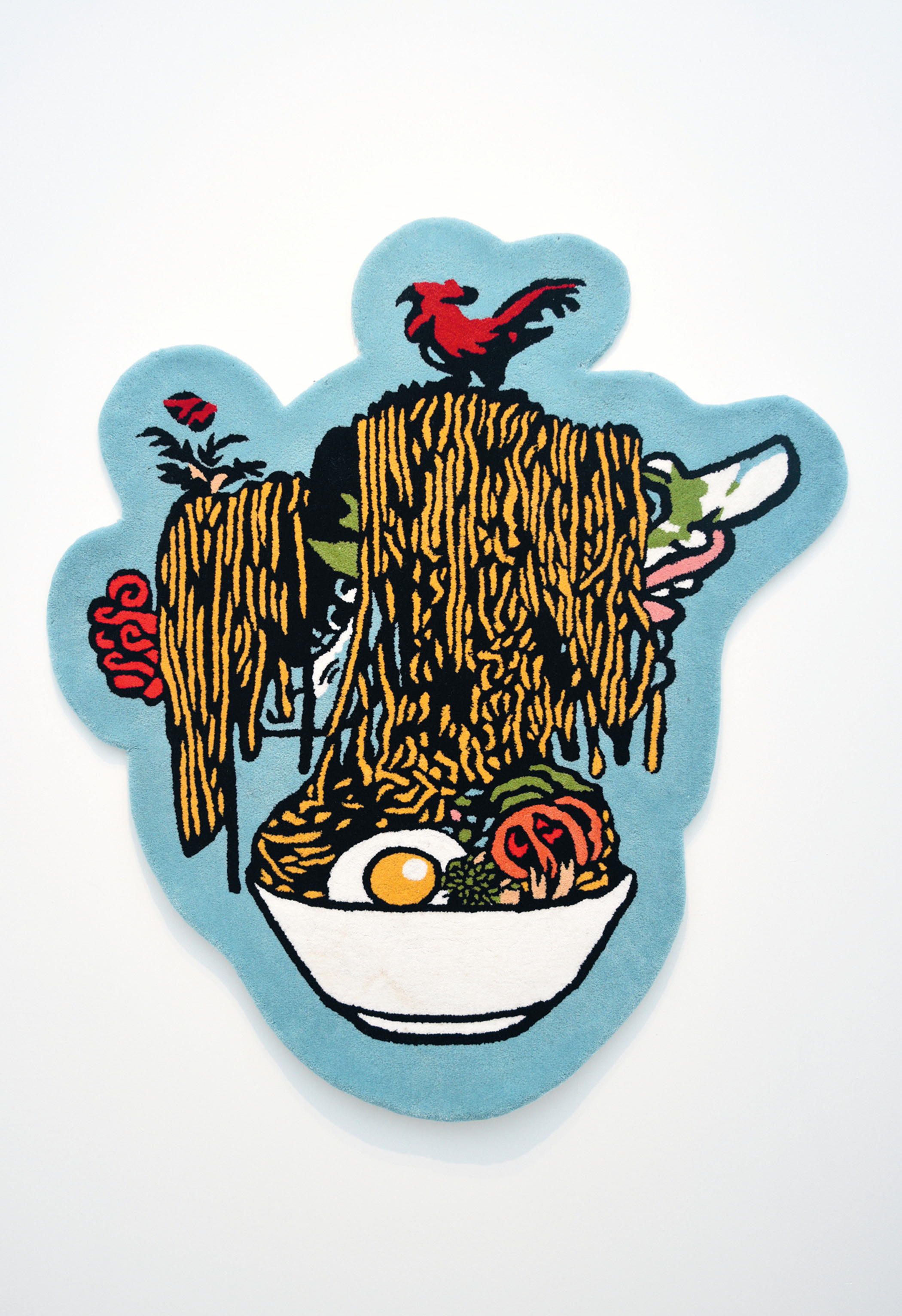
This is a good question. This work is indeed a parody of the situation and condition that we experience personally: losing touch with history. As part of a generation that witnessed history becoming a commodity reproduced for the benefit of the ruling party, we created this work as a reminder for us to not always believe what we see—that reading is not merely an attempt to understand the text. When we were studying, history was always about boring, heroic stories. The real stories that we were interested in were covered by popular culture at that time: Hollywood films, European New Wave bands, American heavy-metal music, mecha-genre anime series, and comics from Belgium, France and the Netherlands.
When we created these eight installation pieces based on bicycles, we thought about bicycles being technological inventions that still made the human body move. This movement occurs less and less now. The bicycle also has a close relationship with urban issues that are now affecting Yogyakarta. Traffic jams and pollution, for example, are no longer the myths of major metropolitan cities; they have arrived at our doorstep. Combining everyday objects with art is common now, and we believe that art-making is not always about creating something sacred, untouchable and distant, but also about intimate and familiar objects that create certain psychological impacts or serve as a foundation for constructive thought processes and questions.
Most countries in Southeast Asia are developing countries. In this context, what stands out is the effort in responding to limitations and turning them into something strong and valuable. Artworks from Southeast Asia are flexible. They are artworks with narratives so fundamentally anxious and rich, and indeed there are many fundamental things we should be anxious about.
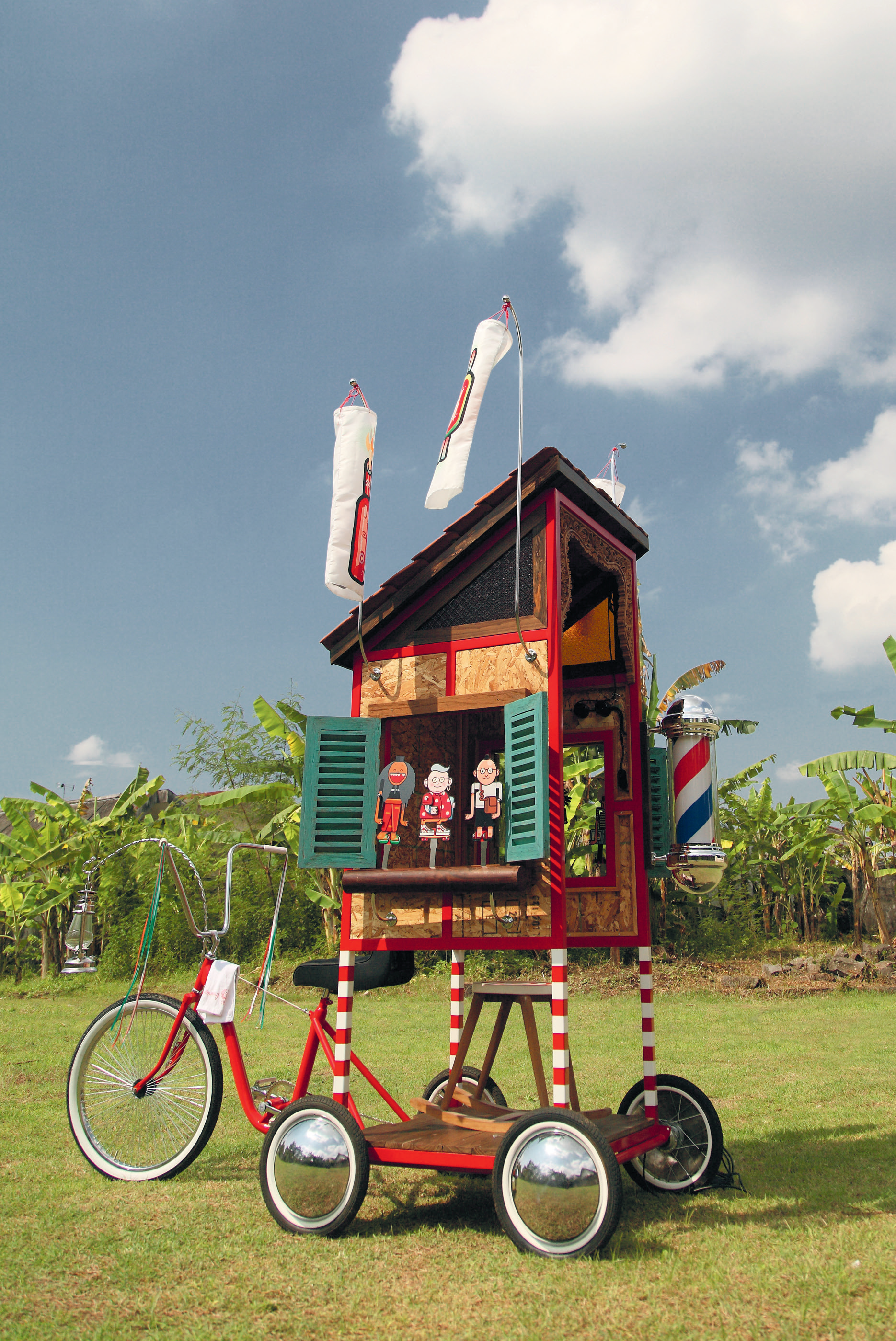
The spectrum of the contemporary art scene in Yogyakarta is very wide. Every artist has their own issue that they translate into artworks: politics, identity, spiritual values, bewilderment. There are even those who use the issues of the art market as their ammunition. How each artist interprets each of these issues varies according to their experience. For example, if we look at the early-90s generation, many of them are more political than us. Because of the influence of the New Order[2], their perspective remains politically tuned when they see the current situation. We view our generation as the ‘unlucky generation’ which has to continuously run and adapt with our rapidly changing world, though at the same time, we see this confusion as something interesting to be explored. —[O]
A respected voice in contemporary art discourse.
Focusing on ambitious storytelling and insightful art-world commentary. Ocula Magazine publishes in-depth interviews, critical essays and timely analysis on the artists, exhibitions and ideas driving the global art world.
Learn more about Ocula Magazine
Showcasing the best of the art world.
Ocula partners with galleries from around the world to highlight their artists, artworks and exhibitions. Gallery membership is by application and invitation, with each member vetted by an independent panel.
Learn more about Ocula Membership
Specialises in the sale of major artworks.
Led by a team with deep ties to the world’s leading auction houses, galleries and collectors. Ocula’s advisory team offers bespoke services to high-net-worth clients from around the world who are looking to acquire the best of contemporary and modern art.
Learn more about our team and services