






Many Ways to Skin a Brat
Charli xcx’s 2024 album Brat clearly differentiated her from ‘safe’ mainstream pop. So why isn’t the Aidan Zamiri‑directed mockumentary brave enough to make the same impact? Save to My OculaWhen Charli xcx released Brat in June 2024, it achieved the kind of stratospheric viral success that gives marketing departments wet dreams. The combination of brash dance-pop and Charli’s sloppy and shameless cool-girl persona, along with the album’s Y2K acid-green aesthetic, intoxicated audiences bored of an era of bland and brazenly mainstream pop. If Taylor Swift was the HSBC of celebrities, plotting her ruthless stranglehold over global audiences from the boardroom, Charli was the hot, coked-up girl taking a piss outside the bank at 4am on her way home from the rave. Except, of course, this was never exactly the case. Charli is an excellent pop star, a euphoric embodiment of a rowdy and messy kind of fun. But much of the genius of Brat lay in its packaging, which made audiences feel that they, like their idol, were somehow different from the loser mainstream normies—when all along they were slurping the same Kool-Aid, only through a branded green straw.
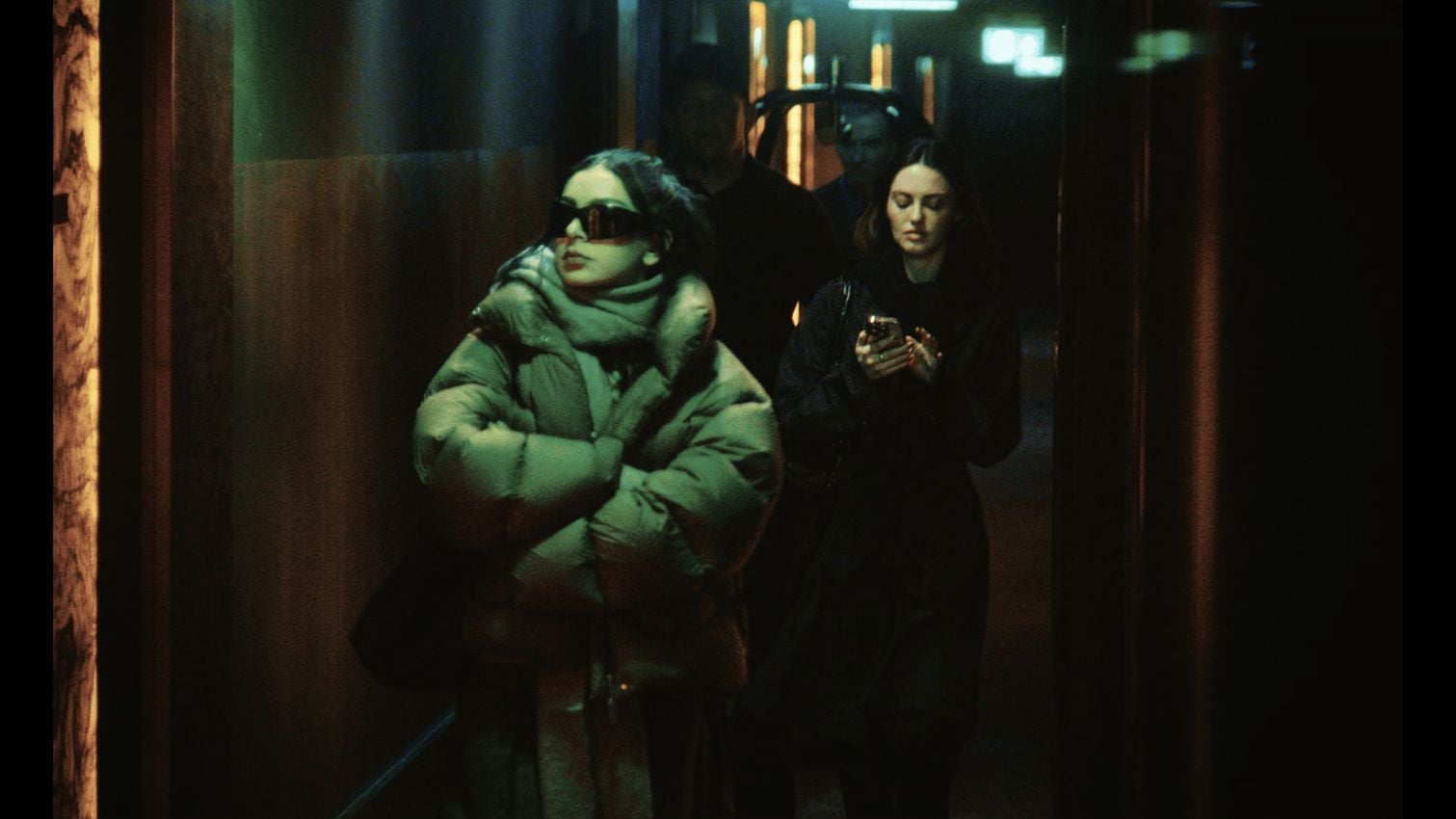
This idea that Charli is fundamentally different from other pop stars underpins The Moment (2026), a film billed as a satire about an artist compromising her integrity in order to maximise her fame. Brat summer is over and Charli is coming down from the high. Unlike This is Spinal Tap (1984), the influential music mockumentary Charli has name-checked as an inspiration when making the film, the subject doesn’t talk to an interviewer or camera. Instead, the film unfolds more like a drama, as we follow the desperate and confused starlet between meetings where she encounters a variety of buffoons from her label who want to squeeze as much money as they can out of Brat with as many corporate tie-ins as possible. “Everybody wants me to make a green KitKat”, she shouts in desperation from the back of a chauffeured car. “I don’t know what I fucking want!”
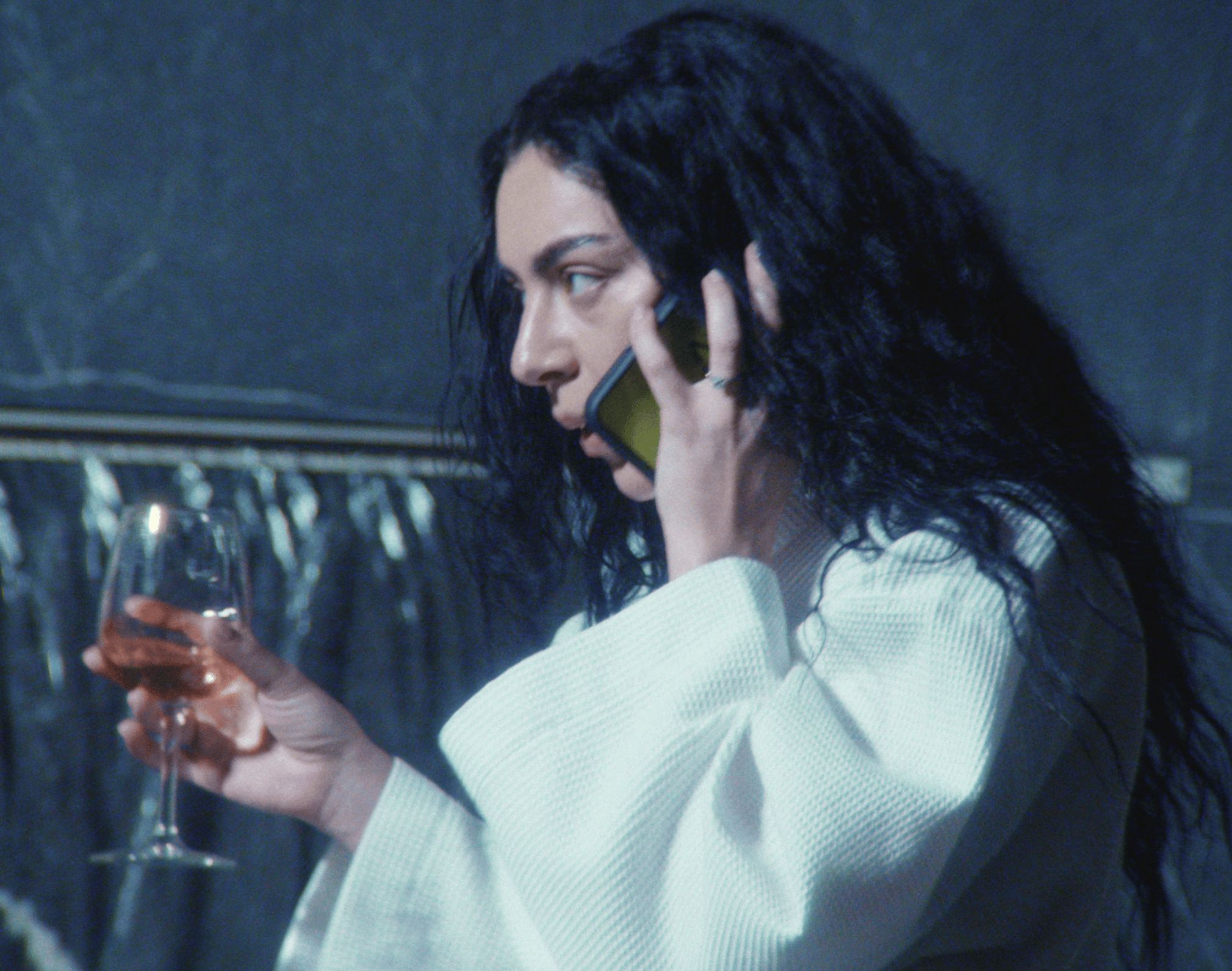
“This is a satire held hostage by the very forces that it’s supposed to be sending up”
The Moment’s storyline revolves around a central dilemma. While planning for the album’s stadium tour, will Charli cave to the demands of a corny South African director called Johannes, who wants to reimagine Brat for a mainstream TV audience by making the kind of tour video that has become a familiar weapon in the contemporary pop star’s arsenal? Or will she stay true to her artistic vision? Johannes, played by Alexander Skarsgård, wears beanie hats, prayer beads and T-shirts with plunging necklines, a phoney guru vibe that’s the polar opposite of Charli’s 2000s-inspired wardrobe: ergo, he’s deeply un-chic.
Will she honour her artistry by crawling around and whipping her hair under the strobe lights, the word ‘cunt’ flashing up on screen? Or, if Johannes gets his way, will the audience wear light-up wristbands like they do at Coldplay concerts, and will ‘cunt’ be replaced with ‘bitc#’ (all code, in the film, for selling out, and loser behaviour)? I, for one, will certainly not argue against the diagnosis that Coldplay suck. But surely there is more at stake, and much more biting comedy to be mined, from a satire about the pitfalls of fame-seeking in an insatiably commercial attention economy.
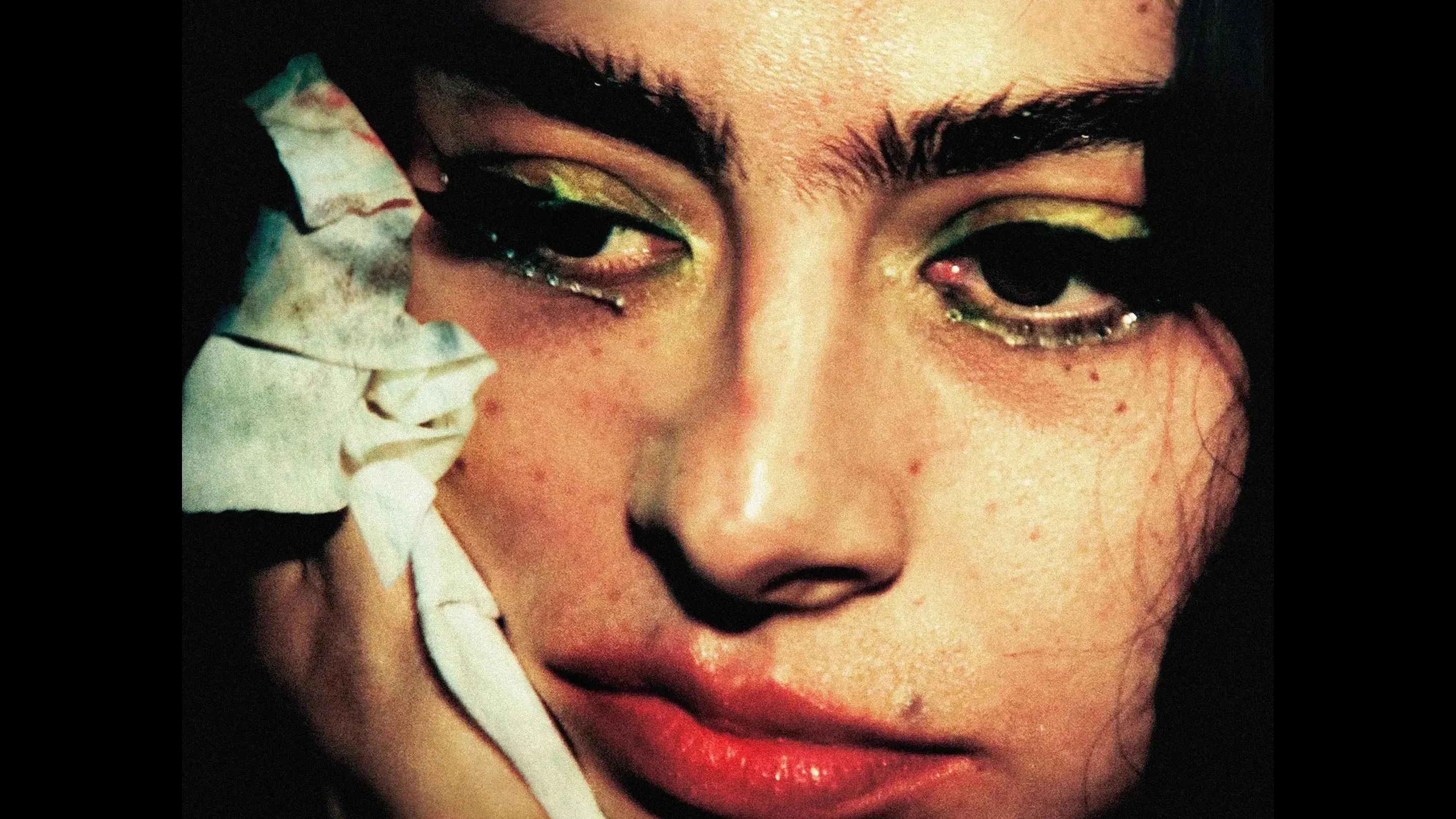
After Charli bumps into Kylie Jenner, who makes a cameo in an Ibizan spa to tell our troubled starlet that ‘the second people start to get sick of you is when you have to go even harder’, she finally caves to the label’s wishes. The film ends with a montage of fawning headlines in music magazines hailing the Johannes-directed tour as the reinvention of Brat. In a voice-note apology to a friend and collaborator she ditched in her quest for fame, Charli admits to selling out but says it was necessary in order to let go of Brat. It’s a vague and unsatisfactory conclusion, neither an embrace of her evolution into a mainstream pop girl nor a convincing rejection of it. This lack of resolution may be an accurate reflection of where Charli xcx currently finds herself, undergoing the uncomfortable transition from apparent upstart to mainstream stalwart and desperate not to lose her edge.
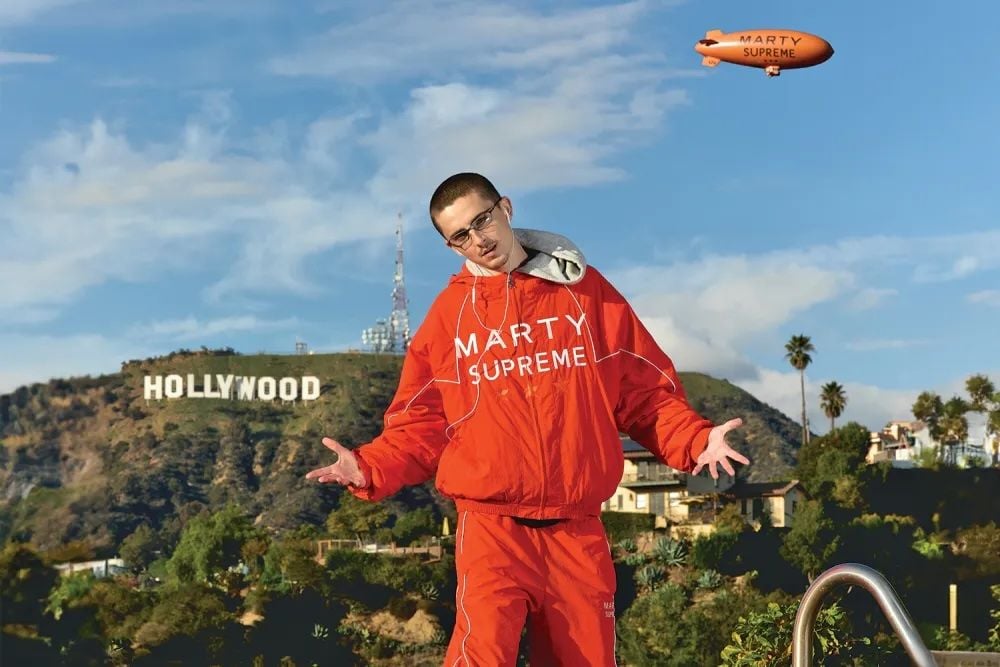
Herein lies the fundamental problem with The Moment: it is a satire held hostage by the very forces that it’s supposed to be sending up. The film’s director Aidan Zamiri, described by The New York Times as someone who helps celebrities ‘craft their public personas’, cut his teeth taking photos for Victoria Beckham and family on holiday; he was also an architect of the Brat image, directing the music video for 360, a celebrity world-building exercise that placed Charli at the heart of a clique of other online cool girls. More recently Zamiri was the brains behind Timothée Chalamet’s Oscar-begging campaign for Marty Supreme (2025), transforming Chalamet from a cute but nerdy theatre kid into a zany viral content machine, dropping limited edition Marty Supreme jackets and flying a branded blimp over US cities.
Both Zamiri and Charli are clearly perfect subjects for a send-up of our chronically commercial, viral-chasing era—but only if someone else is making the film. To successfully satirise yourself, a near-impossible feat for celebrities whose entire careers revolve around the transmission of a meticulously constructed image, you have to be willing to take risks. Yet they are both too close to the brand, and too aware of the dangers to the bottom line that come from alienating Charli’s audiences, to be brave enough to take them.
Presumably this is the reason The Moment steers clear of the vast satirical potential of Brat’s embrace by Kamala Harris in the run-up to the 2024 US presidential election. When Charli tweeted ‘Kamala is Brat’ that July, and Harris’s campaign team in turn transformed their social media acid green, it was both the apotheosis and the end of Brat Summer: the moment it got the kiss of death from a failing political juggernaut, showing just how far it had risen while simultaneously undermining any claim it had to being in any way subversive.
Were reflections on such a key event in the history of Brat avoided, because any send-up of Harris—or indeed any explicit political positioning—risked offending sections of Charli’s US audience? Charli later said she intended the tweet to be ‘positive and light-hearted’ rather than an endorsement, stating in an interview ‘my music is not political’—surely exactly the kind of prevarication after a PR fail that a braver and sharper satirist (such as Succession’s Jesse Armstrong) would dine out on. With nothing meaty on the line, The Moment is limited to a narcissism of small differences pertaining to the costume and set-design of a stadium tour. Will she sing through a bedazzled microphone (cringe)? Will she agree to be suspended in mid-air (double cringe)?
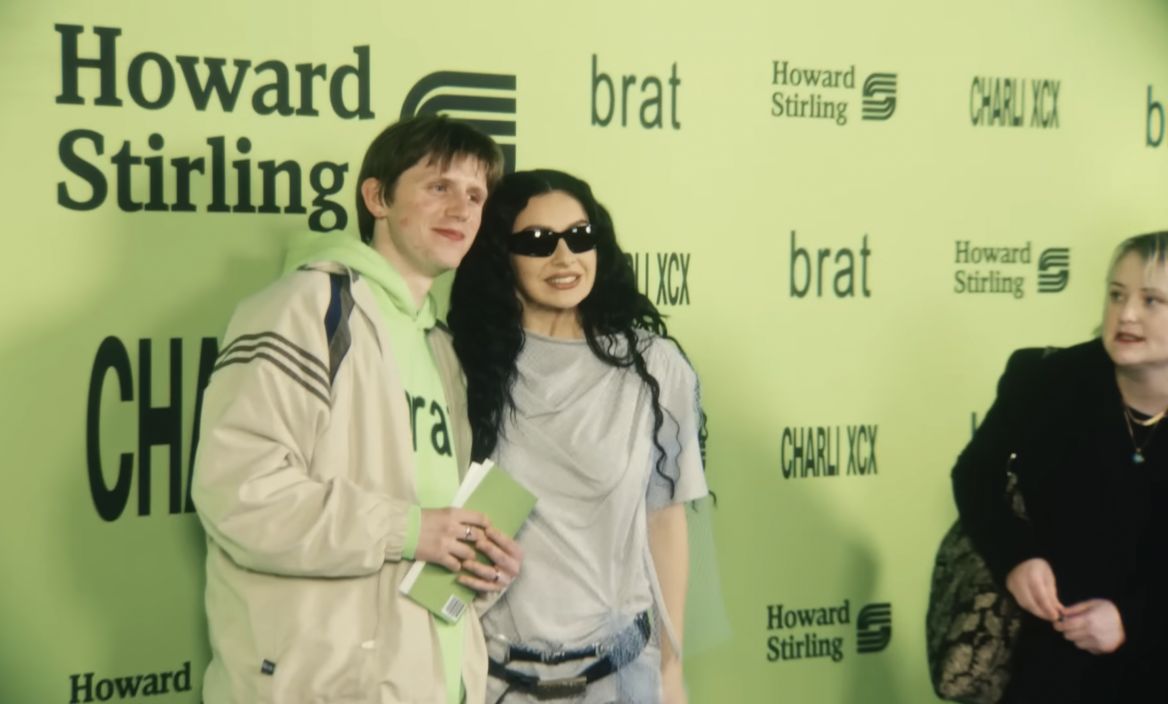
“To successfully satirise yourself, you have to be willing to take risks”
The Moment is certainly correct that the slew of celebrity documentaries and tour films that litter streaming platforms are so formulaic and dull that they make sticking pins in your eyes seem an appealing way to spend an evening. The problem, however, is not merely the lameness of the format, but their function as a branding exercise, delivering controlled and workshopped messaging designed to present their subjects in the best possible light. The recent release of Melania: Twenty Days To History (2026) may have shocked liberal audiences with its blatant propagandism. But its attempts to transform its subject into a likeable figure, the complete absence of a critical perspective, and the pumping of gross sums of money into an artistically vacuous vanity project, are no different to the many ‘documentary’ style films and series put out by everyone from the Beckham family to Taylor Swift and Beyoncé, all off which aim to humanise and enforce a celebrity brand.
If The Moment had moved beyond mere self-awareness and into genuinely satirical territory, it may have succeeded in repeating Brat’s trick of elevating Charli above her competitors. In the absence of these qualities, the film is merely a demonstratively knowing version of the very thing it is so keen to distinguish itself from: another celebrity-centred product in which the potential to say something—anything—interesting about its subject has been suffocated by the need to protect and promote the brand. —[O]
Main image: The Moment (2026). Courtesy A24.

A respected voice in contemporary art discourse.
Focusing on ambitious storytelling and insightful art-world commentary. Ocula Magazine publishes in-depth interviews, critical essays and timely analysis on the artists, exhibitions and ideas driving the global art world.
Learn more about Ocula Magazine
Showcasing the best of the art world.
Ocula partners with galleries from around the world to highlight their artists, artworks and exhibitions. Gallery membership is by application and invitation, with each member vetted by an independent panel.
Learn more about Ocula Membership
Specialises in the sale of major artworks.
Led by a team with deep ties to the world’s leading auction houses, galleries and collectors. Ocula’s advisory team offers bespoke services to high-net-worth clients from around the world who are looking to acquire the best of contemporary and modern art.
Learn more about our team and services