






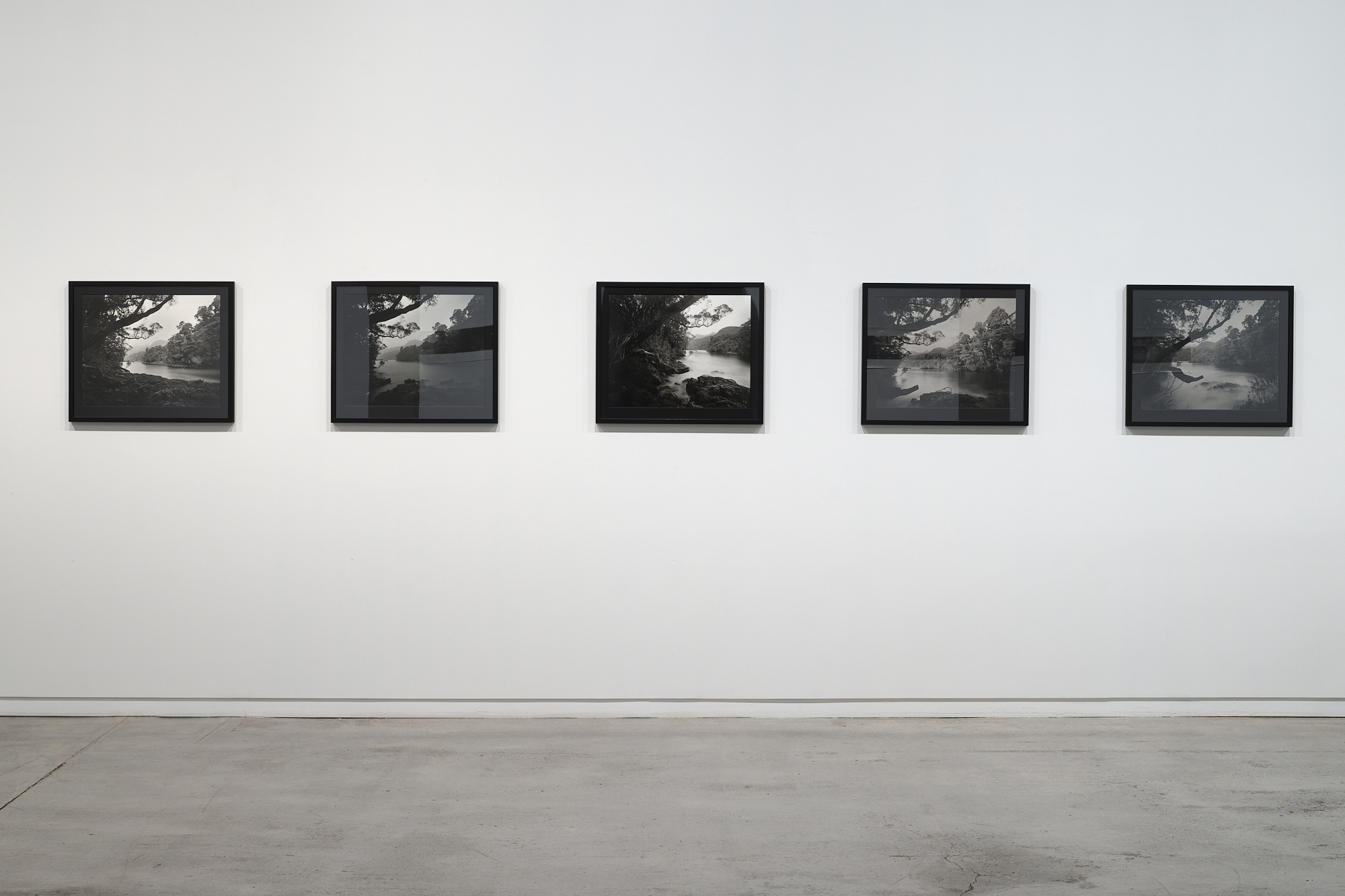
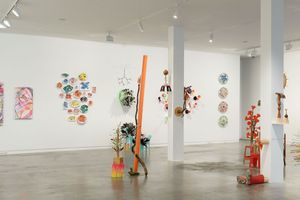
Exhibition view: Mark Adams, Darren Glass, Ian Macdonald, Haruhiko Sameshima, Tamatea - Dusky Sound 1995, Two Rooms, Auckland (9 June–15 July 2023). Courtesy Two Rooms. Photo: Sam Hartnett.
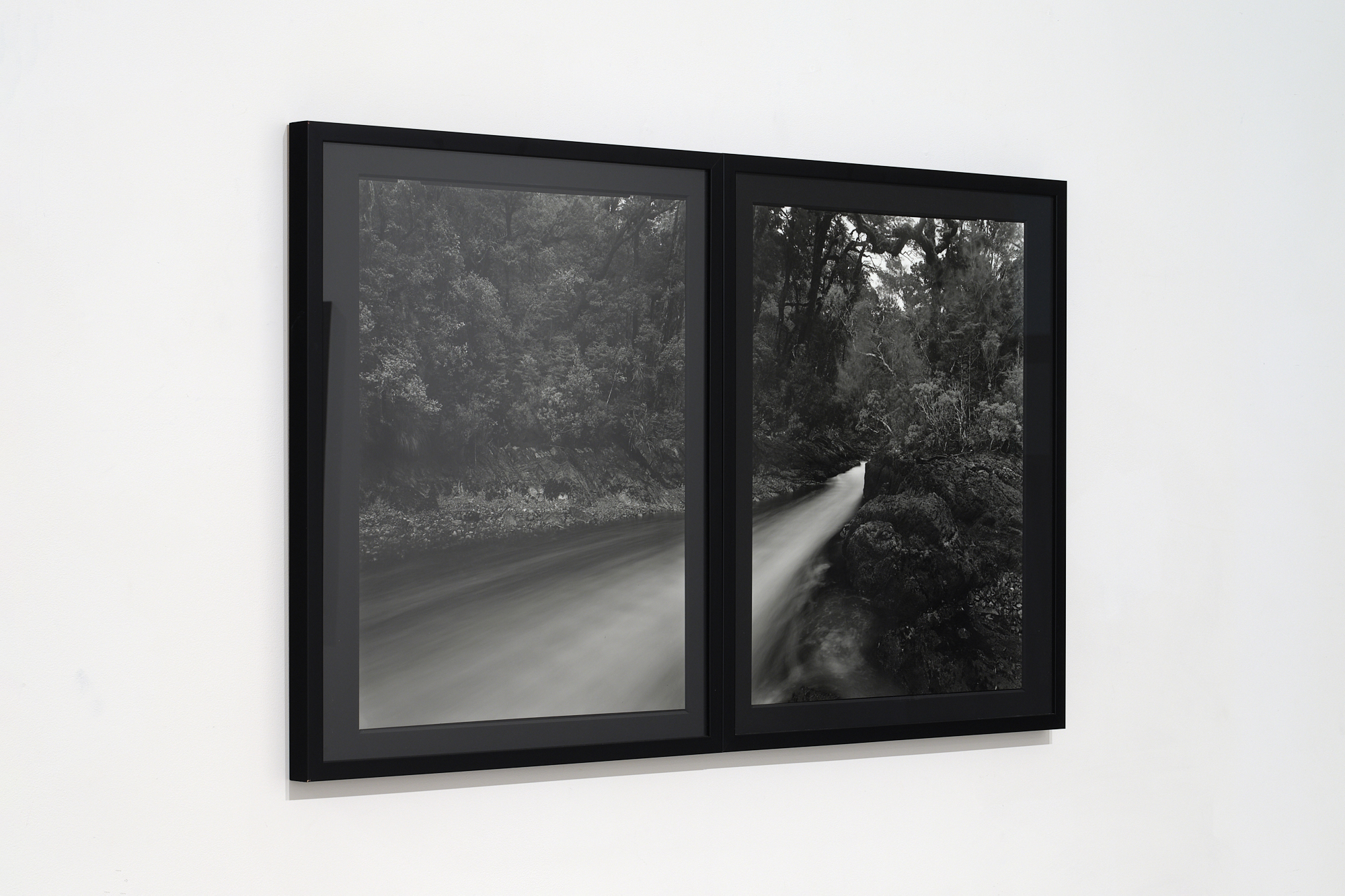
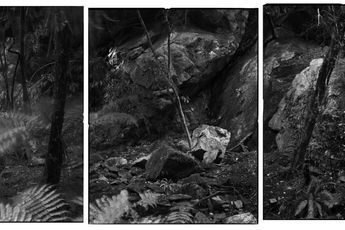
Haru Sameshima, Cook Stream mouth, Pickersgill Harbour, Tamatea / Dusky Sound (1995). Silver gelatin fibre based print. Diptych: 580 x 450 mm each. Courtesy Two Rooms. Photo: Sam Hartnett.
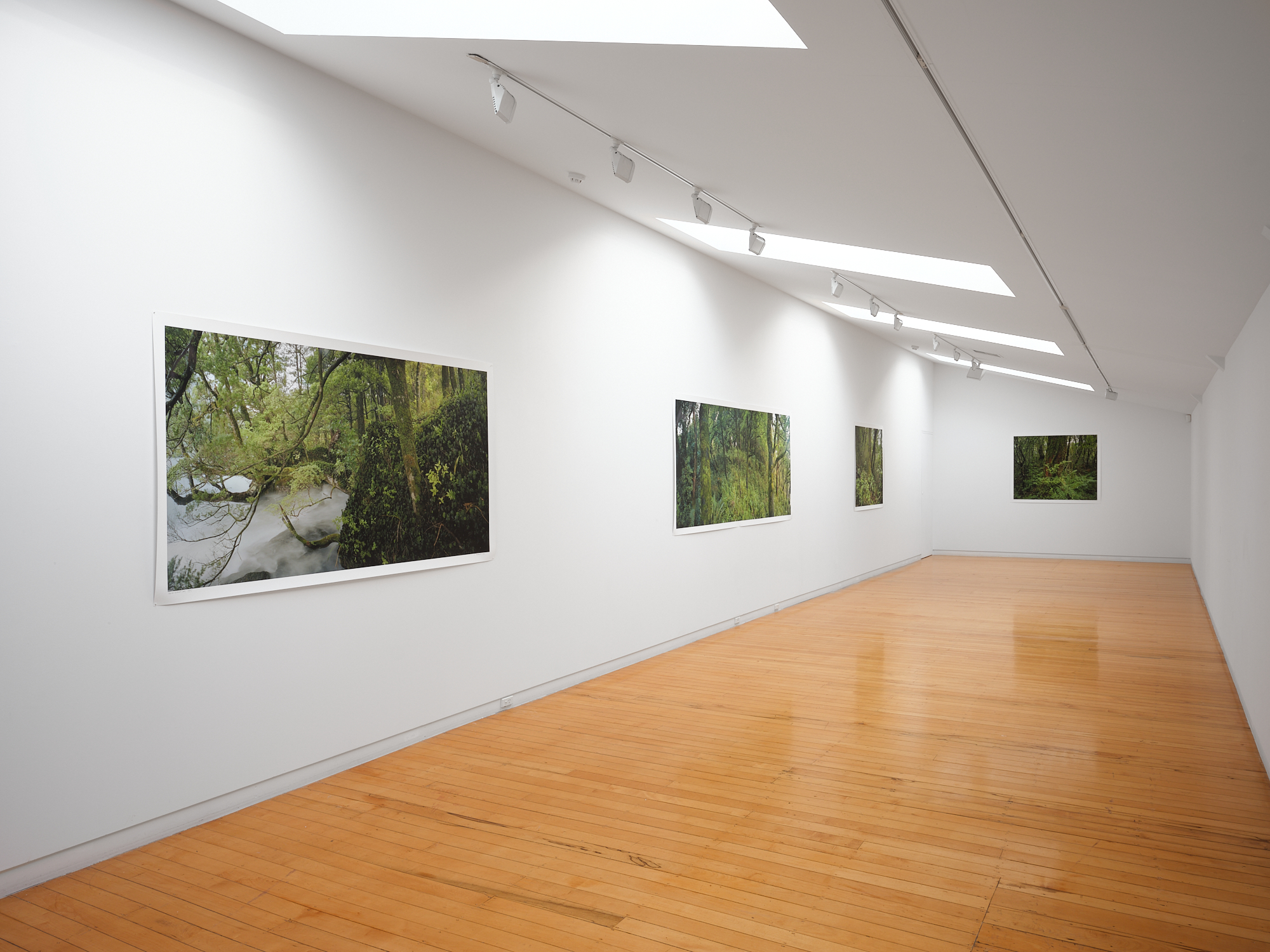
Exhibition view: Mark Adams, Darren Glass, Ian Macdonald, Haruhiko Sameshima, Tamatea - Dusky Sound 1995, Two Rooms, Auckland (9 June–15 July 2023). Courtesy Two Rooms. Photo: Sam Hartnett.
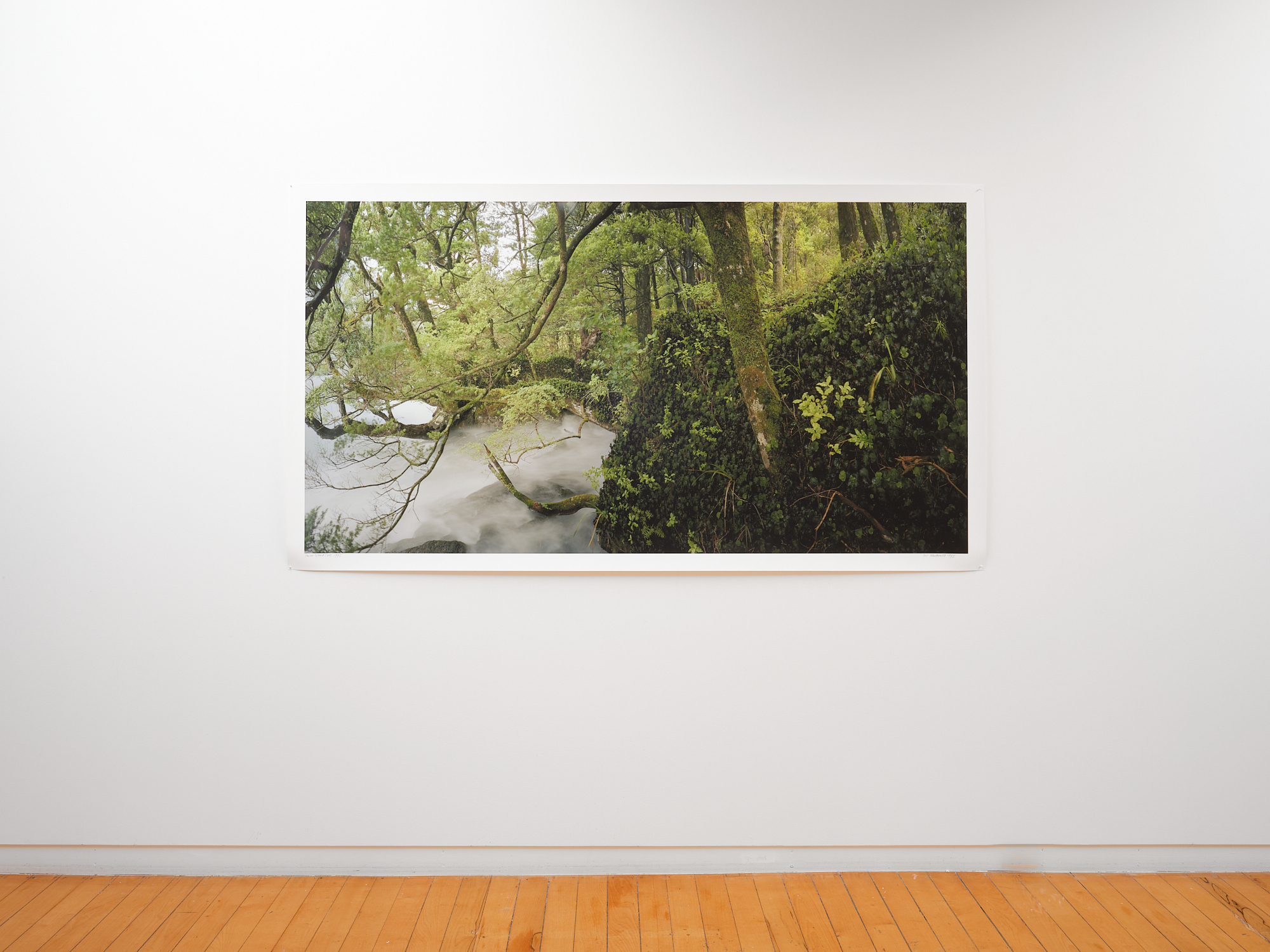
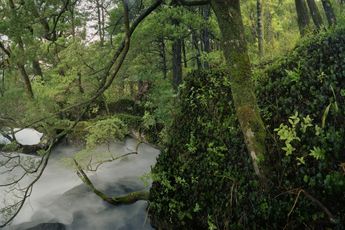
Ian Macdonald, Heron Island Cove (1995) Sure colour Inkjet on Hahnemuhle Rag Paper. 100 x 182 cm. Courtesy Two Rooms. Photo: Sam Hartnett.
In 1995, four photographers who had a deep interest in antiquated camera technology and a passion for the history of Aotearoa New Zealand made a trip with to Tamatea, also known as Dusky Sound, in Fiordland.
The location where they landed was the site where Britain’s Captain James Cook first encountered the country’s indigenous Māori inhabitants in 1773.
Several years after taking their exposures of the distinctive coastline and botany, they created prints that form the basis of the exhibition Tamatea – Dusky Sound, 1995 now showing at Two Rooms in Auckland.
Mark Adams’ triptychs of butted-together (but separate) framed panels depict Astronomer’s Point. These overlapping long exposures reference the works of William Hodges, a painter Cook brought with him, and the activities of William Wales, an astronomer who was tracking Venus. Adams also alludes to Russell Duncan, a photographer who visited the site in 1910.
Haru Sameshima‘s series of framed images of Pickersgill Harbour are spaced apart on the wall. Taken from around the same spot on the beach, they deal with the impact of light on the water, particularly the dramatic effects of elongated shadow and inverted reflection.
Darren Glass’s pinned up horizontal bands are made with a thrown ringlike pinhole camera that simultaneously opens seven apertures. The end of each exposed, pulsing, looping strip repeats the beginning.
Ian Macdonald‘s photographs of the local vegetation on Heron Island are different from the rest of the show in that they are coloured. He merges smaller images together by digital means, and the overall dappled serrated foliage is dense in texture.
The show is both semiotically mediated and mysterious by virtue of the location being a very remote part of Aotearoa New Zealand.
Main image: Ian Macdonald, Heron Island Cove (1995) SureColor Inkjet on Hahnemuhle Rag Paper. 100 x 182 cm. Photo: Sam Hartnett.





A respected voice in contemporary art discourse.
Focusing on ambitious storytelling and insightful art-world commentary. Ocula Magazine publishes in-depth interviews, critical essays and timely analysis on the artists, exhibitions and ideas driving the global art world.
Learn more about Ocula Magazine
Showcasing the best of the art world.
Ocula partners with galleries from around the world to highlight their artists, artworks and exhibitions. Gallery membership is by application and invitation, with each member vetted by an independent panel.
Learn more about Ocula Membership
Specialises in the sale of major artworks.
Led by a team with deep ties to the world’s leading auction houses, galleries and collectors. Ocula’s advisory team offers bespoke services to high-net-worth clients from around the world who are looking to acquire the best of contemporary and modern art.
Learn more about our team and services