






Leigh Bowery: ‘I Just Adore Extremes’
Save to My OculaOn the occasion of Tate Modern‘s survey exhibition Leigh Bowery!, Tendai John Mutambu reintroduces Charlie Fox’s writings on the visionary artist and provocateur.
In 2017 I caught wind of writer and artist Charlie Fox’s debut book, This Young Monster—a bestiary of strange, misfit characters. It’s a rip-roaring ode to monstrosity by a then-25-year-old phenom, whom John Waters, The Pope of Trash, anointed ‘the real thing’. Like many, I feverishly pored over the book’s contents: stylish disquisitions and crazed musings on topics from the films of Rainer Werner Fassbinder to David Lynch’s Twin Peaks, from Symbolist poet Arthur Rimbaud to experimental filmmaker Harmony Korine. This was writing as unruly as its subject matter, not to mention just as perverse and mercurial.
Eight years on, while re-reading Fox’s essay on one of my favourite monsters, Leigh Bowery, I’m just as spellbound by his characteristic style, a tantalising mix of loucheness and erudition. His is an unrivalled portrait of Bowery, the style maven, performer, designer, and model for Lucian Freud, who escaped suburban Australia in 1980 for London’s demi-monde, where New Romantic foppery was the order of the day. But Bowery did more than partake in the scene’s pageantries: he became a movement unto himself. ‘Basically, I never want to look ordinary,’ he told i-D in 1985. With Tate Modern’s new exhibition Leigh Bowery!, celebrating his irrepressibly queer monstrousness, extraordinary ‘Looks’, and orgies of collaboration, now feels like the perfect time to share Fox’s piquant writing on this once-in-a-generation provocateur.
The following is an abridged excerpt from Fox’s essay on Bowery, ‘I JUST ADORE EXTREMES’, republished with permission from the writer and Fitzcarraldo Editions for Ocula‘s ‘Extracts’ series.
‘I JUST ADORE EXTREMES’
‘All monsters are queers.’ — Derek McCormack
‘Not to chase other men; that is the Law. Are we not men?’ — H. G. Wells
‘A BIG ENTRANCE’: AN INTRODUCTORY QUESTIONNAIRE
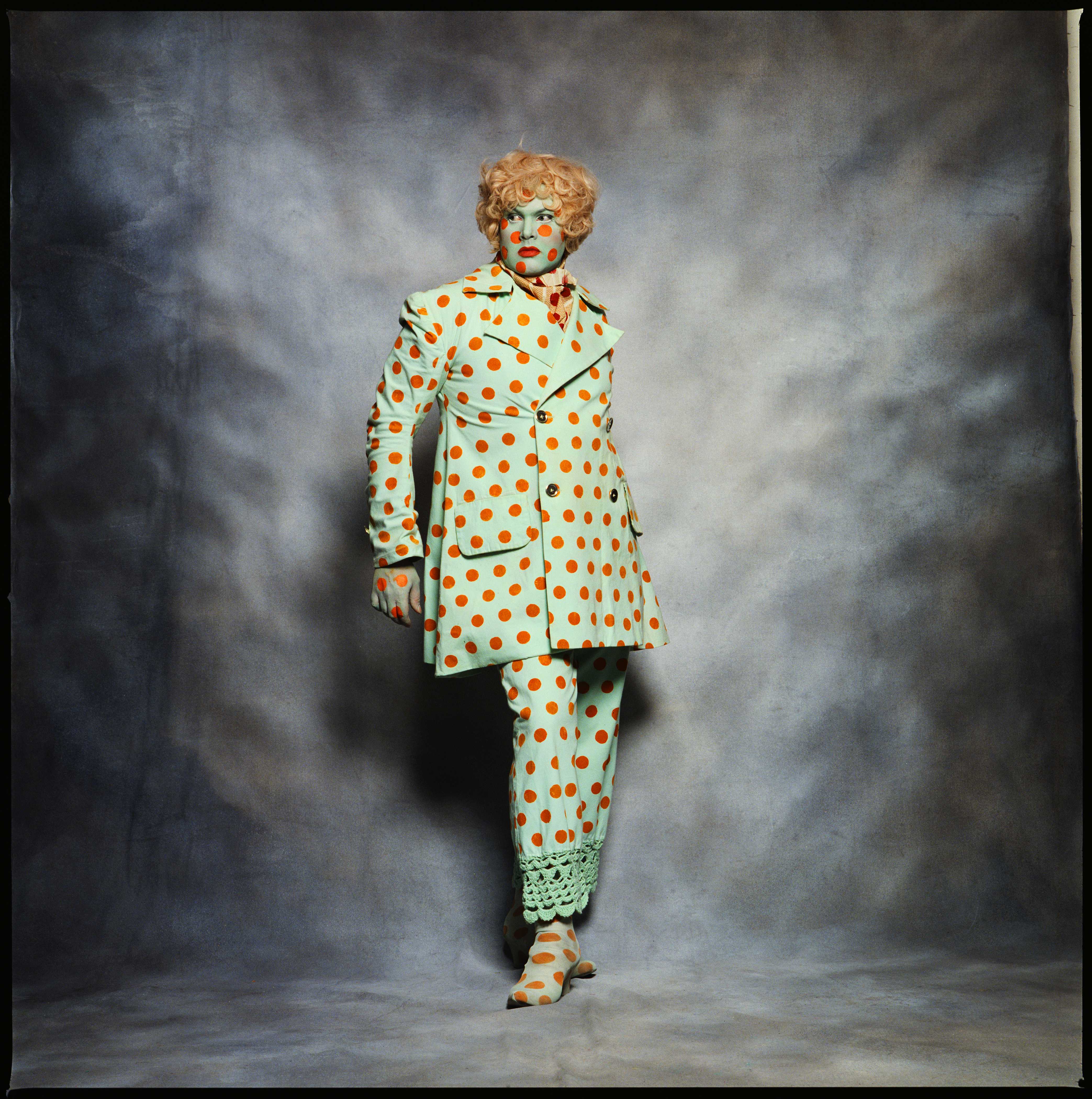
To be a shapeshifter, as Leigh Bowery knew very well, is hard work. A magic wand only does the trick for girls in fairy tales. Some nights he hit the clubs in London as a moon-faced goblin with melting green wax for hair, on others he materialised as a deranged jester on roller-skates, his head explosively crowned by a sunburst of razzmatazz spikes. His appearance and activities during these midnight sorties make all potential descriptions sound hopelessly meagre: ‘fashion designer’, ‘performance artist’, ‘clown’, his finest role was being ‘Leigh Bowery’, a persona as transfixing and difficult to unravel as any of his costumes. In conversation, this protean ability was matched by the fact that he was a compulsive liar, prone to concocting another outrageous story just to keep his imagination alight. A biography of him could be assembled enumerating nothing but his most notorious lies: he was a boy prince from London, that he fucked Dolph Lundgren. He dreamed up fetishes for his friends, which he took great delight in confabbing about with mutual acquaintances. As if in retribution for this regal disdain towards the truth, there exist three magnificent biographical accounts of Leigh Bowery’s life: Sue Tilley’s book Leigh Bowery: The Life and Times of an Icon (1997), Hilton Als’ essay for The New Yorker ‘Life As A Look’ (1998) and Charles Atlas’ documentary The Legend of Leigh Bowery (2002). All of which can make a prospective biographer arriving after the mischief is over feel irrelevant, standing on the empty dance floor, clutching the poppers, mirror ball (and mind) still spinning.
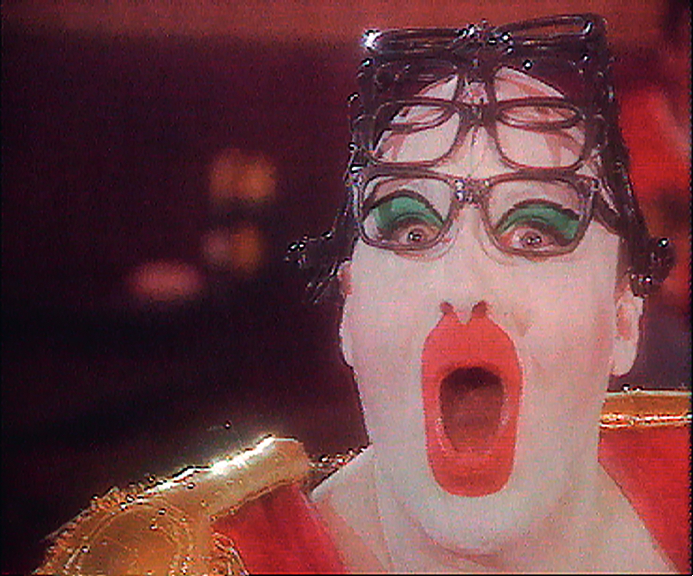
Leigh Bowery was born in Australia in 1961 and he died in London on New Year’s Eve 1994 from an AIDS-related illness. Once, in the late 1980s, he fired glitter out of his rectum onto the audience in a Brixton club like a cascade of fresh champagne. A snapshot from his childhood shows him as an awkward cherub, moonfaced, on a patch of lush and possibly artificial grass, improbably holding a football like a radioactive bomb. During a radio interview, when asked what precisely it was that he did when he appeared at clubs, he said, ‘I just make a big entrance.’ Those are facts about Leigh Bowery. Rather than refrying the detritus that’s collected in these works again, wouldn’t it be way more exciting to think of him as:
a) a mind-altering substance?
b) ‘a mythic creature making an appearance in a quotidian world’? (Thanks, Michael Bracewell.)
c) a glitter-encrusted homosexual, performing funky metamorphoses again and again?
d) the history of queer monstrosity artfully compressed into a body?
e) somehow inexplicable?
Sometimes he looked like a psychotic Troll doll; sometimes he looked like a ghost. Consider this subsequent compendium of high-intensity scenes to be the equivalent of Polaroids, all mixed up, documenting various magical looks.
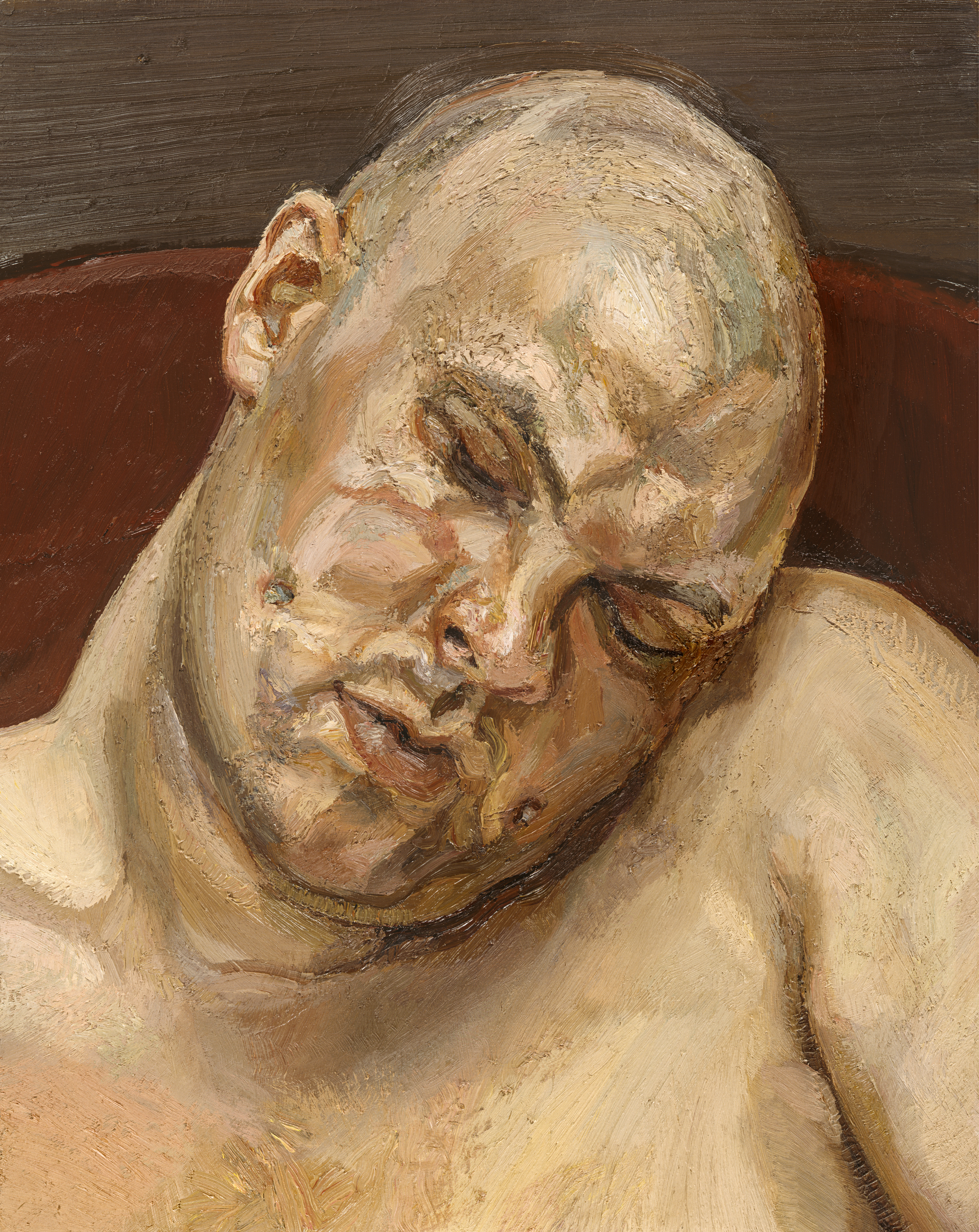
Many might have wished to proffer a questionnaire at Bowery when they first encountered him since he was so bewildering. Towards the end of 1992, a fax arrived from those famously attentive sleuths in The New Yorker‘s fact-checking department, eager to verify certain incredible claims stitched into his biography. (An essay on Lucian Freud, then painting Bowery in all his ogreish glory whilst chatting with him about recherché pornography and Peter Rabbit, was in the works, hence all the attention from one of Gotham’s fanciest publications.) By way of an icebreaker they asked, ‘Did you go into labour and give birth to a pink “caul?”’ A clarificatory rejoinder indicated that he had also spawned his assistant and future wife Nicola (the marriage was a conceptual jape they performed together) naked with her flesh painted hellfire red in the style of a howling newborn. Facts acquire a neon power when they have the air of fiction. Bedevilling all this insistent pursuit of truth, though, are odd little soundbites such as Nicola’s admission, ‘his whole persona was a mask’, or the artist Cerith Wyn Evans noting roguishly, ‘Maybe the truth isn’t the most exciting place to reach in relation to Leigh.’
Another kind of primer is required that doesn’t deal in hot factoids but attends to the monstrous conceptual effect of these repeated transformations and plays around with the imagination responsible for them, embracing the mythic trippiness of his whole adventure. Echoing Bracewell again, an interpreter acute as a laser beam, much can be conjured up ‘under the sign of Leigh Bowery’. He’s a route into brainy exhilaration but he’s also frequently baffling. ‘He enjoyed confusing people,’ his friend and dearest collaborator Michael Clark said, ‘he enjoyed creating a response of, “What the fuck was that?”’
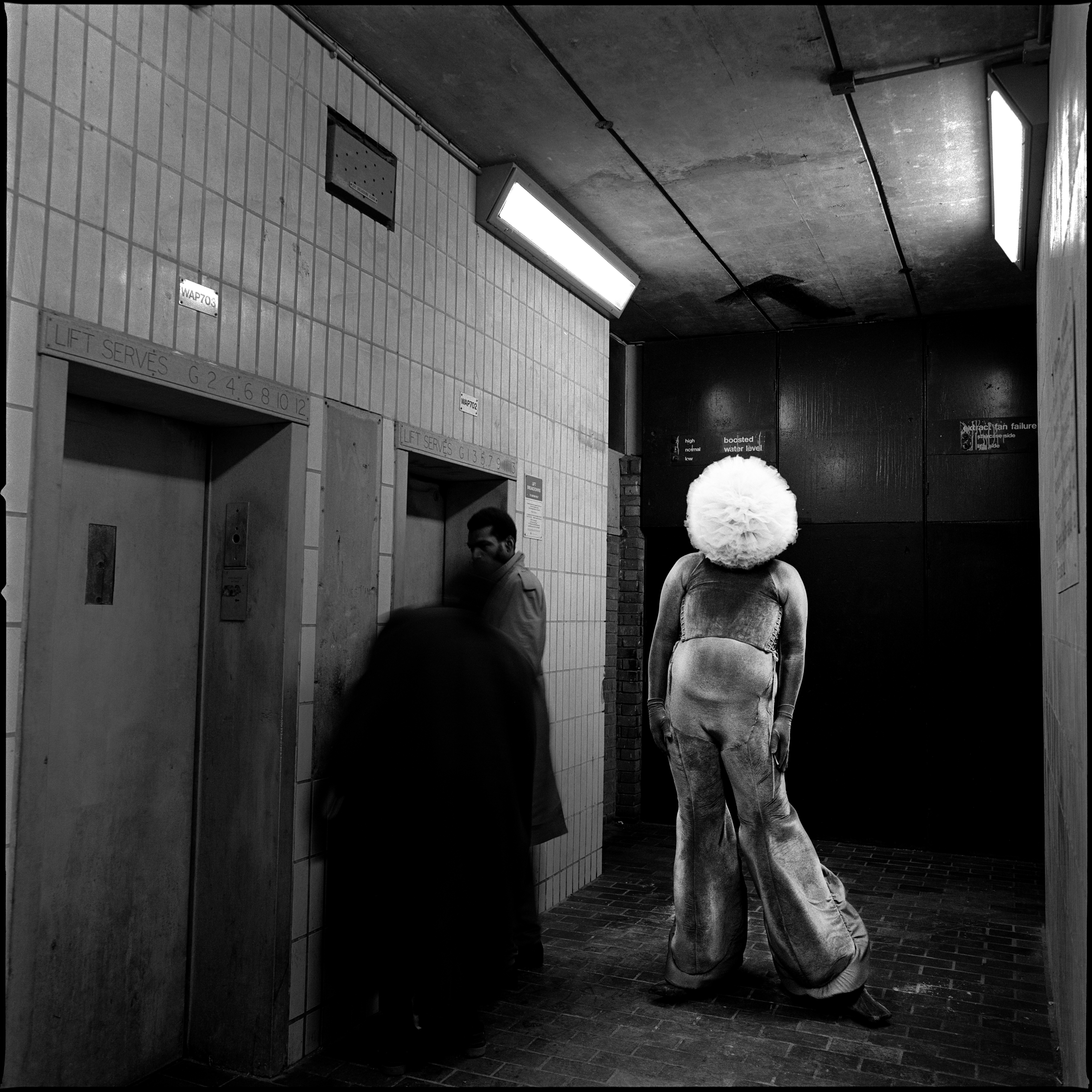
HISTORY LESSON
By his own account, Bowery was mesmerised by punk and some of the weirder creatures coming out of its cauldron. Punk’s mental and philosophical upheaval was radically expressed in fashion, transvaluing the ugly, tasteless or forbidden (snot-green hair, ripped garments, Sid Vicious’ T-shirt of the goofy cowboys with their equine cocks almost touching) into objects of beauty and thus desire. This would be instructive and empowering for Bowery when he was a teenager in Sunshine, Australia, tracking the activities from far away via imported style magazines as if they were monthly transmissions from another world. Every scene has its mascots: before Bowery was showing up in i-D and The Face, grinning like a loon, the punks had Jordan, the wild-eyed vixen who writhed around nude, Warhol had his Superstars and the Bright Young Things of the 1920s had droll Stephen Tennant, mixing amphetamine into his cocktails. The requirements for this role were simple: wit, a carefully confected persona and a huge capacity for excess – living by night takes its toll.
Back in 1974, around the time he was singing about a character named Halloween Jack and imagining London as post-apocalyptic overrun with droogs, David Bowie told the NME that ‘the kids themselves are more sensational than the stars.’ As ever, Bowie displayed a seismograph’s accuracy for predicting future happenings in culture at large since the effects in this shift from fascination with the star to the crowd would be many and various, ranging from punk rock to rave culture. Bowery’s outfits, too, were literally ‘sensational’. Outré things, they exist to provoke difficult feelings in an audience.
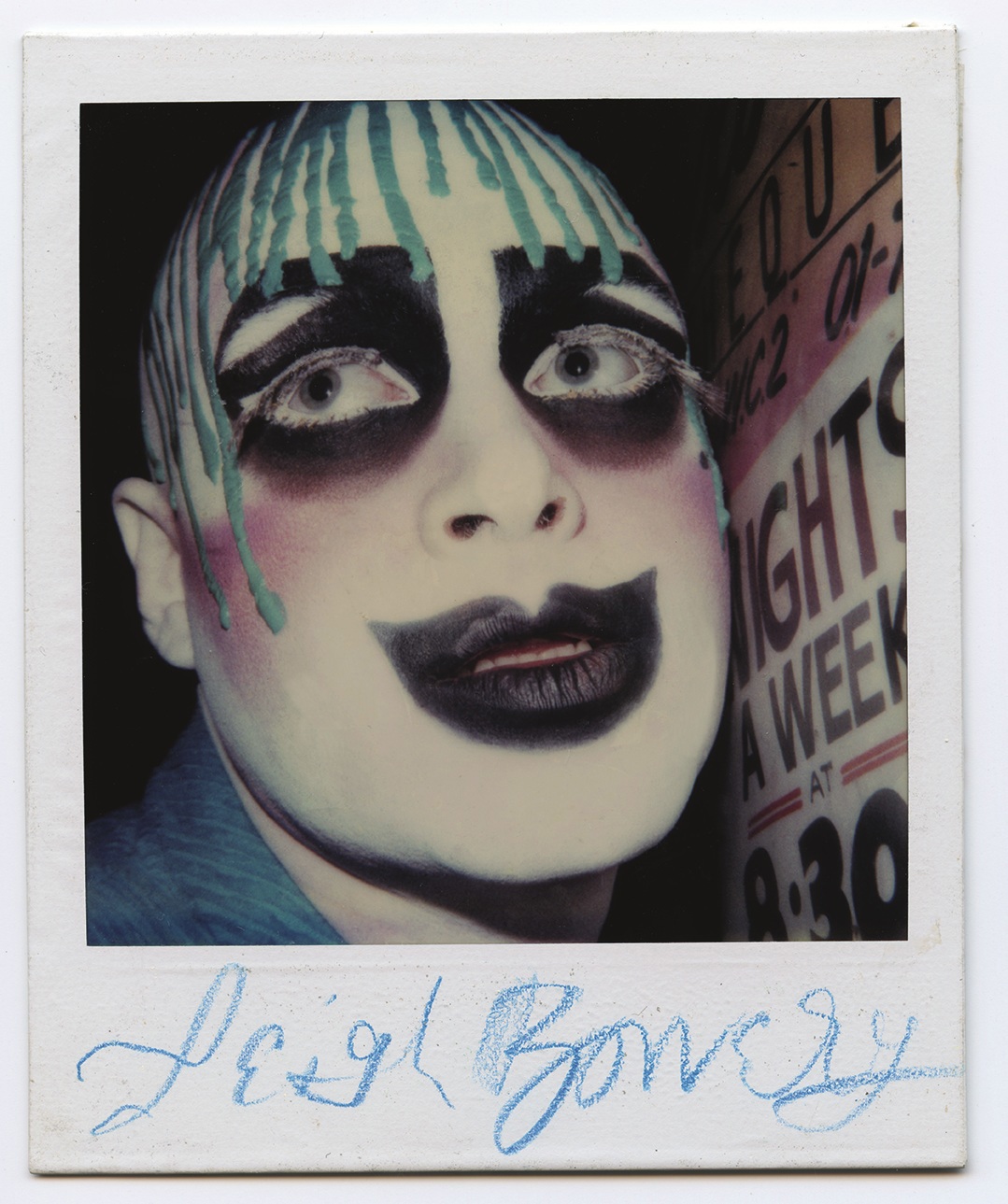
FILTH
Asked about his old friend and muse during an interview for The Advocate in 2015, John Waters pointed out that Divine (born Glenn Milstead) never had any transgender intentions animating his alter ego: ‘He didn’t want to pass as a woman – he wanted to pass as a monster!’
The Pope of Trash was a primal influence on Bowery. Not only did he recreate the birth scene from Waters’ Female Trouble (1974) where Divine sires Mink Stole on an ugly couch but took cues from the master on the necessity of turning bad taste to ‘a stylish and original purpose ... Good bad taste can be creatively nauseating but must, at the same time, appeal to the especially twisted sense of humour.’ All Waters’ films provide explosive lessons about how queerness can be at once carnival romp and terrorist activity, rebelling against straight world notions of what’s normal with depraved glee. And Waters possesses an imagination that any wannabe surrealist would razor-blade an eyeball to attain. Desperate Living (1977) is like a children’s story concocted by a perverse but gifted boy: Mink Stole brews up potions in her castle, Grizelda the morbidly obese maid is killed by a collapsing house, a hound dashes off with a severed cock and the queen is roasted like a hog for a cannibal banquet. Trash siren Divine ignores the fact that her body would never be deemed ‘attractive’ according to the usual rules and makes it into a personal triumph, getting high on the fabulosity of her three-hundred pound figure, undead Jayne Mansfield strut and proto-punk coiffeur.
Bowery took the shit-eating spirit of Pink Flamingos (1974) and covered it with glitter. He said in an interview, ‘If I have to ask, is this too sick?’ he said, ‘I know I’m on the right track.’ Shock gets a bad rap as somehow cheap or puerile but it can be cathartic, too, discovering where the tasteful limit lies and dancing all over its corpse. Silence was what homophobic adversaries craved: that was the official government strategy in response to AIDS. Ronald Reagan didn’t acknowledge its existence in public until 1985, by which time the apocalyptic effects were inescapable; Margaret Thatcher’s apparatchiks rejected the thought of issuing public health warnings about the sexual practices that carried a high risk of transmitting the virus that same year, believing such procedures were ‘in bad taste’.
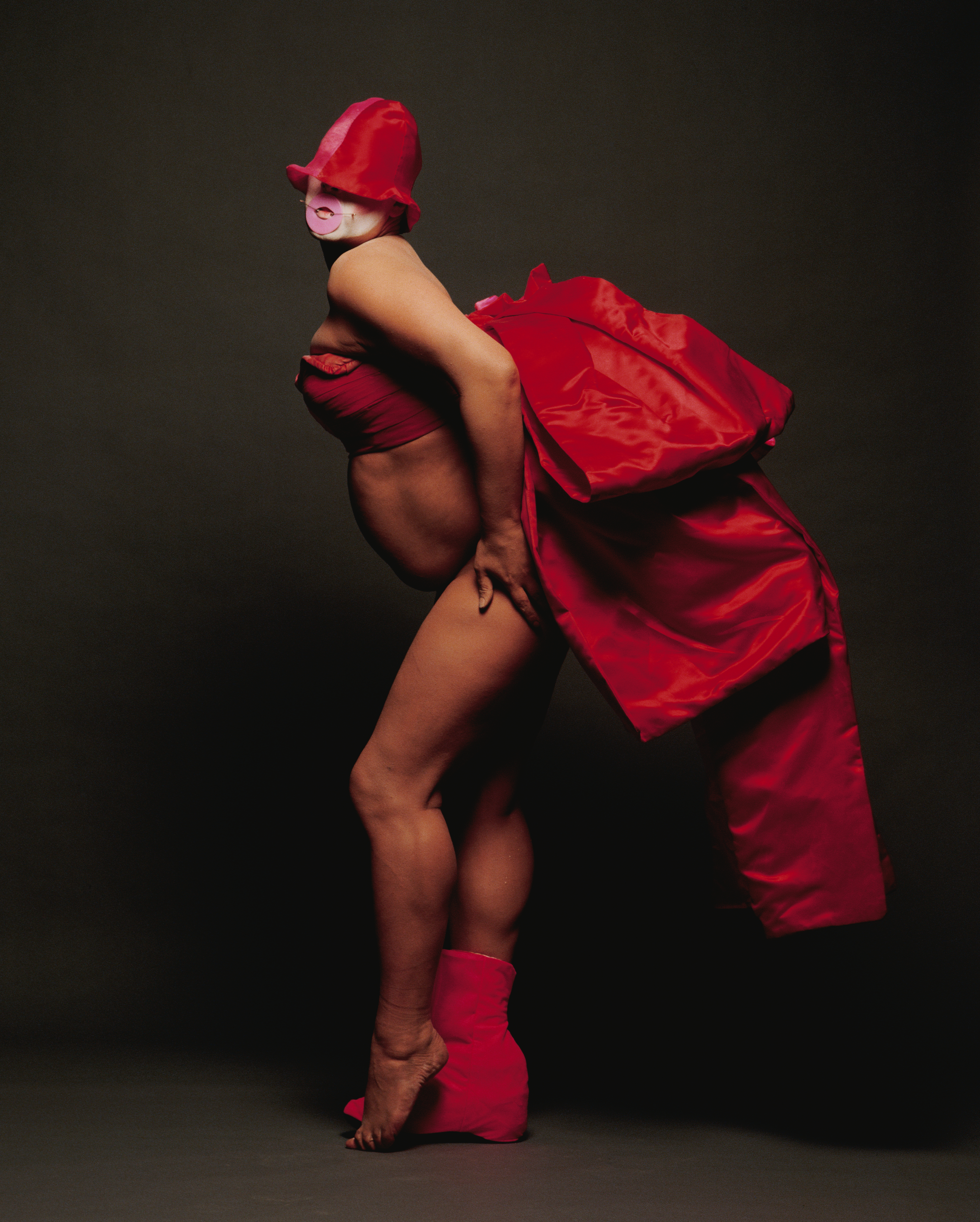
GO BANG
... all this mournful choreography is a gross habit, as if the only way to think about a concluded life was as a crypt, offering little other than grief, scars, exquisitely measured sorrow; old passions withered like specimens on a mad scientist’s shelf. Honey, fuck that: who says you can’t go Party Monster on it all, burst into song, cavort through the graveyard, loop Macaulay Culkin dancing in his Puck-on-Ecstasy costume? You can be dead way before you’re buried anyway, everybody knows that, inside.
Bowery is someone who dedicated himself, ingeniously, to making mischief, clowning, and proved that didn’t need to be just a dumb pursuit, thus the funeral soliloquy and requisite attempts at blackening the page with woe are neither hot nor wise moves. You could write ’et in Arcadia ego’ in Liquid Gold and cum, that would be a smart tribute. And there may be no adequate way to mourn the queer paradise poisoned and lost long ago. Like any great monster, Bowery shows what we could be if we dared, bringing what’s going on within to the surface, mixing up inside or outside, dream or waking, human and supernatural.
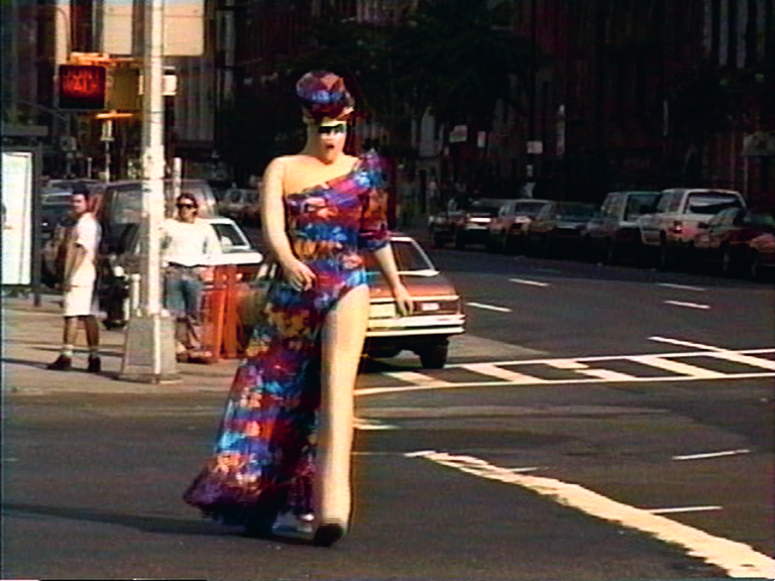
No use harping on his ‘trademark impenetrability’ or ‘the conundrum of his life’ (attempted and rejected). Picture him dancing with Anton Walbrook, that silver fox, in The Red Shoes (1948) underneath a ruby moon, picture him licking whipped cream off Divine’s face or shaking booty to ‘Seen and Not Seen’ by Talking Heads (‘He thought he might, by force of will, / Cause his face to approach those of his ideal’) and ‘Work It’ by Missy Elliott. Picture him flashing his usual lunatic grin. He wanted to transfer exactly whatever insane notions were prancing around his mind into real life, without anybody else’s interference or censorship, and he did it. Staying within the imagination is the most fitting tribute: it all came out of his head.
Heavy as it sounds, Bowery is sublime proof that the gloomy facts of life can be transcended, those dark feelings inside can be turned into something magical, bright and strange. Unrepeatable, and not an encore of anything, his life is also exemplary. He was his own muse. The whole explosion of fireworks that can be identified as his life from Sunshine boy to magic character in the Big Smoke, yes, all of that traces the transformation of life into art. —[O]
This abridged essay originally appeared in This Young Monster (2017) by Charlie Fox, published by Fitzcarraldo Editions.
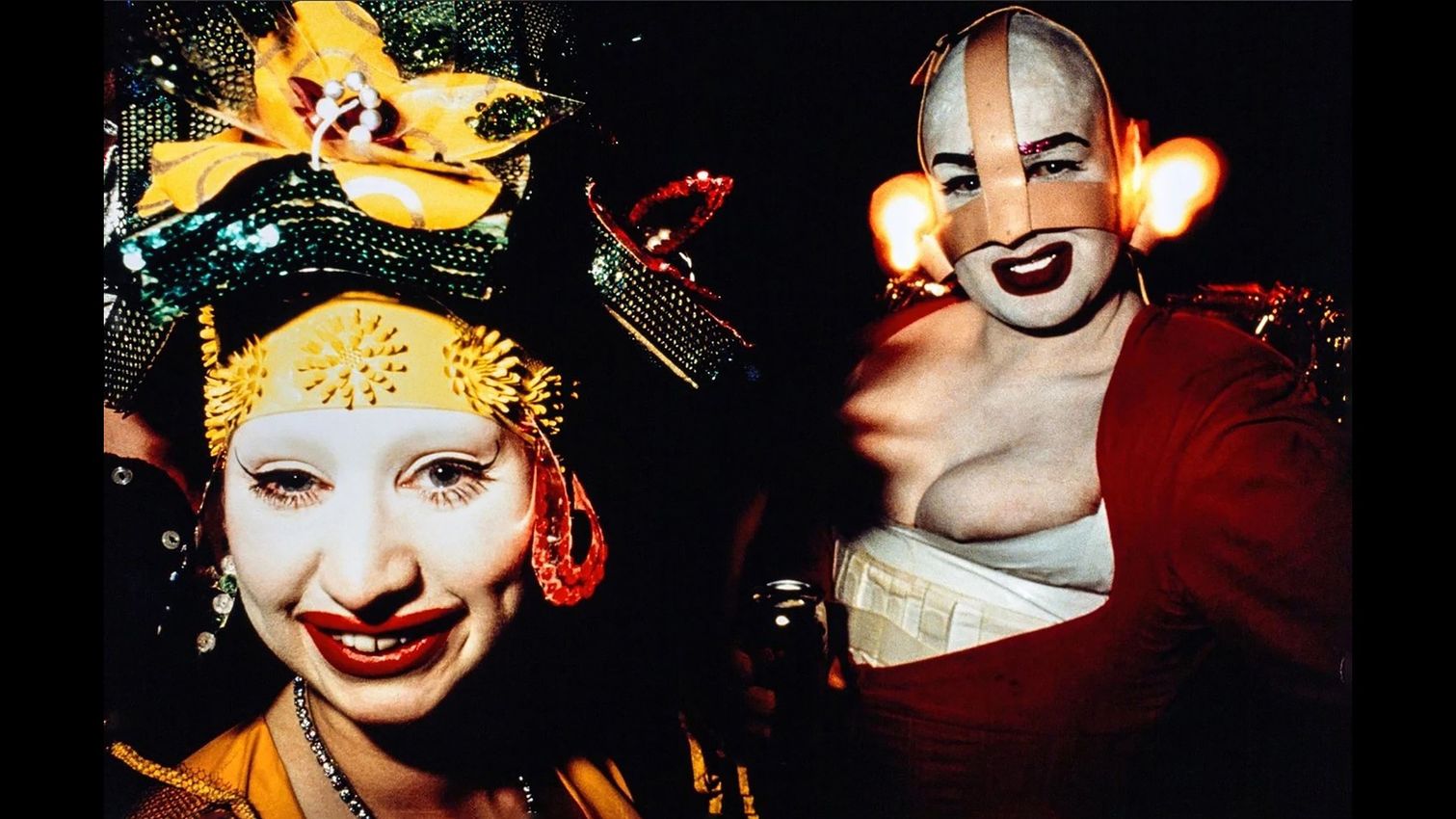
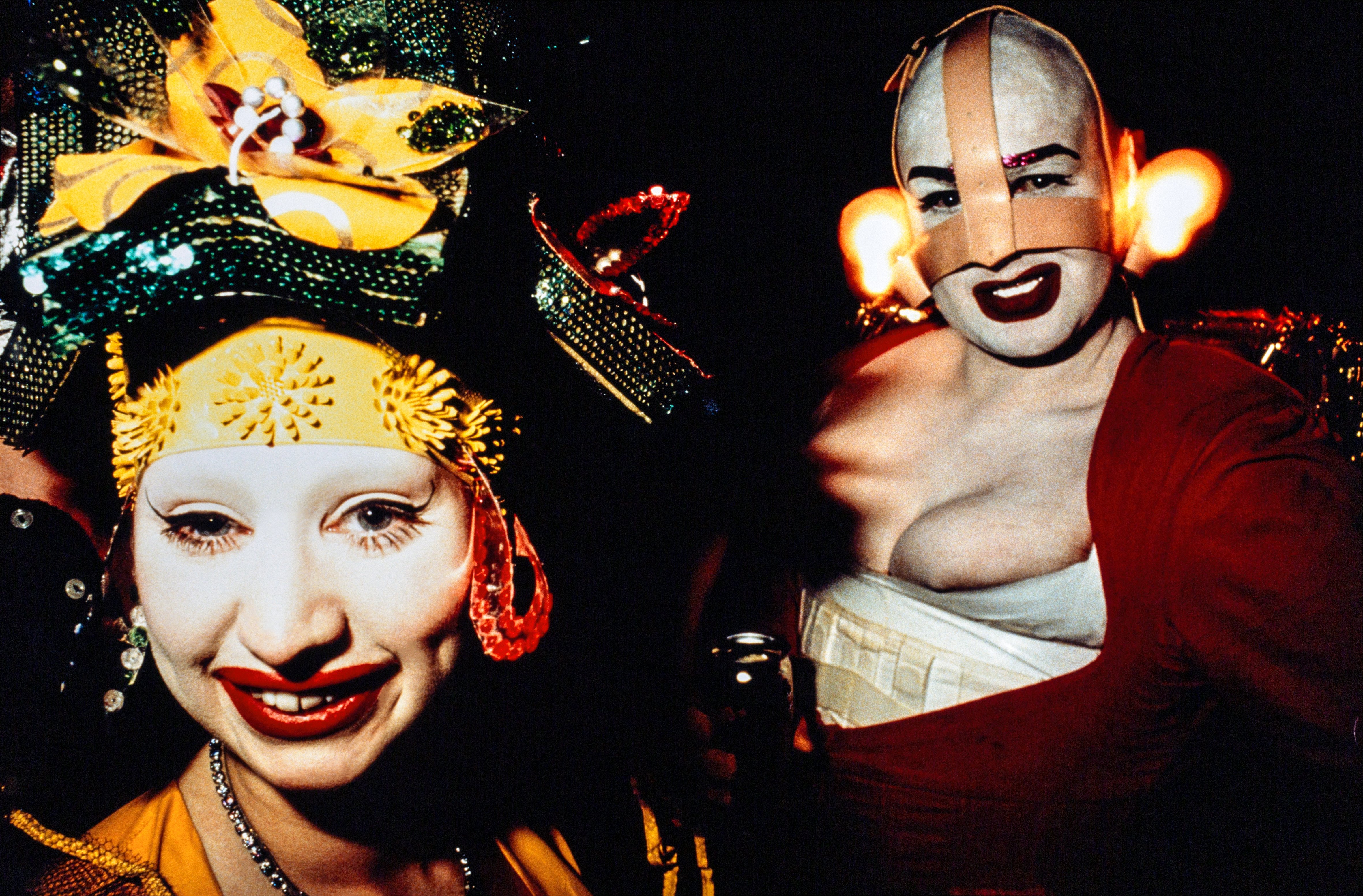
Main image: Dave Swindells, Daisy Chain at the Fridge Jan '88: Leigh & Nicola (1988). Courtesy © Dave Swindells.






A respected voice in contemporary art discourse.
Focusing on ambitious storytelling and insightful art-world commentary. Ocula Magazine publishes in-depth interviews, critical essays and timely analysis on the artists, exhibitions and ideas driving the global art world.
Learn more about Ocula Magazine
Showcasing the best of the art world.
Ocula partners with galleries from around the world to highlight their artists, artworks and exhibitions. Gallery membership is by application and invitation, with each member vetted by an independent panel.
Learn more about Ocula Membership
Specialises in the sale of major artworks.
Led by a team with deep ties to the world’s leading auction houses, galleries and collectors. Ocula’s advisory team offers bespoke services to high-net-worth clients from around the world who are looking to acquire the best of contemporary and modern art.
Learn more about our team and services